Six Types of Product Managers, w/ Catherine Ulrich, Managing Director at FirstMark Capital
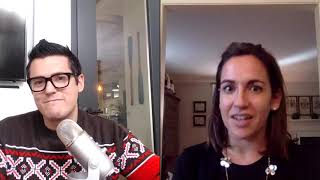
In this live Product Collective interview, host Mike Belcedo talks with Catherine Ulrich, Managing Director at FirstMark Capital, about her Medium article that categorizes six archetypes of product managers. Catherine explains why she created the framework—seeking a shared vernacular for hiring and role clarity—and walks through each type: Growth PM (data‑driven, revenue focus, risk of short‑term hacks), Workflow Warrior (observes user workflows, improves toolkits), Community Connector (builds social dynamics for B2C and B2B), Platform/Product PM (oversees APIs and third‑party ecosystems), Data/AI/Search PM (translates needs into algorithms and ML models), and Mobile PM (specialized UI/UX, now merging into broader skillsets). She adds a bonus “Internal Tools” PM role serving internal users. Catherine then shares a two‑step hiring framework: map the product’s components (marketing site, e‑commerce, workflow portals, APIs, etc.) and clarify the top business objective (e.g., scaling onboarding vs. revenue). This mapping reveals the most needed PM type. The conversation shifts to career advice: adopt a T‑shaped skill set, understand one’s primary PM archetype, and consider growth or workflow roles as the most transferable across industries. For skill development, she recommends attending the Industry conference, reading the High Growth Handbook, and studying existing products deliberately. Finally, she discusses how product leadership (CPO) provides cross‑functional exposure that can lead to COO or CEO roles, emphasizing people leadership over pure functional expertise. The interview ends with audience Q&A on resources, role positioning, and how to contact Catherine on Twitter.
Chapters
Hey everybody, this is Mike Belcedo, co-founder of Product Collective. Thanks for joining us for another industry interview. Really happy to have everybody here, especially around the holidays. I know this is a pretty busy time. I was taking time a couple days ago finishing Christmas shopping, so I know, I know this is kind of a crazy time. So thank you for spending it with us, and I'm excited about today's session, but Before we get into it, just kind of a couple housekeeping type things. If this is something that maybe is the first time you've ever attended one of these, these industry interviews, these are really live video Q&A chats. So, you know, you could see me, you could see my guests. We're just gonna be having a conversation and I have some questions for our guests, but really I'd love for you to be asking questions too. So there's actually a section, a little ask a question section. You might see that. And I'd love it if you have questions that pop up no matter when. Maybe it's right now, you have a question that you already want to ask, put it in there, and then throughout the session I'll be monitoring that and I'll be pulling in questions sometimes, you know, right in the middle of a conversation that we're having. Maybe it's towards the end, it'll really be the whole time, so don't, don't feel like you have to wait to do that. There is a chat too, though, you probably noticed that. That is perfect for introducing yourself, you know, maybe I don't know, for me, I just always love seeing where people are from, the kinds of products that they're working on. So if you feel so inclined, feel free to introduce yourself there. You could even ease my mind to know that you can see and hear me by just putting in the chat like, yeah, I could see you and hear you. That would be awesome. And then for those of you that aren't familiar with Product Collective, maybe you stumbled upon this industry interview, but you're not as familiar with what the rest of Product Collective is all about. A community for product people. And by that I mean, you know, we do have these chats, we have a newsletter that also goes out every single week, we have a pretty active Slack channel. There's about 6,000 product people in our Slack community just trading ideas, best practices, asking for advice, that sort of thing. And then we meet in person at Industry, and we do that twice a year. Our flagship conference is in Cleveland, Ohio every year in the fall. Fall. And we also have our first— well, this past year was our first European conference, so we'll be back in Dublin, Ireland in the springtime, and I'm excited for that. So you could check out more info there. You could go to productcollective.com and stumble upon it, but you could also go to industryconference.com and check that out too. So I'll guess I'll— with all that out of the way, I'd love to get right in the topic of conversation. And I guess before talking about the topic, I should introduce our guests. Which is Catherine Ulrich of FirstMark Capital. And Catherine, thanks so much for being here with us today.
Thanks for having me on. I'm thrilled to have this conversation.
Yeah, well, and it was awesome getting to meet you. I know you spoke at Industry this past year, so thank you for coming out for that too.
That was great. It was a fantastic conference. I mean, by the way, that was reminding me that I wish those kind of resources had been available when I first got into product. So that was awesome.
Well, I'm glad that, glad you were able to make it work. And I'm glad that we're having this conversation because really this kind of spawned after— it spawned from an article that you wrote that I had stumbled upon. And this was actually, you know, probably right before Industry. This was the 6 types of product managers. You wrote it and posted it to Medium, and I thought it was awesome. But I also thought maybe it was worth digging into a little bit more, you know, here for this session. So I thought we could do that today.
Perfect. Yeah, go ahead.
No, I was just going to say, if you wouldn't mind, maybe you could even just, for those that haven't actually read it yet, I did post the link, but if you wouldn't mind just sort of recapping what it was and kind of what, what brought you to write it, like why you felt like it was important to write that.
Yeah. Well, I'll actually say, I think this started like many things in life from learning from my own mistakes. And so what I mean by that is in building and managing product teams, I think earlier on in my career doing that, I probably didn't have a great enough understanding about the diversity of product managers. So it probably started from that perspective of even thinking about who do I hire? How do I decide whether someone is a qualified product manager for the specific product role I have? Over time though, that kind of grew, I would actually say, into almost like a pet peeve, because for me, what I realized is that all these other positions that are out there have so many adjectives that help people describe a a person in that role. I mean, I think a great example would be someone like marketing. And so if you're hiring a marketer, you don't just say, I want a marketer. You literally say, I want an affiliate marketer. I want someone who knows SEO. I'm hiring someone to run the display team. And then likewise, when you get to the point where you're hiring a CMO, you even have this vernacular of talking about like what the strong points of a CMO are. Is it someone who's very brand-driven or social-driven? Is it someone that's performance marketing-driven? And the same analogy, even I'd say, holds true for developers. There's all these adjectives that we have for describing developers, whether it be, you know, front-end or back-end or codebase. And then I felt like when you turn to product people, when I often would say to folks, either myself or then people in my network who would say, you know, hey, Kathryn, I'm looking to hire a great product manager. And I say, well, what type of product manager do you want? I'd often get like a blank stare of, of, Well, I don't, like, I don't really know, like, this is the product, this is what I need them to do. But there was not this crisp set of adjectives, which we have in these other functions. And so it actually used to drive me nuts. So I guess the post came from that motivation. The post came from the motivation of, hey, wouldn't it be great if we, as a product community, started to develop a set of vernacular so that we could all talk the same way about the different roles. And in full candor, I think I had about 10 different types of product managers. And for the sake of how articles go, I bundled it into 6, 'cause I think that's the maximum that people can digest in an article, but came up with the kind of 6, which I've seen in my career and which I've hired and now, you know, recommend that companies understand this to hire. So that was the background. I'm happy to give like a quick overview of the 6 if that's helpful, and then we can dive in from there.
I think that'd be awesome if you wouldn't mind.
Okay, cool. So the first type of product manager that I often see, and I'd actually kind of argue this tends to be the most in-demand one, is a growth product manager. So this is someone, you know, if you think about growth hacking, usually these people have to some degree, even if they didn't come from a marketing background, they have kind of that DNA in them in terms of trying to figure out how to hack conversion, increase retention. They tend to be very data metrics-driven individuals. And that's her background. And so that is a very common type of product manager role that we see. The reason I say it tends to be in most demand is because it's a very easy, easy thing for a CEO or someone to say, yes, I want that because I want someone to boost my revenue. So by default, it's a very easy role for people to say that they absolutely need someone who does that in the beginning. And actually, in the article, I end up brooding not only about like what skill sets does this product person have, but that was their superpowers, but I also was writing about the kryptonite because what I've also seen is that each of these types also has a bias that tends to be their greatest weakness. And I don't know if I'll go through all of them, but I think for the growth hacker, it's a great example that I'm passionate about because some forms of growth hackers can risk driving financial metrics and sacrificing customer experience. And I think that great product managers do this really great delicate dance between business outcomes, user experience, as well as the technical investment it takes to build any products. And a growth hacker, I've seen some great growth hackers that can drive amazing metrics, but sometimes you can run the trap of doing those product hacks that are not good for your users, like pre-checked boxes for subscriptions that are buried somewhere or auto-renew, or my favorite pet peeve that I hate and never recommend is having to call in to cancel your product. I know why people do that and a number of startups do it, but it's an artificial way to boost your short-term performance, not the long-term. So that's, that's the growth hacker role that I often see. The next one is actually near and dear to my heart because it was very core when I was the chief product officer at Weight Watchers. I think this was a core role that we had to have, which is what I call a workflow warrior. This is someone who, the reason it was near and dear at Weight Watchers is if you think about that product experience, we were at the end of the day kind of selling a workflow tool. Now the workflow was, how do I go through my day and understand what I should eat when and how and track that and plot that? But it's a toolkit, like you're working in a toolkit as the user, right? You're interacting with a set of tools. And a workflow warrior, what they are really good at usually is observing users in the wild, not putting their own judgments on top of them, but just watching their current workflow no matter what it is, whether that's the their workflow of how they make their food choices across the day, or whether you're building an enterprise SaaS product and helping to build tools for marketing managers, but they're able to observe and watch things. And people that are very good at this, you just, I can tell right away if someone's gonna be great at this role based on how they interact with users because they're not leading the witness. You know, they will, if I say things like a great interview question is, you know, tell me, how do you get to understand your users? This person will naturally say, well, I wanna go watch them in the wild. You know, they're not just doing pilot groups. So like, I'm going to go sit with my user and just watch them for a day. And then I will figure out how I can improve it. But that's the workflow warrior. The next one I had was, I called it the community connector. This is someone who, and this, as it sounds, it's someone who can create a great community. It's certainly someone who understands social dynamics and can build that into the product experience. What I found is that this person ends up being really great usually at understanding the psychology of not only individuals, but how groups behave. And they know how to build the right dynamic amongst them. So if you need to create social ties into your product, which honestly in my now belief is that, again, it used to be that people would say, well, social ties, that pertains really to B2C products that people are building. And actually now it's very clear that that applies even to B2B because we've seen that the fastest growing enterprise products are one that tie into social behaviors or they build collaboration and team dynamics into it as a retention format. So whether that be Slack or something like InVision, where the key reason is not just a great workflow toolset, but also how do you bring teams and social dynamics into it, that ends up being a critical skill. The other one I had was, I called it a platform product manager. And in the post, I even, all these have different aliases, which are my, like, I've heard this role be called this in other ways, but a platform product manager, sometimes this is called an API product manager, Sometimes people get bucketed into the, oh, that's a technical PM, which has some different nuances. But platform is generally like, if you're building a platform where people are going to come on and build on top of it. So whether you think of it as a PM overseeing an API network and helping understand how developers want to use those APIs, or whether you create a platform that really helps with third-party partnerships, that's how I think about a platform PM. And then I had the next one was I called it a data or AI product manager. Other terms for this would be, for example, a search product manager is a common role. And if you guys have ever known or worked with search PMs or data PMs, like they are their own breed in and of themselves. You know, they act in the same way of any product person, like translating user needs into technical solutions. But in this case, they're usually translating user needs into either algorithms, search algorithms, or AI or ML models. So I would have actually said, if you're asking about this, this role or position 5 years ago, I probably would have called it search product manager. Now, obviously, with the plethora of AI and ML-driven solutions, I think the skill set is actually very similar for that type of solution as well. And then the last one that I included in this post was a, mobile product manager. And I even noted in the post because I think, I think the kind of idea of having a mobile product manager is on its way out. It's probably dying as an independent role, but it is still very common that people will have, you know, the iOS and Android person. I call it out because no matter what, it is a very unique skill set to know how to handle the user interface and the interactions in mobile and to think of it from a product lens where you're not just building the same desktop experience on top of mobile, but you're thinking about the unique use cases and how do you develop that. But again, I think with responsive and how everything has moved and adapted and React and so on, this role is kind of fading away. It's more being a skillset that's starting to be built into any product manager's skills if you do front-end-facing features. So that was my— and I'll give you one bonus role, which I took out of the post for the sake of brevity, Which would be, and I think I bundled this at the time, you can kind of say this is a type of workflow manager, but I have also seen a totally different type of person who is an internal product manager. So internal tools. So that would be, for example, a PM who works on DevOps. So literally the tools that your developer team needs to use, or it could be a PM who works on something like Salesforce. So they're watching how internal employees use Salesforce and driving the application development on top of Salesforce. But that's another role that you can maybe bucket it under workflow The internal warrior is just, you know, the customers are internal, but it's another distinct type of position that I see.
That's awesome. And I think it's helpful for us to hear about the different roles because most people don't necessarily separate them like that. So that's great. I imagine though, you'd mentioned before, like you have a lot of people that have approached you like, hey, what, you know, I need a product person. What, what type should I be recruiting? Even if they did know that there are these 6 different types, I imagine though, that maybe the next question is, well, growth is important to me. And, but there is a community aspect to what we're building. Like, how do you know which of these are necessarily the right one? Is it stage dependent, industry dependent? Maybe you could talk a little bit about that.
Yeah, I think, you know, I'll tell you like how I usually go about helping people think through that. There's actually two key steps to me. The first step to answering this question is, and it's more about how I make sure I ramp up to speed is, describe your product to me first. Tell me how many different components of the product you have, right? So there's some products that have— they'll say, okay, well, I have a marketing website and I have an e-commerce shop. I'm going to use something that I know very well, which is this company I invested in called Parsley Health. So in Parsley Health's category, they have a marketing site, an e-commerce shop where they sell things like supplements, and then they have a patient-facing portal, which I would say is very workflow-oriented. And then they have actually a doctor-facing portal because this is a new form of primary primary care. And then they have a backend infrastructure and API layer. And like, if you plotted out their product diagram, which is something that I always do with companies I meet with, like, show me all the different buckets of features and front-end components, then you can say, oh, well, immediately I know you're probably going to want growth because I get you have a marketing site and an e-commerce shop. But most importantly, your core product is a workflow product. So step number one is like creating this product map, which I've always done for companies. Which has things bucketed and ideally your full list of features under each part of the product. The second step, which this is the biggest challenge for most companies, is what is the biggest objective you're trying to hit? So if your company uses OKRs, great. I am referring to the highest-level objective and key result for how you're going to measure it. But what is that biggest objective? In full candor, whenever I ask that question, I usually find that there needs to be more turns done on it. Without, you know, I met with this company actually earlier this week, and they said, it's an early-stage company, they said one of their biggest objectives was hitting this certain sales goal within the first half of 2019. That was the objective, hit this number in, you know, H1 of 2019. And actually, then when I dug deeper, it turned out they actually already had the full sales pipeline to hit that number. So that was not their biggest challenge. The biggest challenge was that they didn't have the products and the operational to meet the scale they were about to hit. So they were about to hit the sales number, but it involved onboarding more customers than they ever onboarded in the history of the company. And so the real question that they needed to answer was not how do we hit that sales number? It was how do we deliver, like, you've got to define the level of quality of product you want, but how do we deliver the right quality of product experience to all these people we're going to onboard? And so once you have that question, once you really know the objectives you need to hit, then all of a sudden, you know more what type of product manager you want to hire. And, you know, that one ironically was like, they needed someone who was going to be doing a lot of the workflow because they needed a lot of parts of the product to be self-serve. So they needed to analyze how their clients were coming on board and how they could create self-service tools so that there was less internal pressure to do those things manually. So that's one example, but the two steps are understand how you, the components of your product, and then really refine your objectives and get those right. And then it usually becomes incredibly clear what types of PMs should be your highest priority.
That's great. And actually, there's a question that popped up from the audience that I think is a good one. You know, right now you have probably lots of product people that are watching this, and maybe for some of them, they've always hung their hat on something specific, like, hey, I focus on X. But maybe for others, this is the first time that they're considering, well, wait, I might be that platform product manager. I just never really thought of myself as that. Do you encourage product people, especially if they're going out interviewing for roles, you know, looking for new opportunities to, to sort of position themselves as something specific like one of these? Or do you recommend that, hey, as product people, we should play multiple roles of the, you know, I should be number 1 and number 5 and number 3, you know, I guess what advice might you give to a product person?
I mean, one of my— honestly, it's like kind of a life philosophy, not just a product manager philosophy, but It's kind of, you know, if you've heard the phrase, if you can't measure it, you can't manage it. I love that phrase. But to me, there's actually a deeper meaning, which is if you can't name it, you can't manage it. If you can't name something, and I literally mean in any aspect of your life, it's very hard to improve it. It's very hard to grow unless you know where you are and where you want to be. And if you don't have the vernacular to say, here's how I gauge my level I am today, and I have an ability to describe that I'm trying to grow this way, there's no way to get there. It's no different than having directions, right? If you told me the address of a house, but didn't tell me where you were, I wouldn't know how to direct you to get there. And so that's where I go first. Like what I would say is there's already a benefit if you, and as a PM, can say, okay, I think I'm playing this role today. Am I doing the best job that I possibly could? That's kind of one question. And then the other one is, can you map out— I think if you want to grow in your product career, it's great to think about becoming a T-shaped person and T-shaped meaning, you know, you're broad across a number of categories and then you go deep in a certain set of areas. So like to understand that these are all different types of PMs, to dabble in them, but know then the one that you're going to gravitate towards based on which one comes from your point of strength. That's, that's just going to help you in your career as you go forward. Um, so that's my general take on it.
Yeah, that's, that's great. Um, and that was a great question from the audience, by the way. Keep those coming because I can, I could talk with Catherine all day. Actually, no, until 1:30. But, um, but still, I'd love to get to more of your questions as well. Um, but I do have one that This was another audience question, and it's when we think about these 6 types, are any one of these more so than the others, like more transferable across industries? Maybe we are thinking of, you know, trying to focus in on one, but maybe the question's coming because it's like, hey, I want to still stay marketable as much as possible across industries. What's your take on that?
Yeah, my take on that, there's probably 2 that are really good for anyone to know, which is the growth PM and the workflow PM. What I have seen, to be totally candid about this, the growth PM, it is a, it's a learned role. So what do I mean by that? I have known PMs who are great workflow PMs, but for example, they haven't spent any time in marketing and they haven't been exposed enough to like financial principles. You cannot be a great growth PM if you can't speak the language of finance and conversion. And I would say for anyone listening, And I will admit, so if you look at my background, I'm highly biased. So take this knowing my background, which is that I came from a financial planning and analysis strategy role before I moved into product. So obviously I'm biased to say this, but I do believe if you want to grow in your career to be a, you know, a bigger leader over time, let's say into a CFO position, you cannot get there unless you speak the language of finance. Because as an executive team level, That is the language that executives and the board speaks. So just keep that in mind, which is what I would say is like growth PMs understand that language. So for example, if you're a growth PM, you actually need to know, for example, and have you all have the conversation in this quarter, you know, am I trying to just push top-line revenue growth? Am I trying to push contribution margin growth? Am I trying to push like earnings growth? And how do I think about that? Because actually I might push a product that has a higher margin versus a product that has a lower margin, and how do I balance those things? And how do I balance things like increasing retention, but also balancing that with repeat rate? Like a good example is that cancellation thing I said, like you might actually be able to do some like hacks that kind of have people stay longer, let's say on a subscription product, but you might do it in a way that they're more likely to ask for a refund. So your refund rate's gonna go up. and they might, you might lower the repeat rate, meaning once they cancel, how long does it take for them to come back for a second time as a customer? So you might destroy that repeat rate. So I just, as a good growth hacker, you have to understand all those mechanics and know how they move together. And it's like anything, you know, when I, more junior growth hacker PMs maybe haven't learned to ask all these questions or think of all the balances between it. And that's what, you know, a senior product person should be trying to to help grow them to consider. But I would say that those are the top 2 most transferable roles. And long-term, I do recommend you learning the growth hacker skills, if for nothing else than learning the financial terms and acumen that will help you in your career.
Thank you. I did see another question come in, so I want to ask this. This is, you know, what are the best resources? Let's say you want to enhance your skills with any one of these. They reference Workflow Warrior in particular. But the question was, you know, do you think product management trainings, conferences, courses, things like that are good investments, or how might one really continue to improve themselves? I have a conference in mind, but no, I'd love to hear your take on that.
Go to the industry conference. I mean, the— I would love to hear if there's other ideas. Honestly, I'm not sure if there are courses yet that cover it only because I, Maybe I should work on one, but like this vernacular, I had not seen this vernacular. I think it's still early. Like we're actually still early in this creating of the product craft, as crazy as that sounds. But the marketing craft has been around for a lot longer with a lot more conferences, with a lot more communities. And so I think there are a number more books in terms of how do I go learn how to do affiliate marketing really well versus how do I learn about how to be a great workflow product person? There's a lot less on that. But what I would say, my biggest thing is to be really be a student of other products. And it's no different than the story about how Tiger Woods became a great golfer. You can't just go out there and just casually hit balls. Like you have to have the deliberate learning focus. So for example, you know, pay attention. The lucky thing about learning in the product world is that you're trying and exploring products every second of your day, right? So if you're just attuned to, oh, what was that checkout flow? How did they even collect my user information? Like I will notice things like, whoa, that was actually, that was a way better way than I've ever done on my team. We should just knock that off and do it that way. Or workflow products. When you go through a workflow, you can just study some of the ones out there. And I'm a big believer in that, obviously, 'cause there's no reason to reinvent the wheel. I do find like, it's like anything though, it's very easy just to go through those motions in life without saying, I'm gonna be a great workflow PM, therefore I'm gonna go create a list of 10 workflow-type products. I'm gonna go through the 10 workflows that those companies have launched and look for the similarities or the learnings or the great things about them. And if you do that, like, you will gain these skills.
That's awesome.
And actually, the one other tool I do like is, if you guys haven't seen, um, Elad Gil just launched a new book. What is it called? It might even be called Growth Hacker. He is like one of the best growth hackers. I don't know why I'm blanking on his book name right now. You're probably searching it for me. But his book is amazing on if you want to learn how to be a better growth hacker. Like, I would read that book as a great starting point on it.
Oops. Is it High Growth Handbook? I see that one.
That is it. High Growth Handbook. Yep.
I'll put it right in here for folks. That is not a sponsored Amazon link. It's just a regular Amazon link. No, that's cool. I haven't read that. I'll, I'll, I definitely want to check that out too. Thanks for recommending that.
Yeah.
And I don't, I know we have only a few minutes left. I do want to take one more question. And there's, this is maybe a little bit more broad too. This is the question's really, Do you see product managers ascending into not just C-level roles, but like CEO roles? And curious about your, you know, product experience and your experience now at FirstMark, you know, when you're looking for or at least helping in the search for CEO roles for your companies. And do any one of those 6 types sort of stand out as, hey, this could be a good CEO type person someday, or is it not as I don't know, maybe you could just let us know what you think.
Well, just for context, I mean, it's interesting for me because my career, both CPO roles I had, which were at two public companies, I was the first one in the role. So I will admit it's a little bit odd. Like at Shutterstock, they were growing rapidly and it's the first time they hired a chief product level, chief product officer. And same thing at Weight Watchers, the role hadn't existed. Again, keep in mind that company had been around for, 50 years I had grown up quote unquote, like on the digital side of the business. And then they kind of were realizing, oh, we need someone that owns the whole end-to-end customer experience across not only digital, but face-to-face meetings, every touchpoint we have. And that became the CPO role at Weight Watchers. So I do think it's a role that obviously is becoming more and more prominent and available. I will say this, like I, again, I'm biased. I think that, being in a CPO role is a great role to ultimately become a COO or a CEO. And the reason why is because there are very few roles where you have a legitimate reason to work with every single department in the company. And I am biased in saying, I think product is the one. The other one, again, you know, my biases now is financial planning, finance. So the people that are in finance and people in product have a reason to talk to any department in the company about anything, right? I can talk to the sales team about the new products I'm building or how we can I have a customer feedback loop. I obviously work closely with marketing about how our go-to-market strategy based on the products my team creates. I talk to finance about exactly the financial impact of what we're doing in our initiatives, obviously technology. So literally every group. So being in a great product org means that you are learning all the skill sets that you ultimately need to become a CEO because you're touching every single team. And I think that is a very unique thing that anyone that's going to be on this call should take advantage of. Because you can not only have your great product role, but one of the things I think I talked to industry was I had a period of my life in product that I treated as my free MBA, took a list of the curriculum that you usually would learn in an MBA and said, I don't want to pay my money to learn an MBA. I'm going to do it on the job. And that led me to, like, reach out to colleagues in different functions and just try to learn from them as much as possible, usually by offering to help them, sometimes offering to do the honestly, you know, shitty grunt work just so I could learn a topic. And again, product is a rare position that you can find a reason to do that if you go after it. So that's my biggest take on that. The only other thing I would say is there's, as you think about becoming a more senior level position, let's just say a CEO, there is a piece of, you have to have the functional knowledge, right? To become a CEO, you need to have the wheelhouse of skills, ideally across every single department. You can have your areas that you're stronger at, but you need to understand enough to ask the right questions on every single topic. But the biggest skill as you become more senior is way more about people and leadership skills than it is about any functional knowledge. I used to joke with my team that like a lot of my time, it's people dynamics. It's because it's no longer about you and what you know. It is how do you get the collective team to be their best, to continue to growing, to contribute the most to the company, to be inspired, And great things come from that, which is probably a whole other topic. But I'd say like if I look at my career advancement, it had a lot more with building my skills on that front than learning how to be a great growth hacker.
That's awesome. Well, I know we're already at the end of our time, so it goes by really quick. But I will say there's probably questions that maybe people were itching to ask that they didn't get a chance to. I know you're on Twitter. Is—
might that be the way people could get a hold of you if they do? Tweet at me and I can answer on there and then other people can see the answers as well. I'm happy to do that.
Awesome. I'm going to put your Twitter name right in here for everybody to see. I'll do that right afterwards. So come back in just a minute and it'll be there for everybody. But Catherine, thank you so much for joining us. Really appreciate it.
Absolutely. And thanks for everyone for listening in. I hope it's helpful and helps each one of you grow.
I'm sure it did. Definitely helped me. And, and thanks everybody for being here too. Um, and yeah, check everything else that we have going on at Product Collective. We'd love for y'all to get involved and hope everybody has a great holiday season. So I'll see everybody later.
Bye guys.
More from Greg

Changing Buyer Behavior | A Conversation With Greg Coticchia | Tech Done Different Podcast With T...

3 Decades, 5 Marketing Truths and The Power of Perspective with Greg Coticchia and Bryan Scanlon



Changing Buyer Behavior | A Conversation With Greg Coticchia | Tech Done Different Podcast With T...

Hot Topics in the Summer Heat: Greg Coticchia's Take on Product Prioritization

The Great CEO Podcast with Pam Singleton from The CEO Project and Greg Coticchia CEO at Sopheon.

🚀 Lessons in Innovation Management and Entrepreneurship with Greg Coticchia, CEO of Sopheon


Sopheon CEO Tackles Smart Product Development Challenges on World Product Day 2021

Product Management Misconceptions w/ Chad McAllister, Host of The Everyday Innovator