The Path from Product Management to C-Suite | w/ Steven Schneider, CEO of Logi Analytics
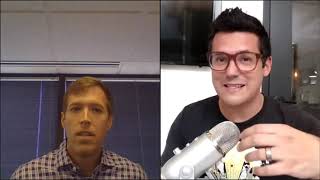
In this industry interview, moderator Greg Coticchia (Speaker A) talks with Steven Schneider, CEO of Logi Analytics, about his unconventional journey from a product manager to a chief executive and the lessons product professionals can draw for their own career advancement. Schneider shares how he set an early goal to become a CEO by age 40, deliberately pursued a breadth of roles across unrelated industries, and leveraged sales experience to build a strong customer‑facing skill set. He explains the transition from product to executive leadership, emphasizing the need to master finance, accounting, and SaaS metrics (ARR, ACV, COGS, EBITDA, retention) and to develop people‑management capabilities that go beyond influencing without direct reports. Schneider outlines common pathways for product people into executive tracks—sales engineering, professional services, technical account management—and stresses the importance of asking “why,” adopting a company‑first mindset, and staying close to customers. He describes how Logi educates its product team through CFO‑led metric workshops and transparent access to bookings data, while also noting common traps such as avoiding ownership of cross‑functional problems. The conversation touches on the popular notion that a product manager is the “CEO of product,” the differences between small and large organizations, and how product leaders can help CEOs appreciate product‑level metrics. Finally, Schneider highlights Logi Analytics’ focus on embedded analytics and its annual State of Embedded Analytics report as resources for product professionals.
Chapters
I was excited for this session because a lot of our sessions in the past, you know, they're on how product people can improve themselves right now, you know, in their role as a product person. This session, we're looking ahead a little bit because for many of us, we aspire to be more than that product person we are now. You know, maybe we want to be in an executive role later on. And so that's exactly, you know, I know what you've done, Stephen. You were a product person. You are a product person. But, you know, now you lead a product-oriented company. And so I thought we could dig in on that. And I will say for everybody else first, if you have questions for Stephen throughout this entire industry interview, there's an ask a question section right at the bottom. And even right now, you can start to load that up with questions. I have some for Stephen. Thankfully, that Stephen will be able to hear now instead of me having to type. But I would love to take in your questions. So I'll be monitoring that throughout. And so please load up that ask a question section. And then there's also the chat, which you've been using. That's a great way to introduce yourself, to share where you're from, what product you're working on. And this session will be recorded, so you'll be able to go back and review all of this if you want to. But yeah, thank, thank you for joining us, Stephen. And I thought maybe if it's okay with you, maybe we could just start a little bit about, about your path, you know, from being in product in general, but to now, you know, as an executive. And that might help, that might help others sort of understand the context.
Sure, happy to talk about that. And that's to say, I can't say that my path is the same path that a lot of people are going to follow. It's interesting when we think about looking for additional PMs internal to the organization, we tend to look at the technical field as a place to kind of start and people moving in from that trajectory. And that wasn't really how I started. But let me take a step back and talk to you about my path. So I was pretty goal-oriented when I graduated college. I had a degree in computer science. And I knew that at the time, while I was gonna be, I could be a decent programmer, I could be pretty good at being a computer programmer, that wasn't really my best skill set. My best skill set was kind of understanding bigger picture and working with people and communicating. So I actually set a goal for myself when I graduated college that I wanted to be a CEO by the time I was 40. And then I kind of laid out a plan that I wanted to follow along that trajectory. So in my 20s, I focused on getting as much breadth of experience as possible. So every job I took, I said, I wanna take a job that's completely different from anything I had ever done before. And that was kind of my mantra throughout my 20s. So I worked in a casino, I worked in women's healthcare for a while. I moved to New York City having never been there before and worked there. I worked in Europe, I went and got my MBA and every job was completely 180 degrees different than the job I had done before. I then took on some sales roles and that was really helpful. And I would say that was probably the most helpful experience I had in helping me both in my product role as well as in my role today. CEO, working with prospects, understanding how to position products, handle objections, build relationship, prioritize, manage time, all those sort of things. It was a really good skill set that I developed. So after my 20s where I focused on breadth, I said, my 30s now, I really wanna understand how to run a business. So I'd actually started a small business or a small company in my late 20s, early 30s and realized I didn't have the skills to really scale it. So I went to work for a company that I thought would give me that experience. And it was a small $5 million business. And I ended up getting thrust into a lot of kind of general promotions over the years that I was there. So I had the opportunity to run marketing, to run sales. I ran product for 3 years. And that was probably the area that I felt like I was the closest to my kind of background and skill set in. And then eventually moved to COO and then eventually CEO 23 days before my 40th birthday. So that was my path. Did it.
You, you, you met that goal that you had, that you set.
Well, now I get, I get asked a lot, what's my goal for my, when I'm 50? I'm 43 now. I actually don't know what that goal is. It's actually a little bit interesting. I've never been at a period of my career where I haven't had a goal, but I will say that I think it probably has a lot more to do with family than it does with career at this stage.
Yeah. Makes sense. Is it, no, so you're, you mentioned before, I mean, your path is unique to you and everybody's going to have their own path. Is there— are there other sort of, you know, maybe common paths, you know, going from product person to executive, or, or does it really just run the gamut? I mean, what's your take on that?
Well, no, I do think there are probably common paths. Like I said, when we look to— so often from a product management standpoint, while we do bring in people externally, we also look internally. And some of the things that we look for are who has the technical aptitude or experience, I should say, to understand our customer and who has been in the field working with the customer, who's the closest to the voice of the customer, to understanding the problems. And those are people that will typically try and— or we may try to move into that kind of product management function because they have that field experience about what works, what doesn't work. And with a product like ours, which is really a platform, it's more of a development platform than a canned configurable product, the nuance of how something's implemented and the little details are really, really important. And it's hard to know that until you've been in it. So Sales engineering, professional services, technical account management. Those are really good areas to potentially move into a more product-focused role.
And, you know, thinking back to, you know, now again, you're an executive at a product-oriented company, but back when you were that product person and going from then until now, what's your take on why a product person might make for a great future executive? You know, are there certain characteristics or or maybe common skill sets that stand out? What comes to mind for you?
You know, there are, and it's interesting. When I was in sales, it was very clear what was success and failure, and you worked in a certain timeframe with a defined end. Product is a job where the right answer is very amorphous sometimes, and you have to kind of balance value, feasibility, usability. You have to deliver something that solves a problem that in theory people will pay for. You need it to be delivered in chunks where each chunk adds value so you can test that, what you have, and validate it. Like I said, the customer has to ultimately want to use it considerably more than what they're using today. There's a lot of unknowns in that. You have to listen, understand the multiple points of voice, and you have to come up with a solution that addresses all the different constraints that you have. It's really a big multifaceted problem and you need to have a really broad context. It's not only just about the product you have to create and what problem you're solving, You have to think about how do I bring it to those people? How is it going to be messaged and marketed? How will it be sold? How are the incentives aligned for the people that have to sell it? Are they going to want to sell it? What are the economics of the sales channel? What are the economics and support infrastructure that you need to put in place once you have delivered to make sure people are successful? It's this broad contextual thinking, this broad thinking that you have to have, and it's, it's, it's understanding that bigger picture, understanding all those points of views and synthesizing that solution. That's the same thing you have to do as an executive. And frankly, as you move up from an executive where you're crossing multiple functional areas, it's even more important to understand how those different functional areas are going to interact, how their incentives are aligned, and frankly, the challenge that they have. So a lot of the same characteristics as a product manager, good product managers have, are the things you need to have to be successful as an executive.
Yeah, I, you know, I want to take an audience question because one just came in. And by the way, just as a reminder, Keep those coming in because I'm sure your questions are gonna be better for Stephen than mine. So, um, for my own sake, that would be, that'd be an awesome thing, um, and, and it'd be a good opportunity to get to learn from Stephen. But the question is, what was the biggest, um, for you anyway, what was sort of the biggest skill change from product person to now being an executive, uh, that you had to kind of take on?
Yeah, so that's actually a really easy question for me to answer. So it's really about understanding kind of the finance, accounting, and operations aspects of the business. In product management, I had a sense of, you know, what my sales needed to be and what my win rate needs to be. But having the understanding of things like COGS, EBITDA, how expenses are allocated, SaaS metrics like, or term contract metrics rather, like ARR, ACV, retention rates. Those are the things that like you use to manage and understand if you have a healthy product line or a healthy business. And they're critically important. And those metrics are different depending on what your strategy is. So you need to understand, is, is this a product that you're at product market fit? And if so, what are the metrics that you're gearing to? Is this a product that's past product market fit into growth stage? Okay, what's the level of investment I can put forth into at that stage of the business? And how do I measure and manage that? Or maybe this is a product that is kind of in maturity and you're in maintenance mode. And you need to think about how am I going to constrain costs in the long run? So understanding the overall business objectives of a product line and then understanding what are the metrics that you need to measure to are going to have impact on how you price, how you package, how you're performing, all that sort of stuff. And all too often when I talk to PMs, they think about, well, how it's selling and they think about what they have to do to develop, but they don't necessarily understand the bigger picture of how it fits into the overall health of the business. And that's an area I've learned a ton about. And I'd probably say I spend a quarter to a third of my time now thinking about and modeling and tracking those kind of top-level company metrics that all flow through down to the product level. And we spend a lot of time here trying to educate product management team on those kind of metrics. But, you know, that's a skill set that is critically important. I frankly don't see a lot of people have.
Yeah, I think that's great. And it kind of— I mean, I know one of the questions I was going to ask you is whether there are skills that maybe product people overlook that, you know, would be very helpful for them to become that executive. Is that really it? Is it those, those sort of, you know, the more of the business acumen type skills, or are there other things that product people are overlooking? What do you think?
Yeah, I'd probably add one more to that that comes top of mind, and that's kind of the people management, people skills. I mean, often PMs have a lot of responsibility to influence, but they don't necessarily have a lot of direct reports. And so things like being able to give positive and/or critical feedback. It's just not an experience a lot of people have until they've managed large teams, right? And, you know, how do you work with an underperforming employee? How do you interview and hire? How do you decide how to, you know, make changes if you don't have the best team that you need? Again, when you're in a role where you don't necessarily have a lot of direct reports, you just don't get that experience. And that's the sort of thing that you can read in a book, but until you've done it 10, 20, 30 times, it's, it's a skill set that you have to develop.
Is there— I mean, for, for your team right now, and this is kind of stemming from audience question, the audience question is, what are some of the resources you use to better understand the product metrics or educate your PMs? And so I'm curious, you know, do you kind of— do you try to coach your product people up to, to think bigger, almost like think like an executive? Or because that's a, it's a Tough thing. I mean, they have to manage a lot already as product people, but how do you approach it more from a management standpoint?
Yeah, so there's two pieces to it. So the first is education and the second is communication/transparency. So, and frankly, we could do a better job of this, but one of the things we started doing a couple of years ago is twice a year, our CFO brings in basically the kind of key leaders in each functional area, including the product team, and walks them through the kind of six top-line metrics of the business. And why they're important, what drives them, and how we think about them in terms of our targets and related to the business objectives. So kind of understand how those top-level metrics perform. And then secondarily, the product team gets access to our bookings report, which is essentially a slice and dice of all of our sales and all a lot of those core metrics that we then share, and they have— and that team has access to so that they can evaluate. And many of the top-line objectives at a product-level team map back to some of those objectives. Now, some of them are operational metrics like win rate, others are more financial metrics like expenses or EBITDA or things along those lines. I don't have a great book to point out though, unfortunately.
No, that's great. That's— I appreciate that. I appreciate that. Um, so I can imagine, you know, some, some people that are watching this session, you know, they are that product person now, they aspire to be the product executive, and you're already mentioning some things that they should be doing maybe from here on out, you know, taking on more of those, again, like the finance skills, maybe that's something that they don't have right now. Are there other— I'm trying to think of this, particularly things that maybe people could do in the short term, like maybe these next 90 days, but also longer term, like what, what do you recommend product people do to sort of help put themselves on that track even better to maybe one day be a product executive for those that are interested in doing so? I shouldn't even say product executive, but maybe an executive at a product-oriented company like you're at right now?
Yeah, sure. So I can think of a couple. So the first one I would say is understand the why. So I'm not saying when someone says this is what we need to do, don't question them and become argumentative about it. But, but a lot of times someone in finance or someone in sales or someone in, I don't know, marketing will ask for something or say something has to be a certain way. And people say, okay, and they kind of go off on their merry way and they do it that way. But they don't actually ask, ask the why. What's the context of why it needs to be done this way? For instance, why do we need to price in a certain way or use language in a certain way to finance? Well, that may have to do with how they recognize revenue or GAAP accounting rules or all sorts of different things that if you just ask the why would be informative and you're going to be better prepared to structure those things in the future. You know, why is a particular feature really special? Well, to marketing, that may be because it's a differentiating characteristic that a lot of people are searching for and asking for, and they can help drive demand as a result of that. So asking the why is really, really important. COGS is another great example. Hey, I can OEM this particular piece of technology or resell it, and it'll be 50%, but I know I can sell a ton of it. Okay, but maybe that affects gross margin and your cost of sale is a certain point, and when you're done with commissions and sales and marketing expense, there's nothing left. So it's really not a good idea, but you gotta ask the why. The second thing I would say is always kind of think about the companies first, and it can be difficult to do that, but you need to kind of put the company's interests ahead of your own when it comes to day-to-day decision-making. And I'm not saying you have to work for pennies. I'm just saying, don't focus every day on what is best for my career, my job, or my paycheck or my workload. You need to focus on what is the right thing to do from a company perspective. And if you do that time and time again, your paycheck will grow, your workload will stay interesting, and your career will keep developing, right? But too often I see people get a little bit caught up in like, oh, if I do this, you know, my commission's going down by $200. Well, does that really matter? Or, you know, is it going to be better because you've done what's right and you're continuing to get career progression? It'll all kind of work itself out. Finance 101, I mentioned that. And then the last thing I would say, and this is something we constantly push our PM team to do, and I'd say we still don't do it enough and I don't do it enough, is get out of the office, go talk to customers, go talk to prospects. And I'll tell you, the market changes all the time. So what the prospects told you 6 months ago, they could also be talking about something else the next 6 months. And if you're not out there having those conversations, you're not hearing that information and you can be caught unaware. And it's so easy to get locked into the office, especially in PM where you're getting pulled in 18 different directions. Get out there, talk to them, understand the pains, understand if those pains are something that people actually pay money for. Very different than, I want this, I'd like to have this. That's ice cream. Everyone wants ice cream. Is this something that's painful, so much so that you will change and spend money on? You gotta understand that you can't, can't do that over the phone, and you can't do it with just a couple conversations. I just don't believe you can.
I, I think that's— those are all great advice, so thank you for that. Um, you know, one question I did have down that I wanted to ask you, you know, especially since this is a session where we're talking about product people but also becoming CEOs There's this phrase that some product people use, and I think it kind of, you know, there's some people that believe it, then there's some people that are so vehemently against it, but it's, you know, that the product person is the CEO of product. What's your reaction when you hear that phrase? I'm just curious, especially as a product person that is now a CEO, like, what's your take on that?
Look, I like the characterization. I've used it myself on occasion. I'm not actually I don't actually think that PMs often think of themselves that way though. I think all too often or not, you'll find, or at least I'll find, is that they spend most of their time in one function or another that kind of plays to their strength. Like they'll be all go-to-market and not spend a lot of time on development, or they'll focus more of their time on development while other areas remain weak. One of the things that I think as an executive, and as you kind of raise up the responsibility in an organization, you realize is that you don't actually have to be great at everything and you don't have to do it all. You need to have a broad enough context to understand enough of all the pieces. But really, it's about understanding, you know, where are these areas of weakness? Great, is everything possible? And that includes yourself. So again, when you kind of look at where you're spending your time, you need to make sure that all the different areas around What's the pain we're solving? Who is it we're solving for? How do we solve it in a differentiated way? How are we gonna bring it to market and sales? How are we gonna make sure customers are successful? That you have an A-player, a great person working on all of those different aspects, even if it's not you. And don't just get kind of mired into, this is my job and this is what I'm gonna do well, and I'm not as good at that stuff, so I can't worry about it. 'Cause when you do that, you're not the CEO anymore. You're a player of one piece. And a CEO has that broad context has to think about the bigger picture. Yeah, yeah, it's really critically important.
Yeah, great. Um, you— somebody— this is— I'm going to take another audience question here, and, and keep those coming. We have time for a couple more for sure. But this question was whether the, the path, um, or, you know, sort of suggested path or recommendations that you're making, if they would differ, uh, based on a product person that is maybe at a smaller organization versus a larger organization, especially if somebody's at that larger enterprise and you know, maybe there's, there's sort of a lot of layers in between them and ultimately the CEO. There's not maybe as many advancement opportunities. What's your recommendation for somebody at that larger organization?
You know, that's a question that's really hard for me to say because I haven't actually worked at many very much larger organizations. You know, most of the organizations I've worked with are kind of under $100 million type size. If you look at Logi, we're about a 250-person team here. So, you know, it's a decent size. There's multiple people in each kind of organization and function, but, you know, my sister-in-law works at Intel. It's hard for me to give insight as to how one would progress to be the CEO of Intel. I certainly can't claim to have any expertise on how to do that, or maybe I would have.
No, that's fair enough for sure. I'm curious, you know, your if there are maybe some sort of like common mistakes, common traps that you see product people make, maybe things that they think are putting them on the right path to, you know, eventually becoming an executive, but maybe, maybe actually be holding them back. Are there any sort of common traps that you see pop up from time to time?
Yeah, so that's not my job. I mean, and people say it in different ways. They don't always say it that way, but that's often kind of how it exhibits. It's, oh, well, you know, my job is this and this person is kind of not, not doing their job or this function isn't doing their job. Or I see a problem and it could be a people management problem. It could be someone that's unhappy because of something that is somewhat related to them or not related to them, but something that is not going to go well for the company. But they're kind of in their place like, well, that's not really my job, so I can't kind of step in and get involved. People that move up in the organizations are people that start doing that job before they're there. Saying, hey, there's a challenge over here. This person is not going to be able to accomplish what they need to accomplish. Maybe not taking ownership of solving it, but certainly letting the people know they have responsibility of it, that, hey, there's a problem and it's not going to work, is really important because sometimes they don't know. In product, I mean, look, at the end of the day, you're responsible for the success and failure of the product. I look at that from what are the business objectives. It has to grow, it has to be profitable, whatever it may be. And then you don't have ownership of any of those people, but you're going to rely on the entire organization to help you get there. So you need to get really comfortable identifying what it is that needs to work and what it is that isn't working and being able to articulate those things that aren't working in a clear and concise way. There's no putting your head in the sand on it. It doesn't work. It drives me a little bit crazy, frankly, when that happens, because you know the problem exists. The right people know the problem exists. It just doesn't get to the people that can do something about it.
Yeah, yeah, no, I, I think that's great advice for sure. Somebody did ask another question, and this isn't necessarily about the path to becoming an executive, but your role as a CEO right now, um, you're in a unique position to answer this question. The question is, how can I help my current CEO to understand product metrics are critical, you know, to, in this case, to make revenue? Um, it sounds like, you know, maybe this CEO is they're thinking of the business metrics and that's kind of all they're focused on, and maybe product metrics aren't necessarily top of mind for them. How can product people help that CEO?
Well, so I think you have to draw that line and you have to be good at communicating what that line is. So I'm going to assume inherent in your question is that— sorry, my computer is going a little bit nuts here. No, I'm going to assume what's inherent in your question is that they've been handed some business objectives, like they need to sell a particular amount of software. And, you know, they're saying that there's some underlying metrics that they have to track to drive to being able to sell that amount of software to hit a bookings goal or whatever it may be. So what I think is important is to say, hey, here are the leading indicators, or here are the indicators that I can track, and here is how those translate into the business objectives that you have outlined for me. And putting it very crystal clear. I'm not— I don't get all caught up in it has to be in PowerPoint or has to be anything like that, but but a visual diagram that says, here are the operational metrics I track, here are how those operational metrics trap to those business objectives that you care about, and I'm going to report on these every month or every 2 months, and this is how they're going to translate the business objectives. Now, you have to be right. I mean, don't, don't come in and give me these metrics and say these are the ones that are going to translate and then have them go up and to the right or whatever the direction is they need to go in, and then the follow-on objectives don't happen. Like they actually have to be real metrics that are measurable and trackable in that way. But you got to paint that picture because look, at the CEO level, we sometimes aren't in that level of details and nor do we need to be. That's your job, right? You need to be in this level of details. But if it's important for you to explain how those things work, you just got to make it very clear and draw that firm line.
Yeah. Thank you. I appreciate that. We only really have a couple of minutes left, so I kind of wanted to ask you, Just sort of to sort of close things out, what's one final takeaway that you feel like, hey, if somebody is going to sit in on this session, there's one thing you want them to walk away with and for them to be top of mind, like what would that thing be? Like what, what's that most important takeaway that you want people to get out of this?
Huh? What's the most important? Well, so again, I would— I think, I think I talked about it before and it's just have that broad context. If I look at what's helped me in that career, it's understanding just enough of each of the different functional areas to incorporate that into my decision-making. Again, we had a, we had a product that we earlier, a couple years ago, that we introduced. It was a great product, really well designed, went through all the user testing. It was beautiful. But when it came to introducing it through our sales channel, we realized that we had a problem where we had two products that did very similar things. That weren't different enough, yet one was sold at a low transaction, one was sold at a high transaction, and we couldn't sell it through the same sales team. And that was a realization, that was a screw-up that we did. And I think that, you know, if we'd had that broader context and thought about that route to channel and kind of thought about what that challenge would have been, we could have solved for that earlier in the process. So having that broad context and thinking through that entire value chain till customer gets into production Anytime you're going to introduce something is pretty important.
Well, you know, before we do end the session, I want to say, you know, Logi Analytics has been an awesome partner for Product Collective, for industry. We've been very grateful for it. I know firsthand there's all sorts of resources that are available. You know, it's not just the great products that you're offering. There's all sorts of white papers, research reports. Can you just talk maybe a little bit about, for those that might not be completely familiar with Logi, and some of the resources you offer, just how people could sort of keep tabs on that?
Sure, absolutely. Well, you know, so I'm not sure if you're familiar with Logi, but Logi focuses in the category referred to as embedded analytics, meaning that we offer analytical capabilities sold to product managers and application teams that want to offer capabilities like dashboards, predictive analytics, operational reporting, things along those lines in the context of their application. So we have a lot of great content that we publish. We do a survey every year of product managers talking about how they offer analytics in their applications. What kind of business benefits they get out of it, what kind of feature functionality they incorporate, and then how do they package and price it. So State of Embedded Analytics is a great asset that we put on our website that we publish. And then we also do just a lot of work of interviews with product managers about how they're delivering analytics as part of their application.
That's great. Well, and I know I linked to one of those reports and there's plenty more that are available. So definitely suggest people can check those out. And, and Stephen, I appreciate you joining us. Thanks again for dealing with my pantomiming in the beginning. Of the session, uh, but love to have you back on at some point in the future too.
Absolutely. If anyone has a follow-up question that they want to email me directly, they're more than welcome to do so. Steven@logianalytics.com.
Awesome, thanks so much.
Thank you, take care.
More from Greg

Changing Buyer Behavior | A Conversation With Greg Coticchia | Tech Done Different Podcast With T...

3 Decades, 5 Marketing Truths and The Power of Perspective with Greg Coticchia and Bryan Scanlon



Changing Buyer Behavior | A Conversation With Greg Coticchia | Tech Done Different Podcast With T...

Hot Topics in the Summer Heat: Greg Coticchia's Take on Product Prioritization

The Great CEO Podcast with Pam Singleton from The CEO Project and Greg Coticchia CEO at Sopheon.

🚀 Lessons in Innovation Management and Entrepreneurship with Greg Coticchia, CEO of Sopheon


Sopheon CEO Tackles Smart Product Development Challenges on World Product Day 2021

Product Management Misconceptions w/ Chad McAllister, Host of The Everyday Innovator