Learning from Instacart's hypergrowth | Stripe Sessions 2019
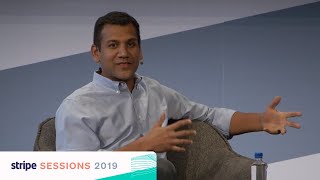
Ravi Gupta, former CFO and COO of Instacart, discusses how the company scaled to 100,000 shoppers and 80% U.S. household coverage. He explains how Amazon's 2017 Whole Foods acquisition became a catalyst to sign the remaining 98% of grocery partners, and how core values like "solve for the customer" drove decisions on speed and operational readiness.
Chapters
Hello. This is going to be awesome. If you've never heard Ravi speak or met him, I don't want to set the expectations. Ravi is really entertaining, so this is going to be great. A few things about my guest here. He has done some blue chip background type things like McKinsey and KKR, which I just think like barbarians at the gate when I look exactly like what you'd expect, not look like a kkr. And then made actually a pretty amazing move to Instacart, what, about four years ago.
That's right.
Originally as CFO and then became CFO and coo, which we're going to get into. I think there's something about foxes and henhouses in there that we're going to talk about. And we're thrilled at Stripe to work with Instacart. We've worked together for a long time, but mostly we're going to talk about scaling fast. And before we jump in, maybe just a little lay of the land on where Instacart is now, so folks, get a sense of the scale.
Yeah. So Instacart, I don't know how many of you guys use it or if anyone uses it. If you don't, you really should. It's a wonderful product. We think of ourselves as the best way to get groceries from your local store to your door in as fast as an hour. And now we started seven years ago. Our founder is a guy called Apoorva Mehta, who was a software engineer from Amazon. And he couldn't get. He could get everything he wanted delivered except for groceries. And, you know, instead of doing what most of us would do in that situation, or certainly what I would do, probably not this group, which is sort of, you know, lament about it. He decided to build a grocery delivery company and he was the first customer and the first shopper. But now we're doing billions of dollars of sales. We have millions of customers and hundreds of retail partners. So. And we have. We just crossed a thousand employees.
Wow.
And we have over 100,000 shoppers.
So it's over 100,000 Instacart shoppers.
Yes.
Seriously?
Yes.
Wow. And then I read that 80% of households in US and Canada can get service from Instacart.
Yeah, there's some cool stats. So 80% of the US and Canada, just like you said, can get service from Instacart. And also we have a really diverse Shopper Base. 75% of our shoppers are women. And it's a pretty interesting thing where a lot of times people think that It's a coastal phenomenon, but 85% of our sales happen outside of New York or San Francisco. And so it's amazing. It's busy people.
Yeah. Well, working mom here, I can tell you, Instacart, as I've told Ravi, makes the guilt goes away. And I can get healthy food but not have to go get it myself.
Our family using Instacart is the reason I'm there. It's the same thing, which is it gave us a lot of time back with our kids, and that was as good of a reason as I could ever think of to spend time somewhere.
So in 2017, Amazon purchased Whole Foods. Did you know that?
Did you know? Yeah.
And that was probably like, an oh, my God moment for you guys. I would love for you to turn back the clock a little and talk about what that meant and how you all reacted to.
Yeah. So they announced it at 9am Eastern, which, of course is 6am Pacific. And so I woke up and I saw 263 text messages on my phone. Now, I am not Patrick or Claire or Will, who probably has 263 text messages all the time. So that was a very alarming thing. And I was like, who died? What happened? And they were all like, did you see? What about this? What about this? What does this mean? And people I hadn't talked to in a long time, I'm like, why would this be the first response? But my favorite text on that day was from my mom, and all it said was, are you okay? And I think that that probably summed up people's wonders about, like, what does this mean? You know? And it. You know, I think a lot of people honestly thought Instacart, you know, was gonna be no longer.
I was a little worried, to be honest.
And, you know, Whole Foods was a really big partner. And so it was, you know, it was definitely a big deal. But we had an all hands that day. I learned a lot from the way Apoorva handled that. It was pretty cool where we had an all hands at 10am that day. We talked about what we were going to do going forward. And interestingly, I think we found it as a moment that we were going to remember no matter what. Right. It was going to be a moment that informed the future of the company. Yeah. But what I'm really proud of is that basically there's not a lot of mystery, but it made our product better. And the reason it made our product better is because it got us all the grocers in all the rest of the country that weren't on Instacart already. And it made sure that E Commerce was a thing. And if you think about it, and most people don't know this, but whole foods is 1.7% of the US grocery market. So it's a tremendous grocer, and we have all the respect in the world for them. But effectively, that's a pretty small portion of where people buy their food. And so we got most of the rest of the 98.3% to join us as a catalyst. Huge catalyst.
And it was a huge industry catalyst.
Yeah. And is anyone in here from Florida?
Okay, I see Florida right there.
In Florida, the place you shop for groceries is Publix. If anyone's in here from St. Louis, you shop at Schnooks. If anyone's in here from the Northeast, you shop at Wegmans. And those grocers are the ones that joined our platform after that. And it ended up being a really good catalyst. And as simple as it sounds, it was just because it made the product better, but it didn't necessarily feel like that that morning. But I think what was cool, and I think the lesson we learned was we had no idea that was going to happen. But when you're helping lead a company, your job is to make it work. Right. And we found the good in it. And it ended up being, knock on wood. I mean, the story of Instacart is still being written, but so far it was a trajectory changer in a good way.
Talk about, as a leader at the company, did you personally get involved at that moment as sort of you all had to react? Were you talking to Publix and Wegmans or what was your role?
Oh, yeah, Yeah. I think that one of my favorite things about Instacart is I think that we do band together. Right. And I think I really love my colleagues and I, you know, believe in them. And I think that at that time, the titles didn't matter. Right. It wasn't about what you were focused on. It was about doing what was best for the company. And what we had defined as what was best for the company then was two things. One was signing every grocer in North America to join the Instacart platform. And the second one was really adding Instacart Express members. So the, you know, I'm sure you're a member, but people that spend a fixed fee and then get all their deliveries for free. And so all of us were on those two teams. Every Friday, we had an all hands. We talked about how many Subscribers we had, we talked about the progress on every grocer in, you know, our Slack channel was filled with pictures of us in middle seats taking pictures, you know, talking about where we were going. Grocers are incredible companies, but they're in some places that are not easy to get to. And so we spent a lot of time in, you know, Lakeland, Florida, and in places like that, but all of us were all hands on deck. And, you know, the stat that's interesting is there's $850 billion of groceries sold in North America every year. And that's not like Silicon Valley math, where people come up with everything can be a trillion dollar industry. It's literally like if you just add up all the places and all the grocery stores, it adds up to 850. Before Amazon bought Whole Foods, we had less than $100 billion of partners. So, you know, not that many. Right. And in the year following, we added $550 billion of the remaining, you know, 750. And so just that was the work of the whole team.
Yeah. So you got a shout out from Jeff Jordan, you Instacart. But Ravi, really, you.
Of course.
We did a podcast on Marketplaces, and Jeff talked about how impressed he's been with how quickly you all have scaled, meaning all of these grocery stores, the 100,000 shoppers, the organization, over 1,000 people. Let's talk about what that took from you personally for the company. How do you do the hyperscale thing and still be here smiling and chatting to me like a normal person?
Well, I don't. Claire doesn't want me to tell you guys this, but, you know, it is true. On when I was. When I joined the company, I joined as our cfo, and I was lucky enough to take on COO nine months in. And I promise you, after my wife, after calling my wife, the first person I called was Claire. And I asked, can I come see you? Because I wanted to learn from how you guys did it. And, you know, so the first thing I would tell you is we learn from our friends and mentors, and I, you know, I mean that with all
my heart, reach out and you ask.
Yes.
Which I think a lot of people forget to do when you're busy.
Yes. And you ask a question of, like, I don't know what I'm doing. Can you help me? And I think that, you know, I learned a ton in that. I think that there's a few principles that we tried to use at Instacart. You know, whenever something is going to change, we try to lean on our values. Right. And so we have five values. I'm very proud of them. We've worked very hard on them. Our first one is solve for the customer. Right. And it sounds so simple, but it is hard every day to solve for your customer. And what we have is a litmus test under each one. That's just a pure yes, no question. And if the answer is no, stop doing what you're doing. So the question we had there was, is what you're doing best for the customer? And if the answer is no, stop. And so the interesting on scaling for us was we wanted to scale more quickly than we did. We wanted to go from six cities, you know, one city to six cities to 18 to hundreds. We were ready. You know, we had a product that the customers that did use it really liked. We had a high NPS score. We had, you know, grand ambitions.
Yeah.
But the reality was our customers in the geographies that we'd scale to, we didn't have a product that was ready for them because we didn't have the grocers. Right, right.
And so marketplace, supply, demand issue.
Exactly. And so as a result, our product wasn't ready for what we want. So the first thing I would tell you that was cool about one of the lessons for us for scaling was it's not when you want to scale, it's when your product is ready to scale. And so that was an interesting lesson. I think the second thing for us was we added a ton of people and we added a ton of team members. For us, we've made the choice, and we could be wrong, but we really believe in homegrown talent. We believe in that a lot. Because if I go back to the values, those are people that they know they represent what we believe is important. And so we really try to give young people opportunities that they wouldn't otherwise have. I look at my own thing, and I had never done the job that I was given, but I think that we're a place where we want to give people a chance, and we want to give people who have been around a little bit of a chance. So we've invested in that. And then I think the last thing was in terms of the shoppers, we went from 8,000 shoppers four years ago to over 100,000 now. And what we tried to do was we tried to listen and we said, okay, well, what do people actually want? Well, what they want is a seamless way to get on the platform. They want to have full flexibility, and they don't want to have to go through a bunch of hoops in order to do it. So we really streamlined the onboarding experience for the scaling. But, like, we had a lot of challenges along the way. So the only thing that we tried to do there was we really just tried to be honest about our challenges as well as the things that were going well.
I feel like, for me, if you ask me, like, what's the lesson you always learn is more listening and more communicating.
Yes.
Internally, with your partners, with your stakeholders. And it's hard when you're running really fast, but the listening and the communicating helps the org get through it.
Totally. And I think that. I don't know, like, part of the reason I think that I like talking to you is because it's okay to say we don't have all the answers. Right. And I think that with their company, we had to do the same thing. There's, you know, many mistakes that we've made, but our company, one of the things I believe firmly is people massively overestimate, you know, risk and that what I believe is you can make any mistake as long as it's not a mistake of integrity. I think people forgive you for any other mistake because it's like, oh, I didn't know. I now will do better. And they don't forgive you, as they shouldn't, for a mistake of integrity. And, you know, we made plenty of mistakes, but I think if the team was, you know, very gracious with being. Letting us have those.
So let's talk about your career a little bit. Great training, but you'd never been a cfo.
Yes.
And then you became cfo, and then you'd never been a coo, and then you became the coo. How did that. How did you learn? How did you do that? What would you attribute your success to? You said you talked to people. You got advice.
Well, I'll tell you guys a story, which is that. And I. I promise word for word that this is true. My parents claim or tell me that they never got a bill for my birth. So there's a scenario. Maybe the answer is just luck. I don't know.
You were a free baby.
Yeah. I also. I don't know, guys. I look like this and Will looks like Will. So maybe I'm just getting paid off for that, too, because I don't get to look like that. So maybe I get to be lucky professionally. So I don't know. There's any number of reasons, but, no, the largest team I had managed at KKR before I got to Instacart was two people.
I thought you were going to say five.
Yeah.
Okay.
Sub five. Two people. And I'm not 100% sure I actually manage them if I really think about it. So it was an adjustment, but there was a couple of things that I think happened. One, truly, there was luck in that. When I met Apoorva, he had actually met a lot of other people for the role, and I think that they were much more typical.
Yep.
And I think that, you know, he really showed a lot of, you know, recognition.
Someone took a risk on you.
Yeah, someone took a risk on me. And, you know, he and I had good chemistry. He knew I really used the product a lot. Right. You know, our family used it a ton. The first question I asked him was about adding smart and final to the platform. And so he knew, you know, that we really. We got it right. And he knew I was enthusiastic about it. And I think that our board and, you know, our board still to this day is actually only three people. It's Michael Moritz, Jeff Jordan, and Apoorva. And I think that they were encouraging of, like, look, if you believe in somebody, take the risk. And so he gave me a chance. So truly, like, there is no path unless somebody decides to give you the chance. And then, honestly, Claire, I really think that, for me, you asked about the dual title thing. I think one of the things we expect of CEOs is for them to always put the company first and that their team is the whole team. Yeah, right. I don't think that should be something we expect just of CEOs. I think that should be the expectation for anybody who works in a company. And so whenever somebody would ask me, what would your team think about this? Literally, for four and a half years, every time I say the same thing. The whole company is my team. And so the CFO COO thing, like, taking on that role, it wasn't any different because, truly, the job was to have care for our entire company. And I always viewed that as the most important thing. And I think that in my limited experience, people gravitate towards people who want the team to win. Right.
But there are moments where I imagine you had to put two different hats on, because part of the CFO job, which I like your take on it, which is like, I'm here taking care of the whole company. It's not the no guy, which I think often gets ascribed to a cfo, but it is an element of conservatism and being smart about the financials of the company and the investments that are getting made.
Sure.
And I'll say, speaking as a coo, operational investments are a thing I advocate for a lot. And so then what do you do about the tension there, where you've got to put on the let's be really smart and measure our impact and ROI here?
Totally.
Where the other hat you're wearing is like, go, go, go. More grocers. More grocers.
Yeah. I mean, I think there's. I think the way we've talked about it is that, like, if you think about it like a sports team, you know, there's a head coach, there's an offensive coordinator, there's defensive coordinator, and like, you know, the CFO oftentimes can play the role of the defensive coordinator. Right. Rather than the. The offensive coordinator. I would tell you what we try to do is, the first thing we try to do is have some shared outcome that we are both. That we are all trying to shoot. And that really helps. And it helps even when I'm trying to do things on my own. Okay, what is the objective? Okay.
Because it's not your objective.
It's not my objective.
Company objective.
Yeah, exactly. It's the company's objective. And honestly, I mean, you know, you wouldn't say this, but you told me that. But it's the same point. But it's like, it's the company's objective, and then if it's the company's objective, it actually is just about best idea wins. Now, there are times where, you know, it was complex. And I would tell you that in that case, the only two things that we tried to keep in play were we tried to make the decision that was best for the team and wherever that sat. And the second thing we tried to do was on the financials of our business. I guess once we got the economics of the business right, I don't feel like the roles, they didn't really have as much back and forth. And it was something where for a period of time, we didn't have the economics right. But once we got those right, the best answer for us now is to scale. And that's it. With the COO hat on. Everybody aligned, CFO hat, CEO, cpo, anybody?
Yeah. How long into your time do you feel like it took to get those economics right?
Well, so I guess I'd start by saying, and this is hugely important because it's not about one person in any way. The way that the company was built for the first few years was actually the right way, even though the economics were upside down. Because what it did Was it got a product actually out in the market, made people love it. And that is actually harder than fixing the economics of a business. And I always tell everyone, and it's true, I was. I'm glad I wasn't hired into the company into the first few years, because I would have been absolutely hurtful because I would have brought a perspective of like, no, we needed to do this. We need to have the economics look like this.
What's the margin?
Absolutely. And it would have been the wrong answer, because the only thing that mattered there was getting a product that people would love. And, you know, Apoorva's brilliance there, truly, along with the rest of the team, was that's what we have to do. And so the company made a decision shortly after I got there that we needed to fix the economics of the business. And that took 12 to 15 months of very real work. But one thing that was really cool was I learned a lot about the way to work with a team, because the language I was used to was like, we have to improve the margins of the business. That doesn't motivate anybody. That's not interesting.
It motivates certain people.
Yeah, exactly. Yeah. And, you know, and you can get frustrated because you're like, well, why? Why don't people care about why aren't
people rallying for margin?
Yes. And like, that's not the thing.
That's not that.
That's not the thing. Right. And so I think that asking the right questions. So for us, one of the things that ended up happening that was a big impact for us was we needed to make our deliveries go faster. Right. Well, I know that each minute of productivity, each minute faster that a delivery goes, is worth 22 cents of gross margin to our bottom line. Right. But what really matters is that one of our, you know, part of our vision is to give people back their time. Right. So we're actually aligned, Right.
Customer experience.
Customer experience. We should be able to deliver it to people faster. Our shoppers want to do as many orders as they can. Right.
They get more money.
They get more money. We want to give them back their time. And so our job is to do that. And so we got everyone T shirts that say every minute counts. And all of a sudden, that's actually one of our values, because we really believe in urgency. And I always joke that my T shirt, instead of with every minute counts on the front, should say on the back. Exactly this much.
You were measuring it, but you found the motivating, rallying cry.
And now to this day, you'll have people in our hallway high fiving because they got a minute out of a delivery, because they gave a minute back to somebody. And I think that that is something that's pretty cool.
So tell me the biggest risk you feel like you were part of taking in the last four years at Instacart. Maybe now it looks obvious, but maybe then it really felt risky.
You know, I think that. Let's try to think. I think the day that Amazon bought Whole Foods, I think there was a lot of smart people who told us that we were on a fool's errand. And I think that there was a lot of different directions the company could have taken at that point. And I'm proud that it took three hours in Apoorva's office for us to come up with the plan. And one of the things that I think was cool about that, too. So it was sort of the risk, Claire, to, like, just to try, right, to not give up at that moment. And I think that was one thing. And then the other thing that I truly think about is, like, the people that decided that were with us that day. You know, no one needs to have names or anything like that. But, you know, I know. I remember who was in that room. I remember who texted us that day. You know, hey, come to my house. We'll talk.
Let me help you.
Let me help you. Can I come to your office? Let's talk about this. I remember those people, and I remember the people that acted like we didn't exist for a period of time. And you realize who your real partners are. So anyway. But the risk for me was the sort of, like, at the moment, we all felt like, gung ho. This is our moment. But it wasn't obvious to the rest of folks. No.
Because at the time, Whole Foods was a very big grocer for you, right?
Yeah, yeah, they were, I guess, when. At the time, they were deep into the double digits, south of 50, but very large percentage of our business. And when they left our platform, it wasn't a register because a lot of the people decided to shop from other grocers.
Yeah, I switched over and it was fine.
See?
Yeah. Nice job. All right, so you guys have a very complex marketplace. I actually use Instacart a lot when I'm trying to describe what's really stripe does. Because you've got, obviously the consumer. You've got the shopper. Sometimes you have the driver separately from the shopper. You've got to pay the grocers, you got to pay yourselves. You got to Pay the shopper. I mean, this is complicated stuff just from the payments aspect, but actually to run all those stakeholders and have them be happy and participating. So what's the secret to getting all that operating at scale? Do you have different teams that work on the different stakeholders? Do you?
Yeah. So use a smart payments platform. Yeah, well, there's a few things I think that one, we've tried to build the things that we believe we are uniquely suited to build. Right. And I think that you guys know, it's hard to find amazing team members. It's hard to retain amazing team members. And so what we want them focused on is the things that we truly believe that we are uniquely able to do. And we think we're uniquely able to build a great front end e commerce experience and a great enterprise experience for grocers. We think we're uniquely able to fulfill really efficiently. We don't outsource any of our fulfillment.
Yeah.
We think we're able to, you know, onboard shoppers and give them a great experience, you know, all that. We don't think that we are, you know, as well suited as some other folks to sort of, you know, have the payments infrastructure for that entire thing. And so the fact is, we've been with Stripe since I think literally the first day when we were in like, you know, one city delivering probably just to Aporva.
And now it sounds like he was shopping and buying.
Exactly. He gave himself a good tip, you know, the first time. Yeah. And now, you know, billions of dollars, millions of customers, hundreds of thousands of shoppers, hundreds of cities, hundreds of grocers and we're still with you guys. And I think that, you know, which
we've had to work to keep up with you. I mean, this is a real partnership. We built some things together and learned some lessons together.
When I think that one of the things I think about, I think about instant cash out. Right. Which is something that's an innovation, you know, of like, you know, our shoppers, you know, they don't get paid every two weeks. This is the, you know, it's a flexible job, you know, and sometimes it's
a lot of part time job. Yeah, I definitely have had some students delivering my groceries.
Yeah, absolutely.
I will say that.
Definitely over 18, of course.
Totally.
But of age. But one of the things shoppers told us was I love shopping for Instacart, but I want to be able to cash out much more quickly. I want to be able to. If I want to buy something right now, I want to be able to do that, well, that's something that you guys were building. And I think that it was something that we could roll out together, and it makes a big difference. We saw points of NPS improvement with shoppers. We saw retention improvement from that feature. And I think that's a big deal.
And for us, it's lucky because that's. I mean, you heard GitHub talk about this. There's a version of people wanting to get the money they earned faster that is transferable across lots of marketplace environments. And if we can help you build the version for you that makes your shoppers happy, we're happy when it really
allows us to focus. I mean, one of the most important things we believe in is that. But the other thing, Claire, I think about is alcohol is very complex to sell. Right. There's a set of Byzantine regulations, state by state, you know, and the interesting thing is, I'll tell you. And like, this is one of the lessons we've learned, you know, and just because it's not always sunshine when you work with somebody for seven years. Right.
Oh, we could have partnered better.
Yeah. And it's mission critical. But the thing that happens is what we learned was that the relationships need to be everywhere throughout the org. Right. If you're going to have something that's mission critical in your business and you're going to have a partner that you do it with, that means it's not just the technical folks that have relationships. It's not just the business folks that have relationships. It's the legal folks that have relationships.
Everybody's got to be able to talk. The risk teams have to be able to talk.
And what we screwed up on was we didn't have enough foresight together on, like, okay, what exactly are we going to be doing? Because we're a nimble, We're a startup, but all of a sudden we got to do stuff together. And I think that now we've made it through that. But we've learned a lot of lessons about how to partner. Because I remember, well, we basically, you
and I had a lunch at one point, and I said we should have been talking about our roadmaps a little farther out and a little more in detail with the right people in the room.
Totally. The other thing that's. I mean, it's a very interesting thing about, I think, both of our businesses, in my judgment. But like, if you don't get somebody's groceries. Right. They're very upset.
I once got that one banana. Yeah, yeah.
And like, people. People really, you know, they. And you Know, it's like a high standard, but it's good because that means that you matter.
Yeah.
You know, if something goes wrong with Stripe, it really, really, really matters.
Yeah. People are sensitive about their money.
Yes. And so I hope we're a demanding partner.
You are.
But it's a real partnership.
You gotta get the groceries right, we gotta get the money right. We gotta do it together.
Yes.
So you made. There's an announcement recently that you're moving to a new moment in your career. Tell me about that. What does it take to make that kind of decision as a leader?
Yeah. Well, so, you know, we announced a couple weeks ago that I am going to leave Instacart at the end of the year and I'm going to join Sequoia Capital, who is, you know, our largest investor.
Also ours, you may have heard of them.
It was a very hard decision because I love Instacart and I think that what we're doing is changing people's lives and I firmly believe that. I also love investing and I miss spending time with, you know, companies with more than one company.
Yeah.
And I. And I miss, you know, I want to help build new companies, multiple companies, and I think the reason, honestly, that it made it okay was because of the strength of the team. And it is.
Yeah. You know, you've already got your successor.
Yeah. We had an internal generation for our cfo. He's excellent. He's, you know, don't tell anybody, but he's basically been the CFO the last four years, too. He's amazing.
That's how you're the CEO.
Exactly. That's how we do it. And, you know, I think we'll hire an amazing coo, because the business, you know, it's amazing, is a business that means something to people.
Well, I think, Ravi, the thing that comes across, I hope everybody experiences with you is you're a person who really cares, not just about the economics, but the people and the organization and being a high integrity leader. So actually, I welcome more of you in the investing community and I'm thankful to all the work we've done together. I look forward to continuing it. But congratulations on Instacart and all you've accomplished and on moving around in your career. We all do it and it's great to take those risks.
Thank you.
Thank you for being here.
Thank you. To strike everybody.