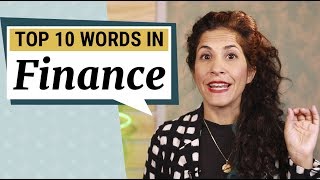
A short instructional YouTube video by Hadar Shemesh that teaches correct American-English pronunciations for the top 10 commonly mispronounced finance words. The speaker breaks each word into phonetic parts (consonants, vowels, schwa), explains stress patterns and articulatory tips (aspiration, dark L, flap T), and contrasts correct pronunciations with common misspellings or misreadings. Words covered include: capital, debt, cryptocurrency, blockchain, bankruptcy, stock market, equity, mortgage, forex, and shareholder.
Chapters
Hey, guys, it's hadar. And this is the accent's way. Today we're going to talk about how to pronounce the top 10 words in finance. Ready? Let's go. Capital. It's a K sound. And then the A as in cat. Ca. When the k appears at the beginning of words, it's aspirated, so it feels like there is a little H right after ka. Then we have a P sound and then a schwa. Ka. P. It's not cappy, but ka. P. And then finally we have a flap T that sounds like a D and a dark L. Dole. Dole. The dark L is created here, so it has this really deep dark sound and kind of weird ol D. Capital. The ka is the primary stress, so it's longer and higher in pitch. Capital. The next word is debt. That's an easy word to pronounce, but is commonly mispronounced because you got it of the spelling. So we start with the D sound, then it's the E as in red. Drop your jaw just a bit, but the tongue is still rolling forward quite a bit. And then we end it with a held T. Debt. Debt. There is no B, although there is a B in the spelling here. We just disregard it and pronounce it as debt. I mean debt. I'm out of debt. Let's be positive. Debt. Cryptocurrency. So let's talk about currency, which is an important word on its own. Currency. It's the K sound, then the R, as in stir. So technically, you want to think of it as if it's a K and an R together. Cur. Cur. And then you relax your tongue and mouth and energy to a schwa. Curan. Run. And then close it with an N. Curran. And then again finish it up with C. Currency. Currency. Before that, we want to add the crypto. Crypto. It's a K sound and then an r. Ker. And then you move on to the sound, as in situation, not creeped, but crip. Crypt. Somewhere between E and E. Crypt. And then close it with a P and a T. Crypto. The T opens up to the O, as in go. So again, Crypto. Crypto. Cryptocurrency. And every syllable has a different note. Cryptocurrency. Cryptocurrency. And if we're talking about cryptocurrency, let's talk about blockchain. It's a B sound that shifts to the L sound. Bl. Make sure that the tip of the tongue touches the upper palate. If you don't have the l in your language. You may be saying something like brock. Chain. And then it sounds like an R. No, you gotta make sure that the tip of the tongue touches the upper palate. Bl. And then drop your jaw to the ah as in father. Blah, blah. Close it with a K sound block. And then move on immediately to the ch sound, as in chicken. Blockchain. Don't add vowels in between. You need to connect the K to the ch Block. Chain. You can kind of like hold abruptly the K sound. Blockchain. But not block. A chain. Don't add any vowels in between. Blockchain. Then we have the A as in day. And we close it with an N. Blockchain. The block is the primary stress. Higher in pitch. Longer. But you already know that. Blockchain. Bankruptcy. Bank. We begin with bang. It's a B sound. And then it's the as in cat. But since there is an ng consonant sound. Bang. Then the A turns more into an E sound or an A sound. Bang. And then close it with a K. Bang. Bangkrup. So you move on to the R immediately after the K sound. Bank. So round your lips for the R. Prepare for the R and bring the tongue up. Bank. Schwa. Reduced vowel. Don't open your mouth too much. So it's not. Bankrupt. Bankruptcy. Close it with a P and then see. As in. What do you see in front of you? See. Let's go to the C. Bankruptcy. Bankruptcy. Stock market. Let's break it down. You start with an S sound and then you hold it abruptly with the T. And then you open it to the oz and father. Sta. Sta. And close it with a K sound. Stock. It is not. Stock. It is not. It's stock. The stock is the primary stress. So it's going to be longer and higher in pitch.
Stock.
Then we have market. Market. We begin with the M sound and then the R as in car. Technically, it's the father vowel, but a bit more rounded because it has the R right after mar. Mar. Notice that you're not bringing the tip of the tongue high up too soon. So it sounds like market. But mar. You want to divide it into two steps. Mar. And then you close it with kit. It's a K sound, a schwa, a reduced vowel and a held T. K. Stock market. Stock market. Stocks. Stock market. Equity. We begin with the E as in red. And then it's a K sound and a W immediately. Obviously, there is a schwa there. So it's a really relaxed vowel. All right. So not equa. Di. Ekwa. Flap. T. And then a high E. D. The. The Equity. Equity. Primary stress on the first syllable. E. Equity. Mortgage. Mortgage. Here we have the M sound, then the or, as in for round your lips, for the O. But keep your tongue down so it doesn't go up too soon for the r more. Then you drop to the R more. And. And then the second part is goodge. It's a g sound. And then the. The T there is silent. It doesn't really exist. Only in the spelling. More like gimme More. More. And goodge. Goodge. Goodge. Mortgage. Mortgage.
Forex. Forex.
We begin with a F sound. Then the or, as in for four. Four. And then rex.
Rex.
So we have a primary stress and a secondary stress.
4X. 4x.
The R sound is a strong R because it opens up to a vowel. And then the vowel right after is the as in red. Rex. And we close it with a K and a S sound one after another.
4X.
Make sure you don't drop any sounds at the end so it doesn't end up sounding like fork. That's a different word.
Forks. Forks.
Shareholder. Shareholder.
Two words with two long vowels in the middle. So you got to go slow on this one. We begin with the first word, share. It's a sh sound. Then the air, as in there share. You want to make sure that the sound is clean so it doesn't sound like sheer shair. Share. That's the primary stress. Then we have the word holder. The O here is the O as in go. So it's not holder. Holder. But you do go through this nice diphthong starting from. And then closing to an oo. Ho, ho. Make sure you pronounce the H. Share. And then we have the dark L. It's dark because right after there is a consonant, it's the D sound.
Share, whole.
So we're starting to create this tension.
For the L. Share, whole.
And the dark L blends in with the O as in go.
Share, whole.
And then we ended up with der. Der.
Der.
A D sound. Schwa. R, which is technically Dr. Der.
Shareholder.
Think of it as if it has three parts.
Shareholder. Shareholder.
Okay, that's it. These were the top 10 words in finance and how to pronounce them. Now it's your turn. In the comments below, write a sentence with one of the words that we discussed today, or two sentences or three sentences, because, remember, practice makes better, and that's the only way to learn. I hope you enjoyed it. If you did, consider subscribing to my channel, because more fun videos are coming your way. Have a great week, and I'll see you next week in the next video.