10 things I LOVE about being a non-native speaker
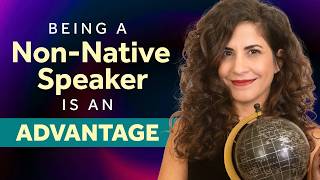
Language coach Hadar Shemesh, a Hebrew speaker who moved to the US and now lives in Barcelona, shares ten reasons she loves being a non-native English speaker. She argues it's given her multiple linguistic personalities, deeper empathy for learners, and the ability to surprise people with her perspective.
Chapters
Today I wanna do something slightly different. If you've been following me, you know that I always share content around helping you speak English with clarity, confidence, and freedom. I teach pronunciation, mindset, fluency strategies, and all sorts of stuff. Today I don't wanna focus on English. I wanna focus on you, and I'm gonna do that through focusing on me. Because today I wanna talk about the 10 things that I absolutely love about being a non-native speaker. And here's why I wanna talk about this. When I first started learning English or using English in my day-to-day life, when I first moved to the US, I was embarrassed by the fact that English was not my first language. I hated when people asked me where I was from. I hated when people commented on my accent. I hated it when people made fun of my pronunciation or words that I used or phrases that I used incorrectly, cuz that was the case when I was 20 and I started exploring English be— before I did the work that I've done to be here and teach you the things that I know. And when I started teaching on YouTube, I never shared that I was a non-native speaker because I felt that it was a sign of weakness, of inadequacy. And it took me years and a lot of work and effort to recognize the value in me being a non-native speaking teacher, teaching you these things, and also just me being me. Knowing what I know and the fact that I happen to be a non-native speaker of English, but I own it as if it were my first language and it's a part of my life and who I am. But because I'm a non-native speaker, there are things that I absolutely love about it that I wanted to share those things with you because I want you to start appreciating the fact that you are a non-native speaker, and that 100% is a superpower because it's so easy to think like it's a deficiency, like it's not enough. Like the fact that you don't speak English like a native speaker, that means that, you know, you are less than, but that is fuck. Forgive me, but it, it is because the fact that you know more than one language is Unbelievable. And only people who speak a second language or third or fourth know what it takes to get to a place where they can communicate confidently in more than one language. So today I wanna acknowledge that, and I wanna talk about the things that we don't usually talk about when it comes to speaking a second language. So just for context, my native language is Hebrew. I grew up not speaking English at all. I moved to the US when I was 20. My English was, eh, mediocre. I studied acting, and there I have gone through the process of working on my pronunciation and speech. And ever since, I've been teaching and working in English, and I absolutely love it. And now I've been living in Barcelona for the past 2 years, so I'm also learning Spanish. I'm not fluent in Spanish yet. I understand well, I can speak, But this is a journey that I'm undertaking, so I will mostly refer to my experience being a bilingual speaker when it comes to English, English being my second language, but also as a humbled learner trying to get confident in Spanish. Okay, now if you're new to my channel, then definitely check out my website at hadarshemesh.com for a lot of free resources, or follow me on social media for daily lessons, and definitely Subscribe and stick around because it's fun in here. Okay, so the first thing I love about being a non-native speaker is that, and that's pretty obvious, I get to understand and speak with more people in a language that is easy for them. I have expanded my ability to connect with the world and to do things that I love by being a non-native speaker. If I only focused on one language, I've, I would have had a lot less opportunities. I would have had a lot less experiences in life, and I would not have lived the life that I live today. So being a non-native speaker has allowed me to live the life that I want. Simple as that. To connect with more people, to understand more people, and to do the things that I wanna do in life. That's it. So anytime you say to yourself, ooh, uh, I hated that, my English is not good enough, and I'm for the league of the— yes, and you speak a second language and that is freaking awesome and that can do so much for you if you choose to use it for whatever you want, right? You don't have to, but it's just more opportunities to connect with people, and that is incredible. You are actually in a position of power, speaking with another person in a language that is not your first language to make it easier for them so that they can speak with you. Do you understand what it means? And it's so easy to think like you're not enough speaking to native speakers, whereas you are the one holding the power. You are adapting to them. Okay, so that's the first thing. Second thing, I have different personalities. I was able to create another personality in English that is associated with who I am, with how I speak in front of the camera, with my teaching, with my strategies, with what I listen to, versus who I am in my first language, in Hebrew. And I love both personalities, and I feel like it's me. It's just like an expansion of who I am, and I'm acknowledging that I have these two different personalities, two types of sense of humor. I do. I'm funny in a different way in my first language and in English. And I love that. I love it that I can do it. It wasn't always like that, and I needed to build it up and build confidence, clearly. But where I am now, and where I believe you can be, and maybe a lot of you already are, you just need to acknowledge it, is that having— feeling differently in each language is not necessarily bad. It's something that you can think of as an advantage. You can be more brave, more courageous, more outspoken, more loud in English, for example, versus how you are in your first language. Funny in a different way, more sarcastic, right? Or maybe it's the other way around. In your first language, you get to be all of those things that you get to be in your first language, and in English, maybe you are more polite, more sensitive, more of a listener, So it's not necessarily that you are different, it's that you are expanded and you have those two parts in you that are fully expressed, each in its own language. Now, I also feel like I have two different voices, three if I'm thinking about Spanish as well. I do. I have my voice in Hebrew, I have my voice in English that you know already, and I have my voice in Spanish. And At first I felt like it wasn't ideal, but I actually love it. Like, I don't feel like it's different. I feel like it's more in, it's in the frequency of, of the language and how people speak around me. And I get to have that. And most people have just one voice, and I'm okay with that. I'm okay with, with exploring my voice in different ways. And also how I use my voice is different because intonation is different in all three languages. So in one I could be more monotone and lower in pitch. In another one, I'm a lot more versatile. And in the third one, well, I'm still exploring that, so I'm not gonna go into that. Another reason why I love being a non-native speaker is that I get to be creative without feeling guilty. I'm gonna give you an example. Um, my cousin is, speaks English cuz she was born in the US and we exchange a lot of voice memos, like really deep conversations. You know, like we coach each other, we share our experiences. I call them mini podcasts that we record to each other because of the time zone difference. Um, we don't get to talk a lot over the phone. And sometimes I go into like this deep philosophical conversation with myself and her, recording myself, and I'm like, this is such a mess. Grammatically, structurally, like I'm going in all different directions, and I'm bringing in all my knowledge from all the languages that I speak, and I let myself be in that mess. And she's following me, so we already have our way of communicating. But the fact that I do it, I invent structures, I invent words, fully aware that I'm just inventing them, but I give myself permission to be creative because I can. I'm a non-native speaker and I can do whatever I want. I don't feel guilty about it. And sometimes I acknowledge it. I was like, I just made that up, or I just invented a new structure, or I say it and then I say it again with the right structure and I'm building up towards it. But I don't feel like I need to be perfect in any way. And I love that. It's almost like permission to not be perfect. Because I'm a non-native speaker and I can do whatever I want, and I speak another language. And while things are super intuitive for me in my first language, and probably in English as well, but not as much, I get to do that. Not to mention the mess I make in Spanish when I try to explain something and I use all the different tenses in one sentence and words that don't belong there. But I'm, I'm giving myself the freedom of creativity. Now I'm talking about things that I love. Of course, it creates a whole side effect of shame and, uh, and avoidance and also, you know, like the fear of judgment and all of that. But we're not talking about that. We're just owning the fact that we get to be creative and we don't need to be perfect. Another thing, and this is probably the most important thing, is that I feel like my language journey in English and now in Spanish as well is a tremendous part of my personal development journey. Learning a language is not just cognitive, it's not just linguistic, it's a behavioral shift that you need to go through to be able to believe that you can communicate. You have to face all your demons about speaking up and about your voice and about who you are. You have to be okay with judgment. You have to be okay with criticism. You have to be okay with not being perfect. You have to be okay with standing out and being different. All the things that we don't like as humans in doing that. In English and now doing that in Spanish. For me, Spanish is like, sits on building a habit and, and being the person that I wanna be and, and being a woman of integrity. Like I tell my students to do one thing and I want to be able to do those things consistently as well. And all of those things are in my head and they're helping me be a better person. So I always tell my students that, The language learning journey is a personal development journey, and we have to overcome a lot of demons. And when we do that learning English, for example, we can apply it on so many other things that we're doing in other areas of our lives. And I think that my business is the way it is because I've learned so much from showing up in English and being consistent and being determined., and the life that I have and the habits that I have are also the result of what I have created and built throughout my life, learning how to, how to be a confident and clear speaker. So yeah, don't underestimate it and don't downplay it. You have to celebrate it and celebrate yourself and celebrate all that you've done because it is a lot. Another thing that I love about being a non-native speaker is having that deep understanding of others who speak and try to live and try to immerse in a second language. I feel my students in my body. I know how they think. I know how they feel because I have been there. I know what it's like to try to own English as a second language, and I think that learning English is different than learning other languages because there is this expectation that you need to know English, especially for immigrants. Like, oh, you need to speak English. It's a must. It could be very scary and crippling, like, uh, okay, like, versus learning other languages where you're so appreciated and celebrated for even trying. This is what I feel now when I communicate in Spanish here. Well, I'm in Barcelona, so it's a little tricky cuz there's also Catalan, but I feel like even though I make a lot of mistakes, I am welcomed with a lot of appreciation for trying. And I feel that immigrants in the US and Canada and English-speaking countries are not experiencing the same thing. So being a non-native speaker of English, helps me understand on the deepest level other people who speak English as a second language, but also who speak any other language and they try to be the best version of themselves in that language. And that affinity, that understanding is something that helps me connect to so many people without saying a word. And I love that. I love that about being a non-native speaker. I love that. I love that. I love that. It's a sense of community. It's a sense of connection that no one else gets if they're only speaking one language. No one can get that. And I see that in my community. I see that in Beyond My English Practice community where people connect and meet and, and It's almost like they already, they get it, they get each other. And that is something that only non-native speakers have. Own it, my friend. Own it. Okay. Another thing that I love is, uh, surprising people. For example, I could sit on the train and speak in English to a friend of mine sounding the way I sound, and then hearing someone speak in, in my first language in Hebrew and like, being able to understand that without them knowing that I speak their language as well, or being in the US and communicating in Spanish to people where it's not expected because I, you know, like even if I speak my first language, my Hebrew or English, like being able to surprise people by understanding them and speaking their language or just eavesdropping, which is also interesting sometimes. I, I do that as well. Uh, that's another great thing about being a non-native speaker. Another thing that I love, and I promise this list is not endless, uh, but I'll share all the things that I, that I think you should acknowledge as well, is that whenever I learn something about how I am in my second language, in English, I learn more about how I am in my first language. So when I learn about intonation, pitch, and rhythm, in English, I realized so many things about how I use those elements in my first language. And then when I started learning Spanish, that's the first thing I heard. So one thing that you'll learn about a second language teaches you so much about your first language that you usually take for granted. Okay? And since taking for granted makes it impossible for you to improve or change anything, then you are in, in a constant exploration and change that helps you become a better communicator in any language that you speak. I've worked with so many public speakers that when they worked on their lecture or their TED Talk in English, after that they would come back to me and say, you know, I feel like I'm, I'm a better speaker in my first language now because I've learned so much from that work alone. And I love that. Okay, so you can really learn and, and understand and be sensitive. The most important thing is not to be afraid, not to be timid, not to be overwhelmed by everything that English has to offer, but just to see that as an opportunity to get better at other areas of your life. Like, whether it's the personal development stuff that I talked about, about building habits and, and, and speaking up and being brave and, and, and not being afraid of judgment, or learning about the nuances of speech and your voice and how you use your voice. And take that to all the other languages that you speak. The next thing is that I get to have a different relationship with each language. There are different things that I connect with or relate to in each language that I know, mainly Hebrew and English, but starting to happen in Spanish as well. So in Hebrew, the connection is is, uh, it's deep. It's like, it's where it comes from the gut. Like it's emotional, it's immediate, it's direct, it's raw. This is how it is in my first language. That's the language I grew up in. Um, that's, you know, like that language connects to family, to core friendships. To a lot of things that I don't love about the language or about the culture, like, but it's very raw. It's very connected to my emotions. Now in English, I feel like I'm more connected to it on an expressive musical level. It connects to my voice. I feel like a lot, I'm a lot more expressive in English to me. It's the language of Shakespeare. Like, it's how the sounds are shaped and the beautiful rhythm it has that feels like it's the rhythm that I already have in my body and it's being expressed in English. So here it's a lot more, it's a lot more gentle and delicate and sophisticated and, and conceptual. And it's the rhythm that I live in. If like, that's the best way to say it. This is why the work that I do is in English and I feel super confident and comfortable in English talking about the work that I do. For example, if I need to write something or to write my thoughts, I only do it in English, right? Like, this is the, the language where I got to know myself and to have a deeper understanding of who I was or who I am. So that is where English Connect is like, it's the mindset, it's the intellectual part, it's the thinking part, it's the melody, the music. And now with Spanish, Spanish is simplified for me, first of all, because my vocabulary is limited, but Spanish for me, it's the imagery of the language. It's the simple words that go together that mean so much more than what they are. So here I'm starting to discover how, like, the metaphors and the images that simple words can create. And I'm still in a journey of exploration here. First, because I don't know the language well enough, but I also don't know all of these things that I feel exist. But there's something so beautiful about the simplicity and the richness that happen at the same time in the language. And that is what I'm gravitating towards when it comes to my connection with the language. So I get to have a different relationship with each language, and it's not a bad thing. It's not that I need to feel the same about each language. And why am I telling you all of this? Because I want you to understand that feeling different in your first language and in English is not a bad thing. It's something that you will get to love. Maybe you don't love it just yet. I have, probably more experienced learning and using the language than you. And this is why I get to say that to you. And I get to tell you that if you trust the process and if you do the work, you will get to feel those things. And also allow yourself to feel those things. Know that you deserve to feel those things. Being a non-native speaker is a, an incredible advantage. You get to have all of those things. Whereas most people don't have that. They don't have different relationships and different personalities and different voices, and they don't get to be creative, and they don't necessarily understand more people, and they don't get to surprise people by showing them that they know their language, and they don't get to have that part of having a personal development experience and journey through the language. You get to have all of that, and it's easy to forget it, and it's easy to think about all the bad things, but I wanted to tell you about all these good things and that you are on the right path. And sometimes it's just a matter of decision of saying, I'm owning this. I'm owning all the things that I feel and all the imperfections. And all the creativity that sometimes people might criticize and say, oh, it's not correct. You made a mistake. But you get to speak in more than one language, and that alone is worth so much more than the negative impact of making a mistake. That's it. I thought you might need to hear this. I don't know. I just think there is something that gets lost when we only talk about what we need to do and the strategy and the sounds and how to improve, because the whole thing of being a speaker of more than one language is kind of remarkable, and I wanted to say that. Thank you for coming to my TED Talk. I'm kidding. Thank you for being here. Thank you so much for being a part of this community, and thank you for making this world a better place by learning another language and wanting to belong in it and for it to belong in you so that you could show up as the best version of yourself. Sending you all the love, and I'll see you in the next video. Bye.
More from Hadar











Read Out Loud with me! Dare to Lead by Brené Brown | Pronunciation & Vocabulary practice