5 Fluency Practice Strategies for Teachers and Students
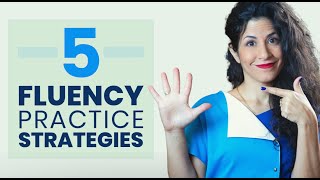
Hadar Shemesh walks through five ways to build English fluency: speak with feedback, answer a daily question on video, shadow native speakers, transcribe audio, and push past speaking anxiety. Each method targets a specific skill gap.
Chapters
Hey everyone, it's Hadar. Thank you so much for joining me today. I want to share with you five fluency practice strategies that I have been using with my students for many, many years and my coaches and teachers use with our students as well. Whether you're a student or a teacher, you want to use these practice strategies to improve fluency. If you're new to my channel, then hello and welcome. My name is Hadar. I'm an English coach and I am not a native English speaker. I am teaching sharing with you everything that has helped me reach where I am today and that has helped me help thousands and thousands of students around the world. If you want to find out more about my work and get a lot of free stuff to help you improve your English fluency, confidence and clarity, check out my website, hadarshemish.com or come follow me on Instagram at Hadar Accentsway. Let's get started with the five practice strategy strategies. So the first one is speaking with feedback. Now I'm going to talk about that a little bit. Whether you're a student learning with a teacher or whether you're a teacher trying to help a student, this is a very, very effective practice technique and it helps students build confidence. Now if you don't currently work with a private teacher, then wait till the end and I will share with you how you can do it on your own. But if you do have a teacher, or if you are a teacher helping a student, here is one of the things that I've discovered to be the most helpful when it comes to identifying the challenges of the students. So the idea is for you to speak freely about anything that relates to your life, whether it's your job, your plans for tomorrow, anything that you might be using on your day to day life, and then to have your teacher or coach give you feedback on the specific things that prevent you from sounding clear, coherent or confident. So you don't need to get feedback on every single pronunciation challenge or grammar mistake that you're making. And if you're a teacher, your job is to help the students identify the key elements that prevent them from being clear, coherent and confident. So if you're a student working with a teacher, you would want your teacher to give you specific feedback on those places where you get stuck or whatever it is that you say make you sound unclear. Or it's a very, very noticeable grammar mistake, such as, you know, saying something like he play every week instead of he plays every week. So speaking with feedback in a spontaneous, intuitive way is one of the Best practices that I have seen to help students gain clarity and confidence. Now, if you don't have a teacher, you can do two things. One, you can use voice to text so you can record yourself speaking. And when you see that it hasn't detected what it is that you were trying to say, then maybe there is a pronunciation challenge and you want to explore that. You want to repeat that phrase, repeat that phrase, repeat that phrase. You want to see that it actually detects what you're trying to say the second time. But also, and this is a really good tip, so make sure you write this down. There is a great tool called wordtune. Wordtune is a writing assistant based on AI. I'm going to link to it below. I'm not an affiliate. I just love the product. And what it does is it takes a sentence, even if it's half baked or not ready, and it really understands what it is that you're trying to say and it gives you some alternatives so you can choose from it. And this is a great way for you to see, okay, I said that this is what it suggests. How is it different? How is the grammar different? How is the sentence structure different? So even if you don't have a coach working with you, then this is something that could be helpful and it's practically free. Now. Another reason why I know this works is because in Beyond My English Practice Membership community, we have sessions of speaking with feedback and writing with feedback. The students absolutely love it because not only that, it deals with real life challenges that actually most students face. It's also super relevant to the lives of the people who practice and the lives of the people you know participating in the session. If you want to find out more about Beyond My English Practice Membership, super affordable, you can click the link below and learn more about it. The second practice strategy that I've been using with my students for many, many years is asking the students, and by students, that means you, to answer a different question every day, to give yourself three minutes and record yourself on audio or video answering the question. Every question should be totally different about topics that you don't always talk about. And here's why. Usually when you speak in your day to day life, you use a certain vocabulary like you use the same ongoing conversations. And here's the thing, you're used to speaking about something, therefore that would be convenient for you. But every time you get out of your comfort zone, getting asked about something that you don't know how to talk about that might feel challenging and then you'll Feel like your vocabulary is limited or you might just like not participate in the conversation, which is not good. And to improve that and to expand your vocabulary and confidence speaking about different topics, I recommend to take a question, a different question every single day and answer it for 3, 4 minutes. And what type of question? Just go and Google conversation topics or controversial questions and you'll get lists and lists and lists of questions to raise a discussion. And all you need is yourself and the Internet and the recorder so you can record yourself and listen back to it if needed. But you don't even have to record yourself. I like recording because you are more composed, you are more intentional when you know it's recorded. And this is why, like, that's the closest thing to speaking in front of other people without really speaking. If you want to get fancy, use video. I have talked a lot about improving your fluency through video, and I'm going to link to some of those resources and videos and episodes in the description below. The third practice technique is imitation and shadowing. Again, I've talked about that on a separate video, but now as we are talking about the top five fluency practice strategies, I really, really, really love this strategy because it helps you understand English and comprehend English on a deeper level and a subconscious level. Because you're absorbing English, you're repeating it, You' it into your body without thinking about the grammar rules, without thinking so much about the words that you're using, right? So it's like a holistic experience, and it helps you improve grammar, vocabulary, fluency, and pronunciation for sure. So the idea is that you select someone that you like, a speaker that you like, or a video or a TV show or whatever that is. You play a line, you pause and you repeat. You can also shadow it or echo it where you play it, and then you repeat it like a split second after the person speaking. If you have the script, even better, you can even take notes. It's a very active practice strategy, and my students who have been using it consistently report that this is one of the things that has really, really helped them. Again, when you join beyond these are the things that we're doing all of these exercises on an ongoing basis because, you know, first of all, you want to keep it interesting. And also you want a bunch of different things that tackle all the challenges that you face when communicating in English. The next one is transcribing texts. So here it's more about working on your listening skills and listening abilities. And the idea is to listen to different listeners with different accents by the way not just standard American, not just English teachers on YouTube, but listen to different voices and different dialects so that you start to develop awareness around all the potential English sounds. And the idea is to listen to someone speak and try to transcribe or write down what it is that you're hearing and then compare it with a text and look at the places where it's not aligned. Right? Because there will be some places where you will write should and the person actually said could, right? And then you'd be like, okay, why did I hear it differently? And this is why, like, listening and then transcribing, writing it down for yourself and comparing it with the original is such a great strategy to improve the confidence in listening, but also understand how it all works together. The last thing is challenging yourself. So when I see my students talking about something that is really difficult for them, I challenge them to go and explain, explore that a little deeper. So, for example, if a student of mine would say, I am really afraid to speak in meetings at work, so I want to work on my English and I want to work on my pronunciation, great, so we're doing all the work. But then I would also tell her to go and tap into that fear and do more of the thing that she is so afraid of. So that means speak more in meetings, right? In a way, just like put yourself in a situation where you are forced to speak, of course, only if you feel safe, but to really confront yourself with that thing that you're afraid of. If your thing is fearing speaking in public, then go live on social media and speak to other people. Post videos. If your fear is to not pass a job interview, then go on like five or six or seven different job interviews just for the practice. Do more of that thing that scares you. Because fluency is interconnected with confidence. And if you're experiencing a certain fear around communicating in English, it's not just about the grammar and it's not just about the vocabulary. So you got to push yourself and see that it's possible for you to do something and that boosts it, your confidence, and ultimately will boost your fluency as well. So these were the five practice strategies that I wanted to share with you today. Just a quick recap. The first one is to speak with feedback, whether it's with a coach or with Voice to Text or a writing assistant. The second one is answering a different question every single day. And when you get stuck, try to find that word that you were missing and maybe repeat it a few times and make that word more available. The third one is imitation or shadowing exercises. The fourth one is transcribing what it is that you're hearing, improving your listening and comprehension. And the fifth one is challenging yourself and doing the thing that scares you. Even if you were to do just a little bit of each exercise, I guarantee that you will feel safe. Significant Rewards now again, a lot of people are missing out on practice and they're missing out on opportunities to speak. And this is why we created Beyond Our English Practice Membership. Now it's really all about taking the knowledge that you already have and putting it into practice and minimizing the gap between the English that you already know and the English that you use. With all of these strategies you know that we implement in the program and a lot of opportunities to speak and a lot of coaching and support and feedback and so much more. And doors are going to open soon. If you're watching this as I release the video, you can click the link below to find out all about it. And even if the doors are closed, I'm inviting you to get on the list to find out when we open doors for beyond our English Practice Membership. Have a beautiful, beautiful rest of the day. I hope this was helpful. If you have more suggestions and more tips on how to improve fluency, please write them in the comments below. Have a great day and I'll see you next week in the next video. Bye.
More from Hadar











Read Out Loud with me! Dare to Lead by Brené Brown | Pronunciation & Vocabulary practice