Advanced accent coaching | Watch me coach an actress on her American accent
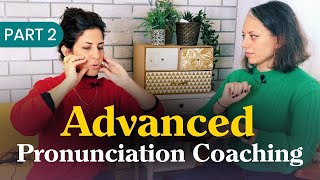
Hadar Shemesh coaches actress Mayra on American English pronunciation, working through vowel contrasts like sheep/ship and seat/sit, the schwa sound, L quality, and how to sustain stressed words and sentence endings. They use minimal pairs, tongue placement cues, and resonance exercises to build consistency for auditions.
Chapters
Hey everyone. Welcome back. Thank you so much for being here. Today you are going to watch a session where I coach one of my students on her pronunciation. She is very advanced. She has a lot of experience working and practicing English. And today you are going to see how I give her feedback and the things that I look for when working with my students. Actually, this is part two of the conversation that we had. In part one, she shared her story and experience. So please make sure you watch it as well. I'm going to link to it below. And if you like pronunciation, whether you are a coach or a student, I'm sure you are going to love this episode. You can also listen to it on the podcast on the Influency podcast. I'm going to link to it in the description below. So thank you so much and let's watch our session. Hi again, thank you so much for joining us. If you missed it, last week we had a conversation with Mayra, one of my students. She, she lives in New York City and she has a really intriguing and interesting experience with her English journey. So she shared a little bit about her story and some of the transformations that she went through over the last few years. So if you missed that episode, we're going to link to it below. But today we are going to focus on pronunciation coaching. So we're going to do one on one coaching and I'm going to give Mayra some notes based on the conversation that we had and then we'll practice it specifically and you can learn from that too. And of course, practice with us. I'm going to mention some sounds and elements of speech and I have a lot of videos teaching those things. So if this is all new to you, go to the description and click on the links and check it out so you can go deeper and learn more. Are you ready?
No, but let's do it.
Okay, so first of all, let me ask you before I give you my notes, what is the thing that you feel you still struggle with when it comes to pronunciation?
I feel that I'm exactly like. I sometimes get lazy on the feeling versus the height. E. Right. And I like my laziness default is like the Israeli, which is somewhere in the middle. But it's not, it's not like, okay.
The E. It's not like it doesn't have the same quality as we have in English.
Sometimes I catch myself say fel instead of feeling.
Mm.
And it's, you know, when it's really like short, when it's really filled, then I'm like, oh, no, no, that was not what I was saying. Let's just re. Say it.
Okay.
But a lot of times I just let it. Like if it's. If it's the middle A, E, kind of E, then just let it slide. And like, I'm like, okay, they'll get.
It as long as it's understood and depends on the context.
But when it comes to acting specifically.
Yeah.
Then it's not good.
No, no.
And this is where I like. All right, let's feel it.
Yes. Let's make it more into a habit so you don't have to worry about it and that you don't have to think about it.
Right.
Yeah. Good. Anything else that you notice?
I can want to say my.
My eyes sometimes your ah, as in father.
Yeah, sometimes, like, it's less of an issue for me.
I don't think it's an issue. I think your ah sound and your ah are pretty consistent.
Okay, so no, I guess you tell me.
Okay, so we are going to start with the E and E. I do think it's every now and then. I do notice that sometimes the E is not high enough. So it's actually less about the lips and. And more about the tongue position. So we'll talk about that. And I also think that the sound is sometimes not specific. Right. The I could be a little high or too low, like more of a schwa sound and that as well. We want to make it crisp. And again, for those of you who are like, what are you talking about? She sounds amazing. She does. But as an actress, it's important for her to have to be very clear about these things and to be able to control those, because then it's going to prevent from her to feel free when she's working on a role. And obviously she is. So, you know, like, this is. This is something practical that she needs. But also I think it would be interesting for you to listen to a coaching session and notice those nuances, because when you can start hearing it, when we are working on it, it's going to be easier for you guys to work on it as well. So we'll talk about the sheepship. But another thing that I want to point out that I'm noticing two things, and it's not just about specific sounds. It's about your overall speech. Sometimes it feels to me like you tend to sink into your down in your voice to a very low note where it might make you sound a little less clear. Okay. So it's not about the articulation of the sounds, but because It's a combination of the articulation and something else that you're doing that I'll talk about in a second. But sometimes you drop really low. And because of that. Yeah. So your pitch goes really low. And it's great for certain situations, like, you know, if we're having an intimate conversation, then it's totally fine. But of course, on the stage, it could affect how your voice is carried. So that is one thing that I want you to pay attention to, because when you speak your voice, we do want to use our voice on our optimum pitch level. So optimum pitch level is where your voice is more comfortable in. And usually it happens when just. Aha.
Yeah, say so.
See how high this is?
Hello, Hello.
Yeah. And you use that voice. You use this pitch here. But sometimes, especially, like, you know, I noticed it at the beginning of our conversation that you went a lot lower.
Okay, interesting.
Okay. Like you just did now.
Interesting.
Yeah. Which is, again, it's not a bad thing. It could be a conscious choice, but I want to make sure that, like, it's not something that is preventing you from being heard. So, for example, let's take the. Okay, interesting. And move it up here. Okay, interesting.
Okay, interesting.
Yeah. And what if you kind of, like, try to use your head voice a bit more? Project your voice a bit more so it's not hiding an internal. Right. Like it's going outward a bit more. Okay, interesting.
Okay, interesting.
Hey, hey. You see how it's still, like, inside? Hey. It's as if you're almost grabbing here. Hey, hey, hey. What's up?
What's up?
Hey, hey. Right, now try. Imagine as if there is someone across the street from you and you want to grab their attention. I want you to find that resonance here. Hey, hey, hello. Go to your nose. Yeah, Right. So when you bring your sound to your nose, that's when you start using this, the resonance here, your facial, your mask. Resonance. Hello, Hello. Hey, hey, hey, hey. That's mine, that's mine.
Don't take it, don't take it.
Yeah, exactly, right? Like, your voice becomes a little brighter when you use this and not just here. I just want to make sure that you don't substitute this voice with confidence. Do you know what I mean? Like, that you don't perceive. Like, this is how I'm going to be, per se. Because you can speak up here. And there is this thing about women, you know, like having that you yourself talked about not having the. Wanting to sound too childish. But when you use your voice, it's okay. To kind of like bring it up here, especially when you want to be heard. Okay. So that's one thing, something to think about, and it's mostly about, you know, like, you using the voice. The second thing is that I think that you have an amazing grasp of rhythm. Right. You being an actress and also living in the US for so many years, sometimes I feel like you like to reduce a lot of things and sometimes even the key words. So in a sentence, we have words that we tend to reduce and words that we stress. And the words that we stress are longer and louder and higher in pitch, just like the primary stress in a word. And I want you to play with the rhythm. Give yourself more permission to stretch some of the words that are stressed when you're saying, because sometimes it feels like you're reducing those words as well. Why don't you tell me a bit about your morning routine? What usually happens? What do you usually do when you wake up in the morning?
Okay.
A lot of things to take. She's on the spot right now, not conscious at all.
So I'm usually waking up very early. Like 5:30am wow. Because I'm going to work out at 7 and I have to commute to make town. So I wake up, I get dressed. I don't usually eat, you know, do the morning stuff. Sometimes I grab an apple, but that's. That's pretty much it. And then I walk to the subway.
Good. So I think I'm realizing that that tendency of dropping or reducing happens at the end of a sentence. So you both drop in pitch. And also you kind of like lower your voice and reduce those words. Like doing those morning stuff. Right here. The stress word is morning, but it didn't get the. The presence that it needed.
Got it.
Doing all those morning stuff because I'm kind of. This is morning level. Yeah. You're already thinking about the next thing. Right, Right. So make sure you're not swallowing it. And it's not a problem with the sounds. It's not. It's just like articulation and awareness just being present until the end.
So not doing the morning. So, like, doing the morning. Doing the.
The morning stuff.
Doing the morning stuff.
Yeah. So sustain the stressed word. Maybe use a little bit more pitch if needed. Depends on, you know, like, again, if it's a casual conversation, we're not going to go high in pitch when we stress something. But you want to prolong that word, the stress word. Let's keep going.
So I'm going to the subway. I usually take the queue to 34th street and walk to the gym. Good.
So make sure you don't swallow at the end.
Walk to the gym.
Yes. Sustain it. I walk to the gym, and I think, again, it's both the voice and also kind of like the word and the. Yeah. So remember that the ending sometimes has the most important information for us. So make sure you don't kill it. Don't turn off the switch on your voice. And clarity at the end is also important. Yes, exactly. I need to hear it until the end.
Okay.
Later today we'll practice a bit more like free speaking with feedback. Now let's talk about the sheep ship. You want to practice it? And again, I think. I think you're already there. You're already there. We just need to tweak it a little bit. Let me hear the word sheep.
Sheep.
Good. That's it. Like, you know, And I think you need to focus. Maybe your focus is too much on this. Because just how you explained it to me. Maybe it's just about, like, really thinking that this part for the E sound, the tongue goes up, Right? The body of the tongue almost touches the upper palate. E. E. Good. Now I want you to not move your lips at all, as if you don't want someone to read your lips as you say. Sheep.
Sheep.
Good. I want you to know that you can fully pronounce it without doing this. Okay? Sheep.
Sheep.
Reach.
Reach.
Season.
Season. Good.
That was really good. Now we will add now because we do want to pull the lips a little bit, but I wanted to see that you're capable of doing it. So now say season.
Season.
Reach. Reach. Sheep. Complete.
Complete.
Completely. Completely. Good. Reality.
Reality.
Reason.
Reason.
Sneak.
Sneak.
Sneak peek.
Sneak peek.
Good.
You know what's tricky? Trick or treat.
Trick or treat. Why is that so tricky? Two of them.
Two of them, Right?
I know, I know. It's a great tongue twister because we have I and then the tense E. Let's practice the lax. IH for a sec. Rich.
Rich.
Simple.
Simple.
Vision.
Vision.
Go back to simple.
Simple.
Right. Your tongue is a little too low. You want to raise it a little bit. Not some. Some, but sim simple. Raise your tongue even more.
Simple.
Right? So your tongue. Look at my tongue. It is slightly higher than what you're doing right now. Yes. Simple.
Simple.
That's really good. Delivery.
Delivery.
Good. Keep. Make the L a little lighter. Yeah.
Delivery.
Right. Keep the tip of the tongue behind the teeth. Delivery.
Delivery.
It's a little too heavy. The L. Delivery. Good. Delivery.
Delivery.
Now the sound. Let's make it More specific. Delivery.
Delivery.
Delivery.
Delivery.
I'm waiting for a delivery.
I'm waiting for a delivery. Sounds weird.
What happened? It was the end of the word. The end of the sentence. So that's the habit of just reducing it, Right? Sustain it and then your pronunciation will be there for you. I'm waiting for a delivery.
I'm waiting for a delivery.
Beautiful. Okay, good. I finished it yesterday.
I finished it yesterday.
Good. So again I'm hearing finished, finished, which totally works, right? But if we want to fine tune it, think as if you bring the sides of your tongue a little higher. Fe. Fe. Listen to the difference. Fe. Fe. Fee, Fee. It's not fee, fee. Fe.
No.
Close your eyes. That was good, though. Lower your tongue just a bit. Yes. Finish, Finish. Finished it.
Finished it.
Not fuh. Finished, finished, finished. Exactly. Don't be so afraid of moving it away from the neutral E sound. It is pretty close. Yeah, but it's far enough.
Think of my head. Because of the Hebrew, I'm trying not to say Finnish.
I know.
And it's like I default to finish.
Exactly. You're distinguishing it, right? Quite a lot. And as a result, the E is not that crisp, clear sound, which is like when I was in acting school. I remember that my speech teacher would always describe the sound as this bright, crisp, clean, you know, the bright E of English. And I was like, I have that. It has to be bright. I have to make sure it's bright and crisp. Right? And I don't know, it worked for me because I could kind of like pinpoint it. That's it. It's so subtle. It's so close. This is why it's challenging. Good. Finished.
Finished.
Simple.
Simple.
Vision.
Vision.
Image.
Image.
Good. Both of them. Both vowels are E. Image.
Image.
Right? Image.
Image.
Good. The image.
The image.
Look at that image.
Look at that image.
Good. I imagined it.
I imagined it.
Right?
Imagined. I imagined it.
Yes.
I imagined it.
Good.
This really helped. Like, the hand is really hard, right?
I imagined it. And then you drop with your pitch at the end. It's a simple mission.
It's a simple mission.
Mission.
It's a simple mission.
Me, me, me, me, me.
Not me.
Somewhere in between.
Me, me, me. Mission.
Mission. Imagine like a cogwheel here, right? That you just turn. And that actually affects your tongue. And as you turn it forward, your tongue moves forward. And all you need to do is just turn it a little bit. Yes. Right. But raise the tongue a bit more. Yes. Like this.
Good.
What was the word that we were working on?
Mission. Mission.
Thank you. Mission.
Mission.
Good. Okay, let's compare the two sounds. Sheep ship.
Sheep ship.
Reach, rich.
Reach, rich.
Least list.
Least list.
List. Turn it, like, forward a bit. Not last.
List.
Yeah, List. You want to be able to stretch it.
Yeah. Like, it's almost like it's changed. Like, it starts like an avid switch into E. Like we want to.
Yeah, yeah, I see what you're saying. And yes, if that helps, then use that list. Okay, now let's do something interesting. Let's go through the four front vowels. Okay? Tense, E. Seat.
Seat.
Lax. E. Sit.
Sit.
Little higher.
Sit. See? Sit. Listen.
Close your eyes. I. I. Sit. Yes. Sit.
Sit.
Set.
Set.
Sat.
Sat.
Right, the four front vowels. Seat. Sit, Set, Sat. Seat, Set. Sit, Seat. No.
Seat.
Okay. Seat, seat, sit, sit. Good. That was really good.
Set.
Good. Set again.
Okay, it's just a seat. Sit, set. Sat.
Good. Peek, peek, peck, pack, peek, pec, pick, peek, peck, pick. Raise your tongue a bit more. Peck, pick, peek, pick. Yeah, take it from the E sound, not from the A. Peek, pick, peek, pick, Good. Notice her. P. So good. Aspirated P. Peek, pick, peek, peck. Oh, good. Peck, pack, peck, pack. Good. Make a bit better distinction between them. Peck, pack, peck, pack, peak, peck, peck, pack, peak, peck, peck, pack. Good. All right. Shake, shake, shake, shake, shake, Shake it out. Yeah. Okay, let's look at a few phrases. It's a cheap computer chip.
It's a cheap computer chip.
Right. Give me that spreadsheet.
Give me that spreadsheet.
That was good. Try to trick you. Trick or treat.
Trick or treat.
Good. We went trick or treating.
We went trick or.
Trick or.
Trick or. We went trick or. We went. We went trick or treating.
Trick or treating.
Trick or treating. Trick or. Trick or. Trick or treating. Trick or treat. Treating.
Yes, that's it. Trick or treating.
Trick or treating.
Right. So it, you know, you want to imagine as if it's different colors, or think of a ladder inside your mouth, and there is the high part of the ladder and then, like, a lower part where you kind of, like, switch between the two. E, E. You want to be able to tap into it on command. E, E. Good.
Yeah.
Trick, treat.
Trick, treat.
Good. Do it again.
Trek. Treat.
Good. Trick or treat. I'm like.
I'm almost like. Because the E. Like, it's like Trek. Trek. You know, like, it's almost like. Almost a Trek. Yeah, Sometimes.
Yeah. Almost like. Well, it's still far from track, but it's closer to an N than words like bid, bed.
Right.
Right. Let's do those four. Bead.
Bead. Bid, Bed. Yeah. Bead Wait, hold on. Bid Bed.
That's good bid. You know it. You have it? Yes. Bid bed again. Bead. Bid bead. Bed, Bed bad.
Bed bad.
Now bid Bed.
Bid bad.
Bid. Bed bad.
Bid Bad. Bad.
Right, so I actually, the third one, the second one switched him. Yes, you did. Okay, so now I, the I and the E. Right. Bid Bed.
Bid. Bed.
Bid Bed bad.
Bed. Bed bad.
Bead. Bid Bed bad.
Bead. Bid. Bad. Bad.
Good. Now your bed is closer to. Is closer to the ah. Oh, it's too open. Bring it back to closer to an Israeli. Eh. Eh. Bed bad.
Bed bad.
Bead Bid. Bed bad.
Bead. Bed. Bed, bad. That was good.
Okay, now let's take a break from sheepship and work on the cup sound. Okay, that is right there in the middle between the A and the ah. And just for fun, we'll practice the three ahs. Even though I don't think it's a challenge, but I think it's going to be fun for everyone to practice with us. Okay, we're good. Do you want more water?
Later. Okay.
All right. So the ah sound for everyone, you know you're going to be practicing with Mayra and me is the open A sound. We've already practiced it, as in the word cap.
Cap.
Happy. Happy. Last.
Last.
Passionate.
Passionate.
The back ah sound usually spelled with the letter the ah. The father sound.
Oh, the father.
A. Either a sound or a lot of times we will find it with the letter O. Like coffee and job.
Office.
Office. Exactly. So that is placed all the way in the back Ah.
Ah.
Nice. Office, Office. Job.
Job.
Opportunity.
Opportunity.
Good.
Follow. Follow.
And honest.
Honest.
So that's the back ah and the front ah. And then in the middle we have the cup sound. Cup, Cup. Nice. So a cup sound is like a schwa sound, but it's always stressed. Therefore, it's going to be a little higher in pitch and a little longer. And the jaw is a bit more open. Good. Cup. Cup. Fun, Fun. Love.
Love.
Good. So sometimes you tend to swallow it a little bit. Right? So like, I think you. You hold some tension here. Love.
Love. Cup. Love.
Yes. Good. And notice that the L sometimes takes over the vowel when the L is at the beginning. Make sure it's not too dark.
When.
It'S a little lighter, because when it's heavy, when we add tension, it will affect your vowels after. So this is great for dark Ls because we want them to affect like in the word. Well, well, nice. Pool. Feel. Good. Perfect. But then if we. If there's a lot of Tension for the L, as in the word love. Right. If we use love, love, the cup is going to be affected the sound. Okay. Love.
Love.
It's good. Lust.
Lust.
Good. Lucky.
Lucky. Good.
I'm lucky.
I'm lucky.
Good. So now let's talk about the three, uh, sounds. Lack. Lack. Luck.
Luck. Luck.
Luck.
Cup. Luck.
Cup. Cup.
Cup. Cup.
Luck. Good. Lock.
Lock.
Good. Lack. Luck. Lock.
Lack. Luck.
Lock. Not bad. Do it again.
Lack of something.
Good.
Luck.
Luck.
Luck. Mm. Lock.
Lock the door.
Lock the door.
Good. And when you pronounce the ah sound, make sure you don't allow too much air to come out through your nose. You don't have a nasal voice, but with the ah sound, you do get to. Some sound comes out. It's very common with the ah sound to make it nasal because the tongue position. Ah. Kind of like if you're not blocking the nasal passages, what will happen is that air is going to come out and it's going to sound a little nasal. Cat. Cat. Right. Lack. So just be conscious of it. Again, it's a choice. There's no problem with it whatsoever. But be conscious that it does sound a little different when you say lack. Right. Your voice changes because of the A sound. So let's see if we can stay consistent with the voice just for the sake of practice.
Lack. Lack.
Luck.
Luck.
Lock.
Lock.
Beautiful. Stack. Stuck. Stock.
Stack. Stuck. Stalk.
Good. Stack. Stuck. Stock.
Stack. Stack. Stuck. Stock.
Good. So how do we keep the form even if we go faster? And that's the thing, right? Like that's the thing that we talked about before where sometimes because you want to go faster, the pronunciation compromises a little bit for those key words. So how do we keep the form? Because you know how to make the sounds. So it's not a question of pronunciation, it's a question of commitment to making those sounds always, even if the word is not fully stressed. Does that make sense? So it's like only these specific positions that should require your focus when it comes to working on things, especially on specific roles. And, you know, when you work on text and in auditions, this should be your focus because all the rest is, you know, it's already there for you. Yeah. Now let's do again, like this, free speaking. And I'll give you general feedback. It is. So, like, let's just a round of applause because it's so hard. I know you're like, you know, you're thinking about it and. But. But let's try. Tell me about what you do at work.
Okay. So in my high tech Position. My current position is a senior customer success Manager.
Cool.
I help customers.
So this is a cup sound. Customers.
Customers.
Right. So, like, it needs to be a bit more forward.
Customers.
Right. You want to shoot the voice. Forward. Customers.
Customers.
Customer Success.
Customer success.
Senior Customer success manager.
Senior Customer success manager. Good.
Senior.
Senior.
Right. So we have the high E here and then the schwa. Senior.
Senior Good. Senior Customer success manager.
Good.
I help them reach their goals.
Good.
With our product.
Good. Make sure that you don't swallow the word product. With our product.
With our product.
Right. Sustain it. You can keep your voice going as if, like, we do want to drop at the end, but not completely until the word product is lost. Product. Right. Because then it's.
It's.
It's a matter of.
So I help them reach their goals. With our product.
With our product.
With our product.
Yes. Okay. Keep going. So what does that mean exactly? Like, what is your day to day?
So I work with the company's most strategic customers.
Strategic.
Strategic.
T. Strategic.
Strateg.
No, that's a heat.
Say it again.
Stra.
Stra.
T. JIC Strategic.
Strategic.
Good.
So I work with a company's most strategic customers.
Right. And when there is a stressed word like this one, then what we want to focus on is the primary stress of that word. That's what we are focused on really. Right. Strategic.
Strategic.
Right. And unlike Hebrew, that is a. You know, where every syllable receives the same beat. In English, you know, the. There are some syllables that are longer and some syllables that are shorter. And in strategic, then the T is the primary stress. Strategic.
Strategic.
Good.
And help them analyze their own goals and implement our product. To achieve those goals.
Good. To achieve those goals.
To achieve those goals.
Right. So don't drop all the way at the end.
To achieve those goals.
Yeah, yeah.
It's like. Almost like. It's not an exclamation mark, but it's like to achieve those goals. Period.
Yeah.
Like. Like how I imagine it to help me get through. And not yelling. You know, it's like.
Right. You're not yelling. You're never at the verge even of. It's a statement. Right. Like, it's. It's very like the idea of putting in a full stop at the end, a period. Right. Also not a question mark.
Right.
And at the same time, not dropping the ending completely. Okay, good. Well done. How are you feeling?
Tired.
You were amazing.
It's great. It's really helpful. Obviously, I'm gonna go back to it and listen to it and practice because these are the things where I Catch myself. Like, that didn't sound right, but I don't know how to fix it.
So just to wrap up the main thing that we talked about today, we talked about the tense I. That actually is really good. You just need to be more consistent. And I think you're too focused on this and just focus on the tongue. Right. So maybe some of those tongue transitions from just to kind of like, get more specific about the positions. The I needs to be cleaned up a little bit. Okay.
Crisper.
Crispier. Exactly. And then the cup sound. We talked about the cup sound that it needs to shoot forward a bit more. We talked about the L, the light L that could be a little lighter sometimes. It has that tension here that affects the vowel after. Okay. And then we also talked about making sure that you're not swallowing the. Yeah. The ending. The content words at the end. Because if it's a function word, go ahead and swallow those words. Right. Like, the vowels are reduced anyway, but the vowels and content words, even if they're not stressed, they're not reduced to a schwa. So we want to make sure that we are. And. And you know how to make those vowels. So I'm not worried about that. And then the voice connects with the ending. You know, like, use the full range of your voice. Right. Whether not just the chest, but, like, you can also explore more of this area. Especially, you know, we tend to go down when we are nervous, when, you know, like, there's a lot to manage and all of that. So just be conscious of it. There is nothing wrong with it. But again, like, you want to choose how to do it and not it happening to you without your awareness.
100%.
Yes. Yes. Myra, thank you so much. Thank you.
It was great. And we don't get to meet in person that often, so, like, that's. This is lovely.
You can follow her on Instagram and we're gonna link to it below, and I'm excited to see what's coming up for you, and good luck in the show.
Thank you.
Thank you.
Come to New York if you're.
I know, right? I have to go see this show. Okay. I'm going to book a ticket. Thank you so much.
Thank you.
Thank you again, Myra, for this beautiful conversation and session. Thank you for being courageous and brave to practice with me and to share everything that you had to share. And again, if you haven't watched our initial conversation about her journey, be sure to watch it. I'm going to link to it in the description below. And if you have ever practiced your pronunciation, let me know in the comments. I would love to know what you did and how you did it. And for now, that's it. Have a beautiful, beautiful rest of the day and I will see you next week in the next video. Bye.
More from Hadar











Read Out Loud with me! Dare to Lead by Brené Brown | Pronunciation & Vocabulary practice