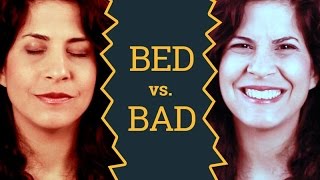
A short instructional YouTube lesson (spoken by Hadar Shemesh) teaching non-native speakers to distinguish the English vowel pair in “bed” (/ɛ/) versus “bad” (/æ/). The video explains articulatory differences (jaw drop, tongue forwardness, lip shape), demonstrates example word pairs (e.g., bed/bad, head/had, set/sat, left/laughed), and gives practice tips and a call-to-action to comment or ask questions.
Chapters
Hi, it's Hadar and you're watching the accents way your way to finding clarity, confidence and freedom in English. And today we're going to talk about the vowel pair bed, bad. Right. As you can hear, these are two different vowels, but they're often pronounced the same by non native speakers. So first, let's understand what the differences are between the two vowels. So the first sound is very close to a neutral sound that exists in many languages, as in the words red, bed, head, set. The other vowel is a more open vowel. It's a front vowel. The tongue is pushing forward as in the word cat. Alright, so it's quite different. The quality of the sound is different. The mouth is really open for this one. As you can see, the sides of the lips are pulling. Right? The lips are pulling through the sides a little bit. The tongue is pushing forward. The front part of the tongue is flat. Happy, right? It's not hippy, it's not happy, happy. I'd say that phonetically speaking, this a sound is somewhere between the E and A, the neutral E. And. Okay, so cat again, happy, that bad. Now, when we compare them, it's really easy to see the shift between E, e and A. All right, so you got to drop your jaw. Sometimes we have a tendency of speaking really quickly and not opening our mouths. And therefore the ah sound may come across as eh. Alright, and then words like bad, sat and laughed may sound like bed, set and left. Alright, so that's what we're practicing now. This distinction. Left, laughed, head, had, set, sat, send, sand, bed, bad. All right, great job. So practice this distinction. Don't forget to drop your jaw, pull the lips a little bit, make it a front forward sound, and that's it. If you have any questions or insights about these two vowels, please share it with us below this video. If not, I will see you next week in the next video. Bye.