English Fluency journey with Anna: Mastering English Fluency
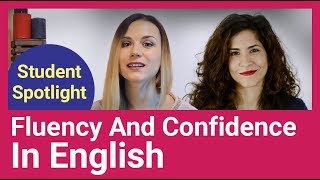
Hadar Shemesh interviews Anna, a Ukrainian learner who built English fluency through shadowing and daily video practice. Anna created her English Fluency Journey channel after a 30-day challenge and now uses Hadar's course toolkit: two months of 10-minute daily recordings plus drills for sounds like th and V/W. She's on day 45 of consistent practice.
Questions this video answers
Ukraine (born and raised).
The English Fluency Journey.
Accent Makeover (online course).
About two months of recorded daily practice (roughly 10 minutes per day).
The English "th" (voiced/voiceless) and the V vs W contrast.
Chapters
Hey, everyone, thank you for joining me. Today we have a different episode. In this episode, I'm going to interview Anna. Anna is an English learner and she is also a student of mine. She's a member of my online program. She's a member of the online Facebook community that we run of non native speakers. But most Importantly, she's a YouTube creator and she has her own channel called the English Fluency Journey where she shares her experience as an English learner and as an English teacher.
Teacher.
We're also going to talk about how video can help you improve your English skills and your speaking skills, especially when you share it with a supportive community. And we're also going to talk about her experience taking my online program and how improving her pronunciation and her accent helped her improve her English, her confidence and her speaking skills. Okay, so let's welcome her. Hi, Anna, Welcome. Welcome to my channel. How are you doing?
Hi. Hi. I'm great. I'm great. Excited.
I'm so, so happy and excited as well to have you here. I've known you for a long time and I think it's the first time we're doing this kind of interview together, right?
Yes, yes. The first time together. The first time ever for me. Yay.
So I'm really honored to have you here. And for those who don't know you, why don't you just introduce yourself really quickly and share, share with them what you do and where you're from.
Okay. I'm Anna. I am from Ukraine, born and raised. So I'm a YouTuber now recently.
Yes.
And I have a son, a toddler and me and my husband, we are entrepreneurs and. Yeah. And I learn and teach English.
Awesome. So have you ever lived in an English speaking country? Have you ever had people around you who spoke English?
No, never. I've never even visited English, any English speaking country. So. Yeah.
And your English is fantastic. So how do you, what have you done? What is the secret? I mean, there are so many. You know, I always get this question, all of my followers and all like they say, okay, great, but you lived in New York, you know, for five years. Of course it was easy for you to accomplish this. But I don't have anyone to speak with.
Right.
I will never improve. I will never be able to practice my English. And here you are, you know.
Yeah, never, never to speak with.
So. Yeah, so tell us, tell us a little bit about it.
Yeah, I know a lot of people that live in the US they just literally can't speak. They don't know the language. Although they live there, like 20 years, maybe, or even so or less. And my secret is my passion, because I just love English and I just love learning and studying all this process and practice and hard work. So, guys, there's. That's the. I don't know. That's the only way for me because I've realized that. That you have to practice, that you have to. You have to do something, because otherwise, no, you're not going to speak.
So how did you even start this whole thing, your journey? How old were you? Like, what made you. What were the first few things that you started doing?
Okay, so it started when I was in kindergarten, actually. I remember. Yeah, they were teaching us English. And I remember my first teacher. I still remember her face. She was great. And my first word that I remembered that I learned was an apple. So I came back home and I was like, mommy, I know that this is an apple. This is an apple. It was so exciting. I loved it. And then, of course, it was school, but, you know, our age educational system, it's not great. And it was like basic. And we didn't have Internet back then, so I didn't have any opportunities that we have now.
Right?
Yeah. But I knew back then that I love this language. And when I was watching some movies or TV shows and I heard this, their voices in the background behind the translation, I tried to listen carefully and I tried to repeat. So that's when I started to apply this shadowing technique, although I didn't know about that.
Maybe explain a little bit. What is the shadowing technique?
It's when you hear something and repeat right away after the speaker. Yeah.
Do you speak English with your son?
Yeah.
Yeah.
Only English.
Or.
When we are at home, it's only English. And when we are outside, of course I speak Ukrainian because a lot of people are around, and some. The people that we know, they like looking at us like we're weird or something. But, you know, even though I still speak in English with him outside, and it's. To me, it's kind of additional motivation to learn English and to drill sounds, to be. To be consistent, to use a proper English and to. To learn grammar, because it's important, right? For. Especially for a child.
Yeah, yeah, yeah, absolutely. And it's a gift, you know, you're giving him the gift of having a second language. And it's amazing.
Yeah, I hope so. Although my mom says, like, because he says cup and all these words and she's like, oh, my God, he's speaking English. And this R. This r. Sound. Don't teach him this R sound. Teach him our R sound.
Yeah, it's so funny. He'll master both. He'll master both.
That's the.
Like, that's so. What's so amazing with kids is that they're able to hear and apply immediately. It's not like us, that it's hard for us now to move from the.
To the.
So that's the beauty of being a baby, you know?
Yeah. Yeah.
So were you ever. Do you ever feel judgment when you speak? Do you ever feel what is your biggest fear when you communicate in English? Do you ever. Have you ever experienced judgment from other people? Even non native speakers of English that, like, did not understand why you're doing this English thing?
Yeah. Just of non native speakers, actually.
Really?
Yeah. Native speakers, they don't judge. They actually. Well, the ones I've talked to, they are actually fascinated by the fact that we learn English and that we can master this language and that we like it because it's their own language. And a lot of English native speakers, they don't know other languages. So. Yeah. But, yeah, I am judged by people around me. Yeah. So I get these looks all the time and these weird questions like, like, so, okay, so you have a YouTube channel that's funny. And like, so. So do you know English? So do you teach English? It's like. And I'm like standing and saying, well, yeah, so what? And. But actually, it's. To be honest, I couldn't care less.
Right.
I'm just ending these conversations like they are and say, okay, it was nice to talk to you, and goodbye.
Someone will always have something to say. You know, I recently listened to Rachel Hollis. She's awesome. And she had this podcast, or she says it in her book. Other people's opinions of you are none of your business.
Right. It's not.
It shouldn't interest you, it shouldn't bother you, and you definitely shouldn't make a decision based on what other people think, you know? And I think this is a great motto.
Yeah. If you feel that this is something that you want to do, then do it. Then don't listen to anyone, especially English.
People feel like they're not enough because they're non native speakers. They're new to English.
Right.
They weren't born into the language. But it's more than enough, you know, it's more than enough if you do the work. If you. If you show up, if you're consistent, if you provide value to others, then absolutely. Okay. So, Anna, what made you decide to open your YouTube channel. And how did it all start?
Okay, so it all started when I found. Actually came across your YouTube channel. And then I found out about this community, about this Facebook group of non native speakers that learn English and that help each other. But actually, back then, it was just, Just. Just a challenge.
Right. So we had the 30 day challenge, right. Because I have one before the 30 day July challenge, Right?
Yeah, yeah. And we had to make videos every single day talking about some particular topic. That was intimidating and terrifying experience for me because I started from introducing myself and it was so weird because I've never talked to anyone in English, let's say, like this. Maybe there was some time, but especially I didn't record myself. I haven't recorded myself ever. So it was so weird. But then I decided that I'm gonna do it. If I started that I'm gonna continue.
How did you, like, once you posted the first video, what did you think that's going to happen?
Actually, I was. I was so terrified that I didn't think anything. I was like, oh, my God. Did I actually do it?
Oh, my God.
People are watching and they are commenting. Oh, gosh. Oh. I had all these thoughts, but then I watched a lot of other videos of other people, and I never judged, never judge. And I was like, they are awesome. They're great. They're speaking English. That's amazing. Yeah. And I was like, I can do it too. And I'm gonna do it. I'm gonna be consistent. So I'm gonna continue with this challenge. Yeah. And I did.
The comments you got were amazing, right? Like, the feedback you got. People loved you. Yeah.
Yeah. The comments were great. They were asking me, like, what do I do to improve? What did I do to get this level of English? Although I didn't think that it was a level at all, I was so stunned by those comments. I was like, great. It's awesome. And this is where. That was a great motivation for me. I was like, yeah, I wanted to do it. And now I have this confirmation that I need to continue. Yeah, that was great.
This is. This is what I love about it so much, is that people have these opinions about themselves and about their English, how bad it is and how not interesting they are and not engaging. And they take the first step and they post the video and they want to, you know, like Natalie, one of our students, she's also from Ukraine, she said that she posted a video and she turned off the phone, and then she deleted the Facebook app from her phone because she was so embarrassed she was just like, it's going to be terrible. People are going to mock me and ridicule me. And then like, the next day she was just like, I don't want to know anything about it. And then the next day she turned it on and there were all these amazing comments. You're awesome. Thank you so much for sharing. You're so interesting. And all of a sudden you're like, wait, right? Like, what exists in my head does not exist in other people's heads. And actually people are interested in what I have to say, and they're curious and they're motivated and inspired by what I'm saying or how I show up. And that gives you to continue, you know? And from there she was like, she posted every single day. They're super interesting video. And. And I think she. She created relationships like we all did, you know, like created relationships and had impact on each other. I mean, there are such strong relationships just by. Just because you connect to people who. Who show up on video. Because when you see someone, you're like, you really see the person and you can get a little deeper than you can in just writing a post, you know? So, yeah, the patience or the energy or the skills to write, like, exactly what they want to say.
So making a video, that's actually the secret, I would say.
Right? Making the video, Having a supportive community respond.
Yeah.
And it's safe, I think, like a place, like you said, you never judge. And just like you people don't judge. Like, in that community at least. Like, like it was only support. It was always only empowerment.
So, yeah, yeah, a lot of support and a lot of feedback and I get some great advice and corrections because we have a lot of teachers there. Right. So of course that my grammar wasn't great and I was struggling with that. And I still struggle, you know, I still make mistakes. But that's okay. I think, you know me and you know, it's so great because you get to improve just like this. And also, you know what I loved as well? That I had to make like five videos every single time because I didn't like something because I made a mistake because I didn't say that I wanted to stay because I forgot something. Yeah. And it was great because every single time it was better and better and better.
And that's how you improve when you don't have someone to talk to, use video. This is like my new. My new belief system, right? If you don't have people, you have the video.
Thank God.
Like, everyone has a phone. So.
Yeah. Yeah.
Okay, so from that point where you saw that you, like, you know, you have people who want to listen to what you have to say. What was the moment where you decided that, okay, I'm gonna do it. I'm going to open my YouTube channel.
Yeah, that was that moment. But actually, I wanted to start my YouTube channel a lot earlier. Me and my husband, we were thinking about that, but we just didn't know what to talk about, what to show to people, what to share and how to help people. And that was the problem. And then when I told my husband, you know, I would like to. I would like to try because I think that something amazing will happen and will turn workout from that. And also that was another opportunity for me to practice and to learn English and to stick to it. Right? Yeah.
And you always, like, if you have a dream, you always have to go for it. I mean, worst thing that can happen, you fail, you close the channel.
That's it.
Like.
Or you. But.
But it. And you only learn from it. You only learn and you start again doing something better because you learn. But the worst thing is just like, not to do it because you're afra. You're afraid you're not going to succeed. You're afraid of what people are going to think. I mean, you know, you're the only person who needs to face those consequences at the end of the day. So you got to give it a try.
Yeah. Well, when we started the channel, I didn't think about getting a lot of subscribers. I didn't think about bad comments because I know that there always will be bad comments. Always. There are people that like you and there are people that just don't like you no matter what, no matter what you say. And just because you look this way, that's it. And I wasn't thinking about that. And I just wanted to. When I had my first hundred subscribers, it was so exciting. I was like, oh, my God, a hundred people are listening to me and are interested in what I have to say. This is so cool. Yeah. And I just wanted to. I just wanted to share. Then I started getting questions. That was exciting. Yeah. As well.
So what kind of content do you share on your channel?
Different. Like tips and advice, how to improve, how to learn basically on your own. And I just share what do I do all the time. And I'm gonna. Yeah, I'm planning to make a video, like, I'm explaining and telling, describing my day, what I do every single day to practice, like, just to show people that it's all Achievable. It's all doable. And you can find time for that. You can make time for that.
Right, right. It doesn't need to be much. You just have to be very intentional about it. Right. So what was the video you had most fun creating or you thought that was like, you know, you really enjoy doing?
Okay. So to be honest, like, the first 10 videos that we've made were really fun to shoot because we didn't have a place, so we don't have a studio or separate room for that. And every single time, we have to arrange here in the apartment the place to shoot the video. So we had to. We had to. We had to buy these lamps, lights, and. Yeah, my husband was arranging all that.
It was.
So it was such a mess inside the apartment. And we tried to. Yeah, we tried to keep our baby away.
So we were.
Yeah, he was watching, I think on.
One of your videos, you could even. You could even hear him, right?
Like.
Yeah, I remember watching one of your videos. I remember because when I just started out, it was just the same way. Waiting for the girls to go to the kindergarten and then, you know, changing the entire apartment, getting all the lights and everything, and then having to fix it. All right. Yeah, yeah.
And also I. Yeah. And it's a great experience for my husband as well because he. He's learning how to edit videos and he's enjoying this a lot. So this is like his. This is like his. How to say it? Right?
Like his passion. Like.
Yeah, passion. Or this idiom. A couple.
I want to say something about cup of tea.
Yeah.
Yeah. So the coffee didn't feel right, but the cup of something.
Yes.
I had this word. I was in the middle of the class. I had like 10 students in front of me, and I get stuck. I was just like, no, wait, I know this word. And I was. What was the word I was looking for? Forbid it. Forbidding. Forbidding or forbid. So it was just like, you know, I know this word is just. It was not very available and nothing else was fitting enough. So. Yeah. So also. So once we started in the Fluency Challenge, you also became a member of my online program, right? The Accent Makeover online course.
Yeah, yeah.
And you actually made a video about it without me knowing. So it wasn't like something planned, because I think it was. Was worthwhile. So, guys, if you want to learn more about the program, I'm going to.
Put links to everything below.
So go check out her channel, you know, because it's over there. And anyway, you need to go Check out our channel and subscribe if you're learning English. So, yeah, maybe tell a little bit about that, about the experience and why pronunciation was, like, why improving your pronunciation was a goal for you and why, how it helped your English. Like, I'm really curious in understanding what led you to join the program and.
To.
What impact did it have on your English.
So I gotta say that in the first place, why I decided to do at least something and to change my life, basically starting learning English because of my son, because I want better opportunities for him and better life. So this is why. And for that reason, if I wanted to talk in English to my son, I needed to have a good pronunciation. So that was the main. The main reason.
Right.
Also that I have a YouTube channel and I have to, like, speak properly, and I have to know how to speak. And to be honest, enrolling to this course was the best decision. Decision that I made.
It's so.
It's so true. Because I gotta be. Frankly speaking, I didn't expect much. I was like, well, okay, that's gonna be, like, some recorded video lessons, and maybe I'm gonna practice. Maybe I'm not gonna practice. I don't know. But it got so interesting. It was so engaging.
Yeah.
We have this group as well. Right. We have another.
Yeah. Facebook group for the course members. Right.
Yeah. And a lot of people, they're posting their videos and drilling sounds and doing all the work, and it was so great, so exciting. And when I started, it was so hard. I didn't expect that. So my face muscles literally hurt a lot when I tried to speak properly and to speak, like, a lot. Like, having a conversation. It was hard. It was so hard. They were so tense. Yeah.
Like, we resist, right? We learn something new, and the muscle resists it.
Right.
Like, the muscles. And so you got to learn how to let go and how to train those new muscles. Like the th. We're starting with the th. So the time. Those things that it never used to do before.
So. Yeah, yeah, yeah, it was. But when I practiced, I actually kind of saw the results right away. Like, on the. Like the. Like on the other day, let's say like this. So I practiced today a lot. A lot. A lot. And then I was so tired and exhausted. And then when I got up the other day and I tried all these words and all these sentences, it was easy. And I was like, oh, my God, this is so great. Yeah, Now I can. Now I can pronounce it, actually, because I didn't have actually a lot of problems. With the separate sounds or maybe words. But I had a problem with sentences. So when we go to sentences, it's hard to try to repeat with the same intonation and speed and all the stresses.
Right?
Yeah, that.
It's hard to be consistent, especially when you get tired and you don't want to think about the accent.
Right.
It has to be there for you. But for that, you got to develop the skills and the pronunciation skills and the muscle memory.
Right? Yeah, yeah.
What was the most challenging sound for you element of speech that you worked on throughout the course?
I'd say that, of course, th. Because we don't have this sound in our language, in Ukrainian language, but particularly this transition when we have voiceless th and s. Voice th and Z and I still tend to do it.
Let's give an example. Like voiceless th and s. With some.
With some.
With some people.
Yes. With some people.
Is that you? Right? These transitions, I get questions about those all of the time. So we have a few tricks there in the course. Right. That we. And how to practice and drill it. So it's easy.
So this is like my. My number one problem. Let's say like this too.
Yeah. Because we also do that. We prioritize our issues. Right. So it's not like we need to learn everything. I love it that you said it now and that you pinpointed it. Yeah, absolutely. Because, like, if you're. If something is not yet there or you. You get obsessed about a certain sound that you haven't mastered, that's probably your number one priority. Because if you get self conscious about it, especially when you're at a more advanced level where it's not a clarity issue. Right. Then you got to figure out the sounds that are tricky for you or that you are. That you're overly aware of. And for people who have clarity issues that, like, they're really not fully understood, then they need to work on first and foremost, like, invest all of the time during the course and after, you know, to invest all the time to master the sounds that will get them the best results. Right. So this is the system behind it.
Yeah, yeah, yeah. Very cool. Also, of course, that's V and W were and sounds. So the same problem here.
Ukrainian speakers and Russian speakers.
Yeah, yeah. Because we don't have these sounds in our languages. And it's.
When people.
When people do these sounds, make these sounds, it sounds like they are. I forgot the word. You know, we have this word. Well, it sounds like they're not speaking properly and a bit weird to do that.
They have a lisp or they have a speech impediment.
Yeah.
Yes. Yes, exactly. Yeah.
So this is something that we're trying to fix.
Yeah.
And actually, I still work with your practice toolkits that you gave us.
Yeah. So, like, once the course is over, you get, like, two months worth of recordings for every single day, where it's like 10 minutes a day. Do you find it useful? Helpful?
Super useful. I'm on the day 45 right now.
Good for you.
Yeah. And I go back to those days that were maybe hard or maybe that I want to drill them more and more. So I always go back and I actually practice throughout the day. So starting from the morning, this is the first thing that I do. I get up, I have my breakfast, and then I go and practice with these practice toolkits. Because it's so convenient when you have this already recorded. You know, like, you don't have to.
Go search for the content. Yeah. You know, I work with. So, like, the reason why I created it is actually for. I created it for my online students, but the needs came from all of my students, even the ones here in my school in Tel Aviv. Like, okay, there's all this content. How do I know what to focus on? How do I decide what to do every single day? And people are so busy that they don't have, like, because they need to take another action of opening the drive, looking for the content, deciding another decision. So I'm like, I'm gonna save you the decision. I decided for you what you're gonna practice today. All you need to do is hit play, you know, and then I think it's very, very valuable. And the responses are great. I feel that people do the work.
And the most important that I've learned on this course is to be consistent and to. Actually, you taught us. You taught us what to do, so you showed us all the tricks and hacks and like, to. To practice with TED Talks. So you get to choose some TED Talks. And you. You can. You can do shadowing, practice or whatever.
So it's like, we also had the monologues where you did incredible work. Right?
You had. Yeah, that was so fun.
Right? You want to. You want to tell us about that?
Oh, that was so much fun. I've chosen this monologue. I actually don't remember right now the.
Name from Hidden Figures. Hidden Figures.
Oh, yeah, yeah, yeah. I was really impressed by the power of this monologue, by the power. Power of the speech. And I. And I really wanted to go out of the comfort zone one More time. Because it was something totally new. In this monologue, it requires to be so, so emotional, right? Yeah. To play, to show yourself, to scream. I was like, okay, how am I even gonna do it? But I just closed the door and I decided that, yes, I'm gonna record this. And actually the first. So that was the first take, I guess, that I did. And my husband said that this one is just great because you showed, like, showed all the emotions and it was so genuine. Yeah, so he liked it.
Even picked up on the southern accent. It was so good. Yeah, yeah. So to wrap it up, Anna, what is the best thing you can recommend our viewers and the people out there learning English or wanting to improve their English, but they don't live in an English speaking country. So you talked a little bit about it at the beginning. But you know, if you could tell me one thing that they can start doing as of today, even though they don't have conversation partner, like, what can they do to improve their speaking skills?
Okay, if we're talking about speaking skills, that I would really recommend to do this mimicking, shadowing practice and to record yourself. So this is, this is. Those are two main things that you should do to improve. And if you want, if you can, if you're not shy, then just join this community, our community Facebook group and post your videos there. But be consistent. Don't just post one video. And then people, people are like, oh, nobody commented. And I don't know, I'm so frustrated. That was so humiliating. No, it wasn't. We have so many people there.
So we just, maybe we just missed in the feed. Like it could be one hour that too many people posted at the same time.
Yeah.
So you gotta be consistent. You gotta show up right now. Like, you know, we don't have the 30 day challenge, but we have weekly discussions.
Right.
Every week we have a different topic. This week it's about privilege. You know, what is being privileged mean? And so it's like. And last week, what was like your favorite movie scene? So we have different topics. So it's quite fun, like to talk about things that are out of your comfort zone.
Video.
And we have different activities and we have fluency talks where people give mini Ted talks in the group.
I say that if you want, really want a feedback, then you should post your video, you should take part in the activities.
Yeah.
For example, we. Yeah, because then you're gonna get your feedback. It's for sure. And then you're gonna be, you're gonna be noticed.
So.
Okay, there you are. And then people are gonna watch your weekly discussion videos a lot more.
And it's really. Yeah. And it's really about like doing the work and benefiting from. From, you know, recording five videos and finally uploading the fifth one. Even if you don't like, if people don't upload, but they do the work and they get inspired, but by other people and they learn it, that's also very valuable, you know.
Yeah, I actually, I didn't have time to upload and I forgot to upload a lot of videos of weekly discussions that we had. But I recorded them. Yeah, I have them in my phone and I watched like the other day one of the videos and I noticed that I pronounced. I forgot the word, that I pronounced some word wrong. And I was like, oh, great, okay, now I'm gonna check it out. And now I know how to pronounce this word. So this is so useful.
So useful, so valuable. Absolutely. Anna, it was so much fun talking to you. Oh, it was so much fun as well. So first of all, thank you so much. I know your baby boy is a little sick today and you still took the time and spent it with us and shared your knowledge and your journey, the English Fluency journey. And that's also your YouTube channel. And I highly recommend you all to go and check it out and subscribe and go click on the link. So we'll put a few links below, check them out if you want to know more about the program. So also go check out the video animate on her channel and of course, join us, join our community on Facebook of non native speakers from around the world. And you know, maybe one day you will open your YouTube channel also because you'll get so freaking comfortable on video and you'll see that you are a rock star. Just like you.
Yeah. Thanks for having me. That was awesome.
Yeah, thank you so much and thank you for all the value you bring to English learners around the world.
Thanks.
More from Hadar











Read Out Loud with me! Dare to Lead by Brené Brown | Pronunciation & Vocabulary practice