From afraid to speak to expressing herself fully in English | Real Student Story
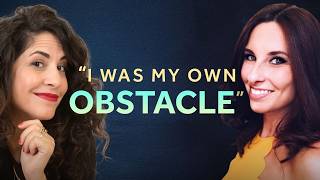
Elisa went from too afraid to speak English to expressing herself confidently. She credits Hadar's program focusing on pronunciation and prosody, daily video practice in a community, and shifting from perfectionism to prioritizing her message. She says start before you feel ready and let the desire to communicate outweigh fear of mistakes.
Chapters
What does it mean to fall in love with English? This is how Eliza and I started our conversation that I'm about to share with you. Eliza is one of my dear, dear students, and she has been learning with me for years, and I had the privilege and honor to see her go from being so quiet and so timid to being the most expressive, creative, and outgoing version of herself in English, and you will see for yourself. Her journey is truly inspiring because at every step of the way she challenged herself and was able to break another glass ceiling and another glass ceiling that she has set for herself. This conversation is going to be about fluency, about courage, about limiting beliefs, about perfectionism and how to overcome it, and about letting your voice be heard. She will share it from her personal experience and also talk about the universal experience of speaking English as a second language. I am so excited about this conversation and I can't wait to share it with you, so let's go ahead and listen to it. Hello, hello, Alisa, how are you doing?
I'm great, thank you, Hadar. How are you?
I'm good. I'm so, so happy to have you here. Thank you so much for taking the time to share your story here on my channel, and I'm excited for this conversation. I've known you for so many years, and I told, uh, I told you right before the— we started recording that it's time, it's time for me to share you with the world.
So thank you, thank you so much.
I didn't want to, but now I have to. So there, there we go. Okay, so Um, do you, would you like to quickly introduce yourself for those who are not in our community and don't know you?
Yeah. So hi everyone. I'm Elisa and I'm Italian and I live in Italy. Uh, I work in, um, in hospitality and I use English, uh, at work, uh, to communicate with international guests, but That's actually not the main reason why I started working on my English, because as far as I can remember, I've always been attracted to this language and to its sounds. And if you ask me why, I don't really have an answer for that, because it's like when you love someone and people ask you, why do you love this person? Why? Yeah, exactly. I mean, you can list all the beautiful qualities that the person has, you know, gentle, caring, kind. But at the end of the day, you know, you just love that person and that's it.
You love that person.
Yeah, exactly. And I feel kind of the same about English.
And wait, but so I have a question about this. When was the first time, maybe when you were a kid, at least as a kid, that you started developing emotions and feeling for English?
Yeah, yeah. It was when I, you know, look back at when I was a little girl, maybe in elementary school or even before that, I feel like my very first English practice was kind of pronunciation practice because let me explain.
Tell me.
Yeah, because I'm a millennial and back then we had these boombox, I think. I don't know if it's the proper name, those portable music players that include both a radio and cassette player. So I used to wait for my favorite English songs to be played on the radio, and I would record them on my cassette tapes. And I was creating my personal playlist because there was no streaming back then. So you had to wait if you wanted to listen to your favorite song. Actually, You had to wait for many things back then, but that's another story. Anyway, once I had this playlist, the interesting thing is that I couldn't understand a single word yet because I couldn't speak English, but I wanted to be able to sing the songs right away. So what I would do is something that I think that many millennials or really even older generations maybe can relate to. I would, you know, grab my cassette player and my cassette tapes. I would press play for a very short part of the song, of a song, and then, you know, press pause and write down what I could hear. So not the real lyrics, of course, but the sounds that my ears could perceive. And I would, you know, repeat this process until the end of the song and for each song. So eventually I have my personal versions of the lyrics, and I was happy because I could sing them. So yeah, bottom line— what wouldn't I just have to say?
Like, what wouldn't I give to have these papers with songs transcribed, I would, I would pay a lot of money to see it right now. So if you find it—
I don't know if I still, I don't know. Yeah, I should, but I don't know if I still, uh, have them somewhere. Probably, probably because yeah, but—
I would love to have them, to see them. Cause it's so interesting to see how you perceived certain words and what you're like, cause you know, the brain, if you don't know words, then all of a sudden you write these very different things that you hear, which is— sometimes we do that in our own language. Okay. So this is the first, like when, when you had the infatuation with English, when you started falling in love with English and sounds and rhythm. Ah, now everything makes sense.
Good.
And yeah, so, so this is why you wanted to explore more. Yes.
And, uh, I have to say that, you know, my, My relationship with English has been on and off over the years because there were moments when I was really motivated and fully committed and moments where, when I felt that I want to give up. But you know, somehow English always found its way back into my life. What a beautiful way to say it. Yeah.
Yes.
So of course I started studying English at school, but the English that you study at school, I think many people told you that, for me, I think it's really, I don't know how to say, really scholastic. So not really the way that I wanted to learn English. And then there was a moment off, and then during my last year of university, I decided that I wanted to improve, so I also enrolled in a private English school. So I had group classes, and there was some space also for conversation classes, but you know, the conversation that you have in these, you know, when there are many people, it's not that fluid because You know, maybe you get to answer a couple of questions briefly and then they need to move on to another person, of course. So I felt like I didn't really have the chance to speak in a natural and fluid way. And so before coming across your programs, I also explored another English course online, not for long actually, but I mean, it was not bad. It was really good. But no, to keep a long story short, I felt like it was not the right fit for me. So because what I was really craving again was a course that, a program that focuses on English sounds, the melodies. So when I finally found something like that, I said, wow, I was like, I felt like I was reconnecting with, uh, kid Elisa, you know.
Yes, yes, absolutely right. Like giving, giving space and room for you as a kid and, and in your adult life. Before we continue with, with the story chronologically, tell me one thing that you're doing now regularly, or that you can do, that 10 years ago, 10 Lisa from 10 years ago would say impossible?
Sitting here today with you. That, I mean, first of all, this was, um, uh, that's unthinkable. Unthinkable. And, uh, I don't know, many, actually there are so many, just one thing, it's, uh, not enough because there are many things that I can do today that were not possible for me some years ago. I don't know, I can— now I can speak without overthinking every single word that I'm saying, or I can express myself fully and not giving just, you know, the basic answers, the safe answers because, you know, when I had before you, before your program, even when I had the chance to answer a question in those English classes, but also, you know, in general, when I had the chance to answer a question, I would always go for the basic answers. The safe answers because I used to tell myself, I used to stop myself. I used to tell myself, that's it, don't say more because if you say more, you're going to make a mess. So I was limiting myself.
So I was like, what a powerful limiting belief that is, right? Like, yeah, or you're going to make a mess. And I love because I think it makes so much sense for people. Who feel like they could be all over the place or get distracted or not be perfect or something like that. And I think that when you have that thought, how limiting it is. And how is it limiting you?
I was not speaking, so, period. Yes, exactly, exactly. So it was very— I was, I was stuck. So the point is that I, you know, until that moment, I kept -consuming and consuming English with podcasts and watching videos, YouTube videos or movies in English and listening to music and so on and so forth. But I was afraid of speaking and it was something that I needed to overcome because it was like a vicious circle because I felt like, no, I'm not ready to speak. I don't know enough to speak. I'm not prepared enough. So I kept postponing this moment. And of course, I felt stuck because if you don't do something, you cannot get better at something. And it is like that for any skill in life. So if you want to improve, You need to practice. Uh, you gotta do the thing you want to do, right?
Like if you want to do something and you don't do that something. Yeah.
So it's not magic. You have to do something. Uh, so yeah. Um, but the moment, uh, the moment I realized that I needed to change that, um, I mean, I, everything changed.
Yeah, and not overnight because— no, no, no, you know, like I've known you for many years and like you've built it. It's kind of like layer by layer by layer by layer until now, you know, you're, you're— the things that you're doing are just—
yeah, I think that, you know, you need to be willing to start, uh, speaking in a messy way because at first At first it will be super messy sometimes, and that's okay because we are just starting, you know, something. So that's okay. And we will, you know, you will make a lot of mistakes, and that's okay too because that was another issue. But, you know, mistakes are the only way to improve. Mistakes are part of life, so it is how it works. So actually, I started with Accent Makeover, you know, my journey with you, because I realized at a certain point, once I realized that I was stuck and I wanted to do something, I also realized that one of the things that was holding my speaking back was pronunciation. Not only that, but also pronunciation. And since, you know, pronunciation, I have a thing for the sounds of it. Yeah. I decided that, you know, instead of, because I don't, I don't know, I didn't want to just speak, you know, English. I wanted to sound clear and I wanted people understand to understand me easily. So instead of trying everything at once, I, I decided, I made a decision and my decision was to start with pronunciation. And that's when I joined Accent Makeover that later became New Sound.
Yeah.
Yeah. And so I started with that and then Beyond Arrived, because in Accent Makeover and The New Sound, I did all the job— all the work, sorry. In Accent Makeover, I did all the work, but I was not ready to expose myself yet. So I did all that on my own, even if there was a community in Accent Makeover, but you know, I didn't feel ready. Yeah, this word. So, but when Beyond arrived and I joined Beyond, that was my game changer for me because by that time, of course, I had already, I had already done some inner work and I had already built some foundation with the pronunciation and intonation and you know, the English prosody. And so I was really, I really wanted to practice, practice, practice, and I was ready to take action. And that's what I did from the very first moment that I joined Beyond. I started to be very active very soon and started to make videos and I started to post them on inside the community and I started to interact with all the other members and All of that, uh, had, had really a, um, uh, a great effect on, on my improvements. Yeah.
What do you think, what has worked so well for you when it comes to making videos? Because this is how I got to know you more, kind of like deeply, is just like really watching your videos when you first started, when it was years ago, right? Like when you started posting. Daily or almost daily your videos.
It was daily.
It was daily. By the door, you know, like perfect lighting, perfect angle. And, um, and I'm curious how you think making videos helped you. I mean, you know, I know it helped me. Just creating content for YouTube has made me a much better speaker and communicator, and I've seen it with my students. But I want you to talk about your own personal experience, how working with videos has helped your fluency and your confidence?
When I joined Beyond, I started to see that there were other members that were posting videos, you know, and then I said, okay, I think that this can be a nice, nice, an interesting way, a useful way to improve my speaking because you need to speak, you know, when you record a video, you do that because you wanna, you speak for like 2 or 3 minutes talking about something in English. So you are practicing. That's your goal. You're practicing your speaking. And, um, it was helpful because, uh, because I soon realized that, um, there was other than, you know, the main challenge with, with videos for me, uh, there was like another challenge within the challenge, because the main challenge was speaking in English for like 2 or 3 minutes. Then I started to realize that since I was not used to making videos, I was not used to seeing myself on camera, I realized that I I didn't like what I was, you know, my face, my expressions, my movements, my hand gestures, and I'm Italian, so I move a lot, and my voice. So basically I didn't like anything. And so my goal was to overcome all of these side struggles too. So that's why I didn't give up because I was really determined to overcome all of these side struggles other than the speaking one. And I'm happy that I didn't give up because I feel now, I feel that I'm stronger and I am more confident. I mean, I'm not just a more confident English speaker, I'm more confident as a person in general because I I worked on all of those side struggles that came up.
So yeah. So talk to me about how developing in a language is intrinsically connected to developing personally, because I think a lot of people when they come to learn a language, they think, okay, I just need to learn the words and the grammar and then I'll be able to speak. But it's It's almost like you have to think about it. I believe that, you know, this is my method and I think some people connect with it and some people don't. You transform into someone new, someone new who speaks another language and that language can carry who you are and your personality. So I think that when you really transform your English, in our case, you also transform personally. And I think that was the case for you. So what do you think about that and how has that played out for you?
So I feel like the English language gives me the chance to show other aspects of who I am. I mean, many aspects that in Italian are not so visible, in English they show up more. Maybe there are some, you know, in some contexts in English I might be more expressive or more outgoing, maybe in the exact same context in Italian, I might be more reserved or more careful of the words that I'm using, but not because I'm a different person. It's just because, you know, the expressiveness of the language. Yeah. The expressiveness of the language gives me this chance, this opportunity. And I feel like it's It's a kind of a richness, you know, it's not a limitation. I don't feel like I'm a different person. I feel like I'm the same person. It's just that, you know, English shows more some aspects of me that in Italian are more not so visible. Yeah.
Yeah. But I think also that to be able to get to that place, you know, like being so incredibly expressive, even more in English than in your first language, you have made a lot of, you know, shifts in how you think, how you manage perfectionism. We talked about it, right? Like how you show up, like, like inner transformation in your confidence, limiting beliefs, thinking, how you perceive yourself. And I think that is, an essential part of being able to get to that place because it wasn't just learning the pronunciation, it was really you showing up regularly, interacting with the community, challenging yourself, managing that voice that kept saying you're gonna make a mess, you gotta be, you gotta say it correctly, you're too much, you're not enough, right? Like all these voices that we hear, it's like really learning how to manage them.
Yes, and it, I mean, it's a huge part of the, of the journey because I think that, uh, um, the mindset work that we also have in, inside New Sound, it was really, uh, important for me because, uh, if you have all these, again, if you have all these limiting beliefs And if you keep telling yourself, you know, if you keep limiting yourself with your own words, you're not gonna be able to succeed, you know, in what you wanna become, in the English speaker that you wanna— no, you're not gonna succeed. You're not gonna succeed. And working on my limiting beliefs was a huge part of my English journey. Uh, because when you, um, uh, when you work on that, uh, every, everything else, uh, unlock somehow.
Uh, can you, can you be more specific and say, for example, let's say someone watching this right now has this fear of making mistakes, right? And I know you've had it. So what would you tell them? What did you tell yourself to be able to overcome it?
So I think that you need to stop, you know, you need to shift the focus. You don't, when you are speaking, because usually when we are afraid of making mistakes, because when we are communicating with the other person, you don't want to sound stupid. You start overthinking. These, uh, things like, oh my God, uh, was it the right word? Was it the right pronunciation? Uh, what is the right way to say it? Or what is the most natural way to say it? And if you don't shut down all these, um, thoughts, all these voices in your head, you're gonna— you, you're gonna— it will drive you crazy. So you need to So you need to make that shift. And the shift was, you know, instead of focusing on every single word that I was saying or the mistake that I might make while speaking, I decided that I needed to focus on the message. That's it. On what I needed to communicate, because that's what it is. Important at the end of the day. So the connection, the communication itself. So it might seem like a subtle shift, a silly shift, but it's not. It really changes everything in your speaking.
So just change, shift, shift from thinking about your mistakes and editing your thoughts or your words.
Yeah.
To just think about what is your message, what it is that you want to say.
Exactly. That's it.
Yeah.
Yeah. I love that.
And that worked for you?
It worked for me. Of course, you know, there are days where I feel—
Spectrum.
Yeah.
Kind of like, yeah, it depends on the day too.
Yeah. I need to work on myself.
I need to—
we all do. I needed to work on myself. Yeah. And another limiting belief that I needed, another major shift happened when I stopped saying myself those limiting words. Like for example, when I, when everything new, when I needed to try everything, something new or a new challenge, I used to say, no, that's not I used to tell myself, no, that's not for me. That's not my thing. Or, oh no, no, I'm not able to do this. I'm not going to do this. But then I started thinking, wait a minute, do I have proof of that? I mean, do I have real evidence that I'm not able to do this? So let me try. So I realized that before saying that, I actually needed to try. That's something. And when I started to say yes to new things and to new challenges, it was mind-blowing because I've noticed that I was capable of doing much more than I had imagined. And so, and that little shift, again, that subtle shift was from I cannot do that, I'm not able to do that, to let me try. I mean, it's again, it seems like it seems subtle and that's the compound effect, right?
Like it's small decisions, small changes that make a huge difference that at the moment they don't see much. But also you have made big decisions, not big decisions, but like you took risks and you had courage to do things. What are some of the things that you are most proud of?
I mean, I don't want to sound like, oh yeah, I'm 'cause yeah, in a way I'm brave, but I feel like my very first reaction was, and I think it will always be a little bit of resistance at first. But the point is that now I know that I need to push through and, you know, to get to step out of my comfort zone.
But you know, this is so good. So that resistance that a lot of people use as intuition, as like a negative feeling that is associated as fear, maybe it's just testing you to see how willing you are to push through and to challenge yourself so you can actually grow. And you said like, I'm accepting the challenge whenever I feel that resistance. Yeah.
Yeah. Because usually it's a sign that you had to do that when you experience that resistance, right? Like it was for the videos at first. At first I was experiencing this resistance and that's how I felt that was the right thing to do. Okay, do it.
Yeah. I'm just going to name some of the things that I've seen you do in the community. First of all, post regularly. You host conversation groups. You came to a meetup and I got to meet you twice already in real life. You have a podcast in our community and beyond. You are a very, very dominant supportive member of the community, so you give a lot to other members of the community. We did this crazy musical video from Chicago, 6 women inside Beyond, and that was like very ambitious and incredible.
And super fun. And super fun.
And super fun. And super fun. So it, it like, it's It's like you, you like to, to experience the, the resistance and the challenge and to be able to achieve it. Did I, what else, what else do you feel like you're, uh, uh, I think you mentioned, you mentioned basically everything. I mean, it's a lot already.
Yeah. Yeah. Uh, I don't know if I like to experience that, that first part, you know, the resistance and all these, uh, struggles, But I, for sure, I like, you know, um, the following steps, you know, when you overcome all of that. Yeah. That feeling is incredible. The other side. Exactly. The other side is incredible. Yeah.
Talk to me about the importance of community in your journey and what it, what it means for you in, you know, as Elisa, not as an English student, right? Like personally. And just for context, we are in, uh, um, you're a part of, you've been in USAM, but you also have been inside of Beyond for many years. Beyond is our English fluency, um, community. And, um, and yeah, so talk to me about what it has been for you to be a part of this community.
It was everything. So I had to be honest. At first, I really underestimated the power of the community. Because, you know, when I joined Beyond, I was really focused on myself, on my English journey, on my improvements. And somehow when I joined, I was expecting the support of, I mean, your support and the support of all the coaches. I mean, incredible coaches. I love them all. And for sure, you know, once I joined beyond the support that I, that I experienced and I'm still experiencing today is a lot more than the one that I was expecting for sure. But I was expecting that somehow. What I was not expecting was the impact of being surrounded by people who have the same struggles, the same fears. And, uh, you know, these people, when you feel like you don't— I mean, when you feel like you're tired, where that you're not motivated, when you feel like you want to give up, when you have these bad days— we all, we all have these bad days and bad moments, uh, you know, during these bad moments, the community can become your fuel. I mean, in my case, it was like that, or at least this community. I don't know. I want to talk about, you know, I want to be specific.
I want to be specific because, you know, there are communities that could suck your energy instead of offer you more. Yeah.
And because these people, uh, you know, are people who understand you, who push you, encourage you, who challenge you, who tell you that you can do it. And even when you don't believe that, they make you believe that it's possible. So it's a huge, like the biggest part I would say of my English journey, of my English journey. And I didn't just find English speaking partners in the community. I found real friendships and it was like, I didn't see that coming. It was totally unexpected. It's so beautiful. And because, you know, what did you— what I didn't— what I was not realizing at first when I was focusing just on myself is that growth becomes easier and faster and even— not even— and most importantly, more meaningful when you don't do it alone. And an interesting thing is that one of my, one of my dreams when I was a little girl was to be able to speak with people from all over the world. And one of the things that helped me the most to achieve this goal, it was actually people.
So I think about, right, you need people for, for to be able, first of all, to be able to speak, right? Like, uh, you know, it's so important and to get feedback and to see how your words land. Like it's so, it's so incredibly important and I love it that, that it wasn't about that. It wasn't what you signed up for, but it, it's what you received and it has, you know, like it was even better.
It was even better.
Yeah. It was even better. Yeah. The, our community is really, really the most remarkable community ever. I'm biased, but I'm also objective. So I think this is more objective.
Thank you.
What is, what would you say your goals are moving forward? Uh, when it comes to English, when it comes to—
I don't know. Right now I'm kind of, you know, I, I'm open to possibilities. I don't really have right now, uh, a specific, a specific goal that I want to achieve. I mean, right now I feel like I need to keep consistent, keep improving because of course, you know, especially with language is important to be consistent because how they say, if you don't use it, you lose it, right? So you need to do the work. So I'd love to help people who now feel the same way that I did.
And I think you're already doing that by sharing. First of all, like, you're doing it right now, sharing your story, because, you know, people look at you and say, okay, you know, she's so expressive and so confident, and they might feel so distant from, from that experience. But this, you know, you were like that before. You were reserved, you were quiet, not wanting to make a mess. You know, and this is no longer your reality. And a lot of it, a lot has changed for you because of that, which is remarkable.
Yeah, I was just saying, because I was thinking about what is possible for me, you know, other than the other, the things that I've already told you. I think what is possible for me is, uh, freedom. I mean, uh, I'm not perfect because I still make mistakes. I'm sure that I, uh, I've made mistakes even during this interview, but the point is that I don't let them stop me now. And it's not that I don't care, because of course I care if I make mistakes, but it's more important for me to, to communicate. So, uh, what is possible for me now is this, is the freedom to, to connect it, to express myself, and the freedom to Be imperfect, but speak, but still speak. Okay.
So, uh, and I think, I think that's key and I think freedom is so much more critical for the human experience and for us speaking in a second language than perfection, than being accurate, than getting it right, than always saying the right thing. Because when you don't feel freedom, then you probably use 10% or 20% of what you know, and then you never show up. First of all, you never make the language accessible in and of itself, right? And also you never have the confidence to show up authentically because you're always in your head, you're always limiting, you're always stifling. And, um, and I think this is huge what you just shared, like telling yourself freedom and self-expression is more important to me than making mistakes. And even when you make mistakes, it doesn't destroy you, right? Like, and I think that when you understand that when you feel horrible, horrified, embarrassed, ashamed, when you make a mistake, first of all, it's probably from some past trauma that you were, um, you know, like you saw someone being humiliated or embarrassed, or you experienced it, whether it has to do with English or something else. And then that feeling, Right? That feeling of shame, we try to avoid it so badly. Like we don't want to experience shame, so we would do everything including eliminating our voice so that we wouldn't feel it. But when you're willing to feel those feelings and say, wait, actually it doesn't, doesn't mean anything, you know, then you're able to manage it. It's like you said about resistance, it will come up. Fear will come up. Shame will come up. Right? But it's how you let it manage you and direct you. That's the question. And this is like how we grow as individuals where we don't let those things, you know, when we don't operate from these emotions, but from where we want to be and who we want to become.
Sometimes English learners might feel frustrated because, might feel frustrated when they don't know something, they don't know some words in English. Because, you know, when you've been studying English for many years, for a long time, maybe people around you start asking questions like, "What's this word in English?" or "How do you express that in English?" And if you don't know the answer, you might feel like, "Oh my God, I've been studying all, you know, of all these years and I don't know the answer to that. What's wrong with me? You might feel like, you might think that the other person, oh my God, now the other person will think that I'm stupid, that I'm wasting my time and all that jazz. But I think that it's completely normal not to know everything in a language, even in our own language. Because, for example, when you, you know, if somebody asks me about, you know, a specific term, a specific, yeah, a technical term for us, you know, in a certain job, for example, let's say for carpenters, maybe I know some of the names of some of the tools, that the carpenters use in their job, but I'm sure that I don't know all of them, the names of all of them, and that's okay for me. Honestly, I don't feel bad. If something like that happens in our native language and we don't feel that bad, why we have to feel like that if something like that happens in English? So I think we need to stop doubting yourself when something like that happens. And because that doesn't mean that we not able to speak English or that we are stupid, or it just means that we are human. No, that's it.
Exactly. Exactly. And no one's perfect and perfection is overrated anyway. It's boring.
So it really is like, I'm so passionate when I say this because I used to feel like that when people would ask me something like that. And I didn't know the answer. Oh my God. So yeah.
How has pronunciation helped you? What was the thing that you did talk about your love for sounds, but what was it about learning it that, um, that helped you change something or understand something?
Okay. So when I started this, uh, uh, deep work on the sounds of English. First of all, the first thing, you know, the first thing that helped me was becoming aware of some sounds because many times I think that when we don't have some sounds, some English sounds in our native language, I think we tend to replace them when we speak to the closest sounds that we have in our own language. I used to do that. And so, but, you know, doing this deep, deep work helped me to be aware of all the sounds. And then we also So, you know, during the program, you also learn how to really recognize these sounds and to perceive them. How to— you learn how to perceive these sounds and then you learn how to reproduce them. And then, you know, you practice them in a— you drill the sounds in isolation and in words, phrases, and sentences, and then in speeches, and then the connected speech, and then, you know, prosody. Um, vocal intonation, stress, and I love that. But good student.
I'm like, I love, I love listening to every word and how you build it.
Yes. And I think that, uh, you know, when you, um, go deep, uh, on the, the sounds and the pronunciation, I think, no, let me rephrase that. Uh, when you learn about the prosody, of English, everything changes because I think that prosody carries the meaning and the emotions of your message or what you are saying. And that can change everything because maybe you say something and you want to sound super confident, 100% sure, but because your intonation maybe is a little bit you end up sounding insecure, maybe even that you're searching for validation in the other person. So the other person might feel confused, you know, what's the message here? And that's not good. I mean, when you are communicating. So I think that's important because the way you say words, you know, your words it makes a difference because the same words may sound like you are excited or annoyed or that you are sure, insecure, bored, angry. Yes, depending on your intonation. And that's when you are aware of that, that's huge. That changes the way you communicate. Uh, yeah. And I love that. And I think, oh, another thing, another, I just want to mention to just say what I say, another thing about prosody, uh, because you know, for sure, prosody helps you to, uh, to be clear and to sound confident. But I think most of all, it, it, um, it helps you be in control. Of your message, of the message you want to convey. And that's it.
Yes. And in how the message is going to be received too, right? Like not just the message you want to convey and also what they are going to feel when they receive it.
Yeah.
So much like people think about, I just need to use the right words, right? And grammar and vocabulary and that. And then they say something and the other person feels like they're angry with them. And I've had so many students experiencing that because, because the way they use their intonation and their voice, which was extremely friendly in their native language, for example, in the US where they were living now, like it was, it sounded a little kind of like, you know, aggressive or angry. So I think that understanding that is not just about changing how you sound, it's really about understanding what others expect. Expecting. And because at the end of the day, you want your message to be clear because it serves you and you get what you want and you say what you think, and then you're, you're also communicating well for the other person to, you know, to get what they need.
Yeah, that's such a good point. Such a good point.
What is something that you are excited about that has nothing to do with English?
Oh boy, my niece and my nephew.
I knew you were gonna say that.
Yeah, I mean, I— okay, tell me about them. I don't know, I just— again, it's like, you know, it's like the question, why do you love them? I, I just love them. They are so, uh, cute. And I don't know, I, I, I spend—
you spend a lot of quality time together.
Yes, a lot. I mean, Sometimes can be tiring. It can be tiring, but I mean, I don't complain. I'm lucky that I can do that. Yeah.
Yeah. Yeah. What is one piece of advice you would give someone listening to us right now? And maybe they are insecure. They don't know what their next step is. They want to experience a breakthrough and they don't know what to do, what would you recommend for them?
Let's say if I could go back in time and tell myself and give myself a piece of advice, I think the first one that I would say would be just do it. I mean, just start. I would say don't wait until you feel like it's the right— until you feel ready. Don't wait until you know more. Don't wait until you are more prepared. Don't wait until you feel like it's the right moment, because we know that the right moment, that moment will never come. So you just need to jump in and start. And if that resonates with you, yeah, don't No, don't try to find excuses to postpone this, this moment out of fears. Maybe you just need to take a little, a small step. That's it, just a small step, and then another one, and then another one. And, and, you know, all the, those small steps will take you, will take you further than you, than you think. So if that resonates with you, don't waste your time. Just start now. I mean, not tomorrow, not later, start this very second.
Now, something that you've been thinking about doing that scares you, that maybe even if it's just like spend 10 minutes a day practicing something, start now. Yes.
I mean, because the key, yeah, the key is to be consistent. Uh, you don't have to practice for hours and hours and hours a day. First of all, because it is not sustainable. Because, you know, life doesn't allow us to do that.
And it's busy. Yeah.
Yeah. And so just 10 minutes a day, they will make a huge difference because those 10 minutes a day will become your results. But of course it has to be 10 minutes every single day. I mean, not 10 minutes every, you know, once in a while, because that won't take you anywhere. So be consistent, small steps.
This is such a golden advice. And even if it doesn't resonate with you, because you said if it resonates with you, but I'm saying even if it doesn't resonate with you, take that advice because this is the key to success with everything. And I've experienced that with everything in my life. Start before you're ready. Start now. Start small. Just start. Right. Don't let your brain talk you out of not doing the things that you want to do. That's the most important thing.
Stop limiting yourself because most of the times we are our own obstacles.
So yeah, exactly.
Yeah. Yeah.
That's so beautiful to end it with that. Before we go, I'm just going to say we talked about two programs. I'm going to put the links below. We talked about Beyond, which is our English fluency, uh, community, and we talked about New Sound, which is our, um, structured pronunciation program. So if you're curious about this, I'm going to link it below. And, uh, and that's it. And Elisa, I love you so much. I appreciate you. I, I really, I'm in awe by all the things that you do. I'm in awe by your transformation from, you know, You know, from, from Accent Makeover and the first few months of Beyond. And, um, I'm, I'm grateful for all that you bring to the community and to my life. And thank you, thank you, thank you for everything.
So I will somehow by saying same here. Thank you so much. Thank you.
Thank you so much. And thank you for sharing your story with us.
Thank you for the invitation. Thank you.
Thank you so much for staying all the way to the end, and thank you, Elisa, for this beautiful conversation. And I want to reiterate and repeat what Elisa said. The most important thing is to start before you're ready. Don't wait to be ready. Don't wait for something to happen to do the thing that you want to do. Do it today. It has worked for her. It has worked for so many people who had a goal and they did what it took. To get to that goal, and I'm inviting you to do that today. Thank you so much. Have a beautiful, beautiful rest of the day, and I will see you next week in the next video.
Bye.
More from Hadar











Read Out Loud with me! Dare to Lead by Brené Brown | Pronunciation & Vocabulary practice