How a non-native speaking actress landed an all-American role in the U.S.
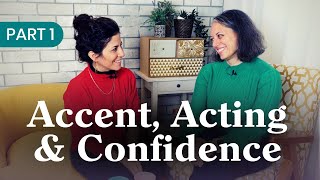
Mayra, an Israeli living in New York, spent years struggling with her English accent until targeted pronunciation training gave her the confidence to audition. She just landed the lead role in Calamity Jane with Rising Sun Theater Company.
Chapters
Hey everyone, it's Hadar. Thank you so much for joining me. What does it take to make your dreams come true in English? Today's guest, her name is Mayra, is a student of mine. And in today's interview she is going to tell you about her journey from being insecure and self conscious about her English to fulfilling her professional dreams as a businesswoman working in high tech and as an actress portraying a role not only in English but also in a very particular accent and doing an excellent job at it. Myra actually visited me at my studio, so I had the honor of working with her and teaching her in person. So I want to share our conversation with you today and it's going to be in two parts. Part one is an interview where she shares her story with you and part two is me coaching her on her pronunciation because also she was a part of my retreat and meetup that we.
Hosted in New York and she won.
One of the competitions and she got to coach with me one on one. So you'll be seeing how I coach my students. And she is very advanced. She has a lot of experience on her pronunciation. So that is going to be exciting as well. So this is part one and stay tuned for part two. Make sure you subscribe and like the episode.
If you did, you can also listen.
To these episodes on my podcast, the Influency Podcast. I will link to the episodes in the description. Let's listen to the interview.
Hi, Myra, how are you doing?
I'm good. Hadar, how are you? I'm good.
I'm so happy to have you here, here at the studio for a real live interview.
Thank you for having me.
Yes. So for those of you who don't know you, this is Myra. So, Myra, how are you doing today?
I'm good. I'm in Tel Aviv. It's rainy.
But other than that, she still made it. She made it here.
And I escaped the New York weather this weekend. Merry Christmas. I know.
Is it like freezing cold over there right now? Your friends are freezing. Yes, friends are freezing. That's a good tongue twister.
Friends are freezing. Friends are freezing. Friends. Yeah, it's a good one. It's a good one.
So for those who don't know you, would you like to tell us a little bit about you and maybe a short background on your English experience and learning journey?
Sure.
So, hi, my name is Mayra. I'm Israeli. I'm living in New York for the past almost 10 years. It's actually the longest I've ever lived anywhere. I lived in Israel, obviously. I lived in Egypt for two years. I lived in Germany. I speak German as well. And it was always important to me to be able to speak like a native in German. Hebrew was easy, but of course in.
English, in every language that you speak, you're like, I want to know it as if I was born into it.
Right. And really because of my insecurities, because, like, you want, you don't want to feel different. You want to feel like you can have a conversation and nobody will stop you in the middle. Like, wait a minute, but where are you? Are you translating from a different. Like, how are you? You know, you have an interesting accent.
Yeah.
And about 15 years ago, I started my acting journey. So it's step back. I work high tech company in New York City. I work with Americans all the time. I speak English all day. And I'm an actress now. There are people, Israeli people and foreign, other foreign cultures that speak English with a very heavy accent of where they're from. And that's okay. But when you're an actor.
Yeah.
It really limits your range of what you can do.
Yeah, I remember that when I lived in New York, that was my main focus. Like, the reason why I started my acting, my, my English, my speaking, my pronunciation work was because I wanted to have freedom in, you know, in this path. Like, I wanted to, I, I did not want to be limited by anything. And an accent is a big thing when it comes to acting in the U.S. yeah. So I can totally see why this was in addition to you wanting to sound like a native. And we'll talk about that in a little bit. It's also a question of, like, what can you achieve in your career?
Right. And in my high tech career, it's hard to say that I felt discriminated, but it's because it's not something you can actually put your finger on. But you. There were comments of like, oh, no, we only want Americans to be in sales, like dealing with customers because of culture differences or stuff like that.
And so they frame it in a way that makes you feel a little confused about why that is. But like, you, you know, the cultural differences obviously has to do with how you sound and how you respond and all of that. And I remember we first started working about four or five years ago, and I remember that it was really important for you, not just for acting really for work. Like, you were really focused on not people not noticing that you're not, you weren't born in the US and that's.
Well, first I was born in The US But I did not grow up there. But that's. That was a big deal because a lot of times I found myself in an executive room full of white males, like middle aged from everywhere in America. And I was the only woman not native foreign language with some metaphors that are not in the culture. It wasn't always baseball or football that I was referring to when I gave examples of somewhat. Sometimes military. It was not.
Yeah.
And beyond that, it's just to say what I want to say without triple thinking how to say it. Yeah, I know that it's not that I am not the problem, because even if I wasn't the problem, like, it was loud, the person is old and couldn't hear me. The minute they said, sorry, come again, say what? I was like, oh, no, I don't know how to say it.
Yeah, it's me.
I mispronounce my A's. I said a different word, you know.
Or I didn't understand what they were saying or all of that. And now they're thinking of me this, this and that.
Immediately losing my confidence, immediately going to. And, you know, did I say she correctly? You know, like, so that was a big deal for me. And then the acting was a whole different path, which I have worked before I met you. I have worked with American accent reduction coaches and all that. And they were great. Usually Shakespeareans. And yeah, they've worked with like British accent and like all that. But they couldn't really pinpoint, like what I needed. And I started, I think it was like a YouTube video that I've seen. And I was like, let me just work. Let me try with the free version. Let me try YouTube stuff. And I specifically remember it was the girl.
Oh, the pronunciation of the word girl, which is very tricky for a lot of Hebrew speakers, but everyone who doesn't have like the R sound or the L sound in their language.
So it was the girl. And after that was the school. I was like, there is no L in school. Especially not lamed.
Right?
Not the la.
And I was like. And then you were talking and a lot of coaches talk about the jaw movement and where the sound is coming from. It felt very theoretical. And what I found that I found that was most helpful for me with your method and the way you approach things was it just suddenly clicked.
Yeah.
Oh, I'm so happy to hear that. I mean, there's a reason why I'm keep coming back. And I was like, oh, so okay, let me try that. And then. And all the exercises would were broken down to vary just the digestible stuff.
Yeah.
Did I feel stupid most of the time doing th transition?
Yes. Show us what a th transition is. So Myra came to. She started one of my programs in 2018, accent makeover. And then we. She also had a one on one session with me. And then I gave her a bunch of. A bunch of drills to practice and to simplify the th. Show us the th transitions.
So it's really just breaking down like the THS or the THD. So just 10 minutes every day, not a huge deal. But waking up every morning and just doing. And reverse that. So all that made you feel really dumb. Especially if there's another person in the room. Yep.
All my students know what this is about. I know.
But I kept doing that. And my boss at the time, his name was Seth.
Okay.
And Seth said things. Speaking about tongue twisters. When I want to say, well, what Seth said, I was like, wait a.
Minute, that's a good tongue twister.
It works. It works. And it wasn't like Seth beforehand. I was like, okay. I can, I can say, yeah.
So the idea behind this, for those who don't know, is that those transitions. And I actually have a video about it, we're going to link to it. Those transitions, they kind of simplify this transition so that when you do have to use it, your tongue will already know what to do instead of you thinking about it or you training yourself using it in different contexts. Now it's like when you work on those transitions, it becomes automatic. You build the habits and then it's just going to be there for you whenever there is a transition without you thinking which the beauty of pronunciation work when it's effective. And then you say Seth said things or whatever that is. And it's just there for you.
It just worked. And I was like, I remember the first time I had to say that. I was like. Or I actually succeeded in saying it. And I was like, huh, that wasn't too hard, was it?
Yeah.
So I know I've said it before.
But thank you again. Well, thank you.
And then in my acting journey. So the last program I joined was a new sound with the little pods and we had a little group with a different coach that worked on specific things. And my goal was to get to the finish line. Being able to. Confident enough to audition for American parts and being able to get the parts. Yeah. And I'm actually, I'm gonna chill so that I'm saying it. But it was actually on my birthday almost last year. This year I auditioned for A play when I need to not just play an American character, but also an iconic American character in the American history called Calamity Jane, and she's from Dakota, which is a very specific accent. And I can do the cliche. So, like, I can do the cliche. Like, that's not it.
But I'm curious for a second. Is it easier for you to do, like, a caricature, a specific accent where you play Caricature of the character, or is it then, you know, you're working on, having worked on your own accent, what's easier for you? Does that make sense? My question? Yeah, because I find that for actors, sometimes they have more freedom if it's a character rather than them themselves, like their own accent.
That's interesting, I think, for me, because of the two worlds that I'm in. So the first one, the default for American accent was always like, oh, my God, like this amazing. And when you're in a business world, you don't want to sound like this. I know. It's all, like, cliche and doesn't really mean anything about the personal intelligence. It's all true. And yet you want to have the option. Yeah, yeah, yeah.
And you understand that your words, they have impact and, you know, like, in your voice and how you say things and.
Right.
And you want to understand how you use it to serve you best so you get what you want. Right. So it's not like there is a form of speaking that is totally fine in certain circumstances, but in others, they just don't serve you. It's not right or wrong. It's just that how are you gonna get what you want?
Right? And that kind of person is great for characters, is like, for that kind of, like, white girl, valley girl. Like, that's great for that. For others, it's really depends. I'm still not knowledgeable enough in the delicate differences between the specific American accents, because there's a lot and just not one Southern accent. And it was. That's actually funny because it was because. Because I was. I was born in Texas and I never lived there, and. But I used to come with my somewhat Israeli unclear accent. First time, like, talk to clients at work and be like, hey, how are you? Like, like, whatever. And they were like, oh, well, that's. That's an interesting accent. Where are you from? I was like, well, how do you define from? I was like, where were you born? And they'll be like, well, I was born Texas. Where are you? Like, what are you? And people will be like, so confused. What.
You Messed. Messed them up. Like, you know, like, I did not expect.
But that's the cliche of, like. That's not even a Texan accent. It's just, like, cliche of Southern, and there's, like, so many different Southern accents. So when for acting to, like, to play what I know and have more freedom in accents. Yes. But it's not specific enough for me.
Yeah.
I still have to work on it. I still. It's not like I cannot switch like this unless I did at work. Yeah. Ahead of time.
Yeah. So back to your story. Sorry I distracted you from telling us the story of what happened a year ago when you.
Yeah. So I auditioned. It was on my birthday, and I got to be understudy for Calamity Jane and another lead character who's French, so it's a different accent. And if you're in New York in February, please follow. I'm doing commercial break. Rising Sun Theater Company. We're having a show coming up in February, and three of these shows, and I hope nobody else will get sick. I'm gonna be playing the lead, so. Yay.
That's. That's. That's absolutely incredible. We're gonna link all the details below. But that's absolutely incredible because, you know, that was your vision for what you had wanted for yourself. This is why you worked on your accent. And not only that you got cast in an all American role. It also required you to speak with a certain dialect that was not native to you. Right. Because you mostly worked on standard American, and you live in the East Coast. So I think that is so inspiring, and congratulations. You worked so hard for it, and you deserve it. And I think that I'm so happy that you get to celebrate it now and to acknowledge this achievement, because it's a big deal.
And it's a big deal. And just to say. I mean, I'm sure everybody who's been through one of the programs know that it's not easy. And even.
It's not easy.
Even when I did, we did a little pilot, like, audience engagement thing, and I was working on that specific accent for that event. After a day, I was like, wow, that hurts.
Yeah.
Like, it's not.
Yeah.
It's. It's the same language. It's not the same muscles that working. And it was. I was like. And I only knew that muscle work because of that training.
Right.
And I'm sure that for you, it was easier because you had the training because you already knew how to. How to use those muscles and how to work your.
Yeah.
Pronunciation Tell me a bit more about the shift that you had from wanting to sound native so that no one asks you where you're from or challenges you or challenges how professional you are because of how you sound. Because I know that was a big deal. You share that into what's happening for you today. Because I feel, you know, we talked about it right before we started recording, and you mentioned that it's no longer the case. Like, it's still challenging or sometimes or. Or it could be. You might feel like you are not at the same level, specifically when it comes to cultural talk and idioms and expressions, that even though you've been living in the US for 10 years, so I'm sure that not a lot of it is foreign to you. But what has changed in terms of your mindset and the shift that you had to make to feel more confident?
I cannot take credit for that shift. We'll give all the credit to you.
No, it's all you.
No, no, let me finish. Because I was very, very focused on sounding like a native. I was like, nobody needs to know. I don't want anyone to ask, like, where I'm from, if, like, whatever, I grew up here. What would not. And at some point. And it's very frustrating, right. Because when you're tired, when you're drunk, when you speak different language all day and then come back to English, it could be some sounds will feel different in your mind. Like that transition. And then you shifted from sound like a native.
It's true.
To clarity.
Yeah. And confidence.
And confidence. And that was like, aha moment for me because I was like, yeah, that is what matters. Yeah. That is more important so people will understand what I mean. And it's more important for them to understand that I did mean sheet or, you know, I have tons of embarrassing stories to share about what happens when you don't pronounce your E's correctly. And be confident about it. If someone be like, sorry, I didn't get that. You're not like. And then it's only getting worse from there. Like, for me, when I'm getting panic, I was like, it will only, like, I'll be small. I will not open my mouth.
Yeah. And then you're, you know, your sound, your voice, everything's affected.
It's getting worse.
Yeah.
I'm not as, you know, loud and. Or, like, my volume will decrease, and.
It will be like.
And then I'll make harder for everybody else to understand what I wanted, and the message will not come through because I was so confident the first time. And then someone questioned it and I'm like shrinking. What does it mean about my opinion?
You know, so good.
And. And I'm sure some people are familiar with. You're not always in a welcoming environment or supportive environment. Yeah, yeah.
Especially when you say, like in a room filled with men, you know, who never had to fight for speaking up or sharing their opinion or using a language that they weren't born into. So of course it matters. And it could affect your experience. The question is, are you going to let it affect you or are you going to.
Yeah.
Show up the way you deserve to show up.
Exactly. And even with acting, like sometimes, you know, you audition and someone will be like, I didn't quite get that. And then immediately I'm like, it's my accent. Sorry.
But.
Will be.
So I'll be like, it's. It's probably me. When it's not necessarily most time. It's not.
Yeah.
And so that was a huge shift for me, thanks to you. At some point I started and because of the very tedious exercising.
Right.
And because it goes together, it's like the mindset work and the exercises because you still have to work on it physically.
Right. Yeah. And I was like, wait a minute, I do know how to say those things.
Yeah.
So I'm going to repeat myself for. For the other person. Not because I didn't do a good job the first time. You know, it's like, that's. So it's really started and right now, and it's not 100%. I still sometimes get the cringe of like, hey, where's this accent from? Like one accent. But it's, it's becoming less and less. And. And you help me understand that it's actually something I need to be proud of.
Yes.
Hey, I speak three languages. How many languages do you speak, Mr. White American Guy? Like, you know, I kind of. Yeah. You know, and.
Yeah.
So, you know, that's something that was really helpful. And I can do it in a. In a clear way. I know I can convey my thoughts in a very clear and meaningful way.
Right.
Confident way. So it's, it really lets my true self, my personality come out without thinking about it. And that was the main thing.
Amazing.
Wow.
And I think, you know, what you're saying is so important for people to hear because that entitlement that we don't feel because the language is not ours is something that we need to make ourselves feel like we belong in the language. We deserve to use it. Whether we make mistakes or we don't make mistakes. Whether we understand the people around us or whether we don't, it should not affect our internal experience, because when it does, it also affects our fluency, our clarity and all our voice, all of that. But above all that, it doesn't allow us to show up for who we really are. And then you're limiting yourself. You're hiding yourself. You're stifling your impulses, and you. It can also affect your professional abilities because you're not sharing your opinions. You're not showing up. They don't know what you think or what you care about. Right. Because you just don't want to be. To say something and to sound different or like you don't belong.
Exactly.
So, like, we need to eliminate that. That fear.
Yeah. And one other thing that I realize I'm doing more now is I'm. I'm not ashamed of asking. So, like, especially now, like, we worked on that. We had to read through the script of for the show in February.
Yes.
There's a lot of old English terms because it's like in the 1700 thing and that I've never seen before written or sound. Right. And I was like. So I. I just. I caught myself after the fact being like, oh. I stop and I ask another actor who's next to me. I was like, how do you pronounce that without so Or. I tried. I gave it a try. And I was like, is that how you say it? And there was no shame about it. Oh, my God.
This is so important, because I think that once you let go of the shame of asking, what does that mean? Can you repeat yourself? A lot of people are afraid of not being understood or not understanding others, and that's preventing them from speaking. If that's the case, just ask. You know, that's the thing. Like, there is a shame around asking, showing, as if we don't know. And I think this is so. And that's probably something you would not. Would not be that easy for you to do, let's say, five years ago.
No, no, not with specific words. I would like, in meetings, secretly Google, like.
Yeah, right.
Like, have the facade of I know.
It all and then, what is that word? And then use the other word, because I don't know how to pronounce this one. Like, literally the table or phrases. Right. American phrases.
Yeah.
From different. Like specifically, I remember someone from, I think the south was saying something, well, let's not go around the barn about this. And I was like, I. I'm sorry, I don't know. There's a. Let's wait till the cows will come home. Something like, weird. It was, like, very cultural, like, specific or. And I was like, I'm sorry, I'm not familiar with that phrase. And they explained it to me, and my response was like, I'm Israeli. I don't go around the bar. I go through the freaking barn. But I didn't care for asking. And also, it was just like, shut.
Up and be like, pretend like you got it. Yeah, yeah, let's pretend. And then you don't learn because you're always like, what they meant. Exactly. And then you feel very limited. And that's another thing. Like, I think that people should be. Should acknowledge the fact that they speak with people who are not from their, you know, surrounding or school or whatever environment, and that people have different experiences with a language. And sometimes a certain dial idiom or expression is not the right choice to use. It's just, like, bad communication.
Right.
Because even native speakers, when they communicate, it's important that they use words that they know will help them get what they want, which is to be understood as well. So we all have responsibility in. In this.
Yeah. It was my. My partner, and I was joking. I was. I mean, everybody's using let's touch base. Let's touch base. At some point, I got so angry. I was like, what about. What about touching bass?
It's not baseball we're playing here.
He keeps getting to that. Now it's a joke, right? But then I was like, I don't know.
Like, it's not, you know, I don't love baseball. I don't want to talk about baseball. Right.
But especially in the business world, a lot of, like, many expressions are coming from sports. Like, people watch baseball, football. They would talk about, you know, like, touching base. That's like, maybe the most common one. And people outside this area, but, like, you know, like, hitting home run and, like, doing all that and that they refer to it in a business context.
Yeah.
And I'll be like, okay, but is that, like, you know, scoring a goal in black soccer? Like, I'm not 100% sure.
Like, what is that?
So it took me some time to learn that, but I had to ask, what does it mean in the beginning? You're absolutely right. I was like, yeah, sure, let's hit a home run.
So as asking is a big takeaway, I think here not being ashamed when you don't know something. Before we go into the coaching part, where we actually practice pronunciation together, what is the one piece of advice you would Give someone watching this, Maybe someone who wants to work in the US but are afraid because they're not native speakers. Maybe they have immigrated, but they're, you know, they're thinking of finding a job, but they, they're afraid of what you had described. So what would you tell them?
I would say go with Hadar 2.0. You don't need to sound like a native. You need to have clarity and you need to have confidence. That was a really big deal for me when I got that and it's so much weight off my shoulders.
Yeah. You don't take the responsibility for everything and the every piece of communication and outcome and what people are gonna think like so much to deal with what they're thinking about me, how it's going to be perceived, how it's going to affect me. What have I done? What have I not done? Right. Like all of that and also not.
Needed face for me the reality. It's impossible to sound like a native. Not because I can't practice to get there. It's because, like, who is native New Yorker?
Isn't it so true?
Is that like California accent?
What is native anyway?
Yeah, it's like when I started now learning Spanish and they're like, what do you want a Colombian Spanish? Do you want a Spain Spanish? Do you want this? It's not just one dialect fits. All right. So, yeah, just focus on being able to say what you want to say and clear and confident way. And for me it was a, like, it was a really big deal and.
I think we'll go far.
And the confident part, like, it's, it's good that you're coming from another culture. It's good that you're coming from another language, you know, more than the person who most likely interviewing you because like, they probably didn't and you know, they didn't go places. And especially if you're immigrant to the, to the US or other English speaking countries, like, whatever you went through, that's like your life resume, like you reinvented yourself in a different language. And that's like the best advice I think I can.
I know it's like I always talk about the immigrant experience and how much immigrants had to learn and had to go through and the challenges they faced. You know, that says so much about them. And a lot of, a lot of immigrants are still, you know, they might still feel inferior because of the language, but it's kind of like you have to switch around the experience and to reframe it and to think about all the things you have achieved and are possible for you that other people have no clue on how to handle half of the challenges that you've faced.
And maybe one more thing. I mean, we're learning a different language as adults. Put aside the brain part. I know there's different theories about that, but we compare ourselves to kids that learn new language. And this is a wrong comparison, because think about a baby, when they make mistakes, it's cute. And we all encourage them and we laugh and we'll be like, oh, it's cute. But you don't say this. You say that as adults, we already judge ourselves before even opening our mouth of like, oh, but everybody else was. It will judge me. Everybody else will like, yeah, maybe it's not cute and the environment is not as supportive, but we also judge ourselves and. And it's the wrong criteria.
Yeah.
Because we're not having that. You know, we're not. Sometimes we're not even immerse ourselves in the environment like babies. Right. You don't hear it all the time. Depends where you are. And it's. It's a very different experience.
Yeah.
And if you have a different language that you grew up in, it's. You already have the background of a language. You already have a logic that may be different than the language you now trying to speak.
Yeah.
So that's another thing I was like, I don't know about. My brain is getting old. I can't get. It's just a whole different, you know, environment and a whole different system that supports that journey with the new language.
Yeah, yeah, yeah. And I always say, like, you've already learned a language once.
Right.
You know, you can do it again. Your brain knows how to do it. And a lot of times we just get in the way with all the fears and maybe, like, the wrong strategies. And also, you know, the education system in certain places around the world is not ideal. We can speak for, like, you know, our experience. It doesn't teach you to. To be a good speaker just to pass exams. So some. Sometimes you'll have things in your way, but if you find a way in an environment that allows you to thrive rather than to always feel like you're not good enough, then it's possible for you to succeed because, again, your brain knows how to do it, how to acquire a language. So, first of all, thank you so much for this amazing conversation.
Thank you. I mean, you've been. I know you didn't know that until, like, now, but you've been really a big part of my journey. So I'M so honored, and I'm glad I found you.
All right, so actually, the next part is going to be in the next episode where we're only going to talk about pronunciation, and I'm going to coach Maura, and we'll talk about specific sounds that she could still work on and some intonation patterns. So stick around and I hope to see you in the next episode. Thank you so much for this conversation.
Thank you.
It was a pleasure. I'm gonna post links to Myra's Instagram if you want to follow her journey in New York City. Come see the play and go see the play. Absolutely. Thank you so much. And we'll see you next week in the next episode.
Thank you so much for watching Part one and to watch Part two, make sure you subscribe to my channel. If we already published it, then we will link to it in the description below. In part two, I'm going to coach Myra on her pronunciation, helping her with some nuances in particular sounds to help her speak effortlessly and with clarity, especially since she needs to use her English in her acting roles. All right, so I'll see you in the next episode.
More from Hadar











Read Out Loud with me! Dare to Lead by Brené Brown | Pronunciation & Vocabulary practice