0:45
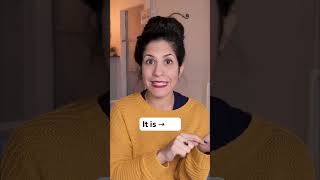
Hadar Shemesh explains why "is" sounds different after certain words. When "is" follows a voiceless consonant like the /t/ in "it's," the /z/ sound becomes /s/. She shows how this rule works in contractions like he's, she's, and it's.

Hadar Shemesh explains why "is" sounds different after certain words. When "is" follows a voiceless consonant like the /t/ in "it's," the /z/ sound becomes /s/. She shows how this rule works in contractions like he's, she's, and it's.
The word 'is' ends with a Z sound even though it's spelled with an S. So 'is' comes after he, she, and it. After he: he's. He's great. He's working so hard. She is, she's. She's crazy about it. It is, it's. What happened here? The 'z' sound became an 's' because the 't' is voiceless, so it affected the 'z' sound of the 'is.' So the 'z' became an 's.' It's, it's, it's horrible news. It's wonderful news. Why be negative? It's wonderful news.

Read Out Loud with me! Dare to Lead by Brené Brown | Pronunciation & Vocabulary practice




