How to pass IELTS Speaking? Strategies from an expert
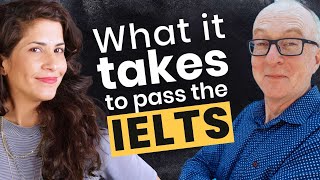
Hadar Shemesh talks with Keith from English Speaking Success about passing IELTS Speaking. Learn vocabulary slightly above your level, build grammar through repetition, and manage test-day stress with topic-based practice and real conversations.
Chapters
Are you preparing for the IELTS exam but you're dreading the speaking part? Do you feel like you want to improve your English speaking in general and you'd like to get some tips and strategies on how to do that? If the answer is yes, then this episode is absolutely for you because today we are going to have a conversation with Keith from English Speaking Success. Keith is a teacher, an English teacher with vast experience around the world in teaching students, helping them prepare for exams, but also teaching teachers. And today he is going to share some of his best tips on how to help you succeed in the speaking part of the exam. We're going to talk about using vocabulary, we're going to talk about grammar, we're going to talk about confidence and so much more. So if you're interested in improving your English speaking and also in succeeding in the IELTS examination, make sure to tune in all the way until the end. So let's go ahead and listen to our conversation. Hi, Keith, it's so nice to have you here. How are you doing?
Hello. I'm very, very well, thank you. And thank you so much for inviting me here. It's a great privilege and a great honor. I'm really excited to talk about you. Talk about you talk about everything, about.
English, about our students, about exams. Yeah. And I'm really, really thrilled to have you here, first of all, to share your experience and tell us a little bit about who you are. You have vast experience in teaching, so I'm curious to hear more about you and your history. Teaching history. And then we're going to help our students understand how they can improve their preparation for the IELTS exam and exams in general, which could be like a pain point for so many people. So this is why I'm really, really excited to have you here.
Fantastic.
So let's start. Let's start with the beginning of. Why don't you just tell us a little bit about you and what you do and why you do this?
Well, that's a big question. Why do I do this? So my background is in teaching and education. Well, I began teaching in my 20s, basically in Europe, in France and Spain. I did the CELTA certificate and became a Director of Studies of a school in Spain. Then I became very curious and I moved to China and I lived in China for many, many years doing teaching, teacher training. I began working with the British Council and worked for them for many years and did educational project management, actually, which is where we worked with the government in different countries to help develop the teaching of English in primary Schools, secondary schools and universities. And then. So I was in Asia many, many years, Malaysia as well, and then moved to Spain. As we mentioned earlier. I moved recently back to Spain. About five years ago. I decided to leave the. If you like, the corporate life of educational project management and set up on my own to try and reach more and more students. I had this mad goal of reaching millions of students. And it's become true. It has really become a.
How amazing is that? I know being able to reach and help so many people around the world. You have over 3 million subscribers on your YouTube channel, isn't it?
It's crazy. It is absolutely crazy. And I sometimes wonder how. How. I mean, it has taken a long time to build that up, but it has been amazing. And the students there are fantastic, who come watch the videos and the comments are so useful and motivating.
But that was a community of students on YouTube.
They're great. They really are. They're really very supportive and it's great. I mean, so that's going back to your why? Question. I guess that's one of the reasons I do this, is to try and support and help students reach their goals with English through digital means. Because I think it's one of the most powerful means for reach and depth. I think originally I thought it was just about reach, but I've discovered. I mean, I. In my gosh, how old was I? I think in my. When I was 45, I did a master's degree in digital education and. And began understanding better how people learn online. And now implementing that to realize you can get great depth of learning as well as reach. So it's been an incredible journey. Yeah. Yeah.
I think, like, there's a big shift between how we perceive education and especially language learning since, like when I was raised and learned like, let's say 30 years ago versus today, how people learn, the attention span, capacity to learn everything is a lot more flexible, modular. So it's, it's. I'm so, you know, I'm sure that you've. You're putting into practice a lot of things that you've discovered and learned throughout the years, and you're totally, totally.
I think there are some things that are much better online than face to face. There are other things that work better face to face, and it's kind of getting that right balance of things and then the balance with what people want. You know, you talked about this focus for maybe you're scrolling and every 10 seconds you want something new. And balancing that with what students really need is a Tough one as well, but it is an interesting one.
Yeah. I've once heard a really good sentence that I always go back to, which is, offer them what they talk about what they want, but really give them what they need. So it's really important because sometimes if you just talk about what they need to succeed, let's say you need confidence to pass the test and they'll tell you, no, no, no, I need more vocabulary. So there is like. But ultimately, when you have more confidence, you can use your passive vocabulary more confidently. So it's kind of like you have to, as a teacher, you have to find the balance between helping them, drawing them into the actual work that they need, which I'm assuming that's what you do.
Yes, absolutely. Yes, yes. And the world of YouTube, I mean, with thumbnails and titles. I think students should understand that very often we put out tit thumbnails to get them in the door, like something attractive. But then you've got a chance to really give them things that they need once they're watching and inside the video.
Yeah, absolutely. So your. Your focus, or a lot of the work that you do, is designed around helping students succeed in exams, right?
Yes. In particular, the IELTS exam, which is the exam they need if they're going to migrate and live in another country or study abroad, where English is the. The means of education.
What would you say the biggest pain point is when studying for an exam or even before migrating to a new country and thinking about this?
Yeah, it's a very good question. There are several pain points. I think probably one of the biggest ones is students. They. They. A lot of students want to get the test quickly, so they see the test as something. As a threshold to get into university or to migrate. Therefore, I need it as quickly as possible. Often they don't think about it till the last minute. And so they've got like, oh, my God, I've got my test in a week's time or in a month's time. I better go and study now. And the biggest challenge, I think, with this English IELTS test is it's not really about exam technique. That may be like 20% of it, but it's about building up your English level to the level that you need. And that takes months, if not years to do. And it's really. I think many students don't fully understand that at the beginning. And so they're rushing. And so the pain point is, why am I. How or how can I get the test, the score I need right away, quickly? And Often they can't. And you get students who do the test 3, 4, 5, 6, 7 times and still at the same level because they're focusing on exam technique and not building up their level of English.
Right. Because ultimately the exam is designed. Is supposed to reflect the actual level. So it's not just about passing the test. Even though I'm sure that there are some techniques that you can. That can help you succeed. But ultimately it's about the language skills.
Yes. I mean, IELTS is one of. Yeah, it's one of the most researched and best accurate tests out there for English. And I say that as a little bit as an advocate of the British Council and the IELTS organization. But I think it's true. Having so seen behind the scenes how they do it, it does reflect in many, many, many ways your ability to communicate English. Spoken English in particular, or academic English, if you're talking about reading and writing.
What would you say about that aspect of stress when you walk into a test and you get so stressed out that, like, the result doesn't actually reflect your true level?
Yep, yep. That is a factor that happens to a lot of people. As, you know, speaking a foreign language is very stressful. I mean, I know that from personal experience as well. And so that influences the score for a lot of students. They may be capable of more, but they're just so stressed out and nervous and. Yeah. So I think as trainers and teachers, we have to work with students to overcome stress. Maybe overcome is not the right word to accept that level of stress and handle that stress.
That's a good straight.
Yeah, you can still perform. I mean, you know, when I get nervous and stressful, I don't fight it anymore. You just kind of let that happen. You feel the nerves, you accept them, and then you carry on with what you're doing.
I'm stressed right now. This is how it is. You know, let's breathe in and I'll still do my best. And also, like, I think then you get into a loop when you're thinking, oh, I'm stressed, it's not as good as it could have been. And then that also becomes your narrative in your head, and then you're not present and you're not. You're probably underperforming when that happens.
Yeah. Oh, totally, totally. Yes. And it's a shame because I think there's a lot of rumors going around that examiners are trying to trick you and catch you out. Therefore, people are more and more nervous. But the truth is, the majority of examiners really Want you to do the best that you can. Right. They want you to perform well, and they know that if you're nervous, you won't perform well. So most examiners will try and just relax, take your time, everything's okay. I'm not here to catch you out, just to see how you perform, how your English is.
You know, it's funny because I always talk about mindset when it comes to speaking a second language. And there is the aspect of speaking with a native speaker which makes you feel evaluated to begin with. Right. That's like, from at the outset, you already feel evaluated by simply speaking a second language, and there is an element of stress there. So to add that the exam that you're actually being evaluated, like, I can't imagine. But at the same time, practice preparation, you know, like mindset work. All of that can definitely help our students with being prepared, expecting this to happen, and then managing it, like you said.
I totally agree. Yes. And that kind of acceptance as well that I think you often talk about is just accepting. If you're at a certain level, let's say intermediate, then accept you're there. Don't be angry because you're not a higher level or that people think, oh, you're stupid because you make mistakes. No, just accept where you are and slowly work to develop and build yourself up.
Yeah.
You know?
Yeah. How. How much in advance do you think students start preparing for a test? Let's say they. They have the thought of migrating. So, yes, it does take time to build the language confidence, but the actual test preparation work. For example, students work with you.
Sure. My advice to students would be, when you're thinking, when you're starting to think about this, don't book any tests. Just try and find out your level. So you can, you can go on Italki or Cambly or preply. Find a teacher who will give you a mock test of your spoken English and find out your level. Talking about speaking. Right. For the moment, find out your level and then find out what level you need. Because IELTS isn't about passing, it's about getting the score you need. So if you're immigrating, maybe a six is enough. If you're studying abroad, maybe a seven is needed. And then, okay, decide if I'm a six now or I'm a 6.5 and I need a 7.5, then you can get an idea of how long you need to prepare. And the truth is, if you want to jump up one band from six to seven, you're probably going to need nine months, right? Six to nine months if you're studying, let's say, I don't know, between two and five hours a week, which a lot of working people are, because these, a lot of most people are adults. So they can't be studying five hours a day. If you're studying five hours a day, five hours a day, maybe in three months you can do it. But otherwise you've got to balance your life, your screaming kids, your family, and studying for ielts, it's going to take longer, I think, when it comes to the preparation, the actual exam technique, preparation for ielts speaking could be, you know, two or three weeks. And technique, exam technique for reading and listening and writing, probably months. I mean you. Because it's not just knowing, it's being able to do it and you get that through practicing doing it.
Right? Yeah, that's a good point. That's really great. What would you say about learning vocabulary? Because here's the thing, when you go online, then you have all these videos about advanced speakers. Say this, and this is basic English and this is advanced English. And there are a lot of vocabulary, there is a lot of vocabulary content. And you know, sometimes I go into this conversation that yeah, there's spoken English and usually people don't use high end or fancy vocabulary. And then I get the pushback that for exams it's really important. So let's talk about it. Do people really need advanced vocabulary, which means words that are not commonly used in day to day conversation for the spoken part of the test or is it just for the written part? How is it, how does it work?
So let me step back a little bit because I think you said something interesting about these videos that show simple English and advanced English. I think the most important thing when learning vocabulary is to be learning vocabulary slightly above your level. So if you're a B1, there's no point watching videos that show you C2 language, there's really no point. And that's not going to help you if you're preparing for ielts. Learning all of this vocabulary that's way above your level that you don't really understand is not going to help you. So I think the first thing is be focused on the vocabulary for your level, right? That's what you need. It's not maybe what you want, but it's what you need. And then the other thing I think I'll talk first about speaking is I think in the speaking test your focus should really be on communication. So you've done the preparation, you've Learned quite a lot of vocabulary. But when you're in there, you focus on communication. And I think the big mistake is students think I've got to use that really fancy band nine word I learned last week, what was it again? And they try and squeeze it in and it just doesn't work. And you know, when native speakers or proficient speakers, you know, like yourself, they're speaking in English. We don't use advanced vocabulary all the time. There's times where you just, it's a mix of simple vocab and maybe more advanced vocab. So it's useful to have the advanced vocab in your artillery if you're at that level. But, but you're not going to be using it all the time, but you may need to recognize it. And now and again you'll pull out some impressive words. Maybe, but, but they have to come naturally. And that only happens when it comes from the level that you're at or just above that level.
Because I think that even for me now that you said that, I was thinking about like how I communicate and how I use my vocal vocabulary and I noticed that I use simple vocabulary. Right. I don't use a lot of advanced vocabulary. But every now and then when I try to make a point, there is like this one word that comes up in my brain is like, that's the word I need to use. And I know that it's a little bit, might be a bit more advanced or above the level of a lot of my students and I absolutely use it because this helps me communicate better. But it's interesting because it's not something that is always available. It's like when you have like a specific, specific point to make or maybe sometimes it's, you've heard it recently and then it's just like available there and you want to use it. So your brain is like, ah, let's try to put it in a sentence. So this is how it actually works in for, for most people. And, and that, that's interesting what you said because it's like made me think about it.
Yeah, absolutely. Right. Yeah. I mean the, the thing is, I think it's often topic related. So maybe we're talking about everyday life and suddenly somebody says, oh, and the recession's really hard hitting. And that's, I mean it's topic related. Recession, hard hitting. But they're not words you use all the time. I mean the fact is if you do conversation analysis, the kind of words like connectors, for example, students learn and I teach first and foremost nevertheless, in addition to that, on top of that and all that's good to know. But 90% of connectors in spoken English is and, but so, and but so that's it. So it's getting the balance really right.
Right. I love that. How do you help your students incorporate more vocabulary if they're at a more beginning level or how should they prepare?
I, I, so I do it topic based. Basically it's looking at a particular topic. And if I were working with a, I mean, I don't actually teach classes per se now, but when I did, I would be working, let's say with beginners or intermediate. We'd look at the topic of food or cooking and we'd be using vocabulary at that particular level. If they were a high level, we'd be using more advanced vocabulary. But I try, I think context is all important and having it topic related helps the neurons of the brain connect it. When you're talking about food, for example. And I do that now. I mean every month I do a live lesson. I live stream on YouTube and I take a topic. Common topics from IELTS like meetings or maybe not meetings is not that common. But you know, health, food, travel and, and we just go through and it's quite hard on YouTube because I don't know what level people are. So I try and give a little bit of everything, kind of some lower level stuff. Then we work up and made it, make it higher level. Um, there's a challenge of teaching online is you, you are trying to, you are kind of trying to appeal to everybody. And so yeah, it's, it's a bit of a balance. But yeah, topic related I think is, is my personal preference. It doesn't mean it's the best way, but it's my personal preferred preference.
I do that as well. Not for, just for conversation practice. Right. So it's not specifically for the test. So I, I'm very much aligned with this and I've noticed that if you use ChatGPT, for example, which is a great tool for learning English, because like you said, people who learn online and I think learning online is such a great, it makes everything more accessible, but they have to own their own journey. They have to understand where they're at and to accommodate or to modify the lessons that they get based on what they're capable of doing or understanding their own level. And when using ChatGPT, what you could do is really just ask for conversation topics and suggested vocabulary for each. And then usually that's a really great way because you have the Question, you can ask for a specific level vocabulary and then for people who practice on their own, what do you think about that method? Like what do you think about using ChatGPT for exam practice?
Absolutely. I think we are on the threshold of a great change in education with not only ChatGPT but with AI, basically. Yeah. I think that's great because it enables you, you can get from ChatGPT the context. You can get sentences, stories, conversations with the vocabulary you choose. Of course, the thing is it's 90 something percent accurate, but that's okay. You're studying on your own. Nothing's perfect. Real life is about communication with people. And so as a practice tool, great. But as a part of your study and practice, you should try to communicate with people because that's where the difference happens and that's where the magic happens in many aspects.
Right. And I'm going to take it back to what you said at the beginning. When people sit in front of the, in the exam and, and they get stressed out and then they think about, you know, what to say and how to say it and they forget to listen to the question or response you in the, during the exam, but also in real life conversations. And I think it's so important to be present, to really listen and trust that the work that you've done is going to be there for you than to plan and. Which is something you can do when you practice with a robot but not with real people.
Yeah, no, I'm a big advocate of pushing your boundary. What's the expressions get pushing out of your comfort zone. Doing things where you're not so comfortable speaking to people, where you think, well, I'm a bit nervous to do that. If you're feeling that edge, then that's a good thing because that's building up your ability to communicate. I mean, very often students say, oh, I, I've, I've done a mock test online. I'm a band 7. I did the real test and got 6.5. And I would say, well, no surprise because the real test, you're, you're probably, your score is probably 0.5 less than your real level because the pressure of everyday communication is so high. You will underperform. Most people will underperform. It's another thing practicing with ChatGPT or your, your favorite teacher you've been talking to for six months and then suddenly speaking to a complete stranger and your performance is going to be lower. So you have to prepare for that as well.
Yeah, yeah, yeah, yeah. Okay. So we talked about vocabulary. I'M curious to know how you help students or what you would recommend students to do when trying to improve their grammar. Because it's also like when you do the written exam or when you have to think about grammar, when you have time, it's a lot easier. How do you implement what you know when it comes to grammar? When you speak, do you have any tips or strategies to learn and practice?
Yeah, it's a really, really good question. I think it's a classic situation, right, where students say, oh, I've studied this grammar 15 times and then they speak, can't use it correctly. It's that kind of fossilized mistakes that are just fixed that they've been there for so long. I would take a two thronged approach. I would look first of all at building up your passive knowledge or receptive knowledge of grammar. So I'm a, you know, I'm a big one for reading and for listening. I think if the more you read, yes, you build up vocabulary, but you just build up this feeling of what's grammatically right. You know, when students say, well, it just feels right and it usually is, it's because you've been exposed so much to the language, so reading a lot more than you normally do. And the same for listening and there's no excuses. Now the world has facilitated all of that for podcasts, for videos and stuff, maybe. Yeah, I mean, expose yourself to much more language so that your sense of grammar is stronger. And then it's practice and I think taking time. But I realized, I mean, I created a course for this. This is not meant to be an advert at all. But.
No, no, go ahead. If there is a tool that can.
Help students, the tool there is fluent grammar and it's a grammar based course. But what I do in the course is I take different tenses, for example, and I. We go through them to understand the meaning and most students understand the meaning, but then with me in the video, they repeat and we focus on pronunciation and intonation and reacting and changing different words in the sentence so they're actually thinking about it. And that kind of automation of using it, I think is the first step to using grammar successfully in speaking. It's not going to solve your problem because you need to practice it afterwards. But having that foundation of having repeated it with the right intonation or not the right intonation with a native speaker pattern, for example, because as you know, intonation, there's no rules really, I think that that helps and that that can be a first step.
Yeah, yeah. I always Talk about how grammar is just. Or pronunciation or vocabulary is just like a set of habits and just like to build a habit, you just need to repeat it again and again until it's automatic. You don't have to think about it. Right. Just like with any new habit. So you spoke about repetition. Repetition is a big part of what I do for pronunciation, but also for grammar, because it really is to take it away from the rule, you know, that we studied on, like with the board and then that, like ver +I and + +b +ing. Right. Take it away from that and to just make it a new pattern. Which is. Which is what you just talked about.
Yeah, absolutely. It's sometimes connected to pronunciation as well, as I'm sure, you know. So, I mean, I. Sometimes I get students to record themselves and then play it back. And they, for example, instead of saying he takes, they say, he take. He go. He did that?
Yeah.
And I go, listen. Back and listen, they go, oh, I didn't realize. I thought I was saying takes. But because that's not natural to them, they just say he take. It's a pronunciation issue as well sometimes. So it's. I think recording yourself can raise awareness, which will then help you fix the problem.
Yeah, yeah. I think. I think we're so unaware of what comes out of our mouth when we speak. We think we're saying one thing, you know, and then it's something completely different.
Exactly.
Let me ask you this. Like, let's say people do prepare for, you know, they have that goal to prepare for the exam, and then what. What comes after what? How would you recommend for someone to practice? Or what should be their focus beyond the exam when it comes to learn, you know, being a speaker of a second language.
Wow. Good question. So getting students to think beyond the exam is quite hard because most people, most of us think mid to short term, so to think long term is difficult, but I think it's a good idea. So I think that the big message I give for students is don't just try and pass the exam. Don't learn the minimum, but focus on building up your overall level, your ability to communicate. Because when you go to the States or Australia and you're in the university, it's not just about having enough to understand. You've got to be able to communicate to teachers, communicate with colleagues, live in the community. I think you've also got a responsibility to contribute to that community. You're in there, you've got this opportunity to do so much more. And if you are able to communicate better, with better English. You can give so much more to friendships, to people, to everything around you. So I think raising awareness of that great opportunity in the long term is actually going to help you in the short term get the score you need in the test. Yeah.
Because ultimately it's just the means to get to your goals and your vision and, you know, what you want in life. English is not the end goal, although it feels like that when you think about the exam, but it's not really.
Yeah, they do. I think people see the certificate as their end goal and it's not. You're right. Your end goal is not even English. Right. It's, as you say, it's. It's taking your family to live in another country or having the opportunity to study at Harvard, whatever it may be.
Right.
You know? Yeah, yeah, totally.
So you've been doing this for a while. Can you think of the top of your head of like, one success story of a student who really struggled and then they did the work and then, you know, they, they were happy with the results?
Yeah, that's a very, very good question. Yeah, quite a few. There's one recently who got back in touch with me, Hanan. And she had studied English and when she joined the course. So I have an online course, it's called the Gold course. When she, she joined that about a year and a half or two years ago, she hated English. She found English really difficult and she, she. She didn't have the motivation to study for an exam. She was finding it frustrating being, you know, because so many students preparing for IELTS are at. @ that intermediate plateau, they can't push up. And so I think what was great was she found motivation in the course. So the course has a community and there was a chance to speak to other people, at least to chat to other people through the Facebook group and, and share stories. But then the course started adding. I started adding what we call breakout rooms where students can speak to each other. There's no teacher, but they speak to each other. And that. That was a big game changer. I think for her in particular, the chance to push the boundary, as we mentioned before, that she was out of a comfort zone and practicing and thinking, guys actually understand me. I can. I can get better. And she came back several months ago and said, yes, I've got my band seven. I'm now going abroad. I'm going to be living abroad and studying abroad. So excited. And, and she'd actually started learning French. She'd taken up a new language as well. She was moving to Canada, so that would have been a useful addition. Um, but imagine the change from somebody who had headaches and hated learning English to starting to learn another, a third, second, a third language, foreign language. It's a big, big change. It was a joy to see and it was really, really nice. I was so, so happy for her, but pleased to see that, that, that kind of cycle of studying and studying and practicing with people and feeling a bit uncomfortable and then doing the test and it took time. Right. This was not a two week. Hello, I'm fluent in two.
Weeks. Right. You know, she showed up, pushed herself out of her comfort zone. Like that's what's.
Needed.
Yes. You know, it's not, of course, you have the beautiful structure that you have created in the right environment to succeed, but also it's the determination and the. And, you know, also the belief that it's possible that she probably had. Which was a perfect combination for.
Success. Yeah, absolutely. And it takes different amounts of time for different people. I mean, you know, some people may get their success in two weeks. Maybe that happens. Other people take nine months. I think it's important people think, you know, when you look on the Internet, you think, oh, well, everybody's getting their band seven in three weeks. I should as well. No, don't, don't compare, you know, don't look at other people. Just look at yourself and focus on your progress yourself. It may take you a year, but so what? You've got a whole life ahead of.
You. Right. That's a. Such a great perspective. Keith, any final tips for students who are about to take the IELTS exam or anything? We haven't talked about.
Anything. We haven't talked about final tips for students. Maybe it's a mindset thing. You know, believe in yourself. Believe in your ability to do things. Don't compare yourself to others. And I think I see language, you know, I mean, I, I do speak other languages at different levels, but I do see as a kind of identity thing. I, I see my, my Spanish as part of my identity. It's part of who I am and how I live my life. And I think it doesn't matter that I got that when I was a beginner in Spanish. It didn't come, like, years later. It's just something I felt very early on. So it doesn't matter what your level of English is. It can be a part of your identity if you accept it and, and want to take it rather than fighting it. Right. The struggle against English. Just change that mindset to the, the joy, the enjoyment it can bring you and, and change, if you like, to a positive mindset or an accepting mindset. I, and I think that can help with your learning journey, especially for ielts, you know, you want to have fun and stay motivated as.
Well. Yeah, such a good point. It all comes down to mindset, you know, and how you approach so much in.
Life. So much is around mindset.
Yeah. Keith, how many languages do you.
Speak? So I speak Spanish pretty good, French not bad, Chinese intermediate level and English is.
Okay. Pretty impressive. I'm very impressed. Where can people find you? Where can people find your courses if they don't know you.
Already? Right. So my YouTube channel is English Speaking Success. There are hundreds of videos out there. I go live the first Thursday of every month at 10am I go live out there. We do about two hours, an hour and a half or two hours live. You can get the PDF and everything. And then I've got the website, the Keith Speaking academy, which is keithspeaking academy.com and it's. Yeah, I mean, there are lots of, there's information about ielts. There are online courses. I have the. My Gold course is my main flagship for people studying ielts. But I'm getting more and more students who are not ielts, students who are just enjoying the course because I try and make them fun and engaging. We have audio podcasts and mini novels in the courses. So it's, it's all part of enjoying your study.
Basically. So of course we're going to put all the links below in the description below if you're listening to the podcast in the, in the show notes so that they can find you easily. Keith, thank you so much for a wonderful conversation. I'm also going to say that we are going to have an interview on your channel about pronunciation. So go check out our interview on Keith's channel and that's it. It was so lovely hearing your perspective about things and talking to.
You. Likewise here. Thank you so much for inviting me. It was great to hear, you know, have the conversation and share ideas with, with yourself and other students and keep up the great work. I think you're doing some great.
Stuff. Thank you so much. Thank you for being.
Here. Take care. Bye.
Bye.
More from Hadar











Read Out Loud with me! Dare to Lead by Brené Brown | Pronunciation & Vocabulary practice