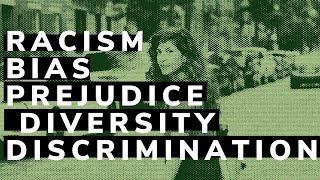
Hadar Shemesh teaches vocabulary for talking about social justice: racism, discrimination, prejudice, bias, privilege, protest, diversity. She points out that English-learning media favors white native speakers and accents, and pushes learners to seek out diverse teachers and speak up against injustice.
Chapters
Hey everyone, it's Hadar. Thank you so much for joining me. Today we are going to talk about vocabulary used when talking about social justice and social equality. It is important to learn these key terms and to use them confidently when talking about these important subjects. And it's important to be a part of the conversation because when we're silent in face of injustice and inequality, we become a part of the problem rather than a part of the solution. So. So I decided to create this lesson for you to make sure that English is not the reason why you choose not to speak up as I'm making this video. There are protests and riots all across the US As a response to some horrifying acts against the black community in the U.S. racism has been prevalent in the U.S. and around the world forever. And since racism and prejudice is everywhere, I encourage you to take a close look at your society and your country and share with us in the comments below where do you find racism and where do you find discrimination? Share it with us in the comments below. So we all understand a little better different cultures and different societies around the world. And we all become more aware of the problem because one of the solutions is to constantly raise the issue and to constantly talk about it and help people become more aware. And because this is an English learning channel, I definitely want to talk about how all of this is manifested into the English learning industry. But first, let's talk about the vocabulary we need to have this conversation. The first word is racism. The belief that people's qualities are influenced by their race and that the members of other races are not as good as the members of your own. Many people are protesting these days against racism in the US And Canada. The next word is discrimination. Discrimination. Discrimination. Discrimination. Discrimination is treating a person or particular group of people differently, especially in a worse way from the way in which you treat other people because of their skin color, sex, sexuality, etc. For example, the call center representative suffered from discrimination at work because of her accent. Prejudice. Pre Ju Tus. Prejudice is an unfair and unreasonable opinion or feeling, especially when formed without enough thought or knowledge. For example, many people are unaware that they hold prejudices against people of color. Bias. Bi. Yes, bias. Bias is a tendency to believe that some people or ideas are better than others and that usually results in treating some people unfairly. For example, there is clear evidence of strong bias in favor of native speaking English teachers in many language institutions. Privilege. Priv Lige Schwa. Privilege. You can also say it as privilege and add another schwa there. Privilege. Privilege is a right or benefit that is given to some people and not to others. Sometimes people with privilege don't even know that they have privilege without taking a close look at other groups and other people seeing their starting point and how they're being treated by society. For example, if being a native speaker is a privilege, native speakers are usually unaware of the barriers and challenges non native speakers face in order for them to communicate at the same level. This is why native speaking is a privilege. In particular, being a native speaker of English, being a man is a privilege as men usually don't face the same obstacles, challenges and bias as women do. Protest and protest. Protest, the noun an occasion when people show that they disagree with something by standing somewhere, shouting, carrying signs, etc. For example, the protest was very powerful. To protest is a verb. It's the act of protesting in a protest. The last word for today is diversity. Die versus city Diversity. Diversity. The state of having people who are different races or who have different cultures in a group or organization. For example, it's hard to ignore the lack of diversity among native speaking English teachers online. Now, racism is not always being violent against people of color. No. Racism can be very subtle and it could be patterns of thoughts that we have that are a result of what we see and the content we consume. For example, if we look at the voice of English that we see on YouTube, most of the teachers who teach on YouTube who are native speakers, most of them are white. And as white American or British speakers, they have a very particular voice and very particular accent. This accent, because it's so dominant, is associated with what seems to be proper English. And everything that deviates from that might sound to us inaccurate, wrong, or sometimes unintelligent. There are many different dialects of English that English learners are less exposed to, and as a result they may associate English as being spoken in only one certain way. And that is a problem because if you don't follow enough voices, you will always think that this is how you should speak English. And to be honest, it's not. English is very, very varied. And when you feel that there is only one way of speaking English and what proper English is, you will always be trapped in this complexity of I don't sound like a native speaker because native speaker is good and non native speaker or an accent is bad. I'm not saying that's the case for everyone, but sometimes we have these patterns that kind of like consume our thoughts and prevent us from showing up fully and confidently. So this is something that I want you to be aware of now you're probably asking yourself, okay, what am I supposed to do? I'm just trying to learn from the best teachers, it's true. But you got to be aware and this is why it's important to educate yourself. I'm going to add in the description some links and I'm inviting all of you to share links related to everything discussed here today in the comments. Also, it's important to keep a diverse feed, so really try to look for different voices as you're learning from teachers because there are a lot of amazing teachers of color who just didn't show up in your feed because of YouTube's algorithm. So it's important to look for that whether it's on Instagram or YouTube or Facebook, because it's your responsibility to understand and navigate this system. Okay, that's it. Thank you so much for joining me in this conversation. I cannot wait to hear what you what you think. So let me know in the comments below what you think about everything discussed here. And if you have further information to share and links, please post them in the comments below as well. Stay safe, stay healthy and I will see you next week in the next video. Bye.