I’m a student again! My experience in Spanish class | My Relocation Diaries
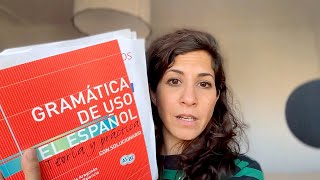
Hadar Shemesh started an intensive Spanish course after relocating and found the 4-hour daily classes moved slower than she learns. She wants more pronunciation work and active repetition, and plans to supplement with grammar books, podcasts, and trying other schools before committing long-term.
Chapters
Hey everyone. Welcome to my Relocation Diaries, where I share with you my thoughts and experience relocating and moving to a new country. And today I have a lot to say. So I'm super thrilled to record this episode. If you have listened to the last episode, you know that this week I started learning Spanish officially in a Spanish school, and I have to tell you all about it. So that is what I'm going to talk about today. But before I want to give you a quick update. So remember how last week I said, I feel settled. We have our morning routine. Everything is chill. And then I laughed and said, you know, you're probably saying to yourself, wait, Hadar. Just you wait. You think that you have settled. But. So the following day, after recording the episode, we had an insane morning, a horrific morning. And the following day was the same as well. It was so bad. I was like, I shouldn't have said anything. My young daughter had a test and she's not used to it because we never had tests or homework before. But back home in her school, she had a democratic school that had a different approach. And here they have a lot of homework and tests and that stresses them out so much. It's not even about getting it right or wrong. It's just like the fact that it exists, really. I don't know why people invented it. Like, I get it, but still. So anyway, it really, really threw her off and like, it was a mess. The weekend was great. I don't know if I told you, but I signed her up, Asia, my younger daughter, to swimming classes. And I love it. Like, I feel like we are adjusting. I feel like, oh, I'm a mom who takes her daughter to extracurricular activities and we're doing things that are not just, you know, work, school, home, home, and that's it. So that has been nice. And then on Monday, I started school. Well, I only signed up for one week for now. Now of course it's not enough, but for me it was like, I'm going to sign up for the intensive course, which means four hours a day, starting at 9:30, ending at 1:10. And I'm like, I'm just going to do it. We had an oral exam and they put me in. Like I'm. I'm not a real beginner because I understand quite lot and I can communicate badly. So after the oral exam, they put me in a group with students who have learned for a few weeks in the school, which is nice to know that I'm not a real true beginner. So I walked into school Monday we had to come in early, and I was like, this is the first time I'm going to a physical school. I've learned a lot over the years, but everything was online. Like, I haven't gone to a school and sat with other students since I was at the university back in 2011 or 2012. So it was really nice and refreshing. And, you know, like, I came in and usually I'm the teacher and people know me, and here I was like, no one. I was just one of the students. And I really enjoyed it. And I think this week has been. Today is a Thursday. You're gonna listen to this tomorrow. So it's been four days, Monday, Tuesday, Wednesday, Thursday. And I feel like it was a great way to get myself into the learning process because up until now, first of all, I was really, really busy with life, with work, with adjusting. So I just, like, picked bits and pieces, like, listen to podcasts, watch some videos. But I haven't put in the work into learning SP actively, and I knew that it had to be massive. So I just signed up for a week. But also, like, I still have a business to run and, you know, I have meetings to have that I need to conduct. So it was a really, really busy week. I ended up rushing from school straight into teaching and having meetings and catching up on work. So it wasn't the easiest week, I have to say. Also, you know, like, it was just a lot. And yet, when you're in class without your phone, without distractions, it's really nice to just be present with the people, with a teacher and with the content. So for me, it was really refreshing. Now I have a lot of opinions about teaching a language, and I really did enjoy. I think a lot of the things that they did was. Were good, practical, helpful. It completely opened my mind into using the language better and learning more verbs and words and vocabulary. Of course, I felt like some things were not relevant for me, and maybe you have experienced it as well. When you're in a group, it feels like there are different, not different levels because we were all sort of at the same level, but it's like different ways in which you get the content, in which you understand the time that you need to practice. And since I have a lot of experience in this work, I'm very quick, right? Like, I hear something, I know what to do with it, and I know how to use it quickly. I understand grammar, I understand how they teach it. So. So for me, I felt like I needed to produce it in many cases, a lot quicker than others. So it was interesting for me to. To look at what it feels like to be at a different pace than others. But I'm not gonna lie. Like, sometimes I. I got a little impatient with my time is so precious. I only have these four hours to invest, and I want to learn more, and I want to do more. And it wasn't the group. The group was really, really great, great. And everyone's great. It's just the. The. I'm like, more of straight to the point, let's do it, and let's move on to the next thing. And not everyone is like me. And I feel like sometimes it didn't create resistance because I enjoyed this rhythm, but also thinking about efficiency, I feel like I was like, ooh, I could achieve more with the time I'm investing. But that's just me. That's because of my background. And I think. I think I'm not the typical student that would go to these classes because they think it was a perfect fit for everyone else. And what do I mean by that? I mean that, yes, there is a lot of conversation at the beginning, which is great. I think it's really important. But then by the time they introduce the topic, it takes time. They kind of, like, play a game, and there is a lot of back and forth. And for me, that was, like, a little too much, right? Like, just tell me what I'm here to do and have me practice it a lot. So this week was kind of like surrendering to a new pace. And I think it was good for me. I think it was good for me to get started. It also got me excited about doing the work on my own because it was hard for me to sit down every morning and do the work. And I think this week has allowed me to. To see how I can build my own routine, because now I'm like, I wake up in the morning. I'm like, okay, let's learn. Because I do my homework in the morning, and I listen to Spanish in the morning. So I feel like even though it was only four days, I'm starting to build my routine. And this is why I feel it's really important to have that structure to get you into the process of doing this work continuously. Now, in my programs, that's what we do. It's not just the teaching of the content or practicing English together. It's really about developing habits and getting people to understand that showing up for your practice is critical. So that is my first understanding, really. Like, it doesn't matter how good your teachers are or how well, you do in class. If you don't take what you learn and you practice it on your own, you. And you repeat it, it's not going to be effective. It's. It's not going to work. And then you're going to feel overwhelmed because you keep spending time learning without being able to use it. The illusion of learning. I always talk about it. Now I feel it. There was one day where I didn't have time. Yesterday when. Where I didn't have time to review the content properly. And today in class, I felt overwhelmed. I was like, wait a minute, you know, Like, I know this, but I don't feel it. It's not intuitive. And those few minutes in class that I get to practice with someone else are really not enough. So without me repeating it out loud at home, I feel like I'm not going to benefit from all the time that I'm investing. And it's expensive. Time, like it's. Your time is expensive. My time is expensive. Not because I could work at this time. It's because I could. I could read a book. I could be with my girls. I could sleep, for crying out loud. Like, I could sleep instead. So if I choose to take my time and invest it into learning, I want to make sure that I get the most out of it. And even if it's the best school, without putting in the work and reviewing it and repeating it, even if it's for a little while, it's worthless. Not worthless. Let's not exaggerate. Hadar. But it's not as effective. And then you feel like you're not progressing. And I'm seeing it with my students, my students or my companeros, my colleagues, right? My. My peers in class. I hope I use the word correctly. Okay, so I'm learning to tame my rhythm and pace and be okay with it. But I am also thinking about what I need and making sure that I have that I'm learning to build the habit of learning Spanish every single day and practicing it. And I'm also learning to be a student. And that is hard for me because I can't help it. But the teacher in me keeps coming up or coming out. So, for example, we would. I would practice something with someone and, you know, let's say I. I got it. I know how to use it. You know, use a certain verb or irregular verbs and to use them in the sentence. And the student I'd be practicing with would not get it or would make a mistake. And I'm like, hadar, don't say Anything. You're another teacher. It's okay. You shouldn't. You shouldn't give them feedback. That's not your job. And I'm like, I know I can help them. I know. And sometimes, like, it comes out and I say, like, something and I explain it. But then so many other times, I'm just, like, waiting quietly. And I was like, hadar, that's not your job. It's okay if they use the infinitive form and they're not supposed to. It's their journey. So. But also, I'm not present as a student. I'm not there to, like. I feel like I need to give feedback, which is good, because even though I'm, let's say, one step ahead, it's still good, a really good practice for me to recognize their challenges. The fact that I can hear that they're making a grammar mistake is incredible to me. So even though I'm not there to give them feedback, recognizing it is an excellent practice. And I'm saying that for those of you who might have a speaking partner who may not be at your level, it's still a really good practice to recognize the things without having to say anything about it. But a funny thing that happened today was that one of the students didn't understand the difference between to and usted. Like, a polite way of speaking to someone. Second person singular, like a person in front of you. So in Spanish, you would say you too. And they like, if you were to speak to them in a. In a formal language, like usted. And it's a different grammatical structure. And she couldn't understand the difference because the explanation of the teacher was not really clear. So she kept asking questions, and the teacher kept answering. But she didn't. The teacher. And she's great. The teacher is great. Like, she didn't click. Like, she didn't understand the confusion. So I'm, like, waiting there. I'm like, I know how to explain it to her that she understands what the issue is. And then at some point, like, I just said it in English and I explained her confusion. She was like, oh, now I understand. I'm like, okay, hadar. Like, that's. That's not your job. But still, it was nice to see that even in Spanish, I can explain things to simplify structures or things for students. But at the same time, I'm also. It's also very humbling. Like, there were a few sentences today where I was like, what? I have no idea what to do with this sentence here. Right? Like, it's so not Intuitive to me. Also, I haven't practiced. So all of a sudden I'm like, I don't know anything, right? Or there is so much more to learn. Or she asked me to explain how to play a certain game and I was like, I have no idea how to do this. I don't know. Like, I can, I have five verbs that I can use to explain what I do in the morning, but to explain how to play a board game. So. But really, it's so much fun to be a beginning student. Someone who's just learning everything because things are different, right? Like if I don't focus so much on grammar with my current students because they can get by, they can express themselves even when their grammar is not 100% or not always correct. When you're first starting out, if you don't have the basics of grammar, you really get stuck because you don't, you don't have the foundations right. So I think grammar is a lot more critical and vocabulary is a lot more critical at the beginning than when you are intermediate or when you have more experience. Because it's, it's really the difference between being mute and being able to say a few words, right? So I think for me, like the thing that excites me the most right now is to focus on grammar, grammar and vocabulary. Like that is my focus right now. Luckily, I don't struggle with pronunciation. It's really clear to me, you know, how to pronounce sounds in Spanish. But I don't have issues with listening. I understand well, but it's the grammar and vocabulary that hold me back from being able to communicate. I do notice, by the way, observations. Now it's observation time. So first of all, I noticed that they don't talk about pronunciation at all. And I think it's a mistake because I notice in particular native English speakers, but not just who don't get the fact that Spanish is a phonetic language. And I think it's so simple to explain at the beginning, you know, like the five vowels of Spanish and how each consonant is pronounced, you just so they have the foundations. Because they struggle so much with saying the words, they feel self conscious. The teacher doesn't correct them. And I get it why, and she doesn't need to correct them. But you know, when someone says the word trigo, for example, as trago I turns into a, that's a problem because that might sound like a different word, maybe not here, but in another word. Or for example, if a British speaker tends to drop the r at the end of a word, and they might do the same in Spanish. Then a word like ler, which is to read, will end up sounding like le unintentionally. And le is. He reads. Right? Like it's already. It will sound like a grammar mistake, and it's just a pronunciation mistake. So I think that giving them the foundations at the start is not about making them sound like Spanish speakers, but really giving them the tools to use the language confidently and correctly, because they might know a word, but if other people really can't understand them, that could create a lot of frustration. And I think that with a few tips at the beginning, or just developing awareness, their experience could be completely different. Right, Here are the sounds, here are the consonants, here are the vowels. Spanish is a phonetic language. There you go. Right? It's not about pronouncing the R correctly. Right. They can still pronounce it as a r or. But replacing a sound with another sound that exists in Spanish, or dropping sounds completely is a challenge. And I feel like people overlook this. They don't give feedback on it, and I don't think they set them up for success. Now, again, as a pronunciation teacher, I know that there's a balance between, you know, pronunciation and all the rest, and you definitely don't want them to think about pronunciation, but just to give them the tools and then have them do whatever they want with it. Right? Or at least develop awareness. So I'm even more convinced now that pronunciation is key for speaking confidently. But even for me, like, sometimes a lot of the sounds are not intuitive yet, and I really tried to pay attention to it because it makes me feel more grounded in the language and more aligned with what I hear and how I want to pronounce things. Another thing that I noticed is that people are really terrified of asking questions in a group, so I have no problem with asking questions. At the beginning, I noticed that I wanted to ask questions, and I kind of, like, I stifled that need because no one was asking questions. And then I really remember thinking, hadar, why aren't you asking the question that you have? What are you afraid of? Like, why are you embarrassed to ask the question? So I raised my hand. And since then, I can't stop asking questions in my broken Spanish. But I noticed that for a while, I was the only one asking questions. I'm like, there is no possible way that everything is clear for everyone and no one asks questions or no one has questions. And I was looking at people, and I saw, like, that moment where they wanted to ask a question and they didn't now, that was mainly in the first day or two, and then people got more comfortable. But it's. It was interesting to see, like, and this is why I wanted to talk about it on the podcast, because I want you to think about situations where you tend to stifle the need to ask questions because you don't want to stop others or interfere with the pace of the lesson, or the meeting doesn't even have to be inside the lesson, or you don't want people to think that you have this question because you think it might be a stupid question. And I think it's so important to ask questions and so important to. To make sure that people know that you're not clear on something. It's really good for the teacher as well. Like, they need to know that what they explained was maybe not clear or maybe they need to explain it again in a different way. And as a teacher, I love it, love it when my students ask questions. But it was funny to see that it wasn't that. That easy for me at the beginning, and I really had to work on my thinking to start asking questions. I also see how mindset should be addressed always from the beginning. There was this sweet girl that was sitting next to me, and she struggled with today's content. And I saw how, like, throughout the. The week she was showing up. And, you know, it was harder for her, but she was showing up and she wasn't understanding everything, but she. And today I saw that her energy dissipated. There was a point where she understood that she doesn't understand. And it was like, it wasn't easy for her to get back on track. And it looked like she gave up. Like, she put her books in her bag. She was. Started being on her phone, and she wasn't like that for the entire week. And she looked so disappointed. And, you know, I came to her and I said, it's okay if you don't understand reflexive verbs and you don't use them just yet. It doesn't, it doesn't mean anything. Like, it's okay. Don't worry about it. You'll get it later. She's like, no, it's the second time I do this class. And I'm like, yeah, but this is the work. You don't get everything easily at the beginning. And sometimes you have to kind of like, come to terms with the fact that there is this topic that you just don't get right now. Maybe your brain is not ready for it. The fact that teachers decided to teach it now doesn't mean that your brain is ready for it doesn't mean that there is anything wrong with you. Maybe it means that you need to practice it a bit more. Your rhythm is different, but it doesn't mean anything. And I really wanted to tell her all that, and I couldn't. It wasn't my place to do it anyway. But I realized it's so important for teachers to address that, to take a moment and to say, hey, that is not the most important thing. Look at all these other things that you were able to do. Look at the fact that you were able to understand me, you know, and it's hard because teachers don't have the time to do it in class or maybe even the awareness to recognize that it happens. But it could completely deter a student if they don't have the mental foundation to deal with these challenges. And I'm saying that because I'm sure that as you are learning English and you're probably learning or working towards improving your English, if you're listening to this in a way, maybe you have in the past, maybe you will in the future, I want you to remember that. Because the moment you give up on yourself, or you say to yourself, it's too hard for me, then that's the moment where you really stop your progress. Because progressing doesn't mean always understanding everything, always getting it, always being able to use what you learn. So that is what I wanted to say. Another thing that I wanted to say that I feel is not great in how we learn. And honestly, like, I think it's a great school. I think the teachers are great. But one of the things that I notice is that when they give you a new word or when they explain a word, they just write it on the board and that's it. Now I'm the only one who is saying it out loud to herself. Everyone else is just writing it in their notebooks, and that's it. And I know that unless they go back home and kind of like repeat this word again and again again, that they'd be able to remember it and use it. And there's all this other content that they need to practice that I know that you won't do it. So. Teaching a new word. As a teacher, I would teach a word, and I would have everyone say it out loud with me and repeat it again and again and use it in a sentence once or twice. Like so many times I had to ask for more examples or more sentences with this word so I would get it right. It wasn't intuitive in their teaching. And I Think that is a lot more important than just, you know, repeating the same content again without having your students say, say it themselves. So I feel like that was missing. And I was. Like I said I was the only one. And, you know, I'm not gonna speak out loud in class or repeat out loud, so I just repeated it quietly. But I think that part was missing. And when I do say it out loud and use it in a sentence right away, I see that it's much easier for me to remember it. So the method that I've been teaching you, repeating the word out loud many times, using it in context, I'm doing it now, and I'm telling you it works. So if you don't know what my method is, I'm going to link to my vocabulary plan and vocabulary process in the description. All right, that's it. So this was a combination of a language reflection and my own experience learning Spanish, you know, having the personality I have. But so far, I can tell you that I really, really enjoyed being a student. I really enjoyed, like, opening my brain a little bit to new words and new structures, and all of a sudden, things make sense to me. I definitely feel like while I understand it, it's still not a habit and not intuitive. So I decided to take the next week and try to do. To work on my own. I got a grammar book, so I'm gonna work with a grammar book. I'm going to review all the words that I've learned over the week, and I'm going to practice them in speaking. So I'm going to speak to myself, and I'm going to listen to a lot of podcasts, ideally with a transcript. So that is my next thing to do. And I think I'm going to focus on that for the next week. The following week is going to be too busy, so I'll do very little because we're going to have a meetup here in Barcelona, and then the following week, I'm going to get back to school. I just need to understand which school. I might try out a different school, just to try a few different schools and then decide where I want to stay and maybe a different format. So I'm still thinking about it. I'll update you. And that's it. That is my update about life and about Spanish and about learning a language. So have a beautiful weekend. If you're listening to this on Friday, and I really hope to come back next week with more interesting stories about life here, it's probably not going to be about Spanish or about language. Learning because there is more to talk about, as you know. Have a great, great day. Thank you for being here. Bye.
More from Hadar











Read Out Loud with me! Dare to Lead by Brené Brown | Pronunciation & Vocabulary practice