Learn English with movies - Barbie movie speech | shadowing practice
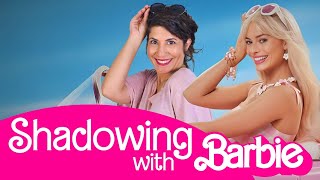
A YouTube lesson by Hadar Shemesh guiding English learners through shadowing practice using America Ferrera’s monologue (Gloria) from the Barbie movie. Hadar breaks the speech into lines, demonstrates pronunciation, stress, intonation, connected speech, and offers tips for practicing rhythm, reduction, and phrasal verbs. The video aims to help learners improve pronunciation, intonation, and fluency by repeating and shadowing the monologue.
Chapters
Hey, everyone, it's Hadar. Thank you so much for joining me. Today we are going to practice together the awesome speech of America Ferreira, who plays Gloria in the movie Barbie. And by the way, this is why I'm wearing pink. And I know it's not as pink as it should be, but that's the pinkest I could find. I wanted to share with you the speech because, first of all, I thought it was great. I think it really consolidates the experience of being a woman. And this is why it became so viral on TikTok and Twitter and everyone's talking about it. You can hear a lot of people talking about that specific monologue, but also in terms of intonation, I think it's such a great practice because it has so many different contrasting ideas, and it's a great opportunity to practice your intonation connected speech and pronunciation when working on this awesome monologue. I think you're going to have fun. Are you ready? Let's get started.
It is literally impossible to be a woman.
It is literally impossible to be a woman. Let's break down the word literally. Li R flop T, R ly Round your lips for the r. Literally. It is literally impossible to be a woman. The word impossible is stressed. So you want to try and stress. Stretch it a little bit and raise your pitch. It is literally impossible to be a woman.
You are so beautiful and so smart.
You are so beautiful and so smart. So here we want to try and stress the word so to emphasize what it is that she's saying. You are so beautiful and so smart.
And it kills me that you don't think you're good enough.
And it kills me that you don't think. You don't. You don't. The D is flap and you connect it together. You don't. You don't. You don't think. Stick the tongue out for the th. You don't think you're good enough. Good, good, good enough. You don't think you're good enough.
Like, we have to always be extraordinary.
Like, we have to always be extraordinary. Extraordinary. Extraordinary. The primary stress is the or vowel extraordinary. So you want to stretch it a little bit.
But somehow we're always doing it wrong.
But somehow we're always doing it wrong. Let's do that last part again. But somehow we're always doing it wrong. A quick tip about the word always. You don't have to pronounce the L sound if it's tricky for you. Always. Just an open ah sound. Always. And now we start the part in the speech where she contrasts two different ideas within the same sentence. And I want you to pay close attention to the intonation pattern. She uses one idea in comparison to another idea. It's called to juxtapose ideas. To juxtapose means to put closely together two contrasting ideas for comparison. So, for example, in the sentence, we've just read the idea of being extraordinary, but also, we're always doing it wrong. Okay, Being extraordinary and doing it wrong. So two ideas, one in front of another. Let's move on to the next sentence and pay attention to this idea.
You have to be thin, but not too thin. And you can never say you want to be thin. You have to say you want to be healthy, but also you have to be thin.
You have to be thin, but not too thin. One versus another. You have to be thin. Stick the tongue up for the th. But not too thin. Right? Can you see the two ideas? Thin, but not too thin.
And you can never say you want to be thin. You have to say you want to be healthy.
And you can never say you want to be thin. You have to say you want to be healthy. So we have thin versus healthy. So there is a lift in pitch when we say thin. One idea versus another idea. Healthy, thin. Tha da thin, healthy. So let's read that part again. And you can never say you want to be thin. You have to say you want to be healthy. But then she adds, but also you.
Have to be thin.
But also you have to be thin. Right? So she compares, not too thin, be healthy, but also you have to be thin. So the emphasis is on the idea of being thin. Thin. Before we move on to the next sentence, I want you to read out loud what we've already practiced. The next part.
You have to have money, but you can't ask for money, because that's crass.
You have to have money, but you can't ask for money, because that's crass. So here we're comparing have versus ask. You have to have money, but you can't ask for money. By the way, you can also say but you can't. But you can't in contemporary American English. So the t and the y connect together, and then what you hear is a ch sound. But you can't. But you can't. But you can't ask for money because that's crass. Crass, by the way, is an act that lacks refinement or that is insensitive or doesn't have class. Okay, so that's what she means. Like you can't ask for It. Because it's not cool. Next up. Now let's see how she's comparing those two different ideas.
You have to be a boss, but you can't be mean.
You have to be a boss, but you can't be mean. Boss versus mean. You have to be a boss. Hafta. Hafta. Hafta. You have to be a boss. Ba, as in father. In American English. You have to be a boss, but you can't be mean. Mean. Right. So even though mean is not high in pitch, it's still stressed because it's emphasized. It's longer. More volume, which is another way for us to stress words in English. You have to be a boss, but you can't be mean.
You have to lead, but you can't squash other people's ideas.
You have to lead. Have to hafta. Hafta. You have to lead, but you can't squash other people's ideas. Squash, squeeze, demolish. Squash other people's ideas. Other people's. Other people's. Other people's ideas. So let's compare it. You have to lead stressed, but you can squash other people's ideas. So the stressed words are lead, squash, ideas. You have to lead, but you can't squash other people's ideas. Now, notice the rhythm here. The stressed words are the emphasized words, and that determines the rhythm of the sentence. Right? You have to lead, but you can't squash other people's ideas. And the words that appear between those stressed words, they have to fit in the rhythm, whether it's one word or five words. Notice this. You have to lead, but you can't squash. But you can't. But you can't. But you can't. So I'm reducing it to fit into the rhythm. You have to lead, but you can't squash other people's ideas. Other people's. Other people's. Other people's. Right. These words are not stressed, so I'm going to say them faster. I'm going to reduce whatever I can reduce so it can fit the rhythm. You have to lead, but you can't squash other people's ideas. Let's do it again. You have to lead, but you can't squash other people's ideas. Good. Now you. Next.
You're supposed to love being a mother, but don't talk about your kids all the damn time.
You're supposed to love being a mother, but. But don't talk about your kids all the damn time. Love. Don't talk about your kids. Love being a mother. Don't talk about your Kids all the damn time. Right? So let's compare that again. You're supposed to love being a mother, but don't talk about your kids all the damn time.
You have to be a career woman, but also always be looking out for other people.
You have to be a career woman, but also always be looking out for other people. Have to be career woman, but also always be looking out for other people. Looking out. Looking out. Looking out is considering the feeling of other people or taking care of them or making sure they're okay. Looking out. Looking out. Looking out. Stress on out. No, you.
You have to answer for men's bad behavior, which is insane. But if you point that out, you're accused of complaining.
You have to answer to men's bad behavior, which is insane, but if you point that out, you're accused of complaining. Come play. Okay, so here we have. You have to answer for men's bad behavior. So that's one part. Men's. Men's bad. Men's bad behavior. And then there is a part where she states her opinion. So it kind of like changes the intonation a little bit. Men's bad behavior. Right. One idea, which is insane here. You can go down in pitch, but if you point that out, you're accused of complaining. Okay, Complaining. Stress on complaining. Now you. The next part.
You're supposed to stay pretty for men. But not so pretty that you tempt them too much or that you threaten other women. Because you're supposed to be a part of the sisterhood.
You're supposed to stay pretty for men. You're supposed to stay pretty. Pretty. Pretty. Pretty for men. But not so pretty. Do it with me again. But not so pretty that you tempt them too much. Or that you threaten other women. Tempt. Tempt. You don't really hear the P here. Tempt. Tempt them too much. Or that you threaten other women. Women. Women. Because you're supposed to be a part of the sisterhood. Let's say that all together. Connect all the words together in connected speech. Because you're supposed to be a part of the sisterhood of the. Of the. Of the. Of the sisterhood. Sisterhood. Sisterhood of the sisterhood. Now you. The next part. But always stand out.
And always be grateful.
But always stand out. And always be grateful. Stand out. Stand out. Stick out. Be noticeable. Stand out is another phrasal verb. And in phrasal verbs, we stress the second part. Stand out. Stand out. But always stand out. And always be grateful.
But never forget that the system is rigged.
But never forget that the System is rigged. Rigged is manipulated or dishonest in a dishonest way, like rigged elections. But never forget that the system is rigged. Try to connect all the words together. But never forget that the system is rigged. But never forget that the system is rigged.
So find a way to acknowledge that, but also always be grateful.
So find a way to acknowledge that, but also always be grateful. Now you. Okay, the next part. I'm going to need my phone for that. The next part feels like one long sentence that one idea builds on top of another. So also, I want you to pay attention to what you can do with your intonation to distinguish one phrase from another.
You have to never get old, never be rude, never show off, never be selfish, never fall down, never fail, never show fear, never get out of line.
Let's do it together. You have to never get old, never be rude, never show off. Show off. Another phrasal verb. Off. Show off. Never be selfish. Now, to make sure that it's not repetitive, make sure that each phrase is a little different in terms of the musicality, intonation and pitch. Try to be varied. Let's do it again. You have to never get old, never be rude, never show off, never be selfish, never fall down, never fail, never show fear, and never get out of line. Out of line is like not following the rules or not doing what is expected to be done. Okay, so now you try it. Try to make each phrase slightly different in pitch. Okay, next part.
It's too hard, it's too contradictory. And nobody gives you a medal or says thank you.
It's too hard, it's too contradictory. Let's break down this word. Contra. Dick. Ta. Ry. Contradicting itself. Contradictory. Contradictory. Contradictory. It's too hard, it's too contradictory. And nobody gives you a medal or says thank you. And nobody gives you a medal. Metal. Notice the D. It's really light. It's like a flap. T. Metal. Metal. Or says thank you. And the next part, this is a long sentence. So we're going to take a deep breath and say all the sentence, the entire sentence, on one breath.
And it turns out, in fact, that not only are you doing everything wrong, but also everything is your fault.
And it turns out, in fact, that not only you are doing everything wrong, but also everything. Everything is your fault. Let's do it again. Read it with me. And we're going to do it slowly. And it turns out, in fact, that not only are you doing everything wrong, but also everything is your fault. Now you try it. Okay, so now we're getting to the last part.
I'm just so tired of watching myself and every single other woman tie herself into knots so that people will like us.
Let's take a deep breath. I'm just so tired of watching myself and every single other woman tie herself into knots so that people will like us. So sometimes when we want to emphasize something, we just separate the words. We don't use regular connected speech and every word is somewhat stressed. All right, now you do that last part. All right, that's it. If you want to see the full script, click the link below and it'll take you to my website where I put the entire script there for you to practice with and I recommend using it on the go. You can also listen to it as a podcast. I'm going to link to it in the description so you can practice along with me and with this awesome, wonderful, insightful monologue. Alright? I hope you enjoyed it. If you did, make sure you like and subscribe to my YouTube channel. You can also check out my website@hadarchemish.com for more content for you to speak English with clarity, confidence and freedom. Thank you so much. Have a beautiful, beautiful rest of the day and I will see you next week in the next video. Bye.
More from Hadar











Read Out Loud with me! Dare to Lead by Brené Brown | Pronunciation & Vocabulary practice