Little pieces of confidence | My Relocation Diaries
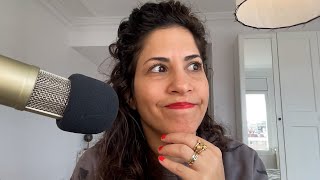
Hadar Shemesh narrates episode two of her "My Relocation Diaries," describing how she is rebuilding confidence step-by-step after moving to Barcelona. Through short, concrete vignettes (joining a gym, ordering coffee, school-bus pick-ups, and municipal paperwork), she shows how repeated small actions, tolerating fear, and learning the language gradually increase belonging and self-efficacy. She closes by noting plans to begin formal Spanish study and to continue the series.
Chapters
Hey, welcome to the second episode of My Relocation Diaries. I moved to Barcelona and I shared all the reasons for why I did that and shared why I decided to start this series. And I shared that on the first episode. So if you have no idea what's going on, you should definitely go and check it out. I also want to say that I have been receiving incredibly incredible messages from so many people on YouTube, on the website, on Instagram, email, just saying that my story really touched them, especially from all of you who have immigrated or relocated in the past or thinking about it. So a lot of the things that I shared resonated with you. And I just want to say thank you so much. I wasn't able to respond to everyone, but I have read all the messages, so keep them coming. And also, thank you, thank you, thank you for sharing your thoughts with me. That means the world to me. That's really the reason for why I'm doing this. Just wanted to start with that. What I want to talk about today is how I'm working on building my confidence here. And the thing is that confidence is a result of a lot of things that are happening that give you this feeling as if you're okay and you're going to be able to handle whatever comes your way. Right? And I think the biggest challenge with moving to a new country or starting a new job, starting a new school is that you don't know what's going to happen. You don't know what it's like. You have to adapt, you have to adjust. You have to learn the surroundings, and that could be really, really scary to leave your comfort zone where you feel confident to a degree and to put yourself in a situation that is completely new. The stakes are high in many cases, and you don't know yourself in that situation. And that can create a lot of fear and frustration. And of course, it completely shatters your confidence. And looking at my journey since the moment I got here, I noticed something that I do, and I wanted to share that with you in the aim or the goal of building more confidence here, because I definitely don't feel as confident as I was back home. Like, I have a good sense of self, I know who I am, so I'm not worried about that. But it's just like moving around this space, this new space that I'm in makes me feel anxious at times. And I try to understand why that is and what I could be doing to resolve that. And I realized that what I'm doing was I'm building small pieces of confidence Day by day by day. Because I don't think that I could immediately snap my fingers and be like, okay, now, now I'm confident. I'm good. I can, I can do this. But it's kind of like you. You take areas when, when you move to a new country, you or you start something brand new, you can't become confident all at once. So you're. You're taking small areas in that thing that you're trying to understand, learn, adapt to, and you're building your confidence in those small areas or situations. And I'm. I'm going to give you examples. But before that, like, I want to talk. Like, I was. As I was preparing to talk about this today, I was trying to think, okay, but confidence to do what? Why do I feel confident? Or why do I need to feel confident? What am I not feeling right? What am I afraid of? And I think that the reason why I don't feel confident is because I'm afraid of not fitting in. I'm afraid of doing something wrong, like not understanding my surroundings, doing something wrong. And the worst thing that could happen, of course it's not a big deal, but to do something wrong and then someone come and tell you that you're doing something wrong, but they would say it in a language that you don't speak or understand. And because of the stress, you are not even capable of processing it. And that is my fear. I'm afraid of being singled out and someone telling me something and I wouldn't understand what they're trying to tell me and what I did wrong and how to fix it. I think this is, like, the biggest thing that I'm afraid of now. It's silly because, like, you know, what could possibly go wrong so badly that I, you know, I couldn't understand or fix myself. But still being a guest in someone's house, which is how I feel right now, you want to be okay, you know, you want to belong. And also, I don't want people looking at me. I know it's silly, but that's like a limiting belief that I have. I don't want people looking at me saying, oh, she's such a tourist. She's a foreigner. She doesn't know what's going on here. That's not how we behave now. I know it's silly. And I teach my students to learn about those limiting beliefs and understand how they're stopping them from getting the results that they want in their lives. I know that. But it's still there because we're humans. I Recognize it. And I recognize it in many different situations here that I've come across. But I also recognize how I manage it. That's by building small pieces of confidence. So I'm going to give you a few examples. One of the things that I decided when I got here is to change my lifestyle and start exercising every single day. And I realized that there was a gym right next to my house. And I said, let's do it right. Let's sign up for a gym. I don't like gyms. I haven't been to a gym in years. But I said, you know, like, let's do things differently. Let's do something that you haven't done yet. What if it works out for you? So I recognized the resistance and I said, let's do it. So I went there and I. It's like so old school, right? Like back home I would just go online, call them, be like, okay, how do I sign up? Great. No, but I had to go there to make sure the person speaks English. And I signed up for four months. That's a good start. Small. Started small. And I said to myself, okay, I'm going to start building the habit of going to the gym. So the next day I take my bracelet. There was, there was like a bracelet. And then you have to put your finger for a fingerprint. And I said, I was so nervous before going to the gym the first time after I got my bracelet. Why? I don't know. Like, I hate it when there's like this technology and I won't be able to figure it out. And I wouldn't be able to explain, explain it properly, like what I. What exactly I need. So silly. But it was really, like, consuming. I was stressed. So I said to myself, okay, Hadar, today is the first day you go to the gym. And your objective is to get in smoothly, to understand where everything's at, to do something for five, ten minutes and go back home. And I said, okay, I can commit to that, right? Because the purpose of the first visit is to feel comfortable in this new space that I am going to, obviously or not. Of course what happened is that my bracelet didn't work. It didn't detect my fingerprint. I was like, okay, what am I doing? How could I get in? No one was at the counter. Someone was looking at me, started saying something, couldn't understand them. And everything that I was afraid of happened. Eventually someone came and helped me get in. I was like, okay, okay, I did it. Now I realized what I needed to do. Okay, let's Go look for the dressing room. So couldn't find that, of course, started walking into many different directions. Okay, put my stuff in the locker, then. Okay, where do I work out? Even though I've been there the day before, I completely forgot where I needed to go. Now I'm so on top of things in my life, which made me feel really, really small. Like, Hadar, you have a business with, like, 20 people who work with you, and you have thousands of students around the world, and you can't freaking get around a freaking gym. And the answer is, yes, I couldn't. I walked up and down the stairs. All of a sudden, I saw the elliptical. I'm like, great, let's go. Let's go in. Let's do it. Exercise for literally 10 minutes. And then, like, it's okay. I'm done. I did what I needed to do and went back home. And then the next day, I was like, I already know how to get in. I got in. Something else went wrong, I think. I don't remember what that was, but this time I was like, I'm going to work out for 20 minutes. Which I did. And the thing that I kept thinking about is that it's not about getting fit. It's not about working out in a way that would, you know, that I would feel like, ooh, I worked out. No. Like, my objective is to build the habit of going to the gym every morning and also feeling like I belong here. Right? And it took me quite a few days to feel that. Like, I always feel. Felt like I'm going in the wrong direction or getting into the wrong door. And I was, like, waiting for someone to say something to me, which is so incredibly silly. But the more I did that thing, familiarized myself with the situation. I'm like, I can handle it. Okay. And of course, as the days went by, like, okay, I had our worst case. To speak in English, and they will answer you. It's not a big deal. But just giving myself space to feel that fear is exactly what I needed. To feel the fear, acknowledge it, and take those small steps to overcome the fear and to build confidence in going to the gym. Now. Going to the gym. Being confident in going to the gym creates a situation where I'm more comfortable with this part of my life. So it's not like I'm a complete stranger. No, I'm like, you know, I just moved to this new country, this new street, and I go to the gym, and that's something that I do. So I'm kind of, like, creating this new identity for myself where I feel comfortable in. Now, another thing that I noticed is how I get my coffee. So the first time, like, I. I found this really cute cafe not far from my house, and the first time I went there, I just said what I needed. Un cafe, un americano. I was able to say that, and that's it. And they responded to me. I picked up on what they needed, responded back, that was fine. Gradually, the more I went there, I felt more comfortable to speak with them with my very basic Spanish I'm learning. I'll tell you more about that in another episode. You know, I. I already know how to say coffee to go, coffee to stay. I want also sparkling water. I want this chocolate cake, right? So. So every time I allowed myself to ask for more or to say more, and I said to myself, this is how you build confidence. Small pieces of confidence coming together to build this more profound sense of confidence. Now, another thing that created a lot of stress, and there was a reason. I'm going to tell you why that is. But another thing that created a lot of stress for me was picking up the girls from their bus stop. So they take the school bus to go to school, and whenever I have to go pick them up at a different bus stop because I don't know the place, I get really anxious about it. I research it, I make sure that this is what they meant. Also, they're very unclear in terms of, like, where exactly the bus stop is. I wish I could just get a Google map with, you know, a pin, but that's not the case. So it's like two crossing streets, but those junctions are really, really big, those crossroads. And I'm like, where do I. Where do I pick them up? Is it here, is it there? And until the bus arrives, I'm very, very stressed. It's kind of like, I know it's here, but there is a part in me that says maybe you're wrong, that, that, like, I don't trust myself, which is really silly. But I say to myself, okay, like, so I'm doing all of this work speaking to other parents or just double checking with, with the person in charge of the school bus. And as soon as the bus arrives, I'm like, okay, that's it. Check. Now I know where to pick them up when I am coming to this location. If I go to another location, because sometimes we like to, you know, like, explore the city, then that's how I learn how to do it. But this really scares me because, like, the, the image of the school Arriving, my girls are there and I'm not there. Of course, they would never let them get off the bus, but still, like, that stresses me out so much. In fact, this is really like a horrible story, a very stressful story. On, I think, the fifth day, I went to pick them up every day from school from the moment we arrived. And one day I had to go to the municipality to register as a resident. And so I couldn't go pick them up. And I told Gil to go pick them up. And he said I should go at 5:30. And I didn't think about it, and I said yes, but it was actually 5:20 the time where he was supposed to be there. So I was on this bus on my way to wherever I was going, and I see this woman in charge of the school bus calling me. Now, she doesn't speak English, and I don't speak Spanish or Catalan, especially when I'm stressed out. I was like, why is she calling me right now? And that's like my worst nightmare, mind you, not being there for when the school bus arrives. And I, like, I don't pick up the phone because I'm like, what am I gonna do? I don't. Like, I'm also in the middle of the bus and, like, with a lot of people around me, what am I gonna do? What am I gonna tell her? And I immediately called Gil, and he didn't pick up, of course, because if you can make the situation even worse, why not? And I text her and she writes to me, there's no one here. And I said, isn't there dad there? And she's like, no. And then I asked, is this woman there? Because there's another parent there that I. That I know. And she's like, no, she's not here anymore. And the time goes by, and Gil doesn't pick up my phone. And also the funny situation is like, she said something and I misread it, and I thought she said, no, he's here. So I send her smiley emojis. And then she says, no one's here. And I'm like, oh, crap. I did not get that. So anyway, I'm like, I don't know what to do. I don't know what to do at this point because I'm on the bus on the other side of town, and they're waiting for me. And after a couple of minutes, very stressful minutes, Gil calls me and he's like, I'm with the girls. So, okay, I move on. But. But that experience, I think, created this anxiety Where I said, I don't want to feel that again. I don't want to get that phone call again. But also, it happened, and nothing really bad happened. I mean, they were, like, telling us, this is not safe to do this. Fine, of course. And we held everyone, like, for another eight minutes. Poor kids already wanting to get back home, and they're, like, waiting, but everyone's safe. It's okay. We're not going to do it again. But even if it does happen, I already know how to handle it. To stress out and wait until something happens to resolve this. I build confidence there as well. It's like when you experience something the first time and then the second time, you learn how to do it and how to manage it, and then the thoughts around what could possibly go wrong are not as dominant. And that's what I'm trying to say here, that when you're doing something new and you say to yourself, I don't have the confidence to do it, you got to build your confidence little by little by doing those small things and sometimes doing them wrong, but doing them. And then you slowly build confidence that way, and then it becomes this thing that you do or a part of your identity, which is really interesting. I'm thinking about my girls. You know, like, they go to school and everything's new. Two new languages to learn, Spanish and English, because they understand English, but they don't love speaking English. This is also a big part of the reason for why we moved, because I'm like, they don't want to learn with me, and I want them to, you know, to enjoy speaking in another language. So everything is in these two languages. They have new friends, new subjects to learn. Everything's new. Every single minute of their day is an experience or is an opportunity for them to build confidence. And they do it right. If it's starting to make friends or speaking to someone or paying attention in class or just going into class, all of it is new. I think for them, it is so much harder. Today I had this experience where, for the first time, we left the house in the morning and we went to the bus stop, and I see my daughter. All of a sudden, she just flipped out. She's like, I don't want to go. She started crying. And usually when that happens, I'm like, just stay home. You know, like, we need a day off. That's fine. I don't care. I don't care about, you know, you go not going to school one day. But at that point, also knowing that this is what I want to talk about. I'm like, but should I let her work through it and get on the bus and learn how to manage those situations where you're overwhelmed by your emotions? Or should I just be like, okay, don't worry about it. You have the space to decide if you want to go, if you want to stay. And I kind of, like, worked against my instincts, and I didn't tell her that she has to go. It was clear to her that she's going, right? But I. I didn't say, don't worry about it. If you want to stay, you can stay home today. And she was, like, crying almost up until the moment that she had to get on the bus. And it was so hard. Like, when she got on the bus, I got, like, little emotional, and I cried a bit. And I was wondering if I did the right thing. But I also said to myself, like, this is the experience that she needs to have right now. Because sometimes life's crappy and you have all these big emotions and you don't know how to manage them. But there is, like, the outside world that you have to adapt to, and that's a skill we need to develop. And sometimes there is space to say, no, I want to stay home. I don't want to do this. And sometimes you have to. We do it all the time as adults. And I also think that being able to overcome it is what builds your confidence as well. It's another small piece of confidence that you're building. Like, it was hard for me. I got on the bus, I regulated my emotions. I managed to speak to my friends, and I went through the day and I survived. Sometimes that's all we need just to get through the day. And it's not like we have wasted the day. We have learned something about ourselves and how we can manage in situations where everything is just a lot. Of course, I texted her teacher, I sent her an email, said, you know, she needs to be handled with care today. Let me know if I need to know something. So, of course I did that, but I'll let you know next week how that went. Anyway, we're going out of town today. I'm recording this today, and today is the day that it's going to be published. Because, in fact, I recorded a different episode yesterday for today, but then I decided that I. I wasn't happy with it. So I recorded this one. I'm gonna share it another day, because today, that's, like. That's what I wanted to talk about. So, yeah, I think that's it. Like, I think that. That the. The main message here is to share with you how I'm building my confidence here in this new place. And it's just, like, really step by step by step, but also recognizing what are the thoughts that are limiting me. Like, what are the thoughts that create stress? Stress. I acknowledge them, I try to change them, but I also take very consistent action, and I make sure that I'm not operating from fear, but I'm operating from where I actually want to be, which is a, you know, feeling like I belong. And I want to feel confident in this place, even without the language. But I am also recognizing that the language is a huge part that restricts me, because if I spoke the language, I would be a lot more confident managing challenging situations. So let's say someone says something to me and I were to speak the language, it'd be like just advocating for myself. I think it's the gap between, like, I want to advocate for myself, but I can't because I don't have the language. That is what creates most of the stress. And I'm sure that a lot of you who have immigrated with not having strong command of the language, I'm sure that that creates a lot of stress, especially when speaking to government officials, doctors, teachers, like, because this is also definitely my biggest challenge. When I went that day to get the permit, the padron, I was. I came across this woman, and she was not happy with my documents. Like, something was missing, and I couldn't tell what that was. I had a friend coming to help me, but she started checking my documents, and she made this face. If you're watching this on video, you can see the face. But she kind of, like, raised her eyebrows, and she opened her eyes, and I was like, what did I do wrong? What did I not bring? What did I. You know? Because every minute I'm like, she's not gonna. She's gonna tell me, no, you can't live here in Barcelona. Which, of course, is silly, but anyway, I was missing my daughter's birth certificate. I didn't know I had to bring it, but that. That's what I was missing. But, yeah, like, when you are dependent on someone to give you something or to do something that you need, and you can't advocate for yourself. You can't convince them. You can't argue for something. You can't explain. You sometimes can't even understand what you need to do. It's a lot. It's a lot. But we can do it. We can do it by learning the language, by doing it again and again and again and by believing that even if it doesn't work out the worst outcome is not that horrible and we'll be able to manage emotionally and technically even the worst thing that might come out of such situations. So that's what I'm working on and next week I'm going to start studying Spanish. So far I just did it on my own but I also gave myself time to settle in. We came to an apartment with no furniture and there were a lot of things that we had to take care of in terms of bureaucracy and permits and stuff like that. I'll talk more about that in the future but that's it. So have a happy weekend you guys or week whenever you're listening to this and thank you for listening. Thank you for being here and I'll see you on Tuesday for the weekly lesson or next week on Friday for the Relocation Diaries. Thank you guys. Bye.
More from Hadar











Read Out Loud with me! Dare to Lead by Brené Brown | Pronunciation & Vocabulary practice