Live: how to understand native speakers better😬 | American English | Tips and tricks
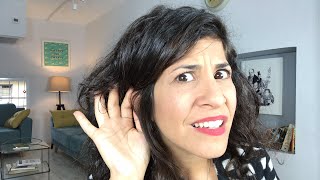
Speech coach Hadar Shemesh explains why native speakers are hard to understand: English isn't phonetic, words blur together, and consonants disappear. She recommends focusing on stressed words, using context, slowing videos to 0.5x speed, and imitating specific speakers to train your ear.
Chapters
Hey everyone, it's me, Hadar, and it's my Friday live, second week on Friday that I go live. And that's very exciting today. First, I want to invite you and tell you if you don't know that yet, that I'm running a five day fluency challenge and it's going to be super exciting, super effective. Hi everyone. Good to see you. So, yes, let me know in the comments below that you can hear me and see me and tell me where you're from. Yay. A new video. Yes, a new video. And it's an exciting one today because I put some thought into it and I wanted to discuss something that a lot of people have been asking me about, how to understand native speakers. And look at me, I jumped from one topic to another. I started talking about my challenge. Okay, let's go back to talking about the challenge. The fluency challenge that starts on Monday. This Monday, it's a five day fluency challenge where we're going to tackle some. Not tackle, but you're going to get from me specific exercises and learn hacks and important tips that will help you communicate your message and share your ideas with others without getting stuck. Now look, over 7, 750 people have signed up to this challenge, you know, up until now, and more people are joining every minute and half of them are already participating in an active Facebook group. So people are uploading videos and supporting each other and connecting and communicating. And I have to say, it's pretty amazing. It's more than I'd expected. So it's going to be super exciting and very effective. And if you want to join the challenge, you can click on the link below or, or go to the accentsway.com fluency challenge. Okay. Or just click on the link below and join the challenge. I promise it'll be exciting. All you need to invest is 20 minutes a day during those five days and you will see results. Okay, so we're going to talk about how to overcome your pronunciation obstacles. You're going to get very cool hacks on how to improve your intonation and how to sound effortless when you speak, knowing what to focus on and what to stress. And you will have to. It's just, it's, it's, it's a great opportunity to practice with other people. I know that a lot of you don't live in an English speaking country and that's a good opportunity to practice your English, to speak a lot to. So I definitely want you to check it out. Okay, good. So this answer is actually in response To a question of one of the participants in the challenge who said that he, you know, he speaks English rather fluently and he's pretty confident when he speaks, but when it comes to listening to people or speaking with other native speakers, and he feels frustrated because he doesn't always understand what they're saying and that puts him in a very bad position because he has to ask them to repeat themselves and then they just think that he doesn't understand English. So sometimes we don't understand native speakers not because we don't understand English. Like if we were to read the text, we would understand every single word, but something about the way they speak that sounds a little overwhelming, unclear, and sometimes just frustrating. So today I will talk about the objective reasons why that happens and the subjective reasons why that happens. So that is related to. So the objective reasons are actually how English language is structured and things that happen in England in spoken English that we are not always aware of as non native speakers because we never learn it in school. And the subjective reason reasons are patterns of speech of not of native speakers or dialects. Okay, so we'll discuss that after. And at the end, of course, I'm going to give you practice tools to help you deal with those issues and learn how to and actually practice your listening skills. Okay, good. So right now I'm going to ask you, and in the meantime, I'm going to look at your comments. I'm going to ask you what is. So first of all, I'm going to ask you, do you struggle with understanding native speakers? Is there a specific situation or speaker that you struggle with? The most specific TV series that are more difficult for you to understand? What do you do about it? Okay, what do you do when you come across someone that you don't understand, whether it's on television or in real life? Okay, so let us know in the comments below so we can all learn from each other. And yeah, so in the meantime, I'm going to look at your comments. Just really quickly say hi. Hello everyone from Cuba and India and Israel and Brazil and Madrid. Amazing. How to understand. I don't understand this word. How to understand Nega English. Okay. Okay. Monday, the challenge Monday on which time zone? Well, it's going to start in my morning. So for you, I don't know, where are you from? Where are you from? So it's going to start, let's say really early morning New York time, about actually 4:00am New York time. So it's going to be right there like midday for Asia in Asia, in The Far East 9:00am In Israel, my time. How to correct your pronunciation? Mike is asking. I have just joined in. Can you tell us how to correct your pronunciation? I don't like using the word correct. Okay. It's not to correct. There's nothing wrong with your pronunciation. How to modify it or how to make it a little clearer. Yes. Maybe how to learn a new accent. That's something important as well. That's okay. You're not doing anything wrong. Okay. Okay. So I don't understand. Saro or Caro says that I don't understand people when they speak greatly fast and mumble. Okay, so we'll talk about that. Definitely. When they speak fast, I don't understand every word. Okay. I wish we had subtitles in real life. Right. You'd have, like, we'd speak to people and then we'd see the subtitles below and see what they say. That's not going to happen. Okay. Maybe. Maybe someone will invent it. It's easier for me to listen. I have more difficulties with speaking. Okay. Yes. So that happens as well. I can understand you very well. Good. I'm not a good example because I'm a speech coach. So I am clearer probably than most native speakers just because I know to emphasize some words more. And my intonation is very varied, which helps you understand me better. Okay. And actually, that's how I speak in real life because I've been teaching and coaching most of my life. My life. So it's a little easier for me to do it like that. But of course, when I'm more tired or, you know, when I don't teach, my pronunciation is not as clear, probably. Okay, so let's get started. Let's talk about why it is so difficult to understand native speakers. Here's the thing. English. I've said that before, and you've heard me say that many, many times in my videos. But English is not a phonetic language. So first of all, it is not spoken as it's written, okay? You are not supposed to hear what you see. The representation of the language, the written representation of the language is very confusing to us because we expect to see certain letters, so we see certain letters, we expect to see certain sounds. Moreover, we see certain phrases, and we expect to hear every single word. But in reality, a lot of words are reduced, connected, omitted. Okay? So we drop a lot of words, a lot of sounds. And the problem begins when we try to kind of like hear, hear the language and attach a written word to every word or every sound we hear. Okay? So basically, we're always trying to hear the language. Or we listen to the language through. Through the filter of the written word. So we want. We immediately visualize the words. Now that's the worst thing you could do. Why? Because there is no correspondence between what you see and what you hear. And I'll give you a few examples. Let's begin with intonation. If you've seen my latest video about intonation, I discussed the fact that there is a difference between content words and function words. Content words are words that stick out. These words are pronounced slowly, they're stretched. The intonation is. They're higher in pitch. They're very clear at the same time. Function words, all the small odd in at could. What should m is are. All these words are usually reduced, reduced to a place that they're not really clear anymore. Okay, so let me give you an example. I have to think about it. I have to think about it. What did I say? If you tried to connect every sound to a word, a written word, what would you say that I'm saying? What would you write? I have to think about it. So some of you know that I'm saying, okay, tell me what I said. I'll say it again. There's a delay here. I have to think about it. Good. Yes, I said I have to think about it. Right. A simple sentence. But look what I did. This is a short example, but just to show you I didn't say okay, I don't think about it. Someone said, someone, someone thought I said I don't think about it. And you're right. Like how would you know? What did I do? I took the word I have to and I turned it into I have to have to. And then I said think. That was clear. So you both got think I have to think about it. Yeah, I have to think about it. Good. Most of you got it right. So think was clear about it was also clear. So just that part of I have to was not 100% clear. So what am I saying now? I gotta get out of here. I gotta get out of here. That's also an easy one. But look what happens. I have got to get out. I have got to get out. Good guys, nice. All of you got it right. But again, when you're thinking of the words, okay, Also when you think about saying the words I have got to get out turns into I gotta get outta. I gotta get outta. I gotta get outta here. Right? So we're reducing the begetting and add. And there is usually one word or two words that start stick out another example. What are you trying to do? What are you trying to do? Okay, so what you're doing right now, because I'm giving you short sentences, is that you detect the main words. Trying to. Trying to. What are you trying to do? Is that what I said first? I think so. What are you trying to do? Right? And you fill in the gaps, right? You know that. What are you trying. What are you trying? What are ya? Okay, if I just say what are ya? It is very good, guys. You all got it right. What are you trying to do? What are you trying to. So trying is the word that sticks out. And what are you? Is reduced. What are you? What are you? What are ya? And let me tell you, this is also what do you. What do you want to do? What do you want to drink? What do you want to see? What do you. So what do you. Can be what do you. And what are you? Right? Two different sentences, two different tenses. They sound exactly the same. Why? Because I reduce them. What do you turns into? What are you? What are you? Turns into. Technically, it's what are you? But the R is reduced, the flap T and the D connect. What do you. They sound the same. Exactly. So someone wrote here, what are you drink? Right? I said, what do you. What do you want to drink? Or what do you drink? No, what do you. That's not a word. What are you drinking? Right. Maybe that's what you meant, what are you drinking? So someone hears that and they may think that I. I'm saying, what are you drinking? What do you drinking? Then it can be also confusing in terms of learning grammar, okay? Because different sentences sound the same because of the reductions. This is just a small example of something that happens all the time because we are used to analyzing every single word. So what am I trying to say here? Don't try to understand every single word. Think about the way you're reading in your native tongue. When you read a book or any text in your native tongue, do you actually read every single word? Do you actually read every single word and focus and concentrate on each word? No. You usually skim the text and you detect the words that kind of like stick out. Usually these are the strong content words, the words that convey the message, the words that hold, that carry the content. That's the way I want you to think about listening in English, okay? When you listen to someone in English, don't try to analyze every single word, first of all, because it's going to be. Whatever you hear is going to be a little faster. Than what your brain is kind of like detecting. So instead of trying to analyze everything that you hear, try to get the strong words. How do you know the strong. The stress words? How do you know that these are the stressed words? Those are the words that you detect. Those are the words that are usually pronounced a little slower, a little higher in pitch, and a little louder. So instead of listening to everything, try to look for those stressed words, those peak words, and trust your intuition and. And trust your knowledge of English or of languages in general, that you'll be able to fill in the gaps and fill in all the small words because you have heard, you know, you did detect some. Some of the sounds there. So you will be able to fill in those gaps even if you're just. Even if you just understand the main and keywords in the sentence. Okay? So instead of listening and trying to analyze everything that you hear again, because you won't be able to associate what you hear with the representation of the word in your brain. So just go for the stressed words, the words that jump at you, the words that you have no problem understanding, and use your intuition. And of course, it's a skill that you need to practice, and I'll talk about how you practice it later on, and use your trust, your knowledge of English, that it will help you to fill in the gaps and understand what you hear. Okay. Also, there is the, you know, there is this thing called context, right, that you, you know the situation, you know what it's about usually, so you can understand sort of the meaning. It's like when you read a book and you come across a new word and you don't have really the patience or the time to go into the dictionary and look it up, but you get what it means because you understand the context. Okay? It's the same thing. You don't have to understand every single word. So basically what I'm saying is let go. Because usually we freak out and then we get all stressed out, and then we are like, I don't understand what is being said here. And then you turn on the subtitles if it's time, television or, you know, you just ask someone to repeat, or you just nod, hoping that they're not asking a question right now. And. And then. And then that affects your confidence and it affects your ability to communicate in that moment. Because when you stress out, of course the words are not going to be. Be available. And of course you're not going to be open to listening and to kind of like, you know, communicating. Okay, so let go of the need to understand everything and try to detect the keywords. The second reason why English is not 100% clear is one, there are some sounds. Okay, forget the one. There are some sounds that are there, that they're there in the. They're there in the spelling. And I'm not talking about the K in knives or the P in psychology, that these are not even sounds. They don't even exist. It's just a symbol on the page. I'm talking about words that end with legit sounds. For example, a word that ends with a T. Okay, let's take the word wait. Wait. Okay, so you hear the word wait and you're expecting to hear t. However, the T is not always pronounced, especially in positions at the end of the word or before a consonant. It's called a held t. So while you are expecting to hear a t sound, what you actually hear is, which is nothing. It's an abrupt stop of air. It's not a T the way you perceive it. Okay, so again, for example, if I'm just saying wait out of context, then some people may think I'm saying way, way, W a y, when in fact I said wait. I stopped the a sound abruptly and that's the T. Okay, so a t at the end of the word is not pronounced. So no, I did not say way. I said wait, wait. Okay, Gate, Gay. Okay, so there is the word gay, G, A, y, gay and gay, Right, where I stop the air abruptly and that's the T. So you know that when you hear the word separately. But what happens when it happens within? You know, when someone speaks really fast and then that happens as well. Right? That can be very, very confusing. So again, explain. Expecting to hear a certain sound and not hearing can throw us off. Another example, I had a student complaining about it. They someone said strange and the speaker said strange. Strange. Okay, because sometimes str can be pronounced as a sh sound by non native speakers. That happens. So immediately what that person did was he heard the sh sound and he was automatically looking for a word with sh that sounded something like strange, and he couldn't come up with it. So it was very unclear for him. He couldn't tell what this word meant. Of course, had he seen the word written, he would understand that perfectly. He knows what strange is. But in this case, he heard a sh sound. So he tried to look for a word with a sh sound and nothing fit. Nothing was fitting. Okay, what he expected to hear. So, okay, so again, don't take what you hear for granted. Always challenge what you Hear and assume that you may have not heard a certain sound that was there. Okay? So again, you also need to be familiar with those sounds that are held or not pronounced. So those stop sounds like a T or a P. Stop. You won't hear the P at the end. Okay. Help. Not a lot of times people will release this P. It's not help. Okay? So when you associate the P with P, when you hear just this stop, right. You don't recognize it as a P. Again, I'm generalizing here. Maybe that's not the case for you. If it is, let me know. If it's not, tell me as well. But I'm just giving you examples of situations where what you hear is not what you know or what you expect to hear. And that's when it becomes a little harder to understand native speakers. These are the objective reasons the way English is structured. And again, that's intonation, the reduction of function words, okay? And a certain pronunciation of some sounds that are not the way you expect to hear them or sounds that change according to their position in the word, like the p's, the t's and the k's. Now, another reason. Okay, these are the subjective reasons, are certain circumstances. Sometimes when people use humor, they would go really, really low and kind of like, speak really with the slow pitch and the glottal fry and what do you want to do? And. Right. Are you familiar with this? When. So, for example, I could say. Let's try to give you an example. I'm terrible at. At coming up with funny, funny sentences. But let's say something. Yeah, I'd like to join her. I'd like to join Hadar's Challenge. Yeah, I will join Hadar's Challenge. Like that's ever gonna happen, right? I will join Hadar's Challenge tomorrow. Yeah. Like that's never gonna happen, right? I kind of, like, spoke really low. I was making a joke. I was being sarcastic. Like that's ever gonna happen. But I deliberately said it. Uncle. Clearly. Like that's ever gonna happen, right. I mumbled it because that was a way for me to convey the humor in the thing, right? I was sarcastic. So that's. That happens a lot, right. When Americans speak, they go. Also when they're, you know, some speakers speak really, really low or, you know, some speakers are more monotonous. Some have a different dialect than what you are familiar with. Okay. It can be a Bostonian accent. It can be a Southern accent. It can be, I don't know, a New York accent where all of a sudden you hear sounds that are not the way you're used to hearing them. Certain rhythm, different intonation patterns. And then. Which takes us straight to part three of this short training, how to practice it, how to improve your listening skills. So when you have a specific speaker that you like and you don't understand them, then look for interviews with them. Look for, you know, if it's. It's. If it's a. If it's an actor, look for TV series or film, films with. With this specific actor, movie monologues, and try to listen to it closely. And let me tell you one thing about practice. Look, we listen to English all the time, and still we struggle with understanding native speakers. Why? Because we never looked for the things that make it unclear for us. So a lot of you tell me that you have specific speakers that you understand perfectly. A lot of you understand me. If I don't speak too fast, I know that I do speak fast sometimes, and. But a lot of you say, I understand you. I understand other teachers, but when I watch this actor, I cannot understand a thing. You need to understand what are the things about this specific person or this type of conversation that is unclear to you when you practice. You need to know what to look for. You need to be very specific about what you're working on. So just listening over and over to the same thing is not enough. So what I would do is I would play a video and play it in half the speed, okay? Half the speed. You can go to YouTube and click on the small cog wheel on the bottom right corner and play it in half the speed and listen to it closely. Listen. Detect the reductions that they do or a specific word, okay? That is not clear to you. Maybe you can even turn on the subtitles, right? And see if you can. If you can see, see what word was not clear and try to understand what was not clear there. Did it have a specific sound, like the T's and the P's and the K's that are not released, and that was the reason? Was it a certain reduction? Right. So be very attentive and think close. Like, think. You have to be very conscious about what you're hearing and what you're practicing, and that's the only way to get results, okay? So you play it in half the speed. You listen to the parts that are not clear, and you try to understand on your own why that was not clear. Taking into consideration everything we discussed today, okay? And then you can play it in normal speed and see if you understand it better. Maybe you can Take a TED Talk and read the script first and then listen to it again. Okay. Or not again for the first time, after you've been reading the TED Talk. That gives you a stronger understanding of the, of what you're hearing. Maybe you can just play a game and take a speaker that you really don't understand and then just try to, and listen to it. Don't look at the, at the television or the computer and just write down the words that you detect, that you do detect. And then maybe try to fill in the gaps and create sentences out of this, out of the words that you detected. Knowing the circumstances, knowing the context. Okay? So there are plenty of ways to practice it. The only thing is to understand that to keep on listening to speakers and expect to improve just by doing that. It's not enough. It's not going to cut it. You have to listen closely to a certain speaker and detect it closely. Detect the places that are unclear to you and try to work just on that imitation. Exercises really help because it gets you to speak the way that person speaks. And then again, it helps you understand a bit more their patterns and the way of their way of speech. Okay, so to summarize, and then I'm going to go into Q and A so I can answer your questions. To summarize, when you listen, to, when you struggle, when you, when you have difficulties understanding native speakers, the reasons for it could be reductions. So a lot of words that are reduced to one word, okay? And they're, it feels like they mumble and speak rude really fast, but they actually reduce parts that are less important. And because they're less important, it's less important for you to understand exactly what they were saying. Trust that the words that stick out are enough. Your brain will fill in the gaps. Trust it and practice it. Practice listening to it differently. Okay? So that's one step. Recognize the sounds that are not pronounced the way they're written or the way they're pronounced in your native tongue. And then you, although you hear a certain sound, or maybe you don't hear a certain sound, maybe the sound is actually there. Okay. And I gave an example with the T's, P's and k's. And then we talked about subjective reasons, people using humor or certain patterns of speech where people speak really low or mumble or speak fast or speak with a glottal fry, or they have a certain dialect. And then you need to kind of like develop your listening skills specifically for those speakers. Okay? So it's not just for all general speakers. It's specifically for those speakers. And when you improve your understanding of these certain speakers, then of course it affects your understanding in general. And of course, of course, if you hear hear it, you can do it. So it improves your speaking skills as well because you first need to recognize what's going on and to hear the differences and only then you're able to actually make it. Okay. So it's not just about understanding them. It's also about improving your own abilities to speak clearly and effectively. Okay. So that's about understanding native speakers. I'm just going to go back to, for those of you who joined later, to telling you that I have a five day fluency challenge that starts on Monday, starting this Monday, April 23rd, and it's going to last for five days. And every day we will tackle a different aspect of speech. And by the end of those five days, the idea is for you to be able to communicate your. To introduce yourself and to talk about something you are passionate about without getting stuck. Stuck. And with being a little more clear in terms of pronunciation and intonation. And you will get tips and tricks on how to practice and how to sound effortless and how to improve your pronunciation and confidence. Okay. And also how to prepare for any speaking opportunity. And it's free. It's totally free. And there is an amazing community forming up as we speak. Speak. So as we speak, a lot of people already upload, are uploading videos and commenting on each other's videos and communicating. So I think that's the most important thing and that's the biggest gift that I've got from starting this challenge. And that's probably going to last even after the challenge is over. Because I think what we're looking for is a supportive community and also a lot of opportunities to practice. And there we have it. We have people that want to speak with people in English. What else can you ask for? Okay, so I'm going to go into your questions. Okay, so, okay, let's see. What do I have have pronounced here? You're just answering my questions. Guy Gate. Yes. Why do we. Oh no. Why do we make English complicated? It's not we that make English complicated. It's English that is complicated. I was banned to post because of my frequent posts. I didn't know that. I'll check it. Grow to global. I didn't ban you probably probably went to spam and I don't always check my spam folder. Your face isn't hideous. It is pretty. Well, thank you. I'm happy that my face is not hideous. It's all about context. Yes. Okay, when do you ask me questions, guys? Okay, so we're done with the conversation. Ask me questions. When you speak fast, you can throw away some sounds. I don't know what that means. How to pronounce the word thing. How to pronounce the word thing. Okay, so people from California usually talk using the vocal fry. That's true. Okay, I'm going. Does the word federal have any reduction? Okay, federal. Actually here the word federal. That's a good question. You can say federal and federal. So the reduction here, it's a function word, so it doesn't reduce so much. But what does reduce here is the middle syllable. Okay, so when you have words with three syllables and the middle syllable is a schwa, like the word federal, in many cases people just drop the middle syllable and say something like federal. Can you think of other words that where that happens? So federal turns into federal. Memory turns into memory. Right. Restaurant turns into restaurant. Now several turns into several. Absolutely. Very good. Family turns into family. Now both are. Okay, who is another one that I always give as an example. Okay, I forgot. But okay, so when you have a word with three syllables and the middle syllable is a schwa, in many cases people will reduce that middle syllable. So you can do that too. And it is easier because it's easier to pronounce two syllables rather than three for some people. Natural and natural. That's very natural. That's true. We have family. Okay, in the words walk and talk, is the L pronounced no in walk and talk. And I think in all words that end with lk, walk, talk, folk. Folk music. That's a different vowel. But when you have lk, the L is is not pronounced. Now, I'm sure there is an exception that I can't think of right now, but take that as a thumb rule. Okay. Lk is not for whenever there is l and k, it's not pronounced. It's not even a dark L that you say. Oh, I barely hear it. Like in the word girl that. You don't really hear an L. No, here it's just not pronounced. Okay, interesting. Interest. Interest and interest. Yeah, this is more. It's a little different. It's not different because interest can be pronounced as interest. No one says it like that. If someone adds a schwa in the middle, they'll probably drop the T as well. Interest or interesting. Right. Because when the T appears after an N, it is often dropped. So I usually say interest. Two syllables, Interest. Okay, so let's see what other talk about clearly I think about, I talked about nearly and clearly last time and how to pronounce cappuccino. Okay, I'll talk about these two. How to detect the schwa in a word. I have a full video about it. So I would write like, you know, an hour long video about how to detect the schwa in a word. So I recommend you to watch it. Can I improve audio lesson continuously? Can I improve by listening to audio lessons continue continuously over a period of time? Well, improve your listening or improve your pronunciation, that's the question. So think about it. But when you listen to audio lessons, it improves your listening skills. Yes. Because your ear is more trained to listen to what you hear. So yes, Mr. Awesome. Cool. Mr. Awesome. Cool. Yes. So listening. Yes. It's can improve your listening skills if you feel that you are. It's up to you. Like, I think it does help. It, it does help. But if you feel that nothing changes in a, like, let's say you've spent a few hours practicing or a few hours listening and it's still a struggle, then maybe something about the. What you're doing is not enough. And then maybe you either need to slow it down, maybe you need to work with the script at first until you train your ear. You connect what you hear with your eyes, with your, you know, with the, your perception of the word. Okay, good. So wait, before I move on to look at more questions, let's talk about the word we said clearly. Right. And cappuccino. I think I'm going to make a video about how to order stuff on Starbucks. They have all these weird words for coffee. Tall and grande and frappuccino. Okay, so I'll do that soon. Clearly. Before the word cappuccino. Clearly. The difficult part about it here is the R and L. Right? The transition from the R to the l. So we have a light l at the beginning and we want to connect the k sound to the L. Cool. So I don't know what language you speak. The person who asked for this question, I think you're a woman. So the woman who asked for this question, let me know because it depends. Some speakers struggle with connecting the K to the l. And then they'll say something like a clearly or clearly. Right. Add a vowel in between. If that's the case, you need to connect that sound with the L. So as you pronounce the K for that, you bring the back of the tongue up, you bring the tip of the tongue. Brazilian. Okay, so I don't think you have. You struggle with cl. So you kind of want to pronounce the L sound, but start it with a. A little bit cl. Cl. Right. Tell me if it's difficult for you. And then you move on to the E. And afterwards you bring the tongue up again for the R. Not touching anything. Clear. You have this sound in Portuguese, R. Clear. But then I think the tricky part is to move from the R to the L. So you want to make sure that the tip of the tongue touches the upper palate. Clear. Here the tongue pulls back, and then you make sure that the tongue touches. So it's not clearly or clearly. Okay, so clearly, nearly fairly. Okay. So for the R, the tongue pulls back, not touching anything. And then you push the tongue forward. For the L, the word cappuccino. Let me ask you this. The A sound in the word. In the beginning of the word cap, what does it sound like? What other words have the A as in ca. I almost gave it away. Okay, as in cappuccino. Give me other words that have this a sound. Cappuccino. Cat. Clearly. No, we're not talking about clearly anymore. Clearly, we're not talking about clearly anymore. So the word, the sound A. Thank you guy. He wrote is in Hebrew. Yes. Cat back. Very good, dad. Good for you, man. Reply me. No, it doesn't have the A sound in reply me. Apple. Fantastic. Gasp. Lack of Beautiful guys. Yeah, as in cat. Sadistic. Sadistic. No, there is no a. It's spelled with an A. But sadistic has a schwa at the beginning. Hack. Ha, ha ha. Okay. Fact. Very good. So a lot of words spelled with a. You're right. Usually it's. It is represented with the letter A and the word congratulations. Yes, it has congratulation. Congratulations. Beautiful. So that's the as in cat up front vowel. So you got to drop your jaw, pull the lips to the side so it doesn't sound like cappuccino. Cat. Cat doesn't sound. It shouldn't sound like cappuccino. Ca. That's the Oz in coffee. So we have it in coffee. But in cappuccino we have a. What about the second sound? Listen, Cap. What sound is it? Cap. So it's not capuccino. There is no oo. Claude. Schwa. You're right. So kappa. It's a schwa. Kappa. And then the primary stress is chi. A ch sound like a t and a sh sound and a high e. Chi, Cap. Chi. And then we end it with no, no, O is in go. Not. No, not cappuccino. Okay, for you Italians out there, or other speakers that don't have the O as in go in their language. It's not cappuccino. It's cappuccino. Right? The O doesn't exist in English. That's a generalization. But it doesn't exist in English. Especially when it's at the end of the word. You have to close it with o. O as in what? What other words have the o sound? Cappuccino. No, no, class. That's the as in cat, colleague. No, that's the oz and father. And a high E. Colleague, Blow, go, bow. B, O, W has the ow as a noun. That's a different sound. Spelled the same, but it's an owl sound. Low. Very good. And whole. Very nice. That's not an easy one. Okay, whole. The whole world or I have a hole in my pocket. They sound the same. It's an H sound. And then the long O as in go, though boss. No, boss is the oz and father. My boss. Okay. Not boss. Not boss. Okay, so we need to discern. There is no O in English. So usually it's either. Again, it's. I'm really like. It's very general what I'm saying, but a lot of stuff. Speakers of languages that have 5, 6, 7 vowels usually take a bunch of sounds in English and turn it into an o. The as in father is one of them. So they'll say boss instead of. And sometimes they'll say cappuccino instead of no. Okay, so they'll turn the O as in go into O, or the a and father into o. And sometimes a schwa sound is pronounced as an okay. So we add a lot of sounds when. Where we don't need to, because again, there is no in English. Okay? So going back to cappuccino, I talk about all these things when I talk about cappuccino. So ca as in cat, P, schwa, chi, high e. And no as in no cappuccino. Other words. Let's see. Bus versus boss. Okay, bus versus boss. That's a good one. So we said that there is no O. It's not boss, it's boss. So how do we distinguish it from bus, I took the bus or my boss takes the bus? He's a really cool boss. He takes the bus every day to work. So what's the difference Here? Get me another word that has the sound as in bus. Bus, I took the bus. Us. Very good, Claude. You're on top of it today. Hush. Bass. That's the as in cat. Let me tell you this. The Cup. Sound. Luck. Very good. Sovereign. Versus. No, you got it wrong this time, Claude. You hit it off really well. But now I have to take out one point. Touch. Very good. I'll tell you why versus is not. Because versus versus has the stir sound at the beginning. And then it's a schwa. However, maybe I will give you back this point. The sis at the end, the schwa sound is like a stressed cup, as in cup, as in couple, as in bus, as in struggle. Good job, guys. You guys are awesome. Fuss. You know what I love about you is that you have all this knowledge. Most of you who have been watching YouTube videos, you know so much. So that's pretty amazing. Suck. That sucks. Bug. Rug. Yeah, Usually spelled with a U, but also with O, like love and ou, like country. And sometimes double O as in flood and blood. Okay. Produce. No, produce doesn't have a cup sound. Rustic does have. Produce is the oo sound. And at the beginning it's a. We have a schwa. Produce. Unless we're talking about produce. That's the noun. Produce. And that's the O is in go. Okay, Anyway. Cup. Bus. For this one, the tongue is in the middle. The jaw doesn't open much. The lips are relaxed. Cup. Bus. Bus. Okay. Cap, as in cat, like the cat. Vowel, like the cappuccino. That's an open ass sound. Cap. We have cup, as in bus, as in husband. And we also have aw, as in cop. Oh, as in father. Cop. Coffee. Boss. For this one, we drop the jaw, the tongue pulls back and the lips are relaxed. Boss. Let's do it together. Bus. Boss. Bus. Boss. Cup. Cop. Let's try all three. Cap, as in cat. Cup, central sound, like a stress. Schwa. And cop. Okay. And I actually have a video about cap, cup, and cop with more examples, so look it up. Stuff. Okay. Blood. Very good. This sound is an upside down V, isn't it? Yeah, it is. It's that upside down V sound. But if you look it up, Google, if you just search, you know, if you click Define on Google, right, and you see that one box with the transcript, it's the apa, the American Phonetic Alphabet. It's not exactly the ipa. It's not the International Phonetic Alphabet. That's when you will see it as a schwa, but you'll see it as a stressed syllable. So it has a small apostrophe to the left of the syllable, which indicates that's the primary stress. And when you see a schwa, upside down, schwa. Again, when you see a word transcribed using the apa, the American Phonetic Alphabet. It's those funky elements, like, you know, double O with a little curved line right above it that indicates that's a cook. Look, book vowel. Okay? It's different from the ipa. And then again it. It. It's marked as a schwa with. In a stressed syllable, the. The word paper. The second P. Is the second P aspirated. Okay, great question. And I think you asked it in one of the comments. Guys, I read all your comments. I don't always answer all the comments, especially pronunciation comments that I kind of like take into consideration that I will answer it in one of my videos. So the word paper. So first of all, I see your comments and thanks for being very active and engaged. So, yes, paper has two P's. The first one is aspirated. So it has a little H after pay. But then the second syllable is not the primary stress. Paper per. Right? I'm not saying paper. That's too much. I'm not saying paper. None of the P's were aspirated. The first one is aspirated. Pay per. So the rule is, when the P is at the beginning of a stressed syllable or the beginning of the word, it has to stand alone. It cannot be after another consonant, like spray, for example, or spit. Right here. It's not going to be aspirated. So when it's at the beginning of the word, when it stands alone at the beginning of the word or the beginning of a stressed syllable, then it's aspirated. Same thing for the T's and the K's and so on. I'm having so much fun. So I will continue answering your questions, but feel free to check out if you're bored. So payment. What's the question? Aspirated. Yes, payment. Connected speech and blending. Okay, not in this video, but I will. I am working on a video about connecting connected speech that will be very helpful. Still steal and steal. I like this one. I was actually discussing this triplet this week a few times with my groups. Danny. Hey, what's up? You just joined in. Hello. Okay. Culture. I don't know, I'm just reading random words. You were mirror ordered murderer. How can I say these words without mumbling strongly? Well, you know, sometimes you need to mumble strongly when you say some words. I'll talk about these before, but what was the question before? Still steal and steal. Okay, so we have the pair sheepship. The tense E versus the relaxed E. Here we have steel. Okay. S, T, E, E, L. Steal the substance or steal the verb. I'm going to steal your thoughts. Steal. Those are pronounced the same with a high E sound. Ste. The tongue is high. The lips pull to the sides. As in seat. Yes. Seat complete. We steal feet. Reason feet with a T. Right? I did not say fee. I said feet. My feet. I wanted to show you my feet, but I'm not that flexible. Okay, so feet and steel. So these two words are pronounced the same. They're homophones. Okay. Different words that are. That sound the same, spelled differently. And still has a relaxed I. Still. Still. There are like a bunch of cats just downstairs. Do you hear them? Let me know in the comments if you do. Like they're making all these funny noises. And it's not my baby crying out there. It's first of all because I'm not at home. And second of all, she doesn't sound like that. Okay. Yes, you hear it. Okay. Sorry about it. Steal. And still relaxed. Eh? Still. Right? It's a relaxed E sound. Drop your jaw, relax your lips. It's a shorter sound. Still steal a high E. The word error. Mirror ordered. So I talked in the last live video, I talked about words with a flap T or T and then an R like order and border. So I'm not going to repeat that. I'm not going to repeat my explanation. Just go and check it. I think I discussed it right at the beginning of the video. But here's the tip. When you have words with a lot of Rs at the end. Murderer. Mirror. Let's talk about mirror and error and horror. So here. Although there is an O here, so it's R O, R the way we perceive it. Right? The O is not an O, it's a schwa. So basically it's R. R Schwa. R, like in mirror. So technically it's mirror. Mirror. But no one says it like that. First of all, it's hard. And second of all, it becomes unclear. So you want to connect the two R's together. Mirror. Mirror. Right. Mirror. It's not error, it's error. Error. Okay, just say a little longer. Horror movie. Horror. Just one. Not horror. That's too difficult to pronounce. So sometimes murder and murderer. Right? Everyone mumbles when they say this word. Just make sure that your R is not too strong, that you don't invest too much energy when you are saying this R sound. Okay? So I think that's the secret. Especially when it's at the end. Rs at the end are really, really like should be light. Don't over pronounce them. Don't invest Too much energy, a lot of the work. By the way, if you want to understand how to be more effortless when you speak English, join my challenge that will begin on Monday. Okay. The fluency challenge. Because on day three, we will talk about how to speak effortlessly. Okay. Or how to invest less energy when speaking. Okay. Someone said the shield is asking. I'm shy about taking videos of mine. Look, you don't have. If you can still join the challenge. Yes, of course. You don't have to have a Facebook account to join the challenge. You don't have to share your videos, but you, you need to do some stuff on your own. Okay? So you need to make videos, keep it to yourself, erase it a minute after, but you really learn from it. One of the reasons why we use videos or recordings in the session is in the challenge is for you to be able to notice things that you don't usually notice when you speak. It's for you to be able to listen to yourself and know what you need to focus on to improve and to do it again and better the next time. And it's opportunity to take this one week that will pass anyway and to make a change, to really make a difference. And all you need to invest is 20, 20 minutes a day. That's not a lot, of course. You can invest an hour. That would be great. Of course. Of course. Not more than that. I'm not. I'm a fan of small baby steps and really getting results. And I truly believe that once you make a change, a small change in one aspect of your speech, of your English, it has an effect on many other elements in your life and your confidence and of course, your English. So this is a really good opportunity to step out of your comfort zone and make a difference. Make a change. Okay. What have you got to lose? So click on the link below and sign up. You can also come to my Facebook page and you'll see the link there, the accent sway or my latest video about how I lost my accent. I have plenty of links there to the challenge. Okay. It's been an hour. I think we're done. I had so much fun speaking to you guys. What is a comfort zone again? Comfort zone. Comfort zone is where we feel comfortable. Is where we feel safe. Is when we need to do something outside of our comfort zone. We get scared. We are afraid to try something new. Our mechanism want, like the. We wants to keep us safe in a certain area. Right. We don't try new things. We don't do crazy stuff because we don't want to get hurt, okay? It happens in many areas in our lives. So for us not to get hurt, not to fail, not to be frustrated, we stay within our comfort zone, what we are familiar with. So when it comes to English, so we use the same words, we use the same patterns, we maybe don't speak as much as we want to because that means to leave our comfort zone and to be vulnerable, to be exposed to, I don't know, judgment, self judgment, first and foremost. Sometimes we are afraid of what people are going to think about us. Sometimes we are afraid to. Of making mistakes. Mistakes and then to be criticized for that. So, you know, we want to be perfect so we don't leave our comfort zone. And the thing is, if we don't leave our comfort zone, we don't grow. Okay? The only way to change and to grow is to leave our comfort zone, is to get uncomfortable. So you get uncomfortable, you do things that scare you, but then that becomes your comfort zone. And then there's something else to strive for. Then you need to do other things, right? So every time you get into a new comfort zone, there is always some other place that you want to get to that is less comfortable. But that's the only way to grow, and that's the only way to learn and the only way to achieve your goals, especially your English goals when it comes to what we talk about here. Okay, that's it. Enjoy your weekend. I really hope to see you there on Monday. So sign up to the fluency challenge, and if not, then I'll probably see you here on YouTube in the next video. Bye, everyone. Thank you. Thank you for participating and being so freaking awesome. Class is dismissed. Indeed.
More from Hadar











Read Out Loud with me! Dare to Lead by Brené Brown | Pronunciation & Vocabulary practice