Live: Shadow a scene with me | American English Practice
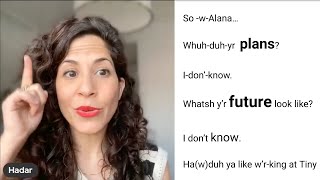
A recorded live lesson by Hadar Shemesh (May 14, 2024) teaching the shadowing technique using a short scene from the film Licorice Pizza. Hadar guides listeners through listening, repetition, and analysis—highlighting connected speech (reductions, flap T), stress/intonation patterns, and tone/attitude cues—so learners can both reproduce natural-sounding English and better interpret speakers' intent. The session alternates between playing short audio clips, instructor analysis, group shadowing, and brief viewer interaction.
Chapters
Hello. Hello. Hello, everyone. How are you doing? Thank you for joining me live for a live shadowing class. Today we are going to practice shadowing and we're going to do it with a scene from an American TV series. I'm going to wait a minute or so for people to join me and in the meantime, say hi in the comments and if you were able to join and tell me where you are joining me from. Okay, I'm going to wait another minute. If you're watching the replay, then you can Skip the next 5 seconds, 3 minutes. Because usually it takes a little bit of time for everyone to join. And I want to make sure that everyone is here for the beginning of the class. All right, good. Hello, hello, hello. Welcome. It's good to see you all. So today we have. We're gonna do it. This is something that I'm doing for the first time. I'm really happy about it. Usually we share a video. Every Tuesday, we share a video lesson. Today we wanted to do something a little different and to do it live because then we can interact. You can ask me questions, I'm here to answer. I can explain, explain things more thoroughly. Something that doesn't usually happen when I just share a recorded video. So if this works and you like it, we're going to do it more often here on my YouTube channel and Facebook page. If you are new to me, then. Hi, my name is Hadar. I'm a non native speaker of English. I'm a fluency and pronunciation coach and I'm here to help you speak English with clarity, confidence and freedom. I do it while focusing on pronunciation and with that there's everything that goes into it, intonation, rhythm, stress. So it's not just pronunciation, but also prosody, connected speech, and really how to feel more confident communicating in English. Shadowing is one of my favorite techniques to teach and practice with because I think it's so effective and also fun. First, it allows you to unleash your inner actor from within because usually we do it with fun scenes. So it's an opportunity not just to take on someone's English and pronunciation, but also attitude, nuances, sometimes even voice, like imitating different voices is something fun to explore and see what is possible for you and for your voice. So I think it's a lot of fun. And also you learn, you actively and passively learn both pronunciation and prosody really well when you do this. Shadowing practice as well as idioms, expressions, vocabulary, grammar, and pretty much everything. So this is why I think it's Important. And today I'm going to teach you how to do it while practicing with a scene from another from a TV show called Licorice Pizza. I don't know if you know it, but if not, you can go ahead and Google it. Here is what we're going to do first. We're going to watch the scene. Okay. Are you ready? Good. Let's.
So.
Okay, so I'm kind of like playing here with the layouts. This is new. Here I am. I'm gonna. I don't think you need me for it. I'm gonna keep myself. Can see me commenting. All right. Okay, good. I wanted you to watch at first, and now we're gonna go back to the beginning and I want to show you that we also have the text. Okay. So I'm gonna do with you what I usually do with my students. We're gonna listen to a short clip, a short sentence or two, then we're going to analyze it and shadow it together. Okay, good. Specifically, what I want to practice here is this ping pong conversation intonation of a back and forth conversation. It's not a monologue, it's a conversation. And I want you to see how the intonation is really triggering the response of the other person. So we're going to pay attention to intonation here, and we're also going to pay attention to connected speech, pronunciation, of course, and tone of voice. Because we'll see that if we were to look at the text alone, we could have read it in a totally different way. But when we listen to the characters, we get some underlying messages and some subtle nuances that I want you to be able to read through or. Or to understand when listening to people. Okay, good. So let's look at the first sentence first.
So, Alana, what are your plans?
What is he saying? We can do. We can turn it into a quick listening exercise as well. What is he saying? Before I show you the text, I'm gonna play it again because maybe you weren't ready for it. Let me know in the comments. And if you're watching the replay, you can write it in the comments as well or just write it for yourself.
So, Alana, what are your plans?
If you don't know the show, then you might not know that her name is Alana. And then maybe that could be confusing. So, Alana. So, Alana, maybe some of you were like, what is he saying at the beginning? But a lot of you were pretty good with detecting that he's asking her about her plans. Okay, so, Sualana, notice There is a comma here, but he's not really pronouncing the comma. So what you hear is so lana. So alana. So the W sound is something that happens when you connect a vowel, a back vowel, with another front vowel. So alana, you don't have to focus on pronounce, pronouncing it. But this is what we're doing. We're kind of like focusing on the speech so you can start detecting those things. What are your plans? But listen to how he says it in when it comes to connected speech. So plans. Whittier Wood. What are your. So actually what we're seeing here is W, duh, year. Okay? And plans is pretty, pretty clear. But really what we're hearing is widio. Plans. Widio plans. Now this is another thing that I want to teach you. If you don't know this already, in English, there's hierarchy in a sentence. There is hierarchy between less important words and more important words. The key word, the key stress of a certain phrase or a sentence is always going to be longer, louder, higher in pitch. What are your plans? And everything else reduces. What are your. What are your. What are your. What are your. What are your. What are your. What are your. Right. So it reduces. It doesn't mean that these words don't matter. It just means that people are going to fill in the gaps and understand that this is the sentence. What are your plans? That's a pretty significant. Like that. That word was pretty clear. Now listen to the intonation of this word. Let's play it.
What are your plans?
What are your plans? Plans? So even though there is a question mark here, we hear like, what are your plans? These are my plans. Right. It feels like he's dropping down in terms of intonation. It doesn't have that question mark intonation that we tend to associate the into questions. What are your plans? Right. Because usually that rising, rising intonation at the end indicates a yes, no question. And when you try to gain more information like he does here, it feels like a statement. It feels like there is a period at the app. So. So that's just like a. Like a side note here. All right, let's listen to her answer.
I don't know.
Okay. She kind of like laughs here. What is her attitude? What do you think? Think about it. Let's play it again.
I don't know.
I don't know. I don't know. It's kind of like what I get from this. The subtle message is, I don't know. Why are you asking me this, Right? Like, are you my dad? I don't know. Right. Notice what happens to the D when you connect the I to the D when it's. It becomes like a light D. I don't. I don't. I don't know. I don't know. And you don't really hear the T either. I believe this is what we're hearing. Let's listen to it again.
I don't know.
Right. So she doesn't really pronounce it. T. I don't know. I don't know. I don't know. Yeah, and she doesn't care much. She's not trying to come up with an answer. She's like, I don't want to answer this right now. Let's listen to the next question. Okay, so let me show you. Right. See this? I don't know. Dropping the T. The D is very light.
What's your future look like?
Okay, next he's asking, what's your future look like? What's your future look like? Let's listen to it again.
What's your future look like?
What's your future? What's your future? What is your future? What does your future look like? Right. What does your future look like? What's your future look like? Right. That's what we're actually hearing. And we're hearing like, what. What. What year? What's your. What's your. So actually, we're not hearing, like, a grammatically correct sentence, really. What's your. What's your future look like? Because if I were to ask this question, what. What does your future look like? That's what. How. I would ask it correctly. I wouldn't ask, what does your future look like? What's your future look like? Okay, look is a relaxed sound. Look, look. What do you think the stress word is here in what he says?
I don't know.
What's your future look like?
What is the stressed word? And by stressed word, I mean, where does he go high in pitch?
I don't know.
What's your future look like?
Can you detect it? Yeah. Irina says future. Right. Future look like. And when we think about intonation of sentences, then you'll notice that usually in English, intonation is very varied. That means that every syllable is somewhat on a different note. What your future look like? Da, da, da, da, da, da. And the higher pitch is usually the word that is stressed the most. In this case, yes, it's future. All right. What's your future look like? She responds, and I'll show you how that looks like. What's your future look like? And then she responds, I don't know. How now same I don't know. Right here the no is a bit more stressed. I don't know. Let's compare the first I don't know with the second I don't know. The first I don't know sounds something like this. I don't know. The second I don't know sounds something like this. I don't know. What is the difference? Can you hear the difference? I don't know. I don't know. You'll notice that when people repeat the same phrase, it's kind of like it's colored. It has a different color. Usually people are not just going to repeat the same phrase again and again and again. Do you. I'm going to give you an example. Do you want some cake? No. Do you want some cake? No. Right. It's kind of. It's escalated a bit. First, to add interest. Second, because I've already answered it once. You're asking me again. I'm going to respond again. But it's kind of like emphasizing my point. Right? So that's what happens here. I don't know. Why are you asking me all these questions? Right, let's continue.
Tiny toes.
Okay, the next question is. I'm going to play it again.
I don't know.
How do you like working on tiny toes?
Okay, the next question is. How do you like working at tiny toes? How do you. How do you. How do ya. How do you. How. It's kind of like a ha with a short. Ooh. How. How do you like working at tiny toes? Right. Again, the intonation pattern of his questions are kind of like the same. Is kind of like the same. How do you like it? How do you like working at tiny toes? By the way? Working, working. If you have a hard time pronouncing this word, you should look at it like this. Working. Or even like this. Working, working. How do you like working at tiny toes? Okay, let's continue.
I hate working at tiny toes.
Okay, so here we have an answer. How do you like working at tiny toes? What is the stressed word here when she says this sentence? How do you like working at tiny toes? I hate working at tiny toes. Now, by the way, I hope you're practicing out loud with me as I'm doing this. I hate working at tiny toes. Right. Have you noticed how hate was longer, louder, higher in pitch? And by the way, when you work with a text, by all means, steal my method and just go ahead, put it on a Google Doc. And change the font of the words that are stressed. It's so much easier when you see it in front of you. I hate working at tiny toes. Okay. How do you like working at tiny toes? I hate working at tiny toes. The fact that you stressed hate mean something, right? It's kind of like it's a ping pong conversation. What do you want to, you know, what are your plans? I don't know. What does your future look like? I don't know. How do you like working at tiny toes? Like an interview. I hate working at tiny toes. Right. Question, answer, question, answer, question, answer. So they're playing this game and you know, like, it's really interesting to look at that in terms of the intonation, in terms of the words that they choose to stress. This is an excellent practice for that. Let me take a break and look at the comments. Sultan says working is a stress word. It's not reduced. I would say that's like the second word that is stressed. Right? I hate working at tiny toes. And why is that? Because we already heard this information before, right? How do you like working at tiny toes? So she doesn't need, like, it's not new information that is introduced. And that is something else that I want you to notice every time a new, every time new information is introduced, that new information is going to be highlighted. So if you're not sure what words to stress when you speak, remember that introducing new, new information is definitely worth emphasizing or stressing. Okay, next.
You should start your own business.
Okay, let's play it again. Tiny toes, you should start your own business. Okay, what is stressed here? Tiny toes, you should start your own business. Okay, you should start your own business. So he kind of like stresses start. Should is reduced. So you can practice it. Usually you, you unstress this word. You should, you should, you should, you should start your own. Same thing with here, with your, your own, your own. And when we connect it together, I know it's going to be tricky. Your own, your own, your own business. You should start your own business. So we have both the word business and start. I would say that business is a little more stressed. And listen to the rhythm here again. Da, da, da, da, da, da, da. You should start your own business. English is a language that is like, you can hear the long and short syllables in it. That's not the case for a lot of other languages. In many other languages, this sentence will be read like, you should start your own business. Right? Every syllable will receive the same beat. And if you have somewhat of a Monotone language. Then also, everything is going to be on the same note. You should start your own business. And for some languages, this is the proper intonation. For English, you'll see that there is variation in rhythm and there is variation in pitch data. You should start your own business. Play it with me. It's like. It's like a song. You should start your own business. You should. You should start your own business. You'll notice that a lot of times people would when like, someone has an idea or, oh, my God, you really have to do it. I need to go pick up my kids. Right? Like, there is a lift at the beginning, a lift of pitch. Pitch starts higher. It's not. You should start your own business. That sounds a little less natural, right? And when someone has an idea, oh my God, like, think of that. Like, oh, you should start without saying the word oh my God. You should start your own business. Okay, you're going to practice acting with me. You should. Oh my Should. Should write a book. I need to. I need to tell you something. Right? So play with your pitch. See what is possible for you with your voice.
What business should I be in?
Okay. And notice, like, his high excited intonation versus her, kind of like low pitch, kind of like a lot less excited. And this is where we kind of like tap into tone of voice, right? When. When someone is. Is being friendly or excited, usually whether it's a man or a woman, male or female pitch. When someone is a little less excited, down to earth, straightforward upset, you'll notice that pitch is less varied. So there's like less. It's less pitchy. Right? And usually you'll notice that it's lower in pitch when someone is sarcastic. Keep that in mind as we get to the end of the scene. Listening to his voice as well. When someone's sarcastic. Sarcastic is like you're saying something, but that's not actually what you mean. When someone is sarcastic, usually you'll notice that they go lower in pitch. Okay, what business should I be in? What business should I be in? I want you to practice. Be in. Be in. Connect it. Don't separate it necessarily. Be in. And again, it's not a real intrusive year, but I will put it here anyway. Be in. For those of you who have a hard time connecting two vowels together, maybe this could help. Be in. And also notice, again, it's not should. It's not should. There is no l here. Should. Should. And if this helps. Business, Business, business. Some people might pronounce this with a schwa. Business Business. And for those of you who have learned pronunciation, the reason for that is that when we have the lax I sound in unstressed syllables, like nis, business in American English, it could turn into a schwa. It's an allophone, so the schwa, a reduced vowel, can replace the lax sound, as in sit, kid, and finish when the syllable is unstressed. If you're new to pronunciation, then don't worry about what I just said. And please just say business at the same time. Notice that it's not business, but be business. What. What business should I be in? Okay, let's listen to his answer. Okay, so he's still up here. I don't know. I don't know. He's trying to get her excited. I don't know. What do you like? I don't know. So again, the pronunciation of I don't know is the same. I'm not going to repeat that. But again, what do you. What do you. What do you. What do ya. What do ya. We've heard that before. What ya like? What do you like? What word is trust? Always be on the lookout for stressed words. What do you like? I don't know. What do you like? I don't know. What do you like? I don't know. What do you like? Right, so after he says I don't know, you'll see that he's lifting up a little bit his pitch. He's not saying I don't know like she did before. I don't know. I don't know. When the pitch is lifted up, it suggests that something else is coming up. It's an opening for either a response, that rising, rising intonation, or it suggests that I'm not finished yet. I don't know. Right. It feels like something else is coming up. What do you like that he finished it instead of I don't know. Feels like I'm done. Okay, so again, small things that I want you to be aware of because it kind of like gives you an extra layer for understanding a scene or a conversation. And then she responds, oh, you're an actress. I don't know. I don't know. Again, it's that same attitude. So do it with me. I don't know. Let's play it again.
I don't know.
You're an.
What do you think she feels? Okay, you can put it in the chat. And I'm going to continue blank.
I don't know.
I don't know.
You're an actress.
You're an actress.
You should be an actress.
Should Be an actress. Let's do it again together. Notice how I'm shadowing. Do it with me as well. And we're focusing on reductions here.
You're an actress.
You're an actress.
You should be an actress.
You should be an actress. You're an actress. You should be an actress. So again, this is such a great example of introducing. Not introducing new information, but repeating information. And if you're repeating information, if you're saying the same thing twice, this second time is for emphasis and intonation needs to support it. You're an actress. You should be an actress. Right? Notice that high pitch. Oh, I just had a great idea. Urine, Urine. Urine. I'm kind of like going here. Between pronunciation, prosody, acting, attitude. Right? Like, so it's like this whole speech analysis thing. I hope you find it helpful. Again, if this is too confusing for you, just focus on the pronunciation and shadowing. You're an actress. You should be an actress. Right? So play with the different attitudes. And when you're reading texts, then like there is. There's always like this underlying message. You're an actress. Is he guessing? Is he asking? Is he suggesting? And I was like, oh, I had such a great idea. You should be an actress. Also, again, should. Should. Should. Should be in. Be in being. Right? Like a mini. Yes. Sound. Actress. Actress. So it's the ah at in cat. Ah. Not actress. Not actress. Actress.
So how'd you become such a hot. So how you become such a hot shot actor?
I'm a showman.
Okay, so she's shifting. She's like. She's not even answering. She kind of like has this interjection like, right, she not going to be the first one. And now she takes the lead in the conversation. So she's starting to ask questions. So how did you become such a hotshot actor? Let's listen to it again. I want you to pay attention to reductions, connected speech and stress.
So how did you become such a hotshot actor?
Have you noticed it? Let's do it again.
So how'd you become such a hotshot actor?
Okay, let me just make sure that. So how'd you become? How'd you become. How'd you become? How da. That's what we're hearing. How'd you. How'd you. Howja become such a. Such a. You can connect it and then she slows down a bit. Hot shot actor. Right? She slows down to emphasize it. Is she complimenting him here or is she mocking him a little bit based on her tone of voice? Hotshot Actor. Right. What's the attitude? Mocking or complimenting?
So how'd you become such a hotshot actor?
Hotshot actor. Hotshot actor. Also, by the way, while you're answering, notice that it's an ah sound. Hot Shot. And because we're connecting words together, and when it comes to connected speech, what happens is that when we have a word ending with a consonant shot, and then we connect it to the next word, actor, the last consonant in this case, the T becomes the beginning of the next word. Because it's easier to start with a consonant and then a vowel. Hot shot actor. This is also a flap T. Hot. Here it's not. It's a held T, so we barely hear it. Hot shot actor. The reason why you're hearing two different T's. And the T in actor is also different. Right? That's like a regular T actor. Ter. There are three T's here. All three of them are different. Hot sh. Right. The T is a very varied sound, and it changes its pronunciation based on what comes before and what comes after. If the syllable is stressed or unstressed. In this case, when there is a consonant right after, it's a hell ta. I don't pop it. If you pop it, it's not a big deal. These are nuances. Okay. The next word, a T between two vowels, is flapped, so it sounds like a R sound. Right? Like you just lift your tongue up and you drop it. Ra ra, ra, ra ra. Like a Spanish short R. Pero. Hot actor. Shot actor. Hot shot actor. And when the T is after a consonant, like here, then it's just a regular T that goes up and drops. Hotshot actor. Okay, what did you answer? She has nothing to say. Yeah. So you can hear from her attitude that she's kind of like mocking him. She's not. Okay. So how did you become such an. Such a hotshot actor? Right. If I were to ask it like this, it would seem like I'm complimenting him. Right? That's not the attitude. And it has to do with the quality of the voice and the tone of voice and the pitch. So how did you become, like, if you feel like there is this smirk, you know, this emoji, and it's kind of like smirking. That's. That's the attitude. That's the intonation that we're hearing. Okay, continue. Let's continue.
I'm a showman. It's my calling.
Okay.
Do anything else. It's what I'm meant to do.
Okay. I'm a showman. Showman. I'm a showman. That's how he pronounces it. I'm a. I'm a. It's my calling. Right? So we have showman. It's my calling. Let's listen to her reaction. I want to make sure that I don't miss it out because I have a video coming up about interjections.
I don't know how to do anything else. That's what.
I just interrupted you.
I'm a showman. It's my calling. I don't.
What does she say here? I love this interjection. Interjection is like a sound or phrase that you say that is supposed to deliver an attitude. It stands alone. And it doesn't necessarily have a semantic meaning.
Like.
Do it with me. I'm a showman. It's my calling. Right. And it kind of like it's aligned with her attitude up until that moment. And then he says, I'm a showman.
It's my calling. I don't know how to do anything else. That's what I'm meant to do.
I don't know how to do anything else. That's what I'm meant to do. Notice how he connects everything together. Let's break it down. I don't know how to do anything else. I don't know how to do. I don't know how to do. I don't know how to do. How to do. Okay, how a lot of flap teas here. This is like a flap T lesson. How to do anything else. Right? So kind of like anything is kind of stressed here. I don't know how to do anything else. And let's see.
I was a kid. I've shown it's my calling. I don't know how to do anything else. It's what I'm meant to do.
That's what I'm meant to do. What is stress here? That's what I'm meant to do. That's what I'm meant to do. I hope you're repeating me, repeating after me. That's what I meant to do. Okay, let's do it together. I don't know how to do anything else. We're going to do it again slowly. I don't know how to do anything else. One more time. I don't know how to do anything else. That's what I'm meant to do. Let me look at the comments, see if there are any questions. Any questions. Okay, what means this sentence? I'm a showman. I'm in show business. I'm an Actor. Like, being on stage is. Is what I do, right? It's. That's my calling, right? Is that the sentence? It's my calling. My calling is what I'm called to do. My purpose in life, right? So it's kind of like. It's. It's like when God calls you and you're like, ah, that's what I need to do. That's what I'm meant to do, right? I'm. My calling is to be a teacher. So that's. That's the meaning of the sentence. I don't know how to do anything else. I'm assuming that that is a little clearer. That's what I meant to do. I was born to do this. Okay?
I was a kid. I've been a song and dancer.
Come on.
Okay. I mean, every. Every. Every since. Let me not forget this. I mean, ever since. I mean, that's like a connecting. That's a transitional phrase. It's a filler. We don't need it. But you'll see that a lot of people use it to explain, to create kind of to transition between one thing to another. Because he doesn't have to use it here, but it's a common phrase that people use. I mean. I mean, ever since I was a kid, I. Everything. I. Ever since I was a kid, I've been a song and dance man. Okay? And then she interrupts him. So let's do it together. Ever since I was a kid. Ever since I was a kid. We'll try to practice fast speech here. Ever since I was a kid, I've been a. I've been a. I've been a. I've been a. Song and dance. Song and dance. When we connect two words together with the word and with. We don't pronounce the full word and we just put the N sound in between. Song and dance. Song and dance.
Since you were a kid, I had.
To do anything else. It's what I'm meant to do. I mean, ever since I was a kid, I've been a song and dancer.
Come on.
Ever since I was a kid, I've been a song and dance man. Okay. Song and dance man. Come on. So. Come on. Does she believe him? Does she not believe him? What is the attitude behind it? Come on. Excited? Come on. Can you hear the difference? That is tone of voice. And it is so important because it actually changes the entire meaning of the sentence. Come on. Practice it with me. When you're, like, trying to kind of like diminish something or someone. Come on. Oh, Please, come on. Okay, let's listen to the rest of the sentence.
Ever since you were a kid.
Ever since you were a kid. Right? Even the way she says kid. Let's practice just that. Kid. Up, down, up. Kid. Ever since you were a kid. Okay? Ever since. Ever since. Ever since. Ever since you were. Even though it's reduced the word you, because there is a W after we round the lips here, so it's not Y like you would normally pronounce it when it's unstressed. You were a kid. You were a kid. Every. Every. Ever since you were a kid.
Dance man. Where are your parents?
Okay, so song and dance man. Again, she's mocking him a little bit here. And then also, why is she saying, why is she stressing kid? Can you tell? Why is she stressing kid? Ever since you were a kid. Why is she stressing it? Why do you think? Look at the next sentence, where your parents. Okay, what is she trying to do here? Let's see if you can get that. But as you're answering, I'm going to say this. Usually, normally, if you were to find someone walking in the street and you would want to ask them, where are your parents? You wouldn't stress the word where. You would say, where are your parents? Where are your parents? It's very unlikely to hear this sentence pronounced this way. This way.
Song and dance man. Where are your parents?
Where are your parents? You are not likely to hear it pronounced this way. Why is she pronouncing it this way? Right? So some of you say, yeah, Carol, that's it. He's still a kid. Since you were a kid, but you are a kid still. So it's not just that she doesn't believe him. She's kind of like making fun of him. She's patronizing him. Do you know this, this word, patronizing, Treat someone like you're, like, a little bit better and more knowledgeable than them, like you're their parent or something. Like, like, do you know this phrase, don't patronize me. Don't, like, sound like or speak as if you're better than me. And that's kind of like what she's doing, right? Maybe for a good reason, but that is what she's doing. And ever since you were a kid, because you're still a kid. And this is why she asks this questions, like, where are your parents? First of all, to indicate that he's. He still needs his parents, right? If he were an adult, she would ask it in a different way. And also, it's A suggestion that says, something's off here. You shouldn't be alone, right? Where are your parents? Let's continue.
Oh, of course she does.
I don't want you.
Where are your parents?
My mom works for me.
Oh.
My mom works for me. My mom works for me. Say it with me. My mom works for me. Let's continue.
She does in my public relations company.
And you're.
Okay, now listen to this back and forth. So if before it was a question, pause, answer, pause, question, pause, answer. And then they switched. She started asking questions. Just look at the dialogue, right? Like I want you to see, see? And how that affects the rhythm of the conversation. Then she asks a question, he answers, asks a question, answers, ask questions. And now they're like on top of each other, right? Oh, this. Right? And then like we see that the intonation from being very varied, it's a lot more direct, right? Like it becomes more of a real conversation here. So let's analyze it together. Okay? So now it becomes factual, right? Where are your parents? My mom works for me. Right? It's not, oh, my mom works for me. No. Okay, so let me tell you the fact as they are. My mom works for me. What is stressed? Can you notice? Right? Are you starting to pay attention? My is short. It's unstressed. Mom is somewhat, somewhat stressed. My mom works fur. For me. For me. For me. My mom works for me. It actually goes up at the end because he. It feels like he wants to say something else, but she interjects. Of course she does. Again, sarcastic. Of course. Of course. How else would it be, right? Like I should have assumed it myself. Again, it kind of like goes along with. Along the lines of patronizing someone or mocking someone. Of course she does. That makes sense. And then he responds, yes, she does. So now instead of. It's kind of like, it's more direct. Let's, let's.
Ever since you were a kid.
So what we're going to do now, Just those couple few phrases. I'm going to pause and we're going to repeat it, okay?
Song and dance, man.
Wait.
Where are your parents?
Where are your parents?
My mom works for me. Plans.
Oops.
So how'd you become such a hotshot actor?
Sorry.
Come on, let's do it again. Ever since you were a kid. Song and dance, man.
I'm gonna do it again.
Where are your parents?
So where are your parents?
My mom works for me.
My mom works for me.
Oh, of course she does.
Yes, she does.
Oh, of course she does. Yes, she does. Let's do that part again. Of course she does. Yes, she does.
In my public relations company.
In my public relations company. In my public relations company. Right, so it's kind of like. It's a duel. And each of them kind of like goes higher in pitch every time they want to add something else. My mom works for me. Of course she does. Yes, she does. In my public relations company. Right. Let's do it again. Pr. Public relations. Pr. You might have heard the word pr. PR means public relations. A company that is responsible for media and getting someone interviews and getting them on the paper. Right. So usually celebrities and actors and politicians. They have a PR person or a PR company. In my public relations company. Okay, so it's also his company.
Public relations company.
Right again, doubtful. Your public relations company. In my public relations company. Let's say it together. In my public relations company. And your public relations company. Okay, again. Intonation. He says it with a falling intonation. In my public relations company. She repeats. In your public relations company. And then.
Yes, in your.
Because you have that. Yes. Okay, let's do that part again.
In your public relations company.
In your public relations company.
Because you have that.
Yeah.
Because you have that. Period. Okay, practice your intonation here. Yes.
And you're an actor.
Yeah.
And you're an actor. Yeah. Okay, let's look at the text. Let's do that part again. Now I'm going to read it for you so it's easier. So you have the text in front of you. My mom works for me. Oh, of course she does. That makes sense. Yes, she does. In my public relations company. In your public relations company. Because you have that. Yes. And you're an actor. Yes.
And you're a secret agent too.
And you're a secret agent. Agent, too. Okay. When. When you go down. When you hear someone going down to that vocal fry. First of all, it's common. It's like you might hear it anyway. But it's also associated with being sarcastic. Okay. And the sentence is. And you're a secret agent too.
Well, no, I'm not a secret agent. That's funny.
Okay, can you tell how his intonation changed here from the beginning? You should be an actress too.
Yes.
And you're a secret agent too.
Well, no, I'm not a secret agent. That's funny.
That's funny. Is he really amused? No, because he's sarcastic too. So his pitch is lower. Is he excited or. No, he's probably offended. And his pitch is lower. Right. Or he feels he has no power all of a sudden. The power Structure has changed. If at the beginning he felt powerful, now he's not powerful anymore, and that changed his attitude and his voice. That's funny. Right? Now let's look at the text. And again, talking about tone of voice. Oh, that's funny. Well, no, I'm not a secret agent. That's funny, right? Z. Same sentence, different intonation, different tone of voice will suggest one thing. And then the way he said it suggests a totally different thing. Well, no, I'm not a secret agent. That's funny. Something else. Okay, what do I have to say about pronunciation here? Maybe just another flap T. I'm not a secret agent. I think someone asked earlier in the comment, how do we pronounce the I'm when it's reduced? So it could either be I'm, I'm, I'm. It could be. Could be. That's it. I'm or I'm not a secret agent. I'm or I'm not a secret agent. Not a secret agent. So many flap T's. Nada, nada, schwa here. Nada. Secret agent. Again, Notice what we're doing here. Secret again. Connected speech and flap T. The flap T is so cool to practice connected speech because you have to connect the words together to get the flap T. Secret, Secret. A. That's an A as in day. Secret. Agent. Secret agent. English is not a phonetic language. What can we do? Secret agent. This is how it actually sounds. Or to be more exact, secret agent. I can keep on and on with this. That's funny. All right, what I recommend for you to do is because I think we're going to wrap up. This has been a long lesson. What I recommend for you to do is go find this scene. I'm going to link it in the show notes as well, so you can listen to it and watch it. We have a clip just of this scene in particular. Or you can go to the beginning of the video and watch the entire scene and just watch. Pause and repeat. Pause and repeat. And if you want to work with the scene and the text, you can find the script online and you can analyze it yourself. Yeah. And that's it. And then you can do what I did here. Kind of like play with the text, pause and repeat. And look for all the things that I've mentioned. For example, connected speech, stressed words, intonation at the beginning, at the end, and also tone of voice. Right. What is the attitude and how do we know? Like, if it's high in pitch, low in pitch, sarcastic, excited. Those nuances are going to give you more power in understanding other people, especially if you tend to communicate with native speakers. And sometimes as non native speakers, we really focus on the content. Like, we're, like, working really hard to understand what they're saying, understand pronunciation, make sense, and come up with the right answer. Right. And all of that takes up a lot of space in our brain. And when that happens is that we forget to listen to nuances, and then sometimes we don't get it or get the meaning or get the joke or get that it wasn't really, you know, it was said sarcastically. And again, it's another layer of information that we need to listen to. Now, of course, it's more advanced. It's not for people who are just starting out in English, but I hope that these kind of exercises can help you with that. And of course, it's a good pronunciation practice. All right, my friends, thank you so, so much. If you enjoyed this, if you're watching the replay, you enjoyed it and you would want more, just write more in the comments. So I know and we know and we can do more of these sessions. All right, my friends, thank you so much. Have a beautiful, beautiful day and I'll see you next time. Bye.