Pronunciation practice in a song: Traitor by Olivia Rodrigo
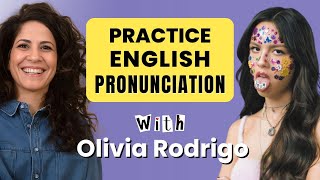
A recorded pronunciation lesson by Hadar Shemesh using Olivia Rodrigo's song "Traitor" to teach American English pronunciation features, especially different T sounds (flap T, held/aspirated T), D sounds, reductions, and connected speech. The instructor plays lines from the song, analyzes tongue placement and rhythm, prompts shadowing practice, and offers resources (lyrics, video link, playlist) for further practice.
Chapters
Hey, everyone. Thank you so much for joining me. Today we're going to practice pronunciation with Olivia Rodrigo. Olivia Rodrigo is one of my daughter's favorite singer. We hear her songs all the time at home. And because of that, I decided to use one of her songs, traitor, to teach you pronunciation. Specifically the different T's and even more specifically the flap T, as in the word traitor in American English. The flap T actually sounds a little bit like a D, a little bit like an R. So today we're going to figure that out. We're going to talk about it. No more confusion about the T's. And also, it's a great way to learn and practice. And after reviewing the first verse and the chorus, you'll be able to sing along with Olivia the song Traitor. You're welcome. If you're new to my channel, then hi, my name is Hadar. I'm a non native speaker of English, a proud one, and I am here to help you speak English with clarity, confidence and freedom. If you want to learn more about pronunciation, fluency and mindset, definitely go check out my website for a lot of free content@hadarchemish.com you can also follow me on social media where I share daily content to help you thrive and in English. Back to Olivia. Let's get started with the first line of the song. We're going to listen to it, talk about the pronunciation, maybe even sing along. I don't know. I don't know how it's going to go.
Brown guilty eyes and little white lies.
Yeah. Brown guilty eyes and little white lies. Okay, Brown guilty eyes. Notice the T here is like a regular T. Guilty, guilty. That's because it comes right after a consonant. So we hear it nice and crisp. Brown guilty eyes and little white lies. So little, little, little flap T, little. It sounds like your tongue goes up, touches the upper palate really quickly. It sounds like a very light D little. Then a dark L little. And that sound exists in many other languages. In many cases as they are like in Japanese or in Spanish, the short R. Pero, pero, pero. Ra, ra. It's the same. Little, little. So a light tap and then the dark L little. So brown guilty eyes and little white lies. Here the T is held before an l. So a t. When it's before another consonant, it's held, listen, white lies. So keep the tongue up there and then transition to the L. White lies. Let's do it together again. I'm going to play it and then you're going to sing along or just speak Along. Okay, good. Next sentence. Okay. I played dumb, but I always knew. But I. But I. But I. Another flap. T. I played dumb. So it's played in the past. And then we have dumb, but the two Ds connect. I played dumb. You don't pronounce a D twice. It's just a little longer. Dumb. No B. Dumb. Close it with an M. I play dumb. But I. But I. But I always the L is kind of like hidden there. Okay. That you talk to her and maybe did even worse. Right? That you talk to her. My daughters are going to kill me that I don't remember it by heart. By the way, I have to look. Do not tell them that you talked to her. Maybe did even worse. So now I want you to listen to her D's here. I'm going to pick on it a little bit because listen to how sharp and crisp the D's are. Listen.
That you talked to her. Maybe did even worse.
So I want to speak specifically about the talked and did. In English, the T's and D's are pronounced just with the tip of the tongue. This part. Talk did. Why am I saying that? Because in many other languages the T and D are pronounced with this part of the tongue. The blade talk did. And then the consonants sound heavy, still clear. But if you are wondering why it sounds a little different or lighter when you listen to her, this is why. It's the placement of the tongue. So I'm going to play it again and this is what you're going to pay attention to. Worse. Worse. Not worse. Worse. Worse. Did even worse.
I kept quiet so I could keep.
You listen to the rhythm. I kept quiet. So why could keep. Could. Keep. Could is a function word. Reduced. Very short beat here. She doesn't sing. So I could keep you. Because we don't stress that word when we speak. So we wouldn't stress it in a song. So I could keep you. Something with the D and K. The K sound of keep, merge. Listen again.
I kept quiet so I could keep you.
Almost like the D is not pronounced and almost like the T of kept quiet is not pronounced. Listen.
I kept quiet so I could keep you kept quiet.
Kept quiet. I hear it, but a lot of times you'll. You won't hear the T. You'll hear. I kept quiet because the T when it's between two consonants is often reduced. Just something to think about. And.
And Ain't it funny how you ran to her?
Ain't it funny? Funny, funny, funny, Ain't it? Ain't it? Ain't it, isn't it, ain't it, ain't it, isn't it? That's the meaning. Ain't it funny how you ran to her? She's not even saying ran to her. She's saying ran a her. Rena her. Rena her. So the to is reduced, but it's not a flap t. It's like a D that blends with the N. Rena her, Ran a her. So almost like there is just a schwa there. Rena her. Even in a song, it is that reduced. So definitely, when people speak, this is what you might hear.
The second that we called it quits.
The second that we called it quits. Can you tell what the stress words are? Second we quits. The second that we called it quits and connected speech. Called it, called it, called it the second that we called it quits. Sing along.
The second that we called it quits. Ain't it funny how you said you were friends?
How you said you were friends she actually does not pronounce the r how she how you said you were friends, were friends. So a lot of times when there is a schwa r, like a reduced syllable with the r at the end, people might just drop the r. How you said you were friends. Moving on. Something is off here with the content and the melody. And she does it deliberately and I really like it. Let's listen to it again. Yeah. Because she puts emphasis on don't. Also, it's supposed to be doesn't. So it's a deliberate choice of don't instead of doesn't. Maybe that's why it was strange to me. I've never noticed it. Now, this is colloquial English. It's not a mistake. Okay? I mean, it's a mistake if it were written in a book, in an academic essay or something. But in a song, just like with ain, it perfectly acceptable permission to make mistakes. You guys, one more thing about this line. Look not look like held t. You barely hear the T. Let's go to the chorus.
You betray me and I know that you'll never feel sorry.
You betrayed me. I don't have anything interesting to say about this. You and I know that you'll never feel high. E feel and dark l feel sorry open Oz and father sorry. And I know that you'll never feel sorry. Another thing that I want you to notice is that you that you, that you. When the t and the y connect, especially in colloquial American English, it often sounds like a ch sound, as in chicken, that you get you. I bet you right that you. That you'll. That you'll never feel dark. L. Sorry. Do it again. Say the line you don't have to sing. For the way I hurt. For the way I hurt. Again. Usually if I were to speak it, I would say for the way I hurt. And it's kind of like a broken way to say for the way I felt hurt or I got hurt. Okay, I was hurt for the way I hurt. For the way I hurt. But again, she puts the emphasis on the to almost like emphasize every single word here. For the way I hurt. Let's practice the word hurt. Her. Her. Her. Hurt. You talk to her. When we were together. So again, the T of together changes a little bit. Okay. When we were together, it doesn't always happen when the T is at the beginning of the word. So be mindful of that only for a specific word like tonight, tomorrow, together. Or like the T becomes like a D together. It's not even a flap T When we were together. Okay, I'll see you tonight. I'll talk to you tomorrow. So there are some words where you have to something together tonight, tomorrow, and the two is not stressed. So the T could be kind of like manipulated a little bit like we. Like she did here. Let's listen to it. When you talk to her. Listen to those strong talk to talk to her. When we were together and loved you.
At your worst, but that didn't matter.
Did you hear at your. At your. Can you start hearing it now that we talked about it? At your worst. Worst. Again. No O worst. Loved you at your worst. Loved you at your worst. But that didn't matter. As in cat flap T. Matter. Matter. But that. Healthy. But healthy. But. But that didn't matter. Didn't. Didn't. The T is not even pronounced here. But that didn't matter. Listen to it again.
Never. Loved you at your worst. But that didn't matter. It took you two weeks.
It took you two weeks. Again, aspirated tea. Took. Took Strong, crisp. Feels like there is a little H there. It took you. So the first T is held it. The second T is exploded. Took. It took. It took. It took you two weeks. Again. Aspirated T. Two weeks. It took you two weeks. What took you so long? It took you two weeks. It took you two weeks to go.
Off and date her Guest.
To go off. To go off. To go out there. To go off and date her. Flap T. And date her. It took you two weeks to go off and date her. Listen.
It took you two weeks to go off and date her.
Guess. Okay, now say it. And now the last line. Guess you didn't cheat, but you're still a traitor. Traitor. Traitor. Flap T and a soft R. We practice it at the beginning. Trader. Let's listen to it again. Guess you didn't. She does pronounce the d slightly. The second D. Guess you didn't. Didn't. Which is totally fine. A lot of people, when they speak, will just do. We'll just say didn't. Didn't. Guess you didn't. Cheat. Tense E. Cheat. But you're still a traitor. The word you're when it's unstressed is usually pronounced as you're. You're. You're. But she is stressing it. But you're. But you're. But you're. But you're. Technically, the J is a consonant, so the T is supposed to be a held T. And then you're. But you're. But you're. But you're still lacks. I. Not steal. That's a different word. But you're still a traitor. Now let's do the whole thing from the beginning. I'm going to play a line and then you're either going to sing along or you're going to speak along. Whatever you choose, just put into practice all the things that we learned. Ready?
That you talked to her maybe did even worse. I kept quiet so I could keep you. And ain't it funny how you ran the heart. The second that we called it quits? Ain't it funny how you said you were friends? Oh, it sure as hell don't look like it. You're betray me and I know that you'll never feel sorry. But that didn't matter. It took you two weeks to go off and date her. Guess you didn't cheat but you're still a traitor.
Heartbroken. The T is held in heartbroken, by the way. Heartbroken. Anyway, I hope you enjoyed this practice. There is more of this song, so I'm going to link the lyrics and the YouTube video the clip in the description below so you can practice along and enjoy the T's and the D's and the flaps and pronunciation in general and listening to the rhythm of English. Have a beautiful, beautiful day. Have a beautiful week. Thank you for practicing with me. If you want more shadowing or speech analysis or all the things that we did today, I'm going to add a playlist in the description so you can check it out. Practice along and explore more on my website@hadarchemish.com and if you enjoyed this episode and you know of someone who might enjoy it as well, please share it with them. Have a beautiful day and I'll see you next week in the next video. Bye.
More from Hadar











Read Out Loud with me! Dare to Lead by Brené Brown | Pronunciation & Vocabulary practice