Read out loud with me! Practice vocabulary, pronunciation and connected speech | The Alchemist
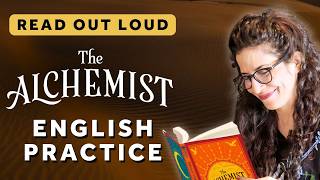
Hadar Shemesh reads a passage from The Alchemist aloud, pausing to break down vocabulary, pronunciation, connected speech, and grammar. You shadow the reading and practice sentence by sentence, learning how reductions and stress patterns work in real speech.
Chapters
Hey everyone. Today we have another read along episode with me. And today we're gonna read from the story the Alchemist by the Brazilian author Paolo Coelho. This book is so loved by millions of people around the world. Also, I know of a lot of people who do not love this book. But either way, this is one of the first books that I've read that really made me think all these profound thoughts. I remember reading it when I was really young. And recently I started reading it again then this time in Spanish. So I have the Spanish version and the English version. And then I looked at it and I said, I want to bring it to my channel here as well. And what we're going to do is we're going to read together. I'm going to explain some difficult vocabulary and I'm going to talk about pronunciation and intonation. In the past, I've released different read along episodes. Atomic Habits, Harry Potter, the Let Them Theory. And you guys always loved it so much. So this time I'm doing it with, with the Alchemist. The part that I'm reading is closer to the end of the book. If you know the book, then maybe it's gonna kind of like locate you in the narrative. And it's where Santiago, the main character and the alchemist are traveling through the desert. And in the excerpt that we will read, Santiago deals with fear, love, doubt, and the deeper lessons the desert reveals to him. So it's a. A moment that shows his understanding and his ability to listen to his heart. And I think we can learn a lot about listening to our inner voice and to our hearts from this excerpt and the way it's going to work. I'm going to read a few parts, talk about certain elements, and then I'm just going to do one read through. And I expect you to either pause the video and read sentence by sentence, or just shadow me as I read along. This way you will understand the context and learn little tricks about how to read it. And the second time you will be able to implement them reading along with me. So are you ready? Let's get started. They crossed the desert for another two days in silence. The Alchemist Al K Mist the alchemist had become more and more cautious. Cautious is someone who thinks carefully before acting or someone who avoids taking unnecessary risk. Cautious. It comes from the word caution. So the alchemist had become more and more cautious because they were approaching the area where the most violent battles were being waged. So the word approaching means coming closer. They were approaching the area. And then the word violent is Using or involving physical force that can hurt someone or cause damage. And waged. Which is a little less popular. A word that is a little less popular is carried out or started. Usually referring to a fight or a war. To read it in context. Where the most violent, violent battles. Ba. Battles were being waged. I'm going to read that part again. No stops. Repeat after me. They crossed the desert for another two days in silence. The alchemist had become much more cautious because they were approaching the area where the most violent battles were being waged. Moving on. As they moved along, the boy tried to listen to his heart. To his. To his. We don't pronounce the H here, so to his. Both of them are reduced. And heart. Just open your mouth for the r vowel. To his heart. It was not easy to do. In earlier times, his heart had always been ready to tell its story. But lately it wasn't true. There had been times where his heart spent hours telling of its sadness. Telling of its. Of its. Of its. So we have two content words, telling and sadness. And two function words that are usually smaller. Of its. Of its. Telling of its sadness. And at other times, it became so emotional over the desert sunrise. So emotional over. Nice demonstration of the O sound. So emotional over. Long O as in go. Not over, but over the desert sunrise. 1s. Desert stress is on the first syllable, unlike the word dessert that you eat at the end of the meal that is spelled with two S's. But then the stress is on the second syllable. Desert sunrise. That the boy had to hide his tears. Okay, good. So now I'm going to read that part again without stops, and pay attention to the reductions. Pay attention to the melody and try to imitate the melody. And I want to point out something in that last part that I read. There had been times where his heart spent hours telling of its sadness. So notice the intonation here. There had been time where his heart spent hours telling of its sadness. And at other times. So when we compared two parts. Right. Times and other times, something needs to shift in your voice, so the intonation plays a significant role introducing you a new idea. There have been times and at other times. So I want you to use your voice and your pitch and the melody to indicate one versus two. Okay. So now as we read it again, just pay attention to that and try to imitate it. Good. As they moved along, the boy tried to listen to his heart. It was not easy to do. In earlier times, his heart had always been ready to tell its story. But lately that wasn't true. There had been times where his heart spent hours telling of its sadness, and at other times it became so emotional over the desert sunrise that the boy had to hide his tears. Let's move on. His heart beat fastest when it spoke to the boy of treasure, and more slowly when the boy stared entranced at the endless horizons of the desert. So entranced, very interested, or filled with wonder, that in a way that you cannot look away or think of everything, anything else, you're entranced. Okay. And horizons is the line in the distance where the sky meets the land, the horizon. Okay, so let's read it again. Pay attention to these two words in context and just echo me. His heart beat fastest when it spoke to the boy of treasure, and more slowly when the boy stared entranced at the endless horizons of the desert. So it's a nice way to think about listening to yourself and listening to your heart. And when you get excited about something, how the heart beats. And to think of it as if your heart is speaking to you about something. And the pace of your heartbeats means that you're experiencing different things. It's not just something physical that happens. Moving on. But his heart was never quiet, even when the boy and the alchemist had fallen into silence. Quiet, quiet. There is a schwa there. Why do we have to listen to our hearts? The boy asked when they had made camp that day. So notice how I read the question a little faster. And there were a lot of reductions. Why do we have. Why do we have to listen to our hearts? To our. To our. To our hearts? It's a question, so it doesn't get as much emphasis, at least when I read it. And then when we go into, like, the narrative, the story, then I slow down. Why do we have to listen to our hearts? The boy asked. Asked. Not asked. Asked. The e is not pronounced here. When they had made camp that day. Because whenever your heart is, that is where you'll find your treasure. Tre together end up sounding like a ch sound in American English. Treasure. Because wherever. Practice it. It's a hard word for some. Wherever. Wherever. Wherever your heart is, that is where you'll find your treasure. Notice the rhythm. Because wherever your heart is, that is where you'll find your treasure. But my heart is agitated, the boy said. So agitated is feeling very nervous, upset or worried. Agitated. I'm so agitated today, I can't. Don't talk to me. I'm agitated. Agitated. That's such a nice word, agitated. I mean, describing something not so nice, but I like the way it feels in the Mouth. Okay, so now we're going to put all of it together. Shadow me. But his heart was never quiet, even when the boy and the alchemist had fallen into silence. Why do we have to listen to our hearts? The boy asked when they had made camp that day. Because wherever your heart is, that is where you'll find your treasure. But my heart is agitated, the boy said. Moving on. It has its dreams. It gets emotional, and it's become passionate over a woman of the desert. Let's talk about grammar for a second. It has its dream. So in this case, the word its is the dreams of the heart, right? It has its dreams. It gets emotional. It gets emotional. Here we just say it and then. And it's become passionate. And here it's short for it has become passionate. And it has become passionate over a woman of the desert. So it's possession, it's dreams, and it's. It has. And also, this is how it sounds when you say it is. When you contract the two words, they all sound the same. And it's become passionate over a woman of the desert. Okay, it's nice. It's. You have possession here. You have the present. Simple. It gets emotional, and you have the present. Perfect. It has become passionate over a woman of the desert. It's kind of like you're in all realms at the same time. It asks things of me, Things of things, of things. It asks things of me. And it keeps me from sleeping many nights when I'm thinking about her. Well, that's good. Good, good. Try not to round your lips so much. So it's not good. Good, good. Well, that's good. Your heart is alive. Keep listening to what it has to say. Now. I love this perspective, pulling away from the English and just talking about the concept of being afraid of bad emotions. And I talk a lot about it when I talk to my students in my coaching sessions. And they're like, well, I feel nervous when I talk to other people. I'm afraid that this. I'm afraid that. That I get anxious or I get too excited. And what I always say is that we should never be afraid of strong feelings. We should never be afraid of negative feelings. Because first of all, yeah, it means that we're alive. It means that we care. It means that we haven't shut down all the emotions so that we wouldn't feel, because some people do. Feeling something, even feeling negative things, is a part of life, and we shouldn't avoid it, because when we do, other things happen, and then also we end up not doing Things because we're afraid of feeling bad. And if we don't feel bad, if we go into our lives being willing to feel shame, to feel fear, to feel judgment, to feel embarrassed, we are going to achieve so much more. We are going to feel so much more fulfilled. Because feeling unfulfilled is an ongoing, constant feeling that sits on you and chews up your liveliness and makes you feel less than what is possible. So this is why I really relate to this part. And I wanted to interrupt for a second, but. But now we're going to go back to the story. Okay, so let's read it again. Now, just shadow me. It has its dreams, it gets emotional, and it's become passionate over a woman of the desert. It asks things of me, and it keeps me from sleeping many nights when I'm thinking about her. Well, that's good. Your heart is alive. Keep listening to what it has to say. During the next three days, the two travelers passed by a number of armed tribesmen and saw others on the horizon armed with weapons and tribesmen. People from a tribe, now others on the horizon. And not in the horizon, because horizon is like a line. And when we think of on. On in an at. When we think of something that is more of a line, like a coast or a street, we use the preposition on. This is why we say on the horizon, on the coast, on the street. The boy's heart began to speak of fear. To speak of fear. What a beautiful phrase. To speak of fear. It told him stories it had heard from the soul of the world. So long. O is and go. World. W er whirl. Oh, oh, oh, Dark l. World. Soul of the world. Stories of men who sought to find their treasure and never succeeded. Sought is the past tense of seek. To seek. And it means that you tried to find something or looked for something. I sought after, sought to find their treasure and never succeeded. Sometimes it frightened the boy with the idea that he might not find his treasure or that he might die there in the desert. In the. In the. In the place. The tongue on the teeth for the n. Relax it a little bit. For the th. So you get these vibrations in the short, reduced. Desert. In the desert. In the desert. In the desert. At other times, flap t. Here. At other. At other. In American English, the t between two vowels in unstressed syllables is flapped. At other times, it told the boy that it was satisfied it had found love and riches. You know, this ambivalent feeling of one day feeling discontent. Right. Like nothing works. I hate everything and the next day, you're like, I'm so grateful for everything that I have. I feel I can. I could definitely relate to that. Okay, so let's read through again from the last part. During the next three days, the two travelers passed by a number of armed tribesmen and saw others on the horizon. The boy's heart began to speak of fear. It told him stories it had heard from the soul of the world. Stories of men who sought to find their treasure and never succeeded. Sometimes it frightened the boy with the idea that he might not find his treasure, or that he might die there in the desert. At other times, it told the boy that it was satisfied it had found love and riches. Next part. My heart is a traitor. A traitor is a person who stops being loyal to their group, country, or friends or spouse, and helps the opposite side instead. A traitor. My heart is a traitor. The boy said to the alchemist. The alchemist. When the word the appears before another word that starts with a vowel, then we pronounce it as the. The. The. The alchemist. On the other hand, when there is a consonant right after, it's going to be pronounced as the the. As you'll see later in the text, in the word horses, we start with a consonant. The horses. The horses. Yes. An H is a consonant. So again. My heart is a traitor. The boy said to the alchemist when they had paused to rest the horses. Rest the. Again. Tth. Place the tongue on the teeth for the T. And then relax it a little bit for the th. Rest. The rest. The rest. The horses. It doesn't want me to go on. That makes sense, the alchemist answered. Naturally, it's afraid that in pursuing your dream, to pursue means to follow or chase something. In pursuing your dream, you might lose everything you've won. Everything you've won. Present. Perfect. Everything you have won. You've won. Well then, why should I listen to my heart? Why should I listen to my heart? Basically, if I feel fear, right? If it's pulling me away, stopping me, telling me, don't do this. Why should I listen to it? Because you will never again be able to keep it quiet. Quiet. Remember. You will. You will. Reduction. You will never again be able to keep it quiet. By the way, too is pronounced as T when it's before a consonant. To keep. T. To keep. To keep. When it's before a vowel. To understand. To understand. To keep. To keep. To keep. To keep it. To keep it healthy. To keep it quiet. Even if you pretend not to have heard what it tells you. Even if you Pretend not to have heard. Not to have heard what it tells you. It will always be there inside you. Inside you. So when you end a word with a d and the next word starts with a y inside you, you have a little bit of a J sound there inside you, repeating to you what you're thinking about life and about the world. The inner thoughts, right? The whisper inside. So we need to pay attention to it. You mean I should listen even if it's treasonous? Treason is betrayal, or something that someone does to betray a country or a person. Treasonous. Something that is of betrayal. Treason is a blow that comes unexpectedly. A blow is a hit or a sudden event. If you know your heart well, it will never be able to do that to you. Because you'll know its dreams and wishes, and will know how to deal with them. Here, you connect the 2ths with them. With them. Deal. A dark l at the end. Deal. Deal with them. Deal with them. Deal with it. Deal with you. Deal with her. Deal with them. It's a common phrase that you might hear often. You will never be able to escape from your heart. So it's better to listen to what it has to say. So it's better to listen. So the word to is really reduced here. And even the t is reduced here. Better to. Better to. Again in American English. Better to listen to what it has to say. What it has to say. That way you'll never have to fear. Unanticipated blow. Unanticipated is not expected or planned. So it happens suddenly, without any warning. Unanticipated. Now, let's read again through that part. No pauses this time. No explanations. Just shadow me. And if you need, pause it between sentences and repeat it sentence by sentence. Let's start. My heart is a traitor, the boy said to the alchemist when they had paused to rest the horses. It doesn't want me to go on. That makes sense, the alchemist answered naturally. It's afraid that in pursuing your dream, you might lose everything you've won. Well then, why should I listen to my heart? Because you will never again be able to keep it quiet. Even if you pretend not to have heard what it tells you, it will always be there inside you, repeating to you what you're thinking about life and about the world. You mean I should listen even if it's treasonous? Treason is a blow that comes unexpectedly. If you know your heart well, it will never be able to do that to you. Because you'll know its dreams and wishes, and will know how to deal with them, you will never be able to escape from your heart. So it's better to listen to what it has to say. That way you will never have to fear an unanticipated blow. Let's move on. The boy continued to listen to his heart as he crossed the desert. Crossed. Crossed. Not crossed. Crossed. No vowel. In between the S and the T sound, the D is pronounced as a T. Crossed. He came to understand. To understand. To understand. It's dodges, dodges and tricks. Dodges is clever or sneaky ways of avoiding something or hiding the truth be so dodgy. Dodges, dodges and tricks. Dodges and tricks. And to accept it as it was. Again, a healthy as it. As it. As it was. And to accept it. To accept, to understand. To accept. To understand it as it was. He lost his fear and forgot about his need to go back to the oasis. Oasis is a safe area with trees and people. That's in the book. So when he talks about the oasis as a safe area in the desert, offering rest and protection during a long and difficult journey. But in, in general, when people talk about an oasis, it's defined as a peaceful, relaxing place in the middle of something difficult or stressful. So it could be metaphorical, it could be physical, it could be the name of a beauty salon. So oasis. Oasis. Oasis. But in this case, he talks about a specific place where he left his loved one. He lost his fear and forgot about his need to go back to the oasis. To the oasis. Because one afternoon his heart told him that it was happy. Even though I complain sometimes, it said it's because I'm the heart of a person and people's hearts are that way. Heart. Heart. That's the R as in car. But it's not a very open ah sound. It's a little bit more rounded. Heart. And the T is held so you don't have to pop it. It doesn't have to be heart, but you can just end the art with an abrupt stop of the air. Heart. That's the healthy person. No O person. People are afraid to pursue their most important dreams. To pursue is to follow or to chase. To chase their dreams. People are afraid to pursue their most important dreams because they feel. Feel that they don't deserve them. Gives me chills. Don't like. I feel like a lot of people need to hear this. People are afraid to pursue their most important dreams because they feel that they don't deserve them. Don't long O is and go. Don't deserve them or that they'll be Unable to achieve them. To achieve. It's not to achieve. To achieve. To achieve. So you connect them together, and the two is pronounced with an ooh. We their hearts. So that's what the heart says, right? We their hearts. Become fearful just thinking of loved ones who go away forever. Or of moments that could have been good but weren't. Could have been, could have been, could have been, could have been good. Could have been good. You can even say coulda been. Could have been. No sound. Could have been good, but weren't. Or of treasures that might have been found. Might have been, might have been, might have been. And you have to say these in a connected way, and ideally faster than the rest, because it's less important. A lot of words just for the grammar, but it's not about the content, so you can skip through them, not put a lot of effort into pronouncing them. Might have been found. Might have been found, but were forever hidden in the sands. Hidden sands. When the as in cat, just like here appears before an N or an M, it's not sands but a sans. Sans. Because when these things happen, we suffer terribly. Terra bly. Terribly. All right, let's read that part once more, uninterrupted. Just follow me. The boy continued to listen to his heart as they crossed the desert. He came to understand its dodges and tricks and to accept it as it was. He lost his fear and forgot about his need to go back to the oasis. Because one afternoon, his heart told him that it was happy. Even though I complained sometimes, it said it's because I'm the heart of a person, and people's hearts are that way. People are afraid to pursue their most important dreams because they feel they don't deserve them or that they'll be unable to achieve them. We, their hearts, become fearful just thinking of loved ones who go away forever. Or of moments that could have been good but weren't. Or of treasures that might have been found but were forever hidden in the sands. Because when these things happen, we suffer terribly. Moving on. My heart is afraid that it will have to suffer. Suffer. Suffer. Connect the F to the R. Suffer. The boy told the alchemist one night as they looked up at the moonless sky. Moonless. So moonless is another way to say without the moon. A more beautiful way. Poetic way. The moonless tense. Ooh, Moonless. Take your time with it. Moonless. Moonless sky. Tell your heart the fear of suffering is worse than the suffering itself. That's good. That's good. Listen to it. The fear of Suffering is actually worse. I added the actually than the suffering itself. The fear of being judged is worse than actually being judged and how it makes you feel because you get over it. But the fear of it is worse. If we're trying to connect that to our English experience and what I always talk about to my students. So I'm going to read it again because it's important and I want you to listen the tell your heart that the fear of suffering is worse. Were. Were. Were worse than the suffering itself. And that no heart has ever suffered when it goes in search of its dreams. Search, search, search. Because every second of the search is a second's encounter with God and with eternity. To encounter is to meet often when it's not expected. So every second of the search is. Is a second's encounter with God and with eternity. Every second of the search is an encounter with God. The boy told his heart. Told. Told Long O is and go and then a dark L and the D told. When I have been truly searching for my treasure. So let's talk about reductions here. When I've been. I've been. I've been. For my. For my. For my. When I've been truly searching for my treasure. Every day has been luminous, shining, or giving off light. Luminous because I know that every hour was a part of the dream that I would find it. I don't know about you, but I love it. Call me cheesy. I don't know. Like, this really moves me. And if it doesn't move you, it's okay. Just let's focus on pronunciation and intonation. Okay. It's okay, too, in context and grammar, all of that good stuff. Let's move on. When I've been truly searching for my treasure, I've discovered things along the way that I never would have seen had I not had the courage. I'll talk about this grammatical structure in a second. Hold on. To try things that seemed impossible for a shepherd to achieve. A shepherd is a person who herds or guards sheep because Santiago, the person speaking, is a shepherd. So when I've been truly searching for my treasure, I've discovered things along the way that. And now we have a conditional phrase I never would have seen. That's the second part of the third conditional. Had I not had the courage. Had I not had the courage. So the third conditional talks about something in the past that if you were to do it differently, you would have gotten different results. So the structure is if I had not had the courage. But when the verb is had a nicer way to say it is had I not had the courage, instead of saying if I had not had, had I not had. Okay, so the correct form is if I had not had the courage. But an elevated way to say it had I not had the courage to try things that seemed impossible, I never would have seen. Right. So those things. So it starts with a result. I've discovered things along the way that I never would have seen had I not had the courage to try things that seemed impossible for a shepherd to achieve. Okay, so now let's read that last part again and this is going to be the end of this excerpt. There is more, so I'm going to add the text below, but for now this is our practice. But if you want to practice along and you want to see the script in front of you, just go to the description and I'm going to post it there. If you're listening to the podcast, you can find it in the show notes. Okay, so My heart is afraid that it will have to suffer. The boys told the alchemist one night as they looked up the moonless sky. Tell your heart that the fear of suffering is worse than the suffering itself, and that no heart has ever suffered when it goes in search of its dreams. Because every second of the search is a second's encounter with God and with eternity. Every second of the search is an encounter with God, the boy told his heart. When I have been truly searching for my treasure, every day has been luminous because I've known that every hour was a part of the dream that I would find it. When I have been truly searching for my treasure, I've discovered things along the way that I never would have seen had I not had the courage to try things that seemed impossible for a shepherd to achieve. All right, this is it. You did so well. You deserve a break. You deserve to to go do something good for yourself. Like pursue your dreams, follow your heart, listen to it, have a conversation with it, or just practice your pronunciation. That is okay too. In fact, you already have. So check for today if you enjoy this type of episode and practice. I'm going to link to more read along episodes in the description below so you can practice it with me. And other than that, thank you so much for joining me again. Check out my website@hadar shemesh.com for a lot more lessons and resources and PDFs and audio practice that you can download for free and definitely subscribe to my channel and share it with your friends, your colleagues, your students. And in the meantime, have a beautiful, beautiful rest of the day. And I'll see you next week in the next video. Thank you so much for being here and for watching.
More from Hadar











Read Out Loud with me! Dare to Lead by Brené Brown | Pronunciation & Vocabulary practice