Spanish and Me ❤️🩹 - my experience learning another language | My Relocation Diaries
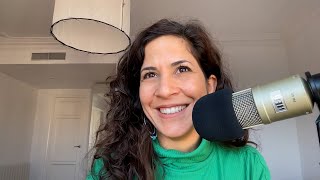
Hadar Shemesh is learning Spanish after moving to a Spanish-speaking area, aiming to record a podcast in the language within two years. She understands about 20-30% of spoken Spanish, studies through Google Translate, apps, a Preply tutor, and phrase drills, and plans to share her progress in future episodes.
Chapters
Hola, amigos. Quiero blarte hoy sobre como estoy aprendido espanol. I would like to talk to you today about how I'm learning Spanish. Now, all you Spanish speakers would probably have something to say about my Spanish, and it's perfectly legit because I am absolutely starting out, and I do not consider myself as a Spanish speaker of Spanish yet, but I definitely want to be one. Welcome to my Relocation Diaries. This episode is devoted to my new partner, and my new partner is Spanish. I always think of languages as people. I always personify English, and now I personify Spanish. And I feel like I'm getting into a relationship with. With Spanish. And so far, it's a relationship of respect, admiration, and I really want to feel closer to Spanish. I want Spanish and me to be really, really good buddies. But right now, it feels like Spanish is a little distant. She's a little aloof. And I'm doing my best to be liked by Spanish. English is my bff, but Spanish is on its way to becoming my BFF as well. So, as you understand, I'm going to talk about my very humbling learning experience and how it feels like to be in a language in a language, and how it feels like to be in a country where I don't speak. Speak its language. I don't speak Spanish, and I don't speak Catalan. I understand Spanish. Some Spanish. Like, I understand, let's say, 20, 30% when someone speaks if they don't speak too fast. I do not understand Catalan at all. That's. It's kind of like step. Step five. But I'm doing my best to learn. Actually, no, I'm not doing my best, and I'll tell you why. Because I'm going to be honest with you guys, but I'm doing my best to want to learn. Yes, I can say that. All right, so first of all, I have to say that it's pretty clear to me that speaking fluent Spanish is a huge goal of mine. It's part of my 10 top goals that I want to achieve. I write it down every single day because I started doing it again. I started writing my goals every single day, and learning Spanish is one of them. And specifically, how would I know that I'm fluent in Spanish? I want to record a podcast fully in Spanish. I don't think I can do it within the next year or two, but I think that within two years, I would want to be able to record a podcast in Spanish, and that would be my indication whether or not I have accomplished this goal because to me, recording a podcast is the essence of being fluent, speaking freely, feeling confident, and being willing to put yourself out there and allow others to listen to you publicly. So that's my goal. But I also recognize that it's a very, very tedious, humbling experience. And I, yeah, know, having learned English when I was a teenager, or at least being exposed to English as a teenager, it made my English experience so much easier. Mainly in the sense of comprehension, like understanding the language. Because once you understand the language pretty well, I have all the tools to turn the passive into active. I know how to do it. But I'm in this zone where I'm learning how to teach myself to understand a new language, because that is something that I don't teach and I haven't put a lot of thought into. So it's a really interesting experiment for me. But it's also very humbling because, like, a person like me who loves using words and I also talk a lot all of a sudden to feel like I'm mute and incapable, really, because. Not because I'm afraid of making mistakes, because I'm not. Just because there's nothing immediate about this language. Like, even if I were to know how to say something, because I know words and I know some structures, it would not be available. It would, like, especially when it's needed quickly. Like, my mind goes blank. Like, I can't retrieve the words because they're really. It's not habitual for me just yet to learn them or to use them. And I feel it in my body. Like, I feel the heaviness, the weight of wanting to say something and not being able to say it. It's like two forces are in me. I like when I say it's physical, you guys, it's physical. And I'm sure you've experienced that as well. It's kind of like you have the energy of getting something out of your body. A thought, an emotion, something. And then it gets stuck. And I. I often feel it in my chest or my throat, and it's heavy, and I'm like, I don't want to feel this way. And then I feel like a very, very pale and limited version of myself when I show up in front of people, especially people that I want to. I want to get to know or I want to talk to, because it's not so much about getting the most important things done. When I needed to get a doctor's appointment for my daughter, I got the appointment when I need to go to the bank or when I need something critical. I either find someone who speaks English, I ask a friend to help me. You know, I'm able to do that. But it's the small situations. It's going into my building and saying hi to the porter and talking to him and asking about his life or his day. Like, I don't have that. I can't. And then I'm like, hola, Hola, sisi con estas bien. And I want to ask more, I want to say more, I want to make a joke, but nothing. And then it feels like I'm just, like, going to the elevator really quickly. And sometimes I'm just, like, hoping that he's not going to see me or not going to be there so I wouldn't have that experience of wanting to see something or wanting to be as friendly as I usually am with people I like but not being able to. Or there is this cute bar that my friend and I often go to. Often I've been here for two and a half months. Yeah, often. We've been there a few times. And the servers there already know me, right? Because she's a regular there. And it feels like, oh, I have my regular place that I go to. And he always kind of like, says something nice when I come in or makes a joke about something else, and I kind of get it, or I get it, but then I just smile, right? Like, and I'm a funny person, so I want to respond with something and I can't. And that really, really makes me feel frustrated. And it's. It's funny because these are not the things that prevent me from getting what I want. But I realized that what I want is to be myself. A natural. And not inhibited, not feel inhibited. So these are the situations that drive me crazy the most. Because, like I said, like, with the other things, I could use Google Translate, I could use, you know, I could practice it before. I could use. Use texts. I could ask for help. I could request to speak in English. But it's those small situations that make us human or create human interactions that I. I'm lacking the most. Now, it's funny because I have thought a lot about how I think about the language and how I show up. Because obviously there is a sense of stress and anxiety. I avoid asking questions in stores and I avoid answering calls. You're all like, hadar. Now you know how we feel. Because these are the things that my students say. I know. I know how you feel. I also think you guys are amazing. We're going to talk about that in a little bit, when I talk about my practice, you're so much better than me, all of you listening to this right now. But. But, yeah, like, I totally avoid. And it's not because I'm afraid of making mistakes, and it's not because I'm afraid of being judged. I think people are very, very open to people trying to speak in Spanish. And it might be different than how it is in the US when you're expected to speak in English, or at least that's the sentiment here. If you are a foreigner or an international trying to speak Spanish and making some sense, which I don't always make sense, but you are respected, and they absolutely communicate with you. Sometimes I notice that if I say something and I say it incorrectly, they would just repeat it to make sure that they understood right, but they would repeat it the right way, and I would learn from that, which is really, really nice. And it never feels judgmental. So I never have the experience of not having a good enough English or being criticized or judged. And if someone decides to judge me, I'm like, whatever, dude. You know, let's speak English or Hebrew, right? Like, I'm. I'm willing to speak to you in all my other languages. But it's what I described at the beginning that troubles me, the sense of immediacy. Another thing that I noticed is that. And I couldn't remember it regarding English because when I first exposed myself to English or started working on my English, that was, like, a while back. So I don't remember fully the act of translating in my head. And I often hear this question of students saying, how do I stop translating in my head? And I notice that it's not really translation that is the problem, because we don't necessarily always translate in my. In our head. Even when I try to speak with my broken Spanish, I don't have a phrase in English or in my native language that I try to turn into Spanish, because that's not how the brain works. The brain starts with this undefined energy of want or need or will or, like, wanting to say something. And we form it into words then, so there's, like, what we want to say, and then we form it into words. And now I don't form it into English and then try to translate. I try to find the words to form it. And it's the fact that the words are not available that takes long or longer than how it would be for me in English. It's not that I'm translating in my head, and I want you guys to think about it, especially you, who think that you tend to translate English in your head when you speak from your first language. So do you really. Is it really the translation that takes up time and space? Maybe it is. Maybe I'm not there yet, and maybe it might be my case in the future. Or maybe it's just like organizing and finding the words. And I know how to solve that, like with repetitions and practice. And pronunciation practice definitely helps with that. But I have a ton of videos about that, so I'm not going to go into it. But that's something that I want you to think about and explore, especially if you have this belief that you tend to translate in your head and this is why it takes you a long time to form a sentence. So for me, I don't think that's the case. I don't think I'm translating sometimes if I don't find the words, then maybe I would think of them in English because English is the direct language that I translate from, not Hebrew, which is interesting if I do need to translate something. When I use Google Translate, for example, I write in English. So, anyway, something to think about now. Let me tell you a little bit more about what I'm doing to improve my Spanish. And every few episodes, I'm going to give you an update about my Spanish and maybe practice speaking with you a little bit at the beginning. I just read from Google Translate, so don't give me a lot of credit just yet. I'm going to be very honest with you, which is kind of intimidating because people look at me and they think, oh, Hadar, it's going to be so easy for her to study Spanish. Or it's going to be, you know, like, she. It's easy for her because she knows pronunciation and this and that. And like, the truth is that it's freaking hard. And also, I'm very, very busy. Like, I don't have time to do this, and I'm going to talk about it in a sec because it's something that we need to talk about. But I feel like I have this responsibility to prove to you that I can learn Spanish easily. And. And I think if I had the time, I would probably be able to do it in a nice way. But I'm, you know, I'm just trying to figure out my life here. And we are so busy. It's like a busy season in the business because we're preparing for New Sound, my signature program that starts in April. So there's a lot that we do beforehand to bring People in and also prepare for the next round and, and create the schedule and, and make sure that all the lessons are prepared. So it's really, really, really busy. And I prioritize that over learning Spanish with all the pain that's involved with me not progressing quickly enough. But I, I, you know, I still need to work and live my life and, and be a mom and be a partner and be a friend and take time for myself. And I think that I under prioritize Spanish, but there will come a time where Spanish would be my priority and then I would be super, super committed to it. So I also think that when it comes to learning languages, we can be so hard on ourselves or why aren't we doing the work, why aren't we progressing? And the truth is that there are times or seasons in life when there are other things that are more important. Like if you really look at them. So for example, like watching TV or working on a silly project is not more important than Spanish. But let's say being present with my family or doing the things that I need to do in my business so that my team doesn't get stressed out because I'm procrastinating things. That is more important to me than learning Spanish, right? The well being of my team, getting things done in the business, making sure that we are on track with our goals. That is more important right now than my Spanish fluency. And even though I really, really want it, I gotta give myself some grace here and be like, I've chosen it, it's okay. And I'm saying that because I want you to know this as well. If you're not where you need to be and you look at your life and you're like, really like, I have other things that are more critical, more important, then it's okay. As long as you have a vision or as long as you have a plan for when you will be able to do that. Because I know that mid April I'm fully into, you know, I'm going to take a course, a real in person group course. Right. Like I really want that. But right now I can't and that's okay. All right. Talked a lot about this. What have I done to practice so far? So first of all, one thing that I want to talk about is Google Translate. First of all, thank God there is Google Translate. Okay. It has been so helpful, especially as I was trying to get things from ikea, return things, talk to customer support about the refrigerator that never arrived. Talk to the woman who's in charge of the School bus route. And like, all those things, like the daily communication with people who don't speak English have become so much easier thanks to Google Translate. However, when I asked it to translate, can I have. For example, when I go to restaurants and I ask for something, it translated it as puedo tenerife. So I started using pueda tener agua, congas, pueda tener un americano. And then a friend of mine said, listen, it's okay, but we don't use it. It sounds strange. And then he gave me a few other options, and I was like, okay, so Google Translate, I know it because I see it when people use it in English, but I realized that when also using in Spanish, so I use it to a degree. Another thing that I noticed with Google Translate is that it's really important to repeat it out loud. So for a while I was like typing a phrase, copying it, pasting it, copying, pasting it, not even looking at the phrase. And it just reminded me of a really funny story that Gil was trying to schedule with this guy from Ikea that was supposed to come and build our. Our closet. And he didn't read how it translated his question. So I'm looking at his chat with, with this guy, and the guy was asking, is it okay if I come today? And then, you know, we. We actually wanted him to come that day instead of the following day. So Gilbert was writing something. He didn't check it, he posted it. And then I'm reading it, and I was like, oh, horrible. What are you. What. What did you write here? Apparently he wrote something along the lines of, that's a horrible idea. And the guy responded, tranquilo, tranquilo. And I was like, what are you doing? Why aren't you reading the text after you translated? Because Google Translate could be so tricky. Anyway, we laughed a lot because it's. It's something you do automatically, right? Like you ask it to translate and then you copy, paste, copy, paste. And then first you. You are not critical about what it writes. And when you read it, you can get a sense, especially if you've been exposed to the language a little bit. But also if you just copy paste it, you're not learning anything from it. So when I started saying it out loud and trying to connect the words to the words I wrote, it helped me so much better. Like, it was the same action. I took another 20 seconds to do that, but it made it so much more impactful for my practice because I could remember the words, I could use it, I could say it out Loud. I could repeat it later, you know, rather than just copy paste it again and again and again. So that's one thing I did with Google Translate. Also, at the beginning, I wanted to learn Spanish. I started learning on my own. And the best part about it is that I realized it was a really good opportunity to see what's good in the market. Like, is Duolingo good? Is Rosetta Stone any good? Because a lot of people ask me about it, and I'm like, I don't know. I haven't learned English from scratch, you know, since I was 20 or even 15. And back then we didn't have all these tools. So now I. I don't know to tell you if it's good or not. So now I can tell you if it's good or not. Still need to do my research. I'm going to get back to you with the results in the future. But for now, like, I'm trying this, I'm trying that, I'm trying, like, all these apps that people market to me. I just sign up and start testing it all and. And I want to see what sticks. So I started using all these different apps. Some are good, some are not. And then I said, no, I need someone to speak to. I need someone to guide me through this. So I have a lot of students who are Spanish teachers. Spanish. Spanish speakers on my team. Marcela, one of my most incredible coaches is a Spanish speaker. But I didn't want to study with someone who knows me because, first of all, like, that, I wanted to start fresh. I didn't want to feel obligated to show up in a certain way, and I wanted to see what it's like. So I found someone really, really nice on Preply and I started working with him. But he. I felt like we had a few sessions and I'm gonna have more sessions with him. But there are two things that could pose an issue for me. First, I need more foundation, right? Like when I have a conversation with someone one on one with a teacher, and I really don't understand a lot, it feels like I need to do more work in understanding more. And that is something I can definitely do on my own. So I started listening to podcasts, read reading more, exposing myself to different platforms where I can just listen and, you know, check the words that I don't understand or try to make sense. Also, I realize that when I listen, I don't understand every single word by under. I understand some words and that's enough, right? Like, I'm not obsessing over understanding every single thing. I just need to get the gist of it. And I'm really proud of myself when I managed to do it, even though I may not understand every single word. And I realized that when I was speaking to that teacher that he was having a conversation with me. But I felt like it's a little too advanced for me. I'm not there yet. Also, I'm not a very easy student. I ask a lot of questions. I'm very curious about everything. I want to know all the details. I always ask about pronunciation. And for a teacher who doesn't have a lot of experience in leading people and really staying strict with what they want to teach, which is not always needed. But sometimes students can get distracted. And as teachers, like, it's really important to lead the session in a way that makes sense. So that's something that I noticed. And I felt like I ask all these questions and I get great answers, but then I. It feels overwhelming. I don't remember a lot of it. And I'm pretty happy with the fact that this is not how we teach. Like sometimes we. It depends on the level. But with people who are really starting out, it's really important to keep the structure of the lesson and to make sure that someone has practiced fully something new and then they're clear about it. Because I would learn something, get the, the data, the information about something, and then I ask something else and then we learn something new. But I still haven't practiced this. So I forget right really quickly what this was about and then this new thing. So I end up learning a bunch of different things without implementing it again and again and again. And you know me, I'm all about implementation because I didn't have time in between sessions, I didn't implement it, and then I felt like it wasn't right. Like, I mean, I need more structure. So what I decided is to create my own curriculum for learning. I made a list of all the things that I need to get by. Like, what is my 20%? Where do I get stuck the most? Where do I feel the gap the most? And like I said at the beginning, it's the day to day interactions. Now I know grammar is important, but when I start learning Spanish grammar, it feels very overwhelming because there is a lot that I need to know, especially about verbal verbs and about, you know, talking about the past, talking about the future. And I realized that if I go deep into learning grammar before having better comprehension, better understanding of the language, it would just confuse me. So I decided to do What I do when I teach other students is to learn grammar through repetitions. So I created lists of words that I need to use regularly. And because of the context, I understand how to use that tense or how to use that verb. Right. So I just drill those phrases again and again and again. And I realized that working from what I need and recognizing where the gap is, and usually the gap is going to be clearer to me. The more I expose myself to Spanish, the more I show up in Spanish, then I would expand my lists and expand the things that I need to work on. So this is the first thing. So lists of phrases that I need to use. And I'm learning vocabulary and grammar through that. And, of course, pronunciation. That's what I do in my sprints. I wish I had sprints in Spanish, by the way. And, well, I'm creating my own and improving my listening. So that's my focus right now, being practical about my speaking practice and exposing myself to Spanish as much as possible. And the next stage would be to go back to learning with a teacher, either for conversations or for a more structured practice on specific things. So just so that I could speak and get feedback, which is another method that I love. Like, I just want to speak as much as I can and get feedback, but right now, I'm not there yet. Like, I can't structure more than one sentence at a time. Um, so I feel like I need a. A little bit more of that work that I'm going to do. So that's my plan, and I'm going to update you on how that is going for me, and that's it. I'm excited about it. I'm timid about it, but I'm also aware that it's going to be very telling about what's needed to develop a strong foundation for learning a language, which is an aspect that I didn't have. Right. I'm really good with taking the language that you already know or know and you don't use and how to turn it into a fluent, confident, free, clear language, spoken language. But I never talk about the foundations or learning a language from scratch. And I feel like I'm ready to develop new methods for that stage. So that's exciting because I told you, like, I'm all about creativity and innovation this year. So I'll share with you my findings on this podcast. All right, that is it. But before I wrap up, I just wanted to say that I admire you guys so much. All of you watching the videos, doing the work on your own, practicing English, listening to podcasts. I admire you, my beyond students and my New Sound students who show up and do the work, who are willing to learn, who show up in front of others, who innovate and try different things in English. You guys are amazing. I always knew how hard it was, but now I. I feel it in my body as well. And also I admire you for prioritizing it, because I know that's not easy, for being consistent and building habits, and I know it's hard, but now even more so, I just salute you, really. And I love you all. You guys are amazing. Keep it up. Stay committed. Because owning a language in a way that feels limitless, regardless of mistakes, pronunciation mistakes, or grammar mistakes is the best, best possible feeling in the world. And I want that for myself so badly. And I know that you want that for yourself in English. So I'm here to help you in English, and I'm here to discover all the things in Spanish and bring it into my English teaching so you can benefit from it as well. So thank you for being a part of my journey, my English teaching journey, and my Spanish learning journey. I love you all. Take care, and I'll see you in the next episode. Bye.
More from Hadar











Read Out Loud with me! Dare to Lead by Brené Brown | Pronunciation & Vocabulary practice