Success Stories: Student Panel
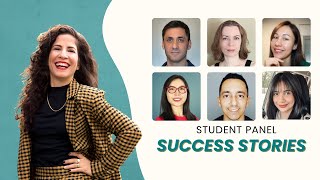
YouTube panel (Sept 7, 2023) led by Hadar Shemesh featuring New Sound students who share personal journeys learning English: challenges with accent, confidence and listening; transformative practices (pronunciation, prosody, shadowing, intentional daily practice); and the role of community and coaching. Participants describe career and life impacts, specific techniques learned, and practical advice for learners.
Chapters
Hello.
Hello, everyone. Welcome to my favorite type of session of all, which is our student panel. Hello, everyone. It's nice to be here again. We are inside the pronunciation training still. We had it last week, and this week we wanted to offer you this beautiful bonus session because it's so important to understand what it's really like for other people. You know, we talked about theory, we talked about all the things that you need to do to improve your fluency and your confidence, but there's nothing like the real stories of real people who will share with you what it has been like for them, working on their English, getting into the habit of learning and practicing, working on their pronunciation, and ultimately what is possible for them now that English is no longer an obstacle. So today I am so honored and proud to invite my amazing students, Luciana, Rosario, Musiang, Sheena, Fred and Antonina. Hello, everyone.
Hello.
Hello.
Hello.
Hello.
Hello.
Hello, guys.
Everyone.
How is everyone?
Very excited.
Good. Excited. Slightly nervous. So good.
Nervous is good. Nervous is good. It keeps you on your toes, right? Like it's, you know, like that. I love that exciting energy that I get when important things happen. So let's just go around and why don't you each introduce yourself, tell us who you are, what is up, where you're from, how you're feeling today, and maybe, yeah, we're gonna start with that. What was your biggest challenge in English a year ago? Okay. And then we're gonna talk about what it looks like for you today. So who wants to start? Musiang, why don't you start?
Hello, everyone. I'm Mushyan Priorski. I am currently a project manager who actually speaks English every day. And prior to this project manager position, I used to be a graphic designer and creative manager for United Creative field for over 20 years, working both in China and also in the United States. Talking about China. I moved to the United States 16 years ago and I will talk about the journey later. Right?
Yes. But you know, you can talk. How was it for you to get to the US 16 years ago? How was it for you in terms of English?
Oh, in terms of English, it's a long way to go. Go back to my teenage year and. And in my first language, I was already insecure about my accent because where I'm from in the southern China called Hunan, I had this accent with the l and the n mixed all the time. So when I went to the city, I was laughed at. I was a village girl. And one time when I was trying to enter to recital speech contest, I didn't even get a chance. And my classmates laughed at me. You couldn't even dream about it with your accent, with your village look, you will never be able to get in front of the TV or camera. That that scenario really imprinted in my mind. Over time, I was all thinking about my accent, how it drew me back. And then fast forward 16 years ago, I moved to the United States and this type of insecurity because of the language came over again. Even though after many years I worked on very, very hard. Because when I came to the United States, I had the language barrier. And then I did, to start over, I went to ESL and went to school here. So I got a degree and worked here from a startup job to be a manager position. But over time, in my head, I was always insecure about my language, about my accent, subconscious.
So.
And would you say that that, that image that you had of yourself, has it prevented you from doing things or taking more active part in the community or speaking more English?
Yes. In fact, I wanted to prevail every time when I face the challenges, because I. This is back again. I was the third daughter in my family and I was, I grew up as an invisible child because I was born during the one child policy. I don't know if any of you were aware of that. And then my brother was born three years later. I was not wanted. And after he was born, basically I was almost like, I, I didn't die, it's already good enough. So I always had to rely on myself. And so whenever, if I felt I was judged or I was not supported, I just have to trust myself and try harder on my own to prevail. And over time, I came to the United States and all over again, I had the struggle I think most immigrants experienced. You need to start over from the familiar situation to a total different places and without family, without friends. And I came here because of my husband. And I also had another layer of judgment from others as my husband was a lot older than me. I. So when I go out, even when I just moved here, many people would judge me. I came for the money. And so. So you were so used to dealing.
With this judgment, so you felt like it's okay. It's a natural part of like, you know, immigrating and living and speaking a second language, even though it doesn't have to be this way, but it's kind of like that's what you knew.
Yeah. Yeah. So I knew I had to just have to try, have to try to keep me being independent. And of Course for a very long time I was relying on my husband, for example, drumming and language translation. It was frightening for me to make a phone call when I just came here. I thought I was very confident enough. But once you get into a new situation and you don't feel like you have all the tools that you, you have to, to go out and you just feel really restrained.
Yeah.
Trapped.
And for how many years have you experienced that feeling? Feeling of feeling trapped and restraints and limited. For how many years living in the US Especially when it comes to speaking.
English from speaking English because I went to esl, I also went to university here. So I got enough of opportunities to practice. I didn't feel I was restrained too much until when I was looking for a job. I spent four months to land my first full time job. And I personally, I didn't think it's because of my English, but sometimes when I, when I come home, my husband, who is very smart and he's supportive in some way but not with verbal language, he would say it's probably because of your language, that's why you couldn't land a job. And this type of language just confirms the insecurity. I felt that it's because of my language.
When we have those insecurities and we hear any type of feedback from the outside world, it just confirms it and it feels like this is true, like this is the reality and then we behave according to it.
Yeah, yeah, I, I felt like I wasn't good enough. My English was never going to be good enough for me. And here I found my first job and my boss told me he looked at my communication skills. He liked that even though I didn't have the field experience in digital marketing, email marketing particularly. But he hired me for my communication skills. That really boosted my confidence.
Yeah, this is such a good point because for a lot of people who are afraid to apply for jobs when they think oh my English is not good enough, they have to remember that people are looking for people with skills and with good personality and communication skill. And it's not all like people are not going to disregard you because you make mistakes or you sound a certain way.
Yeah. And fast forward last year I changed my career from the creative field to project management field in marketing technology in a much bigger company, a global company. And again they lacked my communication skills skills over my technical skills because I didn't have project management certification or background in college. And again, my dear husband couldn't believe it and he didn't follow me for my insurer insurance until after several months, he. I went.
Yeah, you proved to him for sure. Okay, so let's move on to Rosario and I'm going to come back to you to hear about what happened to you over the last, let's say few months or six months and how it was in the job. But for now, let's thank you and we're going to come back to you. And Rosario, you're next.
So.
Hi.
Hi. Hi, Hadar. I'm so excited to be here today with you and I'm honored to. To be invited to share my story. A thousand thanks for being here. Yeah. I hope I can also help some. That are watching this live to make the right decision. But first, let me introduce myself. I'm Rosario from Italy. I work as a software engineer in a company located in my Hometown. And I'm 43 years old. I have a bunch of hobbies and passions like traveling. First of all, photography, music, arts in general. And last but not least, the English, of course. Well, about my story. I started studying this lovely language at school when I was. When I was young. And you know, at school they usually work on grammar rules and few common sentences. And that's it. So after I used my English for. How can I say, a kind of business English for my job without going into depth. And so let me say that the real English has been locked in my drawer for, how can I say, Many, many years. And well, then the last summer in the 2022, I spent as I usually used to do, some days abroad. And that time was in Sweden. I had a lovely time there with my family, with my friends. And I'll never forgot that moment. It was during a dinner. There were some people there that spoke only Sweden and English. Now I don't know any words of Sweden, so I had to talk in English.
You never know what's going to happen next.
For now, not so. I had no possibility. I had to speak in English. So I said to myself, what's the problem? I can do it. And I start to speak in English. And after a few minutes I stopped because I don't have the confidence. I have a lot of things to say, but thought didn't come in mind. So. So I usually used to translate sentences before to talk. So I was okay. The feeling was one of anger rather than shame. I was frustrated, furious with myself because I said I. I learned English for so many years, for what I'm not able to speak. So when I came back. When I came back at home in September, I started to take some lesson, private lessons. I had the possibility to have free lessons with some teachers, but it doesn't work because we have limited speaking time. And so it was like a group session.
A small group session.
Yes. And. But the teacher only introduced the topic and that's it. We had just five, ten minutes and enough.
Yeah.
So I decided to sign it up to. In some languages, exchanges up famous. And I start to speak with many people. But it doesn't work again because the thing is that the environment, it was not safe. I was not able to express myself as I wanted.
Why do you think that is important? Why does it matter where you. What your environment is like, how. Why should it affect your fluency?
Yeah. First of all, when you are in a safe environment, you can share with, I'm gonna say, with any fear your thought without thinking that some people are judging you or things like that. I always felt at home in new sound, so. Yeah, but. So the thing is, at certain point I decided to give up with my English. When while I was searching for some stuff related to my job, I discovered a video from Hadar about the shadowing. I discovered this word, this. This technique. And I was looking for the right way to do it. And I listened to this video and at the beginning, I don't remember the exact words that you used, Hadar. If. But at certain point you said, if you are new to my channel, then hello, I'm non native speaker. Non native. What? You inspired me a lot because I said okay, non native speakers. So I. I can do it. So I can try. I can give it a try again. And so I joined the influency free influency community. And I recorded my first video with an Italian strong accent. I felt like a robot. But I was determined this time to. To embrace my. My problem and to start again with my English.
And I'm so happy that you found your. Your motivation back and inspired. Got inspired to get back.
It was. It was anger, not shame. It. I was really furious with myself. So I decided to give it a try. And if you want, I can continue or just maybe.
Yeah, maybe. We will. We will when we talk about the transformation. And Alessandra here has a question for you. So we can come back later and talk about the transformation. But thank you. And thank you for sharing with us your background story, Rosario. And now let's move over to Luciana.
Hello everyone. Hello, Hadar. Thank you so much for inviting me to tell my story. It's an honor to be here among the successful people and to introduce myself. I am Luciana Brazilian. But I live in Portugal since the beginning of 2019. So I live in a non speaking country. I'm married. My husband is Brazilian as well. I have a cat, she's Portuguese. So I don't need to speak in English with her. But I use in a daily basis, almost in a daily basis in my job. But I needed to, to improve my English to get this job because I was working, I work as UX designer remotely and I was working here in Portugal and I wanted to grow in my career. And even in Portugal they look for people that speak English fluently. And in the interview I could speak like fluently because I memorized the text that I needed to say in the interview. But then in the meetings I couldn't. So in the beginning of the last year I got a job in the US as a freelancer and they had meetings in a daily basis. And I got really scared because I couldn't even understand that my listening skill was not good at that time. And I needed to go to meetings every day and oh my God, I can't. And then I felt panicked, I felt ashamed and I felt like an imposter. I thought I don't deserve this job. I can't understand them and I can't speak. So I avoid the speaking. I tried to communicate only by writing. And then I didn't continue on that job because there were other reasons. The manager of the design team was too toxic. So all the design design team quit. But I had some kind of push at that time that some kind of click that said you need to improve your English if you want a better career, if you want to grow, if you want a better job, if you want to be yourself and speak when you need to speak. But at that time I thought, oh, my pronunciation is terrible. I feel ashamed. I. I can't practice because I feel ashamed. I felt so blocked. And I started to looking for programs and I like Rosario. I found some group classes, but it was only 10 minutes with. With a topic and I didn't got any progress that in that way. So one day I was looking for videos in YouTube and I found a video of you about pronunciation. It was about August last year. So I. I think it was almost starting this sound, but I couldn't join at that time. But when I knew that you were, I know, native, I was so wow. But with this pronunciation, really. And I think her language is even harder than mine because it's another Alphabet, a different sound. So let's see. And then I subscribed. I binge Watch it. I subscribe it to the podcast and I thought, I, I need this. I need to. To invest in this. And when I have the opportunity, I will join the sound.
And luckily you did. Last May. No, March. That was March.
Yeah.
Yeah. Amazing. I love what you said about, you know, having that aha moment where you said, you know, maybe I don't have to to improve my English. Now no one's demanding me to do it, but I know for my own personal development and just for yourself to know that you did it. Like Rosario. That said, you know, I was just frustrated, angry with myself, so I needed to prove to myself that I can do this. And this is why you said, okay, this is when I'm gonna take. Take clear action and start doing something. And I appreciate that because I do think that English is not the end goal. It's just a tool for you to get a better. To create better circumstances for yourself, better opportunities, you know, a better job, a promotion and so on and so forth. So I think developing a language is very much like developing, like any type of personal or professional development. It goes beyond just like the language skills. Anyway, thank you so much, Luciana. And we're going to move to Sheena.
Hello, Hadar. Hello, everyone.
How are you?
I'm good, thank you. Thank you for having me here. It's such a great honor and an opportunity because this is my first ever interview on Live. So thank you so much.
I'm very, very happy to talk to you here today and for people to hear your story. So tell us a bit about you and what made you decide to start working on your English.
Yes, absolutely. So my name is Sheena.
I'm sorry.
Okay.
You can go ahead. Hold on. I'm gonna change my camera. Just a sec.
There it is.
Okay.
Yes, I'm listening.
Yes. So hello everyone. My name is Sheena. I'm originally from the Philippines, but I've been living in the US for almost eight years now. I'm also a mother of two kids and a stay at home mom. And I am very, very passionate about learning English. I would say that these all started when I discovered Hator on YouTube about 10 months ago. But I also want to say that my English journey was a tough one. It felt like a big challenge for me that I couldn't overcome because I was never, I. I was never exposed to English. When I. When I was growing up, my family and even the people around our neighborhood couldn't speak English at all. So. And aside from that, aside from that, like, I got bullied in school. And learning English was definitely a challenge one for me.
Wow.
Yes. And then fast forward to, you know, like after college, I kind of decided to take a leap of faith and move to the US Because I just want to prove myself, to try to live independently and to experience all the things that I've never experienced before when I was growing up. But I was never prepared about learning the language. I thought that I will be fine having just basic English. But when I first came to the US I was so scared. You know, it took me a while to, to find a job that I really liked and yeah, and it was a, it was definitely a big, big struggle for me. I remember I applied for a front desk position and you know, it requires a lot of speaking and being able to help the guest with any of their questions and inquiries and anything else. And I came up with a, with like a silly idea of memorizing a lot of scripts just so I can survive working. Because I only had basic English and for me it worked really well, you.
Know, but it's a very resourceful, you know, solution.
Yes.
That gets you like quick results in the short, in short term. But it's not, it doesn't solve the, the root problem.
No, not at all. Because whenever, like I put on the spot and people would ask me some personal questions, even the easiest questions, like, I tend to freeze and like, oh my God, I don't know what to say. If, you know, when people would ask me like, how are you doing? How was your day? I'm like, I don't know, like, but if you ask me about work, work related stuff, like, I can answer anything that you want to know.
So.
So that was my biggest struggle. And I would say that the biggest or the most significant turning point in my life was when I became a mother and when I discovered you on YouTube. Because it happened last November, it was like three weeks before Thanksgiving and my husband came to me and told me that, hey, we're going to spend Thanksgiving with my family. And I don't really like social gatherings because of my English. Like, I know that whenever I attend, you know, celebrations like that, like I'm always alone or like they would ask me questions and I just end up embarrassing myself because I don't know how to express myself. I have a very limited English. But since I'm already a stay at home mom, like I couldn't find a way to, to, to refuse to, not to go, you know. And so that was my turning point in my life. And I saw that my kids were Very excited to be with my family. So I'm like, you know, I really need to do something about myself. I really needed to change. And. And then all of a sudden, like, I just started imagining the person I want to become.
And.
And that's when I realized that I just want to be confident when speaking with anyone. That's all I ever wanted, you know, being able to express freely. And so I was like, okay, let me just look for some strategies on YouTube on how I can, you know, like, improve my communication skills. But then when I discovered you, I was like, you just gave me more than what I asked for. It's like, you know, like, a complete pack. Like, you've also created an, you know, like, a positive impact in my mindset and my confidence. Not just with my speaking, because I already was able to overcome that, but you also helped me work through with my mindset and with my confidence. And since then, like, since last year of November, up until now, I'm still, like, deeply in love with learning English, and, yeah, I always look forward to every day.
Yeah.
You know, I think. I think it's so important to be able to enjoy the process because, yes, all of you shared here an experience of learning English, but not really enjoying it, not seeing progress. And I think that when you don't enjoy something and when you feel like it's not helping you, you also just don't learn. Your brain is, like, you know, Right. Locks down, and. And then it's. It's really hard to. To be flexible and, you know, elastic and.
And.
And. And to. To be able to take what you learn and put it into practice. Also, you don't want to waste your time being, you know, annoyed with things you need to do. So I love it that you found joy in learning English. Beautiful. So we're gonna continue, and then I'm gonna come back to you, and. And I want later for each of you to tell us what was your biggest moment of transformation. Like, what would mostly help your work. But for now, let's say hi to Fred Silva.
Hi.
Hey, Heather. How are you? Hey, guys.
I'm good. It's good to see you again. So, you know, I'm interviewing you the second time, actually.
Yeah.
In different contexts, so it's beautiful to see you. How are you doing today?
I'm doing great. Thank you for the opportunity to be here to share a little bit about my experience. And, yeah, it's the second time you interviewed me. I interviewed you as well. So for me was. Wow, it was a great time. I really Love that conversations and I think people love it too. So I'm happy with the result of that because, you know, you have like a charisma that I don't know that people get attracted by you because you are, the way you talk. It's like very powerful and people get like so comfortable hearing you. So I think this is one of the reasons I decided to become your student a few months ago. And speaking a little bit about me, I'm Fred Silva, I'm from Brazil. I never been in an English speaking country yet, but it's one of my dreams. I want to go one day and I'm entrepreneur. I am in the digital marketing field. So I, I'm the digital marketer and I start to study English in the end of 2018, I start to, you know, look for content on the Internet, look for courses. And in 2019 I started a course, an online course. And because I want to focus, I want to focus in my speaking skills. I am the person that I like to focus in one thing at the time. So I decided to focus before to focus in my speaking skills because I want to talk, I want to talk in English because I was very shy, very, you know, I was, I'm confident now, but before I was like a disaster. I couldn't speak even in my own language, but imagine in English. And then I started a course and I start developing this skill to speak in English. And, and I noticed that I was good to helping people to encourage them to improve because I was doing something, I was challenging myself and I challenged other people to do the same. And people are getting so good results. And then I started to think, okay, it's good to motivate people to help people to improve and everything. And in January 1st I started YouTube channel, a YouTube channel. I start a, a podcast on YouTube just to help people to gain confidence to speak in English. And when I start to do this every time when I was watching a video, my videos like, because I need to review everything after the edition I got like, my pronunciation is not good. I start to doubt myself because you know, I am so confident, but my pronunciation makes me less confident. And then I start to think, okay, I need to do something here because my pronunciation is not good as I want. And I thought who is the best teacher to teach me pronunciation? And I remember you because a good friend told me about you a few years before. And I start to, to watch your videos and everything. And I need to say that the first time I saw your, your video, I, I didn't Know that you are not from the us I saw you on. In Israel, but I thought you are an American that lives abroad. So I got like. When I. When you said I'm known and I'm no native English speaker, I got like, wow, this is awesome. So. And then I. I thought one day I will study with this lady because she's great. And then I remember that when I thought about my pronunciation and then I said, okay, I don't know how much it'll cost. I don't know if it's cheap or not, but I will study with Hadar because I think it will help me so much improve my pronunciation. And yeah, the rest is history. I became a student. I am happy with the results because every time when I was trying to say words like big words, long words, or words that are tricky for me, like with. With the. The cluster R and L something, I got like, that's not good. I was shamed when I hear myself saying that words because of this, you know, I start to be less confident because of my pronunciation in, you know, in few words or something. So. And yeah, that's it. And I need to say that I was. I need to say thank you for. For my friend that introduced.
I know I need you to me because.
Yeah, yeah, it was. It was great.
So.
And that's it. I. This is a little bit about my story.
Wow.
And I think, you know, it's. It's very clear, especially when you have a YouTube channel or a podcast, when you're constantly confronted or you have a lot of meetings, let's say maybe you need to watch them or you tend to record yourself. Like it's. It's a fantastic way to measure your progress, but also it's like a reflection on all the things that are going well, but also all the things that are not going well, which is, you know, this is why I think you have this high awareness around what needs to be change and good. And I think because you deal with the language and you talk about the language, this journey for you was even more than just about pronunciation, but also to explore what it means really to transform one's English and what is needed. Because, you know, obviously it's something that is very close to your heart. So I'm glad that you found it helpful. Okay. So.
And the passion about English just grow because as much you improve your English, you get so much more passionate about it. I think it's. Yeah, I love that this language. I. I usually say that Spanish was the language that I love the most, but I changed my mind after. After I decided, you know, to. To start to work with. With this. And yeah, for me right now, English is my passion. I really love it.
Don't worry, we won't tell Spanish that you have. Okay, so next we have our lovely Antonina.
Hello.
Last but not least, how are you doing, my dear?
Hi. Hi. Thank you. I'm doing great. So, yeah. Hi, Heather. How. Hi, everyone. Again, it's like, as everyone said, it's nice to be here. I'm also slightly nervous because it's my. Well, maybe first time speaking in front of so many people, and then it's in English, which is like, yay, the first time I'm getting interviewed even more so.
Yeah, yeah.
I'm actually. So my name is Antonina. I'm originally from us. From US oh, my God. Originally, I'm from Ukraine, but I've lived in for almost 16 years now. And I'm actually a tutor of English. But my relationships with English, like the complicated ones, because I actually studied in specialized school, and my school was specialized on language learning, but the target language was Spanish. And I sort of like, you know, I. I had a very good grades in Spanish and I perceived myself as, like, successful language learner. It's what I wanted to do. I wanted study languages because I felt that I'm good at it and I felt, like, proud of it. And then I graduate my school from my school and I have to go to college and I need English, not Spanish. No one needs Spanish. You need to go to work. You need English. And then I started studying, started studying English and it's like completely messy and nothing works out. And I'm talking like, you know, Ukraine about, like 20 years ago. So we are talking, like, basically no Internet. You don't have Internet at home. It's good if you have computer at home. There are no online classes. There is nothing. And a lot of the education of English, it's like, you know, you open a grammar book and you start, like, cramming it and you do the exercise and nothing moves. And you spend hours there because you need it. You need it for the university, for the college. And it's like, you know, the only thing that I struggled with in college was the English. I just couldn't get it. I went to, like, the classes, like the actual class where you go and you talk to English and like, you know, I completed the course, I still don't get English. I started working, I got to the company, and my company, it's like a large international company. We have Office in the Great Britain. And I received that call from the Great Britain, and I get someone speaking English on the other end, and I understand nothing.
Why do you think that is, Antonina? Like, so you're not the first one saying here that I learned English and then I, you know, went out into the world and I felt like I was. I knew nothing. Why do you think that is?
I think, like, my actual, like, I think a lot of it was a problem. The way we studied English in Ukraine, where it was a lot about grammar, it was a lot about translation, it was very little about speaking. You have a class of like, 30 people. Almost no one has an opportunity to talk. Half of the lesson of English is, like, in Ukrainian, most of it.
Right.
And you just don't hear people. You don't understand, understand how to, like, perceive, how to understand spoken English. And then, of course, you are afraid to speak and you start speaking and people don't understand you. Because we never learned proper sounds. We just substituted Ukrainian sounds. Whatever worked best.
Pronunciation was not even.
And then you just hit that wall where, like, the person is speaking, you don't understand them. You're trying to say something. They don't understand you. Yeah. And I got married and my husband got a job offer, and we moved to the US and originally it was like, for the first three years, and again I arrived. So my husband went ahead and I arrived to the airport on my own, and I basically, like, I don't understand anything. Like, my Spanish helped me more because back then in Chicago, some of the, like, some of the signs were in Spanish. There was like, some translations, something in Spanish, Spanish, and I. I used more Spanish than English to get through. And I remember going to the stores, like, you know, to the simple grocery store, and what they ask you, like, do you need the bag? And I was like, I'm sorry, I don't speak English. That was it. I just couldn't even say if I need the bag or not. I was so terrified. We. People would ask me for directions on the street because, well, back then, people didn't have smartphones with a map. And people occasionally would ask you for directions.
Yeah.
And I again, would say, I'm sorry, I don't speak English even if understood people, because. Right. I understand that what they're asking for. And I could probably say that you need to go extra the hair to turn right or something. But I was terrified that they won't understand me anyway. There's, like, no point. They won't get it. And actually, like, going to the Taking the English second language class in United States, it helped me a lot. And it was a very different experience where you actually hear people speaking English. And it helped me a lot also. It's like, you know, Internet in US was way more affordable. You like get online, you start to see stuff in English. And things moved very fast for me from that point. But the only issue was that my teacher on that class, she said like, guys, you are too old at the moment. You will never get rid of your accent. So you just forget about it. And that's what I've done. I like forgot about it. It made my life easier. But again, what I was doing for like 15 years or so, while I felt that I'm fluent in English, I can understand everyone. Yes, people occasionally have trouble understanding me, but it's like, well, I have an accent, what can I do? There is nothing that can be done about it. And I just like, yeah, I just kept substituting the sounds, just using Ukrainian sounds and very like the way I could. And then like when I. But I, at this point I started loving English because like this process like of learning changed a lot. I went from like totally hating it and being frustrated to the point where, wow, I like how people learn English differently. I like learning, learning through, listening, through talking. And I have to admit that I had to like, you know, while people put too much, like sort of like expect too much from living in the English speaking country. But if you are like Sheena, who was like a stay at home mom, or in my case I had some chronic health issues. So for a while I was like just stuck at home and the only people I could speak in English were my doctors. It doesn't give you that much like, you know, you, you can have like all the English surrounding you. If you stay at home and talk to your husband in your native language, you don't get much.
And sometimes I have students who have been living in the US for 16, 17 years, but they live in communities where the entire community is in a different language than English and there is no need, you know, so there isn't. Nothing really pushes them to get out of their comfort zone and to go out, even out of the community, because that's even more challenging, even beyond the language. Right. So you're absolutely right. Living in the US doesn't necessarily guarantee now, okay, fluency for all, you know, because you still have to work hard for it.
But still, like, you know, I got some level of English where I was already proud of myself and I decided that I want other People to help other people to learn English. So I slowly enrolled into, like, getting, like, becoming a tutor, and I started helping other people. And that's when I went, like. Also I started, like, looking a lot online at other teachers at la. Like, how do people teach? That's when I found you, and that's when I realized, okay, so there is something that can be done to you. Accident after 13 years old. And that's when I realized still, like, how much I have yet to learn. And I have to admit that even though I came to the New Sound believing that I already know a lot, at some point I got terrified by how much there is for me to learn. Yeah. Yeah. So that was, like, scary.
Okay, so. Okay, we'll keep people in suspense. Want it, like, wanting to know how you dealt with that fear. And I'm going to move on to the next question I have for you. And, Sheena, we're going to start with you because I know you only have 10 minutes where you can share your stories, and then we're going to go to Musiang. But, you know, in general, for everyone watching this who don't know what New Sound is about, so all of these beautiful people are New Sound students. Some of them are in beyond as well. But New Sound is the program that we're going to talk about today. And it has three major elements that work together, and one of them is really like, simplifying pronunciation, understanding pronunciation in depth. And within pronunciation, I include prosody, intonation, rhythm, stress, and of course, all the key sounds of English. Prioritizing your sounds and practicing effectively. But also, we put a lot of emphasis on confidence and mindset work. So transforming how you think about English and your attitudes towards English, towards your practice, how you learn, how you think about yourself in English. And then the last part is community and coaching, which is something that is also a dominant aspect, as you can see. You know, and they can tell you the community has been a big part in their journey. They've been very open in conversation groups, in live videos, and also being a part of the coaching sessions. So I have worked individually with all of you guys inside of New Sound. So these three elements are the core pillars of New Sound. So I want to hear from you what has been the most transformative aspect for you? So, Sheena, you're. We're gonna start with you. And how has that helped you get to where you are today?
I think for me, the most important aspect that I've learned in New Sound was learning about prosody, especially the Reduction, because I'm not sure if everyone is familiar with it, but with. With this term. But when I first came to the U.S. like I said, like, I had a very basic English. And whenever I hear native speakers speak really fast, I feel like they're just swallowing their tongue for some reason. I'm like, what are you talking about? And when I've learned about this in new sound, I'm like, oh, okay, so this is where it's coming from. They just like to reduce a lot of words and that make it really fast for. For a lot of people to understand. And. And so that's where I kind of focus my. Myself into, like, I try to learn more about the reduction, the intonation of words just so I can sound more natural in English. And at the same time, whenever, like, I. Now that I've learned about all of these things, like, whenever I communicate with other native speakers, like, it's easier for me to.
To.
To understand them. You know, Like, I. Honestly, back then, like, I used to watch English films with subtitles, but now I don't really need to, which I'm really proud of. And whenever I have a conversation with my husband and, you know, or like, we're listening to a podcast, like, in the car, like, I can easily pick up a lot of words because of this. Yeah, this aspect of English, which is like the reduction in prosody, which is.
So interesting because it's like, okay, you know, it's just to sound like a native, but no, it's really to be able to live in the language and understand it better and communicate better and deliver a better message, which is, you know, something that we want, especially if English, if we live in English, you know, and you don't want to not have these. These natural skills that we have in our first language, and we do need to learn them in the second language. So it's.
It's absolutely. And it's also good for your listening skills because a lot of times when you're, like, listening to someone, you try to, like, you have this way of, like, just, you know, like hearing the. The stress words, but you're not completely knowing the entire sentence, and you're like, kind of, oh, is this what he's trying to say? And it creates a lot of misunderstanding and miscommunication because I've experienced it myself with a lot of people, and it's not good.
So little miscommunications that you can. You can get past it, but it just leaves a. Like, it weighs on you throughout the day. So, yeah, so because, again, you're gonna leave in a few minutes, what is your one piece of advice that you would like to give people who were where you were in the past? Like, people who struggle with. Who feel stuck, who are not confident, who don't know what to do next, who feel overwhelmed? What would you tell them?
Well, first of all, my. My advice is to surround yourself with people who brings out the best in you. I mean, having this community has helped me a lot with my confidence. Like, you know, I've. Even though I've learned English growing up, like, in school, like, it never really helped me progress or learn a lot about speaking. And, you know, I got bullied and all that, but ever since I started, you know, discovering you on YouTube and I found out that you have a community where I can hone and practice my English, like, I took that opportunity to. To be active, participate in any activities that we do in order to get to where I am now. So, yeah, so I definitely, you know, like, recommend you guys to be. To surround yourself with people who brings out the best in you.
And.
Yeah, and reach out. Like, if you're struggling with. With your pronunciation or with your mindset, like, don't hesitate to ask anyone in the community as well, because we. We've been through a lot. We share, and we help each other. So never, ever hesitate to ask for help. And also, like, you know, joining a program is definitely something that will help you get better with. With. With your English and to achieve your goals. I mean, for me personally, like, it's the best decision that I've ever made. Even though at first I was a little bit hesitant because I was. When I heard that, you know, your course was somehow was focusing on pronunciation, I was like, I'm okay with my pronunciation. Like, it's not perfect. And I know that I can get better, but I'm like, I just want to get better with my communication skills. That's all I ever wanted. But when I joined your program, like, I've learned so many things that I've never heard before, and it just transformed me into someone who can be a very confident in speaking in English. Yes. So, yeah, that's my advice to everyone.
I love that. I love that. Surround yourself with a community and don't be afraid to ask for help. Like, I take these two things, and of course, you know, if you want, join a program that supports you and can take you hand by the hand, step by step and show you the way. Absolutely. Sheena, thank you so, so much for being here. I know that you might stay with us, but you know, we're. I'm not sure you're going to be able to talk. So I just want to say thank you so much.
Yes, absolutely. I will be here. I'll be watching you guys, listening to each one of you. But thank you so much for this opportunity. Hadar. I will never forget this moment. And yes, have a great day, guys.
Thank you. So now we're going to move to Musiang and Musheng. What. What has been most instrumental for you in terms of the elements that we talked about?
Thank you. I want to add a little bit because earlier I didn't explain why I joined your program. How I found your. Yeah, your program. I got carried away and last year I was in a program, it's called storytelling program. And a teacher was talking to me. When I said I wanted to create a strong connection with people, she couldn't understand me clearly. She said, what collection connection. See, they're very close. Then I have one more time just confirmed that I needed to work on my L and N sounds. And also if I only think about communicating with friends and family, it's okay. My English was good enough. But if I want to advance my career as a leader, apparently I was very passionate about leadership. I felt that I needed to improve my English, even if the nuances that so small people may not notice most of the time. But I noticed it affected my confidence. So in early this year, our company, my new company encouraged us to find some courses that would help us to gain our skills to better perform our job at work. And then I was searching, I found another program which was also doing accident reduction. But right before signing up for that course, I discovered you on YouTube. And look at that. In fact, I got that program approved. And then I found you. And I followed your YouTube for a few days. Then you opened your free week class. I just followed you and you approach your way of teaching and that you are view of everything just resonated with me so much. And I immediately I just wanted to sign up for your class. I couldn't wait for your program to open. And I was wondering what's the new sound that really played the magic on people? So that's how I signed up for the class course. And I want to also utilize this opportunity to thank my employer for supporting me to taking this type of courses. Yeah. Because if just by myself, with my husband's around there, with my native English speakers around me, perhaps it may not be the action I would took take right away. But my employer Supported that, and I am very, very grateful. So after I joined your program, I want to say it's really more than I could expect. I simply wanted to improve a few sounds that affected my clarity in my speeches. However, I learned so much. It made me so much more confident because now I have become a coach of my own. I know my English is still not perfect, but I know how to correct it. That's very important because before joining your program, my family has been teaching me one word. It's the world. They couldn't make me to pronounce it for years, literally. I was frustrated.
Story, by the way, I didn't know this.
Okay.
You couldn't make me to pronounce word work, world in.
Look at you now.
I know. I was, like, so frustrated, too. But over time, I realized that maybe not only L and N affected my pronunciation, the R sounds, and the other sounds. And you taught us overall, improved me, improved my English. So now I have this set of tools. Not only this individual sounds, also the prosody, which I had never heard of before the program. I thought that even that word itself is beautiful. And also when you taught us how to use our sound, how to do. How to make the rhythm, it just made the language so much more beautiful. I have been passionate about this language. I have been passionate about improving my public speaking, speaking skills, language skills for a long time. And I thought I couldn't have the chances to reach to the level of a native English speaker until I found you. I thought, h could do that. H students could do that. Why I couldn't do it.
Right.
So that's why I'm here. I. The strongest part is I felt like I have the full set of tools I can use to coach myself in my future practice. And I'm now able to teach a lot of my friends and to spot their issues, and I know how to help them fix their pronunciation issues.
Yeah.
And as public speaking as my hobby, I think this is a very, very important.
I think with everything. And thank you for saying that, because this was very, very intentional. Like, we really wanted our students not just to get feedback from us, even though you guys do, but to be able to understand deeply what is going on. Right. Like, if you are mispronouncing something, if there is a challenge, to understand why that is and how to fix it without having to have someone tell you that. Because then you have the freedom to do it on your own. Because you will not always have a coach next to you telling you, yes, no, maybe.
Right.
And you need to Be able to detect that with your ears. And for that there is like a very special training that we do in the process that we do to help you become a coach of your own. And I love it that you that this is what you took from it. Because I agree, especially as a public speaker, being able to review your work, give yourself feedback and improve on it is. Is the secret to everything really, you know.
So yeah, as many of you already noticed, I'm surrounded by native English speakers. I really don't have a. An issue of practicing like many students non native English speaker students do. But my native English speaker family and friends, they can speak perfectly. They how they know how to make their sounds, but they can help me how to make the sounds. Like yeah. I constantly felt like I thought I was doing the same thing that they are doing, but in the end different. I just.
Yeah. Someone who's not. Someone who's not trained doesn't have the tools to explain how to do it in a certain way. That's one thing. And also, speaking more doesn't get so quantity doesn't guarantee quality. If you're trying to change something, you need to know what to focus on to change it and then repeat it. But if you keep repeating old habits and old patterns, it doesn't guarantee that you're going to change. I mean, you might improve other things the more you speak, but it doesn't change those basic things that you were struggling with. Okay.
So other than the confidence I want to just quickly add to it is recently I already noticed my pronunciation in the Rs and in those challenging sounds. Like a war. Those sounds I already could tell. I already implemented those sounds into my daily speeches and the L's.
I've noticed because I know that we worked on it together. So I've noticed today when you spoke that you're a lot more conscious of the N's and L's. So that's a huge process.
Yes.
It's my lifetime challenge and you resolved it for me. I can't thank you enough. Harda. Thank you so much. Thank you.
Well, it's all you. It's all you who did the work. But I'm glad that I was able to be there for you.
So.
So Rosario, what was for you? What was something that was significant in your journey and helped you reach a breakthrough?
Okay. Well, first of all, I discovered the intentional practice because before I. I wasn't aware about the sound. And when you practice with intentionally, you can start to listen to your changing in the changing in your speech I mean, for example, at the beginning I put my goal. My goal was to. To be able to understand native speakers from, I don't know, TV movie series with an understanding average of. You helped me in that 80%. And I discovered that intentional practice helped me to reach this goal. Because the thing is, when you become aware of the sound that you can pronounce, at the same times you can recognize this pattern when you listen to.
To it.
To them. Sorry. And so I started to understand movies without captions. It was a kind of magic. And also I start to. I listen to music and understanding lyrics. And before never happened that.
Yeah, it's kind of like your brain was all of a sudden open and chill and relaxed and ready to understand.
Yeah, exactly, exactly.
Not. Not angry anymore, I think.
No, no. And I have a fun fact. As Sheldon used to say in bing Bang Theory. 1. One night I had a dream. It was not just a dream. It was rather than a nightmare. I was scared because it was so dark around me. But I was happy because I was talking with someone. I was talking with this guy. I don't remember the exact content of this nightmare. I was talking in English. I had my first dream in English. So the day after I woke up and I started jumping in my bedroom room, my wife asked me what happened and no, no, nothing. Don't worry. And I was so excited because I. I understood that I was doing the right work, I was in the right place with right people. And my advice is to put some fun in. In the learning process. There are benches of studies that says that if you put your. How can I say. The harmony, the fun in what you. What you do, you can learn better. And so this is what happened to me when I was surrounded with these amazing people. Antonina, Luciana and the other New Sounders. We also had. I discovered you a secret. I. I want to say you that we have a group, a group in WhatsApp and we share our lives with photos and we talk about our journey in English because English, it's something that can. That we continue to practice every day and even outside of New sound.
Yeah.
So New sound was the lifestyle.
You know, it's like you change the way you.
You exactly have in life.
You know, English is part of your life all of a sudden.
I also. I remember at the beginning I built a strong. A strong practice. I remember I start to practice every day drilling sound in. In every place. I remember I was at post office and I start to move my. My jaw looking for the right position for the r. Sound. If you remember, I, I also, I also asked and hot seat with you for.
Yeah, yeah.
For the R sound.
That was the ah and the er. That was challenging.
Exactly. My, my, yeah. Of course I'm still struggling with, with them but now it's better. I have a different R and my, the quality of my R. I, I, I think that is better than before. And yeah, people maybe start to thinking I was weird and crazy, but it was funny. It was funny. I, I remember one a day I was in the park alone and some dogs start to barking because I was making this sound or looking for my trigger.
The dog.
Yeah. So I want to say that if you are scared, for example, another things at the beginning I was scared about my family and job commitments. But with just 20, 30 minutes a day, I reached my goal. Of course some days you can practice more, some days not. It depends. But if you practice on daily basis, even for 10 minutes, it's better than practice for, let me say, one day a week. So this is the most important, less.
To do it 10 minutes a day than three hours.
One and three hours. Yeah, yeah.
Once in two weeks. And that's it.
Absolutely. And this is the most important lessons that I learned here, you know, because.
Rosario used to share his practice with us in the group and you know, you updated us in the coaching sessions and I think that you are very, very diligent with your practice. And I'm happy to hear that this is your biggest takeaway from the program, the intentional practice and how you were able to make changes, you know, through those daily exercises and studies that you did. So I love that. And I do think that intentional practice is what takes theory into reality. Right. Like this is what helps you minimize the gap between all the things that you know and what you're actually able to use. This is a secret. Good. We're going to come back to hear your one piece of advice, but for now, we're going to go to Luciana and see what, what was the most meaningful element in her journey inside New Sound.
Yeah, I've been thinking what made me so engaged in New sound that that didn't make me engage before? Because I tried other programs and I tried the practicing with apps because there are many apps to practice pronunciation now, but I couldn't get engaged or motivated. So I think it's because in New Sound we create a habit and we work in this, in creating habits so these pets can fit our schedule. Like Rosario said, can be 30 minutes or sometimes 10 minutes, but we can fit in our schedule and make it every day. So it became a habit. If I don't practice, I feel, oops, something is missing today. And another thing is that the practice, the lessons and challenges are fun. So by the way, the challenges, the people in New Sound and Beyond see me hosting sessions, recording podcasts, or even recording sketches and they think my favorite thing ever. Now, yes, I have always been like this. But no, I don't do this in my native language. I started it now because New Sound and Beyond have a safe environment where I can feel that it's no problem to make mistakes. And I need this. Like when I was learning to drive, I was really scared, but I could only when I was with my brother because he allowed me to make mistakes, not dangle mistakes. But he wasn't angry with me. He was always making me more calm. And then I learned and I felt this way. I can make mistakes sometimes. I can be myself, I can talk about anything. I feel safe. So I can have progress. And another thing that was game changer for me is the mindset model. Because I struggled with speaking even in my native languages, in Portuguese, I use it to avoid speaking. I was always quiet and hiding myself. And then I remember that I had a hot seat with you and you said, no changing this mindset. Think that people are anger to hear what you have to say. And I wrote that. And every day I think this in the morning of people want to hear what I have to say. I have voice. Voice has power. We need to use our voice.
So.
So those are the things that made all the difference. In addition to everything that Sheena, Mustanga and Rosario already said. That's it.
Amazing. Thank you, Luciana. Such an honor and pleasure having you as a student.
Thank you.
And Fred, what was it about you? I guess mainly the pronunciation work.
Yeah. The first thing I need to say about the program and about what makes me happy about the program is the fact that I, I noticed one thing just in the beginning of the, of the course when you say, when you said pronunciation is a habit, you need to work as a habit. Because I didn't thought about that before and you know, I was speaking the way I. I know, I knew. However, some words I was like missing some, you know, the end in the, in the. The d. In the end of words, the R and L, I was like. And then I noticed that I was not pronouncing that words correctly because I didn't have the habit to. To do it. For example, the word world for me was terrible. I. I couldn't say And I, I use it a lot. But every time when I, when I speak, when I said that word was not in a good way and you know, I noticed that is because I didn't have the habit to do it because in my own language, I don't have it in Portuguese, we don't have this cluster. And then I noticed, okay, it's a habit I need to work in, in this respect and, and make the, this, you know, these words like a habit. I need to, to use more. More as you, you usually say, you need to put this in your active vocabulary. So I start to do that and it works very well for me. I, I start to notice that every time when I use that word, okay, it's getting better. It's getting better. And it's funny because every time when I use a word properly now that I was, I was not able to do before, I remind you, you come to me in my mind and go, okay, Hadar, teach me that. And I, now I'm improving this aspect of language, of the language. So the first thing I think was a game changer for me was thinking about pronunciation as a habit. You need to change your habits if you want to change your pronunciation. And the second thing was the hot seats during the program for me was great because we have the chance to ask for feedback from you or other coaches, which is great because sometimes we think we are doing properly and we are missing just something we need just fix a little bit about the sound and then the sound just comes. This, it start to work and it's just because one detail that you are missing. So I think this is really important. And the third thing is about the ambassador sessions. Wow. That for me was like amazing because you have the chance to meet people from all over the world and you can change, how can I say, exchange experiences. You can, you know, it's a. I don't know how can I describe this, but it's. It's really incredible to have those type of sessions with, with people that already was in New Sound. They pass for the same thing you are passing now. So you have like extra motivation to, to improve the. This aspect. But this is a.
So, so for those who don't know, our ambassadors are new sounders who took took the course in the past and now they are helping new noon sounders get through the course successfully and they host conversation groups. So we actually have daily conversation groups where you can really meet people from all around the world. And sometimes it's more about the conversation, sometimes it's about you Know, practicing public speaking, like, different sessions with different people. So, yeah, that's. That's really, like. I think it's a part of the community and the support. And I'm glad that this was valuable for you.
A lot. A lot. I can say that because it changed my. The way I thought about the language, and I had a great time there, so I just love it.
Yeah.
Yeah. No, it's so important to see that you are in the same boat as everyone else. So a lot of the things that you think or you experience or you suffer from is actually the universal experience, experience of the English learner. And when you see that, first of all, you feel not alone, you feel safe and supported because you're not gonna. You know, you're not afraid that someone's gonna make fun of you because you know that they're in exactly in the same place. So it's kind of like you're. You allow yourself to take your guards down, and when you do, you're more open, you're more vulnerable, and then you're more free because you're not trying to keep yourself safe. And usually when we try to keep ourselves safe when speaking English, we just avoid. Avoid speaking, because then, you know, if we don't speak, we don't make mistakes. But if we let that down, then, you know, there is a whole new person coming out of us and willing to. Willing to communicate and connect. And this is why I think it's so valuable.
Somebody said about. About the importance to being in a community that can support you, and I totally believe that. Because if you are in a place that you are allowed to make mistakes, you are free. Of course, you know, you have your own fears, but you are free to expose yourself in a challenging way. And when you notice that, yes, I can speak, I can improve, I'm doing a great job, people are supporting me. I don't know what happened in our mind, but we get so much more good in speaking.
Yeah. When we surround yourself in a community or a culture where something and a habit or a behavior we want to have is the norm. Right. Like, let's say in your community, no one wants to speak English, they make fun of you for practicing your English, you're less likely to actually take action and do the intentional practice and all of that. But when you're in a community where practicing English, speaking about English, being open, being vulnerable is the norm, you're more likely to do all of that. Okay? So before we run out of time, I want to make sure that we get to Antonina and then we get your one piece of advice for everyone. So, Antonina, what was the most significant part about New Sound for you?
Well, it's like, you know, of course I have my most significant part, but I just wanted to say one thing. I'm a afraid that when we, like, talk about just one most significant part, we don't give it like, the due to the program because there are so many small things which make it, like, full, which make it what it is. The thing is that right before enrolling in the New sound, I also went through a different program. It was not an English program. Right. I don't want to name it because I don't want to do them a big disservice. But I paid like $600 for to be like a part of something, to learn something, and what I got was just a bunch of recorded videos and barely any support from the coaches. And I was like, well, maybe that's how it is. So when I went to the new sound and just those first two weeks when you still can get, like, your money back, and I'm like, I'm judging the program for everything. And I was so amazed how different it is, how much support we are getting, how much everything, like, how much your team is involved, that I actually asked for refund on that other program. I was like, I'm sorry, guys, it's not work. Yeah, it could be so much better. I love that. Yes. While I'm saying that, for me, the most important part was like, pronunciation. And I'm very meticulous person. I need the details. I need details on everything. I need, like every single, like thing. Because right there's like, when we are talking how to pronounce the sound, you go on the Internet, you will find like 100 videos on how to pronounce the sound. I still could not make it. I could not make it exact. I need to know that I got everything. I need the feedback. I need to know I got it. And your program, program gave me that. So when I'm looking at the sound, there are so many, so much advice on how to make it correctly that at least something is going to click for you. But even outside of that, I think that the whole, like, you feel cared for, you feel that, like, you know that people on the other side of that program, they care that you are feeling good, that everything works for you. And if you are in trouble, if you are frustrated, you are getting a lot of help. So I think that's also very important. And for me, one, I think one of the points. So I mentioned that at some point in the program, I started getting frustrated by how much I need to learn, but I trusted the process, and I always felt like I'm not doing enough. I'm not doing enough. But I was just, like, doing something daily. And then I'm getting, like, another session with you, and I'm getting feedback, and you're saying, like, oh, yeah, it's no longer your top priority. That sound improved. And I'm like, what I expected. I expected to work on it for another half a year before I'll get an improvement. And I'm like, oh, my God. So it works. So it works. That's like. That's all I need. And it works.
Yeah, because it doesn't feel like that daily. But if you do the work, it does change. And then you're like, oh, yes.
And you just like, I just haven't noticed it. It just happened. And after that, I was like, okay, so I got this. So I will get everything else. It will just take a bit of dedicated work with this. But I have the tools, and I got the confidence that I will make it. And even after the new sound, after we finished, we got so many tools, because, to be honest, so much stuff gets unlocked only after you finish the new sound.
Yeah, it's kind of like you get the entire amount of content when you're done with new sound.
Like, that's so many new shiny toys to play with. Like, here's like, practice toolkit. And I get the. I feel that even after the new sound, I still. I'm still improving, and I'm still improving a lot, and I still have, like, a lot, like, many tools to work with and keep improving. So it's not just like, you done 90 days and what you got, you got. No, there's, like, so much stuff after.
I'm so glad that you enjoy that.
Yeah.
A lot of times our students, like, they have so much to work through inside the program. They don't even get to the bonuses. But there's, like, so much there. We really want people to have practice materials for years after new sound, so they'll always have something new and interesting. But it's also. But it also shouldn't be too overwhelming, you know, so you know what to do and all of that. All right. So, Antonina, thank you so much for sharing that with us. And let's do a one quick round of one piece of advice from each and every one of you to the people watching. So, Musiang, you go first.
Thank you again. And I agree with everyone who shared. And one piece of the advice quickly is follow the program and follow the community. Trust the community. I fell in love with this community. My husband was saying, you are idolizing Hardar. In fact, in my entire life, I have never idolized somebody. But truly, Hardar is my role model and she is someone who inspires me to be the better me. And I give me the hope that I can reach the goal that I have been dreamed about in my entire life, to speak with clarity and confidence. Thank you so much.
Thank you so much. And I see a lot of comments, people asking about the program. So just, just so you know, we're opening doors on. On Tuesday if you join the master class and on Wednesday, we're going to send an email. Email with all the information you can get on the wait list or you can join the masterclass because at the end I'll talk about it as well. So just so you know, it's coming up soon. Rosario, what's your piece of advice?
Okay, my piece of advice is don't be afraid to make mistakes. This is the only way to. To improve, to overcome your fears. And you are in the right place because here no one will judge you. So this is my piece of advice. And another important thing is take your. Take your time to decide, because when you are in, it's impossible to go out. It causes addition. It's. It's addiction. It's worse than. It's worse than a drug. So take your time to decide.
My husband says it's a sect or a cult or something. He's like, you guys are crazy all day. Once you go in, you just don't get out.
There's no get out. I was like, it's a Newtown world, new sound land.
Okay. And thank you, Hadar. And thanks to Jelena and Cristina. That helped me a lot during her sessions.
Yeah, thank you so much, Rosario. Luciana, what about you and I have.
A mantra that is something that you said in podcast or YouTube episode that is. It's not supposed to be comfortable, but it can be definitely be fun. And it is. So have fun, enjoy the process, and don't try to be perfect, because perfection doesn't exist. So that's it. And thanks a lot, Heather. Yeah, thank you, everyone.
I love it.
It's not supposed to be comfortable. It's not supposed to be easy, but it should be fun. I think you combined a few thoughts together and you made it one mantra. And I love that I'm gonna use that now. Fred, what about you?
Well, could I give three?
Yes, you could? Yes.
Okay.
The first piece of advice is believe in yourself. I think if you believe you can do something, nobody can say the opposite. So the first thing I think is that if you believe in yourself, you achieve what you want. The second one is challenge yourself on a daily basis to do something that scares you, that you are not comfortable. So step out of your comfort zone. I think this is. Can help you to believe in yourself more and know that, yes, you can do. You can speak English better than you are speaking now. And the third one is if you can join to the program. I think this is going to be a game changer for you, as was for me and everybody here. So, yeah, that's it.
Amazing. Thank you so much. Always clear and concise. Antonina, what about you?
Okay. It's unfair for me to go the last. It's like, you know, everyone. I made a few points, which would be my advice. And then I'm just sitting here and cursing them out one afternoon. Can I give three? And I'm like, oh, no, I'm going to be left out of options, like, all together.
Sorry, Antonina. Sorry.
So, yeah, of course, like a bunch of great.
You can repeat the same.
But, you know, I think one of the big for me was to not be afraid to make mistakes. I see it also in my students a lot when they are so afraid and they are overthinking this stuff and they're just not talking because of it. And it's like, same even. Like, for me, you need to separate your practice, your intentional practice, and your conversation with people. I need to, like, turn off the switch right now. Because if I like as much as I work on my Rs and on the words, like how I pronounce the word, the word, like, if I will be sitting here and just thinking about it, I would be getting stuck a lot. So not thinking about it helps. And then I think, like, trusting, like, compound effect, that if you do a little bit every day, you won't notice results immediately. But they are there, they are coming. You are on the right path. So just do the work and don't be afraid. And yeah, of course, like, I join in on everything because, like, and yeah, again, whatever you resist, like, as what Hadar said to me once, whatever you resist is probably what you have to do. And like, following that mantra also helped me a lot because, like, okay, I resist doing shadows. That's what I need to do. I don't want to, but that's what I need to do.
You know, I have. It's the. The beginning of the school year, and. And my daughter, we signed her up for a few classes after school, and there was one class she doesn't want to go to, and I was like, listen, you know, go try it and see first. Like, because you're resisting going. She wanted to go there, and then she's resisting. And I said exactly that. Like, if you're resisting it, maybe there's another reason, except for all the excuses that you're giving me right now, you.
Know, oh, I want this, I want that.
I'm too tired. And try to see, because obviously maybe there is some kind of fear there that is preventing you from doing it. Then if you check it and you see that it's not for you, then fine, but not because, you know, like, we need to dismantle this resistance and to understand why that is first. And I'm glad you did, because I think shadowing is good. All right, my dear friends, I want to say thank you so much, so, so much for sharing your experience and sharing your stories and talking about New sound, which is about to be open in a few days for all of you who had questions about new sound. Then again, I'm going to be answering them in the masterclass tomorrow at the end after I teach you the three powerful strategies. And also we will be available to answer questions over the next 10 days because registration closes in about 10 days once it opens. So. But back to you guys. You have been so inspirational for not just for me to see us students and then, you know, I like this makes our experience as a team so incredible to see the transformation and also to hear you talk about it. So I want to say thank you. Thank you for being such an incredible part of the community, always available, always open, always sharing your. Your story, because I think that it has impacted so many people without you knowing inside the program. And that's it for being so awesome. Thank you. Thank you.
The last piece, I want to add another piece is the more we expose ourselves, the more we want to support others, the more we will gain. So in English community or any communities, if you want to get better, you can try to contribute your time and your energy to support others, then you will get a lot more.
I agree. And I think that ultimately connecting and communicating and getting to a high level in English has to be also about giving. It's not just about what's in it for me. And we see that. And this is why our community is so incredible and can see that talking to all of you. So anyway, thank you everyone. Thank you everyone for watching and for your awesome comments. You guys, you have to go read it afterwards if you're not reading it just to see. I think everyone enjoyed your stories and we're really touched everyone watching. Thank you so much. I hope to see you in the master class that is going to happen on Tuesday and on Wednesday so you can sign up go to hadar shemish.commasterclass and I hope to see you there or inside New sound. Thanks you guys. Have a beautiful day.
Thanks guys.
Bye bye.
See you soon. Goodbye.
More from Hadar











Read Out Loud with me! Dare to Lead by Brené Brown | Pronunciation & Vocabulary practice