The Music of English: Interview with Jason R. Levine @fluencymc
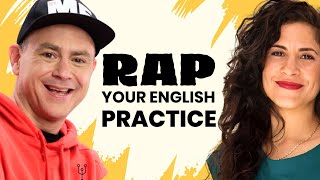
A recorded interview (YouTube) between Hadar Shemesh and Jason R. Levine (FluencyMC) about teaching English through music—especially hip-hop/rap. Levine explains his method: writing original songs to teach grammar, vocabulary, reductions, rhythm and connected speech; he emphasizes repetition, sentence and word stress, and using lyrics/scripts alongside listening. The conversation also covers classroom use, resources (YouTube, activity book), and Levine’s own experience learning French.
Chapters
Hey, everyone. My guest today is Jason Levine, better known as FluencyMC. Jason is an English teacher, but not just your ordinary English teacher. Jason teaches grammar and vocabulary through songs, specifically rap songs.
I'm back once again to strike, struck, struck. Listen up. It's part two of Stick Stuck, Stuck.
Jason appeared on Friends Got Talent. He's made hundreds of videos and songs for English learners. And today I have the privilege of talking to him and learning more about his technique that has helped thousands of students learn grammar, vocabulary, and so much more in a way that is fun and will totally get stuck in your head after listening to it. In this interview today, I'm going to talk to Jason about how he connects music to language and how you can use it to learn reductions, grammar, vocabulary and so many other elements of English. So let's go ahead and listen to the conversation I had with Jason. Hi, Jason, how are you?
I'm good. How are you?
I'm good, I'm good. I'm so happy that we got a chance to meet here and thank you so much for accepting my invitation.
Yeah, I accepted in like a split second. I love talking with you, so, yeah. Thank you for having me here.
Thank you. So I have already introduced you, but please, for those who don't know you, would you mind saying a few words about you and your background and.
Sure.
What you are passionate about?
Yeah, yeah. Well, you can already hear, I guess what I'm passionate about with how I usually introduce myself as a teacher trainer, high stress drainer, knowledge entertainer. So I, I use rhythm and rhyme mostly in, in raps that I write like hip hop music. I write to learners of all ages practice English, so practice in the sense of repetition but in a fun way, in a meaningful way through, through music. And I live in Paris, France, you mentioned that. But yeah, basically I'm someone who just really is passionate about language learning and music. So I saw the connection pretty early on and in my career and yeah, just started doing more and more with writing my own songs and performing with students different countries around the world.
So tell me more about that first initial connection between music and teaching.
Yeah, I mean, for me, I guess like a lot of language teachers, teachers in general, but particularly language teachers, I use music in the classroom, but it wasn't my music. So I was using music with, you know, I was mainly teaching adolescents and adults when I started. So, you know, music that was at their level was often like childish and not interesting. So we would, you know, I went to pop music and found stuff and it was good. But you know, I. It ended up being better in terms of, like, for cultural reasons, like to talk about the music and the meaning and. Which was amazing, but for language learning. And I'm a real. I'm really big into, you know, building foundation of grammar and collocations and so, like, songs. The problem with pop songs is, you know, there may be something in there that's really good, but there's also maybe other stuff that is either too difficult or standard English or it's. Right. It's too. So. So yeah, it. Ten years after I started teaching, I realized I got to write my own songs. And it's kind of a story how. How that happened. But I wasn't. I was using music. Like, I guess most, you know, most teachers do. Like I'm teaching present perfect. Let me go find a song that has. Present perfect.
You know, why do you think music. Before we continue with the story, but why do you think music is even important when teaching?
Yeah, I mean, music is a language. Language is music in a lot of ways. I mean, you could argue that, you know, really, as far as the rhythm of music. And then there's lyrics. It's. It's, you know, it's oral discourse, the way conversation is. So, you know, compared to other ways to use content with students, I think it's the closest thing to. I mean, of course, you know, you can have. Listen to conversations and things like that, but, you know, it's the repetition aspect of it that's huge because we naturally repeat songs. Right. So even if you have a super cool conversation in a book, you're unlikely to naturally want to listen to that conversation 12 times. Right.
I love that. I love how you brought it into repetition. Because I didn't think about it in terms of music. There's emotion involved and there's all of that. Why is repetition important?
Because, you know, when we listen to something, if we're not trying to remember it consciously, we just remember it. Songs get stuck in our heads. So, you know, when I. When I. A great example is when I do shows with students and I say, okay, we're talking about, like, the difference between repeating something boring and repeating something that we're supposed to repeat. And, you know, what do we listen to and repeat naturally? So I said, okay, when you guys arrived, I said hello. You said hello, right? And they say, yeah. I said, but what if I say, and I have a picture on the screen, right, of hello with like, some music notes? And I say hello, and the entire group. This is France. I guess it depends where you are. They all go, it's me. And instantly they get it. Oh, yeah.
And also there's a moment right between you and them, and that builds trust too. Like, they feel like, oh, you hit like a. A place that is close to them. Yeah.
Well, they all say, it's me. And then I score to the next slide and it says, it's me. Hello, it's me. It's like. It's like it's magic, right? It's like, it feels like a magic trick. But I was like, well, music is really magical in that way that, you know, when we. We listen without trying to study and learn. And that's the paradox, right? We acquire it as opposed to I have to learn this, you know, for my test or whatever. So. So, yeah, and that's, that's, you know, a lot of that has to do with the rhyme and rhythm in, In. In music. But there's more there too, obviously. Like, if you like the song or just, you know, you. The melody of the song or you, you know, you associate it with where you've been. Like, there's just so many things about music. There's so many things. But. But just back to the repetition thing, you know, I think for me, my goal when I first started writing the songs, you know, the idea was to. To write songs for adolescents and adults, though they weren't childish, that they'd want to listen to. I'm a dj, so I made the music. I chose hip hop music because I grew up with the culture and because hip hop's universal. I had students from, you know, 15 different countries, sometimes in the same group. No exaggeration. This is New York City. People coming from all over the place, but everybody knows hip hop culture. It exists in every country in the world. You know, it's the most recognized music around the world. So. And hip hop started in the Bronx in New York. So they're curious about it. So, you know, but the problem is, obviously this is the other thing we talk about a lot in my groups. It's like, you know, this idea for, you know, remembering vocabulary and grammar through hip hop lyrics. But I had one problem. I was like, do you know Nicki Minaj? You know, do you know Snoop Dogg? And we start laughing because I say, I love rap English, but it's for the culture, it's not the language. My students in New York needed it for tests. Right. Class for the supermarket. So it's not about good, bad, right? Wrong. English, right. It's about, you know, appropriateness and your needs. So that's why I started writing, writing the songs. And for me, it was 10 years.
Into your teaching, you figured out I need to step in.
Yeah, well, you know, I wasn't. Yeah, exactly. So I mean, I was, like I said, I was more. I was using hip hop songs that were already out there, you know, that they knew. So the advantage of a real song, it's a real song, they hear it out there, they can bring in songs that they want to know about. But you know, the downside is, you know, especially with hip hop, it's, you know, the dialect, it's just, it's different, you know, so it's more about the culture and it's really interesting. But I wanted stuff to get collocations in my students heads. I wanted them to get irregular verbs in their heads. I wanted them to have like that bass that they would get by repeating the songs naturally. So the songs had to be songs they wanted to listen to. So it was, you know, a challenge and a pleasure to try to create. I mean, I made one song, it did well. And so I made more. I mean it was pretty easy for me, it turned out. But yeah, it's just for me it's really about building that base. It's not that I don't want to discuss meaning in songs and meaning in stories. It's that you can't get to the point where you can discuss meaning in another language unless you have the grammar and vocabulary right here. Yeah. And you're comfortable using it. You know, this is the huge problem.
So yeah, I love that and I agree with you 100% because I feel like repetition. I used to study acting. I used to be an actress in New York. And I remember that like, because I never officially learned English except for school, which was, you know, I did really bad. But to be able to communicate the way I am now able to, I think that memorizing a lot of scripts really helps. And I remember myself walking down the streets of New York just saying the lines out loud, right. Repetition like sentence after, like repeating the same sentence again and again. And then not only would I remember words into subconsciously, unintentionally, I would also remember structures. And yeah, I remember like thinking, starting a sentence and then it hit like a place in the brain where I know this structure and I would just change the, the content words but the structure would stay the same as I had memorized it.
Right.
And, and now like I have sprints, which is not songs. Like for me, I feel I. I guess I'm intimidated By teaching through music. I don't have the knack that you do, but I, I do it with repetitions, like I did the memorizing. But just to say that I. It's. It's. It works because you have to. It's a habit. Right. Like speaking, like collocations and structures and irregular verbs and all of the. And even words, they're habits that you need to be able to retrieve really quickly.
Which is so interesting because what you're describing, like, being able to like, access like the, The. The syntax, like the, the stem. The sentence stem. That's all the stuff that happens in, like, substitution drills and books in the classroom, you know, from. From, you know, rote learning through, you know, old, old methods. So it's like, you know, the idea of, like, audio lingual was good in the sense of you need those repetitions. What's bad is it's not meaningful to repeat stuff.
Right, right.
In context. But, you know, communicative language teaching started with a good hybrid, but then they kind of threw the baby out with the bathwater. All of a sudden, all that controlled practice stuff kind of started to disappear to the point, at least for me, in the States. I don't know in the UK or other places. But, you know, schools that used to really do, like, try to get students to get a lot of stuff here and then do more freer practice. We're kind of, you know, Korean students, Brazilian students, you know, Thai students in a room, be like, what do you think of gun control? And like, oh, are you shy? Why aren't you talking a second? They don't have anything up here to say. So, you know, but, but also back to the acting. I mean, it's, to me, the music, and that is basically the same thing. What's important is that you're repeating it because you. It's meaningful.
Yeah. And there is an emotion attached with it.
Yeah, yeah, absolutely. And. And it's also. If it's lines from something, it's also in context. It's not these arbitrary independent book or a list that somebody gave you. The list thing doesn't work. Right. But. Doesn't work. But, yeah, any. Anything. So it's. To me, it's not just music, you know, games too. If you play the same game and you get addicted to it in that game, you're getting exposure to, you know, certain grammar, vocabulary, you know, whatever. Whatever you're doing with repetition. However, there are a few things about music that are different. The rhyme and the rhythm, like the things that kind of turbocharge it. As far as what happens when you.
I think the rhyme, the rhyming is, plays a significant role, like almost addictive in a way.
I would argue rhythm even more rhyme seems like it would be the most important. But then you find languages that don't have rhymes, you know, but no, language doesn't have a rhythm, even if the rhythm is, you know, not as pronounced as English. That's a whole nother thing about why to use music when you're teaching English. Because in fact, the rhythm of English on the content words is very similar to 44 time in music. And when you get into hip hop, which is almost always 44 with very strong beats, and you, you realize that it's more like oral discourse, what they're saying. It's not as much melody. Wow, you are right. You sort of. That's literally the sweet spot. As far as you listen to enough rap. Again, it depends what you're listening to. And that's why I write the rap. Right. But. But what happens is, you know, because, you know, you repeat it, you're going to remember music. But because it's, it's rap, you're more likely to understand conversation because conversation follows the rhythm of rap more than like a song with a lot of, you know, melody and up and down.
I love that. And in a second, I'm going to ask you to explain American rhythm specifically. No idea what that means, but I have to say about the music. When I lived in New York, I worked at a jazz bar. I was obsessed with jazz. Like, I was like, I listened to really experimental jazz and I found that there is a strong connection between the language and jazz music. Right. Syncopated notes and like, when I listen to how people speak and the breaks that they take, it's offbeat, right? Like, it's not on beat. Like melody of Happy Birthday. It's like happy birthday to like, that is the rhythm of English the way I see it, and especially the silence between sentences. So for you it was rap. For me it was jazz. And I remember trying to improvise on a jazz line speaking. And that was like, this is where I found the connection. I was like, no wonder that this is where jazz, you know, like, that's the language jazz has emerged from.
Yeah, totally, totally. Enormous influence of jazz in. In hip hop, in rap music. So, you know.
Yeah. Okay, so tell me about rhythm in English. What is it all about?
Well, you know, I first discovered it in a linguistics class when I was doing my master's in tsol. I'd Already taught a few years when I was. But had this teacher that said something just blew my mind apart. She was like. She taught us about how, you know, English as a Germanic language had more cases on words. You could move words around more, you know, long, long time ago, and that it kind of dropped its cases. And when it dropped those cases, meaning, you know, if you have a noun, if it's an object, if it's a subject, you know, you could move them around more in the sentence, but you'd know, you'd understand because of the ending right. Of the word. Just in case that's. In case that's confusing to some people. So what happened when the cases dropped on is that word order became very fixed compared to many languages. So subject, verb, object became the word order. And we know there are exceptions, right? Passive voice and questions and negative inversion, right? But there are exceptions, right? We have this very fixed word order, whereas most languages in the world, you can move things around more. So according to. To her, and I've been talking about it ever since, is that this also affects the stress, the words, the sentence stress. So that, you know, what we. When we talk about, I mean, almost everybody talks about all the content words are stressed. The grammar, the function words, the prepositions, the articles, the pronouns, right? Are reduced and they can link or just connect to the content words. So but this is just kind of a way to think about it that's even cooler, which is sort of the history of it. So that, that's why English has. Is so stress timed. So languages like, you know, French, Spanish, all the Romance languages, for example, languages in most Asian languages, right, are syllable time and, you know, where each syllable has the, you know, has the same length. And then you have language like Spanish, where when that doesn't happen, there's an accent to show you where to put it, right? Where, you know, in English, if you put that everywhere there was stress, you know, it would be. Every sentence would have them all over the place. Right?
Right.
So. So this is fascinating. And I was, you know, I started really focusing a lot on. On reduced and. And connected speech, calling it shrinking and linking. So I was like showing students, you know, how the words change. You know, the shoulda, coulda, woulda gonna wanna stuff. And then I realized, wait, we shouldn't. I shouldn't write it that way. The best way, right, is to really show where the stress is and, you know, raise awareness about how the other function words reduce. You know. So I just started in, in the songs was before the songs and games Anytime I did anything, I put bold font on the syllable in the word or on the word if it's the sentence stress. Right. And because in dictionaries, even me, I'd forget when they put that little thing is that the syllable right really makes me crazy. And that's, you know.
Right. I'm all about phonetic transcription.
Don't get me started on the. On the. You know what I mean? It's just like. So it's, you know, some people like that fine, but, you know, develop my own way also for like, you know, the short a sound of the long I sound or something. Right. Not the phonetics, but for the stress. I also realized this is maybe the most important thing to say about it, is that when students could see, not just me show, telling them, you know, see visually where it was, and they started following it as a rhythm. And then when I got to music, it was. Became even more obvious to them. But they. A lot of this, a lot of the issues they had with individual sounds, you know, vowel sounds and constant clusters, it just disappeared, you know, and so that I. I found myself working less on, you know, specific problems with sounds. And. And maybe part of. Is also just psychological. When they realized the reason the taxi driver didn't understand where to take me is because I said, you know, Port Authority. Port Authority, not Port Authority. Right. Or, you know, Grand Central. Not Grand Central, you know.
30 or 13th. Exactly.
Exactly.
It actually happened to me once because they didn't hear If I said 30th or 13th back in, like, when I first started.
Exactly. So. So the. So the student. I think I had a lot of Japanese Korean students in New York when I was. When this was happening, you know, did. Did that person who students in Port Authority have a problem with maybe are in that word to be understood or, you know. Yeah, but. But it was the stress. So I have students who still had problems with individual sounds, but if they just focus on the stress, they were understood. So they really started believing in that as the way, you know, it doesn't mean they didn't want to work on sounds, but they realized, hey, if I know where to put the stress on this word, I know which word in the sentence to put it on, then people understand me. Wow. And I understand them also. We haven't even talked about the listening part of it. Right?
Yeah.
They're able to catch much more that.
Way, which is a very, like, I love this attitude that is very realistic and practical for our students. That is not about perfection. It's not about getting them to sound like negatives. It's really to be understood and to feel confident. And that's how you build your confidence and experience and enhance your clarity even more. But it's like, first of all, let's prioritize what's really getting in your way. And then we can take care of everything else.
Of course. And everybody needs that. So for the, for the people that, like, I really want to sound native, blah, blah, blah, you know, if they, if they do this and they really decide to like, want to perfect this or that, they can. Right, but everybody needs this. And also, you'll lose people along the way if it's about perfecting accents, because, yeah, you know, the people off, it's like, it's too hard. I give up. And. But in reality, they didn't need to do all that fine tuning. They needed to focus on the basics for communication, for being understood and understanding.
So what would you tell someone who wants to start improving their rhythm or to understand? Because rhythm is so unlike the R sound or the th sound that you feel it and you see it. Rhythm is so internal in a way. And sometimes you would say something or play, you know, help, help them, like feel the beat and they would still not get it. So there is a lot of perception that needs to happen. They need to internalize it and then feel comfortable using it. So what is the process that you take your students through?
Yeah, I mean, I guess there are two answers. One would be like the process I take my students through or somebody else a teacher could, could do a guide, somebody to help, which I think is important, at least to get started. But the good thing is after that, it's sort of a self learning continuation thing. And then somebody who may be watching this and being like, what can I do on my own? I mean, if you're on your own and you're really familiar with English, you're pretty advanced learner. You could maybe, you know, listen to something, whether it's a song, whether it's, you know, toeic listening, whether it's a podcast and look at a script and try to think where, where is the rhythm? The first thing I would say, absolutely is not to think of it as like, you know, a science or some, the rules or whatever. Yes. We can say that content words are usually stressed. Right. Words, we can be pretty. I mean, you know, there are variations dialects, you know, British people saying, you know, innovative. And we say innovative in, in the States. But words generally have stress but in terms of which words in the sentence. Right. So it's not something like, you know, and especially people like, oh, it's the penultimate stress, the tertiary stress. Right. I would advise people just where's the main stress in the, in the word in the sentence. Yeah, there, you know, don't fool around with where unless you, you know, you're interested in linguistics or being a teacher or something where you might need to explain those things to people. That's different. But yeah, for the everyday learner. But I would say that, you know, it's probably tough the first time you hear something to. To be sure is that where the stress is. So it's great to have a teacher guide you. It's great to see patterns like in terms of words. Like words like, you know, ate verbs. If we're talking about somebody who's interested in like academic English, you know, the most common acade verbs are ate. So you know, the stress pattern is very regular, you know, educate. And it's not always academic, like celebrate, you know, collaborate. Right. So, so. And you could say, oh, so if the word has three syllables, it's on the second. Right. It's not really that as much as just hearing the patterns and songs with those words. I have an ate song and then going to the noun. Right. So educate. Education, graduate graduation. So starting to see patterns, I think is the first thing on a word level at the same time thinking about, okay, most, most sentences, it's, it's like a four, four time signature. It really is with like three subject, verb, object, but not to think. Like it's always subject, verb, object. But a great, a great example is, you know, I'm sure, I know we, we may have talked about this example and there are other people have different examples, but you know, you know, students play music. The students play the music. The students are playing the music. The students have been playing the music. You get all the way up to future perfect continuous. The students will have students play. Music is four syllables. The students will have been playing. The music is 11. And it's the same space. Right?
Space. Yeah.
You mentioned Happy birthday and Happy birthday before. If people are like, oh, this is like any language is like this. No. Here's a great test. You do Happy birthday. I can do Happy birthday to Hadar or I could do Happy birthday to Hadar, teaches English and used to live in New York. It was acting classes and she's a really great person. Happy. You can squeeze as much as you want right into that space in English and try that in another language and it's, it's impossible.
It's not going to work. But how would you. Okay, so here's a student trying to do that, but they're not used to reducing, let's say, trying to squeeze in. What would you tell them?
I think that I used to think, let's practice the reductions. I mean, this is just my opinion from my experience, but I don't do that as much. I practice the stress and the reductions kind of follow.
As long as you keep the. The melody or the rhythm or whatever it is.
So. So, like, you know, I hear students, even with contractions, try to struggle. So the students struggling with like, like they're saying you are. And that's not, you know, they will veil. Right. If they can't get the veil right now, that's fine. Just try to do. They will. They will, you know, focus on the. They. You got your. Will you get enough exposure listening and practicing. It'll. It'll happen. Right? I think.
Yeah, I. I agree. I have a lot of my students who say I don't. You know, I find it really hard to reduce the function words or the. All those connecting words to ashwagandha. So, like, it doesn't matter if you pronounce it as a pure vowel. And even if the vowel is incorrect, as long as you go softer, you go faster, you put the stress where it matters.
Yeah.
And it doesn't matter because people, you know how it is when you skim through a text and you don't really read every single word. This is how we look. Yeah, exactly. You're like, you're. You're not reading every single word. And let's let you know, people watching this, I think about how you read in your first language, not even in English. Right. You just.
Yeah.
It's kind of like photograph the text and you understand what it means really quickly. And this is how we listen too. So while learners really focus on the nuances and people don't notice if you say in versus or of versus, you know, like, they don't if. Because their brain is geared towards hearing the stress words. And this is why we want to signal to the other person.
Yeah, yeah, totally, totally. It's the listening that can be. But again, like, the listening, you know, we talk about how you, you know, fluent listening is listening for those content words because you don't need those little words mainly what people are saying. However, when you go to speak and write, guess what you need. You need those little words again.
You do, you do, you do. Or when you structure it. Yeah. To speak. Because you have to have the confidence of knowing how to put it together. Yeah, for sure.
And especially right when I say you need them, I totally agree with you that it doesn't matter so much if you stress, but if you don't have them at all. Right. Then, you know, I want to go to the movie is not going to work for most people who are trying to move up. So, you know, if you hear, you know, I want to go. Or you say you write one instead of one. Two. Right. Is maybe that's not what people need. So I think this is. I have to get say why lyrics. Actually, I haven't talked about this so much. Why? You know, reading lyrics while you listen or reading subtitles while you watch. Right. Or looking at a podcast script while you listen.
Yes.
Is huge. Or toeic. I have a whole, you know, for all the tests, all the ETS tests, like toefl, toeic, all the Cambridge tests, ielts, and the other ones. You know, a really cool procedure students can follow with when to use the. The script and when not to, and doing dictation and shadowing because it's, you know, so important. They're like, well, on the test, you don't see the text. Exactly. You got to see it here. So if you don't do. If you don't do test, practice with seeing it, you're screwed. You've got to see how the words sound compared to how they look. Right. Especially in languages like English or French, where the relationship between how it's written, you know, it's. Spanish is different, Japanese is different. You kind of, you know, you learn the sound, you learn the letter, which happens a little more. Not the best example, Spanish. Right. You learn the letter E is A and it's always A. But in French or English, you know, by contrast. Right. So doing stuff with scripts. But guess what? Lyrics are scripts. You know, and again, it's natural. So if you get into. Or.
Or.
Or acting like lines.
Yeah.
You know what I mean? So. So that, to me, that's a really big thing people need to know out there. And that's why when I say, should I use subtitles or not? I mean, my wife is almost bilingual and she still watches with subtitles because she wants again, to really pick up.
Yeah.
And she knows if I read it and I hear it, I'm more likely to remember it, you know? So anyway, I keep going on about that, but lyrics. Lyrics are just amazing.
So in a second, I'm going to ask you for some tips on how to do it or what's the best way to practice or work with music. Before that. I want to ask you about your own experience learning French and have you learned French because you live in, in Paris and your first language is English, so obviously you had to learn French at some point.
Yes.
And have you used the techniques that you use for teaching English when you learn French?
I'm laughing because I've been waiting for someone to ask me the question. This question. You are the first person to ask me, and I'm really, I'm so excited. No, no, in, in this kind of context, definitely people ask me, but not, not when we're recording and I can talk about it and hopefully more people will see it. It's a great question of. I. I learned French middle school and high school, but it was, you know, horrible audio lingual conversations. I don't remember anymore. Yeah, you were talking about earlier because I didn't listen to them enough. It wasn't, wasn't meaningful. But I did develop, you know, just basic understanding of the grammar and some vocabulary. So my wife and I met in New York and Brooklyn, and we raised our kids bilingual, in, in New York, visiting here over the years. So I practice French. Okay. I've. I've never applied any of what I do to learn. And, and it's interesting. And that's why to me, my French is plateaued. I feel like if I did. But the reason I don't. It's interesting and, you know, it's complicated for me. I go back and forth on it. But one reason is in this country, everybody wants to speak English to me all the time.
Really? So you feel like people would, wow, okay, everybody.
If I start in French, they switch. I mean, they're really going for now. In France, it wasn't the case like 10 years ago.
Right.
But now it's really changed. Plus I teach with, you know, a lot of English teachers. I'm always working, you know, so that's, that's one excuse. I mean, if I, if I were at a company and I had to, you know, ingratiate myself with co workers and I had to, you know, I needed French for a lot of things. So, so, you know, it. It kind of improves very, very slowly. But I think I have not naturally. And this is where I get very. I'm very, very stubborn about this. I guess I feel like I want to. And I want to tell this story later. I want to naturally fall into something that I want to repeat. You know, I haven't had that yet. I had that with French rap, except the French rap is beyond my level because it's dialect, and it's all right, so I listen to it. It's not. But, like, if, for example, like, I feel like one of these days, right, I will, like, find a YouTuber in French or find a podcast, somebody. I'm really into this idea of getting hooked. Not like I have to. Because I know if, like, I have to repeat, I'm back to, that's not. That's not what I do. Right. That's not what it works. So I. I feel like, you know, then when that happens, I'm gonna watch my French go up, and that will help me kind of validate what I do. Not that I really need to validate. I mean, on a daily basis, basically, I get people telling me, oh, my God, when I repeat your songs, I can remember more, you know, But I'm not repeating anything. I'm not.
Yeah, I'm not.
And so I use that example with students who are like, yeah, well, we're not repeating anything either. We're going to class and talking. I use English. The difference, you know, I mean, French, I use it all the time, right. I'm always using it. When I say I don't speak a lot. I mean, I go to the pharmacy or the supermarket. I'm using it at my level all the time. Yeah. Yeah. But in a situation where people are expressing opinions deeply, it's going to be tough for me. Just the way it was for my English students in New York. And that's why I wrote the songs, so they could say, what do they think about gun control? Or what do they think about difference between Korean food and American? You know what I mean?
Yeah.
I don't have that in French, and I think. I really believe that's why, you know.
And it's nice to kind of like, tie it back to. You have to a. Want it and have, like, a specific goal in mind. Because when you don't, then you don't have the motivation to even search for it or find it. And I think this is also a big part of the learning journey of people who really want to improve. They have to tap into why it's important, because if it's not, then you can invest your energy elsewhere.
That is.
Yeah, you gotta get hooked.
The hook is either, in my case, going to be, like I said, somebody's like, hey, Jason, you got to check out this. This French, you know, YouTuber talking about hip hop and. And, you know, you know, or. Or this game in French. Oh, my God, this is addictive game where you use French. And I started oh, my God, I want to play again. Or it's gonna be, I need French to get this job. Right. You know, I need French to take this test. Right. I think those are the two things that happen. Right.
And I have this piece of information that I know about you, that you did put yourself out there in French and showed up in front of the world because you participated in France Got Talent. Tell me about this experience.
I got four yeses. Yes.
Oh, my goodness.
Yeah. Like, in a situation like that, I can have conversation. My French is not bad. Okay. But what. What I mean is it's plateauing. Like, you know, if. If you saw me, like, you know, I've been here 10 years. You know, if you looked at, you know, six years ago and today, you'd be like, six years ago, it's, French is pretty good. Oh, today's French is pretty good. But nothing's really happened.
Yeah, yeah, yeah, yeah.
But back to your question. Yeah, somebody scouted me basically because I was. I was on the French news and asked me if I wanted to. To be a contestant on the show. But it wasn't an automatic thing. They don't just when they scout you that you're not on the show. It's more like, okay, now you have to audition this way, this way before you get to the point where you can be on the stage for your audition. There's, like, other steps. But, yeah, I got there and it was a blast. The best thing about it is that I have this clip I can show students when I travel and do shows, because it's all about, again, the hook. If it's like, oh, this guy was on tv, maybe I want to follow him and listen to his songs. That's the hook. Yeah, that's the hook I don't have in French. Right. I was just explaining, like, I'm trying to create that hook. So that really helps it really.
I love that. So what would you tell people who want to learn with music? Like, what would your top three tips or one tip that you would like to share? How can they get started?
The first thing I think anybody would say this. Is there music in English that you're curious to know more about and understand the lyrics, all of that. Right. So I think definitely, you know, listening with lyrics. I mean, I have. I have so many examples of students who don't use my materials necessarily. I'm going to get to that in a second. But who just. Especially when Spotify started putting lyrics on almost all the songs suddenly at all these students who are, like, learning English so much faster. So, you know, they were before they were listening without the lyrics. So, you know, I would just say, you know, listen to music you like with the lyrics. Don't try to have any goal in mind necessarily. You know, if you, if you're moved to like stop and check a word in the dictionary or then that's great, but like, don't make it an assignment. Just kind of, you know, do they.
Need to like it or should it be like a song where they understand all the words? What's more important?
That's an interesting question. Right. And that gets back to where I would say, you know, use my songs or try them out, you know, for.
Example, that they can find on your YouTube channel, right?
Oh, right, right. But, you know, you know, it's not as much me trying to like, you know, sell myself as, you know, there is this issue, right, that for a lot of people, the songs that might be at their level, if they're adults, are not going to be songs they would normally listen to because it's, it's not music they like, it's not lyrics. It's like for kids. That being said, there are occasionally songs that are very simple, that are out there definitely. So, I mean, there are two ways. You can kind of just, you know, notice them. You can go on the Internet and be like, you know, easy songs in English, rock songs with, you know, conditionals. Like, you know, you can search yourself and you can find there's a lot of stuff out there like that. So, so that can be cool. You know, you can, you can just sort of Google stuff. But yeah, yeah, I wrote the songs that I've written and continue to write because I'm aiming for that adolescent or adult in terms of what they would naturally listen to, doesn't mean they have to like rap. So people who are watching might be thinking, yeah, but I don't like rap. But my style is more like, you know, old school party beats and stuff. So you, you basically, if you don't, if you don't like funk music, if you don't like, you know, dance music, you know, you probably wouldn't like my music kind of thing, as opposed to, you don't have to be a rap fan, right? But yeah, I write these songs like, you know, I take a lot of time to think about, like, what's the high, most high frequency idioms, high frequency phrasal verbs, you know, whatever it is.
So what's the process? You're like writing down all those, all those phrases or words that you want Them to know.
Right. Well, I just sort of have a word bank. And if you want to write a song yourself, that's what I would recommend too is, you know, sort of have this, you know, stuff I want to put in. Then I start the rhymes and then actually a message comes in there. So I do. Although I don't start. I really am focusing on this most lexical level chunks, you know, grammar structures. But then what happens invariably to write a song is, you know, there has to be a story, there has to be a message. I would never write a song just like repeating those functional expressions or something because then you're back to the original problem. It's like, where's the context? So there are stories and there are situations, but they're easy to understand as opposed to, you know, a lot of songs that are out there.
And by the way, can you just tell us where exactly they can find all of those songs on your YouTube channel?
Yeah, yeah, on my YouTube channel. It's not the most organized, but it's there. I still need to get back in fluency mc. The other thing is people are welcome. My email is supportluencmc.com if you want to put a link. Email's another thing I, I'm happy to answer anybody that watches this if they have a question about where to find stuff or, you know, I can also send lyrics to them and things like that. I have a free lyrics book that you can get on the website.
Amazing.
So that's. There's that and then one more thing I want to make sure I say.
And I'm just gonna. Yeah, yeah. And I'm just gonna make sure that we link everything.
Yeah.
In the description. So you guys can find all the links to YouTube, Instagram and. Yeah, go ahead.
If you're a teacher. I have, I have one thing I sell which is an activity book for teachers what they can use do in the classroom and also what their students can do outside of class with the songs. And it comes with access to all the videos in a private space on my site. Wow.
So you, you Te in classrooms. Right. Do you wanna, do you wanna tell us a little bit about what you do and how you've kind of like the experience that you have is not just out of your brain. It's really for practice. Right. Like you've been using materials for years.
But, but I, but I should say right away on this that, you know, I, I don't rap in the classroom usually.
Oh, you know, I imagine that you do.
Yeah. Well, this is really important to talk, I'll do it. If it's a new song I want to introduce, try, I'll do it. If students ask me sometimes. But this is about practice. This is about repetition. The reason I don't rap in class is the same reason you don't drill for an hour in your classroom. The classroom is where you're using English, right? Activities create things, dialogues. But you can't succeed in those activities if you don't have the language up here. Right. You're translating, you're looking in the book. The whole point when I wrote the first song, stick stuck, stuck for irregular verbs was that if the students listen to the song and they come to class, then when we're doing stuff, it's like a flip, flip classroom, right? When they come to class, they'll be able to actually do the communicative activity. So I mean, wrapping me rapping in the classroom, even if students are doing it, is not a communicative activity. It's. It's. It's a activity designed to get, you know, retain the. The language. Then you do the. Right. So I teach, like most other people. I just. What's different with that is my students usually have more. More English. Yeah, it's more of the target language that they can use. I want to say one super, super important thing.
Yes, yes, yes.
And that's that you know, all of my lyrics, I mark the stress, you know, and that's a big thing when you're saying, you know, what can people do? I mean, if you're, if you're reading the lyrics on Spotify and listening, that's good. But even better is if I think you can see, you know, where that rhythm is, not just hear it, because you'll start to naturally internalize those patterns of where words are stressed in the. In the words on the syllables and then in the sentence.
So wait, so should they. Should they, like, copy paste it into a Google Doc and mark the stressed words? If it's a song that.
I mean, in my song, I've done it.
So they can go ahead and go to your website or your channel.
If they have any problems, just tell them to email me because my site is a little messy at the moment. But, but let me just give you a great example, Hadar. This is really quick. So you know songs like, you know, Twinkle, Twinkle Little Star, if you think about, like, kids acquiring English as their first language. Right. So that song has the part where it goes, you know, like a diamond in the sky. Right. So it's not natural as far as Conversation. Right. Because songs are not designed to teach. Right. So you think. Well, because we would say like a diamond in the sky. Right? Like a diamond in the sky. Like a. Right, like a diamond in the sky. Right. But it's like diamond in sky. It's not natural. But why do you know, student kids whose first language is English have no problems because they hear enough people saying, like a diamond in the sky. You know, like this over there, like a. That over there. Right. So it's not a problem. But students, if it's your second language and you're. You're not getting enough input like a kid would in that language, you're going to need. Right. What are you listening to? So you know a lot of pop music. You know, another example is like, in pop music, they would say everybody, right? Nobody says everybody.
Everybody. Yeah.
But guess what? The stress is everybody. So this is the way I sort of sell what I do because, you know, I've carefully made sure that it's all natural. Like you can read what I do. I also have it like in acapella form. I want to do a spoken form. If you speak my songs, they sound like natural conversation. And that's not true of, of a normal pop song.
So for. Because I know that there are a lot of teachers also in the audience. So can you tell, like, elaborate a bit more about this guide that you have for teachers? I'm curious.
Yeah, yeah. So it's super easy on my website, or you just Fluent CMC activity book. If you Google that, you'll. You'll get to the page. But yeah, it's, it's. It's a PDF book. They can, you know, print it, put it in their computer. Sort of a honesty principle thing. Like, you know, if you want to print it for your students, if you want, just, you know, if another teacher wants it, if your school wants it, maybe don't share it kind of thing. Yeah, but, you know, if, if some people like to print out the lyrics so students have hard copies. Some people just like to put it on the, you know, project the lyrics. But yeah, they also get MP3s for all the songs. So I don't, I don't. You know, most people who have my MP3s, you know, take them from the YouTube videos, which is fine, you know, but this is a way to have them actually, you know, in just the song form without having to download the video and convert it to an audio file. So, yes, in instrumentals, it's all the songs, instruments, I say all the songs in the book. The 15 songs. And it's mainly for sort of, you know, A2 to B2 level students. Yeah, yeah, they can, they can check it out on my site and I'm happy to answer any questions.
And I think especially since there aren't a lot of resources or material that, that is about this, about the rhythm and also about. Because, because the, it's. You get the benefit of two. Like the two elements of. One is the rhythm of the language. Right. And the other one is remembering.
And I'll send you the book right after this call because I don't think.
No, I want to buy it. I'm gonna buy it. Don't send it to me.
No, no. Okay. Well, yeah.
Because I didn't know you had it.
So. Yeah, I talk. I know because I'm not really out there marketing, which is good in one way because I hate it and that another way because I could be making more money, but, you know, there it is.
No, but listen, it's like, I think, I think when someone puts in their, their life's work, or at least some of their, you know, intention and attention, I think it's, it's. First of all, it's worthwhile. There is a lot of value in it. And me as a consumer, I'm always happy to pay for good, good content.
I'll send you the link instead and hope hopefully there won't be a problem with the payment. If there is, then you can have it for free. Or you can, you can PayPal.
Talk about processes.
Oh, God, I have too many problems with my website. We got another, another conversation on the teacher entrepreneur issue. You. That's, that's.
Yeah, I know, I know. We started the conversation about entrepreneurship and then I said, I hope I don't start.
I'm glad we're not talking about that, even though I have a lot to say about it and I need help with it. But yeah, it's much more fun to talk about prosody.
Yeah, yeah, exactly. Prosody versus processes. Like, let's, let's see what. Yeah, I can see where you're leaning into. All right. Anything like, anything else that you'd like to share. Share with our audience or make sure that you want to.
No, just if I, you know, I have a tendency to digress. So if I didn't really fully answer any of your questions, I'd be happy to.
I think you did. I'm also like you.
I'm like, woo.
Let's move around between, you know, just.
That, you know, I love talking to students and Teachers, if they email me, if they send me a message on Facebook, if we're not friends, I probably won't see it. Instagram is a great way to send messages.
Dms.
So I'll accept any message if we're not connected on Instagram. Instagram's a great way to see what I do with. With. With in schools. So I've been done shows in 24 countries now. I've had audiences up to 500 kids at once. Wow. It's great. It's amazing. But yeah, so. So I. I'm lucky because right now I balance that. Like, the shows I do in schools are for middle school and high school, but I teach university students when I'm not traveling and doing the shows. So for me, it's really cool because, you know, it'd be hard to just. For me at least to only be with, you know, adults or young adults or only with kids, so I have a chance to do both and. Or just in the classroom or just in the stage. On stage. So, yeah, it's a lot of fun. So Instagram, you can see where I move around and what's going on, and then YouTube where you can practice with. With the songs.
Beautiful. So we're gonna link to all of that, and if you enjoyed this interview, then make sure you send Jason a DM on Instagram to let him know. Thank you so much for this lovely conversation.
You. So much fun.
I know we could talk about rhythm and prosody forever. There's a lot more to explore. Maybe in like, part two of this.
Yeah. Especially collocations, chunking and how the rhythm with. With, you know, collocations is also faster. Yeah.
So if you'd like more, let us know in the comments, like maybe a mini lesson or something like that.
Yeah. I still need to write. If you need me to write a song for anything you're doing, that would just be awesome. So let me know.
Okay. Sounds amazing. Thank you so much, Jason.
Oh, you're welcome. Thank you. Thank you. Thanks to all of you out there.
Thank you, everyone.
She's. She's amazing.
So thank you. All right, everyone, I hope you enjoyed this conversation as much as I did. If you want to join the conversation, leave a comment below this video. And if you're listening to this on the podcast, the Influency podcast, then you can just send us a dm, Jason or myself on Instagram. I'm going to leave the handles in the description. All right. Thank you so much for being here. Thank you, Jason, again, for this beautiful conversation. Have a beautiful, beautiful rest of the day. And I will see you, you know it, next week in the next video. Bye.
More from Hadar











Read Out Loud with me! Dare to Lead by Brené Brown | Pronunciation & Vocabulary practice