The secret behind basic vs. advanced English | Interview with my head of content Christina
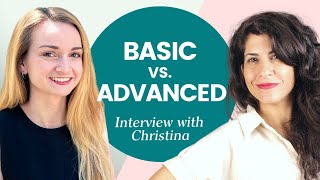
Christina Hilton, head of content, pushes back on social media trends that label English words as basic or advanced. She argues learners don't need rare vocabulary to sound intelligent, warns against learning from short clips without context, and calls out native speakerism in English teaching.
Chapters
Hey, everyone, it's Hadar. Thank you so much for joining me. Today we have a podcast episode where I interview Christina Hilton, who is on my team. She is a pronunciation coach and the head of our content department. And she is going to talk about the things that piss her off when it comes to the content we see on the Internet related to English and English teachers teaching. It's going to be a lot of fun and maybe a little controversial. So tune in and you can listen to it here on YouTube or on your favorite podcast platform, Spotify, Apple Podcasts, Google Podcasts, or wherever you get your podcasts. Just look for the influency podcast. Are you ready? Let's get started. Hi, Christina.
Hello, Hadar.
How are you?
I'm good, I'm good.
Are you good? Because you seem a little, I don't know, angry?
I wouldn't say angry. I would use an advanced phrase. I'm pissed off. I'm pissed off.
I'm sorry, was I too basic?
You were very basic right there.
All right, tell me more. What are you pissed off about?
Yeah, I'm pissed off because I feel like there's been a lot of things happening in the English language learning sphere on social media and YouTube, and I think it's important we talk about it.
I think we're gonna talk about it. We're gonna list all the things that piss you off, and I'm gonna comment on those things. But before that, would you like to introduce yourself for those who do not know you?
Yeah, of course. So I'm Christina. I am the head of content on Hadar's team. And so that means that I help to manage the content that we put out on YouTube and social media and all of those things. And that also means that I see a lot of stuff that is relevant for our conversation today. Some great stuff and some not so great stuff, and kind of the impact that it has on people as learners when you're consuming that content as a viewer. I'm also a pronunciation coach on Hadar's team, so I coach inside of our programs. And I love it. I love it so much.
And we love you. You are amazing at everything that you do, and we are very grateful for having you with us. And now, and I think now you're gonna get to know why we love Christina even when she's pissed off.
Even when I'm pissed off. Buckle up. It's gonna be a ride.
Especially. Especially when she's pissed off. All right, Christina, so what's the first thing that pisses you off?
I think the thing that I've seen recently that pisses me off is this concept or these videos that talk about basic English and advanced English. That's kind of the basis for a lot of things that irritate me, by the way.
I don't remember it being a thing like a year ago. Right. It's a trend. It's a recent trend, isn't it?
Yeah, yeah, I think so. I think that there were. It started definitely with some YouTube videos that got a lot of traction maybe from like, oh, stop saying this, say this instead. Which was way to give you different vocabulary, which is great. Like, who doesn't want to increase their vocabulary? That's awesome. But now it seems like every video, and if you're an English learner and you are on social media, I bet that you've seen a post like these that say, oh, say this, don't say this. Or a basic speaker says this, and an advanced speaker or a native speaker would say this. And there's a lot of reasons why I think that these are really wrong. But I think the foundation is that first this idea that there is basic and there is advanced. And I really don't think that there is this contrast. When we think of language. For example, basic English, what is one word that pops into your mind? Hadar.
Simple. Limited. Stupid. Is that what you.
Stupid? Yeah, yeah.
Unintelligent. Yeah, yeah, yeah.
Like primitive. You know, you're not just like, very limit. Yeah. Like you said, limited.
Unintelligent. Yeah. Like basic feels like you are not educated. Really?
Yeah, yeah. And of course, like, if I see that, I don't want to sound. I don't want to sound those things. I want to sound intelligent. I want to sound smart in any language. So it's very easy to see that and say, oh, my God, I don't. I don't want to sound basic. Right. But then, like, let's take a look at the ideas of what basic. Like the examples that a lot of people say. I was watching one video and it said, oh, basic speakers say hard, and advanced speakers say arduous. So which.
I mean, I have never. I mean it or heard it around me in conversation.
Yeah. So, you know, and it's like, okay, I. I go to. I just say, oh, you know, how was your day? I was so arduous. Like, you don't. Nobody hears that and thinks, oh, my God, that is an intelligent person that just walked by me. You know, it doesn't have that impact, but I think the impact it has.
Is like the cringe factors, little uncomfortable right now. Like, why did you use that word? Yeah, yeah, I think, I think you're absolutely right. And I think that a part of this, the problem is that non native speakers or speakers of English as a second language definitely feel limited with their vocabulary. So I feel it taps into, into that, you know, insecurity. Right. And because people already feel, I think it's one of the basic things that people say, like, what do you want to work on? I want more words to use. Right. I want to improve my vocabulary. Who doesn't? You know?
Yeah.
And, and this sits on that pain point and kind of like rubs it in and makes it makes people feel like they really need it because that's exactly their problem. But does it really give them the right solution? That is the question.
And I think that's the thing. Like, of course you want to increase your vocabulary. I think that's great. Right. Like there's nothing wrong with wanting to have more words to use and especially if you feel that that's what's keeping you stuck. Right? Like, oh, I can't think of a word I don't have a way to express my, my thoughts with, you know, I don't have the right words. Well, I completely agree that vocabulary is a great, you know, we need it. Of course we need it. But if watching a video, you know, a 30 second video giving you this, these ideas first, it isn't really the best way to learn because a lot of these are out of context and I can't, you know, I can't have like a perfect match. So for example, don't say good, say magnificent. I can't use that all the time. You know, I, it would be, it would be weird if I said, oh yeah, it was a magnificent day. You know, it just seems, seems od.
Doing pretty magnificent, right?
Like I'm magnificent. Yeah, it's fine. Doesn't carry the same meaning. And I think like when we watch these videos, one, it gives you this idea that first, this, I think the most, most harmful idea is that these words are bad in their nature. These words like very good, great, hard are bad. And if you think about, I think if we think about these words in our native language, like, can you imagine talking without using the word good? You know, have you ever thought like, oh, maybe I should say the word very less in my language? I don't want to sound dumb. And you know, it just doesn't work that way. And so I think that we can divide the words like basic and advanced into more commonly Used and less commonly used. And just because you hear a word more often doesn't mean that it's bad. And in fact, I would argue there's a reason. There's a reason why it's so.
It's used commonly. Yeah, exactly.
Is so useful. And the other words, like so many videos, they just. Yeah, I was watching one video and they said, don't. Or if you are surprised, you can say I was flabbergasted. Which is really. Yes. Oh, it's just so weird, you know, and using these words out of context, it's going to first, you know, make you constantly feel like, oh, I, you know, should be using more advanced words when I speak. But sometimes it's just weird, you know, you don't need to use all these fancy advanced, quote unquote.
Yeah, I remember. Unrelated but related to this word. I remember that, like, one of the first scenes that we had to do in acting school was a Harold Pinter scene. I forgot the name of the play, but the word flabbergasted was there. And I didn't know what that meant. I had to go research it. And I didn't have a computer or like a smartphone back then. I was like, what's that word? Because I was never exposed to. And that was after living in the US for two years. So obviously it's not a very common word. And I think it's. And maybe that takes us to the next thing that you were upset. Like, does it really serve. Upset about. Does it really serve the students? Does it give them what they really need? So what's the second thing that pisses you off, Christina?
Like, on a scale of. Yeah, I'm like, going down my list, I would say that it's also not useful. Right. And we were talking about this before, and I was like, oh, it's this unuseful vocabulary. And then I'm like, I don't know if unuseful is a word, but you get what I mean. You know, it's filling people with ideas that. That you have this vocabulary that you need. But again, like, you said, like, oh, I'd lived in the US for two years and I never heard this word before. Which doesn't surprise me because, yeah, the word exists, but how often are people really using it? And is this serving you to know all of these words? Or is it just creating a gap between what you know and what you think you should know? And what is this doing? It's like making you feel forever a student, you know, forever. Like you're never going to have enough vocabulary.
Exactly. Like, and I think, and not only that, it suggests that you need to start using it more. So knowing it is one thing. Right. But the messaging is not. Here is a word that you, you know, you need to familiarize yourself with. That's great. You know, like, fine, but to make a point of stop using this and instead use that. I think that. And this is a word that you used is misleading.
Yeah.
Because it's really like not what English is about. You know, it's interesting. A while back I read a book about TED Talks from the creator of ted and he said there's something that was really interesting. He said that when you create, when you work on your talk, make sure you use a language that a first grader would understand. Because people wanted to be direct. I at eye level and very communicative. And I thought it was so interesting. Especially when we talk about basic and advanced. Would you say that TED speakers are basic speakers? Yeah, absolutely not. Yet they do tend to speak in a very direct level that like everyone would feel comfortable with.
Yeah. And I think it's true as well that there are so many words that even native speakers. Maybe it's just me, but no, I know it's more listen to like I cannot tell you if I'm, if I'm watching a movie or I'm reading a book. There are so many book. There are so many words that I don't actually know. Like if you stopped and asked me, hey, define this, I would have no idea. And I just go on because it doesn't impact me, you know, because I say, am I going to use this word? Is this a word that I have heard before? Do I feel like I'm not able to explain myself without using this word? Or you know, is this word just nice to have in my vocabulary? Okay, maybe I would study it a little bit more. But you know, I think it's also important to be able to say I don't need every single word in the English dictionary at all.
And I think also even when you do understand the word, but it's not a word that you use often, that probably happens a lot as well. Yeah, but you know, a lot of words, but it's just not like words that you use on a day to day basis.
Yeah. And again, it doesn't, it doesn't have an impact on my communication with someone. You know, I say, okay, great for you that you use this word, but I do not need it. So yeah, this kind of sparked this whole discussion because I was talking to a student, and they were telling me that they were talking to me, and they said, I would really appreciate it if you could tell me if I sound basic. And I was like, interesting, because there's this idea that I feel is very new because of these videos like this that are saying if you say these words, you're basic. And like you said, think of when you think of basic, unintelligent, not smart, right? All of these things. And so people are getting this idea that, oh, I sound basic. And of course, like, no one wants to sound basic in any language, but you don't want to sound unintelligent. But again, there's this lie that if you use these words, you sound basic. Because I promise, no one is listening to someone and saying, oh, my God, she said very, like, five times already, she really needs to use a new word. No one thinks that.
I think that, you know, you being as our head of content and like, you know, me being a content creator for so many years, I think we understand the struggle or the balance between creating useful, helpful content for our students and also trying to spread the word, right? Like, to get as many people as possible exposed to our content. And one of the ways to do that is to hop on trends. And sometimes those trends are not ethical. You know, they're problematic. And people sometimes know that these trends are problematic, yet they're still going to do it. And I'm not criticizing anyone. Like, I think everyone does their own thing, and that's fine. I know that I have made a conscious choice of not using content that might be harmful for my students, even if it's at the price of exposure. But I do think that sometimes people find it hard to know when it crosses the line. Like, when is it just to get to create controversial content or content that would get views versus valuable content. What do you think? How do you find the balance?
I think a lot of people aren't aware of it. They really think like, oh, maybe this is funny, maybe this is useful. They really don't know the impact that it has. So I think that there are quite a few people that don't really understand that impact. And then there are other people that are fully aware. And actually, I used to have an Instagram account that kind of talked about the very opposite of all of these things. And I had quite a few discussions with other content creators at that time who were fully aware of what they were doing and knew that it brought them more followers. And what this does is it creates this feeling of need for your students to Follow you because they feel like they have a deficit. They feel like something is missing. Right. And you're going to provide what's missing to them. And it's, it's really awful. I think, in my opinion, you don't value your followers that much if you're just using them as exposure rather than actually wanting to teach them something. Like you care more about the number of followers you have or the amount of money you can make selling them a course than actually providing valuable content that would help them in the long run and not make them feel bad.
Yeah, exactly. Content that would make them feel good and like everything's possible. And I think that negativity sells. We know that when people feel like, you know, when you again tap into people's pain points and biggest fears, feeling that enough like they don't have what it takes, then they would gravitate towards that because that is how the brain works. It's like looking for validation of the things that we believe in. Right. It's just like it's physiological, you know.
And what's so funny about that too is that we, you had asked a question on, on Instagram, what kind of YouTube videos do you want to stop seeing? And so many people said, I want to stop seeing these videos that say stop saying or a native speaker would say this, or don't say this, say that. And it's so interesting that a lot of people are like that. They're fed up, they're tired of, of these messages, but still they're doing really well. So. So it's interesting that on one hand, you know, many people are sick of it, and on the other hand, many people, you know, want more and it's doing really well. So people keep making content like that.
I'll tell you what that is. I think why that is, I think it's also, it goes back to the illusion of learning that we always talk about. It's the feeling like I've learned something.
Yeah.
In a very short amount of time.
Yeah.
And it gives you this fake feeling like you've done something about your English today. You know, watching a seven second video and then you, you think, okay, now I know these great words and I'm not gonna sound basic yet. You know, this has nothing to do with the actual practical part of speaking English because you have to put it into practice, you have to use it in context. You have to practice your speaking in general. And you know, like, let's begin with just structuring a sentence and saying it confidently. That is a lot more Sometimes challenging than using the word flabbergasted. Right. So. So without the tools of how to actually implement it, I think this type of content is entertaining.
Yeah.
And people might confuse entertainment with the actual tedious, consistent work of practicing English.
Yeah, of course. Because it's so easy to just watch a video, be entertained, say like, oh, that's interesting. I haven't heard that word before. And if you're anything like me, you say, I'm going to save it so I can look at it later. And then you never look at it later. But then you look at your saved posts and you say, oh my God, like there's so much and you feel over overwhelmed with all of this. This stuff that you learned that you haven't really learned because you just watched it one time and it makes you feel like, oh God, there's so. There's so many things that I don't know still. And it's, it's not serving you at all. It's having the opposite effect.
Yeah. So how. What do you think about us? Because we create daily content as well.
Yeah.
And in a way we're like, okay, but we know what is really needed for people to put in the work, yet we love creating like those short bits and short lessons, you know, we're also a part of it.
Yeah, yeah. It's a good question. And I think it's really important to question, like, what is value? What do people need?
Right.
And I think on one hand that being entertaining is wonderful and I love it. I'm an entertainer.
I know we want to have fun. Also in our courses, we make sure we have fun while learning. So I definitely agree this is a big part of.
Yeah, yeah. And I do think that there is a way to provide valuable content. I will say I have learned so much from TikTok and Instagram. I've been exposed to professionals that make content that I would have never been exposed to. And I learned so many things from 30 second clips. Really like so much. And I. So I believe when you are a content creator and you're creating awareness about something, you're speaking about something that you have knowledge about and you have experience, experience about and you want to share something with your audience that would really provide value, that would make their life better, like providing helpful tips or hey, you might not know this. Right. Things like that, I think that's really important rather than something that's going to make them feel like they're not good enough, that they need to keep working, that they're never going to Be good enough. And I think that that's, that's a distinction not always easy to separate, but that's what I think of when I think of, you know, what is the kind of content that English learners should be consuming. And I don't think it's content that ever makes you feel like less than enough, that makes you feel not good enough, that makes you feel overwhelmed, that makes you feel like you're always going to be a student, that makes you feel dumb, that makes you feel negative, that makes you feel unintelligent. All of those and all of the advanced words for dumb that I don't know. Apparently I'm not an advanced speaker either. But that is not good content. Anything that makes you feel like less than is not good content.
It's not good content. And I think this is the responsibility that we have in this day and age as content consumers because we cannot control the content that is thrown, thrown at us. And that's the thing. We are overwhelmed with content. So we have to be very particular about the type of content we consume and what we benefit from it, or to just say, even if it's not beneficial, I enjoy watching it. And that is fine, you know, but recognizing exactly everything that you said, I agree 100%. All right, Christina, so what else pisses you off? The world wants to know.
I'm ready to share it. Another thing which you may or may not know about it. Well, Hadar, you know about it, but it's something called native speakerism, which is this idea that a native speaker teacher or not even teacher, is better than a non native teacher in any language. But this is especially prevalent in the English teaching industry and interesting in the English teaching industry for a few reasons. As I said, I used to have an Instagram channel that had a lot of conversations, a lot of use when I would speak about this topic of basically I believe that you should have experience and you should be qualified to teach a language through experience or certifications or whatever, whether you're a native teacher or a non native teacher. And there are a lot of native speaking teachers that become English teachers simply because they speak the language. And it can be quite problematic, as we've seen, but especially because, well, it's really hard to teach something you've never had to learn as a non native speaker. Right. Like native speakers have learned the language very differently than non native speakers. So you don't inherit know the knowledge, you don't know the grammar rules just because you speak it. It's very hard to explain to someone but anyway, as I said, I talked a lot about this on my Instagram channel and it got a lot of. Anytime I would would mention this that native speakers shouldn't be teachers just because they speak the language. Right. Like you, you need a little bit more than that, more experience or education. Right. It got a lot of of hate. And then so many conversations from people that said non native speakers are not the best teacher. A native speaker is always the best. Or at least a native speaker. Certified native speaker is like the holy grail. The idea is the perfect thing. Yes, it's funny and be a man. But.
I got into this conversation online in one of those groups that someone recommended a platform for teaching kids English. And I checked out this platform and they literally had two plans. One plan a lot cheaper and it said with non native speakers speaking teachers and the other one was a lot more expensive with native speaking teachers. Nothing about the experience, nothing about the qualifications. And when I said in the comments I was like, don't you find this problematic and you know, partially racist because it was also a group of teachers from a certain region in the world. Area in the world. And she's like, no, I don't see the problem. They're native students. How do you know that they're good teachers? What promises you that this particular is a better teacher? Simply because they're native, you know, and that was so disturbing. And people don't even challenge that.
Yeah, yeah. I'm living in Japan and in Japan there is definitely a preference. It's been changed a little bit because of COVID and everything, but there's definitely a preference for native speakers. And it's just crazy how. And the same thing, native speakers will get paid much more in the school than non native speakers. And my sister in law who's Japanese and wants to be an English teacher is experiencing that right now. She would not get paid the same as me, even though she has more experience, even though she has learned the language herself and knows exactly what it takes. I could walk in there with no certification whatsoever and say, hey, I grew up speaking English, I can teach. And it's just really mind boggling. And actually many people don't challenge that. They just say, you speak the language, you can teach the language. And it's not true at all because I didn't know anything. And everything I learned came from non native teachers like you and Jelena and and other non native teachers. So I didn't know anything when I was teaching and I made so many mistakes because I didn't know Any better. Yeah.
So where do we see that in content that, like, in the content that we see out there, if we bring it back to content or what we see on YouTube or, you know, online. Not necessarily on YouTube.
Mm. Yeah. I see this a lot when we talk about mistakes and what is correct, what is perfect, what is proper. And while I do think, you know, we do need something to look up to. Right. To. To model. Model language after it's. It. A lot of times there's no flexibility. Right. It's like black or white, yes or no. And language is not. Is not like that. Right. Language is very flexible. And it's, you know, we can't simply say it's always like this because it's not. And it also leaves out a big group of people, a big group of, you know, native speakers. Because native speakerism in itself is quite racist. Because if you think about it, like, if a lot of people, like who. What's the first thing that pops into your mind when you think of a native speaker? Probably a white person, you know, a white person from England, the UK or.
North America, most likely standard dialect of some sort.
Yeah, yeah, yeah. Any other dialect just won't. Just won't do. But it's just funny that there are. And there are people that say, okay, you know, if you. If you make mistakes as a non native speaker, you're unintelligent or you're not smart enough, you need to do better. Right. And it's just so discouraging. And especially whenever we see native speakers making mistakes, nobody's criticizing us, nobody's questioning it at all. And you might say, oh, well, you don't make mistakes that often. Like, have you. You haven't, you know, you haven't seen enough. Yeah, it's. It's crazy. It's crazy.
I know. I love listening to podcasts and then, like, counting the mistakes, like the unnecessary S's or the wrong use of much and many and all of those things. I think it's. It's so cool. And it's so like, you know, it really is proof that whatever is taught in school is only done that way so people can measure the progress of their students. Because that could only happen when there is right and wrong. Because if something is like, right there in the middle, which would totally pass in conversational English and colloquial English, I mean, what would you do with it as a teacher? So just serve the system. We have developed a method that really limits our ability to express ourselves or it doesn't reflect how English really is or really sounds like.
And it also doesn't allow any space for mistakes. It's like, nope, wrong, wrong.
Yeah.
And that's not. I mean, again, it's not how language works. You make mistakes in your native language, too, and you don't care about it. And I think that that's really important, too, is that, you know, this idea of trying to be perfect in English, not making mistakes, pronouncing things, you know, the way you're. They should be pronounced. But you're not that hard on yourself in your native language. Not at all. But when it comes to English, you can be so much more critical of yourself. So I think that that's really important to remember. But. And actually, Hadar and I, we have a running. We have a running list of mistakes we hear native speakers make. And maybe Hadar will make an episode on it. So I was at the doctor the other day, and I had a nurse come in, a pa, a physician's assistant, so very educated individual. And she was saying. She said, I squoze the muscle. And it took me a minute to understand what she said. And then I realized that she was saying the past tense of squeeze with an irregular verb tense. And I was so shocked because at first I thought it was a joke, and then I realized she was totally serious.
And for those listening who are not sure, it's. It's not a legit squose. Squoze is not a word. Yeah.
So, yeah. And it's, you know, a normal past tense. So squeeze in past tense is squeezed. And so it surprised me. I was flabbergasted when she said that. It just goes to show that even very educated individuals, such as doctors and physicians, assistants and all kinds of people are making mistakes. And no one's questioning it because they're native speakers. But the thing is that, again, language is very flexible. And so we, you know, to say that non native speakers shouldn't make mistakes and don't say this, say this instead. It's just not an accurate representation of how language works at all.
Yeah. And if we did follow more this idea of how language works, it would have provided so much more freedom for our students and so much versatility and ability to express themselves without feeling constantly bad about not doing well and not being good enough. And I do want to bring it into the conversation that we've been having over the past week or so after the YouTube video that we released on. On a certain creator that was, who is a non native speaker, and she has created content, and there was Another channel just really picking on every single, you know, like, quote, unquote, mistakes, because a lot of them are not really mistakes. But, okay, we can. We can dissect it, but we're not going to do it here. And at first we, you know, so we, we call them out. Like we said, this is wrong because it really delivers the message of mistakes are bad and, you know, like, and so on and so forth. We're going to link to that video in the description. But what was interesting was to see the conversation that was happening below the video. At first we got a lot of support and a lot of people saying, you're right. And then we started getting a lot of comments from people saying, yes, but she's not qualified, and really angry comments about the fact that someone dared to create an educational video and not pronounce things perfectly. And I think that if you break it down and break down all the mistakes, you'll see that a lot of them were not, like, intentional teaching.
And there.
There are, like, a few ways to interpret them. And if some, Some things were mistakes, I think the response, the appalled response, people were like, you know, they would put her in jail if they could. That emotional response to the fact that someone made mistakes was shocking to me. You know, like, I did not expect that.
Yeah. I think it's funny too, because people are very quick to judge and question mistakes by non native speakers. Very quick. And it's so interesting because this happened to me on my personal Instagram account where I. Many of my many of our students, we follow each other. Right. And so I posted something on my stories, and I misspelled the word vigilant because of schwa.
And Is that an advanced word, Christina?
Maybe. I think it is. So vigilant, yes. To. To be very protective of something, I think. So I said I spelled the word vigilant right. And then I had a feeling it didn't autocorrect, it didn't say it was wrong. But I had this feeling, like, later after I posted it, like, maybe that wasn't the right spelling. Right. And I just forgot about it. One, because as a native speaker, you have that privilege, right? You have that privilege of no one really judging you. If it's like, yeah, you made a typo. Right? Yeah.
And then experience that I cannot have. Right, exactly. Typos all the time. In the first few years, I would. Oh, my God. Yeah. I would feel.
And how many people are so quick to point out that mistake, too? Oh, you know, yeah. Yeah. And so the next day, this happened. Like I posted that and then the next day, nothing. And then I posted on my stories and I was like, I can't believe I. Because I realized I googled the word later and I realized I misspelled it. I said, I can't believe nobody corrected me. And then I had several people, our former students write me and they said, actually I saw it and I had, I started having a doubt, like, I think you had misunderstand. But then I thought, like, no, she would never misspell anything. She's a coach, she's a native speaker, she knows what she's talking about. So not only did they not correct me, which of course is fine, you know, that's polite, but they started doubting themselves that they knew what they were talking about even though they were correct. And so it's so funny how like a native speaker could get away with confusing your and your and their, their and their right in spelling all the time and making so many mistakes. But when a non native speaker does it, it's. People are so quick to point out all of the mistakes. And I even see this for non native speakers who are content creators, not in English, just doing random things. People are quick to criticize, like, oh, you use the wrong preposition. Oh, you shouldn't say how it's like, say what it's like. And they're not even, they're not asking for your English advice, you know. But there's so much more criticism for non native speakers than native speakers.
Even though I've heard, yeah, I've heard from so many creators who are not English teachers who are non native speakers, how much crap they get on their pronunciation. You know, they're teaching professional videos or whatever. And then, you know, the people comment on their English and that entitlement or that like being like patronizing the other person saying, oh, you don't know enough. Despite the fact that they're sharing their knowledge and they're doing it in a second language. You know, it's like they don't see it. Yeah. And I think, I think it's so important to come with more compassion and more understanding that there is no right and wrong. It's not black and white when it comes to English. And if you like someone, then you know it's fine and, and, and enjoy what they do have to provide like the, with the content they do provide you with. And if you don't like something, you can always unsubscribe. It's a free content platform. Right. People are so angry, like, this is not possible. People cannot teach wrong. It's like, you know, it's free. It's your choice to subscribe to it or not, and then do whatever makes sense to you. Going back to. But make sure you follow something or you follow the content that makes you feel good and actually provides you with value that you can quantify. You can kind of like measure the progress that you are having with, you know, certain content creator.
And even when it comes to, you know, not liking someone because they. You think that they're teaching things incorrectly again, you know, it's a free. It's a free world. You can do what you want. But I've seen many native speakers teach things about pronunciation incorrectly. So wrong. I know you have, like, oh, my God.
Oh, my God.
So, so, so wrong. Like, just coming up with things just because they think that's what is happening. Like, no. No idea whatsoever. Yet people are not questioning them. Not to the same degree. Right. Like, they're not. They're. They are not at all attacking them for. For, you know, not knowing something like they would a non native speaker. So it's really crazy how a native speaker can really say whatever they want.
And people will just assume that it's true.
Yeah, exactly.
All right. So, Christina, what makes you happy?
Oh, gosh, I'm happy when our students or anyone in our audience says that they feel so much better about their English after doing our courses, like, new sound or watching videos. That really makes my heart happy to see those messages that say, you know, for so long, I was always told that my English was never good enough or I always felt so bad about my English, and now I finally feel like I'm good enough, and I feel like I can do this, and the English is mine. And I love that. That's what makes me happy.
Yeah. I think that that is what gets us going. And, you know.
Yeah.
And that's why we keep doing what we do. Yeah. It just reminded me of the story of one of our students who posted a video inside of our programs, one of our programs. And she said, you know, I've been learning English for 12 years, and I wasn't able to speak. Like, I wasn't able to utter one sentence. And now it's been three months, and I'm making all these videos and talking. It's just like that permission and that belief that she can do it and how to, like, you know, her being able to bring everything together. I think that is probably one of the most rewarding things.
Yeah.
All right, Christina, so what do you intend to do? To change all the things that piss you off. What do we intend to do?
Oh, so many. I think it's important to keep talking about it. I think it's important to speak up when you see something you don't agree with, even if you think it's insignificant, even if you think it's small. I think if we speak up about what we think is harmful, it's important. I think as a native speaker, I have a very big responsibility to educate other native speakers about a lot of things. We have a long ways to go, but I'm working on it. And also to let other people know that there is no distinction between a non native teacher and native teacher. Just a good teacher with experience that cares and, you know, believes in their message and, you know, bad teachers who don't. Yeah. And I just continuing to work in our communities, like the influency community and our program, New Sound to continue working on this message because I think it's so important that everyone finds that freedom in English that has been that you might have been looking for for a really long time.
Yeah.
Yeah.
I love it. All right, Christina, thank you so much for sharing with us your thoughts about.
Thanks for listening.
I really enjoy the conversation and if you have any thoughts, anyone watching or listening, then come and share them with us either on our website or YouTube or Instagram @ Hadar Accentsway. Thank you so much for being here, everyone. Thank you, Christina. Have a good day and see you next.
Time.
More from Hadar











Read Out Loud with me! Dare to Lead by Brené Brown | Pronunciation & Vocabulary practice