The TRUTH About How We TALK And How We Get HEARD ✊ With Samara Bay
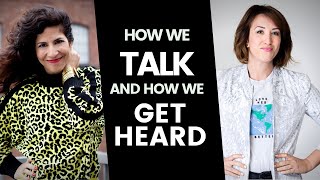
This content was created by Hadar Shemesh. This content was uploaded by Hadar Shemesh. This is a YouTube video titled "The TRUTH About How We TALK And How We Get HEARD ✊ With Samara Bay" created on June 9, 2020. It features a conversation between Hadar Shemesh and Samara Bay, discussing topics related to accents, dialects, and the voice, including the challenges of being a non-native speaker, public speaking, and the concept of permission to speak. Samara Bay, a Hollywood dialect coach, shares insights on how to capture the essence of a sound and the importance of mindset in communication.
Chapters
Hey, everyone. I have a very exciting episode for you today because we have a very special guest, and that guest is Samara bae. Samara is a Hollywood dialect coach. Now, I don't want to drop any names, but she did coach on the set of Wonder Woman 2 and worked with Gal Gadot. Just saying. She's also a voice coach and she's the host of the podcast Permission to Speak, which I am obsessed with. This is actually how I got to know Samara. I'm a huge fan of the show, and I actually contacted her and she was more than happy to come and speak to us. So in this episode, we talk about pretty much everything, about accents and dialects and the voice and what it means to be a native speaker and a non native speaker. And she also shared with us a pretty cool method to learn how to pronounce the English vowels. So you better stick around. I am so honored to have her here. Let's welcome Samara Bay.
Hi, Samara. Hi, Hadan. How are you?
I'm beside myself. I'm so happy to have you here.
Thank you.
Here in my studio in Tel Aviv.
That's right, that's right, that's right. I mean, you know, look, I do not want to say that there's a billion silver linings for coronavirus, because there are not. But one of them is that distance means nothing anymore if everything is remote.
Absolutely. It feels like it can almost hug you.
I'm feeling.
Also used to say that.
It'S really hot in Tel Aviv, and I just got this, like, mad rush of heat. I mean, granted, I'm in Los Angeles, so it's also hot here, but I do feel like I'm really flushed, as though we're sharing a space together, so.
Well, thank you for being here. The first time I heard your voice, first of all, then your name, then your message, I felt like you are my soulmate and I need to connect with you. And luckily I was able to do that. And I'm so grateful that you're here because I think that what you will be sharing here and the conversation that we're going to have is going to be very meaningful for so many people listening to this. So thank you for being here.
My pleasure. Thank you. Thank you for discovering me. I didn't know that you existed and your community existed. And now I'm like, of course, of course. You know, I mean, we were talking a little bit before we started recording. I'm Hollywood based in terms of the dialect work that I've done, and so I never really like, went down the rabbit hole of seeing, like, what the Internet version is, what you do when you don't have necessarily a coach right in front of you and you're working one on one. And it's really wonderful to find that there's somebody else who's talking about, you know, how we talk the way that I do.
Right. Well, yes. Thank you. And, well, for those who don't know you, why don't you introduce yourself?
Okay. Well, so, as I said, I'm in Hollywood. I spent my 20s in New York on the East coast of the US pursuing an acting career. I have an MFA in acting. She Shakespeare is, like, my totally foundational background, the nerdiest of the nerdy. But, you know, it has served me well. And now you and me both. I mean, I'm not apologizing for it. I'm just saying I'm well aware that it is a way into acting, into speaking. It's not the only way in, but it served me in ways I absolutely could never have anticipated. And, you know, part of my story, the last part of the story, is that in the last few years, unrelated to coronavirus, which obviously is affecting the US Currently in ways that we don't see an end in sight. But even prior to that, for the last few years, really since the 2016 election, relatedly, I started coaching people who are running for office and sort of testing out if the way that I was working with actors on their voice and their speech and their dialect for. For stories, you know, for how they tell their stories and for how the stories of Hollywood get told, if that really was applicable outside of the entertainment industry. And, you know, obviously I'm thinking in terms of vowels and consonants, but I'm also not right. I mean, I'm thinking in terms of musicality. I'm thinking in terms of how our thoughts and our intentions and our heart and our gut connect to what comes out of our mouth. And that, needless to say, is relevant. Everybody. Am I allowed to swear? It's the Internet.
Of course you are. Yeah.
Fucking everybody. And so, you know, the first gamble that I took with, like, am I valuable in this realm was with women who are running for office. I have a bit of a background also in helping scientists. My dad is a scientist, so they were sort of in my, like, late 20s, early 30s. I did some work helping coach scientists on public speaking. So I had that background as well. And then I started to experiment once. That was really working with my friend circle, with entrepreneurs, with people who are pitching to Hollywood, pitching In meetings, but not necessarily with creative backgrounds or with performance backgrounds. And what is it, especially for women, especially for marginalized people of any sort who have been told in all kinds of subtle ways or not so subtle ways their entire life, that they're not what power sounds and looks like. I work with people on how to change that story, how to teach the people around them that there's a new way that power can sound. And a lot of that is that the world has to change. But a lot of it is that we can affect the way that we are showing up in spaces.
How much of it is the mindset and the conversation around it and maybe sometimes like taking action. And how much of it is physical?
It's such a good question. It's really both. And I think mindset is more important. I mean, not that they have to be in competition. Right. But yes, I think that if I were to give somebody a one minute warm up to do before really, you know, scary conversation, whether it's a public speaking situation or just like a I need a raise type of thing, I would say the physical matters a lot in that particular case, because getting our body loose and feeling playful, dancing for a minute. If we only have one minute, I would actually just literally tell people to like, dance and hum a little bit. But that is also because of the mindset aspect of it, which I would encourage prior to that one minute. But the mindset aspect of it is about telling ourselves in a really meaningful way, doing work on ourselves, to trust, trust, trust that we deserve to be in that space. Yeah, I mean, you know, we do. And subtle ways that even the strongest among us tell ourselves. But they don't really want to hear what I have to say. The amount, you know, I have this podcast and I've interviewed almost exclusively women and most of them are really powerful and they're on my podcast because they're experts in some capacity. And I have heard even among them what happens in my coachings, which is that when you ask a woman or somebody who has been, you know, systematically told that their voice doesn't matter to tell a story about themselves, they figure out a reason not to. Yep.
I think that I totally relate. And you know, I've been teaching, I've been helping non native speakers for over 10 years. And the first few years of my coaching had to do only with the technical stuff because that's what I knew and that's what I did. I had to kind of overcome a lot of challenges and barriers, but I wasn't thinking about it. Right. I was just doing it as I was on the go. And once I started incorporating mindset and limiting, like changing, limiting beliefs and reframing and to talk about, to actually give them some actionable tasks to do and to show up and to speak up the results. And I kept on doing the technical stuff, and even less, I felt that the results were so much better because. Because your podcast's name is Permission to Speak. This is exactly what it's about. Because people. It's funny because I always talk about it in terms of people who have accents and make mistakes and get stuck so they don't feel that their voices deserve to be heard. They think that they're going to waste people's time. People are not going to understand them, or they're going to think that they're stupid because they made a grammar mistake, even though it's their. It's their second language. And it makes total sense. I mean, it's scientific that you would make mistakes.
And most of the people that they're going to be talking to don't speak more than one language if they're speaking to speakers.
This is part of the work. Although it doesn't really help them. Like, they don't believe it.
Right.
It's the imposter syndrome. It's all of that, that they feel that they're just not enough in a second language. Even more, that's even heightened. So I absolutely see how that has worked for you as well.
Yeah. And honestly, the phrase permission to speak has ended up resonating with me in more ways since I've launched the podcast. And also I just sold a book on the same topic. I know depending on it's going to be congratulations. Now I'm writing it, so it's scared to talk about it, but, but, but it made me really think about that, that phrase permission to speak, because we can talk about the speaking part, but it doesn't really work without the permission part. And the permission part is how do we give ourselves permission? You know, how do we do that? How do we think about the ways that we've set up these narratives in our mind that, you know, how I sound is a worse way of speaking English than the people I'm speaking to. So they're going to be judging me. And even if they are, you know, we have ways that we can either reinforce that, break that down. I mean, I've definitely just recently over, you know, the Internet in this. In this new era, I coached a gentleman who's from Iran who was talking about and whose English really is quite choppy. I mean, he's quite new to the U.S. he's a refugee, and. But he's really joyful and was clearly, like, game to try something new. And I said, you know, could you. Would you consider practicing ahead of time? I'm not big on, obviously, like, memorizing things that we say. That doesn't sound organic. And it's. It's not usually a great recipe for success, but maybe you could work on a few key things that just bring you a little sparkle that say something like, English is new to me, but I'm thrilled with how well I can communicate with you or something. That's not an apology, but an acknowledgement. And just doing one of those up top is a way of warming up any space you're in and acknowledging the problem and making the problem the solution.
And also, like, always being in a state in process. Right. So it's like, it's new to me, but I'm doing my best to communicate well. I'm doing my best to be clear.
Or I learned a new word. You know, if that's. If he did or, you know, I learned. I've just been learning. I've just been. You know, I'm so excited to talk to you American person who might be judging me because I'm getting better and better every day. Still working on it. You know, like, we get to re. We get to frame it with the actual words that we say as much as, you know, with our body language, with our tone of voice.
It's important to do it before, and it's important to also do it after, when our tendency is always to remember the negative things and all, like, all the bad parts. I. I had once, like, a group coaching with women, and one of them stood up and she spoke about this talk that she gave, and she was like. She got really quiet, and she was like. And then I got stuck for a few seconds. It felt like the. The end of the world. Or it was 30 seconds. I don't know. But. And. And I asked her, did anyone mention. I was like, no. They said it was a great talk, but for me, I felt like, you know, English is not my thing. I stopped speaking after that. And it's just like from this entire talk that she gave and answers, she got stuck. It happens in your native language as well, but when it happens in English, you associate and you connect it to English and then you think, you know, I. This is just not for me.
Well, and honestly, because for the last few months, I've been working Almost exclusively with people for whom English is their first language. And we're just actually talking about issues that come up when we're public speaking. I can say to any of your, you know, viewers who are listeners, who are. Who for whom English is their second language or third or fourth or whatever, you know, brilliant, brilliant, brilliant language skills you guys have that this just is. It's so beyond this English as a second language issue. It really is like, how do we show up as humans and that. I say that not to say like you're to diminish your story at all, but to actually give you even more permission if possible, that truly this is a human experience. How put thoughts from inside our head which have to do with feelings that we have which do not have words attached, experiences we have had which do not have words attached, and dreams that we have which do not have words attached. And how we communicate those things from inside of us out is anyone's guess. Like, how do we figure out what word goes after what word to try to capture those things I just said that have no words attached. That is the human experience. And it feels really front of mind when English is not your first language and when we're speaking in a language that isn't our own. I mean, I spent a summer in France when I spoke semi good, bad French. And I remember, like, how much I felt like I owed the people who are listening to me because the fate. Because of the favor that they were doing by being patient enough with my bad. I mean, I am. Well, I really, I really feel what that is. And I want to say that on top of that, it is a human experience. Experience that communication is messy and imperfect. And that is, I think it's beauty and also obviously its challenge for all of us.
Right? So beautiful. And there's something really comforting about that, that we're all in this together and also solvable. Like if. Okay, it's not just about my English. So once English is no longer the issue, then it's a lot easier to speak with fluency. Because fluency is only a result of the state of mind and the confidence. It really has nothing to. I mean, it has to do with vocabulary and grammar and all of that. But, you know, a lot of times when people tell me about how they struggle to speak at work, I ask them, do you feel is. Do you have the same experience when you're with your friend over a glass of wine and they say, no, so it's not the English. And this really correlates with what you're Telling that it's.
Yeah, I'm a big fan also of like, you know, when we are talking about really like literal public speaking, like getting on a stage type of public speaking, which, you know, in the US no one's doing right now, but like, I hope it for everybody. But, you know, when we're talking about that, I'm often the metaphor for me is often this idea of scaling up that version of ourselves that we are comfortable with. And not every room can handle that person. You know, sometimes our instincts are right, that the version of ourselves when we're with our friends having a drink isn't appropriate. But often it is just a slightly heightened version, a slightly more like breathing, taking pauses, knowing that we have the floor and no one will interrupt us version of that conversational selves that we all have. And, you know, for many of us, it just feels so wildly different in those two different contexts. And if we can, if we can, one of the things that we can say to ourselves as we're preparing to speak in public, even if it's just in a meeting or whatever, even more so if it's just a meeting, is, what am I like with my favorite people? How is she or he going to be welcomed in that room? The answer probably is very well. And we tell ourselves no, but that space is more formal no, but I can't. I can't dare bring myself into the room. And, you know, I talk to a lot of people. I have a episode that's coming out of my podcast soon with somebody. I don't want to give it away, but somebody who has worked with some of the greatest world leaders. And we talked about this issue of formality. And she said, you know, the best public speakers are comfortable, so what is it to feel comfortable? And obviously it feels like an oxymoron. It feels like a total opposite. You're supposed to be on a stage and feel discomfort. We all know culturally, like being on a stage is supposed to be scary and awful and weird, and you're supposed to hate public speaking. But I think the secret in honestly changing who the leaders of the world are is in us realizing that the version of us that is at our most comfortable, if we can scale him or her up a little tiny bit to those stages, we are what the new sound of leadership is.
And I also think that public speaking in general is changing. It is becoming more conversational and a lot of ideas about what you should do with your body and how you should use your voice, all of that. And it's like, no Longer.
Yeah. Oh, my God.
For those listening on the podcast, you should come over to YouTube to watch this. But it's like booing.
Yeah, right? It's like, I don't want to throw out all of. I don't want to throw out all conventional wisdom there is. You know, people talk about what to do with your hands. Fine. I mean, as I'm doing, you can't even see it. But as I'm doing this, I'm doing, like, these massive hand gestures that are completely organic, you know, Fine. You can read some paragraph in some book about how the greatest TED talkers have conducted their bodies and learn a little something. Sure. But I would argue that believing you deserve to be in the space and breathing like a person who truly breathes, not a person who holds their breath because they're bracing for something scary to happen is going to solve so much of that. And then also, the work ahead of time, before you give a. Before you give a talk. Sorry. The work you do ahead of time, before you are supposed to be up on that stage thinking about what matters to me in this. What matters to me and what I'm about to say, and how do I say it? Like it matters to me.
Yeah. And communicating it. Like you're really speaking to someone.
Like you're talking like you're a person. I mean, I sort of joke. I say this all the time when I'm coaching clients. And they all laugh because, you know, it's sort of a mean thing to say. But it's also like you. There is. We do have we all. I'm going to just say we all. I'm going to say, like. Like I'm an authority on. On. On everybody. We all have this sense that to be an expert or to be on a stage is to be some certain way to be like the people who we grew up hearing. To be, like, the best person we can think of, but certainly not to be like ourselves. Oh, God, no. Right, right. But when we breathe, when we do that dancing ahead of time, all of that is about saying, can we bring some of our real self up there? Can we be a person and not be a robotic, monotone version of a person who's hiding? And I'm here to. The permission part is me saying, yeah, I am. I am not judging anybody for hiding vocally, physically, the ways that we, you know, cover our bodies and our voices. I'm not judging at all. I am saying it is so human, and I so hear you. And we live in a. You know, depending on what culture you live in, you know, tell me if this feels right or not to you, but we live in a pretty, you know, patriarchal, capitalist, white supremacist situation here. And you know, we, we have heard that it doesn't. That, that being. That being a person would be less welcome. And the answer is no. The answer is no.
Right? You know, when I, when I just opened my YouTube channel, I was so ashamed of the fact that I'm a non native speaker teaching pronunciation. So I would hide that fact. Like I. Oh my God, I didn't mention it anywhere. Now go back and watch my first few videos. A robot speaking to the camera. Now we are going to talk about the. Anyway, and I thought that that's the, like, that's the, the formula for success, right? Like, you need to speak, you need to.
Authoritative, of course, and also way to make, you know, one of your greatest strengths into a weakness in your own mind.
Right. And. And it only went like. It was only when I decided also I was, you know, doing some coaching and I was, I decided that, okay, I have, like, I was fed up with it. I was actually so bored with myself and I was unhappy with how it came out and all.
Signs, aren't they? Yeah.
And then like one day I just created this video telling my story. And from that moment on, actually there was this guy calling me. He's like a public speaking coach. And we're, we're having this conversation and he was like, you know, I was watching all your videos and at the beginning you sounded like there was something there that shifted around video number. And he actually remembered what videos. He did his research. And it was exactly that point where I just. It's kind of like I said, this is me. I make mistakes. And I was also. Because I make mistakes, right? I make grammar mistakes and my pronunciation is not perfect. And I mean, I have typos and. Right. What is perfect? What is the proper pronunciation anyway? Pronunciation not perfect. According to the YouTube.
I am validating your experience and also saying, I don't know, I don't like those words, but. Yes, exactly. Right, right, right.
The accent police, I call it.
Yeah.
Where people, people kind of like, well, actually you're, you know, you, you have not aspirated your P's in this video. I'm like, okay, whatever.
Coming from acting and then also having like a little bit of a, like popular linguistics kind of, you know, sensibility. You know, so much of that is about, you know, this idea of descriptivism versus prescriptivism. Right. We're not saying, you should do it this way. This is the right way. We're saying the opposite. How interesting. How curious. How do you speak? How cool that.
Right.
And obviously, when we're learning, when I have to coach somebody in a specific accent for a specific job, I have to sort of narrow how much, you know, just like absolute freedom we have into something that feels like it's telling the right story and not telling the wrong story. But even in. Then, you know, even in that, like when I've coached people to play real life figures, they don't. No one gets an Oscar or an A for sounding the most like the person they get an Oscar or an A in, you know, teacher Samara for capturing the essence. And essence has nothing to do with what sound goes where. It has to do with who is this human being and what is their lived experience and how does their voice reflect their lived experience, which is what I'm always interested in with clients, you know.
So how do you work? Maybe you can speak to that a little bit. Like, how would you help someone capture the essence of a sound, an accent, a language? Both when you work on specific dialects or foreign accents, but also when you work with your foreign students on sounding more intelligible.
Right.
Like, what are the key factors that you.
Okay, the big, like, it ranges a lot. So. Right.
This is going to be kind of two hour answer.
Yeah, yeah. Let me give you the. But, no, there is. There is a real. There's some simple stuff. There's some foundational stuff. One of them is when I was in my twenties in New York learning all this stuff and still thinking I was going to be a Shakespearean actress. But I just kept finding. I mean, this is really part of my story. I kept finding dialect mentors. Like, I was not looking and they found me or I found them. And, you know, the part of me that super geeks out about this, like you do was clearly already, you know, bursting forth. And I was like, no, no, I'm an actress. Thanks. But nonetheless, I kept finding. And one of them is this woman named Kate Wilson. She teaches at Juilliard. And she taught me a physical gesture way of learning the pure vowels of American English when I. When I was. I spent a summer at the Public Theater in Manhattan. So very. That's where Shakespeare in the park happens. Like, I was, you know, I was touching greatness. And it was. I was.
How old were you there?
20, 23. About to start grad school. Between college and grad school, we might.
Have lived in New York at the same time.
Yeah. Thinking about it. Yeah, we did. And, yeah, I just drank too much red wine. So we saw you. Oh, don't worry.
Me too.
Jameson, I think. Jameson, yeah. Yeah. Well, you were cooler than me. I was just like cheap red wine. I think that's what people. Artsy people drink.
But I was going to every. Yeah, like, every Shakespearean play that was out there. I was there totally.
All the things, all the things. I volunteered everywhere. I was like. I assisted. I made no money. I was a cocktail waitress. So then I just, like, spent all my days doing God knows what. But it was all.
Where did you work? Now you have to tell me.
Where did you work? Cafe de Ville and Asia de Cuba, which was one of those. In those space.
Okay, I have to ask you something later.
Yes, please.
We know someone. Okay. Crazy.
I'm sure. I'm sure. Okay, but. But to answer your question, Kate Wilson taught this method that I don't think was hers necessarily, but she had evolved it into something. And. And then I have since evolved it and at her. At her suggestion, because when. When I was in my late 20s and I got my first professorship at Pace University in Manhattan teaching the BFA kids, so the Undergraduate Theater Kids speech for the stage, I called her and was like, could you remind me about some of that stuff? And she said, no, this is where you have to take it and make it your own. Which was. Talk about a teachable moment. That was very valuable. So. But all of which is to say there are physical gestures to keep track of all the vowel sounds. Here are a few that I can do while I'm in this square. A lot of them require like. Like rubbing your tummy and stuff like that. That doesn't work so well over this. But. And this is, as you said, good. Better to see on YouTube than over audio. But. So this is the short I sound. I as in sit. Right. And this is E. Right. As in B, B or C. So if you have I and E. Right. For. For I will say E exists in every language. It does not. Right. It is one of those bizarro American words, American sounds, English sounds, which does exist. Other languages. I don't want to say, like, we own that sound, but for so many foreigners. And when I taught at Stella Adler Acting School in Hollywood, it's an international school, I didn't realize that when I got the job, I thought it was sort of going to be like, pace and I was ready with my, like, you know, teach everybody standard American and then move on to doing Irish and, you know, all these other things. And day one, I was like, oh, I'm not a single American. Which was a dream, really. I mean, I learned so much. I became a better coach for sure and figured out my patter, or, you know, patter makes it sound like I'm like a charlatan. But, you know, my patter, as in, like the. The way I talk about this stuff that really lands with people with a lot of joy and a lot of speed, which is very much my mo. Like, I want it to really work and then like, let's, you know, move on and you can practice on your own. I want people to feel autonomous as quickly as possible. That's very much my thing. Like, you know, this is not about, like, here's our long system and you have to come to me for six years. It's like, let me give you. Let me throw at you as much as I can. If you record it and take notes and whatever, sit with it, do your own thing. Come back to me when you need auditions for specific stuff. But, like, I really want you to just practice it on your own and feel this out and watch videos and listen to people who are your type but sound a little differently from you and sound that out in your mouth and feel what it feels like. And you know, the sort of like soft brain version of this rather than sort of get out your brain version of this. So part of that is why the physical gestures really worked for me. So, you know, when I had that is sound and I had this Argentinian girl who very memorably said, you know, I just want help with like how to say. How to say beach and not. Let's sound like I'm saying beach. Like, I don't want to go to the beach. I want to call her a beach. But I'm like, you need the short I sound right? And we can talk about how we make that in the mouth. But honestly, I was never trained that way. I think it's about like, I, you know, I don't want to.
It doesn't resonate with them too.
But for me, oral posture is not a phrase that helps me. If you, if you're looking at a specific character to go to your question about somebody who's playing a specific person.
Absolutely.
When you cat, when you watch that person, if something hits you like, oh, God, they feel really far back or they feel really weirdly present or, God, this part of their face seems like it's opening up. That. That got kind of a hit. That's like image based. Use that. But if it's like, everybody from this part of the world has this oral posture. I'm like, no, as an actor especially, I'm like. So I'm supposed to have an intention as this character and also think about where the it does it like it. So, I mean, I guess part of it is I start with those physical gestures to help people just literally know what the pure vowel sounds are.
Give me some more. Do you remember?
There's no. Of course. I mean, I could do all of it if you want the whole, like.
But it's a little, you know, just a few more.
Okay, so. So this is a apple. It's like you have an apple. I've actually recently been starting to teach it like this because I don't want people to feel like oral pal. I don't want people to feel like it's a pushback sound. Right. It should feel sort of like it's coming out of you. Ah. For obviously most of the world, this sound doesn't exist either, and it's weirdly ugly. And I say that with no judgment, but I say that on purpose because so many people try to find a beautiful version of it. And if you try to find a beautiful version of ah, you get to. You get one of the other English, a sound which is ah, as in father, ah, ah, ah. Spanish and Hebrew and a lot of languages have an in between sound, ah, which we don't have. So what we have to figure out if we. If we're. If we're an American, we have to figure out if you have a name like, for example, Gal Gadot. My terrible American pronunciation of it on purpose. But, you know, if you have a name like gal, right? And then. And the proper pronunciation is gal, then like, we have to think. We have to figure out is it a apple or a father. So we can go to gal. A, which is a word in English. So we do. We just naturally will go to gal. Gal. Or we can go to gal. G. Right. Which. Sure. And then we do that also with like pasta. You know, this. The. The Romance language version of that would have a more forward sound, pasta. And instead we go to either British goes to ah, pasta, and American goes to ah, pasta. And this ah sound is super relaxed. Like, I mean, it's also like giving your heart a little caress. So obviously, I. My clients love this. It's like you do this right before you go in for an audition.
This is one of the easier sounds for people to. To produce. At the same time, they don't use it as often as they should and could you know, in America, in English, because a lot of times they can, like, take the ah sound, especially when it's. It's spelled with o, and turn it into.
Okay, physically, I'm gonna pop out just real fast for people who are watching. And this, it's like a little string coming out of your solar plexus. This is the short O sound. So we have two O's. I say we have two O's in English. Unfortunately, neither of them is the one that every other language has, which is O. We just do not round our lips like that ever. So we have that one. I was just doing. And then we have O, which is the diphthong of a cup, into oo, O, O, O, O, O. Right. But to go back to that first one, ah, ah, ah, the non diphthong one, ah, and that ah sound, ah, are identical. I was about to say fucking identical again, but there you go. Are fucking identical. And, you know, we can argue with that in terms of length. Like, technically, ah is longer and ah is shorter, but 50 years ago, they really had a difference. 50 years ago, even 30 years, you know, depending on what age, person you're talking to, they still have a slight difference in that the word not N o t not will have a little tink on the sides, a little up and down shape, not versus, like, I don't know. I mean, this not isn't word. But if you had. Yeah, ah, not an ah, not an ah word. Like, I'm trying to think of an N1 narwhal. Anyway, there you go. But ah, ah versus ah, but especially contemporary, especially our age and, you know, a little younger, a little older, or all the way younger, I should say, and a little older. We should absolutely feel comfortable making them sound exactly the same. Short O, long A, ah, ah.
And it's so much easier to merge sounds. And especially when, you know, speaking a second language and you have less vowels than the, you know, the spoken language, it's so much easier to merge it and just say. Just do that. And then they go to the dictionary or they hear from someone that this is. Is what they should do, and they're like, well, I'm confused. And this is where, like, language is like something that is very fluid and you just need to. You first sound clear. Let's start with that. And if you say.
And the other thing. Sorry, what? I. What? I just got really excited. I'm sorry, I interrupted because I got. Because you're. Yes, yes, 100%. And one of the things that was my. I only had two rules in my class when I used to teach at Stella Adler. They're kind of two versions of the same rule. Neither of them had to do with putting your cell phone away, but they were one. Fuck spelling. Or if you wanted to put it a little bit more gently, spelling is irrelevant. Because when you're trying to come up with rules for oh, but this is oh, oh, so it must be. Ooh. I'm like, I'm so sorry on behalf of all English to tell you.
You should be.
I am. I take full responsibility. I actually have this book. Oh, this. This thing that I recently reread.
I mean, the Mother Tongue.
He's an old white guy and he's deeply problematic, and it's from 1990. And I'm like, oh, my God, I was alive then. And it feels really, really, really wrong. But it is full of a lot of academic wisdom and is told really funnily. But it's called the mother tongue English and how it got that way. It is a reminder that it's a reminder for anybody who needs it on the permission front that, like, as you say, it's constantly evolving. The old Old English apparently used to be somewhat more like Spanish, where every sound actually maintained its integrity and had the spelling and the out loud was exactly. You could tell the rules by looking at it, is what I'm trying to say, but not so much with contemporary English for anybody who's following along at home. So that was my first rule. But my other rule, which is why I bring it up, is ear honesty. Ear honesty. So if we're trying to say but it should be or but someone told us that this is what's right, listen to your ear and trust it. If you were hearing Americans make that aw sound and that short o sound, ah, sound exactly the same. Trust yourself. Trust your ear.
It's so. It's so good and so interesting because there is always this. I noticed that my students, for example, always doubt themselves of what. What they hear and what comes out, which is okay, because the brain does filter out a lot of information, especially if they're not used to sound. So they might, like, filter out the actual sound and they hear it through the filter of the. Of the spelling. Right. A lot of times, especially when it comes to the schwa. Then I once had an argument with a student where argument.
We were, oh, yeah, no, debate.
Debate. Yeah, exactly. And he was like, yeah, there is. Oh, in computer. I was like, no, it's a schwa. It's like, no, no, I can hear here say It. And I said computer. You said computer. Right. And. And like that little sounded our brain. Yeah. And it's just like had you not been born into, had you not studied spelling first thing as you started learning English, I mean, that wouldn't have been a problem, right?
No. In fact, a five year old who's beginning to learn to write and to read and like, it's the opposite way. Right. I mean, he knows the word computer and so he would never spell it with an O.
Right.
And he has to be taught, you know, reverse engineered back to like. Well, I know it doesn't sound that way, but Bill Bryson, how do you explain that?
Yeah. So what do you think? We talked about it just before we hit record and I told you about my thoughts and how I deal with the phrase speak like a native. And I would love to hear what you think about it. And also, what tips do you have for speakers of English as a second language who really struggle with physically, their voices? Like, they don't come out. And I do think that it relates. Right. Because they feel that their voices are not the standard or what people expect or what is the norm. I was asking a question, then I was answering it as no.
It's. So you just said no. I love it. Also, you know, I'm new to podcasting. I have this podcast that's. We just dropped episode 12 today. So I'm.
Which by the way, you have to go and subscribe to the podcast. It's called Permission to Speak. Really? I'm, I, I'm, I eagerly. I'm eagerly waiting every single week. Or maybe I should say, I eagerly wait every single week for a new episode. So it's so good.
Both verb tenses would have worked just perfectly. Also, the point of communication is communication. And I understood the thought exactly. Thank you, thank you, thank you. I mean, we're gonna link to it, by the way.
It's in the description and the show notes.
That's very kind. Yeah, I mean, obviously, you know, part of what's what, what I think we're both excited about in finding each other is that this conversation is just so. It doesn't happen very often anywhere, but it's really big and overlaps with every aspect of our lives. I mean, how we use our voice is just not, it's just so much not about literally how we use our voice. It's just not about, like, what pitch we're talking at. Although that also matters and is interesting and has all kinds of gendered stuff and all of that. But, you know, it's about. It's about all the ways that we're showing up in the world and all the ways that we are around or not embracing our individualism. And then you had some. You had like two parts to an amazing question that I wanted to answer. And I don't remember that now.
I don't think I remember it. Okay. The voice. The voice changes when speaking because of.
Okay, so you wanted to. You were asking about the native. Native.
Oh, and speak like a native.
Yeah, yeah.
How do you feel about that?
Well, it's not a phrase that means much to me. I will say that it makes me think I'm gonna share a tiny metaphorical story. That's not. That's very much not the same as what you're talking about, but is. But I have a friend who's in her mid-20s who is in Hollywood, was an assistant at a really massive, like, you know, movie development company and wanted to leave and start an activism organization for the assistant level people in Hollywood to who have no money and no time to figure out small ways that they can be of use to the world and ultimately also kind of unionize. Like there isn't really a union for assistance and they're treated pretty terribly. So it wasn't gonna be an official union. But the whole idea of like, you know, of union, you're not unionizing is like, you know, we're stronger together than apart. And she had this idea and we sat on this couch and she ran it by me and I'm an advisor now on for her, for her organization. And she said, but I'm just so young, I don't know if anyone will take me seriously. And I underline this because she took the thing that is the strongest about her position when she wanted to do this, you know, the thing that makes her be able to hold a mirror up to everybody else in the town who is her generation and lead them and thought of that as a weakness instead of a strength. And I just, I think back to that a lot because I can feel when I do that to myself and I think a lot of us do that to ourselves. And it is totally easy to say if she were older and knew even more people, then she could have led better, but she would have been less connected to her people. And if you sounded 100% American people out there, you would do better. But no, I mean, the thing is we. We all bring our life experience to the table and we aren't actually. No, no one really wants the most boring person to have the most power except for the most boring person. And, you know, obviously I don't want to call anybody boring, but, you know, the people who have the most conventionally empowering stories, the straight white men of the world who have never thought about how their voice sounds because no one has ever questioned it, right? God bless them. I am not judging them, but I'm saying I'm not speaking to them and to everybody else, you know, and even my husband, he is totally straight white man. And I coughed that. But, you know, his own experience, the place he grew up, the way that he felt as a kid, you know, the different gradations of, of how we have felt kept out of power, we're allowed to sort of own all of that and then turn our problem into our solution and not be, not sit on that couch and say, but my greatest strength is my greatest weakness. And so, you know, I also, I just feel like when my foreigners have broken, my foreigners, quote, unquote, my actors, my clients have broken through, have really gotten those roles that really reflect their souls. They get to be in that position everyone wants to be in where they get to laugh at that time that they once thought that their background was a, you know, a drawback instead of a benefit.
It's like when you, when you're validated by the, by the, by society, it's okay, right? But until then, and usually people are not validated, then we have to just.
Validate ourselves and ask our friends to validate us. And that is hard. And it feels, it feels. I mean, it feels quiet enough when we're just validating ourselves and our friends. Or it feels quiet enough that we still hear the voices that say you're not good enough.
Yeah, but if you don't do it, like, you have to do it because you won't be validated by others if you don't validate yourself because you'll never show up.
And then to make this really practical, how that ends up showing up in our voices is that we realize, okay, that little vocal warmup that I can do, and I don't mean a massive one, I'm not just not a big fan of, like, you have to take two hours to warm up your, you know, but that little five minute one where you make sure that your jaw is relaxed and you make sure that your tongue, you know, which goes all the way down to here, like, you know, isn't holding all of the tension of your life and you're, you know, trilling out your lips, you realize that the way that you can actually use your Vocal apparatus for the athleticism that is speaking any language, but certainly English, is the way that slightly pushing out newfound confidence can show up in your voice. You can actually say, this is what showing up sounds like. I'm going to. In the phrase this is what showing up sounds like, I emphasize the word up. Okay. I don't know. It's not a rule. It was not the most idiomatic thing, but it felt right in the moment. And then instead of saying, this is what showing up sounds like, which would be a really generic way of saying it, this is what showing up sounds like. I'm not really breathing. I breathed, and I punched the word up like it mattered to me. This is what showing up sounds like. And, you know, not every circumstance and not every zoom meeting you ever do requires that level of athleticism. But what if you can practice that on your own? And the answer to your question about what to do on your own to improve that to me, besides, you know, actually getting help on really specific sounds that your ear just needs to learn how to hear better, which, you know, is what somebody like you is really valuable for. And somebody like me, when I'm actually, like, doing it, which is right now, I'm just book writing and living in a pandemic, you know, But. But if you can memorize, if you can make yourself, whether you're an actor or not, memorize a bit of text, hopefully something that you really like. Maybe it's even just like five sentences out of Glennon Doyle's Untamed that speaks to you or some, you know, something that feels contemporary and feels like it means something or has the potential to mean something to you and make like. By which I mean your body does something and walk around your house saying it and have it super memorized so you're not thinking about the next line, not thinking about the next line and just doing it. You know, I used to do this all the time, and I did it with Shakespeare and I did it with contemporary stuff. Now it's like, you know, pick anything that matters, poetry, whatever. And the more that you do that on your own in a room that feels safe and maybe alone, the more you can figure out what is the version of me. She doesn't have to entirely be this person, but what is the version of me that isn't vocally hiding? What would she sound like and what does she do to my body? And just try, you know, see what happens. I mean, I wish I had, like, something I could pick up right now to sort of do an example, but I'm making enough sense, I have to tell you.
It. I love it. I love it. And it's in the past, I think, two years. I have an online program and I have a bunch of students and we were in a Facebook group. And then I said, like, I felt they needed something a little different two years ago. And I introduced them to the power speech based on the power pose, where they had to memorize, like a fierce monologue.
Right.
One where the character is like shouting. And I told you have to memorize it. And they had to memorize it and then do it full out because I wanted them to feel. To experience feeling powerful in English without thinking about the words.
Without thinking about the words.
Without having to think about the words. With, like, having this. Yes. Especially something that you relate to and that you enjoy.
And what I'm seeing off that part of you that that's like, what word is going to come next? And if you can take that off your plate, then you get to really just work on first, you know, in a contained space. What. What does it feel like to stand up for myself? Right.
And that insecurity of like, I don't know what to say next is you really hear a difference in the voice. One of my students said, I never thought my voice could sound that way. Like, I've never heard my voice that way because she's like a very soft talker and you could barely hear her videos. And all of a sudden she was like, full out and very powerful. So I absolutely, you know, I think that this is such a great technique and acting in general. I started doing, like, acting workshops for my students who are non actors, but it's just they enjoy it so much and they learn so much from it. Because when you set an intention intonation is just like. Or the melody or prosody or whatever is just a result if you know what you're talking about and you are safe using the words.
I like to say that there's like two ways to go into a line of text that's complicated. And this goes for acting, but also for just, you know, if you're public speaking a line that Barack Obama says that's long and complicated to know which word gets the emphasis. Like I just said with in that earlier example, you know that there's two ways to go into this. One of them is to actually think what is the operative word? And that takes a little bit of the hard brain instead of the soft brain. And it's a little bit of the operative word is the word that operates the thought. It's the word that gets the lift. And it's not necessarily the most interesting word. I like to give the example from when I worked with a Brazilian woman who had the line in the movie. In the movie she's working on, I don't give a shit. And shit's the most fun word there. But give is actually where the emphasis goes, right? I don't give a shit. And if you actually say I don't give a shit, it sounds weirdly like you do give a shit, which is like really messing with the intention. You know, it's just. It's a bummer. It's a bummer how idiomatic expressions work. But my point is that there is the sort of intellectual way of going about it, which I'm not against. It's just that it has a time and place, and it does. It's not going to feel as in the body. And then there's the emotional connection way. And I think of them not as competing but as sort of checking your work.
The only challenging thing about that is that a lot of times they carry over some patterns, like rhythm and stress patterns from their native language that maybe it's.
Well, that's actually why. I mean, doing that work on operative words. It does not just mean, like picking a word and lifting it. It means getting really conscious about if this thought is. I was gonna go to Chicago tomorrow, but now I'm gonna go today. So tomorrow versus today are the two things that are being held in opposition. And the fancy, you know, Shakespeare word is antithesis. Antithesis, by the way, a Greek word, because we're gonna go to Greece together. Hadar talked ahead of this in August.
Just put in your. Put it in your calendar.
Done. Anyway, antithesis. Two ideas being held in opposition within a single thought. Right? So I thought I was going to do it tomorrow, but instead I'm doing it today. There are rules, and we follow those rules. When we're Native American English speakers, we follow those rules. And even native speakers break those rules when they're suddenly public speaking. They don't that which word gets lifted if they wrote it ahead of time. And now they're out here, they're thinking about the audience. They're thinking about how they look. They're thinking about sounding proper, and they're not connecting to the thought. And this is what I mean about these two things being ways to check your work. If ahead of time you have emphasis, you've underlined the word tomorrow to make sure that today and tomorrow get their nice little Probably a pitch punch, you know? Right. I thought I was going to do it today. I love it tomorrow. I usually call it a lift because a punch feels a little aggressive. But, you know, there is. There is that aspect of it. You know, you can underline it or put it in italics in your. In your written thing to remind yourself, or you can dare yourself to think in the middle of your thought, even on. Even in front of an audience and to really think. And if you really think, I was going to do this today, but I decided I needed to do it tomorrow, it will. It will also lift. It will also do the punch. So that's what I mean. It's not. You're right. And actually, the way to undo the rhythms that happen, either because we're disconnected or because they were bringing in stuff from our own language that isn't working. The way to undo that is to think about those operative words more than anything.
And that idea of, like, it's okay to pause for a second and think about what you want to say and not go on autopilot and on, like, survival mode where you just have to speak. So people don't think that.
And it is the hardest thing. It's the hardest thing to a. To pause and really. And not. Not. Not an empty pause. Right. But to pause, to actually breathe, to actually think, like, what do I want to breathe? What. What impulses are, like, coming at me from what I'm taking in about the room I'm in, and how will I. How will I trust and allow that to change me? You know, a lot of this work is about surprising ourselves. If we never surprise ourselves, we're actually kind of not being people up there. So part of it is that, you know, for sure, you're just like.
Can I hug you? Okay, listen, I have one last question about the voice, which I think my, you know, the viewers. Listeners are going to love hear us talk about it, because it's not discussed enough, like, first of all. So it's a little complex, but a lot of people experience that when they move into English, their voice changes. And I like, it's everything that we discussed about the permission and about being too shy and not feeling that they should be heard. But also there is. Do you like. What do you say about different voices for different languages or different cultures? Right. Like, sometimes there is, like, the quiet voice that is just a result of a culture or norms. Cultural norms. Or a preconceived notion of how an American voice should sound, and then the voice is manipulated to sound more American. But it's then not authentic, and people don't feel like themselves anymore.
I mean, you hit on. You hit on the sort of contradictions in there, for sure. Here's what I know. Some of what we do to manipulate our voice hurts ourselves, either on an anatomical level or in terms of our sense of power. And we're doing it because we think we have to be a certain way that we've heard other people be. Often that means. And this is not even necessarily language related, it's just sort of public Persona related. But often that means that men, especially, go down a little bit in pitch and do what I lovingly call the superhero voice. Right? So, like, if you talk like this, across is, like, really important, and I sound like Batman, you know, but that's a way of not using. That's a way of not using pitch at all anymore. Because as soon as we're. As soon as we're sort of just living in our. Living in our throats, we can't have any pitch and pitch. I'm a big, big proponent of this. Pitch equals vulnerability. When we don't share our pitch, when we go monotone, which, again, not judging, we do it when we're feeling scared. It is a way of hiding. It is a way of saying, I don't care that much. Don't worry, I'm cool. If we show more range, if we go up and down, what we're saying is, I care. That is the root of our greatest power, and it is also the root of our greatest vulnerability. And. And people will be able to see us and hear us, and then they will have opinions about us.
This is so big. And when, like, especially with my. With students and followers, they say, I. Oh, like that thing. I sound monotone. I, like, I don't have any variation. I don't sound interesting. And I heard you speak about that on the podcast about vulnerability. And I was like, yes, that's what it is. It's not just patterns from. From the first language. It's really about. I just want to be okay not to make too many mistakes so people don't notice. Or sometimes like, I'm gonna sound American and people are gonna think, who. Who does she think she is? Or who does he think he is? Like, using his American accent well, and we can talk.
And I'd love to actually hear feedback from people afterwards on your own experiences with this, because I think that so much of what. But what we're talking about on a really practical level of what's going on in our heads is the fear of the feedback we're going to get. And I'd love to hear from people about what the feedback is that they have gotten that's really stuck with them. And also with the percentage of how much has been negative versus positive. Because, you know, us humans, we can focus on that one negative comment and ignore the 50 positive ones. And I think part of the solution, if we really are trying to literally change our culture in terms of who we. Whose voices we hear, not just we talk, but we hear as powerful, is about changing the way we think about those trolls, because they're out there, but they should not be defining all of our lives. And especially if they're just a few really, you know, people who are on their own goddamn journey, they can be them. But they.
You already said it here, so you can.
Yeah, they don't get to take over all of ours. And they have for way too, way too long. And I think it's an image of. Of the. Of the people who are going to. To mock us more than it's real. And I'm interested in what that is. And I think the only real solution is in all of us sharing our stories so that we can realize how much we're collectively stronger than them.
Right. And so I. I do encourage you, if you're listening or watching, to comment right below the video or on the podcast page and just share it with us. And you know what? I think that that troll is like our inner critic. Critic for the most part. Because a lot of times I ask them, like, is, do you know this to be true? Has someone told you that? Like that judgment? They're like, no, I just. I just know that they feel that way.
Right, Right. Well, yes. And I also really want to validate the people who have had, you know, for almost all of us. I mean, you know, it's not. It's not one or the other. You're absolutely right. And almost all of us have had some comment at some point in our lives, often when we're way young, that really stayed with us, whether it's front of mind or way dormant at this point, just like asleep in the back of our mind, but, like affecting our actions. And, you know, that person, people like, you know, I just really don't want them to. To affect our story anymore.
Yeah.
Samara.
So much insight, so many good things. I feel like I need to bring you to a sequel here.
Yeah, I mean, truly, let's do a second part because I feel like also there was a bunch of. We're going to do our homework and listen back for the questions that you asked. And then we got sidetracked and we didn't actually answer because all of your questions. Super. Right on. And there was one about pitch in there, for example, that we were just about to talk about. And this stuff is, you know, this is why I pitched a podcast with, you know, ongoing episodes, not just like a 10 episode thing, you know, And I heart radio said yes, because this is hard for people to think about how big this topic is, but once we get into it, we realize everything is connected to it. Everything is connected to it.
Yeah. And the voice is like the most intimate thing that we have. It's before everything, right before the sounds that we make.
It's.
It's. Maybe the thoughts are first, but the voice is. It's so immediate and. And people hear it first. So this is how you present yourself, how you carry yourself in the world.
I would. I would frame it also a little bit different, which is that we. It's more obvious that how we look is how we will be judged, or if you don't want to say judged, you know, it will affect how we're treated. And we often, you know, not. Not your listeners. And this is why it's, like, so stunning to be in this community. But for the public at large, we often forget that the voice is even something we have any, a, control over and B, like, critical mind to even think about. And yet, you know, when things happen like, you know, five women run for president in America and none of them make it to the final round, it does start to come out in these think pieces all over the place. But they're sort of like, everybody thinks they're having their own thought. And. Is it about feminism? Sorry, is it about sexism or isn't it? And so my dream with the podcast and what I think you're doing over here as well is creating a space to say like, this is actually all different parts of the same story. And how we think about our voice does matter. And it's not just this, like, invisible thing that we can't talk about because we don't have the words. You and I are finding the words, and we're finding them imperfectly because that's how communication works. But we are going for something, and I'm proud of us.
Samar, where. Where can people find you? Because I'm sure everyone the greatest.
For me, I would. My, My. My dream is that you listen to the podcast, which you can find on any podcast app. I mean, it's an IHEARTRADIO podcast, but it's also on Apple and Spotify.
So it's permission to speak. They just have to type in permission to speak.
Highly recommend it. Thank you, thank you, thank you. And then the other thing is, I'm really building up my Instagram community because I want as many people, you know, commenting and DMing as possible so that the podcast can truly be for you.
So go over there and tell Samara what you thought about this interview and about the, the questions that she asked you. So go over there. She'll respond to you to the DMS or comments.
Yeah.
And yeah, that's a privilege when, you know, when, when, when we can do that.
It's a dream. Truly, it's a dream. I mean, we're, you know, you and I are the ones who are on this screen and who've been thinking about this for the last 10 plus years, but every single person here shares the, shares the story with us, which is that we're really just trying to change the way that culture thinks about our voices. Yeah.
Yeah, exactly. Samara, thank you so much for this beautiful hour. I had so much, I've learned so much from you.
Needless to say, I fully geek out about this stuff, but it's because, you know, my heart is really in it and I can tell yours is too, and I love that. Thank you.
Thank you so much.
More from Hadar











Read Out Loud with me! Dare to Lead by Brené Brown | Pronunciation & Vocabulary practice