What is YOUR speaking stage in English? Find out!
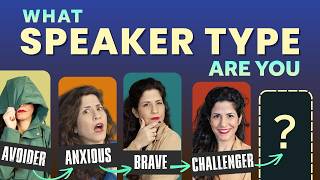
Hadar Shemesh maps five stages of English speaking: Avoider, Anxious Speaker, Brave Speaker, Challenger, and Influencer. A quiz identifies where you are and gives you next steps to move forward, with daily practices in her Beyond community helping you climb the path.
Chapters
So today I'm going to share with you the 5 speaking stages so you can identify what stage you are in and what are the things that you need to do to be able to get to the next stage and move up the success path. This success path is something that we use in my program Beyond. It's an English fluency and confidence community designed to help you move up the success path, and all the things that we do there are designed just for that. So you can definitely check it out. I'm going to link to it in the description below. I'm also going to share with a quiz that will help you identify your stage. And then once you get the quiz results, you'll also get a playlist with action items and with suggestions on what you need to do to get to the next stage. It's going to be super, super helpful. So take the quiz even if after this video you'll be like, I know what my stage is. That's great. But when you fill out the quiz and when you get the results, first of all, maybe there are surprises. Maybe it's not what you thought. Um, but also you are going to get a clear list with additional resources, videos, and suggestions so you can keep on improving and making progress. Before we move on, I just want to introduce myself if you're new to my channel. My name is Hadar. I am a non-native speaker of English and I've been helping tens of thousands of people improve their confidence, their fluency, and pronunciation in English. I'm obsessed about anything related to clear and confident communication, and I'm here to help you get the same results that I was able to achieve. You can go to my website for a ton of free resources at hadarshemesh.com or follow me on social media for daily lessons. All right, so let's get started. Here are the 5 speaking stages of a non-native speaker. Now before that, I just want to say the starting point is of someone who already knows English, okay, who already understands English and is capable of having basic conversations. Okay, so let us get started. The 5 speaking stages are the avoider, the anxious speaker, the brave speaker, the challenger, and the influencer. Now just from these names, try to think, okay, where am I at in my language? I'm assuming it's English, but it doesn't have to be English. It's for any second language that you are currently learning or studying or of speaking? Are you the avoider, anxious speaker, brave speaker, challenger, or influencer? And I want to remind you that I have a quiz with a few questions that will help you determine what stage you are in. Let's begin with the avoider. Like I said, an avoider is someone who is fully capable of having conversations in English, but the avoider avoids having any conversations as much as humanly possible. So just the thought of speaking can stress and anxiety. So if you're an avoider, you probably don't like how you sound, and you are probably overly critical of your English. You are much more confident and comfortable reading and writing than speaking, and if there is a choice, you would always go into writing emails, writing text messages, and responding via text versus actually making a phone call or speaking. Now, it's probably also really hard for you to acknowledge your progress, and maybe you also feel like a fraud when speaking in English because you don't do a lot of that, even though you do understand English, even though you are capable of having conversations. You are just not engaging in conversations, and as a result, because you're not using English, you're not making progress, you're not improving. The gap becomes just bigger and bigger and bigger. And that gap is a confidence killer and fluency killer. So it's really hard to feel like you're making progress, probably because you're not making a lot of progress because you are avoiding. That is the avoider. The solution for an avoider is really simple. It's not even about taking a lot of action. It's just about making a decision to no longer avoid. Now I know it's easier said than done. This is why, again, I have a lot of free resources for you that you will get when you fill out the quiz. And if this is the actual answer, you're going to get all those resources and recommendations. But here is something that I need you to hear. It's just a decision. Nothing's going to happen to you. You're not going to die if you're going to start speaking in English. More. You're not gonna die if you start speaking and you might make a mistake. That's okay. Everyone was an avoider once, okay? We were all avoiders, but at some point you just say, I gotta do it. And maybe you're stuck, you're not, you're not there yet, you're not in the I gotta do it, I'm gonna take action no matter what. And this is my invitation for you to start taking action, to move from being an avoider to being an anxious speaker. And while it sounds terrible to be an anxious speaker, an anxious speaker is an avoider who takes action, okay? This is why it's the second stage. This is why you are moving up the success path. But we're not going to avoid the fact that you still feel anxious when you speak because you've been avoiding, and now you're no longer avoiding. You feel exposed, you feel vulnerable, you feel unrehearsed, unpracticed. So an anxious speaker may show up and speak, but they often experience a very uncomfortable feeling and even a painful feeling when speaking. You might second-guess yourself while talking all the time, and you might replay conversations in your head while speaking and after speaking. You know, that overthinking that happens. Around English. You are probably focusing on mistakes more than the progress that you're making or the fact that you're no longer avoiding, but it's okay because I want to remind you, if you're an anxious speaker, that you have stopped avoiding, which is pretty incredible. You probably prefer one-on-one conversations with people that you know over group settings, and you probably often stay quiet when you get asked to speak and only speak when people kind of like push you to speak. Maybe you're afraid of being judged of sounding wrong, of not finding the right words or not speaking fast enough, not understanding others fast enough, you are in it, you are doing the work, you are practicing, you have the skills, you just don't trust them yet. The thing about avoiders, if they want to move on to the next stage, they have to continue doing just that, taking clear, consistent action, putting themselves in an uncomfortable space, which is Speaking with other people, not AI, not just teachers, but people, new people, different people, so that they can build that muscle and normalize the stressed feeling that they feel and just lighten up the whole experience. And when they do that, they become brave speakers. The brave speaker is someone who has already invested time and effort into practicing and learning and doing some mindset work to overcome the fears and the stress and the anxiety and being able to show up like themselves, or at least as close as possible to themselves. They have probably taken courses. So if you are a brave speaker, you are someone who has experience learning and studying and even practicing consistently and inconsistently, and you really do try to speak whenever you get a chance. Now, the brave speaker is not always confident. It doesn't mean that they are confident, flawless speakers. No, the brave speaker is someone who still struggles with confidence sometimes, sometimes even really struggle with confidence, but you don't let fear stop you. You don't let fear keep you quiet. You show up, you say yes to opportunities for the most part, you keep going even when it's uncomfortable. And as a brave speaker, because you have dealt with the most obvious, which is being able to speak, to communicate, to think while listening, you are now probably able to handle more advanced aspects of English like pronunciation, more advanced grammar, and even focusing on the different fluency pillars without feeling completely overwhelmed or stressed or like it's too much or like you're not able to do it. And even though it might still be frustrating that you can't remember everything or implement everything, or you study it and then you forget it when you practice, you know, you don't give up, okay? And being a brave speaker is an incredible place to be in. So if you're an avoider and an anxious speaker, remember that mindset and taking consistent action will allow you to get to the stage of the brave speaker, and then your brain will open up to learning new things and to retaining information because it's not going to be clouded and cluttered with all the stress and anxiety and overthinking and all the things that you experience as an avoider and an anxious speaker. And when the brave speaker is brave and does the work and shows up consistently, they become the challenger. At this stage, you have fallen in love with English, so it's no longer a chore, it's no longer a burden. It's no longer something you have to do to improve. It's a source of joy, connection, and growth. It's almost like it's a journey of personal growth and development more than just language learning. You feel a sense of freedom when you use English and you are excited by the challenges that come with it. So if an anxious speaker and even a brave speaker might feel overwhelmed by big challenges, uh, you, the challenger, you take it with both hands and you're like, how do I get this done? So you regularly push yourself out of your comfort zone and you are doing things that you once thought are absolutely impossible for you. You create, express, even lead in English. You explore writing, storytelling, maybe videos. Even if you don't actively do it, you have no problem doing it and you are excited about it. It gets you excited. It doesn't make you feel threatened or fearful. And you're not afraid to put yourself out there. And even when self-doubt shows up, it doesn't stop you from taking action. So remember, none of these stages are perfect speakers, and none of these stages mean that you have completely lost all fear speaking. Because as human beings in this world, speaking to other people in any language, even our own language, there is sometimes something intimidating about owning your voice and speaking up and saying what you want because we always want to please other people and we take other people's judgment of us really— we don't take it lightly, let's just say that. And this is why I think it's super important to understand that we're not looking for perfection, we're just looking for progress and to see how we show up more and more and more. And this framework is going to help you understand where you're at and what else you need to focus on That is not just more words or different grammar, okay? So again, remember that if you want to identify your stage, take the quiz and then make sure that you check the results that you get into your email because you have a list of recommendations and suggestions and action items for you to be able to get to the next stage. Tried and true methods, my friends, because I've been using this with my students regularly and I know this works. Now, here's one more thing I need you to know about the challengers. The challengers inspire others by just being in that zone of genius, of practicing and learning. You model what's possible when someone commits to the process, and your creativity motivates others to do the same. Now, I know that some of you might be thinking, okay, but that sounds like someone who is not shy, who is not— who is an extrovert. And I want you to know that it doesn't have to be all about presenting and showing up. It's all about pushing internal boundaries, okay? So even if you consider yourself as shy, remember that shyness is just someone who is afraid to show up because of the fear of how they're going to be perceived, or maybe they don't want to take up space, and there are a lot of reasons. For that. But it's not something that cannot be processed in the brain and dealt with in the brain and managed in the brain so that you can live a fuller life and a life where you feel like you are really, really truly expressing yourself for who you are. Now, you might be thinking, okay, Challenger is the ideal. This is where I want to be. It sounds perfect. Where else would I go beyond that? So the next stage, and this is based on what I've been seeing for years inside of my communities. The next stage is not about pushing yourself more when it comes to English or having even more confidence. It's about making the shift from it being about yourself to making it be about others, and that is where you shift into the influencer. If you are an influencer, you have arrived at a stage where English feels expansive. You feel like you are expanding. It feels like it's empowering you, okay? It's not just fun to practice, it's almost like you have created a new identity in English, one that is fully aligned with your true self and with who you are, and even allows you to express yourself even more than how it is in your first language. Now, you might still make mistakes because we all do, and you might still not always know what the right word is, but you are no longer letting it define your experience. Okay, fluency is not just about being perfect, it's about being free. Now to me, I consider myself to be an influencer at this stage, English being my second language. I feel free in English. Sometimes I feel more free in English than I do in my first language, and that is what I want for myself in my third language, which is Spanish. But the idea is that it's not about getting to a C2 level, being able to use all those fancy phrases, because at the end of the day, sometimes we don't even use that in our first language. It's really just about being yourself and saying always what is aligned with how you feel and being able to be clear and articulate. And of course, you need to have wider and more elaborate and expansive vocabulary, but that is not what defines your experience when we look at this framework. As an influencer, your focus has shifted from how do I get better to how can I serve, how can I support others, By simply sharing your experience and being in with that internal freedom communicating in English, you become an inspiration for others. And by showing them that it was possible for you, you allow them to believe that it's possible for them, and you help them move up the success path. You share your stories, your struggles, and your voice, not to seek validation from others but to light the way for others. Now, I don't know you, the person watching, I don't know what stage you're in, but what I do know is that no matter how you think your brain is wired, no matter how much time you think you have or you don't have to practice, no matter what you think about your capabilities of learning another language, I know I know, I've seen it, I have experience, I know it's possible for you to move up this success path and become a brave speaker, become a challenger, and become an influencer. And each one of these stages is so worthy, all the stages, the 5 stages, because all of them exist in a person's experience in a second language. The question is How long do you want to be in each one? And if you're spending too much time as an avoider and as an anxious speaker, the question is, what are you going to do to create a better experience for yourself in English? Because it is not about knowing more, it's about changing how you show up. Remember, making that decision It's about taking consistent action. It's about working on your thoughts and your brain and how you think, okay, doing thought work. And it's about building a practice habit that is sustainable where you are able to improve bit by bit every single day. So this is my invitation to you. First of all, identify your stage, take the quiz Get the recommendations for improvement so you have those resources in your email, and then think about what it is that you want for yourself. What is your ideal stage? Doesn't have to be the influencer, but what is the ideal stage based on what I've just shared, and what are you willing to do to get to that stage? And about my part, I'm going to do everything that I can to help you and support you in getting to that stage. So I hope this was helpful. If you want to find out more about how you can work with me inside Beyond, my English fluency and confidence community where we take that framework and we make it real with daily, weekly, and monthly actions, and by seeing people move up the success path continuously, if you want to find out more, then definitely check out my program Beyond. I'm going to link to it in the description. I would love, love, love to support you there. And either way, make sure you get all those free resources for me so you can start today. Have a beautiful, beautiful rest of the day, and I will see you next week in the next video. Bye!
More from Hadar











Read Out Loud with me! Dare to Lead by Brené Brown | Pronunciation & Vocabulary practice