Building a Medically Complex Feeding Practice
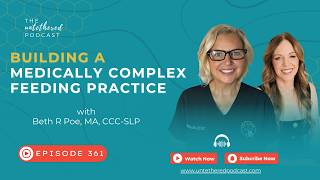
Beth Poe, a speech-language pathologist with 20 years in pediatric feeding, launched Way to Grow Therapies to serve medically complex children. She focuses on kids with congenital heart defects and G-tube dependence, where dysphagia after cardiac surgery is common. She emphasizes the value of the CPFT certification and building interdisciplinary teams to support these families.
Chapters
You know, as serious as silent aspiration and that because, you know, and there's so much that goes into that cardiac and respiratory side and the aerodigestive side of it that I think it's really got to be on our radar as clinicians because something that, you know, may not be on our radar but that any child that has had cardiac surgery is at risk.
Hi and welcome back to the Untethered Podcast. Today we have Beth Poe joining us. Beth is a seasoned SLP with over 20 years of experience specializing in feeding and swallowing and she's a self proclaimed speech geek and she's passionate about serving medically fragile children in complex feeding cases. She's finishing her CPFD certification this month. She's a true career shifter and recently launched her private practice Way to Grow Therapies in Jacksonville, Florida offering home and daycare based therapy with a focus on feeding. Beth also works PRN in a PPE setting with medically complex infants routines. She holds degrees from Villanova and the University of Maryland, completed her internship at Johns Hopkins and and has worked across multiple hospitals and early intervention programs. She's maintained her CCC since 2002, earned two Asha ACE awards and is certified in SOS Feed the PEDs, Hand and Coffin Pecs, and is currently training in the MYO method. She speaks Italian, lives in Jacksonville with her husband. She's got three kids, two dogs, and loves reading, tennis and Mahjong. She calls herself a lifelong learner and is deeply grateful for the mentors who have shaped her journey. Please welcome to the podcast. Beth Poe welcome to the Untethered Podcast. I am your host, Hallie Balkan. I'm a certified myofunctional therapist, feeding specialist, podcaster, business owner and mentor. This podcast is all about getting your questions answered and collaborating with colleagues to bring you the most up to date information in the orofacial myofunctional therapy, airway tether, Dural tissue and Pediatric Feeding therapy space. If you're new here, I challenge you to keep an open mind and join my mission to spread this message far and wide. If you've been around since June 2019, thanks for being a loyal listener. As we jump into today's episode, remember to listen with correct oral rest. Posture, tongue up, lips closed, teeth apart, breathe through your nose. Let's get started. Beth, welcome to the podcast.
Thank you. I'm really excited to be here and be part of this.
I'm excited. I'm excited to have you here. I know they all just heard a bit about your background and we're going to dive more into like your specialty and everybody, you know, who you work with and everything. But before we do, first of all, a big congratulations because you are about to wrap up your cpft, your certified pediatric feeding therapist certification. Apparently I have marbles in my mouth right now, so big congrats there. But you also recently launched your private practice, so let's like talk about like what's going on in your life this year.
It has been a very busy, kind of crazy, but really fruitful year. And honestly Haley, you've been such a big part of that. And so I feel like I could talk just about the CPFT for, for a day. And I was skeptical. I'm a skeptic a little bit at heart, you know, about taking all that on at one time. The CPFT is eight months to do that and I love to kind of parse things out. And it ended up being about seven or eight hours a week for me. I guess the way I do it, I'm a bit of a perfectionist. So I kind of sat my family down and said, hey, I really want to do this, but it's a big chunk. I'm going to be working full time at my regular job. I'm going to be trying to set up a private practice and be doing the CPFT certification for the next eight months. And so I wanted to make sure everyone was on board. My husband agreed to cook dinners Mondays and Tuesdays when I was on my zooms. Yes. And then unbeknownst to me, my oldest son, I have three kids, they're 16, 18 and 21. He found my business cards and started handing them out to his parents friends. So sweet. And then I got a call from one of my dear friends who was a coworker saying congratulations are in order. And I said, okay, we gotta slow our roll. Cause I need to do this. I haven't, you know, given work my timeline yet and do this sort of ethically. So I went back to my son and said, let me let my current work know. They knew, but you know, sort of the timeline and everything. So. But it has been so sweet. So yeah, it's been a busy eight months. Yes. And I officially launched Way to Grow Therapy is my private practice in September. And I'm still working currently PRN with great stride through the ppex which I can talk more about. But yeah, all good things so far.
Congratulations. Thank you, thank you. And I love a naturally a natural born marketer living right there in your house promoting his mom's business. That's so sweet.
I know. Well, and he's majoring in business out in Colorado. Okay. This is. Yes. Oh, yes. And add on to that, two of my boys are in college in Colorado, so. Yeah, Just juggling all of the things. Yes, a little bit. Yeah. But, you know, I did your. I, you know, did your boot camp on private practice, and I will say the CPFT course has been incredible. Supporting that also because, you know, several of my cohorts are in private practice, and just to bounce ideas off of them has been just to have that network of support. You know, I can't say enough about. I graduate. We all graduate a week from yesterday, Monday. So, yeah, tonight is my last small group Zoom. Yeah. Yeah. I just, you know, I could be the poster girl here for, you know, the whole session, but, you know, we do the. The zooms an hour and a half every Monday and then every other Tuesday in a smaller group, and we just get to geek out, you know, on. On feeding and swallowing and, you know, motor. All the things from a real deep dive, which, you know, I did feed the peds, and then CPFT really goes into so many different areas. And just the. The supervisors, I mean, to have the supervision that we had, Cheryl Peltier and Beth and, you know, they. They're all just amazing. The level of supervision and support that we got was phenomenal.
Yeah, I'm so glad to hear that. Because when we built this out, the whole goal was how do we give you such a high level of mentorship when you're not physically in the same room as somebody, but it's. It's virtual because everyone's all over the country and, you know, so I'm like, how do we make that so that you are actually getting that level of support and it's functional. It's like you can actually bring this back to your day to day lives and work towards, you know, bettering the lives of your patients and actually move the needle forward. Right. It was like, function. This has got to be functional. Not just like, you know, oh, I got a piece of paper that says
I have a certification.
Like, that doesn't help anybody.
No, no.
It was like, how do we actually help y' all really feel so good about the work you're doing and really confident in that, like, you know what to do, but also work together on these cases that, you know, as individuals who have been in the field for a while, we still get cases where we're stumped and we need to talk through them with colleagues and we want, you know, and then seeing other people's cases and learning new strategies and, you know, like, we're all lifelong learners, and there's always more to learn.
That's what I loved about this program and the cohort that I did, because, you know, I've been doing this for a long time now. 51, you know, and I've been doing feeding and swallowing since graduate school pretty much, but. And so there were a lot of other therapists in the same boat as Ian that are seasoned, that have been doing this for a long time that are just always looking for more. And it ended up being a lot of sort of roundtable discussions on different cases and, you know, sharing of ideas and techniques and, you know, just getting this. This incredible support system while at the same time, you know, doing the coursework, which really took deep dive into a lot of different areas. And so, you know, it was great to see that, you know, we are out there and we're all looking for similar things. And I love that you're bringing us together. It's so needed. It is so needed. Yeah. So. And I'm seeing that, you know, in my private practice, so. And it's, you know, just happening organically, which is what I was hoping would happen.
I love. I love that. And we try to pair you also with, like, that's why I do all the calls in the beginning to figure out what path are you on, Right? So when you tell me, okay, I want to start a private practice, or I have a private practice, or I want to be in a nicu, or I want to start a program in this. This outpatient facility, or I want, you know, whatever, because everyone has different goals. I'm like, I want to put you with the group one that is going to, you know, those people are going to be on a similar pathway right now as you are and. Or journey, I guess you could call it. And I want to pair you with a mentor that I know can best help you, even though you'll have exposure to the other mentors, like the one you're primarily spending most of your time with in this program should be aligned with, you know, what your desired outcomes are. Right. Whatever that may be. And some people have more than one goal. But that's where it's like, okay, we've got a lot of the NICU people who really want to get into the NICU or advance their NICU skills kind of in one group. And then we've got, like, the private practice people kind of in another group, and then we've got, you know, programs, and that was kind of how. And it's interesting because it was like, slightly different than the first round because everyone. It's so funny, like, how the universe brings people together because in the first round, we had, yes, we had the nicu, and yes, we have people in private practice, but it was like different people had different goals that we kind of molded the groups around the first go around compared to this time. And I'm like, it's so funny how, like, I had four to five people in each group that all had similar goals, and it made it so easy to, like, pair you all together. And so I'm like, thank you, universe, for bringing these people to us so that we can make this so easy for you and put you with people on a similar journey. So that. That's really cool to see it, like, come to fruition. And now, now you all have each other going forward, too. Even after this, you know, after this wraps, you still have. You can still link arms and continue onward beyond the certification with these new, you know, feeding.
Yes, yes. And I think that's one of the wonderful things about this is you, you, you get, you gain this, you know, national, even international network of support that, you know, we'll have for a lifetime, as well as the resources. You know, I'm going to go back and I'm going to watch those zoom calls, you know, in the future. You know, it's just a great reference to have also. So I'm really grateful for that. And yeah, I'm now, you know, starting mayo, so that'll be my next. Yeah. Yes.
And never stop, do we?
No. Yeah. And, you know, all the things, like, I've got a posterior to tongue tie. Two of my kids do. So I'm like, All right, guys, 20, 26 might be all of us getting untethered there. Yeah. I said, I'll go first. You know, let's see how this all the time. Yes. Yes. I'll be the guinea pig.
They couldn't even go first because with my kids, they went first, but one was 24 months and one was five days old.
And then that makes. Yeah, that makes so much sense. And. And honestly, none of mine had, you know, functional limitations. I mean, looking back now. Yes. You know, I mean, you know, my 21 year old is still a little bit of a messy eater, which he'll say himself in queso or that, you know. You know, and I see with myself, you know, just the. The airway issues and, you know, the. The more subtle things, you know, and, you know, it makes me wonder, like, Is there something with any oral tether that is going to creep up on you at some point in life? But. So, yeah, that's going to be our next little family journey.
Love that. Keep me posted.
I will, definitely.
Okay, so now let's talk. So I know you had, you had shared with me that, like, since, you know, pretty early on, and you're like, you know, since your, um, day, College park graduate school days.
Yes.
You had quickly. You quickly were learning that working in like, acute care, inpatient rehab even. I think you were at Newport Hospital at the time it says here.
Yes.
As a therapist, you felt like you needed to help people attain new skills instead of regaining, like, lost skills. And so you actually switched to pediatrics. So talk to. Talk to us a little bit about that transition.
Yes. So I knew in graduate school I loved the feeding and swallowing. I loved the medical complexity that went into that. I ended up petitioning to do my internship at Johns Hopkins Hospital in Baltimore, which no one had from our program had done yet. And they said, go for it, apply. And I got it. It was phenomenal. I was in the OR for a laryngectomy, which reaffirmed that I was not supposed to be a doctor because I almost fainted in there. Just cutting edge, cool things, you know, bilateral lung transplants were just starting then anyway, so I thought, okay, I love that aspect of it. Started out at Newport Hospital. After six months, I was like, there's a big Italian population in Rhode Island. I'm Italian. I lived in Italy. You try telling an Italian they need to puree their food. That's, you know, it's just. Does not go over well. But I quickly realized that just the way I'm wired, I need to be working on attaining new skills as opposed to regaining ones that you've lost. And I switched to peds and got into early intervention six months after that and have never gone back. And that's not to say, you know, know, of course, like, one of my first private practice kiddos was, you know, an adorable girl who was kind of inching towards a case of ARFID because of a bad choking incident. So that's not to say that we don't work on regaining skills. That. But even there, there was an underlying, you know, condition, you know, tether that we worked on to get new skills so that she won't choke. She won't be less likely to choke in the future. But yes, peds is, you know, where my heart is at this point. And so I spent a long time up in Rhode island then that's where my husband's from. We moved. We were in Rhode Island. I did early intervention there for many years, primarily feeding and children on the spectrum. And then life brought me to Jacksonville unexpectedly for my husband's work with three young kiddos. And 2010, we've been here ever since.
Amazing.
So, yeah, and I, you know, I planned on taking a little bit of time off. I would, I had my three children kind of back to back and we came down here just, you know, with no family or support and thought I would take a year off. And then that turned into more than a year. But I always kept my Cs and my, my liability insurance and did a little bit on the side and then jumped back in, in a bigger role about six years ago and went right into the ppex. And I know PPEX is still sort of a regional thing. PPEX are physician prescribed extended care. And it's basically a daycare for children from the NICU all the way to 21 that are too medically involved to, to go to school. And so it's staffed by nurses and they get their therapies while they're there. And it was like perfect setting for me because I love the medical side. And I really focused in on the feeding and kind of became one of the few feeding therapists and then eventually became the lead feeding therapist in charge of consulting. We kind of grew as an organization. It's called Great Strides. And then it got taken over by H2Health. And so it's just growing and growing, which is phenomenal. And so I was the feeding consultant and providing resources. And then just in my own personal journey, the more knowledge I got, you know, the more I just felt like it's time for me to just go off on my own. And also, you know, I want to tell all of them, you know, so a lot of this, the knowledge is proprietary, naturally. So, you know, I told all my, you know, co workers, go, go do feed the P D of course, but you know, a bigger organization can't pay for all of that. So. But that. It kind of got to the point where I was like, I just, I'm ready to go off and, and do this, you know, in my own space. And so that's what started Way to grow therapies, which is my private practice, which is home based or daycare, preschool, school based. You know, there's a real need for families, I think, that, you know, have medically involved children or have multiple children, can't get themselves, you know, easily to a clinic. Just to offer, you know, especially if you're, you know, when I'm doing, you know, right out of the nicu, nursing babies, you know, to be able to do that in people's homes, feeding therapy in general, I think is just in some ways easier in people's homes with their own, you know, foods and, you know, culture and everything that goes into that. I just, it really kind of dovetailed sort of that, you know, the clouds open moment of like early intervention and the medical side being in people's homes. That's just where I'm comfortable. So. So now I'm doing it and loving it.
So exciting. I mean, and I completely agree with you because my private practice does the same thing where we, you know, travel into patients homes and preschools and daycares. And it's exactly that. It's. When they're in that natural setting, it's so much easier to then carry over, generalize those new skills because they're already doing it in that setting. And it's now more about maybe doing it with another person in that same setting versus a new person in a new setting with new all, you know, it's just, it's a lot. Right. So, yes, I feel like the generalization
just, you know, happens organically and more quickly because you have the families buy in and once, once they're on board, you know, and getting them to just integrate it into their day, you know, you get the best bang for your buck.
So you specialize with like the more complex medical kiddos. And I would love to talk a little bit about that because you've got. I know we talked a little bit before, but you know, children with congenital heart defects, respiratory complications, and they maybe are, you know, pre surgery, post surgery. So can you talk to us a little bit about these kiddos that. And not necessarily specific cases, but how this impacts the approach to feeding intervention and what that might look like that might be a little bit different than the child who doesn't have CHT or, you know, for sure.
Yes. So particularly when I was working in the ppex, and that's where, you know, my private practice is going, is I really love the medically complex cases and have over the course of time had many kids with congenital heart defects at all the different stages. And so, you know, there's an increased incidence from, you know, micro preemies with PFDs and, you know, the many syndromes that we see. And, you know, there's so many new, you know, syndromes and genetic anomalies coming out where you know, cardiac and respiratory conditions, there's, you know, are much higher incidence. And so, you know, I've had on my caseload where, you know, they're waiting to see if they need surgery. They're just status post surgery or they may be, you know, somewhere in between one of the three surgeries if they have one of the more serious cardiac conditions. So there are the. I'm going to forget, I'm going to forget the abbreviations now because I've nevericed the HLHS or HRHS where it's very serious and they're going to have three, a series of three repair surgeries. And so, yes, I've seen them, you know, pre, in between status post. And, you know, I think, I think that the, the number 50% of children status post cardiac surgery having dysphagia or feeding difficulties. I feel like that's a conservative because from what I've seen, a lot of them do and it can be from, you know, as serious as silent aspiration and that because, you know, and there's so much that goes into that cardiac and respiratory side and the aerodigestive side of it that I think it's really got to be on our radar as clinicians because something that, you know, may not be on our radar, but that any child that has had cardiac surgery is at risk for having that recurrent branch of the laryngeal nerve nicked during surgery. It's just right there wrapped around it. And so it just happens, you know, I, I see it a lot with the children that I work with. And then you get either a paralyzed vocal fold or, you know, weakness, which is going to affect swallowing and voicing. And then you may just have, you know, it, it may not be, you know, that medically involved, but it could be a child that has just been through, you know, cardiac surgeries and a long NICU stay or a long hospital stay, you know, that is having, you know, some sensory motor delays because of that or, you know, just had to be fed via G tube till they got all of the medical, you know, cardiac and respiratory issues resolved that, you know, it may involve weeding off of a G tube. And so I definitely. And the respiratory piece that goes into that as well because, you know, and I would love at some point, you know, to do a little bit larger, you know, course on this or, you know, something. Who knows?
I saw your notes and we'll talk going, going.
But, you know, like everything else in feeding, there are, you know, you know, at least 10, you know, congenital heart defects you know, of varying complexity and depending what, you know, your client, what, what their medical history is or, you know, what syndrome do they have, you know, what cardiac or respiratory, you know, level is impacted and what does that mean on, on feeding and swallowing and how careful do we need to look at, you know, their respiration if they're an infant? You know, that is a whole area we need to look at in terms of, okay, that's the pacing and the sex, swallow, breathe pattern and all of the things, you know, is going to be compromised in a unique way because of, you know, that cardiac and respiratory involvement. And then, you know, I have kids that are, you know, have trisomy 21, you know, that have, you know, had their cardiac surgery, are doing great, but, you know, you know, there's. Their breathing coordination is still off because of it. And then that affects the feeding. And so I think it, it plays a bigger role in kids on our caseload than sometimes we even realize the impact that that can have. And just at least to be, you know, in our knowledge wheelhouse that it's on our radar that, okay, it can be impacting this, this and, you know, 25 other things. And what does that mean for us as feeding therapists and the warning signs? And you know, and I, you know, like I said, working in the ppex, you really do get a range. And already, you know, in my private practice, I have a couple of kiddos where, you know, they're, you know, it's on our radar. So, yeah, that's kind of one of the areas that I specialize in, you know, the complex feeding population. And in 2026, I plan. I've done a sort of slow rollout of my private practice because I wanted to work out the kinks and just, you know, learning a small business and the EMR and all, you know, all the new things. And then 2026, basically, I just sent out like a text blast to everyone I knew for marketing. That's all I've done so far. But then I'm, I'm going to go to the complex clinics and pediatrics and dentists and the NICU and, and really start marketing towards those families.
Yeah, you're speaking my love language right now. You know, I love all things business, so.
Yeah, and I feel like I do, I. That I need to, Yes, I probably need like more HALI training in that area.
So we can see. So the other thing you pointed out that I thought was really interesting was the recent research is also showing a correlation between CHD and ASD and adhd, which I don't think I've seen that. So tell us, like, what do you know about that? Is it very.
I am just starting to delve into that myself more because, you know, I have so many kiddos like this. And. And that was as I was doing more research, that really jumped out at me. And I think, like, they found, you know, it's all correlative. Right now, what they're finding. They're not finding causation, but like, 40%. And I included an article in here from NIH. Yeah. That they really are seeing a link. And I'm, you know, sort of the chicken and the egg, you know, like, is it that because of, you know, having the cardiac and or respiratory involvement, does that then lead to, you know, sensory sensitivities or neurological, you know, sort of neurodivergent network being formed? But yeah, the. The. There is definitely. They're seeing their study. The studies are showing that correlational response. And so that's another thing, you know, without having a ton of knowledge under my belt about that, I don't, you know, want to overstep where research is bringing us. But there is a, you know, look at the medical history, because if you have a kiddo, you know, with ASD or ADHD on your caseload, and they do have, you know, just check the medical history, there may be, you know, a history, you know, of.
Yeah, well, and I think that kind of goes into the next point where, like, you were alluding to this already, but more education is needed. And as you were talking, I was like, we really don't dive deep, deep, deep into this in the cpft. And so I was like, I wonder if maybe Beth wants to create a course for us and in your free time, you know.
Yeah, yeah. My family will kill me, but I'm the queen of taking on too much.
So I think now it's like, clinicians are going to be like, okay, great, I hear what you're saying, but how do I identify? Like, what are the red flags? Right. What are the signs and symptoms I should be looking for in their medical history? Or when I do an evaluation that might be like, ooh, my antenna is going up. Like, we. Maybe we need a further evaluation because maybe there is something greater going on that hasn't been flagged yet, or, you know, or they're diagnosed with a, you know, chd, and maybe there's something else going on. And so maybe that is sort of the signal to us that we should be looking for, you know, looking at the oral Motor skills, sensory, oral, motor skills, you know. So what, like, what is your thought on that?
That's it?
Well, that's a two day conversation.
I know, like, that's a loaded question. Yeah. And, you know, I definitely see, you know, with my own caseload, just. And I think that the respiratory piece really does play into it. I don't think we can. I could downplay that because, you know, that I find even if, you know, there isn't a true dysphagia, typically there are some sensory, motor issues in the oral phase. And then the coordination, I just, I feel like I see that a lot. I can't pin any, you know, I don't have medical data I can pin to that, but I just see that coordination of the respiratory piece with the whole feeding and swallowing mechanism in the kids with the chd, you know, it's there. It's just there more often than not. And I, you know, I don't know, you know, short of talking to a cardiologist, the coordination of all that. But yeah, the respiratory piece, I definitely see that. And, you know, I think you may even see it, you know, you may have a voicing kiddo, you know, that probably has feeding issues undiagnosed. And if the voicing is related to, you know, if they're having difficulty, you know, with voicing and they have chd, there's, there's a good, you know, looking, you know, there's a good chance that there's some neurological involvement there with the recurrent branch of the laryngeal nerve. And I feel like doctors don't. I just had a friend PT that went through cardiac surgery and they didn't warn her ahead of time, like, okay, this, this is a possible, you know, complication from cardiac surgery is that you could end up with a raspy voice and some, you know, respiratory difficulties coordinating that and then that impacts feeding by the end of the day if you're exhausted and, you know, it's, you know, like, you know, it's all intertwined.
Yeah.
One big system.
Well, this is, I mean, this is amazing. I know we could talk about this all day long. So. All right, so now I want to kind of cycle back to now where you're headed because I know you mentioned that, you know, really the marketing piece is going to be 20, 26, a free or private practice and really helping to, you know, bring those more medically complex families to you and bring you to them, if you will, which I think is such a really, very, very needed, like you were saying, it's Such a needed service because, you know, it's challenging for these families, one to get their kids to therapy. It's like an extra layer of challenge sometimes if the kiddo is more medically complex and it's just. And finding the therapist sometimes that can work with the child that really understands how to address these issues with all these other layers of the onion, if you will, right when it's not. So I don't want to call it straightforward. I don't want to say that feeding therapy is ever really straightforward, but additional complexities on top of it. Definitely it's hard enough to find feeding therapists, and then I think it's even harder to find feeding therapists who work with medically complex, you know, you know, medical cases. So, anyways, I'm excited for you, but I would love for you because you kind of. You talked about this a little bit at the beginning. I'd love to circle back on the CPFT and, And, you know, the training and. And do you feel like it has really helped you to move forward? Like, yes. You'll still have access to, like, all your friends you met in the, in the certification and everything, and your new little cohort of, you know, feeding therapists that you can always tap into. But do you feel like it's helped you become a bit more independent in, you know, going out on your own?
One, I saw your face and you
were like, I'm about to talk. I was like, I'm just gonna let you speak.
Yes. Yes. Oh, gosh, yes. Oh, my goodness, yes. I definitely feel like it gave me the breadth of foundation to feel comfortable, to just take my skills and what I've been doing, you know, over the past 20 plus years and really go out and launch it. And that just comes from, you know, the knowledge I was given, the ideas I was given, the support, the encouragement, all of the things. And. And I do think that when you go into private practice, particularly with feeding and, you know, I'm trying now to put together that someone else you had on your podcast recently referred to the magical unicorn team, like, and that resonated with me so much because to find all of those professionals, you know, that are in the same lane as you, you know, and I'm looking for the dream team in Jacksonville. If anyone, you know, loves medically complex kids and feeding and tethered all tissues, you know, I want to do the whole team and finding the, you know, you know, the dentists and, you know, the nutritionist and everyone who sees it, the lens of the whole child and the complexities of feeding. Yes. And the cpft, I mean, honestly gave me, you know, put the. Allows me to see all of that through prismatic glasses of all, you know, from the big picture. I feel like it's, you know, kind of, you know, from up here and then it really narrows in very specifically. And so the timing to do that while setting up my private practice, this couldn't have been better for me. As crazy as it was, it just dovetailed really nicely for me.
Yeah. And I wouldn't. So often in life we're like, oh, I can't do this because I'm focused on that. And sometimes that's just, you know, it's like taking on too much at once. But the fact that they kind of, you know, compliments each other, if you will, and really helped to navigate this journey.
And I feel like all of my cohorts did that. Well, you know, some of them already had private practices, some of them were in schools, you know, some of them were in the NICUs, some of them were doing early intervention and just seeing how they took the CPFT and expanded wherever they were at. And you could just see how the CPFT honestly is creating leaders in the field. And I'm so grateful to you because we need that. No, really, we need that. And I had an example of that last night, Hallie, because I was called in in my private practice for a second opinion on a kiddo. And I didn't ask questions, you know, when I started with this family. And then the last night the mom shared with me, she said, beth, I really, I want to go back to this other company and say something. And I don't know how, she said, because I was told my son it was behavioral and they put him on a behavioral plan. She said, and I spent three weeks doing a behavioral plan. And I knew this didn't feel right and it just, it hurt my heart, you know, this wonderfully non behavioral child with low tone and oral tethers and sensory issues, you know, that have resulted from that, you know, the mom was told it was a behavior and so it's a disservice to our field. And I feel so strongly like the more of us get out there and you really are educated, you know, trained feeding therapists. And if you're not, it's okay, you
know, but also, don't get bad.
Exactly, exactly. It's okay to say you're not a therapist, but you know, there is damage being done, you know.
Yeah. I mean, this is, this is like the hill. I will Die on. Like this is why I have an online presence. It started as a place to find people to share feed the peds with and it has really like, yes, we still use social media to bring people into our programs, but it's also become a platform where I feel like I'm doing advocacy work because I see so much misinformation out there and unfortunately a lot of it comes from our own field. And it drives me up a wall that, you know, one therapists can't be more open minded to maybe reshape their clinical reasoning based around new information coming out. Or maybe, you know, maybe if there isn't a ton of research, maybe we talk to the therapists who have worked with these kids for, I don't know, 10, 20, 30 years, day in, day out. It's not like, right. That has that one or two on my caseload. It's just like no, yes.
That see it on a day to day basis. What is working. Yes, yes, man.
But I mean in the past, like we, we've heard from some of our graduates just how it like reshaped some of their clinical reasoning even. Especially like, you know, around like one. I remember one sharing about like the medical, like, you know, the medical fraud, medically fragile infants they were working with, especially infants that were coming out of the NICU and transitioning into the home setting. And so would you say that like. And I. Cause I feel like you, you've been doing this for a while, right? Like you're not, you know, right out of school or anything.
Not a spring chicken you've got.
And I mean this in the most like, you know, amazing way. Like you have such good clinical experience. And I think somebody could look at this and be like, well, why would I need to get certification when I have so much experience? Like what is the certification going to do for me? And I. How you kind of highlighted that it's really just a very deep, deep, deep dive. And there's also all that collaboration, the round tables. It's like triaging cases together, right. With other clinicians who get it, but who can also maybe help you see beyond just what's in front of you and help you be a little more creative sometimes. Because I think that like, you know, even in business it doesn't matter what you do. Like you have to have mentors and it's always great to have like colleagues that are doing similar work because we all have brains that operate differently and we can all learn something from each other.
Yes, yes. And that's what I love. So Much about your program, specifically Halle, is because you're always opening it up wider and wider. And, you know, knowledge is growth and us sharing, I mean, there can never. There's such a shortage right now that, you know, it can never overfill the bucket. So for people that are, you know, nervous to hide their skills and make sure they hold, you know, there's. There's just too much of a need for good feeding therapists. And. And half the cohort was my age or older. And so, you know, those of us that are always, you know, it's always, I mean, and I feel like it's still. It's been around, but it's still cutting edge. A lot of this, it goes back and forth, you know, with Mayo and tethers and where, you know, the field is at. You know, it's, for whatever reason, still controversial. And so, yes, just having, you know, our cohort was a lot of seasoned therapists and then some newer ones. And that's just the perfect combination, I think, of, you know, the energy of new therapists coming out until they get it into graduate schools, because it's still not there, you know, I mean, for peds, it's not there. So you've created what we need, you know, in the absence of graduate school programs for pediatric feeding therapy right now.
Yeah, I mean, and I would love, you know, it's like, I have this big overarching goal to get this into universities, but especially with the way the government is functioning right now, I just think that, like, the funding, the government, all the red tape, it's just not happening in there. Had said that, like, you know, I kind of, like, paused on my own little, you know, venture because I was like, well, they say that they're going to bring in Mayo into the, you know, schools. I think they said by 2026. Where. Where is it?
It's like, I mean, I'm there, but it's not in Florida. It's not. Yeah.
I went to. We both went to University of Maryland. When I went there, I had a adult dysphagia class. I did not have a pediatric dysphasia class. I learned absolutely nothing about pediatric feeding and swallowing. And it was a great program. I loved my instructors. Like, oral motor was a dirty word. We'll leave that there for now. But I, you know, but I fully value and respect all of them. I really love that, you know, that program otherwise. And I just think it's fascinating to see how much work I've had to do post grad myself. And now what We've created because it just like you said it was, it's not out there, it's not being taught in the schools. And so then it kind of falls on us to become that responsible party for educating ourselves. But I'm excited that a lot, a lot, I mean, thousands of therapists are right. They're taking that chance on themselves and, and it feels a little scary sometimes. I know sometimes like you've been in the medical space for a while now, but a lot of SLPs trying to get into the medical space from like the more education based SLP side of things or they're like, this feels really scary. I don't want to hurt anyone. Like, how do I this. And it's, it is, it's, it's a scary thing. And so we really tried to just take that fear away through education and mentorship and kindness and opening up a space where you can be like, it's safe to be vulnerable and ask your questions and learn and help your patients. Because at the end of the day, like, that's, that's what it should be about.
So 2%? A hundred. Yeah, completely. Yes. Yes, absolutely. Yeah. You know, and definitely, you know, when I was doing the lead feeding therapist role there, you know, I would just encourage anyone that's interested in feeding, you know, don't be afraid to do it, you know, and just ask questions in, you know, wherever you're at, you know, consult with people that have been doing feeding for a long time and that's how you learn. And then yes, you do want to get, you know, enough under your belt that you feel comfortable to, you know, don't take a, a seven month old, you know, child that's not taking the bottle as your first client, you know, know your limits, you know, and push them gradually, you know, ask the questions and eventually take Hallie's courses. And you know, and I've done a bunch of other courses and you know, I never did Deborah Beckman. I'm doing her next month. So, you know, there's just this wealth of information out there and just, you know, little bits at a time. Do it. It's worth it.
Yeah. And that's the thing. I'm like, there's so much out there and I've always taken little pieces as tools in my toolbox from all the different courses I've taken, from all the different mentors I've learned from. And I think at the end of the day it's just being a good steward of like your own education. Right. It's like really Figuring out how do you close the gap, how do you plug those holes, and still knowing you're going to get cases that stump you. Like, that's just human nature. There's no one out there. If anyone tells you that this is the last course you're ever going to need, or I've got the system that is going to teach you how to work with all the, you know, right. In cases, run, like, run the other direction doesn't exist.
It's so true.
Right? Like, we can give you frameworks, and we can give you, you know, mentorship, and we can help you know how to work with these children so that when you do have them, you feel really confident. And then when you do hit a wall, you also have resources and people to reach out to and talk to about, like, okay, this is what's going on. Like, what do you think? Like, I. I feel like I've done everything now. Like, what would you do in this situation? You know, it's like, nice to. To have those people. And it was so hard for me, at least in the beginning, to find people that were willing to talk to me. You know, I offered to pay people, and they wouldn't respond or they would stop responding after I offered to pay them to mentor me. And I'm like, what is this face?
Yeah. I'm so grateful because you've laid so, you know, you've done so much work, you've laid so much groundwork. So it's made it so much easier for someone like me, you know, who is, you know, just where life has taken me doing, you know, this part of it a little bit later. And. And, yeah, it's. I'm incredibly grateful because that's what keeps us passionate about it is because it is so dynamic. And, you know, you. Oh, you know, tomorrow you're going to get a case that's going to stump you, and that's what, you know.
But that's the exciting part of being in this space. Like, I like, you should want the challenge, right? You should want those that keep you on your toes, because that's what keeps your brain working and keeps things, like, relevant, you know? Oh, my goodness. Well, this has been amazing, Beth. Thank you so much. Is there anything else that you would like to add before we wrap up?
Nope, just. You do it. Do be the peas. Do CPF 2. Do myo. Yes. And, you know, if you dream it, you can do it.
Where can they find you online if they're in Jacksonville or they want to refer anybody to you?
Waytogrowtherapies.com and I finally did an Instagram page. The social media part is, you know, a little rough for me, but I'm getting there, so. But you're there.
The important thing is that if somebody looks you up, you're there, they can find you. They know you're in Jacksonville. Like, if you can accomplish that by being on Instagram and having a website like,
yes, Amazing.
Well, I love it. Thank you so much, Beth for sharing all of this with us.
Thank you. I really appreciate the opportunity and everything you're doing for me personally and for the field. Thank you. Thank you.
Really Quick Disclaimer all information, content and material of this podcast are the opinions of the speakers and is for the informational purpose only and not intended to serve as a substitute for the consultation, diagnosis and or medical treatment of a qualified healthcare provider. Thanks for listening to this podcast. If you found value in this episode and want to hear more of these Myotox, Airway and BB related episodes, be sure to leave a review on Apple Podcasts and share this episode on your social media platforms. You can access free resources and all I offer@halibalkin.com or pop over to Hollybulcken on Instagram to get all the latest updates.
More from Hallie



What I Was Missing in Feeding Therapy: ARFID, Airway, and Myo with Samy Hernandez





