Ep 324: Exploring Airway Health in Dentistry: Insights from Meggie Graham, DDS & Liz Turner, DMD
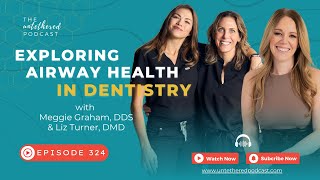
YouTube podcast (Untethered Podcast Ep.324, published 2025-06-16) hosted by Hallie Bulkin with guests Drs. Meggie Graham and Liz Turner (founders of Untethered Airway Health Center). They describe their clinic's origin and multidisciplinary, lifespan approach (newborn tongue ties to elderly patients), emphasize pre-op nervous‑system prep and myofunctional therapy, discuss realistic expectations for frenulum releases (scar vs flexible tissue), restorative/orthodontic considerations (MARPE, ALF, veneers, retainers), fascial interconnections, silent reflux effects on oral health, and provider education/implementation (courses, office hours, directories).
Chapters
Hello friends, and welcome to episode 324 of the Untethered podcast. Today we have doctors Maggie Graham and Liz Turner joining us. They are the founders of Untethered Airway Health Center, a rapidly growing national practice dedicated exclusively to comprehensive airway health. Their innovative multidisciplinary approach addresses the full spectrum of breathing related disorders from infant tongue ties and pediatric craniofacial development to complex adult sleep breathing conditions. What sets Untethered apart is their unique whole family treatment philosophy where they often find themselves treating multiple generations suffering from similar breathing challenges. Both doctors speak nationally on airway centered healthcare and have trained thousands of dentists through their implementation programs when they're not seeing patients in their Wisconsin and Colorado clinics. They're passionate about educating general dentists on how to incorporate airway focused care into their restorative practices. Welcome to the Untethered Podcast. I am your host, Holly Balkan. I'm a certified myofunctional therapist, feeding specialist, podcaster, business owner and mentor. This podcast. This podcast is all about getting your questions answered and collaborating with colleagues to bring you the most up to date information in the orofacial myofunctional therapy, airway tethered oral tissue and pediatric feeding therapy space. If you're new here, I challenge you to keep an open mind and join my mission to spread this message far and wide. If you've been around since June 2019, thanks for being a loyal listener. As we jump into today's episode, remember to listen with correct oral rest posture, tongue up, lips closed, teeth apart, breathe through your nose. Let's get started.
Foreign.
Content and material of this podcast are the opinions of the speakers and is for the informational purpose only and not intended to serve as a substitute for the consultation, diagnosis and or medical treatment of a qualified healthcare provider. Liz, welcome to the podcast.
Oh my gosh. Thank you so much for having me. I am so excited to be here. My colleague Maggie Graham so desperately wanted to as well, but she was having some connection issues. So anyways, here we are representing.
Yes, absolutely. And we'll. We'll have to have her on another time to make up for it. But I'm excited to talk with you because I know before we hit record, we were talking about how you and Maggie have the Untethered Airway Health center and I've got the Untethered Podcast and I feel like when I stumbled upon that on social media years ago, I was like, oh, this is so very cool. So I would love for you just to start by telling us like the origin of the untethered Airway Health Center.
Totally. So I'm a general restorative dentist. I have an airway focus for everything I do. But that wasn't always the case. And so it was probably eight years into my career when I started to realize the missing link between airway health and dentistry, and I started to branch out and do airway focused care. And so I launched Bloom center for sleep and airway health along with my general practice. Meggie is here. Oh, my gosh.
Technological difficulties.
I was so proud of myself for being ready today, too.
I know. And I was just gonna say Maggie had untethered tongue tie center along with her general practice. And then as the universe continued to collide us, we merged and joined forces and became untethered Airway Health Center. And so I believe the time that the untethered podcast was kind of getting rolling was right around the same time that untethered tongue tie center was. Was rolling as well. So it's just funny how now the universe brings us all back here together. So that's kind of how we got started. But Maggie and I are actually in two different states. I live in Denver, Colorado. She's in Milwaukee, Wisconsin. And it's fun because she's become kind of like my dental best friend sister, and there's very few text messages saved in my phone in the little bubble. And she's one of the two. So you're right up there with my husband, Maggie.
Oh, that makes me feel really important.
For better or worse.
I love it.
I love it.
Well, Maggie, since you. You were able to get on, join us, tell us. You know, Liz was just sharing a bit about the center and everything, but I'd love for you two to also just tell us a little bit about yourselves as we're jumping into.
Yeah, I think that Liz probably nailed exactly what I would say, since we're so commonly on the same thread. But, you know, walking this path of being a general restorative dentist and really seeing that there was something else that was missing and then getting to the connection of full body health and really airway was just eye opening, and once you see it, you can't unsee it. And so as I developed that type of treatment philosophy, patients and other providers started seeking out my services. And so it led to the creation of a totally separate entity from my dental restorative practice. And it's just been kind of go, go, go ever since. And so much fun.
And, you know, it's great. We're both moms, and that's there's always a why. Right. And my why was it started with my son and it translated to the rest of my family. But I think for a lot of us that are in this space, we've all been personally impacted in some way by a family member or ourselves. And once once you see it, you just can't unsee it. And so that's where it's really fun to collaborate and get to do things like this. And before we got on, I was asking you a. Your background. And I think the pediatric feeding space is so commonly missed. And I think our profession, dentists, we really do our functional providers a disservice because we don't realize the impact of the oral musculature on shaping the face and aligning the teeth and providing health and stability. And it starts so, so young. So I'm just so grateful for people like you.
And there's so many cheats, right? Like, we can just ignore it because there's so many products and rhetoric around. Oh, that's normal. Don't worry about it. Here's. Here's another tool. Here's another. Another crutch, basically, to help keep babies fed, which is obviously important and wonderful. But we're missing, I think, such a key component of just natural development because of that.
Yeah, yeah. One of my team members actually just had a baby, and we're on the struggle bus of figuring out right now, like, okay, we know we're headed for a release. When do we go for that release? Right? And total different rabbit hole. But it's everything from, okay, we need to calm the baby system so we have craniosacral involved, and we need to, you know, figure out why they be so gassy and screaming, shrieking for three hours straight. That's not typical. Right? And so, but all of these things, you know, when you go online, it's.
Like, well, babies cry.
Babies cry for hours as newborn in the newborn stage. Not like that, they don't. Right. And then once we get the baby finally calm, baby's had, you know, several sessions of craniosacral therapy and some other interventions too. Mom's just like, I'm a planner. I need to know, when are we going for this release? And I'm like, day by day. It's day by day right now. We gotta make sure all the things are ready.
On the other side of that, too, let's say that, like, one side is, like, just totally pooh, poohing it. No big deal. Babies cry. They'll grow out of it. Or, oh, there's a tongue tie. Clip the tongue tie. That'll fix it. And then there's no understanding of this really comprehensive, nuanced middle ground that is the treatment that's so necessary.
Yeah. I mean, as I'm going through this and like navigating it with her, it's bringing me back to when I had my own, my second. And I was like, when do we go? What's the right timeline? And it's so individualized, you know, she's like, well, maybe he's screaming like this because of the tongue tie and the tension in the body and it's causing all these other symptoms and maybe we should release sooner rather than later. And we were like, but if we can calm the nervous system first, we'll have a much better outcome. Because I know you're doing all the oral motor things, but that's important too. And so now that baby's calmed, now it's really a matter of now they're going, well, do we think we need the release? I mean, he's feeding really well, gaining weight, is this, that and the other. And we're like, he can barely lift his tongue past his lower gums. I mean, he's pretty restricted posteriorly. So anyways, it's. Yeah, I like that you kind of gave perspective on both sides of the.
Totally.
Because it's so common in both directions.
Kind of what we tell people is like, our goal is to bring harmony to the system. And harmony can take a little while to kind of come into balance. And that timing is so critical, not just for kiddos, but for adults too. And like, the phase in life always gets in the way. Like maternity leave, paternity leave, mother in law coming to town, I can't handle the stretches, we're going on vacation. So factoring in that stuff, but also making sure that it's the right decision for that person in that timing is important too. So. Yeah. And it's hard when they see improvements. Like you're stating. Right. Like, it was so bad and now it's better. But can't it be even better if we address the structural component now that we also.
It's important to kind of pause on that too, because like your. Your colleague is. Or your coworker is wanting the release, potentially wanting the release. Before the nervous system was settled down, a lot of the parents will come in and say, well, we just want it. We want the release now. Like, we want to get it done. And telling them and kind of helping them understand that, you know, between now and when we actually release it, it's not that you're not going to have improvement. Every step along the on the way is going to give you improvement. Tip the needle towards better function. It's not like we have to do all this and then you won't have release, won't have relief until the release, you know.
Absolutely, absolutely. And I said, I was like, we want improvements that's going to make for a better release, if that's where we're headed. And I think that's such a big conversation we've had too, because early on in my career that was not a big conversation. And when I got into the tongue tie space, it was more like, just get this baby released and then send them to us and we'll, we'll treat them and we'll help the parents. And then we started going, okay, these babies are so disorganized. The feeding's getting worse before it gets better. We really need to prep these families better. So we started working with them on the front end and doing all the pre op work and having them work with body workers when possible. And the outcomes that we saw, I mean, this is like years back now, but like the outcomes that we saw night and day between the babies who had that pre op work and those that didn't, and we were like, huh, there's something to it. And now there's just a lot more discussion around regulating that nervous system and doing all those behavioral interventions and, you know, whatever that baby needs leading up to the release of that is where we're headed. And it's, it's phenomenal to see how much more organized the feeding is in most cases afterwards, how more, how much more calmer the child is and the parent.
Less traumatic, like emotional traumatic.
Yes. I'm sure you guys see this because you guys are doing the releases.
So I try to tell families because it's, it is hard because families come in with different levels of preparedness and some of that's based on who they're working with, like what type of body work, how long, what was the starting point of the child, how experienced is the lactation provider? We will only feel as good as the function is to start. And so I just, I hate the nasty word reattachment because it's so shameful. Like, parents take blame, providers take blame, and then we kind of blame the release as the problem. But so much of it, the body's designed to heal with tension and if we don't have good function and good range of motion of not just the tongue, but like, of the rest of the body to start, we can't expect it to heal perfectly and without excess tension. So I kind of like the concept of how flexible can it be versus how tight is it now? And so we're just kind of like, working on reframing the mindset towards more flexibility, because that seems so much more positive than reattachment. So it's. It's a challenge, I think, managing the aftercare for families, but if we have the function as optimal as possible to start, it just means there's less emphasis on that. And it's so important.
But I say something similar to. I love that every time I hear you speak. Even though we work together now and talk all the time, I, like, learn something. I'm sitting here like, oh, yeah, I like how that sounds. But one of the things I'll say to parents, too, is that, you know, there's always going to be a string that returns. Like, you're going to have an attachment there. And what we want it to be replaced with, rather than a tight scar, is something flexible, something mobile, something that allows more natural movement. But to see the replacement of a string does not mean failure if you're knowing what you're looking for.
Right.
And so I think that how you said that is much more articulate and miscalid.
So I love that. But you're setting up the expectations, too, so it really helps parents understand. Like, yes, we do have the frenulum that grows back. We just want it to be, you know, we usually will tell them, like, more elastic. We want it to be stretchy. We don't want it to be, like, tight, short, stuck like it was before.
And are like, how shocking. People come and they're like, my lip reattached and it's like, no, that's a normal structure. It's supposed to be there. It's just not supposed to be in the presence of excess tension. So that differentiation, I think, is something that we all still struggle with. Like, is there a functional impairment and pediatric feeding? I mean, I see it all the time with, like, pocketing, inability to clear a bolus because the lip either restriction or buckles are in the way. It's hard. Not always just the tongue.
Yeah, absolutely.
So now you all also work with, like, the lifespan, right? You're not just pediatric or you are.
No womb to tomb. That's the latest phrase.
My oldest patient was 105. And then, yeah, I mean, we see newborns, right. So the oldest tongue tie release I've done was in on an 85 year old and like people will say, well, that's not right. Why would you do that? The man went through expansion. He expanded his palate, made more space, went through myofunctional therapy and was like, this is the cherry on top. I'm ready. And he was. So we did a release on him. Wow. The vascularity of an aging population is so different. Sublingual, though, like, it's a little bit more of that fear factor when, when you're in there. But it's just, I mean. And that's a plug for myofunctional therapy. Like, myofunctional therapy is where the magic happens. It's where the muscles separate themselves out and the fascia separates themselves out from everything, all the other dangerous structures that are there. So, yeah, we see all ages in terms of treatments. It's a lot of helping people manage their symptoms through improving their structures. And at times that's interdisciplinary care that we have to assist them in finding. At times they're referred over by people providing that interdisciplinary care like ENTs or myofunctional therapists. So we really work to manage the whole range of symptoms as well as we can. And Maggie likes to say quarterbacking, Quarterbacking these cases is really important to us.
I was never really athletic and that's like the closest I'll ever be the athlete. But see, you know, in infancy, right. Like going back to your colleague, congratulations, by the way, to having a baby. But, you know, the symptoms are improving. The immediate complaint has subsided. And is there still a benefit of doing it? Well, all the pieces have to be weighed. Where is the family postpartum? How are they doing emotionally, sleep wise? All the parts. And what are the repercussions of leaving it behind? Well, they might get past the feeding, but the continued growth that is dependent on optimal tongue function is going to compromise optimal skeletal growth. And so when people come in at later years, in older childhood, adulthood, 85, they are done growing. And while they might have a very, very easy to diagnose tongue tie and a myofunctional disorder, sometimes that's not the first piece to the puzzle. The first thing that we address, it's the cause, it's the reason why it all started to snowball in the first place. But we really need to figure out where are we going to go based on what is your chief complaint? What are your goals? Because if that patient comes in in their 50s or 60s and their chief complaint is sleep apnea. Yes, a tongue tied release. And myofunctional therapy will Be a piece of that puzzle, most likely. But if they don't have enough room in their skeletal structure, maybe it's orthodontia, maybe it's jaw surgery, maybe it's expansion, even though there is a tongue tie present, too. And that's really the essence behind the name change, because I was so excited to notice these tongue ties and realize how foundational it was in our planning and our understanding, but realized that it was really limiting the scope of how much help we can offer.
And then came in airway. Right. So untethered airway.
So then it was untethered tongue tie center. Then it was untethered tongue tie center and airway health center. And then we finally just dropped the tongue tie center, because, yes, tongue ties are part of our treatment modality. It's one of the things that we offer. It's a buzzword. It was a nice way to get people in the door. And I think it sent people maybe a mixed message, too, because it. I just think it's so much more comprehensive than one piece of restricted fascia out of so many different things that are multifactorial.
Yeah. Well, and I love the idea of, like, untethered, obviously. Hello. Yeah, right.
When I picked the name, I did a whole search and did not come across you.
So. Well, you know, I launched the podcast in 2019, but it's not the name of my business, so it probably wouldn't have come up just because it's only the podcast. So that's probably why. But I think we were also starting maybe around the same time, so I don't know.
We're gonna pop up.
Yeah. So, but anyway, so. But I like the idea of untethered, because it really. I think, you know, I wasn't thinking so much about this when I started, but as I went forward, it was more about all that tight fascia and how we are tethered throughout our body and how, you know, we're connected. Tip of our tongue, the tip of our toes. And so to untether the fascia in one area can really help to untether the fascia in another area. It's not always just about the tongue tie. And so I really. I love that you have the untethered components still in there, because everything. Airway and everything tethers, I think, can really.
And if you really want to go poetic and deep, like, untethering from the general traditional, physical, like, medical mindset.
Right.
Like, we are going to do things differently. We're going to untether ourselves from that limitation. And Limited scope of thinking.
Yeah, because conventional dentistry doesn't teach you this. I mean that's.
Can I tell you why I'm in my car right now? So I'm taking a break. I'm taking a break to do this because this is so important to me. But I am at a two day cadaveric dissection course. So I have the privilege to work with a person who has donated their body to science and go through the fascial layers bit by bit. And I am just continually in awe with a. Our human form. But to see the connection of all of these fascial layers and to see a body work in harmony, if one thing is awry, the whole system is awry. So we can take this person who's elderly and we can look at the growth pattern that she went through and she happened to. I know this is not a functional diagnosis, but she happened to have extremely restrictive fascia under her tongue and to release that and watch what happened to the pharyngeal muscles and the muscles of.
The strap complex.
Like absolutely mind blowing stuff. And it is one thing to see it in action, it is one thing to appreciate what happens when it occurs. And I'm here with orthognathic surgeons and physical therapists and general dentists like myself. And our whole takeaway from this is to try to expand on the dental model, to be more medical focused and all encompassing of the mouth and the body are not separate. And so I think that's kind of our mission of untethered. Right. Is to continue to bring knowledge to families and patients, to continue to strive to help people along the way. And if that's as simple as, and I hate using the word simple because I don't think a tongue tie release is simple, but I look at a tongue tie release and myofunctional therapy as potentially low hanging fruit for release. Right. That's a little bit less involved, a little bit less involved than orthognathic surgery. But for many of our patients, they'll choose to go down that journey because they've developed a trust with what we've offered to them through just listening to what their concerns are. So if their chief complaint is addressed with myofunctional therapy alone, what a win. But if they come back six months later and they're like, I'd like to do more, it's nice to be able to give them those options. So I just feel so passionate about this space kind of coming out of general restorative dentistry alone and seeing how we do Treat an isolation of a single tooth. And there's just so much more complexity to it. It's really cool.
Does the lab still smell the same?
You know what it's like. Not to go too deep on it, but it's not embalmed. I mean, this, this is so much different than dental school. And like, what a special opportunity. It's. It's gnarly. So, yeah, it's. It's very respectful, very kind. And I, I think of like, oh, my goodness. Because the trickle down of it with 10 of us who are touching lives all the time is like, it's so huge. I mean, we've got orthognathic surgeons from Mexico and California and every. Everybody's from everywhere, which is really neat.
So it's interesting timing that you bring up that concept, because I'm actually writing, writing a presentation right now about basically that, that we are all taught different components of the body or different specialties within function that are so siloed and so compartmentalized and there's not enough overlap. So in essence, we were taught to be tooth technicians. Maybe a little bit broader than a single tooth. And looking at the way the teeth relate to each other, but certainly not much farther than that. Not to look at the craniofacial structure, not to look at the shared anatomy of where the oral cavity is in relation to digestion and breathing. And so to have those opportunities to collaborate and communicate with multidisciplines is so important for things to shift and change.
That's what one of the surgeons, Mike Gunson, he just. I did the release and he goes, this, this would be very different if I was alone because we're all still learning from each other in our respective spaces, right? So, like, I learn so much from the collaborative providers that we work with. It is so much fun to see how our physical therapists, our osteopaths, our lactation consultants, our feeding therapists, like how everybody comes with a different lens. Because with this stuff and with full body health and with airway health, like, there's never just one thing. It's always multifactorial. It's just how much of a factor is it? So. And that's kind of like what we're all trying to figure out, right? The puzzles have to fun, but I don't know, it's hard. It's hard to want to change the world.
And then in the body, right, the body doesn't know anything, right? Like, body's gonna.
Body.
The body's gonna dysfunction and compensate. Whoever's Gonna do it without knowing that we've all learned little different pieces. And so just the fact that we don't know it doesn't mean it's going to function differently. It's still going to do it. We just don't have the knowledge of how to help. Yeah. Oh, I'm so excited for you to be there. I'm jealous. I want to be there. It sounds so great.
It does. It sounds really.
Cool.
I'm going to need, like to get filled in after you're done. And what else do you, you know, what else are you learning? Because you mentioned the all. Just the fascia and the interconnection. Like we talk, we teach families when we're working with them in feeding and myo. You know that if there's tight tissue here under the tongue, right. What's that going to do? It's going to pull the highway up and forward. What's that going to do? It's going to pull the pharynx up. And for the esophagus, you know, we have a lower esophageal sphincter. And I wonder why. Baby might be refluxing milk or acid or, you know, or whatever may be going on at that point. And we often say too, like, what we see on the hip, lips, we see on the lips. So if we've got poor postural support, poor pelvic support, you know, whatever's going on down there, core, you know, then we're going to see that on the face too. And that's going to impact feeding on chewing, swallowing, sucking, all the things. And so that little tongue tie, that could be the root cause of so much tension and connected to so many other things. You know, we definitely see it wreaking havoc even when like, my, my friend who works for me, like, she has. They have things generally under control, but baby still has a host of symptoms. He's, you know, he's still gassy. Definitely swallowing air. We've got some air aphasia going on. There's. There's other things going on where he's clearly uncomfortable, but because he's console, he's not inconsolable anymore. We can calm him within five to 10 minutes. Yeah, it's like, yeah, like she's figured out his. His body's calmer now. CST got in there, really helped. They've been working with lactation too. She's a speech pathologist by trade, so she's in there doing oral motor stuff with him. He's getting the works. And finally, you know, he's maybe two and a half weeks old now. Finally, he. They can calm him in five to 10 minutes when he cries instead of three hours. And I think mom now, like, her nervous system is like, okay. She sent me a picture yesterday.
She's like, we're at the park.
He's in his care. He's like. And he brought baby wearing because he wouldn't let.
He wouldn't make even.
Couldn't handle baby wearing. I mean, everything was just such a mess. And that I think it's just a really good reminder to me because I'm seeing this so closely, you know, with a friend of mine versus a patient, that there's. Yeah, there's just so much that goes on. It's so interconnected, and it's a lot. It's really a lot. So I think it's also very important. You guys were talking about just everybody working together and how we all look at things through a different lens. But when we come together and we don't treat the body as if it's siloed, like, we are treated as professionals, oftentimes that, you know, it really. That brings the most benefit to the patient. So we're very much there for that collaborative approach and moving away from the whole siloed approach that really is dictated mostly by insurance.
It really is. I don't know. And education. And academia, too.
And education, exactly. Totally.
Yeah.
Yeah.
This came up in another podcast that we recently did about. I've been doing this for a long time, and obviously I talk a lot about breathing and airway and tongue ties, and it's just kind of always at the tip of my tongue to talk about. And my husband of 11 years, just within the last couple months, asked me to release his tongue tie. And I was like, wait, what? And he's having some signi. He's a. He's a distance runner, and he likes to do trail running. And he's been having some major PT issues that have been sidelining him, starting with his foot. And he went to a pt and the PT was talking about his hips and talking about orthotics and then, you know, just talking about the general fascial pain. And it clicked to him that it was the same conversation that I've been having with him from a different end. And he's like, do you think that that could be contributing? And I said, I do. I do think it's going to be. Could be contributing. I'm not advertising that we are fixing high arch feet or posteriorly tilted uteruses, but, yes, I do believe that the fascia is all connected and it could be really big.
Yeah, for sure. So there's other connections too in like in dentistry. Right. Have you seen other symptoms or common presentations in dentistry related to airway issues?
The tongue tied more or less or like.
Well, tongue ties, airway issues, either or.
Yeah. Liz mentioned it earlier. Right. There's a higher caries risk because of the compensations that kids or even adults will do with eating. You know, one of the things I'll do during an exam is I'll say take a break, go ahead and swallow. Just because I've had them open for a while and I want to watch them swallow without drawing attention to it. And so often we see this hyperactivity of the orbicularis oris. Right. Like the swallow and not the movement of the tongue and the silence in the face. And so you can imagine that that tongue can't make that movement. It's not going to be able to self clean. And so along the gum tissue there's more pocketing of food and more, more plaque that's not clean throughout the day outside of oral hygiene. So that's one of the big ones. Which one do you want to take? Oh, she popped.
Oh, we lost her.
The other one I would say is when we have an underdeveloped mid face, an underdeveloped nose or skeletal structure and we have restriction to breathing, we will have a collapsible airway. So even patients that are able to breathe through their nose, if there's restriction to breathing through their nose, it causes a collapsibility of the airway that brings up acid. And that acid is not like gastro acid. It's not causing the burning sensation that we attribute to gerd. It's laryngeal pharyngeal acid. It's silent reflux. And that wreaks havoc on the oral cavity. It causes inflammation in the pharynx, oropharynx, the nasal pharynx. But it also creates an environment that caries can just thrive, decay can just flourish because it's a very acidic environment. And so that's another one that's a red flag from where we were taught. It's home care and diet, and that's about it. Home care and diet are still extremely important, of course, but we know now that that is not always the only causative factor.
What about with like restorative work? Because I've talked to other dentists in the airway space in the past and they've said that, you know, they used to do all kinds of restorative work that would, you know, I don't know if it was a crown or not a crown or a filling, but what do you do on the front?
Animal veneers.
Thank you.
Yes.
And then the veneers crack. Or there's just, you know, issues that happen because there were undiagnosed airway issues, and this person was not previously trained to assess or recognize these airway issues.
That was. I mean, that was both of us.
Right, Liz?
For sure. Yeah. And I mean, looking back now, I realize so many of those occlusal problems that I had were probably airway related as well. And it's just looking at it through a different lens. Like, we. We can still be. We can still do veneers, and they can be beautiful, but they can last longer. Pay attention to the foundation and the function first. And, like, what patient isn't happier if, A, their dentistry lasts, and B, they feel better, too? So it's definitely a win from a general dentistry side, that's for sure.
It takes away a lot of stress. And, you know, I still give patients options. Now I just see things different. I say, hey, I wonder if this underlying factor is one of the most causative parts of your wrist. Right. Your risk assessment, and would you like to work with me to dig. Dig deeper and unravel it and see if that's actually something that's going on. There are plenty of patients that say, nah, just fix my teeth. Okay. But I suspect that this tooth will break again, and I'm happy to fix it again. You'll pay me to fix it again. But that's not very satisfying for me as a dentist to have to repeat my work. And it's not trying to put shame or blame on the patient, but it's to create realistic expectations that there is a. There is an underlying cause that we are choosing not to address. You're going to have more frequent and, I think, frankly, avoidable restorative needs.
Yeah. And I mean, I think of how conservative we can be with our dentistry at that point, too. So I think of, like, a patient with a narrow maxilla in upper jaw, and she's got crowding on the lower, and she wants veneers to make her smile broader. And. And really, if we. And then she wants to unravel the crowding. So what does that mean? That means stripping a lot of the enamel and doing a ton of IPR to line stuff up with aligners and then cutting down her six front teeth. Well, really, she wanted eight because she wanted broader buccal corridors. Or we can do a marpi, which it comes with its own set of problems, but then no ipr additive dentistry on her laterals. And then she's got a big, beautiful, broad, natural smile versus one that we had to, like, forcefully create. And, of course, that was her choice. Right. But she'd already been through a septal surgery that and still felt like she was symptomatic. So she was like, wait, you mean I can get my smile pretty and I can feel better? And, like, a lot of patients just don't know it's an option until you talk to them.
Well, a lot of providers don't even know that's an option. One of my favorite quotes from one of my favorite mentors is Gary dewood, and he always told me, like, or told us that orthodontics is the best deal in dentistry. Like, the amount you can accomplish. And not to say that orthodontics isn't an investment, and it doesn't come with its own set of risks, like Liz said. But the amount you can accomplish when you understand the foundation and you're looking at the big picture, if you're doing it correctly, can accomplish aesthetics, function, airway, breathing. It's so amazing.
Yeah.
Yeah. I mean, I had my traditional ortho as a kid, and then they put me into permanent retainers, upper and lower, which made it very difficult to clean behind my teeth. And I remember being a teenager, and my dentist, who was a family friend, he was like, oh, these will fall off by the time you're, like, 20. So when I turned 30, I was like, can we take these out? And they removed them. And then my teeth started shifting immediately. It was much easier to clean, but everything started to shift. And I told him. I went back a couple weeks later, and I was like, hey, my teeth are shifting, especially on the bottom. He's like, no, they're not. And I was like, yes, they are. What do you mean, no, they're not? I'm like, look, it's turning. And he's like, it's fine. It's fine. I was like, it's not fine. So. And I didn't know anything at that time, right? So fast forward into this space. And I ended up doing a DNA vivos appliance. I don't know how many years back now, but I ended up wearing it for about two years because as a speech pathologist, I was like, I can't wear this during the day. So the 16 hours you want me in this thing, like, it's not possible. I work with little kids and their parents. I have to talk. So I wore it like eight hours a day. And so it just took longer. But it was a very. I mean, I had great expansion at point this point just in terms of allowing my tongue to fit. I then had a septoplasty three years ago. That was after I was done with the vivo. So septoplasty, turbinate reduction, nasal swell, body reduction. And I was like, well, since you're putting me under, let's just do a nose job to get rid of the bump. So she did all the things and she was like a double board certified ENT plastic facial, facial surgeon. Which I was like, okay, you're the one. But now I still have. So I'm like, you hear that? Like, I still feel a little congested sometimes if I drink a glass of wine, my husband's like, you are snoring. Like, I'm like. So my airway gets very inflamed. I also had mast cell activation syndrome. So my. My whole body just was really angry at me last year. But anywho, all that to say, like, my midline is off. It turns inward to the left on the left side. You know, I noticed that it's the maxilla, it's not the mandible. I've been to all kinds of people and everyone's basically like, well, maybe you're a candidate. Candidate for Marpi. And I'm like, I mean, at this point I'm kind of exhausted. Like, my oldest is about to turn 10 in August. She's in her third round of expansion. She had expanded. She had an elf as a four year old and then went into a hyrax with a forward growth component when she was 6. And now she is working with an ortho here who does Marpi. But she's in like a HAAS expander that's kind of adapted, modified. And my kids in five weeks have been this. She split the suture and this beautiful gap between their upper teeth. And we're, you know, gonna now hold on to that till like August and then put upper into Invisalign with the. The lower is already in Invisalign. My younger ones in her second round doing the same thing. But it's just like we've all had such different journeys too. Like all different symptoms. And I'm just sitting here going like, I. I mean this is what I do, but it's also exhausting. And I'm like, what do I do?
Like, yeah, yeah.
And I'm a Little. I'm a little scared to do marpy too, because I know it can really mess up your nose. And I had the nose surgery because I had the. Not the septoplasty specifically, but the nose job. I'm like, that, I think could be not great. So I don't know.
The protocols are getting better and more dialed in. Right. I'm on my second merpe just because we had a failure, because older protocols were faster, a little more aggressive. Like. Like we're really dialing this stuff in. But also, you made a really good point. Like right now, at this phase in life, something like that could prove very challenging. So maybe you just work to treat your symptoms. Right. Like limit inflammatory agents of the diet, get an air purifier, drink alkaline water. And for a lot of us that are moms, like, we're trying to do the best for our kids and for ourselves, but they're always going to come first. So it's really just kind of finding where patients are at and trying to meet them in the middle and know that we can provide long term options like marpi or orthognathics or whatever. But trying to help people be the healthiest version of themselves when they walk out the door is, it's like of our primary. Primary concern. Because not everybody's ready to hear that yet or go through it yet. And maybe they will be in six months. But if you scare them away, that doesn't help anybody.
Yeah.
And meeting you, meeting them where they are, like you said, Liz. But, but also think of the. Think of the unnecessary. Well, not unnecessary, the avoidable suffering that you went through and how even though you might not go further in your journey, or at least right now, you might not, how it's impacted your children's trajectory. Like, they are going to have a different path because of what you've gone through. And that is like, invaluable. Right. I just got goosebumps saying those words. And we see it every day. But like, that has an impact. And that's another reason why, you know, the fixed retainers, we all had them. Some of us had the headgear, like all the things. And now understanding the connection to why things happen the way they do, it's another plug for myofunctional therapy. Like, I wish myofunctional therapy was a sponsor. We could get paid by the entire. The entire. What is it? Therapy. What. Yeah.
Some of us.
You can do to retain this beautiful broad arch is to function optimally. Sorry, Liz, what were you gonna say?
Well, I was gonna say some of us not only had headgear, but have their headgear and their chart because there were such good rule followers.
Oh, I have mine too.
We should continue. I never had that. I'm just calling you out.
Oh, I thought I got so excited. I was like, oh, I feel so seen you did that too. Oh, no, that's just me. Okay, got it.
No, just you. But that's why I love you. You're very good at rule following and. But that's what I tell families too is like, they're like, well I didn't have this, like why should I do this for? And I go, well, no offense to our parents, but all we're trying to do as parents is do better for our children because we have more knowledge. We know more now about the impacts of sleep disorder, breathing. We know more now about expansion versus extraction. Use what we have today and make positive change. Just because somebody didn't have something 30 years ago doesn't mean they shouldn't be have it be accessible now. So we're just trying to be better for our children. I guess that's kind of what I always am thinking about.
But yeah, well, and I love highlighting for families too. And I have really great before and after CBCT from my daughter was 4 and she just did the ALF appliance. Her tonsils were gone within 3 months. Her adenoids and her sinuses cleared. Like adenoids shrunk down, sinuses were clear. A year later it phenomenal changes like that would. She would have been a kid who was a candidate for adenoatomic selectomy. And we didn't have to go through with the procedure. She still has her whole immune system intact, you know, so I would have done whatever I needed to do to make sure she could breathe. But we went into Covid so it was kind of a non discussion and she just happened to be in the, in the ALF that year. And then the same thing with my, my, when she was three, my youngest one had croup nine times in a year and was constantly being put on steroids. And I was like, let's keep putting a three year old with croup on steroids. I get it, we need to help her breathe. But also let's just keep depleting her immune system. This is really going to help her get healthy. And so when not one specialist that I took her to could really help her, I was like, all right, I'm taking this into my own hands. I guess we're going into an expander. So at age 4, she. We did rapid for her because she was kind of in, like, an airway crisis mode. And we didn't really have the time to do slow maxillary expansion. And it was again, just night and day, night and day. Such amazing progress. And now we're kind of.
We.
That was phase one. We knew we were going to have a phase two that happened to be in North Miami with a dentist. Now we're in Boca with Dr. Svetlana Koval, who's an orthodontist. And just. She's brilliant. And so she's the one who I'm talking to about Murphy, and she's in it herself right now. So I'm like, all the cool kids do it. I keep. I keep pushing my consult back because I'm like, I have to record a course and I have to. I'm like, there's a lot of content that needs to be produced before I.
Can'T speak for three months in my mouth or you'll talk with a list. And it's a great talking point.
I know. And it's really. I use it for speech sounds because I'll say. It's challenging for me to say, gee, I have to think about it. I have to compensate. So when I equate that to parents, they're like, oh, that makes sense why they can stumble over their words or why they have difficulty clearing throat. So it is a great talking point. I will be very excited when it's out of my mouth. But it's also been there for, like, I don't know how many years we're going on now. So. But it's part of. I don't want it to be.
If you donate your body to science, we'll take it out for you.
Then.
It'S you saying that you were an advocate for your daughter and taking her health into your own hands like that. Came up in conversation with one of my best friends who's not in the field but is an airway fanatic just because she's been exposed to it and has seen it in her own kids. And we were talking about how siloed and messed up the health system is just from a broad stroke, looking down at it and how really what's going to demand and implement change are moms parents, but moms that are demanding better for their kids and not stopping when they get an unsatisfactory answer, you know, and that's. I think that's such another. Another ripple effect that you can keep doing just by continuing to ask questions and seek out Providers that will learn with you.
Well, and even your podcast, right? Like what'd you say? Episode 324. This is like, that is a lot of content. And I'm sure it's just providers that are listening, but parents too, because they gather information. And I would say we have a huge base of our patient population that comes in because they've listened to an Airway podcast. They've listened not just to me on an Airway podcast, but they've listened to some other health related podcast and this comes up and they go, I found you for me, I found you for my kids. I'm just so happy the information is available. But they didn't get it from their doctor, they got it from the Internet, which I think is really impactful because it is kind of like this mom army, right. We're all just trying to share the knowledge we have to do better. And it's really cool what you've done. It's amazing what you've built. And again, we're just so honored to be on this platform.
Well, thank you to the mom army out there is. I'm one of them. Right. Like I'm out there advocating for my patients and for my kids. But also I think that there is a little bit of danger in the mob mentality of this is always right. And so like you used your daughter's example of her ELF and her avoidance of tonsil and adword surgery. That's amazing. That's always our goal. Right? Like we don't want to have kids have to undergo procedures unnecessarily. And for another child of a mom that shares the exact same healthcare philosophies and goals, their child might really benefit from that. And for another patient, this appliance might work. And for another patient, myofunctional therapy comes first, you know, and so really having the open mindedness to know that we're all out there advocating for health and it's never going to be a recipe. Every single human is going to come with its own order of events and things that will benefit them.
Yeah, that's such a good point. It's just individualized. So. But like you said, like your two children were treated differently, like my two children are treated differently because they have different presentations and different needs. So. But yeah, I think that's the biggest thing is just like being open to the information.
Absolutely. And you know, back when I started this, initially it was with providers in mind and to try and get that information out there. And then I started getting parents reaching out all the Time, especially moms, just saying, like, hey, who do you know here? Hey, I listened to this episode on your podcast, and can you help me find a provider for my child? Here's what's going on. And I was like, okay, we need directories. We need to, like, at least, like, for my own programs, I can create some directories where, like, people have taken this course. So look here. And maybe then they can connect you. If they're not the right person, they can connect you with someone in your area, at very least. But I tell people, I'm like, I probably get at least a half a dozen inquiries a week from parents just saying, hey, can you. Do you know someone here? And I'm like, I don't know people everywhere, but I will try and help you. I will try and help you find somebody or ask somebody who might know.
And worldwide, we get that question. Worldwide. Like, do you know somebody in Ireland? Do you know somebody in India? Like, we're actively working on a directory. That's one of our goals.
Amazing.
And for this reason, and it's hard. You can't vet everybody and nobody does things the same way. But again, it's kind of a plug for, like, get a second opinion. If you don't like what somebody has to say, go gather more information from another provider and then make an educated choice yourself as to what you feel would be right for your family. So, yeah, but you're right. Like, go ahead, go ahead.
Sorry, I did.
There's just a. There's a lack of providers that are understanding of this information.
So, yeah, absolutely. I think this is the opposite way where we started, really, with trying to educate. Sorry, my computer's gonna die. Educating families. And then we started getting tons of inquiries from providers like, where did you learn this? How did you. How did you come across this journey for yourselves? And so, like, I think that. That everyone needs to know it. Providers and. And families. So do you have any tips for.
Like, I was gonna say, do you have any tips for any providers who might be listening, who are like, okay, I've heard you guys, like, I want to get into this space. I know you guys have a course, so you can totally plug your own course, but any, like, tips for just how a dentist or provider could take a look and know what to look for and, you know, then help their patients ultimately take the next step?
You can always learn more. Right? There's so many courses, and I think our goal with the one that we put together was really to help general restorative dentists know the direction that they want to take their airway focused practice and is that being somebody who's treating all those things in their practice, Maybe. Is that somebody who now knows what to look for and chooses to refer out? Maybe. But our goal with it is to really bring the foundations of airway health to dental professionals so they know that they can help their patients no matter what avenue they take. It doesn't have to be an all or nothing. And so we could plug a gazillion courses too, because we've taken so many and we have so many mentors in this space. But I'm really excited about what we're bringing for sure.
So take our part, but also take everyone else's. To answer your question, again in a different way of like, what can we offer people that are listening right now? Where do you start? I think just being curious, right? Being open minded and recognizing and admitting that what you came away from medical school or grad school with is not the end. And in fact, it could be wrong. And so just having that humility to know that there's more to learn and it's never going to end. We're going to keep evolving, we're going to keep getting better. I think that's a really important thing. And I know that sounds really obvious, but I'm sure you guys have been exposed to, to plenty of providers out there. That's not the mentality, that's not the personalities. And so just having. And if you're listening to this podcast, I'm sure you're one of those providers that's open to thinking a little bit differently, but just creating awareness first. Like starting to learn the signs and the symptoms to start to recognize and being comfortable not saving lives every day in your practice, but planting seeds and asking questions and getting curious with your patients to see could this be part of their story, could there be a different trajectory in their journey? Me, I love that. And then follow along on our, on our email list because we try to drip out little pieces of actually tangible information in a way that's easy to consume on a daily basis in preparation for if you do want to take a course and kind of go a little bit deeper in there. But we, we are very passionate about being providers of information because we want more people to think this way.
Love that. And so your course is mainly for general dentists or we, we started with.
The idea of it being for general dentists. But you know, as I, as we're going through the editing process, as, as I'm reviewing it, I, I really think that you would benefit from it. I don't think that you might not take away and implement the same things a general dentist would based on our scope of practice and how we work. But there's absolutely a foundational level of information there that would benefit anyone in the healthcare space that treats patients that have breathing issues, which is honestly all of us.
And then one thing we're really excited about is I think even having conversations like this with like minded providers, we can always garner something from the conversation. So we are going to have office hours to allow us to have productive conversations with people that have questions regarding what they've listened to. And so I think no matter what space you're in, hearing a different provider's perspective is always a benefit. So that's one of the things I'm just really excited about. And then we have a ton of clinical content that we put together in terms of procedures and things like that. So it's exciting. It's an exciting time I think for all of us in the professions that we're in as we are starting to go more preventative care model. It's really cool. Long way to go, but that's awesome.
Yeah, absolutely. And you know the part that Liz is mentioning about us having office hours or having even access to some of the clinical things that we've done from an administrative implementation standpoint. So much of what we consume in this continuing education world is like just consumption.
Right.
And then turning that into implementation has always been really hard. And so we didn't want to just dump out info and then say best of luck. We really wanted to have that continuing support where you have access to live conversation to at least help you think through things rather than just, you know, fend for yourself. And how are you to going to take that information and then put it into play?
Yeah, well, I love this model because it's the model I use in my own business. So within my, like my pediatric feeding course, we have live case study review calls to actually. And it's over like 12 weeks. So it helps people implement. Right. Versus like my myo course, we have them connected to our MYO membership where they have weekly office hours and you know, ongoing CEUs and all kinds of materials and things to interact with. And it's so important because one of the things that I realized that I was infusing in which I think, think to your point, most people don't, is everyone can teach skill set, right? Like you're saying consumption. We all consume the skill information that's taught to us but then the mentorship side of it, to actually help you implement it and go out there and work with patients is like, so, so missing in the medical space, at least in my world. So I love that you guys are implementing the office hours. I think that really taps into, like, a mentorship side where you can actually talk through cases, you can talk through questions. How do I. How do I apply this? And, you know, this isn't working now. What do I try? Or, oh, I have this going on. What do you think about that? And so I think it's really cool when you have that opportunity, because I think it's just, like I said, so.
Lacking having it be a safe space. Yeah, that's really. That gives us a lot of. It makes my heart feel really happy that it's the right thing.
Well, I have so much respect and gratitude towards my mentors that may not have even known how much they influenced me in the moment of giving guidance or giving advice or perspective. And if I can give even a fraction of that to somebody else, I mean, that's what I want to do.
Yeah, yeah. And then, Liz, you said, like, in a safe space. I know that in my world too, people would go and ask questions in public, you know, forums and get eaten a lie by various other providers, whether they were in our space or not. And so people just kind of crawled back into their shell and they were afraid to ask questions. And that was one of my marketing things five years ago. Like, like, hi, this is a safe space. There are no stupid questions. You will never be judged. We are here to support you, help you, elevate you. Like, if we can help you, you can go in turn, help your patients on an exponential level that we can never do individually as ourselves. Right. And so my goal in the very beginning of my business was get kids off of pediatric feeding wait lists. And there were just so many PEDs just sitting there, not enough pediatric feeding therapists. And that's now evolved because I've got other aspects of the business and what I teach.
But.
But, you know, it's incredible to think how many more patients, you know, you can help indirectly, directly, Indirectly. Right. Through just passing on this knowledge to people in your community. So I'm excited for you all because.
I feel like we need more of this and from abundance mentality, like, there's. So I could go and talk with you guys all day, but, like, there's. There's more patients out there, like you said, than there are providers.
Like, there's.
There's no limit to more people Knowing this.
Right.
It's only better for society in our communities if more people know how to recognize and treat this because it's absolutely everywhere.
Yeah, 100% totally agree. Yeah. Well, this has been amazing. Is there anything else that you guys want to share? I mean, tell them how to find you, where to find you and how to learn more about your course or get on the wait list and your newsletter, whatever is you offer.
Sure. If you don't mind sharing the link to our our email newsletter and then our website is untethered. Airway healthcenter.com and we're really excited.
We have a lot of social media content that we're going to launch soon. Just because I find on the daily I get asked questions that are on repeat and and then I go to myself why do I not just film a 30 second video on like why this matters to me from my perspective, like people are asking it on repeat. Why don't we share it with the masses? So we're really hoping to bring more of that to everyone and if there's anything you guys want to hear more of, we're happy to share.
Yeah, always taking suggestions too.
Awesome. I love that. I love that. Well, thank you so much for joining me and sharing all of your knowledge and I'm excited to see what comes out of your course.
Thank you for having us and thank you for being patient with the technical difficulties for me at the beginning.
No worries in the rain. It's all good.
You're wonderful. Thank you so much. Yes.
Bye bye.
Thanks for listening to this podcast. If you found value in this episode and want to hear more of these Myotots, Airway and Feeding related episodes, be sure to leave a review on Apple Podcasts and share this episode on your social media platforms. You can access free resources and all I offer@halibalkin.com or pop over to hollybulcan on Instagram to get all the latest updates.
More from Hallie



What I Was Missing in Feeding Therapy: ARFID, Airway, and Myo with Samy Hernandez





