Ep 330: Empowering Children’s Oral Health ‘Ms. Tongue and Friends’ with Tricia Rogers, MS, CCC-SLP
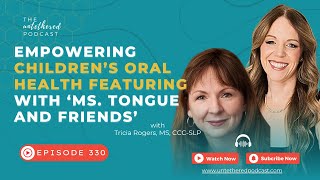
This is a YouTube video titled "Ep 330: Empowering Children’s Oral Health ‘Ms. Tongue and Friends’ with Tricia Rogers, MS, CCC-SLP" published in July 2025. It features a conversational interview between Hallie Bulkin, the host of the Untethered Podcast and a certified myofunctional therapist, and guest Tricia Rogers, an ASHA Certified Speech Language Pathologist with over 20 years of experience. They discuss Tricia's children's book series "Ms. Tongue and Friends," designed to educate children, parents, and professionals about orofacial myofunctional therapy, nasal breathing, and oral health in a fun and accessible way. The conversation also covers their shared experiences writing and publishing therapeutic children's books, clinical insights, and the broader impact of education in this field.
Hi and welcome to episode 330 of the Untethered Podcast. Today we have Tricia Rogers joining us. Tricia is a ASHA Certified Speech Language Pathologist and she has been for three decades with over 20 years of specialized experience in orofacial myofunctional disorders, in addition to running a private practice, mentoring, presenting and professionally consulting. She is a creator and author of Miss Tongue and Friends, a children's book series that makes myofunctional concepts understandable, engaging and interactive. Written specifically for children, these books are valuable tools for myotherapists, educators and parents and can also be shared by healthcare professionals such as ents, airway focused dentists, orthos and pediatricians to help educate families and serve as a resource for supporting nasal breathing, proper oral rest, posture and healthy oral function. Through Ms. Tongue and friends, Tricia's goal is to help countless children build lifelong habits for healthy oral development. One breath, one book, one child at a time. Welcome to the Untethered Podcast. I am your host, Holly Balkan. I'm a certified myofunctional therapist, feeding specialist, podcaster, business owner and mentor. This podcast is all about getting your questions answered and collaborating with colleagues to bring you the most up to date information in the orofacial myofunctional therapy, airway tether, dural tissue and pediatric feeding therapy space. If you're new here, I challenge you to keep an open mind and join my mission to spread this message far and wide. If you've been around since June 2019, thanks for being a loyal listener as we jump into today's episode. Remember to listen with correct oral rest posture, tongue up, lips closed, teeth apart, breathe through your nose. Let's get started.
Foreign.
All information, content and material of this podcast are the opinions of the speakers and is for the informational purpose only and not intended to serve as a substitute for the consultation, diagnosis and or medical treatment of a qualified healthcare provider. Trisha, welcome to the podcast.
Thank you so much for having me, Hallie. I'm nice. I'm so excited to be here.
I'm excited for you to be here. I know we were just chatting a little bit before we hit record and you know, it's fun. You were saying it's fun to talk to another author of a children's book. And so I recently discovered your books, obviously mine, were just recently launched into the world and so I would love for you to. Obviously we're going to talk about all about the books today, but like what brought, you know, brought this idea forward? Why did you create Your books, and we'll talk about what they are and everything. But was there something, some catalyst, something that happened that you were just like, these need to be in the world?
Oh, yes. So I have been practicing myofunctional therapy for 20 years. So I have been in the trenches of mayo work for. For that long and for. And as a speech pathologist, too. So working with little kids was my love. I love working with them. And that was in the beginning to mostly what kids I was focusing on. So you have to be really creative, and you have to have really interesting visuals and keep their attention. And so. And I'd always wanted to write a book. Just don't know why I always had wanted to. So the combination of that and my experience with the patients, carryover at home and trying to get the kids to understand, why do we need to do these tongue movements? Why? And that's truly where I. It came to. And I used them in my practice before I printed them in and published them in January. So my clients have been the field testing and the evidence based for the books.
Yeah, I love that. I love that. Because when we. When we did ours, we had, like, our moms read it and our kids read it, and we were like, do they make sense?
Right.
As long as it makes sense. Like, it doesn't have to be perfect, but does it make sense?
What are you getting from this? Tell me what you get from. Yes. Yeah, exactly.
Yeah, I love that. Yeah, it's. It's so funny because I know we were talking about the timeline a little bit, and you said. I think you said you started yours in 2020. Yeah, I think we were, like, right around there, maybe, like, 2019. But my friend Jen, who I wrote my books with, she was pregnant with her son who's about to turn five. So if that tells you anything, it was just this, you know, it's a labor of love, especially we were doing it together. We kept, like, meeting to wr. And then it was one book to start. Then we separated it into three because we were like, well, one's about, you know, tongue tie, and one's about mayo, and one's about tongue tie release. And maybe families don't want to talk about one of those things necessarily yet. So we didn't want to, like, force it on anybody. So, like, let's separate the concepts out. Which ended up working really nicely. But now we're already, like, having these other ideas of, like, oh, we could do a book on this, and we could do a book on that, and we're like, oh, my goodness, how long will these take? Because, hi. Five years later.
Exactly. I totally get it. I know. So my. My books that are now three in a series, and then the. The one that's a supplement, just like you. I have these other ideas that are literally in the works. I just have to get the illustrations done right. But it was like, Ms. Tongue is what. Learns to Rest is one of them. It started out as Mr. Tongue from the concept of the therapy session where the idea popped into my head and. And it was going to be. Then it turned to Miss Tongue, and then it was going to be one book. And I was like, but it can't. It just can't, because you can't just talk about the tongue and not talk about the lips and the nasal breathing. So then that put me back in the time frame, too, because I had to come up with the text and the illustrations of it. And then now it's a series. You can buy them separately. But, like, you. You have to talk about all of it.
Yeah, yeah, no, absolutely. So I love that.
Yeah.
So, okay, so Ms. Tongue and friends, right? So you've got these books. Who are the friends? Is it the lips? Is it the. Tell us more about that.
Yes. Okay, so I left it. Really, I want it. So the tongue, as we know, is extremely important and. But she can't do all of her work well without the help of the other parts of the body. So the friends, right now There is the Mr. Nose, who has secret super powers to learn how to breathe, and the lips, which is top lip and bottom lip, that learn to stay together. So, like, the book is the Lips learn to stay together. Mr. Nose learns how to breathe and. Whoops, sorry, where's the other one? And There it goes. Ms. Tongue learns to rest.
I love it.
So, yes, so that's. And there is another friend that's in the works and his name is Aerie the Airway.
Oh, well, I was like, are we going with the jaw?
Yes.
Not yet.
Actually, the jaw is in the process, too. It's. And. Because. And that's. These books are like age, like young to like 6, 7, 8. And I'm creating a version for the school age that has the jaw and the lips are in that book together as. And, you know, there's a nose and then the mat. So that's coming kind of in an SLP kit that's going to be out in the near future. Near future. But anyway, yes, so. So but that's where I pull in the jaw and in the lips book. I, I talk about the mouth and how the lips even need to stay together when the teeth are chewing. So I just kind of put a little bit out there about the bop. They have to stay together even when the teeth are chewing to kind of introduce that lips together during chewing.
I love that. Yes, I love that. I feel like these feel very like therapeutic but in a very friendly way.
Yes, that was my point.
I love it.
The concepts in a fun and friendly way. Simple concepts, you know? Yeah.
So I mean I can see like other SLPs using these in therapy. You know, SLP ot anybody working on feeding. Anybody working on myo. Right.
Yes.
RDH is even if they're working on the myo skills.
So.
So who else do you feel like these are for besides the obvious, you know, professionals.
So the parents. So parents that it's a great way. I have had some dentists and orthodontists have them in their practice and then they're there to be the patients. The parents will read it and then they've already kind of prepared them for when the, the pediatric dentist is going to come in and talk about mouth breathing or why that's so it's like a kind foundation. One of my colleagues, the books were in the, in the waiting room, the parents were reading them. 3 year old comes in and she's like Trisha, you made my, my life easy. Explaining to why it was necessary to do treatment and start treatment with this little one because of that. So that love to get pediatricians on board. Love to get the ents on board. Yes, yes. So it's literally anyone, teachers, school nurse. I actually had a trauma therapist that works with kids order my books. And the target that the trigger to me was like that. Okay, breathing, how important breathing is for your symptoms.
I'm getting chills. You just said that. And I got like chills because I was like, I didn't even think about that. But you're so right.
Yes.
Like how important is breathing to our nervous system? And obviously if we can't breathe, the trauma that we've been to, there's just, it's all connected to healing. Yeah.
I was so over the moon when that one came through too because it's like I recognize that the, that as a myofunctional therapist I can see how that's where it can be used and it really helped the parents with the kids and they'll carryover at home. It's fun rather than a knack. But that, that trauma enforced therapist or trauma centric therapist just made my Heart sing. It did, yeah, as does everyone. But yeah, yeah, yeah.
No, but how. I mean, it's really cool though to like experience these other avenues that maybe are not our traditional, you know, our brain does. Our brains like, okay, SLPs and OTS and maybe even PTs and the doctors and the ENTs and the dentists and the RDHs, like, everybody's like, connect immediately connected to this myo. Even pediatric feeding airway spaces. But then in tongue tie all the things. But then you're like, oh, there's other people who can totally benefit from this. And how cool to open up that conversation. Like let's say these are sitting on a table in a pediatrician's office and a parent picks them up. One of our goals was just to normalize the conversation to understand, like, oh no, my tongue is stuck. Like, I can't move my tongue. Well, why. Let's talk. Maybe we go talk to our dentist. Right? Or you know, oh no, my mouth is open and well, we got to breathe through our nose and close our lips and keep our tongue up and bring our, you know, teeth together. And so yeah, it was like, if we can just have like this fun, light hearted story and conversation around these very otherwise stressful topics for parents and even some professionals, like. Right. We can just like make it a little bit easier.
Yes, agree.
Have the conversation.
100%. Yes.
I love that, I love that. And then there's also like the, all the bodyworkers too.
Right.
All of those individuals who help with the fascia.
Right.
I mean, there's just so many different people. I feel like that.
Right.
Probably benefit from having these in their arsenal of tools and on their, on the coffee tables in their waiting rooms and.
Yeah, absolutely. In fact, I've been talking with two recently. One that I would do referrals with and another one in my hometown in South Carolina. And she's like, oh my gosh, tell me more, tell me. She works with infants. And so we talked a lot about the tongue ties and then the resting posture of the tongue. And you know, I told her about my other one, Ms. Tongue learns to dance, which is like the tongue is stuck one. And so I told her about that and she immediately, she ordered them. She's like, I'm going to have these just as a topic of conversation and, and just more knowledge that anyone can have to make people understand. Mouth breathing is not, that's not what we want people to be doing. It's not optimal, it's not desirable. And how can you notice it and see it and what can you do?
Yeah, yeah. And I love how you mentioned like that the nose breathing through your nose is a superpower. Because we kind of went with a superhero theme too. And it was like, you know. Yeah, I was. And I was like, how cool. And I think what sparked that for us is when we were thinking about the tongue tie release story. We were talking about like the magic wand or the, you know, it's kind of like a. We just started to think in superhero mode and we were like, and it's a little girl in our story. And people don't always associate little girls as superheroes, right. It's always the boys. So we, we made it an all female book. So when you're like miss Tongue. I was like, yes, Miss Tongue. I know, I know. It's like, yes, exactly.
So she is, she is the main. Right. That was a friend of mine that we were looking at the book because even. And she's not in, she's not in speech or Maya or anything. And after she goes, you know, I think the tongue needs to be a female. And I was like, you're right. And so I had to illustrated to add the eyelashes and go out. That's how, you know, that came. But it's true. Like Miss Tongue and friends. And there's so as you know and what the ideas. I am so open to ideas from, from everywhere and anywhere. Parents, other therapists and in fact, sidebar. I want to do a feeding one. Oh, I. It is in because. And just like challenges and you know, just like talk about the challenges of eating. And so, you know, you. And I need to talk about this because I want to get that right in the concept of talking to the children. So anyway, so sidebar. But I love that we all are doing these books and we all are talking about them and getting these concepts in a fun way. And the superhero is the best.
I just love that. I mean, I invite more people to like write more kids stories about these topics. Because if we could have a little library, like a shelf in the library, right? A shelf at Barnes and Noble, a shelf on Amazon, like where people actually Google it and they actually have to choose because there's so many of them. Like, then I feel like we've. We've accomplished something here, right? It's like, you know, a lot of people are like, oh my gosh. Well, you don't want competition.
No, no, I do.
Oh, oh, not even. I'm like, these books were not created to make money. These books were created to educate. And the more education that we can put out there. The more we normalize the conversation, the more people will start to recognize and parents and children will start to recognize, you know, oh, I should be breathing through my nose. Oh, my tongue should be up. And it's funny because, like, the more parents and I created this podcast for professionals, and I have so many parents who listen to the podcast, use the information, who are so, like, well educated.
To the point of being able to.
Go have a conversation with a provider now. Yes. And they know what to ask for and they know who to look for. And they, you know, if they can't find them, they'll message me on Instagram and they'll be like, you know somebody here that does X, you know, And I'm like, that. I'm like, that's power. Knowledge is power. And I didn't have this information. So think about, like, us being in the field without all the info. Right?
Oh, right. I mean, oh, this, that. And yes, I'm, I'm trying to like you. I'm thinking of this, like, as a. A tool and a gift. A gift to anyone that is working with children and the struggle of them, you know, the therapists that have to deal, the parents that have to, like, try to get their child to do something that so important for their overall health. And yes, like, I totally agree with you. It's like, it's, it's, it's such. The more, the better the library of them. Absolutely. I'm so excited. Makes me happy.
I love it. I love it. So, okay, so before we go into talking more about, like, any of the medical stuff, so talk a little bit about the trials and tribulations of writing a book. And like, I know we talked mentioned timeline, but like, just share for everybody because I know that you and I know, but just so everyone else understands what it is to birth a book.
It is exactly what you said. You are birthed. I literally, I have not birthed children before. I literally kept thinking, I am birthing this series, these books. And like we said before, it is a labor of love. And it truly is a labor of love. It took. So I found. You have like your timeline story, the illustrator in my. For my books. I found her on Instagram. She was in grad school when she started drawing the books and like, starting grad school. Okay, so OMDs were very new and different and not like, exactly what she knew enough about. Right. And so I had her drawing these pictures and we were doing this by the time I published them in January this year. She has her c's Right. So she was in grad school, she was a cfy. And I was like, by the rate that I'm going with this, she's going to have her Cs by the time it's time to print and you know, illustrated by. And the beauty of it is like, she now appreciates them, she has them and she appreciates the concepts because she understands it even more and she had a head start. But part of it for me was the technology of communicating with her in a way that I could. And the times that I kept changing the text and so I would change the text and then the illustrations would have to get changed too. And I thought about the process. It's like as a therapist, you can correct yourself in the moment if no one's understanding. And as a speaker and presenter, as I do as well, you can correct it if you get a question or somebody doesn't. When you write a book, you've got one chance, one chance to get it right and get it out there and get the point across. Especially in my case where it's an interactive book. So you read the book and it talks about Miss Tongue and she's tired because she does all the things like talking and resting, talking and eating and swallowing and she needs to rest. And in the middle of the book, the children have a chance for their, their super challenge. And then they try to get their Miss Tongue or their Mr. Nose. And so the phrasing of that to hit the children that are young but also up to like the 7 plus, maybe 8 year olds, although some 10 year olds have really enjoyed it. It's just you pick every word apart, but it was so worth it. But yes. Five years.
Yeah, well, and it's, you know, writing it with like my, my co author. We write like, we speak differently, we write differently. And so it's like even just like. And also the way we talk doesn't communicate the same way.
No written form.
So it's like, okay, this sounds good when you and I are saying it, but let's imagine somebody else reading it. Is it going to read that way? Like, let me have my, my child read it and see how she reads this. Does it flow? Does it make sense? Okay, let me have my mom read it. She was an editor. Like, does it, do you like this? Does it work? You know, so it's like having all like you said, you, you tested it on like made sure that it worked. It made sense. There's like such a labor of love that goes into it. And then once we actually had it written. We sent it off to an illustrator. He did a great job, except for we were like, her boobs are a little too pointy and there's a little too much cleavage. And this is not like, these are. This is a kids series. Like, could you please like take the shirt up and could you put her in pajamas and could you do that right? It was like all these like funny things that we never thought to ask for because it was the first time we'd ever done something like this. So we didn't even know how to properly instruct the illustrator. So but it would just take like, like months and months to get these illustrations back. And finally we got so frustrated after like a third round of like revisions that we went and found a whole new illustrator. And that guy was great and everything, but, you know, finally it got done. We wanted some changes to the COVID which I think actually happened. We redid the covers a little bit with. We ended up hiring a company to basically help us bring it forward. So like we're self published, but the company helped us like get it perfect, get it, get it to the printing point, right. And then guided someone on my, my other business team to basically put them on Amazon. And I'm like, great. All the steps, all the whole like, you know, like procedure and processes of getting this yes to the market right was wild.
It is completely mind boggling. And I, I mean I sometimes I look at, I was like, I can't even believe that I actually accomplished this in the self publishing way like that you did. It's like, did how did this happen? But like, I think too, it was like this force that I just, it's like I knew in my gut, in my clinical gut, in my just being that this concept in this way and in any kind of ways needed to be out there. And it was just that just pulled me and kept me going when I was pulling my hair out because I was like, I don't even know, you know, what to do next.
And so it's bigger than you, right? It's sort of like this mission, this vision that's like so much bigger than you are. It's like that's what happened in my online business when I was starting out. It was like, I want to get kids off feeding waiting lists. Like, that was my big goal. And I was like, in order to do that, I have to get thousands of therapists to take this feeding course to help them step into being the feeding therapist they want to be. And then the same thing happened with Mayo. Yes. You know, and I was kind of like, like, just so driven by this, like, bigger force, this goal, this bigger mission. I was like, I'm just the. The person to carry this out. Like, I'm just the. The vehicle. Right. To kind of bring this to. To be. And so it's been very cool because I'm like, with the books, it was like the same thing. It was like you're saying, like, you know, I just knew that we needed to bring this forward and that we needed to start. I was like, even if it started a trend, even if that meant other people did this behind us, like, somebody's got us start.
Yes.
So that, you know, so I love that, like, you and I. It's so funny, like, how parallel this was. Like, we were literally both doing this at the same time. We launched him around the sale. You launched yours in January. We just launched ours, like, a month ago. Yeah. I mean, so funny and also so crazy that we were on, like, very similar timelines. Like.
Right. It's that amazing. And it also validates what we're saying about, like, how much effort and. And love and dedication goes. And just like you were saying, it's like, I would be on it, and then some life event would happen, and then it would take me off for six months, and then I would get back to it and that. And I know you had that, too, and that shows that it is this bigger force. And I, like, I call my mission, like, one breath, one book, one child at a time.
Yeah.
And it's like, that's my thing, and that's what keeps me going. Because, like, you like everything that you've done and everything that we're all doing, especially when you go from being a direct care therapist to, like, branching out and helping more than you can one on one. It's an amazing thing. And then to be a therapist. Therapist like you are, and I am. It's like, you need this in your practice because let me tell you, I've been there. I know yours, mine, you know, you need these in your practice. And everyone will be. It's more fun and more engaging than. Yeah. Than what I.
Well, you know, and you get the kids, too, that sometimes are just, like, in a silly mood or they don't want to participate. But the parents, like, we're going. We're here. If we can, like, offer something else where it's like, hey, just. You want to just read this for a minute while you take a break?
Right?
Exactly.
Let's throw it out there. And then it's like, And I've got these props, like, here we go. Here are the lips. You know, we're gonna. We're gonna go with Miss Lips today. In fact, I'm gonna tell you a story that happens that. That you will just absolutely love. But, yeah, it's just like if they're there and it doesn't matter how many times. In fact, the more times you pick the books up with the kids, the more the visual and the repetition, and then it could be carryover talk at home. Just like when the whole thing with Ms. Tung started. Mr. Tung, at the time, it was a three year old, and I was like, very bright three year old. We had lots going on. Speech. And I was like, there's mayo going on and we're gonna go there. And the mom was a nurse. I'm like, we're going. And so he. They. They kept talking all the week long about Ms. Tongue putting her head on the pillow. And that's because in my book, it talks about Miss Tongue and she rests on the soft, bumpy pillow, which is the incisive papilla. Right. It just like popped into my head in the therapy session and so that the mom was texting me. Oh, my gosh, the pillow. This is amazing. This is amazing. We talk about the tongue resting on the pillow. So that may.
I love it.
I love it.
It's. You know, it's like when you connect and you have those, like, little ones who like, make it all just kind of. It's like the ideas come from them. They just. Or your idea comes from working with that patient. I feel like those are the ideas that take off and that, like, really connect with the other kids.
Yep.
You know what I mean? It's like, thank you for your old.
That one session, one chaos section session when I was like, I am just not making a difference here, and I am not. What is happening.
I. It's like something finally connected.
Right? Exactly. Exactly. Yeah.
That's amazing. So, okay, so you mentioned. Just to talk a little bit about you, too, because you mentioned you're an SLP. Obviously, you've been doing Mayo, would you say, for 20 years. Okay, so you've been doing mayo. Like, how did you enter the Mayo space? Tell us a little bit about. Because the landscape has changed.
It has changed immensely. Immensely.
Yes.
So I was. In the early 2000s, I took a course from the IAOM for. From someone. Her name was Joanne Smith. Peter. So she lived in the Portland area. And she was one of the. She's like. She's 86 now. Okay. So she's been around in the IOM for a while. She was. Afterwards, she started mentoring me up at the dental school. I would go with her. And she wrote a study about the orthodontia and OMD work. It wasn't called omd. It was called, you know, at the time and how it stops relapses from happening. And one of the things that they found in that study was that 80% of the children who started with speech sound disorders, after doing the rest, posture and that work, the Maya work, they didn't need speech therapy. So I was like, okay. So anyway, so I started with her, and then. Then I took courses with the AMOT because that started while I was going through the certification process. And so I just decided to get training from both of the entities. And so I did that. I took any course. There weren't a lot of courses out there for a while, but just studied with some of the people, the pioneers that were from. That were taught by the people in the 70s when the whole thing started. So it's like, I feel so blessed. And what I say was, I was doing Maya when Maya was not cool. Like, it was not cool. And I constantly was calling up Asha, and I was like, okay, how do I code this? What do I do? And honest to goodness, I then started to just do private pay so that I could do and get, you know, super bills and things like that, because I was like, I am wasting time and energy that is not necessary for my patients and my. And. And the parents and the families. And I had the ability to do that in my area. So that's what I went to. And I did that for another, like, 10 years, just private pay. And I. All I did was speech and myo. And prior to that, I was. I did oral motor and worked with children with apraxia. So it was always my interest was in the motor and sensory pieces that were helping or detracting from communicating with the little ones. And, you know, and the jaw was just fascinating to me. Like, when there wasn't a lot of talk about the jaw, I was just completely fascinated by that. So. And the importance of that. So, yeah, it's been a. The. The minute that I took all of my language materials and tests out of my practice, like, I had them in there for, like, five years and still didn't move them. The moment that I took that out, I was like, okay, I am a myofunctional therapist, practicing SLP therapist, you know, so it was. It's great. So I absolutely love it. And, you know, lays, you know, you can't unsee what you see now that, you know. Yeah, Yep.
Absolutely. Those my OIs, once they go on, you're out of luck. They're not coming off. Yeah, Yeah. I had. So there was an SLP who was working with, like, older children and adults, and my private practice was all, like, younger children, you know, infant, really, birth to five. But we were seeing a little. Some kids that were kind of tracking with us a little bit older after, you know, because they started with us younger. Anyway, so she and I were meeting one day, and she just come back from a course, and she was like, like, you know, this is so interesting. And like, months later, we're talking again, and she's like, my practice has completely changed. And she was like, I'm not even doing myo in the way that it was completely taught. I'm using it as a tool in my toolbox. But now that I'm seeing things through a different lens, I'm approaching speech sound disorders and, you know, some of these therapeutic interventions differently.
Yes.
She's like, the kids are all graduating faster. They're all making faster. And I was like, hold up, hold up, hold up, hold on. Okay. I have a private pay, private practice. These families would love to graduate their kids a little faster.
Right.
Tell me more. Within the day, I went and signed up for my course, and I went and I got certified and all the things, and it was absolutely eye opening. And that study that you mentioned, I mean, that's exactly what I saw with my patients, all these kids. I used to work with a lot of kids that had the speech sound disorders. Severe speech sound disorders, too. Right. And I had a kid who came to me. It was, like, one of my most favorite stories. So he came. He was going into high school, and the mom was like, at this point, I started working with, like, teens and adults because I was like, why not any age? And honestly, it was, like, fun to change up once in a while. Those pieces were always a little bit easier. They moved a little faster. I was like, all right, this is a good little, you know, change things up kind of thing. So this kid, the mom's like, so you know, he's going to high school in the fall, and we really want him to be able to speak clearly and say his R's. And I'm like, okay. Meanwhile, this kid has been in speech therapy for, like, nine years of his life and, like, on and off. And, yeah, that he had had seven speech therapists. Not one of them ever looked in his mouth or under his tongue. When I pulled out like the little V speech app just to like, run through in the eval, just to run through a couple words, I was like, I know this is really juvenile. We're not gonna use this in therapy. I was like, I promise. This is just so I can just get a couple quick things.
Yes.
And I will never show you again. And he goes, does every speech pathologist use that? I was like, how many have you had that used? And he was like, five. I was like, okay. I was like, we're gonna put that away. I will just make up the words in my head. It'll be fine.
Right?
But no, it was wild. He had this, like, webbing under his tongue. His tongue was so insanely restricted. Even the oral surgeon was like, I have never seen something like this before. And it was so obvious.
Yes.
That. Had anybody actually ever asked him to elevate his tongue or suction his tongue, you would have right away seen what the problem was, even if you didn't know what to do with it. Yeah, you would have seen the problem. So he had. He's probably my only case that age that ever had like a complete like Z plastic because they had. He had so much excess tissue under his tongue. It had to be resected. It had to be. Yeah, it was wild. When I kid you not like, we mom ended up hiring like a tutor to work with him in between our sessions just to do drills because he was so motivated to like work on the sounds and work on his. His speech six months in and out. Six months in and out. And that kid who was scoring below a two year old on the Goldman Fristo, the GFT, A3, which we know the gift of three is really heavy.
Yeah.
Right. So high we couldn't say any of those.
Right.
He went from being basically a two year old to being like age appropriate in six months. And I was like. And it was really funny. He sent me by accident. He sent like a text to me because he used to send me text to check in just because we were. They were so highly motivated. I was like, just text me every day and say, homework done.
Homework done.
I will respond. It's just your check in. If you have questions, you're absolutely welcome to text me. But he sent me some message that was totally meant for like a girl or somebody that was like his age. And I just, I honestly, I listened to it because I was like, I thought was like, oh, maybe he's checking in. I don't know. That's weird. And I listened to it. I was like, oh, this isn't for me.
I deleted it.
But. And I didn't respond or say anything that would have completely mortified him more. I'm sure, when he realizes he sent it to the wrong person. But I was like, oh, he sounds so good, you guys.
A therapist. You're like, wow, okay. I'm so glad I heard this, because.
I was like, oh. I was like. And the confidence. Because when he started, it's like he didn't want to speak. He was very timid and shy. And you see these kids, right? Like, they gain these skills, and all of a sudden they just flourish. And I was like, he is being a freshman boy.
Yes.
And that was the goal.
Thank goodness. Yes.
I'm like, that was the goal. I was like, so, so happy for him and mom and, you know.
Yes.
Oh, but could you. I'm like, had somebody looked under his tongue ten years prior, Right. How much when she first sought out an SLP because he wasn't speaking clearly and he was already three. You know what I mean?
It's like, yes. I mean, the suffering that. That poor kid. I mean, thank goodness it turned into a success story for him because he got to you. But I know that same thing in my practice. Same. Same type of thing where they've been to multiple therapists, and you just. It's heartbreaking. But that's an amazing story. That's.
It was.
It's.
I mean, and those are the things that happen when parents are aware.
Yes.
And they have this knowledge. Right. And it starts with, like, tools like this, like the books and just normalizing the conversation and getting the information out there in an easily digestible way where people go, wait, what? My tongue is supposed to be up, right?
Wait.
Huh? My lips are supposed to be together.
Right.
I don't snore, but, like, my lips are open. Well, okay, let's talk. You know what I mean?
Yeah.
Those little things.
Exactly. It is just. It's. It's. I. I feel like with you and I, it's so fun to be a part of that knowledge and. And understanding that people are gathering from our books, from our. The. Your podcast, from anything. Like. Like you said, you have parents now listening in on your podcast, not just therapists. And that. Oh, that just. That's the best. Because then they're going to tell their mom friends, and they're going to tell their mom friends. And speaking of that, like, I've been considering and wanting to do, I like to go read my books. Right, Too. And I have had chances around here to do it, and I want to get into some mom groups because.
Oh, that's a good idea.
Yeah. I think especially with the books, you know, the characters and how, like, young you can go with the books. I think I feel like you could.
You could do this in, like, baby groups because these moms don't have this information.
No.
There's probably a handful of them struggling to feed their babies. Babies who are fussy and babies who are colicky.
Yes.
There's actually more going on and you could be that catalyst to, like, introduce them to this world of, you know, people who can help.
Yes, exactly. So I'm excited about that when I add that to my. What I'm doing. The other thing I did one time that was really fun for the little ones and that where the lips came into be. So there's a child development center that's run by speech pathologists up in Washington state. I live in. Yeah. So I was going up there to read to the three year olds. Okay. Well, something happened with the schedule and they were like, well, they. They had to go somewhere or something. But the toddler group is here. And I was like, all right, so that works for me. I was like knowing full well that they were not going to be sitting for the entire series of books. It was just three at that time. Not My Miss Tongue Learns to Dance. But so I was like, had my props like that. And so this little. So a lot of the kids were sitting in the caregivers or the. The helpers of the teacher's laps and listening to the story. Some were, like, wiggling somewhere, but this one, kiddo. So, you know, Mr. Nose has a construction hat on because he's working and he's got his super cape. Right. Because he's got the secret superpowers. So I had the little. The hats there. And then so he gets the cape like this, the little cape. And he has me put on the cape and he puts a hat on. But then he picks up my lip pillows when we were reading the lip one. And he goes around to every classmate and he put the lips in front of their faces to tell them to close their lips. And this was getting chills. I love this. And my husband was recording me and he was just like, wow. And I mean, it did. It was. I was like, this is amazing.
It landed. It landed. And he wanted to make sure that everybody understood it too.
Right, Exactly. So it's like the younger you start reading these books to the children, especially with great graphics and things like an illustrations the better. Yeah.
Yes. 100. I love that. I love that. And this is what I mean when I say like normalize it. Like just like superheroes fly and, and you know, save people and help people. Like well, so does your tongue.
Right? Exactly, exactly.
So let's can do that too.
Do that too. Exactly.
Yeah.
That's one of the things I was thinking too in therapy when like the kids can like co create their own little Miss Tongue that's in their favorite character, you know, or Miss Tongue that's you know, part of their secret their superheroes that they like and, and you know, take that home that they've drawn or something like that. But yeah, but normalizing. Hallie, I'm going to use that word, normalizing. All these simple but yeah. Challenging to learn concepts. Yeah.
Right. It's like how do we make this, yeah.
Challenging to learn concepts. Yeah.
Right. It's like how do we make this mainstream? How do we make this like a typical dinner conversation.
Right, right.
Yeah. Yes. So, so you mentioned you're going to do the feeding one, but you're not really like doing feeding therapy. Is that or you do okay, because you're just myo speech. Right. Like that's your focus.
So this year was going to be my focus on educating myself about feeding. Well, I kind of got a little busy with the release of the books and I'm also writing another book with an orthodontist like you were talking about and I'm putting together a course with another colleague. So I'm like all right. So I, I, I feeding is on my list to get more knowledgeable about and but yes, I have a thumb book that's very close to being ready. Mr. Thumb Book. And I have the jaw and I have a few others in the works because like you said, this can just. There's so many concepts that, that can be taught with Miss Tongue and her friends because there's lots of friends that help with the oral function and with airway and breathing. So yeah. So it's exciting. Yep. I just gotta take more time to stop and write.
Right, I know, I know. And, and not second guess yourself like 500 times. And do we need to tweak this and is this gonna land and does this make sense? And, and, and right.
And, and, and I've also got my books in ebook form now. So yes, they're ebooks. So that it's, you know, easy. People in other countries can buy them this way, which they have and then it can be like something that the kids can Use at home on their iPads. Yes.
Yeah, I know you got to meet them where they are. So love that. Love that. Or even their Kindles. Some Kindles too, you know. Exactly.
Kindles. Yes. Love that. Love my Kindle.
Yeah.
Yeah.
Amazing. Is there anything that we haven't covered that you want to share about the book?
Books?
If not, tell us where to find them.
Okay. So you can find them on miss tongue and friends.com and then the other one we haven't talked about is my miss Tongue learns to dance. And just like you, Miss Tongue is stuck just like your books. And so it talks about the. And interestingly enough for me, this one came out in a rhyme in like I couldn't write it fast enough. The rhymes about just the basic movements that for Tongue. Tongue range of motion. And it can also be good for like differentiation of the jaw and the tongue. So it's got those little.
Love that.
Little movements in there. But that. Yeah. Ms. Tongue and friends.com I'm on Instagram at Ms. Tongue and friends and I just have loved talking with you today and thank you.
This has been so much fun. I am like we could talk forever. And I'm so excited to see all these other books that you're. You're going to come out with and add to this series and everyone knows where to find you now. Ms. Tongueandfriends.com so go support Trisha. Get the books, put them in your library, at your clinics. Parents, you need these because they explain a lot of things therapeutically that are much easier to understand in this nice, easily digestible format. Well, congratulations on the books. I'm so excited for you.
You too, fella.
Than I know. Fellow authors. I love that. Yes. Thanks so much, Tricia.
Bye. Thank you.
Thanks for listening to this podcast. If you found value in this episode and want to hear more of these Myotots, Airway and feeding related episodes, be sure to leave a review on Apple Podcasts and share this episode on your social media platforms. You can access free resources and all I offer@halibalkin.com or pop over to Hollybulcan on Instagram to get all the latest updates.
More from Hallie



What I Was Missing in Feeding Therapy: ARFID, Airway, and Myo with Samy Hernandez





