EP 341: From Dental Hygiene to Myofunctional Therapy with Hallie Bulkin & Ashley Dorado
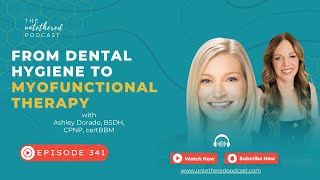
Episode 341 of the Untethered Podcast features host Hallie Bulkin interviewing Ashley Dorado, owner/founder of MYO Movement (Charlotte, NC). Ashley describes her path from pediatric dental assistant to registered dental hygienist, educator, and myofunctional therapist after her daughter's early feeding/tongue-tie difficulties prompted a focus on airway and orofacial function. The conversation covers Ashley's certifications (Myofunctional practitioner, Buteyko breathing instructor, Certified Personalized Nutrition Practitioner), her family-centered, evidence-informed MYO practice (in-person and virtual), collaborative/team-based care with dentists/ENTs/OTs/SLPs, common practice challenges (insurance, accessibility), and clinical philosophy (address root causes, habit elimination within myofunctional rehab). The episode also includes personal treatment plans (both host and guest discuss upcoming procedures like aligners, tongue/lip releases, and expansion) and ends with contact information for MYO Movement.
Chapters
Our muscles are different than everybody else's how they're working, but what I found has been really beneficial, especially for that early foundational MYO is more of a.
Family centered hi and welcome to episode 341 of the Untethered Podcast. Today we have Ashley Dorado joining us. Ashley is the owner and founder of MYO Movement, a Charlotte, North Carolina based myofunctional therapy practice rooted in collaboration, compassion and comprehensive care care. With over 15 years in the dental field, starting as a pediatric dental assistant, then practicing as a registered dental hygienist and now leading her own therapy practice, seeing clients both in person and virtually, Ashley brings deep clinical experience and a personal passion to her work. Her daughter's early feeding difficulties in tongue tie diagnosis sparked a transformative journey into airway health and whole body wellness. Today, Ashley specializes in identifying the root causes of oral facial dysfunction and empowering kids, adults and families through education and evidence based therapy. She's a Munchie Certified Practitioner, Buteyko Breathing Method Instructor and Certified Personalized Nutrition Practitioner. She's also completed Advanced Continuing Education and TOTS Training, Advanced Airway Circle Training and is currently pursuing her certification as a Comm. In addition to her clinical work, Ashley serves as an adjunct Dental Hygiene instructor at a local community college teaching both nutrition and chairside clinic. She loves supporting others in their professional journeys and is proud to be a new mentor for fellow providers through the Mayo membership. Outside the office, you'll find her exploring Charlotte with her husband and her daughter still searching searching for the perfect New York style pizza. Welcome to the Untethered Podcast. I am your host Holly Gulkin. I'm a certified myofunctional Therapist, feeding specialist, podcaster, Business owner and mentor. This podcast is all about getting your questions answered and collaborating with colleagues to bring you the most up to date information in the orofacial myofunctional Therapy, Airway Tepidural Tissue and Pediatric Feeding Therapy space. If you're new here, I challenge you to keep an open mind and join my mission to spread this message far and wide. If you've been around since June 2019, thanks for being a loyal listener. As we jump into today's episode, remember to listen with correct oral rest. Posture, tongue up, lips closed, teeth apart, breathe through your nose. Let's get started. Hi Ashley, welcome to the podcast.
Hey Hallie, thank you so much for having me. Really excited to be here.
I'm excited to have you here. I know we were just chatting a little bit beforehand and you know, with you being a newer mentor inside of the MYO membership. I feel like it's all like kind of coming full circle. And, you know, you were talking about how you used to listen to the podcast when you were traveling. And I'm like, I love hearing that and I love having like a listener, but also now a team member, you know, on the podcast. So thank you for joining me.
Definitely full circle moment for sure. Like, I just. I couldn't be. Yeah, this was like, you're Untethered is the original podcast that I started with and I've continued with. And just to be here really means a lot for my career and just how things have been progress and being part of the my membership. So super happy to. To and now know you and be able to call you a friend and colleague is just incredible.
I love that. I love that. So tell us for our listeners who are maybe new to you, maybe they're not part of the my membership. You know, I know you have a business as well, which we can talk about, but you basically went from dental hygiene to being an airway advocate, right? And so, like, you have your own MYO journey. So I'd love for you to share with our listeners a little bit about your background and kind of just, you know, how you got into doing what you're doing now. Because it's not. It's not where you started, right?
No, definitely not. And even if you would have told me five years ago that I would have my own business, I would be like, in what. What. What am I doing? So it's been, right. Quite the journey. But I originally started as a pediatric dental assistant. Fell in love just with dentistry, all of the things. Went to hygiene school, so registered dental hygienist. I've been a hygienist for over 10 years. So working private practice. And then right when I had my daughter, I was able to transition into teaching at our local community college for hygiene. So really just education and that's always been a big passion of mine, just really lifting others up and then really having my daughter is what tossed me down the rabbit hole. We always say that. And it's such a rabbit hole, but of airway and myofunctional therapy. So it's our personal journey. I had her and she was actually an emergency C section, so didn't go as planned and kind of went down A really difficult time, a really difficult struggle. Breastfeeding, difficulties, latching, reflux. You know, I Wore Black for 10 months. Luckily I would love black, but it was just. And we were told and love our pediatrician but, you know, told, okay, well, this is normal, all of the things we hear. And as you know, my dental background, I'm like, no, I know she has a tongue tie, which people confirmed, you know, different specialists, but they'd say, oh, it's mild, no issue. You know, this is normal, and it isn't normal. So I really started doing my own research and just kind of saying, like, no, you know, she shouldn't be sleeping with her mouth open. And all of these things just really took me down. And I just fell absolutely in love with being able to look to the root cause and to really address things at a young age if we can. As we know it's not too late for adults, but, yeah. So after having her, really went all in. And then it's been two years now that my practice, MYO Movement, has been open. So owner, founder, MYO Movement here in Charlotte, North Carolina. And we also see virtual clients as well. But it has been the best whirlwind.
I love that. I love that. And it's so exciting. It's exciting to take, like, what you're super passionate about. Thank you. Like, I always say to my kids, thank you for, you know, throwing me down these rabbit holes like you were saying. And. And it's very interesting, too, because if you had asked me 10 years ago, like, what I would be doing now, I could never have told you that this is where I'd be. I mean, five years ago, five and a half years ago, when I was, like, conjuring up, like, what I wanted to do in the online space and launching this podcast, almost like, was that six years ago now? 20. 19. Like, holy cow. Yeah. It started as, like, myo airway. Myo Airway Integral tissues. I was like, there's just nothing's out there. I went to look, and I think there was, like, one guest episode right somewhere, and I was like, oh, my gosh, like, we need to be talking about this. And then I integrated in the peed feeding thing because so many of us were having babies, and as, like, an slp, I was like, okay, I've done a lot of feeding up until that point with, like, toddlers on up, but I was not working a lot with infants. I was by the point that I had started the podcast, but not, like, back in my feeding, you know, my earlier feeding days. And again, my own kits. Exactly like you said. Like, they kind of just threw me into this rabbit hole. I specialized. My business became more specialized. I launched another business that was around that. And it's just become such A passion project like you were talking about with like the holistic health and kind of finding like the root causes of things.
Right.
You know, focusing on that I think is just. I'm hearing more of it happen now, which makes me really excited. But it was not the conversation that was happening five, six years ago at all. Like, it was rare to find somebody who was having that conversation and it was like pretty much all offline. So. Yeah, so I get really excited when I hear, you know, other providers share their stories. So thank you for sharing that with us. And you also co authored an article on like the benefits of xylitol, right. Back in 2013. So will you tell us a little bit about that? And like, what, what did that do for your career? Like, did that start down like a holistic pathway for you? Were you already there?
I think it was, yeah. And that seems like ages ago. Right. I was just about to graduate hygiene school and I had the opportunity to write co author the benefits of Xylitol in Dimensions of Dental Hygiene. And it was a really special. I remember when being broached, you know, to publish, to co author an article, I kind of had free rein on what subject I wanted. And I love nutrition, you know, I love the Nutrition for Dental Health course and really became so interested in the benefits of xylitol, really. And just how incredible, you know, when used properly. And that's where the idea kind of spurred of just this idea of how can we prevent cavities. And once again, I was not even thinking about mouth breathing at that time. But that's what kind of continued that conversation. So of course, deep dive into research to make that article happen. But it's really, it's so funny once again talking about full circle moments because for a while I actually forgot about that article until this kind of came up. And I recommend, you know, the clear nasal spray to so many clients which has xylitol in it. And that's, you know, was a, a big part of the article of how we can incorporate it into our daily lives. And I'm like, oh my gosh. Like, I think this was meant to be. Like, I always was a big fan of finding, you know, not looking to the medication, the first route, looking for, you know, how, how can we right, keep our nose clean now we talk about nasal hygiene even right. Years ago I would have been like, what do you mean nasal hygiene? Like, we talk about oral hygiene, we talk about teeth, not, not our nose. But yeah, that's, it's been really cool now and I need to get it like hung up and framed because it really is a special part of my journey and just how, how that's really continued to, to grow. But the holistic for sure.
Yes. I totally second. You got to like get that blown up frame, put it on your wall, put it in your waiting area. If like you have people coming in, you know, they can see like, oh, Ashley's name is on there.
That's cool.
She's my myotherapist. Yeah, that's super cool. So now in addition to all of that, and you mentioned this kind of a little bit, but like your tea, you do, you teach, obviously you're mentoring, you know, just kind of growing the field in a sense. And so talk a little bit about the nutrition side because you mentioned that. And so are you currently teaching nutrition courses? Like, what does that look like for you?
Yeah. So this fall semester is actually starting sooner because it's almost August. So come fall again, this will be my third year teaching nutrition to our dental hygiene students at cpcc. And so I didactically am able to really kind of, now that I have all of my, you know, my awareness, incorporate that into nutrition, which has been such an honor to really help these young students have that, that more of that myo eye that we talk about. So, you know, that's not what they're going to be tested on of their boards, of course. But you know, I do, I am able to fold in myofunctional, you know, work and what it means with when we talk about mastication, when we talk about all of these things. And all hygiene students know digestion starts in the mouth and that's, you know, kind of it or salivary amylase. Those may be the two kind of takeaways. Right. But there's so much more to that. It's using our jaws how they're intended. It's, you know, looking for tethered oral tissues. It's when we see them in clinic, you know, they're, they're patients. Okay. We see the scalloped tongue. What questions should we ask? What else should we look for when we see that? So, yeah, being able to be an educator at the college and for nutrition. And I'd say it may have been a year, but it may have been fall. Once again, the time warp of being a mom and a business owner. I was certified by the ana, the American Nutrition association, with my cpnp, so Certified Personalized Nutrition Practitioner. So it's given me a little bit more of scope of practice to support my clients through my practice, but also at school with teaching. And then of course, as we know what we do is so important with collaborative care so referring out. So I don't do, you know, full nutrition screenings, but I love now I can feel a little bit stronger when talking to my MYO clients. But also I'm supporting my students as well through the nutrition piece.
I love that. Again, it feels like things come full circle because you're talking about even just with mastication, like understanding the differences between the different foods that we eat, how they support our body, but not just energy wise, but how do they support our jaw. Like you were mentioning different foods for the jaw and not that you didn't mention the foods, but just kind of talking about what are we eating, how does that impact our muscle and bone structure and all that fun functional stuff. I think that's again, a topic that is not so hyper discussed, but is so critical and so important. And I feel like every time I share like the Weston Price foundation, people are like, the what? And I'm like, oh my gosh, you've never heard of this? Like, go Google Weston Price. Like, you know, like there's just. You're just gonna go down a rabbit hole. Have fun.
Right?
Right.
Yeah. Reach back out in a few days once you've absorbed as much as you can. But yes, it's so. And then two, it's like being able to plant these seeds and breadcrumbs. Right. Like the students that I work with, you know, they're not always all going to specialize in mayo. Good, that's fine. But they need to be able to screen. And that's where the difference. And I joke, you know, as far as like a hygienist, you know, cleaning, you know, doing a scaling and root planing, we call it a 7 millimeter pocket isn't fun to me. But educating on the need to take care of that periodontal disease and then get them in the right hands, that excites me. Same with myo. You don't all have to become, you know, specialized as far as we do, but you need to be aware and get these, these patients, these clients into the right hands.
Yeah, yeah, 100%. I think it's so critical, but that's. Yeah, that's why I love this, this whole conversation. So now you also kind of started to talk about like the team approach and how it really takes a team. So talk to us a little bit because people are always wondering about this. When you launched your private practice, did you already have a local team or did you have to like get to work and find those people to collaborate with in your area?
Yeah, I would definitely say more so the latter. We do. We are fortunate enough in our area we have an awesome Mayo study club. So I started going there, which was a great, you know, start to kind of continue the conversation like we do here. But then really when, you know, I, I opened the practice, it was reaching out and kind of going to different potential, you know, whether it be dental offices or, you know, species, as we lovingly call your silo ents, you know, I really myself and an orthodontist in the area and a general dentist who she's also a myofunctional therapist. We set up a meeting with a big ENT group in our area and it was like hitting a brick wall. It was really actually frustrating and it was funny because they had tried before and I was like, no, you know, I think now's a good time. Hit a brick wall. So we kind of pivot. We're able to find a really great, you know, ENT in our area as well. So definitely a combination of having to build up the providers that, you know, really that we trust each other, right? We can pick up the phone, we can text each other now and say, hey, you know, Sally's coming to you, keep an eye out or what do you think about this? So, yeah, really trying to though, continue that growth and not just keeping it, let's say to the dental world or to Ents, but making sure OTs. I've done a lot of, you know, I do like a myo and muffins is what I call my lunch and learn. But so I'll go to different practices that are, you know, really open to, to looking to that root cause. And I'm part of a holistic, think crunchy group in the area which is really, you know, I hate the word like minded, but I love it because we are like minded but open to things. So I prefer more open minded with the same kind of resonance. And so I've really been able to continue to build from there and even just, you know, client recommendations, client referrals, word of mouth has been. So when they come in, you know, I find out who their team is, right? Who their primary care is, you know, if they have, you know, a speech therapist, if they have, you know, who their dentist is, orthodontist. And then we'll send out our reports, you know, to those providers. Some may read them, some may not. But it's been really great feedback because we'll you know, they'll respond, they'll say, hey, tell us more about this myofunctional therapy. What is it? And then that's a great way I would recommend, you know, new or even, you know, currently practicing to continue to send those reports. And even if you think that they won't read it, they may. And just getting that word out.
Yeah, for sure. The reports thing, I always, like, laugh because I'm like, we spend so much time writing these beautiful reports for people to not even look at them. Right. It's always time, like, you know, if you can bullet point, if you can make things shorter, people might actually scan and read more of it.
Right?
So it's.
Yeah, it's been a lie now. I used to have just great pages and it's like, oh, my gosh. But I want them to know. It's like, but at least let's get them to read something right? They're not breathing through their nose, but I know. Definitely a love hate with reports. But for sure, for sure.
And then, you know, I think we kind of talked a little bit about this, like, briefly, but, like, just the gaps that are out there, right? I mean, even just the silos that we treat in this kind of a gap still, because it's not that we treat in, but that most of the medical community treats in. Definitely looking at traditional care versus, like, the approach that we like to take, which is, you know, more holistic. But there's other things too. So do you have you run into in your private practice, like, have you run into other challenges or, you know, know, like, my private practice is private pay. We don't take insurance. We do give super bills. Parents can submit on their own. But have you run into, like, anything else? Are there other gaps that you've exposed, if you will, and, you know, in your time in practice?
Yeah, I find. So our practice works the same way. We are right. Fee for service, offer super bills. But what I like to remind clients is that, you know, myofunctional therapy, like, I'm not supposed to see you forever. Once we get the muscles working for you and we're able to facilitate that, great, I'll come to your baseball games, you know, tell your friends, but I don't want to see you in my office forever. So I find that that's been a way that I. That, you know, to talk to, whether it be adults that I'm treating or, you know, kids or families, is reminding them that this, yes, it's an investment in your health, but it isn't a forever recovery, recurring cost, but really, once people can see and start to feel better, that usually goes out the door. So I'd say kind of like, initially, there may be, well, why don't you take insurance, things like that. But it really, it does tie our hands. And if somebody. And hopefully, you know, accessibility does become more of a part of this. So that is definitely something that as my practice continues to grow and as my. My journey continues, I really want to look to accessibility and being able to open that do. But there are some providers in the area that do take insurance, code it the way they need to code it. So I just refer those clients, if that's their number one priority, that's where I send them. And that's great as well. But really trying to continue to bridge the gap between. Right. You know, modern medicine and even once again, I'll talk about ents again. Right. We're doing a lot of tonsillectomies, removing the adenoids, which is certainly, you know, beneficial at times. Surgical intervention can be necessary, but if we're not fixing the function, if we're not fixing the mouth breathing, it's going to replay. So kind of always just educating and reminding the parents, the adults why they're here and kind of what. What service we do provide. And it is a specialty. But it's. Yeah. Not forever.
This is true. Yeah, it's not forever. And I love that, that, that you highlight that, because I do feel like, you know, mayo is not meant to be like, a year after year kind of thing. Like, as a speech pathologist, like, yes, we get kids that come in for many other things, and that may be a much longer road and a much longer journey, and sometimes MYO is part of that. But yes, for our traditional MYO cases. And honestly, when I added mayo in, I was like, oh, this is such a change. And it's kind of keeping me on my toes a little bit because I was only working with pediatrics, and then I added in adults, and the adults moved so much faster. Like, I was like, you know, like, even the frequency with which I was seeing some of them was different than the pediatric cases. And, you know, their total time in therapy was different. And just because of cognitively. Right. Like, adults get in. And some adults had different goals than others. Some were like, I want the whole kit and caboodle. And other people were like, I'm just here to make sure my problem doesn't worsen. I want to just like, maintain where I'm at right now. And so, you know, Just kind of meeting our clients where they're at. And so it was very interesting to like, kind of get out of that, like day to day for me of practicing with my, you know, feeding kiddos or my speech language kiddos into the Maya world because I was like, oh, okay, this is a little bit. This is a little different and there's a lot of overlap. But like you said, it's not a lifetime thing. And honestly, some of the kids who were in MYO for a while, like they had some other stuff going on that was kind of preventing them from partaking in a full on MYO program. And that's why it was prolonged, you know.
Right. Yeah, exactly.
Right.
And everybody is so unique. And that's where though, Right. Supporting it with that once again collaboration and that team approach. So I love. Right. Getting the foundations for the kiddos. Right. We need to be able to breathe through our nose, have that awareness and just the repetition. The tongue needs to be up while we support other things. And it's just. Yeah. The adults have been really. Yeah. Just I really like working with kids and adults though too, because I find for both ages, regardless what I think helps me is like symptom driven. Right. We really are. You know, because your symptoms are different than mine, than different than so and your goals exactly like you said, are different. So really like with the intake. That's why our intakes are always so long. Not only all of the, you know, specialized, you know, measurements and function that we're looking for, but really digging deep into what the issues are. I've had a couple kiddos that are not only nail biters, but toenail biters. And this is always so like both of them, chief complaint, right. That's what they're here for. The, the parents don't want them to bite their toenails anymore. Of course, with that we see so many other dysfunctions. Right. It's. That's the symptom. We need to get to the root. And it'll say like, let's say six weeks later, I'm checking in with mom, you know, we have an appointment. And I'm like, oh, you know, is Johnny, you know, is he still biting his toenails? She's like, oh my gosh, no, it's been weeks. Like, she totally forgot that that was why they were here because it. And that was once again symptom driven. We had more things to work on, clearly. But it's just really always so interesting to see how different things present. So I know that was a tangent.
But no, but I love you brought that up because I always talk about this. Like, it's funny. Back when I first started teaching, like, mayo myself, I really was more driven by, like, eliminating oral habits initially. But at the same time, I was working with patients where they weren't having success in these, like, thumb sucking elimination programs or nail biting elimination programs. And I was like, well, I'm not going to not do MYO with them. Let's just do it and see what happens. Because I was taught, like, you had to eliminate that first. And then I started realizing, oh, my gosh, these kids that are going through MYO and basically graduating, a MYO program, if you want to call it that.
Are no longer engaging in their oral.
Habits because now their tongue is up, it's doing its job. They have no need for this like that. And a lot of times I feel like those noxious oral habits are serving a biological need. They're serving a purpose. So to just try to, like, eliminate it without actually addressing, like you said, like, the root cause, the underlying issue, it's not serving anybody. If anything, it's probably stressing their system out more. Right. And so I will tell parents, like, I used to be like, yeah, let's do a thumb sucking elimination program. Like, we'll do for like, 10 days, then we'll start. You know, we're kind of a little overlap with Maya as we started. But now I, you know, I've totally changed my tune and this has now been three, four years deep. But I'm like, nope, let's just go straight into the MYO program or the younger kids. I'm like, it's a feeding program with, like, some mild goals in mind. And, like, watch what happens. Because like you said with that kid, like, all of a sudden Mom's like, oh, my gosh, no, it's not biting his toenails anymore. Well, yeah, we no longer have the need to do that. Our system is, like, feeling as cool as a cucumber and everything's doing its job. Exactly.
Yeah. And that's so 100% right. That's where my same habit elimination has really changed over the years too. And it's so successful because we still, of course, you know, can talk on that, depending whoever. But it's really. It's not just one thing or the other. That's that collaboration and getting that tongue up. And it's just been, once again, life changing. And it's just. And then for the future too, so getting rid of that noxious habit, but really then just setting everything up instead of just saying like, oh, no, like, you know, we're gonna wear, you know, all of the things which can be definitely beneficial. But really getting to the root is where we see that long term success. Even my daughter, we were able to get her, you know, to. With Mayo, that kind of combination. I think she was three and a half. And it was incredible. Like, you know, of course we know working with our children is different at times. So she'll. She will most likely forever be my, you know, proudest habit elimination program because it was, you know, it was my daughter, so. But I feel really good about that and moving forward and her stability and journey with that now.
I love that. I always love hearing that. And it's not easy to treat your own kids, so good job, Ashley. Especially that age.
Yeah, that was a big one. Yeah. Yeah.
And all that to say too. I'm not saying, like, that there's no time or place or need for like a habit elimination program. I feel like what I have found to be more successful is like, if for some reason it doesn't kind of eliminate itself throughout the mile program, like, then we can more, you know, address it more easily head on. Once we have like, the basic foundations that we're teaching through the Mayo program, because now we have those foundational skills. We have the ability for like, the kid knows what we're asking them to do. And honestly, adults too. Like, I think I read something a couple years ago. It was like a third of adults are like closet thumb suckers or something. And I was like, that's pretty high. I had no idea. And so, you know, I. We say kids, but really adults, like.
This is for you too. Yeah, yeah, yeah.
It's. We can always do it, you know, And I think it's easier with adults, honestly, just cognitively, not necessarily easier to break a habit. But, you know, I think with the kids, you know, I was always taught, like, if you're starting with it, you also have to make them think it's their idea. You got to get the full buy in. You can't do it during any time that there's any changes happening in their life. Nobody should be traveling in the family. I'm like, like, do you know, like, I was working in D.C. maryland, like, before I moved to Florida. I'm like, do you know, like, these are dual working families. There's always 5,000 things going on, like, finding that perfect time even to do the program. Like, if you're doing it the way it's prescribed and taught is challenging. And then to make sure the child has, like, no other things changing, like, within weeks of, like, completing it. I was like, okay, this is just. We're just setting these kids up for failure.
And then that's where marrying it all together. And it's not right. It's not so black and white. But then, you know, building on, right, the tongue placement, the awareness, get them to start sleeping. All of the things, all the regulation, and then, right. Cranial sacral, you know, even those modalities. And then I feel like that is really when we can shine and see the benefits. So 100%, it's good to, like, feel that same way as a provider. I'm like, this is. This is where we're seeing the successes without having to write. We're addressing it, but not, you know.
Yeah, it's not solely just, like, focused on that one thing. It's kind of integrated with and it's. Yeah.
I even had a girl that, you know, once again, chief complaint was thumb sucking. I think she's nine. Lovely. But that's why I told Mom, I said, yes, we're going to address this, but in order to address this fully, you know, we need to get the tongue up, we need to tongue thrust, things like that. She. I think it was in, like, within maybe three days. It was. But now she was bought in. She wanted to stop. So that, of course, helped. But then, so that, you know, we had a few appointments, and then finally the daughter, she's like, well, why am I still here? Like, I, you know, I'm done. Like, my thumbs. I said, yes. I said, but, like, we need to fix or help your tongue thrust. Right? So we still had these dysfunctions, even though that habit was gone. And once her and mom got that, they were like, oh, okay, yeah, because I showed, you know, what was going on. So, yes, we got this down. That was going to be, you know, hopefully the kind of easiest thing. Now we need to really circle back. But, yeah, it's always. We're complex. It's not just one thing. We're a complex human of different varying levels of function and dysfunction.
Yeah, well, yeah, we get parents who are like, they come in because the kid is having a hard time saying certain sounds, right? So they're focused on the articulation. And we're like, it will be a lot easier to address the articulation when all of the muscles and structures are doing what they're supposed to be doing. So it's getting their buy in, right? It's like getting them. Because. And honestly, sometimes I'm like, with. With certain families, I'm like, we just. We just got to start with the speech. Like, we'll start with it alongside the myo. I'd love to get partway through the MILE program and then introduce the sounds, because then I know the tongue is going to be in the right position, or we'll be able to train it and teach it to be in the right position, like, versus, like, undoing the compensations that they're going to be using if we start with it out the gate. I'm like, but sometimes it's just meeting the families where they're at and, like, their motivation level, right? And, like, if that's the chief complaint and you're going to lose them all together because they're just like, this is not what I signed up for.
Right?
It's like. Like, we have to totally meet them where they're at. And. And the education piece, I think, is huge. And so I'm like, I'd rather them, like, start working on one sound and kind of let them know, like, I hear you. And then we're like, wait for the rest of them until we're like, you know, a month or two into the program. But, yeah, it's. It's always fascinating. And so I love that you kind of brought up, like, listening to the chief complaint, too, because I think, like, we have in our mind, like, what's. So what's the prescribed way that we would like to go about this with each patient, right? Everybody, like you said, comes in with different. Different signs and symptoms and chief complaints. And, you know, we could very easily prescribe, like, our idea of what their program and what their goals are, which, you know, as medical professionals, we do that. But also adapting it and meeting them where they're at, I think is so important. And I keep, like, without you, like, really saying that, you know, that's basically what you're saying, right? And I think it's so key because people always ask me and they're like, well, how do you have, like, such success? And how do you have your patients, like, how do you keep them coming back? And how do you have such a high graduation rate from your myo, you know, with your MYO clients? And I'm like, are you listening to what they're telling you? Like, I mean, we. We know what we've learned in our courses. We know if we're certified, what we've been taught and mentored on. We know what an ideal program might look like and therapy might look like. But if I have an adult Telling me, you know what? I don't want to do all that. I just want to make sure that my jaw sliding doesn't get worse because it's upsetting my tmj. Can you teach me how to compensate better or can you teach me how to just, like, you know, get me to a certain point? And, like, and they're very clear, like, this is why I'm here. This is what I want do. I love that? At the end of the day, for me, like, I'm kind of like, I'd love to take you through the whole thing, you know, but I'm like, that's my ego, right? As a medical professional, my goal is to help you help yourself. And, you know, sometimes those people come back and they're like, okay, can we do more? Right? But that's their own journey. And it's like, that's. That's them coming back and saying, okay, now I'm ready for more. And sometimes they don't. Sometimes we get them to where they want to be and they're perfectly happy with that.
And yeah, they're like, Maya's amazing. I'm like, oh, my gosh. You know, but that is so true. And even just like, you know, to. From the dentistry side of things, I think a lot of, like, hygienists, dentists, listening to this will resonate is like, you know, we have the. The patient comes in that just wants whiter teeth, right? And then we take the X rays, we do the assessment and, you know, once again, gum disease or high risk decay, and we still want to fix and address what we know and educate, you know, what we see, but we also still have to hear them and listen and make sure, like, gosh, well, if you're brushing better, if your gums are healthier, your teeth will look whiter, you know, so that's already a quick flop. So it's that. That psychology of it, which I think I love the MYO part because it really. Right. It's not black and white. What we learn in our course is we are so unique. So incorporating that psychology and just listening and then. Exactly. Putting our ego aside and. And getting where they want to be with continued Right. Support and saying, gosh, well, I am still seeing this. Maybe they want to continue and maybe they don't. But, yeah, I absolutely love that. So.
Totally. So talk to us a little bit more about your practice. So MYO movement. I know you've kind of talked about who you help already, buddy, who you help and how you help them. And, you know, What I'd love to know more about because I know you've talked about working with kids and adults, but I think that you've mentioned that you sometimes will integrate like a full family therapy. So will you share? And you can share anything you want about your practice, but will you share a little bit about that? Because I think people be very interested to hear about how you go about that. Yeah.
And I think too, once again, different myos have. We all have our own kind of thing, right? And you know, some may be more rigid, like only one, you know, family member in myo or have an elimination at a time, things like that, which I get. I totally understand that because myofunctional therapy is personalized. So it is, you know, our muscles are different than everybody else's how they're working. But what I found has been really beneficial, especially for that early foundational mile is more of a family centered. So if a, you know, if a parent reaches out to our practice and they have, let's say, you know, a six year old and a nine year old, one still wetting the bed, one's biting their fingernails. So they both already, you know, we kind of here the red flags, right? We're looking root cause, most likely airway. So you know, we do separate evaluations. Usually it'll be at, you know, similar time. But once again I want to get the pictures, the measurements so we know exactly what we're working with with both. And then, you know, kind of get an idea of what to work for. But then really it's saying. And you can always see the parents sitting there too. They're like, gosh, like they're trying to move their tongue or seeing their issues in their children. So I really say instead of making this a battle to get your 6 year old and your 9 year old to do this, do it as a family. Like we'll have, you know, some of the exercises, especially in the beginning, just getting movement, just getting more range of motion, you know, just getting that buy in and that repetition with the brain. Do it at the dinner table. You know, whether it's before you guys clean up, everybody sit there, dad, mom, whoever, you know, just do your clicks and tic tacs. Just make it less of a, a burden on the child and a burden on the parent. Like, we know it's tough having young children and just to add more therapies on, but with mayo. What I love too is it doesn't have to be perfect, it doesn't have to look perfect. Yes. Ideally, if we're in front of the mirror or mirroring each other, you know, that's when we'll see faster results. But I'd rather them be doing something than nothing. And I always remind my parents to just talking about we keep our lips closed and breathe through our nose. I have a little like myo dino, which was adapted from a myo ninja. And I have, gosh, who was it who did the myo ninja? OMT of York? Angie. So I have like a myody that they'll take home and it'll sit around the house. So it kind of works like a code word. So when they see the dinosaur or when the family uses this code word, this means everybody. Are your lips closed? Are you breathing through your nose? Is your tongue up? Are your teeth apart? And I found that those improvements alone by making it more family has been, has been game changing. So that's kind of my family approach. And then we start to see, you know, things progress faster for somebody and we're kind of moving the right direction and then we'll spend a little bit more time. So then we're able to tweak it a little bit more. Kind of put, put some in a holding pattern if we need to really focus on this or if, you know, mom is snoring and really wants to, you know, hone in on specifics. But that's kind of how my family centered approach works. But. Right. Also with my practice, I see plenty of adults who don't have children, which is, you know, great. I see plenty of children who, the parents don't see that in themselves. But that's kind of been my way of kind of pulling it all together. And once again, that accessibility, so making it easier, you know, more tolerable financially time wise. Right. Bringing three kids, the appointment and just kind of really getting those once again, those foundations I'm just so, so big on because as we know with the young ones, then their growth and development, that whole trajectory can change by just these, you know, seemingly simple tweaks, even though they're not simple, as we know, there's a lot that goes into it. But I think that has just been a really, a really neat way for my practice to support more people and really still get those wins that we want, which I, I absolutely love. Yeah, amazing. That's.
I love that, you know, we definitely had a lot of, or have a lot of like, you know, siblings. And then like you said, like, you'll get the family, whether it's the tongue tied babies or it's the mild cases, you get these parents sitting there and like, looking at you and you can tell, like, you're like you were saying. Like, they're like, oh, my gosh, I have this going on too. Wait, can you look at my tongue? Like, like, wait, do I have a tongue tie? Wait, hold on. I snore. I have problems with sleeper. I'm exhausted. When, I mean, it's like they start, like the wheels start turning, things start clicking and you're like. And honestly, when that happens, I'm like, yes. Because I'm like, if they're starting to see it in them, they start to realize, oh my gosh, this is already happening with my child. Like, I can get ahead of this so they don't have these issues later on. Like, okay, cool. But I love the whole, like, family approach because I do find that it can be challenging sometimes. And I think one thing as a speech pathologist that's tricky is if we see kids together and we're providing super bills, we have to code it as group therapy. And the parents are not going to get reimbursed, but if we see them individually, then the parents will get reimbursed really well for both kids separately. So, like, there's like challenges. Right. Like, even, even in a private pay practice, it sends a super, like submits a super bill or gives the family a super bill. Yes. But so we've always tried to be like a little creative in that too, where, you know, it's like shared homework. Yeah. Like, maybe we're seeing the kids like back to back and the sessions might, Instead of being 25 minutes, it's like a 15, 20 minute session for each kid. But then it's like, okay for homework this week, even though you guys have some different goals, we're still, we still need to build foundational skills. Especially in the beginning. It's like everybody's working on this, like, as a family. So I love that you really highlighted that and I love that you even see some families together sometimes. Because honestly, you know, I can't tell you how many times the parent is there in the session anyways. Right. And sometimes the siblings are even like in the session.
Right, that's. I love that you say that. Right. I'm not even like treating like, some of them. I haven't. Right. Done, you know, their intake or anything, but the siblings there, because they have to be. And sometimes they'll, you know, wait out in the waiting room, which is great. But sometimes they do want to be involved. So I'll give them, you know, okay, here's this. So it is, it's just, it's so it's not black and white and it's just making it work and adapting it. But then really, you know, making sure that we are hitting on, on everything that we need to especially past the foundation. So definitely very, you know, not always the right case and there are definitely kids that, you know, we will either try it and it's like, nope, that doesn't work well, we need to do it individual. But so everybody is very, very different on that. But yeah, it's, it's a neat way. But yeah, once the parents, yeah, they, they see themselves and they have obstructive sleep apnea. I have one amazing family. The dad came to me first, found, found my practice, graduated amazing student. You know, just all the things. And then we were talking in one of the sessions he brought his wife because she's a speech language pathologist. So she joined us just to see and she's like, oh my gosh, this is amazing. And I told her about your course and, and then they were talking about their three boys and now they're on each of their personalized programs to, to graduate. And it's just been so, once again life changing and in. Right. Not, you know, a 20 year program in, in something that is we, we see the results. So yeah, it's great to get to know the families and make the difference early if we can. But it's always not too late for adults. So that's what I really been trying to harp on. Like if you look at my Instagram, you see a ton of kids because kids are cuter to take pictures of doing the things right. Adults don't look quite as cute doing some of the things. So some of my adults are so sweet and I'm like, can I take a picture of you doing that? You know, for Instagram? And they're great and they are lovely and beautiful, but right. Adults, it's not too late for us is a big. Yeah.
Yeah. And I think you and I are both the testament to that because we both have done things and are doing things coming up that, you know, like, I know we can talk a bit about your, your personal journey. Like I'm about to go into marpy. And it's funny because I was doing Pilates and this morning with a fellow speech pathologist and, and she is looking into stuff for like her and her daughter even and you know, and she's not like in the myo space. So she's kind of learning all this as she goes and she was like, well, why are you doing. Because I'm about to do marpy. And she's like, well, why are you doing marpy? Like you don't think you've had enough expansion? I was like, no, it's not that. I'm like, well for one, like I do wake up with a scalloped tongue, but part of it is because of my like maxilla is turning inward on the left side. I'm starting to get TMJ pain. Like that's all new to me. And I'm like, I want to get ahead of that. I've done DNA vivos, I got some great expansion. I've done, you know, invisalign. It kind of retracted me a little bit. I'm going to go into invisalign again after. But it's a different strategy. And the, you know, orthodontist that I'm seeing is the kid, the one that my kids have been going to. And my 9 year old, almost 10 year old, is in her third appliance and this will be her last one. And my 7 year old is in her second one. This will be her last appliance. Only they've each only had one appliance with, with this ortho. But anyways, I'm like, it's really interesting to see how people use like similar appliances in different ways and the results that they get because the results that they've gotten are phenomenal. And so I'm like to go into Murphy after I've already had nasal surgery. I've done expansion as an adult. I'm like, I'm not doing it for vanity purposes or for like more expand. I mean, yes, I'm going to get a little more expansion. But she's like, you like, I only need like I don't know, maybe 5 to 7 millimeters. It's not, it's not a ton. Right. But I was very worried about it. She's like, you know, I was like, what's going to happen to my nose? Like that's my biggest concern because when I did my septoplasty and my nasal swell body and turbinate reduction, I was, I had them like basically fix the top of my nose that had like a bump on it and yeah. And I was like, is this going to mess up what I did three years ago? Now that said, when I had that surgery, I also developed a post nasal drip that is constantly there and when I'm in like recycled air situations like sitting in the car, on an airplane, whatever, it kicks in. So it's like more triggered by certain situations. But anyways, it's constantly there. My husband's like, you're making that noise again. And I'm like, I can't help it. Like, I'm gonna choke on like the stuff coming down. I'm like, I. I can't help it. But it's kind of gross. And honestly, I'm. I'm over it. So I'm like, it hasn't gone away. I've tried so many different things. It does help if I use clear a little bit. But also it's not a permanent solution. Right. It's kind of more of a band aid in that sense. Even though I'm engaging in nasal hygiene and everything. So my hope for the Murphy is that like one, I get the expansion. I don't have the TMJ pain. We get my left maxilla, which is kind of locked up like in the right place because I've got some asymmetry right now. And my lower jaw, which is actually looks like it's deviated when I speak and when I open my jaw is actually not the problem. It's my maxilla, not my mandible, which is wild because everyone just assumes it's my. My mandible. I'm like, plus the post nasal drop. I'm like, I've got a whole lot of goals that I'm really, really like hoping this Murphy fixes. Yeah, it's that whole thing. Right. And then she will what she does because, you know, obviously the spaces are created as she slowly moves the teeth like forward and into place. Starting like from the front and then moving towards the back when she uses the Invisalign so it doesn't retract you like was. Which is what happened after the vivos appliance. So anywho, that's my update on my personal story. More to. So what do you have going on? Share with us.
Yeah, so I will be starting aligners here soon, so. Right. Once again, my story has been so once again just we're all so unique. My premolars on both sides, but primarily my right are loose. They're mobile, which, as you know, I just turned 40. I know we both had birthdays this year, so the big one. But, you know, no periodontal disease, no, you know, nothing from the dental. I'm like, what is happening? Well, my bite is off. And I've always been a severe clencher and grinder. You know, all of these airway things as a kid, which now my parents, you know, know what I specialize in and they're like, you know, even like I was a bedwetter when I was a kid and all of these things and I sucked three fingers, like classic check, check, check. They're like, ashley, I'm so sorry. I was like, no, like, of course that phrase that we love, like we now know, like you guys didn't know, but now we do. And I'll talk about my daughter's story too, but. So I'm now adjusting my bite again. I was born with congenitally missing laterals. So when I had. So I had a diastema between 8 and 9 and when I had ortho as a kid, right, they just pushed everything forward and then filed down my canines, right. So lots of broken, you know, chipping on the front teeth and a whole journey with, with, you know, luckily I was in the dental space. So my composites, you know, they fix them and then they break off again. They'd fix them, you know, so finally veneers. But now I'd say it's probably been at least two years since I really started to notice the mobility with the teeth, which is very concerning. So we got a cone beam started through my airway journey. And with my alone, my clenching and grinding has reduced, I'd say probably a good 80%, which is from 100, so I'm kind of 20% less. But with the, with the aligners and with a tongue tie release upcoming in a week, actually a week to the day. We're really hoping that structurally now I'll be able to support and get my tongue in the correct resting position without using all of my compensations, which have been, you know, become more and more apparent just how hard my body is working hard with the tension, everything through there. So through my journey, my symptoms are really, you know, really kind of an overarching goal is relief, right? Relief from, from the tension, the pain, you know, of course stabilizing those teeth, getting those bite, the bite where we need it to be. So I'm very excited about that. And then kind of at the same time, my daughter's journey, right, which brought me down the rabbit hole. She's been through a fixed expander. She was 9 millimeters deficient when we started as and a half year old, snoring, bedwetting, you know, whole gamut, like I said, oral habit, which we fixed prior to expansion, which was awesome. But once we had the change in the structure, it's been a game changer. We're still looking into potential adenoids removal if, you know, once we get the new image to see where things are at there. But she also has tether oral tissue, so her tongue and lip as well. I'm also getting my lip. I had it released back as a kid with ortho, but just more kind of for a vanity and to see if it releases a little bit. I'll also do my lip. But so, yeah, mine will be next Tuesday. Hers will be the day after. She will be under sedation, IV sedation, because she's four or four and a half. But I'm really excited for, you know, the. Even she's pretty. She's. Her symptoms are very low now, which is great. But my concern is the growth and development and the relapse of the expansion that we've got. So it's definitely indicated, and I'm really excited to continue to support that through her and then so she won't end up like me and having to do these things. So, yeah, our journey is. Is, you know, the next kind of big step is happening real soon. So we've been supporting a lot with cranial sacral therapy, chiropractic work, you know, just really making sure that we're, you know, kind of in the best place that we can be. Of course, myo. Right. That goes unsaid. But to support that, that journey. So, yeah, stay tuned.
So I'm excited for an update. You'll have to keep us posted. It's, you know, I basically had my tongue tie released after I had Mia. And as everyone kind of knows, if you listen to the podcast, my kids were released, you know, and so it's actually interesting because we tracked Lily, who's about to turn 10 in August, but we tracked her for a while because when we were doing her second round of expansion, it was kind of, like, unknown. We were like, does she need another tongue tie release? Like, does she have enough mobility? It seems. Seems pliable the tissue underneath. But, like, I wasn't convinced. And as a toddler, she would, like, gag when she would drink through a straw and the liquid would go straight to the back of her tongue. And I think it's because she wasn't elevating the back of her tongue. Like, we released her at 24 months, but she never really learned how to use her tongue properly. And then, you know, through mayo, that improved. But I was like, okay, jokes on me feeding therapist myo mama that, like, basically has a child who can't even drink from a straw. Like, okay, that's. That's, you know, fine. And they didn't want to release her lip. Because, you know, even though it looked like it was restricted, they were like, no, we don't think that's the issue. I'm like, I think. I mean, she could round her lips beautifully. It's not causing any issues currently, so we haven't released her lip. But it's, like, always in the back of my mind because my youngest one was released at 5 days old. Lip and tongue. So, you know, it's. It's very interesting to, like, go through it myself and then to go through it with each of my kids. I feel like all three of us have had very different. Different cases, even though we've had very similar procedures, if you will. So, anyways, now. Now we've moved on to gut healing for the middle for my youngest child, but in myself. But anyways, yeah, it's. It's interesting how everything just kind of comes full circle. And here I thought I was done with my expansion journey, but I'm not. We're about to restart.
Yeah.
My husband's like, you're paying how much to torture yourself? Essentially, this looks like a torture device. And I'm like, like, no, it's not. Everything's gonna be great. Like, it'll be worth it in the.
Exactly right. And two, then, you know, so you can live to your 90, you know, and without this tension.
Without pain and tension.
Yeah, exactly. So definitely, you know, and it's interesting.
Too, because it's actually. You don't even. So. And I know people do it differently everywhere. And I'm about to have Dr. Koval back on the podcast. We're gonna do a recording, like, tomorrow, so that'll be out sometime soon, too. But it, you know, she. I guess maybe she does things a little differently because it's my understanding that I'm only going to have the appliance in for, like, eight months before I, you know, And I think it. I have to go back and look at the timeline at some point after I'm done, like, cranking it. And she does, like, the. What is it? Like a pzectomy pizziotomy or whatever it is. The piezo treatment, they split the suture line for you. So I think that kind of speeds things up a little bit in the beginning. And it's like less pressure and everything on the cranial bones in the beginning, which I'm not opposed to. The whole thing scares me a little, I'm not gonna lie, but I'm not opposed to it. And then it's like, after you're done turning it, I think you keep it in for a certain period of time, and then they remove the bands around so it's still in the palate, but they remove it from your teeth. And so that way it holds the palate while the palate continues to heal. And then I go immediately into the invisalign to start, like, moving things. Things forward. And so I don't know if it was. The whole time frame is eight months until they take out, like, basically the entire appliance. But I was like, that's like, nothing. That's, like, no time at all.
It'll be here before we know it.
We'll be talking. I know.
Like, do you remember when we were on the pod, we were just at it, and we said, gosh, yeah. We'll be like, yeah, that was five. Yeah, it's.
Yeah. And the week, like, right now, while we're recording this, I basically, like, we stacked a bunch of podcast recordings for, like, you know, I'm like, I'm back from my trip. I'm leaving again on Monday for a week. And then I. I come back and I go. On August 11, I go right into the appliance. And so I'm like, I'm not gonna have clear speech for, like, a month. Because I asked her. I was like, you know, what I do for a living. You know, I record. I need to be honest with me. I know I can talk right after, like, so many days, and my speech will adjust, but at what point do we think my speech might not sound slushy and super funny? Like, right. Everyone knows what I do, and this is very on par and, like, in line with my line of work. So I'm okay recording podcasts with this in my mouth. I was like, but I need to be able to speak clearly and at least have people understand what I'm saying. She was like, give it like, a month. I was like, okay, that's a chunk of time.
All right. Let's adjust some scheduling. Let's know.
But, yeah, my team was like, are you gonna be able to talk to us? I'm like, oh, yeah, yeah. Like, I'm. I'm like, I will be more available for you all because everything else is getting cleared out for our entire four weeks.
All that time. Exactly. No. And. And true. Like, it is great to be in that field because. Right. People do get it right or right. Like, just. But yeah, I know clarity needs to come through for the listeners and all the things. So, yeah, I know.
I'm like, if someone finds me on the podcast for the first time, And I'm speaking and I'm like, super slushy. They're probably just, you know, they're not gonna stick around. So, like, you know, little disclaimer. I've got this metal thing in my mouth. I sound a little funny and a little different, but here we go. And everyone, honestly, they're like, when are you getting it and are you scared? And what is this and what is that? And they've got all these questions. So I'm like, this will be really fun, I think, to kind of talk through because, like, when I had my nasal surgery and I documented every single day of my healing for like six straight months, like with photos and especially in the beginning, like, how I was feeling and how I was healing and all these things, I think that was very, like, eye opening to people. And they're like, oh, okay, not. It's not as bad as we thought it was going to be. And I'm like, no, if you know what to expect, I think that also just kind of like calms your nerves a little. And there's for me, I'm like, I know. I trust her, which is why I'm like, doing it, because otherwise there, I wouldn't let anybody touch my mouth.
So, yeah, that's a big part of it too, right? It's like setting expectations. Right. And then. Yeah. And then trust. And then that's. That's why we work, right. Collaboratively with providers that we trust. And that's how I always gauge who, you know, I work closely with is like, would I send my family there? Would I get treatment there? 100, then we're good. If not, you know, let's continue to talk and grow and that's fine. But that's really. Yeah, you hit it on the head. That's. Yeah, yeah, yeah. So.
All right, so before we start to wrap up, because I know we could chat all day long.
I know.
Just looking ahead a little bit, just tell everybody. I know that you're like, on your. Your comm certification track. You are maybe talking about beginning your cmt. You got your recent cert bbm. Like, you know, what else else do you have going on? Tell us a little bit about you.
Yeah, so lots of, you know, we love to learn and that's what we're here for. And I love, you know, every field is growing and changing. It doesn't matter what you're in. But that's why I really, you know, staying up on the latest education and that's why I love. Right. The MYO membership. And really, once I, you know, kind of finish up my calm through iom. I'll, you know, start the next one, start with you and just get, you know, continuing that growth and really just that I think it's helpful though for, for our clients, for our patients to know that like we are staying up with the latest education and that you will get, you know, the best care that we can provide, that we always strive for the best and staying on top of things. And yeah, I finished up my certification in Buteyko breathing just this month, I think even a week or two ago recently. Yeah, which is great because I've already been incorporating some breath work. But once again, kind of with that scope of practice and really being able to, to help clients from that way too, because breathing really is everything. It. Even with what we do with Maya, with speech, with living breath is everything. So I've been really excited about that one and I'm looking to potentially doing some group breathing courses in Assault Cave here in Charlotte. Stay tuned for the details there. We're kind of hammering that out in the back end, but that'll just be a, a different way to kind of incorporate some of that self care that we need, but really get the breath work that we need. And then I'll be speaking, I'll actually, I'm super honored. I have two big speaking engagements this fall. September, I'll be with the North Carolina Dental Hygiene association in Raleigh. So I'll actually be speaking both days there, focusing on mayo. One, I'm gonna do like a myo, kind of like, like overview, right. For newbies or people who aren't really sure about the airway, do a lot more kind of case study focus, which I think will be neat. And then my second topic will be based on nutrition, so talking about what foods are great for the jaws and things like that. And then coming up in November, I'll be speaking with the Athena Dental, with the Dental Holiday Symposium in Asheville, North Carolina. So and that will be more of a focus on like breast breath, breathing and myo. So kind of, you know, as we continue to get the, the groundwork awareness out now when, when practitioners come to these events, we want to start to kind of dig a little bit deeper if we can and then be able to write, spread the word on courses. And that's what I love. Everyone's like, okay, when I do these engagements, they're like, okay, so what courses should I take? And I'm like, Ali's course, like, start there. So it's a really great, great way though to to, you know, set those foundations, and then they can take it where they want. Once again, for me, most important is everybody being able to screen right. You don't have to become my official therapist. You don't have to specialize, but to be aware of it is just my big, you know, platform that I won't get off of.
I love it. I love it. Well, thank you so much for always referring. Much appreciated.
Definitely. Yeah.
We're. And we're obviously so honored that you joined us in the MYO membership. You know, for many who listen, one of our longtime dental hygienist, you know, mentors, retired from, like, all things in life, and she. We were so sad to see her go. But, you know, you're highly recommended. And when I saw, I was like, wait, I know. Ashley.
Yes.
Like, we've got to have her come in. And so it's really very cool to have you in there because, you know, we do think it's so important for all of us to collaborate and to have that, you know, that dental hygiene background in the MYO space, along with, like, the SLP background and even the OT background sometimes. And, you know, all just, like, work together because I feel like what's really cool. And I always tell people this is. You know, back when I had my study club in Maryland, it was like seven different practitioners in different spaces all sitting around a table looking at the same case. And it was just like, wow, we all bring such a different viewpoint to the table on the same patient. And if we could all just talk to each other and hear what each other is saying, like, you've got the vision therapist, you've got the hygienist, you've got the. The speechy, you've got the ot, You've got the, you know, oral surgeon, ent, whatever, right? You've got all these different practitioners all looking. Pt, Even, like, looking at the same patient through a different lens. Even though we maybe have some similar training, we all have such different backgrounds that it was like, wow, okay, I didn't see it that way. But now that you've shared that information, that actually kind of shifts my treatment plan and, like, for this particular patient. So, anyways, all that to say, I think the educational piece, obviously, is so super important. So I'm really. I'm excited for you. I love that you're also speaking at all these upcoming speaking engagements, so people will get such good information. Everything, you know, airway, breathing and mayo and nutrition. It's like marrying all of these topics together is like, you just don't get that in school, you know, so it's, it's cool that you are teaching it in a school setting and you get to talk to, you know, talk to people at, at different speaking engagements in, in the professional setting as well.
Yeah, thanks. Yeah, it's just been, yeah. Once again, full circle moment. Just so exciting to, to continue to educate and stay on top of everything and, and collaborate right. With, with everyone because we all still have so much to learn, which I think is great. And that's where having like a safe, welcoming space to ask questions, you know, no questions are dumb. You know, some. Yeah, it's like, well, let's look and think about this. But no, we all see things differently. We're all unique and I, I absolutely the collaboration is key and that's what's going to continue to make our clients healthier and just make our, you know, our world in general a better place. So all about it.
So true. Well, we'll have to keep us posted on you and your daughter's journeys. I can't wait to hear more about it. I know everyone can go follow you, so tell everybody where to find you before we wrap up.
Totally. So Instagram is usually, you know, the easiest social media. So we are mayo underscore movement. So that's my O underscore M O V E M E N T. You can also Visit our website, www.my O-M-O-V-E-M-E-N-T.com. we're also on Facebook. Yeah, those are pretty much the easiest way you can call or text 980-999-1216. Bailey, our treatment care coordinator, is incredible. So she's usually the first kind of person that you talk to when reaching out to our practice. But yeah, those are the best ways to to connect. Amazing.
Well, Ashley, thank you so much for joining us. Thank you so much for your time and obviously I'll, you know, we'll see you inside the my membership.
But yeah, I can't wait for your journey to August 11th. So August is a big month. I love it.
Yes. Just wait more to come.
Thank you.
Quick disclaimer. All information, content and material of this podcast are the opinions of the speakers and is for the informational purpose only and not intended to serve as a substitute for the consultation, diagnosis and or medical treatment of a qualified healthcare provider. Thanks for listening to this podcast. If you found value in this episode and want to hear more of these Myotots, Airway and feeding related episodes, be sure to leave a review on Apple Podcasts and share this episode on your social media platforms. You can access free resources and all I offer@halliebulcan.com or pop over to Hollybalken on Instagram to get all the latest updates.
More from Hallie



What I Was Missing in Feeding Therapy: ARFID, Airway, and Myo with Samy Hernandez





