Ep: 345: The Hidden Link Between Pediatric Feeding Struggles & Craniosacral Therapy
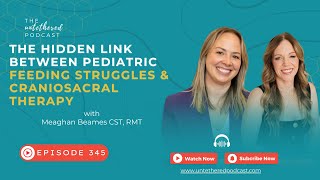
Craniosacral therapist Megan Beams explains how CST addresses fascial restrictions that cause feeding problems in infants, including torticollis and plagiocephaly. She typically recommends two sessions before a tongue-tie release and two after, with maintenance every three to six months. CST also helps regulate the infant's nervous system and supports caregiver co-regulation.
Questions this video answers
Episode 345 of the Untethered Podcast.
November 2, 2025.
700+ babies in five years.
More than 100 health professionals.
Generally 1–4 sessions for an acute issue, then maintenance.
Chapters
Optimal muscle function, or are we working and trying to lay down these motor pathways and these, like, you know, neurons with something that is suboptimal and that's where the CST comes in. So there's the emotional piece of the nervous system and then there's the functional piece of the nervous system.
Hi, and welcome to episode 345 of the Untethered Podcast. Today we have Megan Beams joining us. Megan is a founder and owner of My Baby CST and Beam CST Training Center. Megan founded the Beams CST Training center, offering tailored global learning for health professionals. Her mission is to ensure that every family in North America has access to qualified craniosacral therapists to help their babies cope with colic, latching issues, and all the growing pains that can make life of a newborn harder than it needs to be. In five years, she's treated 700 plus babies, taught more than 100 health professionals CST, and built a thriving practice in Toronto, Canada. With multiple practitioners working under her. Her knowledge goes beyond just the practical applications of bodywork and spreads out into being a leader in growing a business. She's also the host of the My Baby Craniosacral podcast with over 60 episod and 7000 downloads. Welcome to the Untethered podcast.
I am your host, Hallie Balkan. I'm a certified myofunctional therapist, feeding specialist, podcaster, business owner and mentor. This podcast is all about getting your questions answered and collaborating with colleagues to bring you the most up to date information in the orofacial myofunctional therapy, airway, tetheral tissue and pediatric feeding therapy space. If you're new here, I challenge you to keep an open mind and join my mission to spread this message far and wide. If you've been around since June 2019, thanks for being a loyal listener. As we jump into today's episode, remember to listen with correct oral rest. Posture, tongue up, lips closed, teeth apart.
Breathe through your nose. Let's get started. Megan, welcome to the podcast.
Thank you for having me. I'm pretty excited to talk about this today.
I know, I love it. Two podcast hosts podcasting away. You know, it's. It's a good time. So before we jump in, can you just share with everybody a little bit about your background and like, how you got into the craniosacral world and the work that you're doing now?
Sure. So again, I'm Megan Beams. I'm a craniosacral therapist, but before that I was a massage therapist and I became pregnant right After I graduated massage therapy, and really, massage therapy, I thought was a stepping stone to osteopathy. And I'm here up in Canada. And so osteopathy is a lot of manual therapy, right? So that's. That's the type of osteopathy we have up here. Anyway, I got pregnant, I had my first baby, and breastfeeding was awful. I was in so much pain for the first six weeks. And my mom, God love her, she was like, yeah, Megan, that's really normal. They just all. It's always painful. That's normal. And I was like, really? I just don't understand. So I looked into tongue ties. I looked into what could be causing all this pain. My. My son did not have a tongue tie. He had a lip tie. But I didn't know that I could get anything done for the lip tie. But anyway, so in my search of what the heck do I do about this, I found craniosacral therapy. And because I had already been thinking, like, oh, I want to really do osteopathy so I can with babies, I didn't realize that I could just do craniosacral therapy and essentially do what I wanted to do and not have to do five years of osteopathy. So thus began my journey into cranio. And then I got pregnant, and then I had another baby. And then finally I was able to go and take my training in infant cranio. And as soon as I. As soon as I took the first course, I felt like my entire future had opened up. I was like, I know exactly what I'm going to do with my life. I'm going to do cranio for the rest of my entire life. What I didn't know is that I was going to start teaching it. So I. So now I'm the founder of Beam CST Training Center. I teach health professionals all over the world how to do cranio for babies. And, yeah, I have a goal of just making sure that there are well trained professionals in every community because parents and families are struggling and. And they deserve the help.
I love that. I love that. I feel like we've lived very similar paths because I. I opened my private practice, fell deeper into feeding, not with infants and toddlers, but with like. Or, sorry, not with infants, but with toddlers, like, and, you know, preschool age. And then I had my own child. Breastfeeding was really painful for 13 months. It never went away. But I also got this same, you know, kind of feedback where, oh, it hurts a little bit in the beginning. And then I'm like, why does it still hurt now? Like, we're weeks into this. This is not beginning anymore. But anyways, fast forward. She threw me into the infant feeding realm. I now teach infant feeding. Hello. Right. Like, you know, and my goal is similar. It's like, can we please have enough, like, SLPs and OTs out there who can actually help these kids and get them off wait lists and make sure that, like, these children who need the work that you're doing. Need the work that I'm doing. Like, they need it now. They can't wait. Right. So we just need more providers who are qualified to provide this.
That's. That's exactly it.
Yeah. Yeah. So I love, I love the work that you're doing. And I'm a big preacher. Everybody knows of body work, like craniosacral work, you know, surrounding tongue tie releases and feeding therapy in general. Even if you don't need a tongue tie release, like, we know that that body is carrying tension. And anyways, I know we're going to get into all of this, but I'm always excited when I get to link up with somebody where I can, like, geek out on this topic because it's so necessary and so needed and. And it's been a while since I've had a craniosacral therapist on here. It's like, probably been a year or more. So it's definitely a conversation that was like, we need to revisit this. For anybody who is not going back and listening to old episodes. I have over 300. So, like, let's bring a fresh. A fresh conversation around this. So I would love for you to share what that connection is for anybody who might be newer to this conversation. But the connection between, like, craniosacral therapy and then like, optimal oral development, which is a big conversation in the feeding world and myo world and all the things.
Yeah. So it's a pretty deep connection, I would say. And that's kind of a pun because we work with deep fascia, so craniosacral. A lot of people are like, oh, cranial. That must have to do with the head. And so with tongue ties, they're like, that totally makes sense. But actually it's. It's so much more than that. So with cranial, what we do is again, we work with the deep fascia. We work, actually we work with every layer of fascia that we can to help find areas of restricted fascia and help to soften it, release it manually. And so the connection with tongue ties especially is that babies who have tongue tie often have other anomalies going on inside their bodies and other things that are really associated with tongue tie. So like torticollis, they might have plagiocephaly brachycephaly. They have these, you know, head shaped conditions that, that can cause issues with the mouth. And so what cranio does, like I said, is that we, we find areas that are tight. We do that in a way that many other modalities don't quite get to. Because we are so quiet and still and soft, we can find those deeper patterns of restriction. And again, because we're soft, because we are gentle, we can help this body to release itself. So I love stretching, I love exercises like, don't get me wrong, I do love me a good PT session. But cranio almost like in a way paves the way for this body to receive that, to kind of give it kind of a cleaner sleep. So that when we are doing those exercises, we have really well functioning bodies. We have really well functioning cranial nerves that service the mouth. They innervate the muscles of the mouth and the throat. And yeah, so that's, that's essentially the connection between CST and tongue ties. But again, it is so much more. It's, yeah, we're, we're working with the entire body.
Yeah, it's, it's a big conversation we have with families and even other providers because, you know, we know that these tension patterns, like if there's tension through the, you know, sternocleidomastoid and this baby's only feeding on one side and you see a head tilt and you know, there's this fascia that's constrained, you kind of go like, oh, hey, like I, you know, I see what's going on there because I know what to look for now. But as soon as someone says, oh, the baby only feeds on one side. Oh, hello. Like let's, let's go to a craniosacral therapist. Like, I think we need some tension release. We need to work with the body to like you said, kind of help it release because of all these deeper fascia layers that are, you know, if they're kind of tied within themselves, if you will. And so it's really cool when we do get to have a child, you know, a baby infant Todd or who goes and has this work and they come back and it's like they're like putty. It's like so much easier to work with them because things are moving and flowing and the Blood is pumping and you're like, oh, my gosh, the range of motion has improved. And the tongue and the neck. And so anyways, I'm sure you can speak more to that, but just about how, like, tension, like in the muscles kind of leads the tension in the cranial bones and all the things. And that definitely impacts a baby's ability to feed, to suck, swallow, breathe, you know, the tongue, the positioning, all the things, bottle and breastfeeding are directly impacted as a result. Absolutely. Yes, absolutely. Yeah. And so do you see, Like, I know people always ask me, well, how many, like, parents, how many sessions do I need to go to before I'm going to see results? Do you have a candid answer for that?
Yeah. So that is a question that I get all the time. And so generally what I say is I won't know until I'm done the first session. Generally speaking, it's anywhere from one session to four sessions when you're working with an acute issue. And then after that it's maintenance. So like every three months or every six months, depending on how old they are. I don't like to be like one to four and it's gone. Because with a growth spurt, some things will come back. Those deeper fascial strain patterns are kind of still there and then as they grow, they kind of come back. So that's, that's why it's never just like, you know, four and done. But when we are working with this acute issue, especially with pre and post tongue tie revision, we want to do two almost at minimum before and then two again at minimum after. So this is, this is generally how many we like to do. But sometimes depending on the severity of, of the other things that are going along with this baby, like, like you said, the head tilt or the side preference or the torticollis, all of those things, sometimes it does increase. So, you know, it is very baby specific.
Yeah. And then do you have thoughts on. Because this happens in real life, but thoughts on babies who either don't get the body work, you know, they're not getting the craniosacral therapy and, or they come to you after the release has happened. They're like, oh, my provider said I need this therapy. And now. And you're like, oh, gosh, I wish you came before the release, but here we are. We are.
Listen, I don't like to judge because every provider is different, every family is different. And then if I impose my views on the family, then they're going to say I did it wrong. But we can never go back, right? So I don't like to. I try really, really hard not to impose my opinion on this, but I do have them. But when a family does come and they have already had the release, I'm just like, well, that's fine. This is what we have to work with. What can I do to help you? Sometimes, though, it does require more homework. They didn't get the homework before. So this tongue is not, you know, working very optimally. It is kind of stuck in old patterns and old habits. So it does require a lot more of the exercises in the home care. But again, I'm not going to be like, I can't work with you now. So I just work with what I have in the moment. I would much prefer that they would have a couple of sessions of bodywork because those deeper layers of tension might limit how well it heals. Right. So if we think about the fascial lines that are all around the body, there are some that actually could be pulling the tongue down itself, right? So the stomach is connected to the esophagus. The esophagus is connected to the throat and is part of the throat and is connected to the tongue. If there's tension in that stomach, it could literally be pulling the tongue down. So I really want to get in there before they get the release so that we can soften the stomach, soften the esophagus or the fascia surrounding it so that after they do the release, the tongue is not being tethered by. Not by. By tongue fascia, by visceral fascia. Right. So that is why I like to see them before. If I can't, there's. I mean, there's nothing I can do. We can't turn back time. I wish we could, but, yeah, I would. I would much prefer to see them beforehand just so that they can have better outcomes.
Really? Yeah. Well, and I love that. I love the whole. You gotta meet people where they're at. Because in a perfect. In a perfect textbook world, yes, we want everybody doing xyz, but we know that's not always the reality. And so.
And even city to city, right, like my city, there are different providers who have different things, who have different beliefs. And so I'm getting them from all over the place. And I just have to work with whoever I have.
No, and I love that because I've met people where it's like, not necessarily craniosacral therapist people are like, oh, no, you didn't come to me beforehand. I can't help you now. And I'm like, oh, I mean, they need help. It's harder. It's going to be harder. It may take a little longer, but, you know, they're here now, right? And so it's like, really, in my opinion, it's very important to meet those families where they are. And I know, like, we all have our own opinions, like you said, of like, what we would love in an ideal world. Unfortunately, reality and what's ideal is not always matched up and that's okay. So I love it when I meet other people who are like, not passing judgment because you're like, I, I get it. And look, I'm a parent of a kid who. Two kids who've had tongue tie releases, one at five days old, one at 24 months old. I had it as an adult. My kids have been through multiple rounds of expansion. I'm an expansion myself now. It's like I've had it as an adult once before and did expansion as a child. You know, like, we live and we learn and things change and everyone's like, well, helly, have you gone for body work? And I'm like, someone asked me this on the record last week and I was like, no, really busy. And I was just in a business launch and it's on my list. But I called one person and I didn't follow up. They called me back, but I didn't call them guilty. You know, it's like real life. Like, it's just real life. Things happen.
Here's, here's the thing I think about it is that some people think, what good is it really going to do? I can do the mile after, you know, I can do the exercises. It's the stuff that is invisible that, that we work with. It's the stuff like, you know, the traumatic experiences we had in utero. It's the stuff like being born was really hard and those tension patterns are holding on in our bodies even as adults, that, sure, we could. Maybe you could do some like somatic experiencing something like that. But cranio is what is the thing that gets there, you know, so when people think I'll get to it one day, I'm like, yeah, absolutely, sure, I hope so. But. But you have no idea what beautiful things can happen from it. So. Yeah, yeah, it's really.
Yeah, well. And I tell people that in the past, I. Because I had at one point, I know I'm not a baby, but as an adult, I had my second round of expansion. Had it when I was a kid. And then as an Adult. I had. What's it called? Vivo's DNA Appliance. And it was really interesting because I was working. It was a physical therapist, but he was doing what he called, like, a manual counter strain technique. And he was like, our, like, modern counter. He's like, it's not your. Your typical counter strain. It's this more modern version of it. And it kind of reminded me because I've had craniosacral therapy before, and it kind of reminded me of that where it was like, he was barely. It was very gentle touch. It was, you know, he was doing brain mapping. And then he would come down on my body and he'd be like, do you feel that? And I'm like, yeah. And he's like, most like. It's like only 33% of people can typically feel, like, what we're doing and feel like they're. They're like, pulse with it, which I can feel that. So it's really cool for me because I'm like, I feel what you're doing. But the really interesting thing was he would go and do all of this different, you know, work on me. I would walk out feeling like I had a full body massage, but he barely touched me.
Yes.
All of a sudden I could turn my appliance that I couldn't turn before. And I was like, this was such a light bulb moment for me as an adult, because I was like, I get it now. I get it. This is the invisible thing you're talking about. This is what nobody can see. So nobody really appreciates. Especially because these babies we're working with, they don't have appliances in their mouth. It's not like we're turning something and we have this feedback where it's like, I can crank the appliance now. No. So I was like, okay. The fact that that happened for me and that I would then have to see him at a certain frequency to continue to turn my appliances was like, halfway through my intervent, I was like, my body's locked up. And his whole methodology was like, unlocking the body. And so I was like, okay, I'm sold. I get it. This is magical. Like, I don't even need to know how it works anymore. I just know that it does, and everybody needs this. And so part of me is like, I expanded very quickly with my current marpi, but that part of it is because of the procedure and everything that my current orthodontist does. And it's just been. It's been a very different experience. But it's also A very different type of expansion process. And so part of me is like, I really need to go. And I need to go because I fell on my butt three years ago and I like, my tailbone is protruding. And so like, when I try to work out, I. I can't sit on. Sit normally. Like I'm sitting on my foot right now. I have, and this is like an ergonomically correct chair. So technically I could sit flat and be fine. It's not totally flat, but on airplanes, in cars, like, I cannot sit in certain chairs and be comfortable with all because of the positioning of my tailbone. And one of my like, friends and colleagues in one of my programs was like, Callie, you know, like pelvic floor PT or Cairo or craniosacral, like, go see somebody. And I was like, yeah, I should probably do that. Three years. It's been three years, people. So, you know, it's on my list. It's definitely like something I need to do and figure out who that person is in Boca Raton. But, you know, I share this because I know how important it is. And yet here we are, so.
Well, I love that you share that because there's also. We all know how important it is, right? As providers. And sometimes we don't go, which also helps us to understand where parents are because when they don't go, it can almost be very overwhelming just to book the appointment. So, you know, there's also that.
Yeah, I mean, it's like when I look between my kids are getting their appliances out tomorrow. And so like when I look at like my schedule, their schedule, there's the holidays happening right now for us. There's, you know, all this back to school. I'm volunteering at school. My team, like, we were just in a launch and now they need me to do all these things that got pushed back. It's, you know, it's, it's the reality of life and going like, well, I don't want to be up till two in the morning doing my work. So I can't make an appointment right now. Like, I just scheduled to take my car for an oil change. I scheduled it 19 days out. Like, if that tells you where my life is at the moment, they're like, it's a one hour appointment. I'm like, I know, I'll see you on the 18th. Like, I can't do that, you know, so. But it's also prioritizing the things that we know are important and putting our money where our mouth is kind of thing. Right? Yeah, I'M like, that's a saying. So I'm like, this is a priority for me and it definitely needs to be prioritized more. But, you know, I think it is. I always like to kind of show, share the real, like this is the behind the scenes, real life, you know, stuff that happens. But when you can, don't be me. Like, go ahead, go after. Don't put it off. Like, I did do as I say.
Not as I do.
Isn't that right? Exactly. Yeah, exactly. Yes. So I know you also, you, you know, birth can obviously be a big stressor. Let's go back to the babies. And it's a big stressor on the nervous system, right? So we talk a lot about nervous system over here. So do you feel like it's helpful for resetting the nervous system? Can we talk about that a little?
Yeah, absolutely. Again, we work with fascia, but we also work with the emotional. The emotional human. Right? So when we're doing this, we are, we're allowing this fascia to feel safe, right? And so we're, we're, we're allowing this baby to feel safe in our hands, right? So we're doing very soft, safe touch and, and also tuning into the craniosacral rhythm is also very calming. And so in turn, it will then help to bring that nervous system down. It'll help down regulate that nervous system system. So it's not that we go in and we're like nervous system quiet. You know, we. It's because of what we're doing and the safety that they feel and the relaxation that they feel in their body and the unlocking that you mentioned, that's where the nervous system is like, okay, I don't have to be on guard anymore or I don't have to be on guard in this moment, I can actually relax. And so it's almost like showing the brain what it feels like to feel safe and to feel calm. And then, you know, babies are making neural connectivity, like neural connections, millions, you know, millions and millions every single day. And so if they can experience calm, which they probably haven't since birth, especially if they've had a traumatic birth, then their brain can then kind of travel down those calm neural pathways and help them to downregulate. So there's that. But also what we're doing is we're showing parents that their baby can feel calm and relaxed. And so it's almost like, is it, what's the, what's the acronym? When, when you watch something that's calming and it helps you to feel calm. I don't remember asmr. I think that's what it is.
Yeah, yeah, yeah.
So it's almost like, you know, relaxation through osmosis because they're like, oh my God, my baby can feel calm. Usually they have three states. Screaming, sleeping and eating, or all of them all at the same time. And then the parent can feel calm. And we know babies, you know, are co regulators, right? They only regulate when the person they are with feels safe to them. So that's really how we help with the nervous system. System.
I love that. And I, I ask that because I do feel like a lot of the babies that we get that have been in craniosacral therapy are calmer, right. Their nervous systems are more regulated. And it's because, you know, at least in my eyes, it's always been like, well, they're not carrying all this tension, so they're not struggling, so their body's not going into fight or flight. They're more in like the rest and digest, as we like to call it. And so when they're able to successfully feed and they're not swallowing too much air and then arching their back because they're uncomfortable and you know, feeling this tension pattern on one side when the parent tries to position them, on the other, breasts or, you know, certain bottle feeding position, you know, it's, it's a successful feed because baby feels good, baby feels good, so they successfully feed. It's kind of like this catch 22 of like, well, what came first, the chicken or the egg? Well, I mean, in most cases, if the baby doesn't feel well, if they're swallowing too much air, if there's dysfunction, you know, and people go, well, what do we work on first? All of the above. I mean, first we need to get them regulated. And I feel like if we can do this kind of work with the body, work with the CST and get them to that point of being like calmer, which, you know, they're regulated because of the work that you're doing that makes it so much easier for us when they come to us and we have to work on oral motor skills or positioning or whatever the case may be. So it's really, it's very cool to see that. And it's also, as you brought up the parent or the caregiver, that co regulation state where everyone I work with is like, well, we could just get the parents to calm down. I was like, listen, I've been there as a mama where both my kids had feeding struggles. The Second one was way easier. She was released at day five. Like, I knew what to do with her, but my other one was 24 months old when she was released. And we had 13 months of breath of painful breastfeeding. When your child is screaming, it hurts to latch them. You're turning your head away so they don't see you grimace. So tell me to calm down. Like, I mean, I'm calm in my way, but also as calm as I am. Like, my child can literally feed off of, like, talk about, play on words, but feed off of my energy, right? And so as much as I try to stay calm, if my body's tense and my child. Because I know it's going to hurt, right, when they latch and my child goes to latch, well, how do you think they're going to feel, Right? They're going to totally, like, that's. They can't tell you that, but they're going to sense that, and that's going to impact their state of being. And so, you know, it's. I talk a lot about this because, like, I've been there as a mom. I'm like, I'm the mom. I'm the provider. Like, I'm the educator. I'm all the things. And I think it's for nothing else. At least it gives you perspective when working with caregivers and understanding, like, where they're coming from. So I have a lot of clinicians who will say, well, we could just get the parent to calm down. Okay, well, easier said than done. Let's focus on the child first. And I love how you kind of brought it from that angle. If we can get the child to calm, the parent can see the child is able to calm. The parent's going to be able to take a deep breath and go like, oh, my gosh. Okay, we can do this. Because as a mother, you know, a lot of us feel like we're failing our children. All we need, all we want to do is feed them, and it's not successful. Why, you know, it's like this whole rabbit hole. So anyway, so I love. I just love kind of how you framed that. Because I think, again, if we can help the child in a way that brings them to a point of regulation in a place of calm, and the family, you know, sees that such. It's like such a powerful opportunity.
And I want to go back to the pain part, right? Where you say, you know, when you're latching, you're grimacing because you know it's going to be painful. And so when you think about the grimacing in your body, you can almost feel yourself locking up.
Right.
This baby can't tell us that they are already in pain. Right. And so, because they're in pain and they can't, and we're not listening in the way that we need to in order to know that they are in pain. They are just grimacing all of the time. And so parents think like, why can't I hold them this way? Why can't I lay them down? Why can't I, you know, why are they grunting so much? And. Right. So what we do in cranio is we generally, we can feel, you know, areas that are causing this baby pain. And so when they get out of pain, then that's usually where their body works a lot better. They're latching a lot better. So they don't have that reciprocal pain. Right. So it's not like, you know, because the parent is in pain, because the baby's in pain usually, you know, not always, but that's usually what's causing it. Right. The baby who has a side preference isn't like, I just like it better on this side. It's because when they take themselves to the other side, it hurts them. It either feels like a pinch or a stretch or they get dizzy or. Or they get nauseous, you know, and so what we do is we find that release it, and we can help to either lessen or completely take away some of these really troublesome symptoms.
Yeah, yeah. And so I think that all goes back to why it is so much easier to work with babies who have had this intervention. Yeah. Because then they're not carrying the same tension patterns at a certain point of intervention. And it makes everybody's life easier. And if we. Even if we need to still work on oral motor skills, they're no longer uncomfortable. They're. They're present and ready to do that. And I always talk about, like, these buckets of energy, especially with, like, older kids, where, you know, a kid who wakes up dysregulated from whatever it may be going on, you know, they wake up, they have to brush their teeth, they gotta get dressed for school, they have to have breakfast. And if they've got all these other challenges happening by the time they get to school, like, they've gone through five out of their ten buckets. Like, they only have five buckets left. Right. They get halfway through the school day, and they have expended all of their buckets. And it's a. You know, people go, well, I wonder why this kid is just melting down at the end of the day because they have nothing left to give. Right? And so it's like when we can kind of apply that to babies, these buckets of energy, if you will. You know, they. It's a little bit. It's not as obvious, maybe, because they're not able to communicate in the way that a lot of adults are able to pick up on. I know a lot of us can pick up on the cues, but the average parent doesn't know how to pick up on, like, oh, my child is at a zero out of ten. Like, we. We have nothing left to give. And it's really interesting, too. You know, you see these babies with tongue ties and these tension patterns, and parents will say to me, well, we can't do tummy time. Or they only do tummy time if they're laying on my belly, or they only do tummy time if they're on a wedge. Well, that's taken some of the pressure off of that strain pattern, so no wonder why they can't do it flat on the floor. That's, you know, a big one.
Yes. Yeah. And a lot of times they don't like tummy time because the same things that I mentioned earlier. Pain, dizziness, feeling like they're gonna throw up. And then, you know, parents who are like, oh, they always throw up on their tummies. It's like, sometimes, yes, it's pressure on the tummy, but sometimes they literally feel dizzy. Right. And so what? Like, for us, all of those little things, they don't like tummy time. They only spend, you know, 30 seconds on their tummy. They roll out immediately tells us where in their body they might be feeling that pain, that tension, those, you know, those things that are limiting their mobility and range of motion. And people are probably wondering, like, what does this have to do with tongue tie? Well, again, like I said at the very beginning of the episode, this. A lot of these things come because of, you know, bodies that grew with tongue tie. These are anomalies that they. They are tighter in utero. They get into poor positions in utero, and then usually, not always, but sometimes they can. They will need to be assisted in their delivery. So either emerg, C section or forceps, vacuum or extra pitocin, or all of those things that further solidify those tension patterns. And so this is where it all comes in, is like, well, what does that matter? There are some people who are like, I don't believe babies can feel pain. And you're like, okay, that's fine. You don't have to believe that. But what. What we can see is that babies are limited in motion, in range of motion, and those show up as those symptoms, like poor tummy time or not meeting developmental milestones or crawling with one leg or not pooping every day. All of these things are telling me, as a craniosacral therapist, where in their body I could probably find some issues.
Yeah, I feel like you described both of my kids all in one. Like, we had the one who was scooting and, you know, crawling on one leg. We had. And she was one who was released on day five. And we had her in body work, you know, sessions. But anyways, it was until I took her to a craniosacral therapist and an osteopath that she actually then released because we had her in pediatric peace, which kind of just kept her on track and never really seemed to actually fix the issue.
Yes.
And then she was about, I don't know, 12 and a half, 13 months maybe. And I took her to craniosacral therapist. And a week later, just because this is just how the appointments fell, we finally got into the osteopath and it was like this TT slash osteopathic doctor team. They both worked on her. And she literally got up. And so I'm like, I will never know which appointment or if it was a combination of both. It was probably a combo of both. But she got up and started to cruise, and then she was walking, and then she crawled on both legs across the couch a week after that, and I was, like, beside myself. And my husband's like, who cares? She can walk. I'm like, no, no, no, no, no, no, no. Like, things are integrating. She's crossing mid lines. She's on an unstable service. She's crossing. Both of her knees are down. And he was like, why are you freaking out? I'm, like, so emotional. You have no idea.
You have no idea why this is so good, her and this kid and.
Like, in therapies, like, and she's finally doing it. Like, after one CST and one osteopathic appointment. I was like, after months and months of pt, I'm not to downplay pt, but I've learned this is what we're saying.
I love me a good PT session, but there's something that they're missing. Right? Yeah, I unfortunately say that about SLPs. Is that. I mean, it's true. So much good to do when you are doing those oral motor exercises. There is so much. You're Mapping, you are laying down motor pathways.
This is beautiful.
However, are we working with optimal muscle function or are we working and trying to lay down these motor pathways and these like, you know, neurons with something that is suboptimal and that's where the CST comes in. The CST goes in and we try to. So you, you asked earlier about the nervous system, right? So there's the emotional piece of the nervous system and then there's the functional piece of the nervous system. So there's two aspects that we're working with, right? So the physical and functional piece of the nervous system is that we can, we can actually touch on the fascia that surrounds the nerves. Right. The actual cords. So everything is encased in fascia, including nerves. So what we're doing and what perhaps a lot of other modalities are not getting to is allowing the fascia surrounding the nerves to also feel safe. Right. If we. And usually they feel safe when they are approximated. Right. So when you bring the tissue together and closer, that's where it feels safe. When you go and you stretch it, it's going to retract and it's going to almost like keep it further.
Yeah.
Right. So we go in, we approximate that tissue, we soften that tissue, we allow it to be like, I don't need to guard, including around the nerves themselves. And then they start to open up. And then when, when we start that process of feeling soft and letting go, it's almost like a ripple effect through the rest of the body. That area lets go, which then lets go to that area that's, you know, the other part of the body, which lets go to the other part of the body. And like you said earlier, the blood flow is better. I would even say the lymph drainage is better. Right. And a lot of people right now are talking about how can we detox. Blood flow is bringing nutrients, lymph is removing waste. And so both of these are really, really important. And these are all things that help with the, the function of the body and the emotional state too. So this is, this is again where I, like I said, don't get me wrong, I love exercise, I love stretches. But after we do the softening.
Yeah, yeah. And it's. I love that you brought that up. There was a PT who works with the PT that I saw. They're both like pri trained, manual, modern counter strain technique, all, you know, brain mapping. Well, they're really creating their own system. Anyways, I remember Brian said to me, he was like, well, the problem is, and we were talking about my daughter. You know, when you do the stretching, like you're explaining, like you are actually working against the grain. He's like, if you want to release those patterns, you need to actually bring the tight muscle and into itself to then release it. And I was like, that makes so much. I mean, when he said it and he described like this, the, you know, physiology behind it, I was like, yeah. I mean, I'm like, so why doesn't everybody do this? Makes so much sense.
It is a philosophy. It is a, it is an ingrained philosophy, I think, you know, that pain equals progress. Right?
Yeah.
And, and so because we have, you know, deep pressure, people who love a good elbow in their back when, when their massage therapist beats them up, they feel better three days later. So there's, there's that kind of mindset, I think, from like, like maybe Cairo. They don't feel good the day after, but then they feel good, you know, two days after. There's this mindset of if I'm in pain, then it must be working. So we kind of have to get away from that because. And I think that's where people think that this stuff is weird and wacko and woo woo is because it's completely the opposite of what we have been told, what we have been educated on to believe. And so we have to be like, we have to start to believe a different possibility. And that is that actually feeling no pain can produce better results.
Yeah. I mean, arguably, putting yourself into pain is just picking that nervous system.
Right?
Exactly. Sure. And our whole goal is to move away from feeling that way. I've never really understood the whole, like, deep pressure when it comes to, like, deep tissue massages and everything. Like, I, I have a high pain tolerance. Okay. But that does not feel good to me. I'm like, I don't care what kind of relief that might bring me later. If it does not feel good now, I am not into it. And even when I go for like a relaxing massage and they start to get a little too. And they're like, is that too much? I'm like, yeah, ease up. Like, this is supposed to feel good. It's not. I'm like, I know I've got a knot, but can you be a little bit more gentle and like, working that out? Like, come on. So, yeah, I. It just intuitively. Right. I've always been like, I don't get the whole idea of causing more pain to heal pain, like, to, you know, Anyways, so I love that you brought that up because I think It's a really important consideration. I know we're almost out of time. Before we, we wrap up, can you talk to us a little bit for anybody who might be interested, because you mentioned this at the beginning of the episode, but like, building a business and infant body work. Any thoughts you want to share with us on that topic?
I would say that there are more people who are already searching for you than you know. Right. And so if you haven't started on your journey yet, there are literally hundreds of people waiting for you, and there are babies who are waiting for you. They're going to get born. So if you're like, well, I haven't done it yet, blah, blah, blah, there are still going to be babies who need you in five years. So if you start the process next year, that's wonderful. Okay. Don't think that you've missed the boat. The other thing I think people think is that there aren't enough, you know, they're worried about not making enough money. They're worried about how am I going to get enough clientele. I mean, depending on where you live and your. The socioeconomic status of your locale, it's possible that it might be harder for you to build a clientele. I would also say that there are parents who are not in your community who will find you from hours away, who will drive to you. So there is such a need right now. There is such a need, and I think it has a lot to do with obstetrical issues and interventions. And so there's so many people who really need you. This almost sounds like I'm begging, but.
But no, I get it. It's the same thing with pediatric feeding in general. Like, one of my friends who was a myotherapist, a pediatric feeding therapist, she went and did her, you know, she does body work now she has craniosacral work. And to see her clients, like, thrive because they're getting that intervention. And she actually drives because she's military. She'll drive like 45 minutes into town to go to a clinic clients, because it makes it easier. So I feel like there's always, there's always babies. Babies are always going to need you. And arguably, if you're already in this infant space, like, it's going to be so much easier for you. You know, obviously anybody could step in with that, the massage background or, you know, whatever the qualifications are. But if you're already working with infants and you're kind of like, I just, I want to figure out a way to help them More like, hi, body. This body work is so necessary.
It is. And so I. What I like to say is that this is not supposed to change the education you already have. This is supposed to help you connect the dots within the education you have. So I'm not here to indoctrinate you. I'm not here to make you do anything differently. I'm here to kind of connect those dots so that in your mind you're like, oh, this is why I'm doing it. That's why I'm seeing babies like this. Right. And so some people only add in cst, you know, every few sessions, or they do five minutes of it and it helps their practice that much more. You don't have to become solely a cst.
I love that. Amazing. So where can everybody find you?
So I have two accounts. So I've got my private clinic in Toronto and that is called My Baby cst. And. And then my school is beamscst. So Beams B E A M E S C S T dot com. Both of those of those are my Instagram handles. Makes it very easy. Yeah. And you can learn about the training that I have on the Beams website. And then the. My baby side is pretty much how I talk to parents and how I explain CST for them.
I love it. Well, thank you, Megan, so much for your time today and joining me. This will be amazing. I'm excited for everybody to hear this episode and work that CST in.
Thank you so much for having me.
Quick disclaimer. All information, content and material of this podcast are the opinions of the speakers and is for the informational purpose only and not intended to serve as a substitute for the consultation, diagnosis and or medical treatment of a qualified healthcare provider. Thanks for listening to this podcast. If you found value in this episode and want to hear more of these myotots, Airway and feeding related episodes, be sure to leave a review on Apple Podcasts and share this episode on your social media platforms. You can access free resources and all I offer@halibalkin.com or pop over to Hollybulcken on Instagram to get all the latest updates.
More from Hallie



What I Was Missing in Feeding Therapy: ARFID, Airway, and Myo with Samy Hernandez





