Episode 100: Reflecting, Elevating, and EBP with Hallie Bulkin
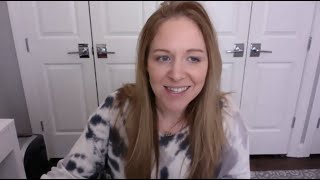
Solo-host reflection celebrating 100 episodes of the Untethered Podcast. Hallie Bulkin reviews the top-10 episodes (naming guests and episode numbers), describes her background (pediatric SLP, feeding specialist, orofacial myologist), promotes clinician collaboration and the 'elevation' movement, emphasizes that evidence-based practice relies on practice-based evidence, and discusses MYO, TOTS, airway, infant feeding topics and related products/businesses (e.g., MYOspots). The episode targets clinicians and parents and includes calls-to-action (reviews, Patreon, social follows, show notes).
Chapters
Quick Disclaimer all information, content and material of this podcast are the opinions of the speakers and is for the informational purpose only and not intended to serve as a substitute for the consultation, diagnosis and or medical treatment of a qualified healthcare provider. Welcome to the Untethered Podcast. I am your host, Hallie Balkan. I'm a certified orofacial myologist, feeding specialist and mentor. This podcast is all about getting your questions answered and collaborating with colleagues to bring you the most up to date information in the orofacial myofunctional therapy, tethered oral tissue and airway space. I challenge you to keep an open mind and join my mission to get this information out to the masses. Let's get started. Hi and welcome to episode 100 of the Untethered Podcast. I cannot believe that we have had 100 episodes. This is incredible and amazing and thank you guys so much for all of you loyalty listeners who have been with me either since the beginning or who have gone back and listened to the beginning episodes. You know, I was looking at the analytics for just how far we've come. I launched this back in, I want to say it was June, July 2019, that summer, middle of that summer. And the whole reason why I even launched this podcast, as I've mentioned before, was simply because I, as a mama and a practitioner in this space especially, you know, I was working on my specialty, I couldn't find a podcast that talked about tots and airway and myo and I was like, oh goodness. Well, in true Halle fashion, that means I need to create it. So here we are, 100 episodes. And it's been really cool to evolve over this past year and a half of putting together these podcast episodes for you all. There were times where I felt that there was a message or a topic that needed to be discussed. And so I did my own episode to to discuss those messages or to impart that information. And then other times I said, nope, you know what, we've got to get some other specialists on here who can really share their wealth. They can share what they know, they can share what they do in their daily lives in terms of treating patients and sharing knowledge. And so it has been a conglomerate, right, of different providers in this space and I am just so thankful and grateful for all of you listeners. For one, some of you have let us know who you love to hear on the show. And as always, if you have people you want to connect us with in your area that maybe I haven't met yet or come across, I'm always open to New connections. Because if someone has a message that they want to get out there in this space, that is the whole point of the Untethered podcast. So I've also used this platform to talk about education, to talk about learning from those who elevate you. Right? There's a whole new elevation movement. You can go back and listen to that episode that I launched recently. But also just a general message of everybody has a place here, right? Whether you're a parent or a practitioner in this space, you know, doesn't matter if you come from the medical side or you come from the parenting side. I've been in both places myself with my children, with myself, with my family, my husband. You know, we've been the patients. I've been the mom and the wife of the patients. You know, I've been the practitioner who is who. You know, for some of you who don't know me, I started out as a pediatric SLP and feeding therapist and honed my. My skill set in PED feeding. Really, you know, was doing a lot more of the oral motor stuff as it relates to feeding. And from there, I fell into the myo space and the tots space, and beyond that, you know, was able to recognize it in my own family, which I know so many of us go down that journey, we take that MYO course, and we realize, like, holy cow. All right, well, I have flagged the number of kids on my caseload. But also, hey, what about me? What about my family? Wow. That is why that was a really tough breastfeeding journey. Or, ok, I'm having another baby. Now I know what to look for in my next child. And that was me. And so I became even more specialized in that piece of what's included in my scope. And it honestly was a bit easier for me, arguably, because I had that background skill set as a pediatric feeding therapist. However, I was not previously working with infants, and I really got into the infant space following the deep rabbit hole of all things tots and myo, because it became inherently obvious to me that children are born with these issues, and then we live a whole lifetime. And I don't know if it was my colleague Autumn Reed Henning who said this. Correct me if I'm wrong, Autumn, or whoever did say this, but it's the whole concept of are we surviving or are we thriving? Right? And so what I like to do is help our patients in my practice and help therapists who are working with patients. I like to teach them how to take the patient who enters, whether that's you or your caseload that enters into that door, who's just surviving right now. Right. And help them go from survival mode to thrive mode. And so that's. I just love that. That was one of my most favorite things that I heard somebody else say. I will not take ownership of that because that did not come directly from me, but I latched onto it. I love that concept. Are you surviving or are you thriving? And I will say that, too, because I. You know, I've worked with male patients in their 30s, 40s. I had one who was in tears after an evaluation because he finally had hope after going to, you know, over a dozen specialists and nobody could help him. And then we finally had a treatment plan that would work for him and a team of people who could help him, and he finally felt like there was hope. Right? And then I've had other patients, adult patients, you know, where they. Because I do. I do adult myo. You know, I'm not treating as much right now, but previously, when I was doing more adult myo with the adult MYO patients, I really felt like they had no idea what they were missing until they did know. Right? You don't know what you don't know. So they would enter in, we would do the eval, and they'd be like, is this really necessary? You know, my dentist referred me to you, or I found you through a Google search, you know, and I coming to you for this issue. But I also feel like, okay, what you're telling me is that it's all interconnected to these various other things. And then when they go through the treatment plan and they meet with the right providers and they, you know, quote unquote, fix all the things, if that's what you want to call it, you know, they come out the other side and they go, holy moly. Like, holy cow. I had no idea what I was missing out on in life. Like, I didn't know that I could have this level of energy. I didn't know that I could feel this good. I didn't know I could sleep that well. I didn't know that I could feel refreshed when I woke up from a night of sleep. I had no idea that my sleep was, you know, crap, I'll spell it in case you're listening. With kids in the car or something, or in your house, you know, and so it's one of those things where. When we can give people the opportunity to thrive, if that's what they seek for themselves, why not? Why not? Right? And I do have to, you know, and we are going to talk about the top 10 episodes because I want to reflect back on them for a few minutes. The top 10 episodes out of the 100 that we've recorded so far. But I want to reflect back on something that I actually saw. And again, I'm going to reference her. My dear colleague, Autumn Reid Henning posted just yesterday, like the day prior to me recording this, she wrote, evidence based practice does not exist without practice based evidence. Like, let that sink in. Let me say it again so you can truly, fully absorb what I'm saying. Evidence based practice, ebp. Right. Does not exist without practice based evidence. Okay, and so what does that even mean? Well, as clinicians, we have to get out there, we have to trial things, we have to treat, and we need to be safe in what we do. And we need to have an understanding of what we're doing, why we're doing it, understand where the patient is now and what our end goal is. Right. But we can't research anything until something's been trialed. Right. And so my whole thought process here with this practice based evidence, because I love how she phrased this, thank you, Autumn, is we all need to stop tearing each other down. And for those of you parents who might be listening or patients who might be listening, you know, the reason why it's confusing and there's so much misinformation out there, or you don't know what to listen to and what not to listen to. It's because even within our own practices, our own professional spaces, there are people who tear each other down instead of elevating them up for the work that they're doing. And I don't stand for that. I only stand for elevating, which is why the elevation whole movement was even, you know, conceived. And really with the elevation movement, as I mentioned previously, and I'm not going to go full blown into that because I've already done an episode on it just recently, so some of you probably have already heard it. But what is it? It's identity skillset and mentorship, but it also stands for truly elevating your colleagues in a way that, you know, we support each other. And another colleague actually commented on one of my posts today on Instagram, if you don't follow me, go follow me. Alliebalken Stephanie castelkarpovs Stephanie, I hope I'm saying your names correctly. And she's been a great. She's become an Instagram friend and we're in the same space and everything. So we've had some Nice interactions in the my own membership and on Instagram. And it's just so nice to find colleagues who lift each other up. Right? And Stephanie, I had posted about the elevation movement actually recently, and maybe it was even today on Instagram the day that I'm recording this. And you know, it's all about elevating yourself, your business, your colleagues, those who work closely in the space around you. Because, you know, yes, we teach skillset and identity and mentorship, and that is interwoven into everything we create and do. But we also need to elevate each other by sharing these things so that we can recognize, well, what skill sets do I need to beef up? Like, what do I need to learn more about? Because, you know, the danger that we get into by calling ourselves experts or putting anyone professional up on a pedestal is nobody knows everything. And I think that we forget that those of us who've been in the field maybe for a certain number of years or who do specialize in certain things, yes, maybe we do know more about certain areas, but we're all still learning. And every patient that we treat, every patient that walks in the door that we see through teletherapy or whatever, however, maybe their house, if you're traveling to them, every single patient is different. And that's why we call this individualized therapy, right? So we need to support each other because that allows our creative juices to flow. And if we can truly elevate each other by sharing our skill sets and mentoring each other within our programs that we offer, but also helping you all realize, like from an identity standpoint, who you are, who you want to be, and working from that place, we can all be successful. And the benefit of that is that our patients get the best providers because if we're working from that place, then they get top notch providers who don't just say that they want the best for their patients, but who actually, truly can deliver the best because we're able to put, you know, them first and listen to what's going on and figure out, like Autumn was saying, right? Practice based evidence. What has my practice taught me works in this scenario. Oh, wait, that's not working. How can we tweak this? Right? So anyhow, I know I've gone off on a little tangent here, but I just had to share that because I think it's just, it's just so aligned with what this whole movement is and with what Autumn even mentioned, because a lot of us tear each other down over the evp. That's where we see that's really where a lot of people tear each other down. Not everybody, but there is a big disconnect of that. And one of the things going back to what Stephanie said was she said, you know, lift each other up instead of trying to squash each other's own unique greatness. Empowered women empower women. And I was like, oh, empowered women empower women. Yes. Stephanie, like, amazing. And she was. She said, thank you for the empowering environment. And you guys, that's just who I am. It's just what comes through. Because I really want this for you all. And so as much as this is Hallie's Untethered podcast, this is really for you all, this is really your podcast. And so if there are things that I can either talk about or teach you through here that you want to hear more about, because I'm going to guess based on the top 10 episodes, what you guys want to hear more about, and we'll talk about that in a minute. But I'm also going to venture to guess that maybe there's other things we haven't had on here yet that you guys would also like to hear more about. So do all, you know, feel free to reach out and say, hey, you know, I listen to your podcast and I'd love to hear more about X. Or I would love to hear you have a conversation with somebody in this space. Or, hey, I have this really cool practitioner local to me. Like, would you be interested in having them on the podcast? And I'll look into what they do and see if it's a good fit, you know, so definitely reach out. I'm totally open to that. I promise. I'm approachable, I'm kind. Nobody's going to bite your head off. We are very nice over here, and we welcome your suggestions. Anywho, all right, so going back to where we were with the top 10 episodes. So I'm looking at it over here right now, and what's pretty cool. And I will say I always just kind of assumed that the most recent episodes would be the most popular because they are the more recent ones. And when there's 100 episodes, I don't expect that everybody's going to go back and listen from the beginning, although some of you have told me that you've done that, which I think is just absolutely incredible to listen to myself. And I know it's not just all me, but to listen to my voice for that long, Kudos to you. No, I'm kidding. But yes, let's talk about those top 10 episodes. So the Top. So actually, let's go backwards, right? So number 10 was actually episode 64, early intervention with growth appliances with Dr. Lenny Kundal, who is out of Connecticut. And. And what's really cool there is that we had a really great discussion about how young you can start appliances like an ALF or, you know. So if that's something that interests you, go back and listen to that episode because we need to be having this early intervention conversation more frequently. If we can prevent these things early on and get the orofacial complex growing right in the right direction, that will support the teeth growing in and so on and so forth. That right there is support so key in the work that we're doing. And it's just a fabulous discussion. Number nine was episode 34, Tits for Tots with Michelle Emmanuel. And that one is. Oh, gosh, what does it stand for? I know it was Intentional Tummy Time. I'd have to go back and look at specifically, like, what that one stood for, the titt. I'll look that up while we're talking about it. But Michelle has actually been on the podcast twice now, and she's just a wealth of information, so definitely check her out. Therapeutic Intentional Tummy Time for Tethered Oral tissue. That's what that was. That is what Tits for Tots stands for. So you guys really like the TOTS talk. So we're going to be doing some more of that. I'll tell you more about that in a second because you're going to see why I'm saying that. So number eight was episode four, which was with my dear friend and colleague Autumn Reed Henning, who I mentioned already during this podcast episode, and where to start and end with Tots. So there we are again. And so she was actually my second guest on the podcast. Episode one was an intro one. Episode three was me just sharing Lily's journey and, you know, a little bit more on that front. And we'll get to episode two in a second because that's also in the top 10. But yes, episode four with Autumn. Go and listen to that one if you haven't yet, because it's just phenomenal. And we all know that Autumn teaches the TOTS training. She was the original TOTS training. So if you are looking for a TOTS course, then you want to take Autumn's TOTS training. And she's Chrysalis Orofacial, so you can follow her on social on, like Instagram and check out her website and everything for those courses. Episode 77 was Body Ties, the full body connection with Ron Ruska, who is a physical therapist of the Postural Restoration Institute, another great organization. So definitely go and check out PRI if you want to look into really fully understanding the entire connection throughout the body. And you know, and I love how Ron said, you know, really we have body ties, like there are ties throughout the body. And he doesn't necessarily mean like you have a tongue tie in another place in your body. Right. But when things are tight or things there's torqued, you know, things are torqued for a reason. It can be highly related to respiration. And I actually took one of his courses on postural restoration and it was a great course. So check him out, especially if you are a PT or someone who does certain types of body work. But also he does have courses for SLPs, OTs, those of you who might be interested in learning a bit more, but who may not go through everything. PRA offers really great organization. And I get very excited when I meet pts that have been trained through PRI because I know that they have this greater understanding of that full body connection and airway arguably, but like airway as it affects us like down at the diaphragm. Not, I'm not talking just, you know, at the level of our neck. So great episode. That was episode 77. Episode 63 was getting down to the Root Cause with Brian Hockel. He's a dentist out on the west coast and he is also just a very well knowledgeable dentist who speaks on growing, you know, growing forward and laterally, not just one direction. Right. We don't want to just grow things laterally. We need to grow forward. And he shared a bit about. I believe I just listened to a training that he gave at an online conference, but I believe on this episode we also spoke about his daughter maybe who, who you know, her expansion and yeah, so another really great episode. If you want to hear from like an air centric dental provider, he's fantastic episode. So number five was episode 81, which was one of our more recent ones and that's advocating for all children with tots. With another one of my friends and colleagues, Vanessa Anderson Smith. And Vanessa does present for Talk Tools frequently and she is a, you know, a TOTS advocate, if you will. So it's really, it was really fun to talk to her because she also works with kiddos, not just in early intervention, but special needs and has a good approach, good comprehensive approach to working with kiddos who may not be your traditional MYO cases that need a frenectomy. Right. There are other children who Needs who need taught releases, tether, oral tissue releases, and who might not always be the easiest kiddos to prep or to do post op therapy with. So really great episode. I know we talked about advocating, even on a parent level, for your child. So I think that's also why that one's gotten so much attention, was because, you know, parents, we want to equip you with the right information so you know what to ask and you know what's going on. So you also know how to approach this topic and even find those providers in your area. So that was episode 81 episode or number four in the rankings. It was episode 57. So almost about halfway through. And that's where we had Dominique Kennedy on. And that was a great episode talking about cultural sensitivity and our role as speech language pathologists. It really applies to everybody in this space or anybody in the therapy community. However, Dominique and I are both SLPs, so we focused on that, especially since SLPs really focus on communication in general. And we feel that we need to be sensitive to every family's background, culture, traditions, you know, call it what you want to call it, but we need to be looking into these things when we're working with families because there could be language differences or dialectical differences there. You know, we need to make sure that we're looking at differences, not just labeling everybody as disordered, but even in when it comes to feeding therapy or our myo and tots approach, we need to consider that family unit and what is relevant to them. What are their values? You know, what, from a cultural perspective, what do we need to be sensitive to in our approach? That we are not projecting what we believe to be true on them, but we are working from their truths. Right. Because we are a unit and we need to work together. And so that was a really powerful episode, and I am so glad that Dominique was on to have that conversation with us. And then number three in the rankings was episode 82. Bottle refusal is not always a Feeding Disorder with Jill Rabin, who was actually. She's an SLP and an ibclc. And she had come back on the second time. This was the second episode that she had done with us. And, you know, there was actually some interesting dialogue about this in the Facebook group after we had this, because somebody felt like it might be a little misleading. But I want to go back to the point that sometimes babies will refuse a bottle, and that doesn't mean that the feeding is disordered. Right. So do we assess them? Do we look for what's going on? Yes. But do they all have a feeding disorder if they refuse the bottle? No. I think that American culture especially really highlights this and pronounces this as an issue. Because when you expect your mama to go back to work at three months postpartum and she's been breastfeeding, and a week before she goes back, she tries to pull out the bottle, because now baby's gonna have to take formula or breast milk if they weren't doing formula already from a bottle. Or maybe there's doing full breast milk from a bottle. Whatever the case may be, if that happens. And all of a sudden baby's like, nope, nope, nope, nope, nope. I'm good. Don't need this. That's stressful. Right? And so we really got into the nitty gritty of talking about behaviors and what to look for and when there might be an issue versus not. And I think one of the key drivers here is we don't want to call babies behavioral per se. Like, we're not saying they're being lazy or they're just, you know, stubborn or. No, we're not attaching these types of labels to them. But we're talking about from a behavioral standpoint. Right? Is behavioral approach to helping the baby. Meaning, like, what we do in speech and language therapy can arguably could be considered a behavioral approach. This is different than applied behavioral analysis. It's not. I'm not saying aba, but what are we doing? We're watching what they're doing, and we're responding. It's responsive therapy to see how can we change the behavior at hand or how can we support what's going on here to make this successful. Right? And so hopefully this makes sense to you guys. But the way that it was discussed was in a way that we want parents to realize that there could be an issue, but it's not always an issue. And I think that as soon as a baby refuses a bottle, there's a big movement online to flag them as having a feeding disorder. And that is just not the case always. So that was really what we were highlighting here. And Jill is a wonderful resour. Jill Rabin is a wonderful resource for, you know, both these babies. She's. She's treated these babies, and she's helped mom get baby on the bottle when there wasn't really a true feeding disorder. Right. The feeding was not disordered, but she also does work with disordered feeding. So she's very well equipped to know what might be a more, you know, refusal type issue and what might be an act, a. An oral motor based feeding disorder or other type of medical, you know, response that's causing a refusal. So hopefully that makes sense. But go and listen to that episode because it was a great one and it's definitely. It was number three in our rankings in the past. Well, actually for all time. I did, I went back and said, okay, give me the all time stats back from like July 2019 to January 18th. Nope, it's February, February 18th, 2021. Give me the top 10 episodes of all time. So, yeah, so that one's, that one's popular. And I think it was just like, you know, one person was questioning it and we had some good dialogue around it. So I want to make sure you all understand too, that this was meant in a very positive way and not meant to be a, like highlighting anything negative. So it was a really great episode. Number two in the rankings is episode number two. Two for two is Tongue Tied, a pesky little string under the tongue. And that was with Richard Baxter, who is a dentist in Alabama. And he's become very well known because he wrote, you know, the book Tongue Tied. He also has a course he offers and just a great resource and advocate for breastfeeding mamas and even other children and adults who are tied because, you know, Richard Baxter has really set out to advocate and it's not easy. I want you guys to recognize that you might see us create these podcast episodes and you might see other providers, you know, get out there and put their name out there and say they're doing X, Y and Z and they've created this course or they've done that. It takes a lot because you're going to be judged one way or the other, whether it is a parent or a professional in your space or another related professional or whatever. And so to put these things out there, I really commend all of these individuals who I've mentioned today. And we'll get up to number one as well in a minute. But I really want to commend them because they've really shifted the industry and they've normalized this conversation quite a bit in the tot space, you know, especially individuals like Autumn Reid Henning and Richard Baxter. And so I think it's really fabulous that we have individuals paving the way. Look, tots are not new. They've been around for a very long time. If you guys were on my free training, you knew about that. You learned about that about a week ago, two weeks ago, maybe three, four weeks ago by the time you listen to this. But the point being, it just wasn't we didn't have these same avenues to discuss it and to share content and to have these conversations. And now that we do have these outlets through podcasts and social media and online courses and in person courses and all that, those fun things, you know, now we get to have these conversations. And so some of these people who are kind of re pioneering this space, you know, it's very evident as to who some of these people are because you see their names in the top 10 episodes here. You guys have made it very clear that these are episodes that, you know, are of high value to you. So, you know, and Richard was my first guest on the show, so I thank him for believing in me and for coming on the show as a guest when nobody else had ever been on the show before, because he and I were not like, you know, best old buddies or anything. I just said, hey, you're a big name in this space. And I think people want to hear from you. You want to come on the show. Like, let's talk about that. That pesky little string under the tongue. Like, let's have a conversation about these tongue ties and symptoms. And he dropped a lot of good information in that episode. So definitely go back. That was episode number two. I think a lot of you have gone back, but go back if you haven't, and listen to that one. And then episode number one is. Or rank. Sorry, rank. Number one is episode 76. And that was a more recent one, being that it's in the 70s. But that was the myo spots episode. Correcting Oral resp. Posture one spot at a time. And that's where we talked about the myo spots that Dr. Job Faragala and Dr. Ibrahim Aldib had created and have created and that they're selling. And they've just came out with it. I know. They just came out with a new flavor. I believe it's strawberry. I have to go back and look. It's escaping my brain at the moment. But I tried them, and I have to say, for me personally, I really loved that they last about an hour. You can use them actively or passively in therapy, or passively just to train the tongue to be up there while the child or the adult does some other activity. It is tiny, and you do need to place them correctly. I did it wrong the first time, and they, like, flew out of my mouth. I was like, okay, let me read the instructions. It's quite simple. Hallie just did it wrong. And so you literally just take your thumb and you press it up into the Spot and hold it there for 10 seconds, if even that. And it sticks and it's up there. And it stays up there until it dissolves. And you keep your tongue up there to dissolve it. And if your tongue is up there, it will dissolve. And about an hour's time, if your tongue is not up there, then it probably is just going to hang and it's not really going to dissolve super fast. So really good indicator of, you know, if a patient is able to get the tongue up there and keep it up there. And so that's really. That was really cool that they had that, because prior to that, I've used other things, but I either didn't like the ingredients or the other things were even more expensive. Or they. Or like chloroplast, for example, is just not something that we should be swallowing. And you could have your tongue up there in the chloroplast, but it doesn't dissolve, it doesn't go away. And to get it off of your palate can be really challenging. And so a lot of my patients were not a fan of this stuff. They really did not like the chloroplast. And I was like, I don't. As someone who has an organic household that really tries, you know, the 80 20, I really tried to be healthy and watch what we're putting in our bodies, on our bodies, you know, using in our kitchen, using products for cleaning my house. Yeah, yeah, I'm one of those people, you know, I really was like, I don't feel good about giving this to the clients, even if they don't mind. Like, it just. It doesn't fit with my value system. And so having them come on this episode and being able to speak with Ibrahim and Shahab and learning a bit about what goes into their products and how it was important that these be real ingredients and how, you know, because they do dissolve and we do ingest them. You know, they really didn't want chloroplast to be the norm either. I just absolutely loved everything behind what they're doing. I love how easy it is to use and how a patient could basically buy a bottle and have it for use for a while. And really, by the time they finish that bottle, they probably don't even need another one if they're actually doing the work that we've given them. So that tongue should then be up there. If there isn't a oral restriction or if their palate isn't too high and narrow, there isn't like a tongue space issue. So anywho all that to say I was really excited to see that as the first episode, because I'm hoping that that's also benefiting them because they own MYO spots. That is also a business. And one of the things that you'll recognize, too, amongst those who came on the podcast is we all, every single one of us who are here in the top 10. We are all business owners in these related spaces, whether it's, you know, a dental practice, an OT practice that, you know, with Michelle Pre Crawling Infants or her thing. And she teaches in that space as well. You know, Lenny Kundal is a dentist, and so is Brian Hockel, you know, so is Richard Baxter, you know, and then you've got Vanessa and myself, and you've got Autumn, and we all own, you know, pediatric private practices. Although I know Autumn treats adults, too. And arguably my practice also does adults for MYO and tots. Right, You've got all of. And then Ron Ruska, who is a PT and owns, you know, his own business, he's that big name behind the Partial Restoration Institute. But you know what I'm getting at here, and I believe Dominique. Dominique, correct me if I'm wrong, but I'm pretty sure you also have your own business, too. I know Jill does. So it's one of those things where it's really cool to just see all these different business owners in this space sharing their message, sharing their wealth of information, helping patients advocate, teaching other therapists and clinicians, and elevating each other all the way through, really just imparting information and having that dialogue because it really helps to discuss these things and gain a better understanding of each other's specialties and professions and even businesses at times to really get a good grasp on, you know, how the world goes around. Okay, so, you know, I love this podcast, but it has just become so much more than just a podcast to listen to in the car in time passing, you know, And I thank all of you for your messages and everything you've shared with me over the past year and a half as you've become, you know, loyal listeners. And you have, you know, thanked me for information that either helped you on your journey or your child's journey or your patient's journey. And they say your journey. I think that was the first one I said. It's just. It's absolutely, absolutely incredible. And everything that I do, I will tell you. I do it because I just get this idea that this needs to happen, this is missing. And I want information to be accessible. I want information to be available And I want it to make sense. I want information to be easily digestible. So we need to make sure that you know, when we are teaching others, we're not. Look, you can charge all you want, right? I arguably will say, like my, my membership is a very low fee for what you get every month. I know my feeding course is expensive, but it's 40 and a half hours and it's a comprehensive approach and people are actually going out and assessing and treating after they leave the 12 weeks. How do I know? They've told me. Okay, so I'm not here to toot my own horn, but in everything that I out to do, be it this podcast, be it Feed the peas, be it the MYO membership, be it my business mastermind or my one on one coaching clients that own private practices. Because yes, I do that too. Be it my local private practice and my therapist that I collaborate with and train. And now I'm creating a business course. I'm also creating a mayo like an intro MYO course because you guys keep asking. So we are going to do was already kind of in the works. But you know, other things sometimes bump things back a few months. So it's coming down the pike. But the whole goal out of everything I do is to serve a purpose in your life. That is I want to make this information accessible, I want to share it, I want it to be easy to digest because yes, some of these topics can be relatively heavy, especially if you're new to them. But I want it to be easy to digest and, and I want it to be functional. I want you to take what I'm giving you and be able to leave and apply it to your patient caseload. Whether or if you're getting into a new field, a new, not new field. Well, yeah, if you're getting to a new field because some of you are grad students. But if you're getting into a new population that you're working with or new, you know, maybe you're new to Maya or you're new to PED feeding. The goal is that you can actually take this information and use it with that patient in front of you and not go, oh my gosh, I just paid all this money for that course and I have no freaking clue how to assess or treat. Because I hear that all too often in our industry. And that's where I said that ends here. I want you guys to take the information, leave with it and be able to use it. But also, we like to not always give you straight up answers in my courses which many of you have come to learn. You'll get the answers, but we make you think, right? We've turned a lot of you into critical thinkers, and that's also super important to us because we don't want you to have to rely on us forever. Yes, we all need mentors, and yes, I promote mentorship, and yes, it is super important. But I also want to cut you guys loose, cut that umbilical cord so you guys can go out there and help your patients without feeling like you have to second guess yourself every time, you know? And yes, you're going to do ongoing continuing ed, and yes, you're not always going to have the answers to everything. And it's okay to tell a patient, you know what, I don't know, but let me research that for you. Right? All kinds of goodness that can come out of this, this conversation. But the point being, we need to start elevating each other up. And I hope that you all take what I'm teaching you and take what my colleagues that I have invited into my programs. I hope you take what they teach you, and I hope that you are like 100 times more successful than I am as a therapist, as a business owner, as whatever you desire. Okay. If it helps you get there, I feel like my job here is done. And. And in order to do that, you have to be getting results for your patients. Right. So, anyways, I'm going to wrap this up with going back to what my friend Autumn was telling us about, you know, her whole evidence based practice thing. And that's why that was my first reel that I created last month. Evidence based practice does not exist without practice based evidence. So if that's the only message you take away from this hundredth episode, thank you, Autumn, for that. And go follow her. We really need to start looking at what are we doing in therapy that's working. Right? I'm not asking you to write the research, fund the research, do the research necessarily, but arguably the work that you do every day. Those are cases, those are real lives. You're getting real results. If you feel so inclined, document it, share it. The more we share, the less people can say, oh, that doesn't work. Right. Because if we can show before and after photos of a face that has physically changed of a CBCT scan with an airway. I know we don't do the cbcts, but our colleagues do. With an airway like mine that expanded with adult expansion, which people say can't be done. Well, look, we have hard evidence right here that it can be done. And I'm thriving now. I am a totally different human. Like I actually wake up in the morning and I don't feel tired when I get seven hours of sleep. So I've had personal, I've had my own personal journey and changes. And some people say, well that's great Hallie, but you're one person. Well, this is happening for thousands and thousands and thousands of patients from birth to death on a daily basis because there are clinicians out there who are going, you know what? I recognize that myofunctional therapy is in our scope of practice and that we should be identifying tethered oral tissues and we need to understand airway and who to connect with in our community or who to build up this understanding with if there are providers who maybe aren't yet in that space. And so if that's what you guys get out of this podcast, I would be so grateful. I just want to make sure that we are truly giving you the information you need to get out there and help your patients patients the best you can. And if like I said before, if you're a patient or a parent of a little one, by all means, I hope this is helpful for you too so that you can take this information and know how to seek the services that you or your child might need and or other family member and really just be successful in getting access to those services so that you can, like I started to say at the beginning, thrive, not just survive. So we are going to wrap it up there. Thank you guys so so much for 100 episodes. Absolutely incredible. We've got lots more coming for you. Some great guests that we have pre recorded just recently this week in the upcoming weeks when mama sharing her story with her daughter and she's now in the MYO space and just absolutely incredible amazing things coming in 2021. So stay tuned for some big things. We got more coming your way. I hope everybody is coming, having a great day and thank you again for being such a loyal listener to the Untethered podcast. Thanks for listening to this podcast. If you want to hear more of these MYO Tots, Airway and Feeding related episodes, be sure to leave a review on Apple Podcasts or pledge a small amount on patreon.com the Untethered podcast. If you found value, others you know in this space will too. So be sure to share this episode on your social media platforms and join us okay her on Facebook on my Facebook page at Halle Balkan Biz on Instagram at at Halle Balkan and you can head over to theuntetheredpodcast. Com to grab a copy of the Show Notes, where you can also subscribe to be kept up to date on the latest podcast episode.
More from Hallie



What I Was Missing in Feeding Therapy: ARFID, Airway, and Myo with Samy Hernandez





