Episode 104: Bullying in the Professional Therapy World with Autumn R. Henning SLP COM IBCLC
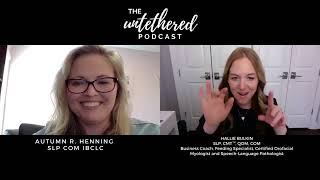
Episode 104 of the Untethered Podcast (host Hallie Bulkin; guest Autumn R. Henning) discusses bullying and anti-bullying within the professional therapy/SLP/orofacial myology community. The hosts share personal experiences of online harassment, gaslighting, power dynamics, reputation management, disengaging from toxic groups, mentorship, and the 'elevation' movement to uplift colleagues. Practical advice includes when to refer, how to respond, disengaging and seeking supportive communities.
Chapters
Welcome to episode 104 of the Untethered Podcast. Today we have my dear friend and colleague Autumn Reed Henning joining us. Autumn is a certified and licensed speech language Pathologist with her Certificate of Clinical Competence from the American Speech, Language and Hearing Association. She is also a certified Orofacial Myologist via the IAOM and an International Board Certified Lactation Consultant. Autumn graduated from the University of Kentucky with a Master's Degree in Communication Disorders. She's currently appointed and in good standing as an Assistant professor with the Voluntary Faculty Series in the Department of Communication Sciences and Disorders at the University of Kentucky College Health of Sciences. She was a founding Board member for the International Consortium for Oral Ankle Frengula Professionals and she specializes in oral function and development throughout the lifespan. Autumn is a founder of Chrysalis Orofacial, which functions to serve patients and provides continuing education to colleagues globally. She's married to Dr. Zach Henning and they have a daughter, McKenna Grace Henning. They reside in Greenville Greer, South Carolina with their beloved cats. She loves traveling, reading, church and any activity with family. Quick Disclaimer all information, content and material of this podcast are the opinions of the speakers and is for the informational purpose only and not intended to serve as a substitute for the consultation, diagnosis and or medical treatment of a qualified healthcare provider. Welcome to the Untethered Podcast. I am your host, Hallie Balkan. I'm a certified orofacial myologist, feeding specialist and mentor. This podcast is all about getting your questions answered and collaborating with colleagues to bring you the most up to date information in the orofacial myofunctional therapy, tethered oral tissue and airway space. I challenge you to keep an open mind and join my mission to get this information out to the masses. Let's get started. Autumn, welcome back to the show. It's always a pleasure to have you on.
Glad to be here Hallie. And yeah, I'm excited about today's topic.
Absolutely. So I know this is a hard to talk about topic for many and you and I have chatted about it quite a bit. We recently made a little reel on this topic so I think this will come by no surprise to everybody, you know, who listens and knows us, but we're going to talk about bullying and anti bullying and so you know I'm going to turn it over to you because I know you and I were just chatting a bit and we were talking about really just about behaviors that we've seen and how bullied people. You know, you had said this bullied people bully others and so let's lead in with that.
Yeah, yeah, so, yeah, like you said, you know, did that little video on Instagram and you know, even prior to that would get a lot of messages from other therapists and even, you know, folks outside of our general profession, so even dentists and, you know, other disciplines. And a lot of people have experienced it. And, you know, while I want to say I was surprised, I'm not surprised just because of my own experience and in talking with you and other colleagues that, you know, the same sort of things have happened to them. And I do try to always approach things from that standpoint that, hey, bullies usually are bullied people and, you know, they learned that behavior from somewhere. And what I found is it's usually a defense mechanism or self preservation mechanism. So, you know, I need to knock these people down a few notches so that I can feel elite and powerful and, you know, the most advanced and whatever else. And so. But what they don't realize is, honestly, it probably just makes them feel worse over time. They just don't even realize it. You know, that short high of knocking somebody down, you know, it doesn't last and it doesn't move the field forward or help anyone. So some examples of things, you know, there's, you know, things have happened in, at conferences and courses more readily on social media. And I think, like, people sometimes forget their manners or, you know, totally hide behind the screen and the keyboard. And two, I mean, I will say that sometimes things can be taken out of context, but what I want people to hear is that, you know what, everyone can have a bad day. You know, I may snap at somebody online or something, be taken out of context. And it's how people respond to it. And is it a, is it a pattern? Does it happen often and numerous times and you know, when, when someone is, hey, that really hurt my feelings or, you know, that wasn't the greatest way to say that. How do they respond? You know, is it, is it an apology? Is it pushing back? Is it gaslighting? Is it, you know, what, what does that look like? And that'll tell you a lot about it, about that person. So, yeah, and I know it's happened to me several times and it feels terrible and it makes you like question yourself and which, I mean, is good. We all need to like question ourselves and check in, but it's not a healthy, a healthy experience for sure. Right, right.
I know. You know, we were chatting about how this is how some people kind of get their power. It's almost like they don't have the power within them, so they have to take from others, and that makes them feel this false sense of powerful. And, you know, oftentimes. And I've also been on the receiving end of bullying from individuals online. And, you know, I've always joked I have a thick skin, right? I've always said, you know, oh, I've been there. I've, you know, whatever, I have a thick skin. This stuff doesn't bother me. Like, I know who I am. But at the end of the day, when there are repeated patterns and you have people dropping into your inbox saying, oh, hey, Hallie, this person said that about you again, or, oh, well, they said that. We know they didn't attach your name to it, but we know they're talking about you because they've said it 30 times before. You know, when other people start to message you repeatedly and say, hey, this is being said about you, or they message you, like you said, we get all these messages, especially after that video, like, ever since I, you know, we started the Elevation movement messages in the inbox of one, there's some individuals who have been in the field for a long time who go, oh, this goes on. And they really act like they. I don't know if they really have no clue or if they really are just not. They're untouchable for some reason, because maybe they're older than some of the people who are doing the bullying, and there is some ageism that goes into some of this sometimes, and so they respect their elders, right? But those of us who are younger and we've had success, we are. We have targets on our back. And I will tell you that the people who are doing the bullying are not oftentimes our equal peers.
Our peers, right?
They are people who really put themselves up on a pedestal. Maybe they've been around longer. Maybe, you know, maybe they haven't, right? The bullies come in all shapes, sizes and ages. But I'm just speaking from what I know in our industry, and I know it's prevalent in all industries. This is not special to the SLP Mayo world by any means. But the one thing that I do know, the one thing that I have learned, and you and I were talking about this, is that if we choose to not allow it, right, we stand in our power, we get to take our power back, and we get to take their power away. And they then have to seek their power elsewhere. And so that is the ultimate goal. Now, obviously, I'm not a specialist in the mental health space. I'M not a specialist when it comes to bullying or anti bullying, but as somebody who has been there and as somebody who has overcome it and as somebody who continues to have a target on their back, you know, in the role that I play in the online space, and I know you understand this as well, right? You teach courses, you have profiles online. It's very easy to get behind a keyboard, right, and be that keyboard warrior who is just typing away at others or speaking poorly about others behind their back. But a lot of us actually have things said to our face, and that's where I've actually had it said directly to me. I know you've been there as well. So, you know, I say this because I want people to realize that it comes in so many ways, shapes and forms. And, you know, gaslighting is one of those terms that's been thrown around a lot in the past year or so. And I want people to realize that gaslighting is a. I'd say a more mild version of bullying, but one that's very prevalent in the online space because, you know, it almost makes you start to question if you're going crazy, like, are they really. Are they really bullying me, or am I just reading this wrong? Or do they really mean to come at me like that? Or maybe I'm just misinterpreting this. But like you said, Autumn, it really comes down to what are the repeated behaviors? Are they always talking like this to you and others or just you or, you know, and so that's where I look at patterns. I, you know, as a therapist, I look at behaviors, I look at patterns, and, you know, these things don't lie. So.
And totally. And I. I was confiding in a friend about a situation that happened, and the crazy thing is, is she said that that same person did something very similar with her. And I can't tell you how. Like, I mean, as bad as it sounds, I was a bit relieved. Like, oh, well, it's not about me, right? And it's about. It's about the person doing the bullying. It's not about the other people. And, you know, I would just encourage folks to, you know, think about what you say about people and online, and would you say it to their face? You know, I'm like, you, Yep, thick skin. But bottom line, like, it does hurt. And it makes a human.
Yeah, exactly.
And, you know, it. Yeah, it. Especially people in a position of power, and maybe they have courses or group or some sort of platform. And I think. Think about what you say and what you Write as if, you know, it was one of your patients telling you that happened to them, what would you think about it? Or your best friend saying, hey, this happened to me. This person said this, that the other. How would you feel about it then? And that's how I try to, like, examine, you know, my own behavior. Not saying I've bullied anybody, but I've certainly, like, maybe come across wrong online or whatnot. So, yeah, yeah, it's really interesting. And I will tell you, like, taking your power back is so freeing. And so you have choices. You have choices of who you align with and want to be part of their groups or classes or, you know, whatever. You are not. Are not forced to spend your money with them or your time with them or your energy on that person. And so I would just encourage you, like, this doesn't happen with, you know, folks that don't have some sort of platform. And we can definitely, you know, take that platform away by not following them and not engaging and whatnot. And so hopefully, I mean, the other thing is, is, like, I'm not just jumping on this podcast and talking about it and talking about it on social media. Like, talk to the person. I think that's really important. And, you know, if I hadn't done that already, you know, folks that have engaged in this with me, you know, sometimes people cannot be talked to, and sometimes, you know, they've kind of already made up their mind and, you know, whatnot. So I would just say, like, if there's a misunderstanding and what, whatever, like, absolutely, talk to the person. But there comes a point where, like, hey, actions start speaking louder than words, and you're getting nowhere trying to have a rational conversation. And, yeah, it's just all about that person.
Absolutely. And, you know, I will tell you, I've left Facebook groups, I've chosen not to take courses by certain people who are big names in our field. You know, I say you put your. I put my money where my mouth is. So if somebody I feel like is speaking poorly about me behind my back, things get back to me. Things get back to me. I mean, people talk, guys. So be careful who you say what to. You know, know who you can trust. Know who your real friends are, because things get back to me, and it just solidifies for me what I already fought in my gut or the experiences that I've already had firsthand. And, yeah, and that is why, you know, I'm not. I will never out anybody. I don't believe in cancel culture. So I'm not going to say names on a podcast or anything. But if you watch my actions and you watch who I choose to align with, and you look at the people who are in my circles, those are people who elevate, Those are people who support. Those are people who create safe spaces for learning. Those are people who are kind in their responses. And like, like Autumn said, we all have bad days. You know, I. And I think this really speaks to just awareness, being aware when I will respond to something on Facebook and I am, like, tired and I probably shouldn't be on Facebook, right? Like, but I have groups, right, and we've got paying members, and I have a, you know, a due diligence to be checking, checking in those groups every day and making sure everyone's questions are getting answered with the rest of the team, you know, and. But sometimes I'm just. I'm just toast, right? And so I will post something and I'll be like, oh, gosh, that sounded horrible. And I'll either go back and delete it real quick or I might go edit it. And. But I'm aware I'm catching myself in doing it, and I'm not doing it with the malicious intent to hold harm through my words. And so, you know, not to say that my posts come off that way, but even if I just feel like, oh, this may not read the right way, or someone might think I'm being a little cranky at them, like, I will still go back and, like, delete and repost it, because I just want to be cautious of how we. How I present myself on social media, especially when my intent was not any. Was something other than what might come across, right? And we can't. We're not responsible for how everybody perceives everything. However, there are certain tones and certain ways of saying things and certain ways of doing things where if your gut instinct automatically goes, oh, someone might interpret that wrong, you probably should tweak it. If that's your gut telling you something, you probably should follow that. That is a high level of awareness that you need to listen to. And so I think just being aware of how you respond to people is a really important. I mean, if you're an slp, you're ultimately a communication specialist. We should be really good at. This guy should be really good at, you know, communication and knowing if this has the opportunity to come off wrong, you know, pretty quickly. And I say that because there are so many groups on Facebook and individuals on Instagram and Facebook and other places where they don't care how they pop off or how they come off and they don't care whose feelings get hurt in the process. And I have detached from those groups. I have left those groups intentionally. I didn't get kicked out. I willingly chose to leave because I had been personally attacked by the group moderator or because I knew that this person spoke poorly about me behind my back. And I just said, you know what? My time and energy is not. It's not going here. I'm going to go somewhere where I can be supported.
And it's not even about, you know, I think there's. That. There's a saying that says, like, hey, if someone's gossiping about someone else to you, what are they saying about you to someone else?
Right.
And so, yeah, like, just watching people and how. How they act and how they interact. You know, there's another quote. I don't recall who it's by, but it's about, you know, you want to be around people who talk about ideas and things, not people. And so it's so true what I've found. And, yeah, it's just an interesting space to be in and trying to do the ethical and the polite thing, but also protect, like, your, you know, integrity and your reputation and stuff, too. And so I agree with you, Hallie. I do find the best option is just to distance. Just, hey, don't sign up for that class. You know, don't. Don't hang out with that person at the conference. You know, unfollow them. Yeah, it's really freeing. And I think so many people are like, oh, but I learned so much from that. Do you really? Or are you just there for the dumpster fire? And, you know, who are you learning from? Usually it's the members, not necessarily the leader, that you're learning from. And there are plenty of places where professionals in our field are gathered. There are lots and lots of places. And so, like, I don't want to get on here and just, like, you know, allude to those negative places. I definitely want to talk about some really positive things that are out there, too. And so, yeah, Hallie, obviously, you know, you and I are friends, and I think this is part of why we are friends and why we do respect each other and collaborate and whatnot is because I know I can come to you and have a real conversation and say, hey, you know, yeah, I just think that's important here and who you choose to be friends with and align yourself with.
Yep, absolutely. Yeah. And, you know, and I think you make a great point, too, because there are a lot of things, especially out of the pandemic this past year. A lot of communities being born online and opportunities to learn from colleagues. And, you know, while some. While these different things are disrupting the industry and because it's just different, right? We have this clubhouse app now. We have Facebook rooms and Instagram stories and reels and all these different opportunities for people to share their knowledge or to uplift other colleagues. And you know, what I. What I say to people is, look for those groups who do that, because they are out there and you can find them. Some are paid groups, some are free groups, but at the end of the day, who's elevating others, right? That is where the whole elevation movement was born out of. It was. You know, I was sitting here and I was going, huh, what is this, like, current? Like, what are the integrated themes that I run throughout all my programs? And it wasn't even me. I was sitting with, with somebody on my team and we were going, okay, well, we give everybody we work on skill set, right? And we offer real mentorship. But we also talk about identity and everything that we do because identity and being able to call yourself the role that you're stepping into and to identify as that person who can truly go out and help your patients, right? Most people don't feel they have the right to do that for themselves. However we do, it is in our power to decide who we are, what we call ourselves, what skill set we want to step into, what rabbit hole we want to go further down, right? But there are people in our industry who will say no. Who are you to call yourself X or to, you know, say that you have enough skill to specialize in this area? Well, who are you to say, I don't, you know, you're not here working with those patients day in and day out. So that is why this became really a very important part of my mission, because I wanted. Wanted you all listening to recognize that you choose your identity. That's your job. That is not an outside person's job. Now, to call yourself an expert, okay, maybe you need to have a little bit of experience in the field. Don't call yourself an expert when you've been out for two years, but to say that you specialize in something, if that's literally what you've been doing day in and day out for even a couple years, and that's all you do, sure, you are specialized in that skill set. And so I think it all comes down to semantics. But at the end of the day, you are in charge of your identity. You decide who you are, you decide who you, who you get to be, who you want to be now, who you want to be a year from now. That is, do not give that power away. Do not give that power to the hands of a bully who is going to. Or a gaslighter who's going to say, who are you to call yourself X, Y or Z, Right? And I know I've gone off on like a whole bunch of different tangents here, but, but this is where I felt like these were the three pillars of what I was really teaching throughout all of my programs. And from that I realized all we were doing was elevating our colleagues. It really was as simple as that, elevating you all to step into your own. And for me, that. That excites me. I don't get paid for the elevation movement. I don't get paid to like promote this on my social media. It's not a course. The elevation is not a course. It is a movement. It's a movement of colleagues trust, really stepping up and helping one another and elevating one another and sharing content from those who you resonate with, who you feel match the identity of somebody who helps to up level their colleagues rather than tear them down. And so that it really is that simple. And so I wanted to point that out because it just was born at the end of last year and I was like, oh my gosh, this is what we've been doing this year. And this is also, I think, what's made it so successful. It's been a successful business in terms of my courses online during the pandemic. But I think it's partially because this is who I am and this is what I do. It's not a front, it's not a, you know, it is actually just who I am and I enjoy elevating my colleagues. And if you all develop a skill set that is superior to mine, by all means, like, I will feel successful in that. I will never, you know, I will never tear somebody else down because I feel like they're getting ahead of me and maybe they'll be a better teacher than I am. There's no such thing. You all go, do you? We are all equals. We are all, we can all teach each other something. And, you know, I hope that those of you who want to be more successful than me, who have bigger goals than I do, I hope you achieve all of them. So, you know, I'll turn it back over to you, Autumn, because I'm just, you know, on five different tangents here, but you Know, I really wanted to kind of tie the elevation movement into just what I've been working on this past year. Year. Because it wasn't the elevation movement when I started. It just was. And then we kind of put a name to it after a year in the online business world, realizing that, hey, this is kind of what we've been doing all along.
And I mean, honestly, like, it's attractive. Like, I want to be around people who care about me and care about empowering others and enriching them as well, not just, oh, here's your skill set. I'm going to teach you that. But you know what? I can help you be a better human, too, and just invest in that person. So I think those are all important things to consider. As far as the elevation movement, you know, it's really cool. And, you know, others have done it, too, in the way that they carry themselves and how they interact with people. I love that you, you know, found that common thread throughout your programs and put a name to it. That's really cool. And that's why I like to use it is just, you know, I think it's a reflection on the teacher if they're not elevating others and if they're not helping others. And certainly there is, like, these things that were. We're conditioned to believe in our society. Okay, Someone who's been doing it for 30 years must be better than someone who's been doing it for 10. And that's just not true. Like, like you said, you know, it's not apples to apples. It's not a linear comparison. And, you know what? The only person you need to compare yourself to is yourself and, you know, improving your own skill set and how you approach things. And so, yeah, I think, you know, coming on here, it's hard to do and hard to talk about and, you know, sort of a touchy subject, of course. And, you know, the people that are going to be upset about this podcast are the ones that know exactly what they're doing. And, yeah, so I don't know why anyone would be upset about talking about elevating others. And, you know, I love it that, you know, I can look around me and see so many people doing great work. And there have been people that have taken my class and then gone off and made their own classes. And, you know what? We each have something cool to give. You know, it's not that I created them or made them who they are. They did that. And I was happy to be part of, you know, a smaller journey. And so absolutely I think that's part of being a teacher and a mentor. And, you know, a leader is, you know, expecting success from those that, you know, took your courses and stuff like that. If they. If people under you taking your courses aren't successful. Hmm. You know, I think that's important to look at, too. So. Yes.
Yeah. No, absolutely. And, you know, you made a good point that those who listen to this and who are not happy that this is being discussed, take a good look at yourself in the mirror. I mean, it's. That's the truth. And I am not a fluffer. I am a straight shooter. So you're not going to get that fluff for me. I'm going to tell you how it is. But, you know, the biggest thing as of late, especially that I've heard of, is, you know, just people spreading rumors and gossip and trying to discredit others. And, you know, really, honestly, I think that comes out of fear of them themselves becoming irrelevant or not being the expert in the field anymore. And I recognize that that comes from a place of fear. And I do hope that, you know, people who are struggling with this, if it is something that's coming from fear, I do hope that they can, you know, I'm open. You want to reach out to me and talk to me. Even if you're someone who's said things about me in the past, you know, I can forgive and move forward. If that means that you're done, you know, slaying my name, that's fine. There was this really funny reel that I've wanted to do, but I just haven't done. That's, you know, kind of like, you know, get my pretty name out of your mouth. I was just like, I really want to do this, but I don't think it'll be interpreted the right way. So we're gonna hold off on this one for now. But really, it just comes down to, like, look, you know what? Nobody's perfect. I'm not perfect. You know, I'm sure you're not perfect, Autumn. Like, perfection is not a thing. I've talked about that in the past. And forgiveness can be asked for. Or, you know, if you don't want to forgive, you just want to stop in your tracks and stop, you know, discrediting those around you. Stop gaslighting. Stop bullying. You have. If you are somebody who's found yourself doing that, you have that choice to stop doing that as well. And even if you don't seek forgiveness, you know that. But at the end of the day, I think that we all needed to take a good, hard look in the mirror and figure out how do I present on social media, at conferences, in courses, in my courses and other people's courses, on podcasts, in email, like, wherever it is that you might have a platform and realize that if something you're doing is not okay, that you have the power to change that, and only you have the power to change that, you know, and if you don't know how to, I always say, seek help. Not for me. I'm not that licensed expert who can help you. But if you want to reach out and have a conversation, I'm always open to it. I'm here for it. Because I do believe that people can, you know, people can change if they choose to.
And I really do. I really do respect people that can have the hard conversations. And, you know, if, you know, they can come to me and say, hey, I didn't really like this, or what did you mean by that? Or, you know, clarify this for me or whatever. I really do respect that because it means that they're coming to me and seeking solution rather than, like, stirring the pot, gossiping, creating a problem. And, you know, you know, there are those people that everyone just loves. Like, the people that, you know are happy and just their energy is great. And if someone can be not nice to that person, then, you know, like, hey, there's something wrong with that other person. And, yeah, I've definitely seen that. And, you know, people ask all the time, is it too late for me to fix my tongue tie when they're in their 60s? No, it's never too late. And that's what I would say about, you know, folks that maybe have engaged in this behavior and continue to do so. Like, it's never too late to change and, you know, to seek to be better and, you know, start by uplifting others. And you know what? You look so much better when you uplift other people. You really do. And that's not why we do it, but it's true.
Yeah, people are attracted to that, for sure, but it also creates a safe space. They feel safe communicating with you.
Right when you do that. Well, yeah, learning can happen in a more volatile environment. Is it the easiest way to learn? Is it the fastest way to learn? Is it the most productive and healthy way to learn? No. I mean, yeah. Would you rather the kid learn not to touch the hot stove by touching it or, you know, by teaching them that, you know, and so, yeah, I just. I think coming on here and talking about it has been good. And, you Know, gives, hopefully will give other people courage to say something and not just be silent about it and to definitely, like, call that out for what it is and to, you know, take back their power. Because I hate. I hate getting those messages and seeing people hurting and, hey, what should I do about this? You know, and there's really not much you can do, but, you know, try to address it if, if it's not able to be addressed with that person because they're, you know, closed off or, you know, what, not the problems with them, not you, and move on.
Yeah, no, and that's, that's the best advice because while I always say my inbox, whether it's my, you know, social media inbox or my email inbox, is always open, you know, I'm. I'm a safe place. My goal is not for people to come and, you know, dump on others. My goal is if you feel at a loss for how to help yourself and you're feeling like you're in a kind of dark place because somebody's really, truly, you just feel gaslighted, you feel bullied, you feel like this is a lot of. This behavior is constantly happening to you on social media. And look, this. This past year has been a tough year for a lot of people. There's been a lot of emotional roller coasters, depression, all kinds of things that have come out of the woodworks for people who maybe struggle with it regularly and maybe people who don't struggle with it so regularly because a lot of us were home and kind of contained to our homes, and there are just a lot of changes and unknowns in a pandemic. And so, you know, what I want to say to that is if you are somebody who's really struggling, while I might not be the right person to help per se, I'm happy to be an ear and help connect you with somebody who can help you or just be that person who can confirm to you, hey, like Autumn said, go back and talk to this person who is doing. Who is engaging you in this behavior. And if they're. If they're closed off, like Autumn said, if they're closed off and they're not open to it, you have the choice to disengage. I have blocked people. I have left groups. I have blocked people because I don't care to see their posts. I don't want to learn from somebody who is engaging in negative behavior towards me intentionally or who is talking about me constantly behind my back. You know what? If you want to talk about me, go ahead. You can do that, but I'm going to cut myself off from you, especially if I know you're doing it behind my back. You're not stopping. And I don't, you know, it's not always to my face, but it's fine. So that's your choice. Right. So you can see these are my real life examples I have. I'm not going to say who or what groups or whatever, but you will not see me in certain Facebook groups because there's just certain people who are either moderating it or who are big voices in those groups that I choose to disengage with. It is not worth my internal peace. It is not worth my energy. I choose to be a person who focuses time and energy where I want to focus it, and that is not healthy to focus it on the people who are spending their time and energy putting you down or trying to take you down with them. So if I can offer any advice, it is disengage, Disengage from the enemy. But no, really, just disengage. And, and you know, you feel so much better because you've taken your power back. You get to stand in your own power. And you know what? I don't know what they're saying about me and quite frankly, at this point, I don't care.
And honestly, like, are some of these groups and you know, folks that are on there, you know, calling people novices and saying like, well, you need to refer out because you shouldn't even be seeing this patient or oh, if you have to ask that question, then you're, you're dumb.
They're discrediting you.
Right, Whatever. Yeah, like you are being held back by that thinking and mentality. And certainly, of course there's times when you do need to refer out, but we call it clinical practice because we literally practice and figure out what works and what doesn't. Now that doesn't mean be reckless by any means and you know, go see an aspirating baby if you have no experience with babies and swallowing. Right. But yeah, you know, look at, look at how, how people carry themselves. And I would just encourage you to surround yourself with who you want to be and you know, the type of qualities that you're, you're looking for. And yeah, so I'm glad we didn't stay silent about it.
There's one, yeah, there's one other thing I wanted to add that kind of came to my brain as we were talking about this because I've been on the receiving end of it. Sometimes bullies will Use, like, compassionate words as weapons. And what I mean by that is they will. You'll ask a question in a group, like in a big public group, right? And you'll get some responses. And then that bully strikes again and they come in and they say their, their piece. And whether it is like, who are you to be treating this patient? They need this and that and the other. And now they position themselves as the expert, basically telling you that you're not. And like Autumn said, sometimes they'll say, refer out. And look, if it's a medically complex case and somebody's, you know, you've got a feeding case and a child is really struggling and you don't have the skillset yet to, you're not fully equipped to hand this case, please refer out. But if it's a case where, you know, it's a myo case and they're not struggling to stay on a weight chart and they're not, you know, in, in. They're not in trouble, they're not headed towards a feeding tube or they're not, you know, it's not super medically complex, right? This is medical work that we do. By all means, keep working with that patient because this is like Autumn said, like, this is how we learn. Everybody has to start somewhere. But anywho, back to what I was saying. So these compassionate words, they will. I've seen people respond back. The original poster will come and respond back to this bully and say something like, well, this is why I'm asking the question, because I need help with X, Y and Z. Like, I wouldn't have posted it if I knew the answer. Or I, you know, or thank you so. Or they'll even say something like trying to disengage them, like, thank you so much, but, like, I'm good, I got help from others, or. And then this bully will come back and say something like, well, you know what? I didn't mean to, to act, you know, I wasn't trying to come off like, you know, da, da, da, da, da. I was just trying to help you. So now it's like they're trying to shift your thinking again and make you think you're crazy, that they weren't coming off like an a hole. They, they weren't trying to bully you. They were just, they were just here to educate you and empower you. So you really, I mean, and this is. But this happens so often and especially to those who do stand up to bullies and who do say something back and who basically want to disengage and then the bully tries to basically flip it on you like it was a positive interaction and they didn't mean to come off that way. This is not everybody, because like we talked about earlier, some of us just have bad days or some things get misinterpreted online. But there are people who have this pattern of behavior that I've observed in groups who do this frequently. And so if you're observing this too and starting to go, yeah, I think I know who this might be, or, oh, I've seen this person do that. It's exactly what's happening. So just be aware when you're openly asking for help in these Facebook groups, especially free groups out there that, you know, some of those big names who post a lot, maybe they generally want to help, but the way they go about it is in a very knock your power down type of way and make sure I remain the expert while I give you a little bit of help. And that's, you know, that's what I'm just not here for.
And the thing is, experts don't need to be told that they're experts. Right. And they don't need to prove it.
Right.
And so that's why I said at the beginning of this, like, this behavior is like self preservation. Like they're trying to keep their, their footing and remain relevant and whatnot. But you know what, this whole field is evolving and you've got to go with it. And so, like, I think humility and like, being able to be like, you know what, I used to do this and now I don't because I, you know, I learned better and I changed what I do. I think that is such a mature pattern for clinicians to have. And, you know, there were people that used to think the earth was flat. Right, Lar? I guess. But, you know, just being able to evolve with that. The other thing that I will say is those that teach, watch how they teach. And this happens on social media posts too. You know, are they asking questions, questions and like dialoguing, or are they lecturing at you, telling you how it is? You know, I think there's a big difference in those as well. And lecturing is someone who wants to hear themselves talk, whereas more of a dialogue is someone who's, you know, trying to help and invest in, you know, others learning and maybe even learn something themselves. You know, when I would say you're dangerous when you've stopped learning. And so I, you know, I think there are clinicians that are, you know, maybe less experienced and, you know, newer to the field than I am. And I learned things from them every day. And even my patients, My patients tell me, oh, well, you know, this exercise was hard, so I tried this. Some of my therapy techniques are what patients have found have worked. And, you know, I teach it to other patients now. And so, like, I think, you know, just being respectful goes a long way. And like Hallie was saying, like, it's been a tough year for everybody. And you never know what. How. What you say, how it's going to impact somebody, you know, from maybe depression and maybe they're juggling their kids at home. Maybe they're financially worried because, you know, a lost job or, you know, had to school their kids at home so had to quit their job or whatnot.
And so.
So, you know, just keep in mind that everyone's at a different place. Meet them where they are, you know, and, yeah, I think that's what true mentors and true teachers do. Whatever this other is how, like, it's almost like hazing. Like, you haven't been in. Been in long enough. And back in 1965, this is what happened. Well, you know, I absolutely respect that experience and respect that history and whatnot. But you know what? I have something valuable to bring to the table, too. Guess what? Maybe we can talk to each other and teach each other something and listen to each other rather than it being like this adversarial, territorial type engagement. And I just, I don't do that. And, you know, like, I'll tell you, like, a couple years ago, you know, I would kind of. I would totally go back and forth. I would. I would go with it and, you know, try to reason with that person and whatnot. And it just never worked out. And so, you know what? I'm like, you know, I'm just gonna rise above this and better myself and not devote energy to it. And I've been a lot healthier and since.
Yeah, yeah, no, and I love what you said, you know, that some of the best teachers truly are engaging, mentoring and not just saying, oh, hey, we have a mentorship program, but actually truly, you know, creating critical thinkers, trying to help our members or those who take our courses fully know, not just understand. There's a difference between understanding and knowing.
Right.
We can take a course and we can understand what's being explained to us when someone talks at us, but we don't know that information until we've gotten our hands in it and we've been able to practice it with a patient or we've been able to have a Conversation beyond what was about talking taught to us. And that is also why I've made it so intertwined into everything that I offer. Because I don't just want to talk at you, I don't want to just give you information, I want to one, teach you. So my teaching, because I have a history of adhd, the way that I teach is the way that I learn. And I need hands on, I need it to be broken down. I mean, I have relatively high iq, so I'm not saying that I'm breaking it down because I'm stupid, okay, I'm intelligent according to the test, but whatever, I don't think that's that important. The point is I'm breaking it down because I like to chunk things, I like to break things so that they are understood as pieces to a larger puzzle. They can be taken in a way where, yes, we understand the history of this, but now let's bring it up to current times and make sure that it's applicable. How do we apply this to our cases now? How do we take this information and help our patients? And again, that's why you'll see in everything I do, I say this is, I'm teaching you this so that you can actually go out and assess and treat your patients. And that again is just intertwined through everything. Whether it's a free training, I'm giving a business training, I'm doing for you a physical feeding training, a MYO training. It doesn't matter whether it's the membership. Of course, if you can't take that information and apply it to your patients, I feel I failed you as a teacher. And so for me, in a virtual world, my biggest challenge has been how do we make this as hands on as possible when we're not all sitting in a classroom learning together. And that's where the mentorship and The Q&As and a lot of the things that we do has worked really beautifully to offer that so it can be done in different formats. And you know, my goal was one, let's teach it so you can take it, use it and rise up, you know, and elevate your skill set. But two, I also want to make sure that you're learning in a safe learning environment. That to me is so huge because, you know, the last thing that I want is any student leaving anything that I've taught or anything that I've offered from because we bring guests in every month of the membership and feeling like they were too scared to ask a question because somebody might think it was Stupid. And honestly, I mean, we've got people who are brand new, haven't done a MYO a day in their life, but they're great therapists otherwise, you know, and then we've got some who've just come out of school, some who are actually still in grad school, some, there's even some undergrads who are kind of poking at, you know, some of our trainings and trying to understand, like, what's out there. And we're telling them, hold up, finish school, get through grad school first. But, you know, from grad school students to individuals who've been in the FIELD for over 30 years, they've gone through the courses, they've gone through the membership, and, you know, I have to say, it doesn't matter how long you've been in the field or haven't been in the field, every single question. We even have mentors who will ask questions at times in our groups because, like Autumn said, we learn from each other. And it's a very dangerous place to be when you think you know everything because nobody does. So, you know, I know we're going to start to wrap it up, but, you know, Autumn, I want to turn it back over to you. I just wanted to really hit on that point that, you know, the best teachers really engage you and make sure that you don't just understand that you actually know and that, you know, the best learning also takes place in safe learning environments.
Absolutely. And I would say, you know, look at those groups and look at those classes and look at how many people are asking questions and engage, because many of these places have thousands of members and no one's saying anything because they're worried about it. And I always say, I always, you know, tell my friends, like, hey, if I ever act like that, knock me off my high horse. Like I. Oh, my goodness. Yeah, knock me off my high horse. And so, like you, Hallie, you know, I love to be inclusive and, you know, try to help others around me and be a resource and be a source of positivity and the you can do it spirit. And so, yeah, just, you know, very similar in that, you know, everything I do is, is going to have that component to it because a, it's who I am and it's who I have chosen to be, and it is totally a choice. And some days it's hard, some days it's hard not to, you know, just fire right back and, you know, whatnot. But I really believe that, you know, going this direction is only going to help our field. And help each other. And, you know, it's funny, you feel really good when you help someone else. I always feel really. I feel great giving a gift more than I do getting a gift. Like, yeah, you know, like, it's interesting how it comes back to you. And so, yeah, I just want to say to all the. All the folks out there listening, hey, you got two allies right here. And, you know, take back your power and don't be afraid.
Absolutely. Well, thank you, Autumn. This has been an amazing conversation. And, you know, you guys know that you can always reach out. Inboxes are open for any conversations. If you feel like you are on the receiving end of bullying or, you know, whatever the case may be, if you feel like you just need an ear or just you need some guidance, you know, can help connect you with somebody if that person's probably not me because I'm not that licensed therapist, like I've said. But, yes, we are. We are your allies and we really do want to help elevate, you know, those in our field. So you've got. You've got two people on your side right here. So thank you for that, Autumn. That was beautiful. All right, thanks, guys. This was awesome.
Thank you.
Thanks for listening to this podcast. If you want to hear more of these Myo Tots, Airway and Feeding related episodes, be sure to leave a review on Apple podcasts or pledge a small amount on patreon.com forward/the unit Tethered podcast. If you found value, others you know in this space will too. So be sure to share this episode on your social media platforms and join us over on Facebook on my Facebook page @HALLIEBLCAN BIZ, on Instagram at Alibulcan, and you can head over to theuntetheredpodcast.com to grab a copy of the show Notes, where you can also subscribe to be kept up to date on the latest podcast episodes.
More from Hallie



What I Was Missing in Feeding Therapy: ARFID, Airway, and Myo with Samy Hernandez





