Episode 111: Kicking TOTs Reattachment Shame To The Curb with Michelle P. Asaro, MS CCC-SLP, TSSLD
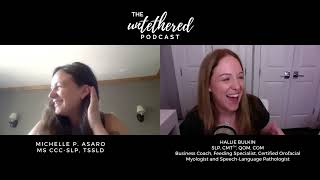
Interview (Episode 111) of the Untethered Podcast hosted by Hallie Bulkin with guest Michelle P. Asaro, a pediatric SLP and owner of Babbling Brook Speech and Language Therapy. They discuss tethered oral tissues (tongue-tie) in infants and young children — recognition, pre‑ and post‑operative care (wound care, stretches, sleep posture holds like Michelle Emanuel’s guppy), causes and signs of reattachment, caregiver education, cost/insurance/access issues, provider referral networks/directories, and practical strategies for preparing families for releases. Conversation mixes clinical guidance, personal stories (Michelle’s child reattachment), and practice‑management tips for feeding/myofunctional therapists.
Chapters
Hi and welcome to episode 111 of the Untethered Podcast. Today we have Michelle Azaro joining us. Michelle is a pediatric speech language pathologist and owner of Babbling Brook Speech and Language Therapy, pllc. Like so many others, her private practice began as an after hours side gig. But her experiences along the way as a special education teacher, early intervention provider, feeding therapist and mom have helped her to shape it into what it is today. Her practice brings a unique interdisciplinary, mindful and sensory integrated approach to enhanced feeding and communication skills in New York City. On top of seeing clients, Michelle is passionate about educating families on guiding proper orofacial development from infancy and how the world of tongue ties, airway feeding, speech and behavior are all connected. Quick disclaimer. All information, content and material of this podcast are the opinions of the speakers and is for the informational purpose only and not intended to serve as a substitute for the consultation, diagnosis and or medical treatment of a qualified health care provider. Welcome to the Untethered Podcast. I am your host, Hallie Balkan. I'm a certified orophage myologist, feeding specialist and mentor. This podcast is all about getting your questions answered and collaborating with colleagues to bring you the most up to date information in the orofacial myofunctional therapy, tethered oral tissue and airway space. I challenge you to keep an open mind and join my mission to get this information out to the masses. Let's get started. Well, Michelle, thank you so much for joining me today on the podcast. I'm excited to chat with you.
Hi. I'm so excited for being here. Thank you for having me.
Absolutely. So, before we jump in and have our little tots talk today, will you give us a little bit of a background about who you are and kind of how you fell into this space?
So I am not by choice, just kind of by my love of different things. Kind of like a jack of all trades. So I actually came out of school as a special education teacher. Loved that field, loved everything about it and it kind of led naturally into me getting my master's in speec. So I have both degrees, both careers, and I love both. So in terms of the speech world, I started out in early intervention and not wanting to leave the families that I was working with when the kind of state said that they had to. So that's kind of where I branched off into private practice. But in early intervention, I was doing a lot of feeding work as well. Um, so I just really fell in love with this space.
That's amazing. I don't Think a lot of people know this about me, but I started in the schools, like in the preschool program they had and was there for two years and then went into EI for one year for infants and toddlers program. And from there actually was like, burnt out. Took a break and then went to private practice as well. Because I was like, I really want to continue working with that age, but also I don't. Here in our county, they had cut it off around. It used to be five, then they backed it up to three and I was like, oh, I don't. Like, I missed these babies. I want to follow some of them a bit longer. Like, I really like the whole, like, birth to five age group. So, yeah, it's. It's such an amazing age group to work with. And that's so awesome that, you know, you were able to do feeding. They actually had mostly OTs doing feeding in early intervention. When I have both.
Yeah, they have both here. And it was. There weren't a lot of speech therapists in the area that I was working who were doing feeding. So one day they asked me and I kind of took it on as a challenge with a case that I was already seeing for speech. So I said, let's figure it out together and threw myself into. And it really. It took off from there. I really fell in love with it from there and been going well.
I love it. I love it. So let's talk about tots. How did you. How did you fall into the tots.
Arena in the tots in the early intervention world? You know, I came across the very typical anterior Thai babies that could not move their tongue. And I said, you know, at that point, next stage of my career, please go, you know, get that tongue tie clip done. That's really impacting everything from feeding to speech. At that time, you know, I had no training and didn't know what I was doing in terms of supporting that. But having that knowledge over time and gradually stepping into some of these trainings, specifically Diane Barr, I fell in love with all of her work, all of her books, and reread her book probably six times while I was pregnant. But the day. It's really funny. One of the first, like, things I noticed about my son when he was born was his face. And I'm staring at his mouth and I said, I said, shoot. I said, he has tongue tie, but it was posterior. So I still, you know, again, new mom, I'm totally in a daze. I don't know what's happening around me. I'm not sure Right. So I'm asking the pediatrician, I think I asked the OB still in the delivery room. Somebody identify this. And you know, the hospital gag orders, nobody said anything. You know, maybe, you know, maybe something. But I don't think that's what the issue is here. It's you try nipple shield. Try this. And my mom is actually a pediatric PT in the NICU in a hospital, and she's had some cops training. And she came over, you know, the day I got home and I said, mom, please, please look. And she's tether oral tissue, she says, And I said, yep. I said, I think so too. And the next day I had an IVCLC who was trained in tithe come over and confirm it. And then we went through the process. So we had his tithe, he had upper lower lip and posterior tie released at 10 days old. Nice. And then we'll talk a little bit more about why I'm here and the kind of stress of it.
Absolutely, yeah. So, I mean, let's talk about this hot topic, right? Let's talk about how, I mean, obviously you had a mom who had a little bit of knowledge. You had some knowledge. It was maybe newish to you at the time, but still at least you even you were aware, right? You knew to who look for it. You, you had somebody kind of within the family who could even help confirm it. Like, I think back to my poor mom, like that first night home from the hospital, like, I was crying, the baby was crying, we were all crying.
My mom was like, oh my. Oh, man.
We still had that. Yeah, right? Oh, yes. Oh, yes. But, you know, it was interesting that, like your mom had that, that ties knowledge too. That's, that's amazing. That's really awesome.
Yeah, she's, you know, and it's very interesting because she does a lot of like, positioning for feeding and things like that. She's been in the hospital for, for 20 years. She's actually retiring next month.
Congrats to her.
Super exciting. But I knew a little bit. But I still, because I didn't know a lot. Was that new mom on social media, Right. At least looking. I don't remember if I posted or I definitely didn't post a picture, but I was joining these groups and staring at what everyone else was writing and all this information, which is definitely a lot, you know, a lot to take in. And then what was the funniest part about this whole process, and I say this all the time, is having to communicate it, like to somebody who doesn't know. So, like Me talking to my husband about, like, why we need to go to cranial sacral therapy right now, otherwise, you know, nothing is going to get better. So that's really difficult. So I could imagine, you know, just me having to explain it to him is. Made me really think about how the layperson is getting this information from social media, because it's all over social media.
Yeah, that's a great point. That's a great point. I mean, I've had friends who text me and, you know, I've assessed their children, I recommend a treatment plan, yada yada, and then they go, okay, help me explain this to my spouse. Like, how do I convince them? Or how do I explain to them how necessary this is? Because, like, I get it, I know it's necessary, but I need them on board. So, like. So that's. That's a really good point. I don't know if that's ever even come up on this podcast. Like, how. One, it's just challenging enough to go into these groups because like you said, one, it's overwhelming. It's like a slap in the face with information. Two, you don't know who to believe, what to believe, what's accurate, what's inaccurate, and then, you know. Three, okay, let's say you do go for an eval. You have a great eval, you get a great treatment plan. It's like, okay, well, now how do I, as the layperson, take all this overwhelming information that I do trust and relay it to a spouse or someone else who's involved in the medical decision making, you know, for this child, and also financial decision making once they get.
On board with the medical.
When you say, yes, the first question in my house is always, what does it cost?
That's the bigger argument every day, you know, to continue body work and bodywork is expensive. No one's. No one's covering it.
Right.
Insurance isn't covering it. And it is just super overwhelming and super especially, you know, you're a new. New parents, and you're. You add a financial struggle, you know, on top of the financial struggle of a new baby. It's very stressful. And that was probably. To be honest, that was probably the most stressful piece of it.
Yeah, yeah. No, and it's. And it's interesting, too, because I've actually had some, you know, SLPs and OTs go through my pediatric feeding course, right through feed the PEDs. And, you know, and some of them have even said, like, I'm here because I have a child who I need to Help. And this is kind of throwing me into this space, like, further down the rabbit hole. Like, I want to understand the tots, the MYO component for under five, you know, under four years of age. I want to understand the feeding component. I want to understand, like, how do I even assess my own child? And like, where do we go next? And yes, they're getting evals too, but they also just want to learn for themselves and be. And a lot of them end up falling into this space and further down the rabbit hole and start working with the patients themselves, which is amazing. But we've had so many conversations surrounding this and it's really eye opening because while I'm, I'm a parent who went through a lot of this too, I didn't identify my daughter's tongue tie until she was 24 months old. So I was like out of that newborn stage for her with my second one. I went into it kind of thinking like, all right, we know genetically, like, genetics are stacked against us here, so she probably is going to have one. Like, I'll be really glad if she doesn't, but let's just anticipate that she will. So going into it, it was a different story because I kind of was like, all right, here we go. Like, let's go down this roller coaster. But I knew and I was aware and I think that changed the story a little bit too. And you know, the financial piece is a big consideration. Like, you're already taking on a new human who is going to require a lot of money, right, to just keep them. We joke like, as moms, like, oh, I did a good job today. Make sure everybody's alive. We're good. Okay, great day. Was a success, you know. But yeah, the financial piece is really stressful for a lot of families. And you know, we've tried to work with families even to be like, hey, like, we'll do an eval and give you a treatment plan. We don't have to write a report.
Like, right.
It's, you know, it's, it's this price if you don't want to report because you really just want an assessment from someone, you know, who's highly skilled. Because we really rather get, make it more accessible and get more kiddos properly diagnosed and properly on the right track. And we know that the other follow up services, if they do need ongoing feeding therapy, like, it's, it's gonna be, you know, it's a little bit of a punch to the gut.
So that's where, like my experience coming from, early intervention really this all read that all resonates with me very, very, very strongly. And to be honest with you, although I live in a more affluent area of my county in the Bronx, if I'm aiming to help families here, I need to be very, very mindful about cost especially and like you said, different kinds of packages to provide the most support. And there are still supports that although you might not be working with a provider who's trained in tots, you know, you may also be benefit need physical therapy for corticollis associated with it. So I'm always referring to the free services as much as possible because otherwise families are choosing to do nothing. So we need some kind of, kind of middle ground. And that's really again where I got into this like education space and trying to motivate other people. Hey, if you don't want to make it a specialty, at least be aware of it so that you can refer out. Because I think that's what's happening is there's no awareness or no referrals happening and things are going unmissed for a long time.
Yeah, well, I think on that topic too, you know, because I never, I'm always a big proponent of like charging your worth and charging for your expertise. And you know, I'm not saying like discount your services to unfair levels by any means because I really think that as providers we should charge our worth. Every other practitioner and every other space is right. And I have seen, I have seen some Medicaid patients fight to get coverage for everything. The release, expansion, body work. I mean, and so, you know, if you have families who really want it, and I always say let the families decide, like never decide for them because the families are going to figure out what they value and where they want to put their money. And sometimes if there really is hardship, like I will refer to somebody who is in network that takes Medicaid, that takes their insurance if you know, like I'm never going to leave them hanging because they don't want to pay my, my private pay fees. I'm going to make sure I connect with a provider who I know has that skill set. And again I understand also that's not always available in every city. So you know, then, then in comes that, that consideration. But we also provide super bills and we give our families guidance on how to connect with your insurance and what questions to ask and what codes to call with so that they can get pre approval. And it may be that they get reimbursed at the same rate that they would have if they'd gone in network. So there are so many ways that we can also help families and still charge our worth. Which, you know, I think is like, I don't negotiate my rates, but I will offer. And when there's hardship, I will offer like sans report, like, which means we're going to still write something up so that you have like all the basic information you need, but we're not going to spend an hour or two like writing this, like, you know, paragraph after paragraph, explanation of everything that was assessed and all of the findings. We're basically going to say, hey, here's what we found, here's the functional impairment, here's a recommended treatment plan, like real cut and dry. And arguably I'm trying to move towards that kind of a model in my practice anyways, because nobody really read long reports, but that's a whole different conversation.
Time to write them. Correct? Yes. I can't tell you how much time I spend on the phone sharing the CPT codes because that's, that's my mindset too. And nothing changed that more in my practice than having to go through that as a mom. Because I wanted the most, you know, apt support from myofunctional therapists in my area. And guess what? I don't really wanna pay those rates either. Or really, you know, it's not in my means to make this a consistent practice. So it was me fighting for those codes. And what are those codes need to be able to, and not only, you know, feeding for speech and everything, to be able to communicate that with the parents, with parents, and understand what the insurance is asking for to help them. And I don't think other, a lot of practitioners take the time to do that. So I'm finding that, you know, that helps really build relationships and kind of is supporting my practice. I love that.
I love that. And you know, and I know you're in the MYO membership, but, you know, we have like a code list in there. Have you found that yet? I'm sure you have all the codes anyways, but I like to give those like in Feed the Peds too, we have a code list because, you know, if you know those codes, which can be so tricky to figure out, especially if you're like in private practice for yourself, if you know those, like, you can help your patients so much faster. And let me tell you the other. My other little secret is like I created a PDF that has like the questions listed and all the codes. And so my assistant will send them this when we do an intake call, so they you know, we don't have to spend like 10 minutes on the phone telling them and waiting for them to write it down. Right. Or sending like that fall, I used to send it in an email and it would just have all the codes listed in the like copy paste. And we were like, no, no, no, there's got to be a faster way. So now it exists in a PDF and we send them the guide and it's, it's a great little, a great.
Little thing that out with my intake forms. Yeah, that's a really good idea.
Exactly.
Perfect. Definitely, we'll get on that. But yeah, so just kind of to transition, you know, going back to the social media for one second. One of the things that's really interested about where we are in New York City is obviously you want to refer to a release provider who knows what they're doing. And we have the opposite problem in New York City where Dr. Siegel is so well known, he's a little busy. People don't, they go straight to him, which of course he's referring out and things like that. But sometimes we're missing that functional assessment. We're missing the pieces of the puzzle and the pre op care that needs to be done because it's kind of trendy like in New York City. If you go on like the Upper east side moms group and you mention the word tongue tie, he will literally get 150 comments in the comment section. And of course that's who did my son's procedures and wouldn't refer anyone else. But it can be a little bit of a challenge in terms of getting that pre op care that they need.
Yeah, well, and that's the same thing down here. Actually. A friend of his, Dr. James Ryan, is our oral surgeon down here and it's the same thing. And you know, there is Dr. Ryan, there is Dr. Marcus out in Reisterstown, there's Dr. Josu in Virginia and others too who have become very highly skilled in this space. Dr. Eric Armacon. There's so many, so many options around here, which is fantastic. Of course, they're all in the dental space, which is amazing to me. I love that. But it's the same thing where, you know, they go straight to the source and thankfully for the most part, you know, these, these individuals will refer for an eval before, you know, proceeding with the release. Now arguably, if a baby is like under four or five weeks of age, like and they go straight for a release because like time is of the essence and they're a newborn, like that is the only time when I say, okay, we can. We can skip the pre op, you know, eval and therapy. I would love to have an eval if possible, but I don't want to delay this. I'd rather get them in, like, asap. But, like, once they're past that, like, fifth week or so of life, I'm like, okay, we really need to do. To not skip any of that pre op. Like, we absolutely need some pre op stuff in place. And I don't know what it is. I don't know what it is about that point, but I have seen some babies, like, just kind of really just take off and really not need a whole lot of therapy when we get in there super early. Now, granted, they still need bodywork and they. But sometimes. Sometimes they kind of just figure out some of the feeding stuff when the tongue is functional and they're still so.
Like, you know how Diane talks about, like, the first 10 days of life? Like, I was like, okay, I'm in on day 10. Like, we're good. Like, it's okay. I'm not gonna have any issues. I'm, you know, a whole other story. But, you know, goes to show it's not always, you know, the perfect.
The perfect Mia, like, Mia went day five, and her feeding was glorious. Like, it was night and day, but her body needed help. Like, she was that kiddo where. And I have the cutest little videos of her. I should probably post one for people to see, but this is, like, more PT based, you know, more Osteo based. I took her to PT for quite a while, and she was, you know, she was making progress. She was never really behind in her milestones, except she was a kiddo that dragged her back leg and back leg. Like, she's got front legs. She dragged. She dragged her leg when she was crawling. And even, like, when going up the stairs in a crawl, she still was not using her leg properly. And you could see that there was, like, some tightness on one side. Like, both my kids had tight necks at birth, so at least I knew with her to get her into ET and get started with that. And so we were really keeping her on track. But I was like, you know what? This is not resolving what's going on. The person who I was going to was a fabulous pt, but she wasn't really, like, in that whole, like, tots space. So I kind of took a break because she actually left the practice that she was at. I took a break from PT at that point and took her to Craniosacral therapist. And what was really cool was Mia was also a kiddo who like was very hot and always super sweaty. And they, she did some like Chinese medicine stuff and told me like what to do to do with like a gua sha stone or whatever like on her back. And I'm telling you that kids hotness like disappeared overnight. Insane. I was like, like it was like the heat was getting trapped in her body and I was like, woo, this is cool. And then a week after that I took her to osteopath because I was like, you know what I want, you know, I really want to like cover all my bases. And they worked on her a bit too. And no joke, like within a week after that, those appointments, she got up and started walking. And she was like, after she walked she. Then I watched her like crawl across the couch one day like on all fours the right way. And I was like, it's time for some champagne. Like this is a celebratory moment. And my husband was like, he was like, why she already walks? Like why do we care that she's crawling on all fours? I'm like, no, you don't get it. Everything's integrating. This is huge. Like this is so important. And at that point I think she was 13 months already, right? So she had been crawling the wrong way all along, wrong way, quote unquote. And you know, and so I think that's what we really need to be looking at. And then obviously she's three now, but we're still monitoring her mouth. We're still looking at like okay, she has a nice U shape but her molars are a little close together, you know. But she's a great eater, She's a great sleeper. Her mouth is closed at rest and when sleeping like she was kind of an airway kiddo in the beginning just in terms of like RSV and croup. And that became viral induced asthma. And you know, now with the pandemic she's been home so we haven't had any illness issues. But as she like reenters the world, we'll see what happens. And so you know, she may be going into early expansion, who knows. But for all intents and purposes, like she's a healthy kiddo right now. And you know, and I chalk it up to all this work that we did in her first year of life. So anywho, I'm totally stealing the show here, but let's talk more about like that pre and post op care and like share with us like what. Why do you think it's important, like what do you work on when you're, when you're doing this work?
So I'll kind of go through it first as a mom and thinking about like, you know, so obviously I know we're going to get into this, but one of the reasons that we talked about me being here today is my son's posterior tongue tie reattached. So he did actually have a release almost two weeks ago now. So noticing the difference. Right. And an untrained kind of hand with no pre op care versus somebody who now is trained in it, but also had pre op care. The difference in that process is very, is profound. So obviously, you know, you get these wound care instructions, you get them at the office. I recorded, I did everything I could think of to make sure I was doing it right. And I think that there's a lot of value in not only understanding how to do it, the wound care, but why. And I don't always think that that makes sense to parents when they're in such a stressful state right after a procedure even, you know. So I think that that's one of the things that I've found to be the most profound piece of kind of pre op care when working with my families is getting them to understand what's going to happen at the procedure and why all that afterward is important. And especially because it can be very traumatic to have to do this to a baby, more so to a 5 month old than a 10 day old by the way, who can roll away from you and bite you. But these groups are, there's a lot of misinformation in these groups that are telling parents don't bother with the active wound care because you know, there's no research behind it or it won't, you know, we had it done and it didn't reattach and we didn't do any stretches or our doctor or dentist didn't tell us to do the stretches. So I think that amount of misinformation that's out there again in these social media spaces is contributing to parents just not being ready to take on that challenge and in turn not ready for the procedure. And I think as a provider being there ahead of time, you can use that to judge when it's the right time. Yeah. Procedure. So like you said, obviously there's those cases where it's a necessity that it get done right away because it's for overall health and failure to thrive and xyz. But I think there's a lot of value in making sure that. That piece of it. And that's just one piece. Right. But that piece is important.
Yeah, I think it helps also. I always explain to my families the difference between active wound care and stretches. So it's like, okay, we want to make sure that. I always say that this feels long and strong. And so we always. I always want that. That wound, right. That open wound to heal. And I tell them, like a long. Like an upward direction. We don't want it to heal horizontally because then it kind of collapses and closes on itself. And we can actually heal and be tighter than we were before the procedure was done. And so while it may not look like it reattached, we don't see. See a frenulum there like, that tongue can be more glued to the floor of the mouth than it was previously, just by nature of how the body tries to heal itself. It's what we do. But I always like to kind of go through and say, okay, the active wound care is like, the worst part of it, honestly. Right. It's like trying to get in there and lift that tongue up and back and make sure that we're keeping that wound open and as long as we can. So it actually feels in the right direction, which seems counterintuitive. Why would you want to keep a wound open, like, longer? You know, it's, you know, so that's where I love, like, how our. My oral surgeon or dentist will come in and also, like, reinforce. Technically, they're the ones who should be giving the active wound care. Like, that's not really even in a lot of our scope of practice.
Right.
But we can. We can reinforce it and we can help guide them if it's been, like, assigned and discussed with that release provider. And so that's where I'll say, okay, I want to make sure that before you go for this, like, show me how you do it. Like, show me how you get in your baby's mouth and show me. Because most parents, when you have them show you, they're like, okay, I don't know what I'm doing. I'm completely overwhelmed. Like, am I doing it right? Am I doing it wrong? Am I going to hurt them? Am I pushing too hard? And I'm like, you are not going to hurt them. Cut your nails down, like, to nothing. Or have the person who does it, you know, therapeutic nail length. And we work on that. And I will do it in their mouth, and I'll have them do it in my mouth, and I will do it in the baby's mouth, and I'LL have them do it in the baby's mouth. I mean, because I want them to be so comfortable with that component. It's like if they can get that, they can do anything. And then we'll go through like the other stretches that are really help, helping to mobilize the tongue and increase range of motion and work towards, you know, our feeding skills and, and all that fun stuff. And yeah, it's an oral rest postures and all the above. So it's, it's so if for nothing else, like, even if you don't do pre op therapy, quote unquote, which arguably I like to get the tongue and the oral structures functioning as best as they can until we kind of hit a wall. And for infants that might be like a couple sessions, like, it's not like this six months long of therapy. I mean, look, I have had kids come in as infants where it did take a really long time because they were so, you know, orally defensive that I would not want to be going into this kid's mouth right now and doing a procedure like we were going to send them off the deep end. Like, this is not fair.
Fair.
We need to prep them, right? So you don't know these things until we get in there the first time and we actually see what we're working with. And I think there's just. For people to send a child into any surgical procedure without being, without preparing them or the family is cruel. And honestly, in my opinion, it should be like deemed malpractice.
Like, sorry, Yeah, I mean, I'm with you. And I think the education piece of it is really. So you mentioned like the diamond kind of closing vertically and not horizontally. Like, Dr. Gihari has that really good picture on his blog and it's like a sketch, like with the stick figures. But it is the most powerful kind of image of showing parents like, this is what's supposed to happen. The other thing I'm really, really big on is, and this is also because this ended up, my son's case ended up being an airway case also. But getting that lingual palatal suction, if you can get that before the procedure to the fullest extent, I think that also really helps with the active wound care. I'm a big, big proponent of Michelle Emanuel's sleeping tongue posture hold because you can visualize it. I think that that's such an effective way for parents to stretch or keep that wound open without the trauma. And if you can show parents how to do that before a procedure and give them another tool so that they think or that they know that they're having an impact on helping this procedure go effectively. It's a huge tool in the toolbox. But I have parents who kind of do the procedure and then come to me, right. And they haven't achieved that or know how to get that suction beforehand and then you're working on that after and they're not, you know, that becomes a bit more challenging. So that's one of the things I really hone in on in my pre op care. I think is really important.
Yes, no, absolutely. And I love that. And another one of Michelle's, I'm a big proponent of her work too. Like one of her other exercises, the guppy, that's become very popular on social media. Michelle's got videos on YouTube. If you look up Michelle Emanuel guppy or Michelle Emanuel sleeping tongue posture hold, she, you know, it's a really nice way to safely, like, put the neck into extension for a good stretch because things tighten up, right? And so it's, you know, if we use gravity to our advantage a little bit and we can kind of dip, you know, the baby's head upside down a teeny bit. That can also add to. You can actually kind of do them together, like kind of go into a guppy and then work on sleeping tongue posture hold, which I love. But it's fun, like, and it's. Even toddlers, they love it. They love being upside down, most of them. So you got to know your kid. But there's some, yeah, there's some really great things out there that you can do. But I will say, you know, YouTube is not a doctor, speech pathologist, or OT or feeding therapist, or any of the above. And so we definitely want to have individualized pre and post op therapy because truly, I get a lot of therapists even who say to me, well, what is your pre op protocol look like? And I'm like, I mean, I have a general program per se in my brain of like, what I'm trying to achieve. Like, I know my outcomes and my goals, but the way that we get there looks different for every kiddo who comes through. Like, there's no two similar cases. Do I share certain exercises across cases? Sure. But are they always the same? No, because not every infant presents the same way. And that's why we really need that feeding evaluation to know, like, what is our baseline? Where are we starting? That way, you know, baby comes. The worst part is getting that phone call. Hey, we just had a tongue tie release and we were told we need you know, feeding therapy. And I'm like, oh, goodness. Like, I don't know where you were starting. I don't know what your baseline is. And now you're going to come to me with like an open wound in the mouth and want to begin therapy and continue onward. Like, it just adds an extra level of challenge because we don't know what the starting base was. So anywho, that's my little.
Can I pause this for one second? Yeah.
Anyway, so I think it's, you know, super important that we recognize that even if you're not going to need or go through a lot of pre op therapy, we at least have that pre op evaluation to establish a baseline.
I think that's like, totally crucial and I totally agree with you and I get that. I ask that all the time. Right? So obviously we can't treat across state lines, especially having like a presence on social media. You know, we'll get these DMS all the time. And I'm just constantly trying to help people and refer them to places where they can find help in their area. Because like you said, I can't just give you a PDF and say, you know, this is what you, this is what you need to do. That's not how it works. And it's so, so important that somebody be there in person with the hands in your child's mouth to be able to assess their level of functioning beforehand. We really want to make sure that we are understanding, like you said, getting them to the absolute kind of point where they can't make any more progress before having the procedure. So I think that's really important as well.
Yeah, no, and I love that point you just made, because as much as we'd love to help the world, like, actually our licensure prohibits us from doing that. So as much as we would love to say, hey, we'd love to do a video consult with you or and whatnot, like, it's, it's not allowed. Like, we can give you general information, but we can't actually give you specific information to your child's case or treatment plan if we're not licensed in your state. So, yeah, it definitely is limiting in that sense. But thankfully I feel like there's enough SLPs and OTs, especially in the US who are getting into this space with pediatric feeding. And one of my goals with my course was to create a directory where we could, you know, I can really, it's, it's selfish because I love connecting people and I was like, I want to be able to be like, okay, I know these people have gone through my program. I know that they're educated, and if they've added themselves to the directory, that means that they do treat these cases. So while I can't vouch for, like, their treatment firsthand, per se, I can at least tell you, like, they are properly trained. And, you know, here's who's in your area. And so my goal was really, you know, and when you. And when people are not on there, I will go to, like, groups and ask, like, hey, who's in this area? And I joke. I'm like a connector. Because the last thing I want is for a baby to not get the help they need, because we can't. A parent can't find somebody. Because I think as feeding therapists, we have greater access to these groups where pediatric feeding therapists are hanging out, and we can more easily find somebody and connect people.
So it's so important. And like you said, I wish there was like a. Like a. A very. You know, everybody's not in every database. And I wish there was a way to help merge. I don't know, merge it. But there are some other, you know, like, we talked about some other programs coming out, like Health Latch, Circle, Airway Circle. You know, there. People are trying to really help connections, and I think that's really important. So I'm glad to see it happening.
Yeah, absolutely. And that's where, you know, a lot of our graduates were talking about, like, you know, trying to connect, too. And so I was like, all right, well, we're going to do this directory. And obviously it's not comprehensive, the program. Let's see, Feed the Peds has only been out at this point for, like, 15 months, and we've had over 730, I think SLPs and OTs go through it at this point. We're about to, like, reopen it again, which is awesome. So I'm excited. But, yeah, so we did create pediatricfeedingtherapist.com which is the directory for anybody who's gone through the course. And then that is a place where you can start to look. And I always say, if you can't find somebody on there or in one of these other directories, DM me. DM me. Because, you know, the last thing I want as a parent to feel like they're kind of floundering and unable to reach the help that they need because it is. It is out there and it is growing. And, you know, you might have to drive a little bit, but we can.
I try to put it on the bottom of, you know, and I do it to myself. You know, I get inundated with questions. But yeah, so important, like you said, because again, as a parent, you don't want to be left not, you know, seeing this information and wanting to get the help that you need and not be able to. It's a horrible, horrible feeling. So I'm always like, let us know if you need help finding, you know, finding a provider trained in your area. It's like my little tagline sign off.
But let's go back to talking about reattachment because I think that is a topic that just is not discussed enough. And you know, I know you experienced it firsthand as a mama. And so let's talk about, you know, obviously we've talked about the need for pre and post op care and that's a major reason why we might see reattachment. But let's talk about, you know, reasons for it or how do you even recognize if it's occurred?
So I think, you know, so in my case as a mom, for me, the biggest thing was kind of a change in the amount of, in the type of function. Right. So right away things just, it seemed like my son was taking in so much more air again. And I just felt like we were right back to the start. And there's a lot of reasons. And some people have reattachment that happens like right away. Right. And because of kind of maybe poor wound care after the fact. And it reattaches very quickly. And you know, again, you think you had the procedure done, you think you fixed the problem, so it must be something else. And things like that go unnoticed. But it could also be you talked a lot about your daughter with tension patterns in the body, especially with infants and babies working with this age when babies go through growth spurts, guess when tension is happening. And I think very much that that's what happened in my son's case. And all of a sudden, you know, it was right around that kind of four month mark. He's doing a lot more things and everything just kind of hit a wall. And you know, we, it's as a mom, you. And again, we go back to the dealing with the spouse situation. You don't want to put, you know, you don't want to go through it again. And I think, and this is kind of going to go into our next topic here, but you know, a lot of people are afraid of the procedure a second time, don't want to go through the stretches a second time. And also have some guilt around it. And I know I did as a provider kind of in this space, like, how could this happen? You know, we did all the right things. We did the body work, we did the aftercare, we did the pre op care and it happens. And you know, everybody's body is different and there's tension patterns and things happen. And I think that the more that you can be aware of the benefits and how dramatic having tongue is for overall development.
Hold on.
Kind of makes it a little easier to like, I cut, I cut out. Or one of the things that at least, especially in my case, being aware of how crucial having full mobility of the tongue is for overall development and knowing everything that it affects, everything from airway to full movement of the body, it really puts it into perspective. But I think that it's so crucial that we stop this kind of guilt or mom shaming or worry around another procedure and really get the message of the benefit out there. And again, we want to make sure that we're doing it at the right time and we're not rushing back into another release. I've gotten families that, oh no, oh no, you know, it's reattached, it's reattached. I need to go get it fixed again. And don't. And again, now we're setting up, you know, potentially for it not to be successful this time around. So it's challenging. It's a challenging process. It's a stressful topic and there are lots of reasons why it's happening. And I'm sure you can kind of touch on a few more of those. Especially we talked a little bit in the beginning about the right provider. Right.
I mean, I think that that's obviously important, but I also think we got to look at like, our bodies heal differently and different people heal faster than others, obviously. Like infants typically heal faster than older adults or peds, but you might even have one infant just based on their anatomy and physiology and by, you know, and bio, all that fun stuff, you know, that their bodies just want to, I mean, our bodies want to heal no matter what. And you know, my, my dear friend and colleague Autumn Reed Henning talks about how we heal in her tots, her TOTS training course. She talks about how like, you know, during the first four days, like the body is just, just, it's like we've got an injury like an insult to the body and we have got to close this back up. Our body's not meant to live in this, like open wound space. And so it makes it really Challenging, because we're trying to direct the wound to heal the way we want it to heal, and our body's just going, I don't care how I close. I just need to close this wound up. And so, obviously, like, things start to kind of, like, close in on each other. Like, the edges of the wound will start to close in, and they will come back together in a way that's not optimal if we're not guiding it. Which is. Is why that active wound care is so important. I've seen babies who have come to me who have had their first release, and then, like, a couple of revisions, and they're like nine months old or six months old, and they've already been through two releases and they're reattached. And, you know, you touched on the whole, like, mom guilt, mom shaming type of thing, where as moms look, first of all, when we're anywhere in that first year postpartum, like, our hormones are a freaking mess, and nobody is talking about that enough. So every little thing that happens that seems to go wrong with our babies, we blame ourselves, because it's our job as our baby's protector to keep them fed, keep them healthy, keep them safe. And if we're failing at one of these things, we automatically go into this shaming ourselves and feeling guilty. And then it's enough that we're already doing it to ourselves. And then we basically enter into the world of Facebook or Instagram where everybody else is telling us what we're doing right or wrong. So I like to tell all of our moms, deep breath. This is not your fault. Either you are not advised properly, or you did the best you could with the information that you had at the time. And you know what? We can still make positive changes for optimal health and outcomes. Like, let's work through this together. And, you know, I think the biggest thing is that if you can be that support for the family, that family member, whether it's a mom or a, you know, father or whoever, is caring for that baby and taking them through this process, sometimes it's a whole family unit, depending on the culture and who cares for that child. You know, we really have to have everybody on board because it's one of those things where if one person's not on board and that person spends nine hours with that child the day after they have a release, like, that's just. That's not going to work. I'm sorry. Like, we're setting everything up for failure. So there's. There's so much that goes into this. And there recently was a question on one of the groups that I'm in. It might have been in the MYO membership. It was like another colleague, a therapist and mama whose child was going for a revision and even said, like, it's planned for June, but I have the opportunity to do it sooner. But, like, I can't be with my child the next day. So, you know, but in June, I can, like, do I move it up or do I wait two months? And I was like, wait two months, because this is going to be a stressful experience for both of you. And so our goal here is, one, be prepared properly, and two, make sure you're doing it during the least amount of stress in regards to, like, the events that are surrounding it. And you really want to be with your kiddo who's gonna, you know, not that they're gonna feel awful the next day. Some kids go back to school or daycare and they're like, totally fine and their tongue sutured up and it's like nothing ever happened. And then other kids really need to cuddle a parent and just be, you know, have a quiet day on the couch afterwards while you're doing some of these active wound care stretches if sutures weren't placed. So, you know, that's a whole other conversation.
But actually what's really interesting too, you know, that you said that and thinking about my own story. So we actually were battling some food allergies and things like that. I personally have Crohn's disease, so I think it's more me than. Than the baby. But I went to a GI for him who, you know, recommended that we do a two week trial of formula to see if the symptoms improved. And all I was thinking was, I can't not breastfeed him during this. The, you know, the wound care. I said, there's absolutely no way that, A, for oral motor development, that I'm stopping breastfeeding, and B, you know, to not have that level of comfort for him. So it's funny that you mentioned that because that was a huge piece for me. So we created some workarounds there. But I, you know, it's definitely something that you need. You know, I've had parents say I have to schedule it around when I have time off from work, and that's absolutely the way that it should be. And, you know, you need support and get support for you. Like, if you think that, you know, you're. Especially when you have older babies who are super wiggly and it becomes a little bit More challenging to do the stretches, you know, get support for you, make sure there's somebody kind of hanging out with you to go through the process. It can be absolutely very stressful on the parents.
Yeah, yeah. I mean, and I think if you're feeling stressed and you're. You're really struggling with doing these at the aftercare and you have a child who's at least 6 months of age or older, I mean, my oral surgeon will suture or put a couple sutures in place if you want to avoid the active wound care. That doesn't mean you get out of doing exercises. It just means you don't have to get in there and like, elevate that tongue up in hopes that it's not going to come close back on itself and we're not going to have that reattachment. And I will tell, like, especially once the baby or toddler has teeth, it is extremely hard. Like some people I know, Autumn coined the term, like, no man's land for like the two. Yeah, that toddler age group. Right. Like, they're, they can clench that jaw shut and like, you're going to have to fight them. They can also bite you. So it is not fun to get in there and elevate a tongue on a toddler. And that I pretty much require along with my oral surgeon that, like, we place sutures in those toddlers because. Because it is just such a much more enjoyable experience for everybody when they refuse to open their mouth.
For kids with special needs who are like, you know, really developing or really developing poor health because of picky eating or whatnot, because of how much pain they're in and, you know, they can't explain it and who are definitely not going to tolerate the exercises. You absolutely need to do that. So. Yeah, that population has a special place in my heart too, so.
Absolutely. Well, and I think that goes back to your earlier point that if you can work on these things pre op with them, there's also less of an association that these are for that procedure. So they will be more willing to try it. Even when they go, ooh, that pulled, or ooh, that felt funny, they might not do it right away. They might realize it doesn't feel okay immediately, but you're going to get a lot more success when you've already been working on these things pre op for that post op child who is healing and, you know, compliance increases. It's not new. You're not asking them to do something new while they're uncomfortable. And it just, you know, again, the association of, like, oh, well, this is tied to this surgery that I had. You know, it's just not there when you've been working on this pre op. So there's a lot to be said about pre op care. And I really think people who are ignoring it or advising against it, they're either not working with this population and they're just kind of reading the research, which is lacking. It's not there. You know, it's. It's coming. But at the same time, this is a very challenging place and population to do research on. And it's really hard to say, well, these infants are going to get the procedure, but these infants are not. We're going to give this one pre op and we're not going to give that one pre op. And like, you can't, you can't do that. So we have to look at how there are five levels of EBP and that clinical practice with the specialists who are doing this day in and day out. You know, those are the people that we need to be listening to because they're living it firsthand. They're getting these kids results. We're bringing kids back to eating. We're getting these kids communicating. We're getting, you know, optimal health and function, which is the end goal. That is the end goal. So I'll jump off my soapbox, but.
No, but I mean, everything that you're saying is exactly why I'm here. And, you know, I really grappled with whether or not to share my son's reattachment stories like a. It's like imposter syndrome. Like, what am I doing, like, as a therapist if I can't even, like, help my son. Right. But I can't tell you, like, the amount of people who kind of reached out to me and said, like, I think this is happening to me, like, I think I should get some help instead of just sitting there. And again, like we talked about before, assuming that everything is well and good because they had the procedure, they did what they were supposed to do, and they're not finding relief. Moms are not finding relief for their pain, and babies are still going through reflux or colic. Right. The doctors are telling them they'll still grow out of it, and meanwhile, these babies are in distress for a fixable reason. So I am all about kind of getting the word out there that while responsibly, we want everybody to be set up for success the second time. And again circling back to that pre op care, but not to kind of brush it to the wayside. So it's just, you know, that's my mindset. I'm, you know, first and foremost, I feel like I'm an educator and I want to spread the word. And I'm glad that we have the opportunity now to do ridiculous things like these reels that I've gotten hooked on. They're so much fun. Not for anything, but it gets the word out fast, and we need to support that and back it up. But I think that in this crazy space where people are breastfeeding their kids with their phone in their hand and just aimlessly in the middle of the night trying to stay awake, we have a unique space to share really important information. And I want to help that.
Well, I love that, and thank you for everything you're doing. Thank you for sharing your. Your own journey and experience. You know, I think that the more of us that come forward and, you know, normalize a not so normal situation, it gives parents the opportunity to know what, to ask, to know what, and maybe even to identify what's going on with their child when so many practitioners have told them that everything's fine or just wait it out or, you know, like all these things that we hear. You know, I asked, I asked for everybody to answer one of those little things. I'm like, what's the most ridiculous thing you've heard about in relation to your kids or one of your patients tots and tethered oral tissues? And the responses I got were amazing. And I'm going to go make some reels with them, because why not? But that's also like you're saying these are the things that parents are seeing. It's what they're identifying with, and it's really helping them gain education and empowering them to go out and find the right provider when they've been turned down by so many. And, you know, you and I have both been kind of in situations where we've eat that's either happened to us or, you know, hey, I was the pediatric feeding therapist who wasn't working with infants back when my child was an infant, my first daughter, and that was just a short five and a half almost six years ago. Didn't know she had a tongue tie, was told she was fine, told she didn't have one, you know, but. And it was my fault, basically. I wasn't holding her right during our breastfeeding journey. Thirteen months of painful, horrible, like, you know, breastfeeding that I was like, so determined, like, we are going to do this, because I also know this is really good for your heart. I am stubborn. And we're going to do this, you know, and then turns out at 24 months, I come back from, like, my mayo course, and I'm like, okay, well, that's a pretty clear lip and tongue tie that she was said to not have. So. Okay, well, here we go. Here we go down this journey. So. So I've been there, and I know so many of us in this field have been there, and I think it's so powerful when we can share our stories and speak out. And I think more of these short stories need to be shared because this is what's reaching a lot of parents who don't know anything about this or who just have that colicky baby who's going to grow out of the colic, and we're like, yeah, they're not growing out of it in a couple of days. It's probably more something else going on.
So.
Thank you. Thank you for sharing this story.
Of course. Thank you for having me on. Like you said, a soapbox. This is definitely my soapbox. I just want. I just want everyone to get the support that they need. That's how I am.
Thank you. Thank you, Michelle. This has been awesome.
Thank you, Holly. Thank you so much for having me.
Thanks for listening to this podcast. If you want to hear more of these Myo Tots, Airway and Feeding related episodes, be sure to leave a review on Apple Podcasts or pledge a small amount on patreon.com the Untethered podcast. If you found value, others you know in this space will too. So be sure to share this episode on your social media platforms and join us over on Facebook, on my Facebook page @hallebulcan biz, on Instagram @halliebulcan. And you can head over to theuntetheredpodcast.com to grab a copy of the show Notes, where you can also subscribe to be kept up to date on the latest podcast episodes.
More from Hallie



What I Was Missing in Feeding Therapy: ARFID, Airway, and Myo with Samy Hernandez





