Episode 117: A Case Study: Prior Ortho, Vivos DNA & Invisalign
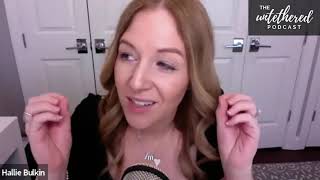
Hallie Bulkin walks through her own case: tongue-tie and feeding problems as an infant, missed sleep apnea as a child, then as an adult a frenectomy, 24 months of Vivos DNA palatal expansion, and Invisalign. She explains what she learned about airway-focused orthodontics and the clinical lessons that matter.
Chapters
Quick Disclaimer all information, content and material of this podcast are the opinions of the speakers and is for the informational purpose only and not intended to serve as a substitute for the consultation, diagnosis and or medical treatment of a qualified healthcare provider. Welcome to the Untethered Podcast. I am your host, Hallie Balkan. I'm a certified orofacial myologist, feeding specialist and mentor. This podcast is all about getting your questions answered and collaborating with colleagues to bring you the most up to date information in the orofacial myofunctional therapy, tethered oral tissue and airway space. I challenge you to keep an open mind and join my mission to get this information out to the masses. Let's get started. Hi and welcome to episode 117 of the Untolder Podcast. It's me, your host, Hallie today and we are going to be chatting about my story, my history because I realized we haven't done an update in a while and I thought it would be fun to let you all know what I have been up to. So let's talk a little bit about my journey. I know you guys have heard about Lily's Journey and Pediatric and we have had some other guests on the podcast and we will have more talking about other individuals adult Journeys because I think it is important for us to take a step back and realize the impact of early intervention and how symptoms over the lifetime snowball. They snowball into larger issues and oftentimes when I get a patient who's an adult, an older teen or an adult, anytime in the adulthood years, there is always more symptoms and they have, like I said, they snowballed because they are throughout the body now. And we are, I always say we're connected from the tips of our tongues down to the tips of our toes. And it's so, so true. And a lot of the patients that I see don't realize that the issues are having throughout their body is related to what's going on in their mouth. So I thought it would be fun to share a bit of my history from start to finish. This won't take too long. This should be a quick episode today. But also, if you're listening, I want to remind everybody that the doors, if you're listening, during the week of June 21st through 25th. Nope. June 28th through July 2nd, the doors of the MYO membership are open. Like what week are we in right now? So again, June 28th to July 2nd, the doors to the MYO membership are open. We did not do a free training before this one, so you didn't miss anything. But we do have the doors open. And what is the MILE membership? For those who are not familiar, the MILE membership is basically a monthly CU opportunity. You can get two CEUs per month. We go through and do a case study that's submitted by one of our members. And that's always really fun because having the member present and sometimes if, if the patient's available to be present, that's always fun too to have the assessing provider and the patient available. But if not, we always have at least the person who has done the, who's worked on the case available so that we can present it to you. And it's fun to be able to talk through it together and talk about what we're seeing and next steps and what's already been done and what needs to be. You know, what we're recommending and really great learning opportunity we have. I will also let you know we have 11 months of those already recorded for you, as well as 11 months of CEUs CEU trainings. We do not currently have the ability to get CEUs for the past month's trainings, only for the current month, but that might be changing, so stay tuned. And we also have research review. So every month we give you four research articles that we reviewed that are related to the topic of the month month. So, you know, for example, in June we had a guest presenter, a dentist who specializes in TMD came through and taught on TMD as it relates to the myo, you know, the orofacial myofunctional, orofacial myofunctionan complex and OMDs. And so what that means is that we have already 44 research reviews done beautifully put into one page. We review each one on a single page and they're available for you, for you to give to patients, for you to give to other providers that you work with. It's a resource for you. We also give you little mini business trainings every month for those of you who are interested in seeing patients on the side. And in addition to that, we give you marketing materials and brochures we've created. We have a done for you lunch and Learn. You can get all these things when you join the MYO membership and they're yours to keep even after you leave. So what I will say is the, my, I should say the downloadable resources are yours to keep after you leave. Anything as far as a video goes, a recording, a training, that's all available as long as you're a member. Now, there's been a little bit of buzz out there that I'm creating a myo, a MYO intro to my course. And I am. And that will be independent. It will be through my company and members, those of you who are members, current members, when I release it, because it will be released between doors open right now and it'll be released prior to us reopening the doors to the MILE membership. So meaning, like late summer probably is the goal. So what I want to tell you is if you're thinking you want that and you want a significant discount on the course, get in the mile membership now. Because the mile membership members are going to get a pretty big discount. Since I've already taught you inside the MYO membership how to do a myofunctional evaluation, you've been able to observe me, do a live one, a virtual one. One is an adult one, one is a pediatric eval. And then I help you make sense of all of that. So because this information is already available inside the MYO membership, I want to make sure that you guys are not, you know, paying for something you don't need. That's why I'm going to give you a pretty big discount. It's not to discount the quality of the course, it's to to recognize that you are going to have had access to some of this. But even though you've had access to some of it, I'm going to give you the whole course anyways. Okay? So at a nicely discounted price. So get into the my own membership. If you've been kind of hanging, hanging around watching what we're doing, but you weren't quite sure if you should jump in, now is the time. Go ahead and jump in. Join us. Themilemembership.com is where it's at and we're excited to have you. It's a. I should also add that three of my colleagues, Kayla Fontenot, Autumn Reed Henning and Vanessa Anderson Smith are all, they're all comms. They're all certified orofacial myologists. They are in there with me running the myomembership, meaning they're in there to answer questions and help you kind of think through things that are going on. And it's pretty cool. So join us in there@themyomembership.com we cannot wait to have you. It is a super, super awesome place where individuals are supporting each other, celebrating each other's wins and work, helping each other work through cases and questions that we have as we all up level our mile game. So join us. All right, so back to My story. Where do I even begin? Let's talk about when I was an infant. We definitely know I had a tongue tie. We know that it was missed. Okay, fine. But I was that infant who couldn't feed well. I was that infant that did not breastfeed well. My mom had to formula feed me, but also I had digestive issues and was that colicky baby and I didn't do well with milk based formulas, so. And my mom was like, and you refused to drink the soy based ones. She was like, it smelled like dirty socks. I can't blame you. But I was a really challenging infant to feed. And then, you know, it got better as we switched to solids. And I wasn't ever really a picky kid, but I, I did have a, a dairy allergy at one point, which turned into a dairy intolerance and milk, you know, a lactose intolerance, basically, which I still have today as an adult. And it's been interesting too, because, you know, I was also that kid who, you know, the teachers would be like, well, she's doing well, but I really think you should get her tested for add, you know, without saying she has add, whatever legal way they could kind of skirt around that conversation to tell my mom, like, take her for testing. This went on from the time that I was in, like, preschool through part of elementary school. I was always that kid who got, you know, when they used to do like, O's, S's and N's for people who are in the United States and who, whose schools use that system. Like, oh, was like, outstanding. S was satisfactory. N was needs improvement. I believe I always got the S's when it came to, like, my behavior in the classroom in terms of like. And they would always comment, like, she talks too much. Hey, look, now I have a podcast. Suggested jokes on them. No, but really, you know, the teachers always thought like, I had some form of ADD adhd. I will say my mom called one psychologist who basically diagnosed me over the phone, and my mom was like, you've never met her and we haven't even done an official, like, consult or evaluation. Bye. And then she went to another provider who I guess, you know, did meet with me and was not so convinced that I had ADD adhd. Seemed, you know, seemed to think it was not that big of a concern. And then a third provider who, and I don't remember the right order that this all went in necessarily, another provider who diagnosed me after talking with my mom in person and doing, like, the consult with her and the parent questionnaires. But also had never met me. Right. Like, and basically just handed over a diagnosis and said, yeah, she has, she has adhd. So, you know, I think I was around the age of five when that all happened. So, like, I was that kid who appeared to be very easily distracted and maybe had a hard time attending. Um, but I was also the kid, I can tell you, who, who didn't like rules and challenged the rules and, you know, arguably challenged adults in my life because I didn't like being. I never, I've never liked anybody expecting me to conform to rules. Now, I'm not the kid who got in like trouble legally, but, like, when you set boundaries and rules in a classroom or at home, you know, I was the one who was always trying to challenge those. And that was, that was going on at a very young age. And I totally see that in my three year old. So yay for me. At least I know how to, how to manage it. Right. Because I am the same person now. What I will say is I also have a droopy eyelid and that I had surgery for around the age of five as well. They thought I wasn't seeing. Well, I don't know if I was 3 or 5. I think I had the surgery around 5, but it's on my left side and it has been something that I have had to deal with throughout my whole life. And I've always joked like, my left side is my weaker side. I've had injuries to my left wrist. I've had injuries to my left ankle and my left knee. So I've sprained and hairline fractured my left ankle at one point. I also sprained it think one other time. I don't think it was two other times. I have sprained my left wrist and I fell when I was at sleepaway camp and cut open my knee with 13 stitches. I think there were like seven on the inside. It took him like two hours to do it. It was super fun. In the middle of like West Virginia that was at the age of like 11 or 12 maybe. And it was like, I remember it being like bat mitzvah year. Yeah, I'm Jewish, going on a whole bunch of bat mitzvahs, including my own. And I remember like my two best friends bat mitzvahs were coming up and I had broken my ankle or my. And I just had the knee injury that, that summer prior and I sat on a chair with my leg elevated and a cast on. I think at like their bat mitzvahs were the same night. So we went between two bat mitzvahs and I had to sit at two bat mitzvahs. It was a super big bummer for me. But anyways, I share all of as I digress because I, you know, I recognize that I'm very asymmetrical. And I also recognize that it starts on my face, right. And then I see it throughout the body. And, you know, I always talk about how we are connected from the tip of our tongues down to the tip of our toes. My aunt also told my mom when I was a baby that I was the lowest tone baby she'd ever seen. So, hey, if you got a low tone kid, they can still be super successful. It's not a, you know, horrific diagnosis per se, but I do have a hard time keeping core strength. It's really hard for me to keep. Keep my core strong and it's hard for me to sit up straight. You know, that is a challenge. It's something I'm constantly working at. Now. I should work out more. Full disclaimer. But when I do, it still is hard for me and I have to constantly be focused on my posture. So the way I stand in front of a counter, I tend to lean more with my foot turned a little bit, and I have to be cognizant of that. And I have to make sure I'm standing with my feet flat. Flat and not putting more weight on one side than the other for a long period of time. A lot of things I've learned about myself working with some providers where I kind of perpetuate the asymmetries in my body because it's easier. Right. We tend to compensate and we tend to do what's easier, but that's not always what's best for us. Okay? We're compensating. We're not functioning at our best. And you know, my friend Autumn Reed Henning always says this. You know, you are functioning. You're not functional. Okay, like you. Yeah, you're functioning. Yeah. You're getting through life, but this is not functional and this is not sustainable. And she's correct, because what happens. But the reason why I'm sharing all this with you, so you can see how it happens throughout the body and outside of the mouth, is because I would then have issues where I would. I would get injured because as soon as something happened and I've now been using these compensatory patterns, I now have made the asymmetry and strength, made the asymmetry and range of motion. I've changed that for myself. Then it's like something happens, an incident happens, and boom, my body's like, well, that was the last straw and I have an injury. So we need to be looking at why things like this happen and how we can work towards making. Not, it's not about making yourself more symmetrical, but it's about how do we use both sides of our body equally, how do we do that in our mouth? And I know we focus on that a lot in myofunctional therapy with our patients and feeding therapy with our kiddos under the age of four, where we wanna make sure that we're teaching them to use both sides of their mouth and that they're chewing on both sets of molars and they're moving food across their mouth and not always chewing or keeping food on one side, which is very frequent with our patients. Right. So anyways, I digress. But going back to my history, if we're talking strictly about, like, orthodontia and my personal myo airway tots journey, I did undergo rapid palatal expansion and braces as a child. I was probably around the age of 11 or so. Um, I remember them taking off my braces, I believe, before my bat mitzvah. And I was 12, I think at that time, 12 or 13. So it was definitely around there that I had the rapid old palate expander. They took it out, I think, after like three months. It was one of those ones where you, like, turn the key, you know, inside your mouth. And then I had braces and then they gave me a removable retainer, I believe, briefly. And I was not good about wearing it when we were like, yeah, this doesn't work. So then they put permanent lingual bars behind my upper teeth and lower teeth. And I believe it spanned, like, let's see, like my. It was behind my upper central incisors and it probably went to, like, the premolars on both sides and then the same thing on the bottom. So that lingual bar was big and it was, you know, it didn't take up space in my mouth and it didn't do anything other than, you know, it was glued to my teeth and it was a round lingual bar. But they said, oh, you know, this will fall out by the time you're 20. And I remember was like, about 13, maybe 14 at the time. So I'm like, six, seven years are saying, like, okay, it's going to fall out on its own. Yeah. So when I turned 30 and I was really tired of trying to keep that area clean because when you have those lingual bars back there. And it sits so close to your gums. There's such a tiny space between your, the lingual bar and where your gum starts like so on your teeth. It's really challenging to keep that plaque free and to keep that, you know, keep from buildup occurring. And I was like, please just take them off. I really, I just want to have like, great, you know, easy to clean teeth. Can you just take these things off? So it has been years and they're still trying to take some of that glue off of my lower central incisors. Um, it's. That still exists from. And I've been to so many dentists and yeah, I think like through three dentists now they've like slowly like taken a little bit and a little bit and little bit. But you know, it's. It's still a little bit challenging to keep it clean down there. And it's pretty crazy, those lower central incisors. But anywho, we did keep that one on a bit longer than the upper. I don't remember what the reason was for that. But anyways, they're out and they've been out now for six years now. If we backtrack a little bit because I think this is part of my story that's very fascinating. I was a. I did great in high school. I was fine. I got good grades and admittedly I skirted some of the harder classes. Okay. Like yes and. Well, yes and no. So I did, I did participate in a program that they were trying out at our high school where you could take like college level courses as a senior. And so I did some of those, but they were, they were actual like college level courses with a local instructor from the local community college. They were not AP courses. I did take AP courses too. I guess I didn't skirt everything. Instead of taking like AP physics and AP bio and some of those courses, I did like health or something. And. And then instead of. I don't remember what it was, I was able to also be an like an assistant or intern for the assistant principal. And in the attendance office I did those like different semesters instead of like another class. So when I say skirted like harder classes, I didn't really. I did take AP classes and I did do this university like, you know, or this local, local college thingy. They were testing out program. But when I say that it was kind of like I didn't do the harder science classes, you know, or higher. Like I did take, you know, micro and macroeconomics, but I didn't. I don't think it was ap. I think it was just, like, the regular echo economics classes that, like, that was not my favorite class. I will say that that was challenging economics, but everything else, like, was pretty simple for me. And, you know, I had to work at things, but it was okay. And I got good grades and it was not a big deal. And I got into the colleges that I wanted to get into, right? And so then I go to college, and I am sitting there in these classes. I was attending my classes. I was taking crazy notes, at least I thought I was. And I was also giving those notes to, like, some friends, and they were taking. They were, like, not going to class, but using my notes, taking the test and getting A's. I was going to class, using my notes. You know, admittedly, I studied the night before because I was a freshman and we were partying. So I'm not going to pretend like I was studying a week ahead of time here, but in doing the same things that my friends were doing, I would get a C on a business class, and I was like, what gives? Like, why did I get a C on this? And I'd go back a week and a half later when they gave us our grades, and I would be like, hey, can I review the test? Like, can I come sit in your office and look for five minutes and, like, look at the test. I'm curious to know what I got wrong. And when I did that, I realized I knew 11 of the 13 questions that I got wrong. And I'm like, why was I not able to answer this? You know, during the actual. It's not like I've studied in the past week and a half. It's not like we've continued to talk about this in class. We've moved on to new information. It made no sense. And this was becoming a challenge for me because it was happening across classes. And here I am, this, like, straight A student who is not getting straight A's in college. And I was like, what is going on? And I didn't need straight A's, but I also didn't want Cs. And that's just me. I'm not saying there's anything wrong with that, okay? But this is just me. This is my story, okay? So I was like, I don't get it. I really don't understand what's going on. So my mom told me about, like, what happened when I was younger, and she said, look, you know, there's different demands in college. Like, let's just Let's. I was like, well, can I get tested? I want to get tested for add. So I did go and get tested, and I was 19 years old at that time. It was like, halfway. I think it was like winter break, my freshman year of college. And they. The psychiatrist was like, well, you've done so well in life up until this point, and you have a high iq. And, you know, I don't really want to diagnose you with ADD or adhd, but you're a candidate for Ritalin. And I was like, what? Like that I'm okay, so I don't have it, but you want to give me Ritalin anyways? And at that point I was like, okay, fine, whatever. I don't really care what you call it. Like, let's try Ritalin. So I started taking Ritalin, and I took it from that point forward, and I became A. Like, I got like A's and B pluses my second semester in freshman year, and then I got straight A's all through the rest of college and grad school. Now I hated myself on Ritalin, but it worked because apparently I needed it at that time in my life. And what I find interesting is that nobody looked at my sleep. Right. So I share that long story with you because we went through a time where I think that uars, or sleep disorder. Breathing. Right. Uars, for those who are not familiar, is upper airway. Upper Airway Resistance syndrome, I think that went missed. And at a certain point, I was like, I would like to do a sleep study. I actually, I was like, my sleep is not good. I don't know what's going on. I don't even remember why this happened. Maybe eventually, like, one of my doctors was like, you should do like, a sleep study. We can do a home sleep study. And the PCP's office here, it's pretty large. There's a lot of general practitioners in there, but also a lot of specialists. And they actually have a sleep center housed within my primary care practitioner's office. Like, it's within the office and a whole separate section. Section. So one of the doctors is a. He specializes in sleep medicine. So they said, well, you don't need to come into the center. Let's just give you a home study. I was like, fine. So I did a home study. And it came back, and they're like, you're fine. No issues. Now going back and looking, I. UARS was like, definitely missed on the home sleep study that was given by this sleep center doctor. And this is why I have become so passionate. Aside from the fact that I know that women are often more likely to be missed with uars, it is part of sleep disordered breathing spectrum. And it is something that we need to be looking into because you can have a narrowed airway passage. There may be loose, fatty tissue in your throat that's collapsing or that's causing the throat collapse in the back, you know, back into your upper airway. Or the position of your tongue may be falling back during sleep, which I probably had a combination of these. Well, I know I had a narrow airway. I know that my tongue was falling back into my mouth. I was tongue tied still at the time. And I don't know if I had, like loose, fatty tissue in my throat that was collapsing. I don't know that. But I do know that I at least had the other two things going on. And it was, you know, I went undiagnosed. And I see this so frequently, especially with my female adult MYO patients that are. They're misdiagnosed or undiagnosed. Some people think you're crazy, crazy and making it up that, you know, oh, I don't know why you're so tired. All your labs are coming back normal, like, everything's fine. You don't have a issue with your thyroid. You don't have an issue with this, that and the other. But a lot of times patients are missed simply for their lack of snoring, you know, and they might have heavy breathing or labored breathing, but when the apnea or the hypopneas on the sleep studies appear absent or very low. Yeah, seems to. It's just written off as not being an issue. And the real issue is these sleep centers are not looking at the right markers or data. Okay. And that's a whole conversation for another day. I've actually had Ken Hooks on the podcast, so go back and listen to his episode, because Ken talks about a lot of what's misdiagnosed, undiagnosed, the markers we should be looking at. He's also presented in the MYO membership. So if you, if you're joining, go back and watch his training because he went. He took a deep dive into discussing with us sleep study, like the results and how to actually read those graphs and the charts and what they mean and what markers to look for and the numbers that are concerning. So if you're somebody who thinks you might have uars. Some symptoms include difficulty going to sleep, frequent nocturnal awakenings, feeling unrefreshed upon waking, excessive daytime sleepiness, and cognitive impairment. There could be other symptoms, too, but these are most frequent, and it's usually treated. It can be treated with myofunctional therapy and orofacial myofunctional therapy, dental, oral dental appliances, and in some cases, lifestyle and behavior treatments will need to be made or maybe very helpful. And CPAP is an option as well. I tend to be more pro the oral appliance or official myofunctional therapy route, because that's not lifelong. You can use it, train your body, and you can basically change your oral cavity, change your anatomy so your tongue has space to live in, you know, in your palate. And then you're able to proceed with, you know, without a cpap, without needing that. Now, I will never tell somebody they do or do not need it. That's out of my scope. But we have had patients come to us on CPAP who were cleared by their doctors to discontinue using it after going through oral, you know, dental appliance experience for expanding their palate, growing their palate forward, opening up their airway, and going through an orofacial myofunctional therapy program as well. Okay, so, anywho, going back to my story, where were we? So UARS was definitely likely missed in that home sleep study. And the other thing that was really interesting, too, is I had chronic sinus infections in my 20s. Often, I. They were. They would give me, like, two rounds of Z packs, followed by. I think it was Augmentin was the stronger med they gave me. And they joked, they're like, yeah, this is, like, horrible horse pill medication. Like, this is, like, strong stuff. We give this to horses. And I was like, awesome. I was like, well, if it knocks out the problem, like, let's do it. And after three seasons, like, a spring, fall, spring of this, like, a year and a half, it was now about two years in, and it happened the fourth time. I was like, can you please review my chart? I actually said this to the doctor, and I was so proud of myself for advocating. I was like, something is not right every allergy season, okay? And I'm not coming back with allergy tests that say I have significant allergies, allergies that require allergy shots, or even taking, like, daily allergy meds. Like, but I'm getting these sinus infections every spring and every fall. Can you please look at my chart and see, like, every single time, you guys put me on two rounds of Z pack followed by a round of Augmentin. Like, what? What else can we be doing that does not require three rounds of medication. And so that time they actually gave me Augmentin first and I skip the Z pack, which I now realize I am pretty much immune to Z packs. And they, it did work. But at that point I also started to look into other things because I was like, I don't understand, you know, and I started like doing food elimination diets and just looking into general health things because I was like, I can't keep doing this. I can't keep being on a medication for three months. And really what was happening was it was the fall, they were putting me on medications, I was going through a Z pack and it would go away and come back Z pack again, another medication. And it was almost like it would all clear up just in time for it to happen again that next, you know, allergy ridden spring or fall season. So I don't know, I still don't know what was going on there. But I do know that my, my airway passages were not optimal and my tongue was tied and had other things going on. So these chronic sinus infections were highly tied to what was going on inside my body. And it was kind of like a wake up call for my body to be like, hey, pay attention, like something's up, this is happening chronically, like we need to do something different. And then I also was put on reflux medications at a certain point in my 20s, which I could not stomach. They actually made me really sick and lactose intolerant. And a lot of medications have lactose in them, often in the casing of the medication or in, you know, if there isn't like a casing, especially when there's not a casing and it's just like the pill with I don't know what they like use on the outside of it when it's just like the actual pill and there's no like, you know, plasticky looking casing. I don't know what the material is because, you know, not my, not my circus, not my monkeys. But there's often lactose in those especially. So anyways, I, it just made me, my body rejected it, it did not like it. And I was like, I'm just going to have to be really good about my diet, which I was. But the thing, the thing I want to share throughout all of this was that I was always given a clean bill of health. I have never been somebody who has been unhealthy. I've always been that perfectly healthy 20 year old, perfectly healthy 30 year old. Even right before the pandemic when I went in for my labs. My doctor said to me, he said, you know, wow, like, they've changed the levels. They've raised the levels for requirements of, you know, daily, you know, or not daily, but of where your vitamin D levels should be. And you're like in the top 90th percent of like, where you should be. Like. He was like, that's unheard of. Most people are like below 60% and you know, I don't remember the numbers exactly, so don't quote me. But what he was saying was like, you appear to be more healthy than your same age, healthy peers and you know, I have zero concerns about you. And he was like, do you take daily vitamin. I was like, nope, I just eat the foods I should be eating and occasionally I will use supplements for things. But no, like, I'm not. I don't take anything daily. And he was surprised. He was like, wow, that's incredible. He's like, do you spend a lot of time in the sun? I was like, I mean, not more than the average person. I work inside, like, how much time do I spend in the sun? So it was very, it was a very interesting conversation because that's what happened. As he looked throughout everything, he was like, wow, like, everything looks really good. Like, you're actually like in the levels that I would want you in for everything. And I was like, great. You know, but here I am struggling with sleep and struggling with my tongue not being in the right position and struggling with. Well, I had a frenectomy, but I learned from my own. Going through my own frenectomy and my children's. You know, I've learned things and I do things differently now. And that's why I'm so passionate about pre and post op therapy, because of my own personal experience, but also because of what I've seen with my patients. So anyways, you know, I stumbled upon the MYO world about six years or so ago and I didn't, I didn't jump in immediately. I did start to like, dip my toe, but I didn't take my IOM course until I think it was like spring 2017. And then I was certified in. It was like January or February 2018. So, you know, I definitely took a deep nosedive. And that's like, I was only doing myO and pediatric feeding therapy. Like, that's all I was treating and seeing after that point. After that course, that, that 2017 course that every, ever since then, that's basically all I've done. But I learned I had a neurofacial myofunctional disorder and a tongue tie and a narrow airway. And I was not getting quality sleep, right. I was getting, I was. Well, I'm also a night owl, but I was getting okay sleep like in terms of like the amount of sleep, but I wasn't getting quality sleep right? It's not enough that we or our children get 8 hours, 7 hours, 12 hours, however many hours are getting a night. We need to look at the quality. It's not about quantity people. Quantity is important too. But I've had parents say to me, well, they sleep throughout the night. Meanwhile they've had the worst obstructive sleep apnea we've ever seen. Okay? So just because a child sleeps throughout the night or an adult does not mean they're getting restful, good quality sleep. And my body preferred to be awake, which was a major red flag. That's partially why I'm a night owl. It's a behavior that has been developed, I think surrounding my body's rejection of going to sleep because it knows like oh no, you're just gonna, you're just going to, you know, continue to wake up so why go to sleep? It's not safe anyways. I had my laser frenectomy around the age of 33 and then I underwent adult expansion using the Vivos DNA so that I had for 24 months. I only wore mine because I speak a lot with what I do. So I only wore mine for a little bit of time and like not a little bit of time but like they said, you know, wear for like 16, 14 to 16 hours a day. And I was like, that's impossible for me. Like I will wear it while I sleep and I will try to wear it when I'm not sleeping, when I'm not like presenting or whatever. But it was cumbersome for me to like, I didn't carry it around, I left it at home and when I would go out of the house. So basically I probably wore my DNA appliance on average 8 to 10 hours a day. And I could have been done sooner than 24 months had I been wearing it more frequently and arguably would I have gotten a little bit more growth maybe, I don't know. I definitely hit a wall at certain points. And the body work that I was doing with my, my PRI trained physical therapist who was working in my mouth and working on my body and doing like full body stuff, he uses modern counter strain technique and some other things. I noticed that like if I couldn't crank it anymore, I would. If I went to see him that day, I would be able to crank it that, you know, that night I'd go home and I could crank the appliance again. It was pretty, pretty cool to see it just. It really reinforced to me the need for, you know, working with somebody who knows what they're doing in this space when it comes to quote, unquote, bodywork. Because not every body worker, not every CST, PT, OT, you know, Cairo, etc. Who might work on the body, they're not all. They're not all equally trained. So we need it. We need somebody who is trained and who knows what they're doing in order to make sure that it is truly benefiting our. Our process that we're going through. But it did open up my airway by growing my palate. I had actual skeletal growth, you know, laterally and forward growth, and it's given my tongue enough room to live up in the palate, which is fantastic. So, you know, I think that it is. For me, the vivos DNA was a great appliance. It was very cumbersome in terms of the space it took up in my mouth. I didn't love that, I will tell you. But the results of what I got from it were phenomenal. And when you look at my airway before and after, it's like, holy moly. Like, I recently posted that on Instagram and people were like, wow. Because it went from a lot of, like, red throughout my airway to a lot of like, you know, it's blue at the top followed by, you know, a good chunk of green and then some, like, yellowish orange. A little bit of orange. Yellowish, you know, orange. So could it still improve a little bit? Yeah, there's still a little bit room for improvement, but I'm functioning, I'm functional and I'm not just. I'm not compensating anymore. And I'm not living in a place where I have a narrow airway and I'm constantly in fight or flight, which often happens for people who have narrow airways, because it doesn't just impact how you breathe when you're asleep, it impacts how you breathe when you're awake. And anyways, that's a whole nother podcast episode. But now I'm in Invisalign. I'm almost done with that. I have a couple weeks of that left. And that was really just to restrain out my teeth and close up any gaps. Close. We did create. It did create a little bit of an open bite going through the DNA process. So we're just kind of bringing the bite back together. But the, you know, the width and the shape of the palette are maintained in this. And it's, it's really great to see that you can do this on an adult. And that's why I wanted to come on here and share this with you. And we totally spent more time than I was planning, but I wanted to come on here and share this with you because, you know, we hear so often in traditional dentistry and from traditional orthodontist, oh, you know, you have to wait till a certain age to expand, you know, until they're, you know, they have their six year molars, or until, you know, sometimes they wait till they're 9, you know, or 10 or 11. And then they say, and we have this very short window because then once they, you know, they are an adult, like, once they're 20 years old, like, we can't get that skeletal growth anymore, especially in an older adult. Not true. Oftentimes they'll say that you have to have jaw surgery. Also not always true. I mean, yes, there's cases where you will maybe have to have jaw surgery. And yes, there are cases where maybe things have been tried and maybe you didn't go about it the right way and we might need to explore other options. But when all is said and done, you know, what I want you to realize is I was that orthodontic relapse case. I had the braces and the rapid palatal expander as a younger child. I needed, I needed it again as an adult. And my teeth were straight. My teeth looked good. They were not super crooked. I did have a little bit of turning after we took out my lingual bars at the age of 30, because my tongue was not in the right place. So it was pushing against my lower teeth, my lower central incisors. But for all intents and purposes, my teeth looked okay. Right. And so that is often the traditional goal, but of ortho work that's done, they're not always looking at airway and they're not all. And they're often not looking at airway and they're often not looking at, you know, is there enough room for the tongue to rest in the palate? Right. But then they go, I don't know why this child's, you know, even though they're wearing the retainer, their teeth are becoming crooked again. Well, because the tongue is pretty strong and if it's resting against those teeth, it's gonna, it's gonna outdo the work that you've. That You've done that you're trying to hold. So anywho, I hope that this message helps somebody. If you have questions, as always, feel free to reach out. You know, I'm pretty excited about my journey. This is why I've been so passionate about getting Lily her work, you know, and we had her expanded at the age of four with an ALF appliance, and she is now going back through Myo again. She was also her tongue was released at 24 months. So I don't just, you know, preach this stuff. I am the patient. I'm the mom of the patient. I'm the wife of the patient. Maybe he'll let me talk about his story once, once he's a little further through his journey. And we're looking at Mia, because my youngest, who's now three, she was released. Her tongue tie and lip tie were released at day five of life. But for all intents and purposes, right now we're kind of just monitoring because she appears to have enough room for her tongue. But if we need to intervene, we will intervene soon. So that is that. That's where we're at. And yeah, again, if you have any questions, as always, feel free. Feel free to reach out. I'm happy to either connect you with providers in your area or answer any general questions about, you know, who you might want to go see in your area. All right, everybody, I hope you're having a wonderful day. And again, the doors to the MYO membership are open. If you're listening to this between June 28th and July 2nd, go to the myomembership.com join us. We would love to see you in there. I'll chat with you guys soon. Thanks for listening to this podcast. If you want to hear more of these MYO tots, Airway and Feeding related episodes, be sure to leave a review on Apple Podcasts or pledge a small amount on patreon.com the Untethered podcast. If you found value, others you know in this space will too. So be sure to share this episode on your social media platforms and join us over on Facebook on my Facebook page at Hallie Balkan Biz Instagram at Hallebulcan. And you can head over to theuntetheredpodcast.com to grab a copy of the Show Notes where you can also subscribe to be kept up to date on the latest podcast episodes.
More from Hallie



What I Was Missing in Feeding Therapy: ARFID, Airway, and Myo with Samy Hernandez





