Episode 118: How One Dentists OMD Shaped Her Dentistry Career with Dr. Jasmine R. Elmore
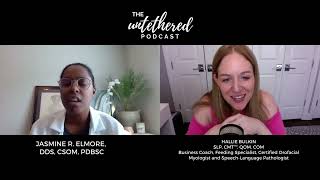
This content was created by Hallie Bulkin. This content was uploaded by Hallie Bulkin. This is a YouTube podcast episode (Untethered Podcast, Episode 118 — "How One Dentists OMD Shaped Her Dentistry Career with Dr. Jasmine R. Elmore") published July 11, 2022. It is an interview-style conversation between host Hallie Bulkin and guest Dr. Jasmine R. Elmore. The discussion covers Dr. Elmore’s background as a pediatric dentist and orofacial myology/orofacial myofunctional therapy specialist, her training in breathing behavior analysis and airway dentistry, her clinical focus (now emphasizing infants and new moms, tongue/lip ties, feeding, sleep and airway assessments), practice location (Durham/Raleigh, NC), and her personal health and breathing journey. The episode also addresses practitioner education, caregiver support, and differences treating children vs. adults.
Questions this video answers
Episode 118.
Durham, North Carolina (Raleigh/Durham/Cary Triangle area); new 0–3 clinic opening in August attached to a hospital/pediatrician.
Website: drjasminerelmore.com; contact email mentioned: ineedrichsleep@mail.com (as spoken: ineedrichsleepmail.com).
Chapters
Hi and welcome to episode 118 of the Untethered podcast. Today we have Dr. Jasmine Elmore joining us. Dr. Elmore is a board certified pediatric dentist, a certified specialist in orofacial myology, and is one of the few people in the world to have a professional degree in the science of breathing behavior analysis. Her personal pain journey led her to airway dentistry. She's been fortunate to be trained by many of the legends in the field. Her airway fairy godfather is Dr. Barry Raphael who personally trained her in his office after she completed the Airway Mini residency. She's the first dual mini resident proctored by both Dr. Sirish Sagi and Dr. Chelsea Pinto at the Breathe Institute. Dr. Elmore has taken courses with Ron Reska to learn more about the postural restoration and is active patient in the therapy. Combining her studies with doctors Ted Belfor, Kevin Boyd, German Ramirez and so many other leaders with breathing behavior has helped her holistically heal both children and adults alike. Quick Disclaimer all information, content and material of this podcast are the opinions of the speakers and is for the informational purpose only and not intended to serve as a substitute for the consultation, diagnosis and or medical treat of a qualified healthcare provider. Welcome to the Untethered Podcast. I am your host, Hallie Balkan. I'm a certified orofacial myologist, feeding specialist and mentor. This podcast is all about getting your questions answered and collaborating with colleagues to bring you the most up to date information in the orofacial myofunctional therapy, tethered oral tissue and airway space. I challenge you to keep an open mind and join my mission to get this information out to the masses. Let's get started. Jasmine, thank you so much for joining me on the podcast today. I'm really excited to finally connect and to learn a bit more about you.
Thank you so much for having me. You're now my new favorite Halle. You have supplanted Halle Berry as my favorite of all time. I just wanted you to know that. So, so happy to be here today.
Oh, thank you. It's so funny you say that because people always go, well is it Halle or Haley or Holly? And I'm like Halle, like Halle Berry because nobody forgets her name. So I love that you said, I was like, that's exactly how I say my name.
I did some research beforehand and yes, you know what, this makes sense. This is why I love her so much. So I'm glad to be here.
Love it. I'm so glad you're here. So let's talk Will you tell everybody a little bit about, like, who you are and what you do first?
Wow. Yes.
Loaded question.
It's always complicated now to describe to people, like, what do I do Right now? What I do is I work with new moms, and I work with kind of like I'm like the eastern version of Breathe Institute or what we're trying to establish here. And we do a lot of tongue ties, lip ties, things like that. Six months ago, my airway practice was a little bit broader in view. We just have gotten so many new moms on board that it made sense to just kind of focus on them right now. But six months ago, I actually worked with infants, toddlers, children, and adults for airway assessments. So they come in with all the host of issues and problems, and we kind of start at the beginning. Look at the way they sleep, look at the way they breathe, chew, walk, talk. And it's a full, like two hour assessment. And then from there put together holistic treatment plans that start to untangle those issues. So I've been doing that, not on my own for a long period of time since September, but I have studied that for the last three and a half years. So it's cool stuff. I love it. I love helping people breathe better, sleep better, and just live better. So it's awesome.
Yeah. And I love that what you said there, that, you know, you just love helping them breathe better, sleep better. They just, it's. Overall, your function improves. And it's so crazy because a lot of my older patients, like my adults will say things like, I didn't realize what I was missing out on. I didn't know that life was actually supposed to be this way. I just was so used to going through my daily life the way it was that you don't know. You don't know what you're missing out on until all of a sudden you have the ability to function optimally, function maximally without compensation. And then all of a sudden you're kind of like, whoa, I don't have to be tired all day. Or I. I actually wake up feeling rested or I can go for a run and breathe through my nose. Or, you know, it's just all these, like, little things that we. Nobody teaches us. We don't think about this. We just accept life is. And go about our day.
Yeah. Yeah. I mean, most of the adults that I was seeing, you know, we don't know. We don't know. You know, it's almost like a badge of honor, especially if you're an entrepreneur or you're a helppreneur. It's a badge of honor to be tired and overworked. And we kind of compare, like, people, you know, what did you do today? You don't get any points for. I was. I was on the beach. Oh, you don't get points for that? No, it's. You know, I had this patient, and this patient on. This patient was crazy. And then this. And that's, like, where you really get people excited, you know, telling all the war stories of clinic, you know, so to really kind of present a new light, it's kind of like, hey, did you know you can get more done during the day by doing less? People are like, what? You know, And I was like, what? When people first kind of introduced me to this, was like, there's no way I'm gonna have more energy doing less stuff. There's just no way. And actually, that's exactly what ended up happening. So, yeah, I mean, it's. It really is one of those, you don't know until, you know, type of things, which makes it difficult to kind of always have conversations with new people, because it's like, this sounds like this is a gimmick. This is too good to be true. What do you mean, breathe in my nose? What is that going to do? And then people just trust you enough to do it, and they're like, whoa, I can't believe I didn't do this sooner. This changed my life. So it's cool stuff.
Yeah. It reminds me of a meme that I saw last week, which is a version of other memes I've seen in the past. And it's like the Europeans, they put up an away message. It says, off to the beach or off to the mountains for three months. Catch in September, October. And the Americans are like, you know, going in for heart surgery, but I'll be available on my phone in two hours. Feel free to text me. Like, I mean, what's up with that? Like, we. And it's. It's like we wear this hustle attitude with a badge of honor. And I have. In my coaching programs because I also coach, you know, female entrepreneurs, especially, like, in the medical space, in the private practice spaces. You know, I really. And it's funny we're even talking about this because I'm creating a. I do a monthly training, and the monthly one that I'm working on right now for them this week is talking about, like, mom guilt and, you know, actually being present for what you need to be present for right now. And, like, you know, we've talked about boundaries. We've talked about setting those hours and respecting those hours for our families, for ourselves, for our patients. And it's, it's really, it sounds like a good concept, but it is so ingrained to do the opposite in American culture that, you know, we really, it's almost like we have to work hard to not be that way. And people look at you like you have five heads when you suggest that you can have like a very successful business and still treat your patients and have very happy, successful, healthy patients and still take care of yourself and your family. And it's, you know, this whole, like, misconception of like balance. I'm like, there's no such thing as balance. There's boundaries. We need boundaries in our life. We need to take care of ourselves just as much as we take care of our patients. So. Yeah, I know that. Definitely a favorite topic of mine.
I need to get into this coaching program. We'll have to talk about that afterwards. I didn't know you were doing that. That's amazing. So necessary. I love that.
Yeah, so tell us. So you had said that you're working with adults or you were working with adults, really, the lifespan, but now you're really focusing on the itty bitty babies. So is it. And you mentioned it's just because you've had such an uptick in these mamas coming into the office. So is that your new niche? Is that really where the future of your practice is headed?
Yeah, the new clinical. The new clinical niche, yes. I still do a lot of consulting with new myotherapists and old myotherapists, new airway docs, older airway docs. So I actually help more adults now than I did six months ago. I just help them from afar, usually in zoom conversations and meetings and things like that. But yeah, you know, I mean, you're a mom. You know, the new moms, they require a certain special set of attention that once they started to come into the fold, I thought, okay, at least for now we will just focus on all of my new moms. They need a different type of attention than like my patient after this is a four year old. And it's a little bit of a different type of therapy. So. But yeah, still help those adults for sure because many, if not all of them struggle from the same things that I have struggled with. And so there's a bond there that we just can't let go. And I love it. It's cool stuff too.
Yeah. And I'm similar too in that my Focus has always been like, actually before I had my own kids, I was doing more toddler preschool age feeding therapy and motor based disorders and then had my own tongue tied baby. And that really threw me into infant feeding. And then from there I threw myself into mayo. And it's kind of been this like snowball effect of like. And you know, and so now I still, like, my practice does treat adults and older pediatrics as well, but really the meat and potatoes of who we see are really those infants and toddlers and earlier aged MYO cases in the elementary age kiddos, which is exciting because for me, I'm like, the earlier we can get in there and start making these changes, the better for these patients, for these little ones. And then you always have the moms or the dads, the parents, the guardians sitting there going, I think I have this issue. Can you look at my mouth? And you're like, here we go.
Absolutely. And that's why I still work with adults for the functional phrenaloplasties, because they're like, oh, yes, you know, hey, do you want to. Sure. Come on, come on now.
Come on over.
We got room. Come on, come on. But all of it is really cool stuff. And the majority of it, like you said, is this to see people's eyes opening and going, wow, I need to be a little more attentive in figuring out if that really does apply to me. And then they'll come back in a couple weeks and go, man, you read me like a book. How did you know? Well, I struggle with the same stuff, you know, welcome to the club. But yeah, it's just all of it is really exciting new for this area in North Carolina and just cool stuff.
Where are you in North Carolina? Because I might have a referral for you. Someone just contacted me yesterday. Great.
Well, my office right now is in Durham, North Carolina, which is near the Triangle, the Raleigh, Cary, Durham area. We're opening a new location in August that's attached to one of the big hospitals here. So I'm really excited about that. We'll be right down the hall from a pediatrician's office. And so for my 0 to 3, this new. The new office is kind of like pretty much specifically 0 to 3. But yeah, it's, it's cool stuff and like I said, still throw some adults in there every once in a while. But yeah, Raleigh kind of is where we're situated right now. And I also have a New Jersey license. And you know, I mean, you know me, there's got to be some excitement in there too, but absolutely, you know.
I got to change it up a little, but I've got my Maryland DC license. I'm moving to Florida. So soon. It's public information now, you know, but it's. My practices will still stay in the DMV area, but I will physically be in Florida. So my team will be here in Maryland, D.C. and Virginia still. But yeah, no, it's amazing and it's so exciting to see, you know, to see this spreading throughout the United States. And I feel like there are other parts of the world that are ahead of us and their knowledge base in this space. And so it's really exciting to see even just a, a few people popping up here and there because we can get, like we said, if we can get this to become more mainstream knowledge, like, oh, the changes that we will see just overall health wise for pediatrics and adult and adults. It's incredible. So will you share with us? Because, you know, you said you've had your own journey. So will you talk about, I don't know where you want to start. If you want to start about, like, start where you realize this was an issue as an adult or have you known ever since you were younger that there was something going on with those symptoms? Looked like, you know, as a, as a child. I defer to you. You tell us your story however you want to, but I think it would be helpful for others to hear.
Yeah, no, my, my story is, I always call it a funny, funny story. Just even how I became a dentist is a funny story. I just randomly one day received a phone call from a guy I'd met, like years before, was a family friend, but I didn't know him very well. And he called me like, hey, yeah, so you're going to be a dentist? And I'm like, what? I'm gonna be a what? Like, what do you. Who, first of all, who is this? Hello, how are you? And what, you know, at that point, we didn't go to the dentist. My mom has extreme dental phobia. We didn't go to the dentist. She hates when I tell people that. But that's, I mean, that's the truth. She's not a bad mom, but we just didn't go, you know, it's a real thing. And this is, this is real, you know. And so I went to his office because I just was curious as why this guy called me and I fell in love with the professional dentistry. The first day in his practice, he's like 6 foot 3, almost 500 pounds. He's like a real life, like Teddy Bear and the kids, I mean, the kids loved him and no one ever really talked about teeth. It was like soccer practice and dance, you know, dance things and dance groups and all kinds of cool stuff.
Amazing.
That's actually how I became a dentist. From a random phone call one day from this guy that thought I'd make a great dentist. And so my journey into airway is actually really similar. I was working like 20 to 24 days a month, just like living my best over active work life, loving every minute of it. And I started having this shoulder discomfort that was starting to now become shoulder pain. And it was pretty debilitating. So a friend of mine was like, hey, I know you're seeing some PTs. And like, I was doing okay. I wasn't doing great. I still was having a ton of pain with like three sessions a week of pt. It just wasn't working for me. And these were really like, you don't understand, Hallie. I'm talking about super qualified pts. There were NFL and NBA athletes in there training with me, like quality pts. Nothing against their knowledge and skill set. It just was not working for me specifically. So my friend said, hey, I know this pt, his stuff is a little bit odd, you know, but I think it may help you. You should check him out. And of course he didn't accept insurance. And so just even though I had the money, you know, just like a reason to go, I'm not going to go see this guy. Like, no, but I'm glad I did because he was able to help me. Actually, let's back up. I fell in the shower. So even though I was having the shoulder pain, I banged my ankle up pretty good. So Most of my PT work was like 25% shoulder, 75% ankle. That's important because within three sessions with this new PT that she recommended, he was able to 100% resolve all of my pain and all of my swelling in three sessions. And I had been in months and months of PT with these other PTs. So because I had this trust factor with him now, I said, hey, my shoulder. I don't know what I got going on. Maybe it's former athlete stuff plus dental stuff, but like, it's bad. I need help. And so he's like, hey, can I do my traditional therapy? You know, not pain management, but like my real therapy. And I'm like, you can do whatever you want. Wave a banana over my head, I don't care, as long as it works.
Do whatever you want.
Do whatever, whatever you did for my ankle. Just. If it's the same thing, by all means, just. I trust you, you know? So he's like, tell me about your teeth. And I'm like.
Why?
You know, Mike, you know, I'm a dentist. What do my teeth have to do with my shoulder? And he's like, okay, okay, let me. Let me back up. Do you dance? Do you have rhythm? You know what I mean? The questions were so odd. How do you sleep? I'm like, I sleep fine, Mike. How do you process stress? I'm not stressed. And he's like, jasmine, you live a really stressed. Are you sure you're not stressed? I'm not stressed, Mike. I'm fine. So he started just at the beginning with this weird teeth and dance. What the heck does this have to do with my shoulder? You didn't do any of the stuff with my ankle. So he was the first person that said, there's a link between your mouth, your diaphragm, how you breathe, your feet. There's no surprise that you need orthotics. There's no surprise that you've had a history of knee issues over the years. These things are all related. And I was just like, I've never heard of my teeth being related to anything with my feet, nothing with my shoulder. And at that point, I was maybe three years out of dental school. So I'm like, mike, okay, you're taking the trust a little bit too far. You know, I trust you, but like.
It up a little.
You know, go back a little bit. Never heard of this. You know, but with my personality the way it is, I'm really open to anything. I'm not gonna say someone doesn't know what they're talking about unless I've done my own research first. So even though I had never heard of it, I mean, there's plenty of things I've never heard of. I don't have an ego big enough to say, like, this doesn't exist. So I took that as an opportunity to start learning stuff. And that was probably the best and worst thing I ever did, because from then on, it was like, okay, I don't want to drill and fill teeth anymore. I literally want to only focus on this because I see these same issues in the kids that are in my chair every day. How did I miss this? Like, not even tongue tied, Just kids sitting in a chair with absolutely the worst posture you've ever imagined. Breathing so loud you can hear it in the hallway. Just simple things. And I started asking parents at that point, really simple Questions, because I didn't know a whole lot back then. And when I'd ask about sleep, they would go, oh yeah, they can't sleep through the night. They wake up, they've got nightmares, they use the bathroom, they have this. I'll get up at 4 o' clock in the morning to get ready for work and little Johnny's already up. And I'm like, what? Because that wasn't my experience. I go to sleep, I go to sleep. I'm a heavy sleeper, you know. So this was the first time I'm hearing about like night terrors. And then one of my friends had a baby who turned two and I started hanging out over there just to learn more when she told me night terrors and I got to hear them and I was thinking, my goodness, I can actually help people better than I can as a traditional dentist, if I can understand how these night terrors are related to mouth breathing. And he had his tonsils removed. And it was so many patterns. And I was seeing it in two kids and then four kids and then 20 kids and then 100 kids. And then I was like, okay, I've got to like now really go all the way in and help these kids. Because trying to learn myofunctional therapy at 30 is hard. It's hard. I'm not gonna lie to you.
Hey, it's me. I hear you.
It's hard. It's hard stuff. Like I. Part of my brand, what makes me me is I tell parents, like, this stuff is hard. Let's not pretend this is easy. This is difficult. It's much easier with the neuroplasticity of a 3, 4, 5 year old than it is with a 35 year old. And that's just real, real talk. So it started with me and my own research. I took a lot of classes with pts, understanding just the body connection. And before I really understood the tongue posture piece, I really had an appreciation for body posture because I've had awful posture ever since I was a kid. But my mom of course didn't know that that was related to the mouth breathing I was also doing. And you know, it's just all connected. So I kind of fell down the rabbit hole trying to resolve my own issues and realized that these kids have the same problems. And then of course, the icing on the cake was my mom. It was around Christmas time a couple years ago, and I was like, hey mom, did you ever try to breastfeed me? And before she could answer, I was like, was I colicky and fussy? And an EPH jaundice. And she looked at me like, were you talking to your grandma? How did you know this stuff? You know, how did you know this? And I said, oh, because I work with those kids every day. And I guessed that based on the fact that I have a tongue tie and some other issues that I probably experienced that. And she was like, you described your breastfeeding experience to a T. Like, she said it was like a two month thing. And I just, she had to just. That was the same with my generous two months. I mean, she just was like, you just couldn't do it. And then of course, I was allergic to every milk and. And it was just me. Right, right.
I mean, my mom was like Also, you know, 35, 36 years ago, there weren't that many alternatives. And she was like, the soy based stuff smelled like dirty socks. So you literally would spit it out immediately. It wasn't whether or not you could swallow it, you refused to drink that. She was like, you are not easy to feed as an infant.
Yep, yep. It's like we're twins. Because my mom said that was my experience as a kid. And I remember she was just like, what does this have to do with like the dental stuff you do? And we have like a two hour conversation. And the look on her face, I will never forget it. It was like a mixture of guilt. And I was thinking, why is my mom guilty? But you know, probably the flaws I have, I'm not a parent, you know, it's like I didn't understand, like, why is she guilty? Nothing to do with her, but it was just like a look of shame and guilt. And then like, almost like, how did I not know? And this is me at like 30, you know, and I thought, man, if she's feeling that with a 30 year old child, what are these moms feeling with 2 year olds or 6 month olds? And that drove me even further to really want to help parents and kind of come not so much from a doctor approach, but like child of single parent mother approach. Like, hey, I know how my mom felt to know that I had struggled with something for 30 years that was easy and simple to fix in her mind. I still don't know if I say tackle easy, tag that to that to this problem. But in my mom's mind it's like, man, if I had known, I would not have hesitated to do something. And you know, wow, I feel like such an awful mom. And I just was like, mom, you're the best mom ever. You know, but that really really cemented it in for me. Like, this is what I have to do. I need to be in this space. So, yeah, I mean, that's how I got here.
I love that. I mean, I think. And what's so interesting is when I started this podcast, it was because nobody else was talking about this yet. At least nobody in the space that I'm in where I went to look like, is there a podcast for SLPs. OTs. RDH is in the myofunctional therapy space who are talking about myotots airway, you know, and feeding even. Because if we're talking about the kids under the age of, you know, under traditional four year old myo age, well, we can intervene sooner. And so I know certain professionals tackle that versus, you know, like, we're not doing myo per se at that age. Might be, I call it feeding with a twist of myo. We still need to have our MYO knowledge. We need to have our tots knowledge. We need to know how to assess and treat, diagnose all that stuff. But what it comes down to is, you know, you're exactly right. These moms sitting in front of me in tears with their own partner sitting next to them, thinking they're absolutely insane and going, why are we spending this money? Because we're private pay. Why are we spending this money out of pocket to sit here and have her tell us this when the mom is sitting there feeling so validated? Because she's like, nobody has listened to me. Everyone has told me I have like all these different mental health issues, which some moms do. I'm not downplaying that at all. And sometimes there is PPA or PTSD or ppd. There's all kinds of real issues going on, which is even more of a reason why we should be arming our moms with as much support as we can in these postpartum months. But, you know, it's like to have a pediatrician or another doctor say to you, oh, your baby's fine. They're on their own growth curve, but mom is like struggling around the clock. And then to have your partner who lives with you to basically latch onto what another professional said and not support you, because they don't know. And for them, they're doing the best they can with the information that they have, you know, it's a really slippery slope. And I really love and appreciate every provider who steps into this space to work with these families because we need more people. These mamas need support. And, you know, and it's been Incredible, too, because a lot of them have started listening to this podcast, and they'll reach out to me and they'll say, hey, who do you know in this location? Or, you know, just. Thank you so much for even bringing light to this topic. Because I. I knew something was wrong. I didn't know what was wrong, but I knew I wasn't crazy. And, like, it's like all these alarm bells were going off, and everyone was telling me I was basically insane for even thinking that something was wrong with my child or that, you know, there was something off about our feeding relationship. And anyway, so that's become a major passion project of mine because I never set out with the intention to create material for parents. It was actually for professionals. But the fact that we have all these mamas hanging around and, you know, and then also to add to that, moms within our field, parents within our field who didn't know and who now know, who can also go out and spread this information and make it more widely available. You know, it's like, for me, I just. My heart feels so full, like, when I speak to another provider who works with moms of babies and infants and toddlers, because, man, that is a hard population. It takes energy. It takes time. You have to be patient. And you really need to know what you're talking about, because they're not just many adults. They are totally different anatomically. They are totally different behaviorally. It's, you know, my friend and colleague Autumn Reed Henning calls the toddlers no man's land. So it's like, that's the area where it's hard to find providers who will even release that age sometimes, because we know it can be tricky. And I'm super lucky because I have oral surgeon local to me, and I have pediatric dentists local to me who are in this space who will release and many who do place sutures, and they do not require general anesthesia. This is all local. So it's really great that we're able to offer this to our families in the dmv, but, oh, my gosh, it's. You know, it is like you. Like, I was that infant. And I know that my mom would have done everything in her power to do what she needed to do had this information been provided to her. So it's so interesting to, like, look back at our own stories and where we were, you know, as children and where we are now as adults, and the snowball effect that, you know, it's taken its toll on all of us as adults who didn't have that early intervention. So what are you. Do you mind sharing like where you're at right now with your journey? Because I know you mentioned, you know, you're an adult. It's not as easy to treat, to unravel all the pieces as an adult because there certainly are. But where are you at in your journey?
Yeah, so I'm starting with MYO right now and it's difficult. I've gained about £25 in the last 18 months and it was not Covid related. It was traveling up and down between New Jersey and Dr. Barry Rayfield and Clifton. He's my airway fairy godfather and I've learned so much stuff from him and he let me apprentice with him for a full year, which was a huge blessing. So my body kind of going out of routine. It was like the one thing I tell parents all the time. You'll find it almost seems like there's this one life changing thing that just kind of pushes you over the edge. But those all the other issues and factors were building. You just didn't know until the one thing happened. So I've learned that in also trying to be physically fit again. This is somebody who used to work out six days a week and bodybuild and train. So falling off of the wagon that hard and trying to get back on is a challenge. Adding MYO into it is of course also a challenge. But I'm going to have Dr. Zaghi perform a septoplasty on me this summer as well. So yeah, I mean just my breathing just starting at the foundation of the nose, my breathing end of itself is compromised. And I played sports kind of hitting the nose so many times and never really thought about it because you know, people, we compensate really, really well. And I was thinking while you were talking, I was like, oh, I have to mention that what I do, I more so work. Even though my traditional pediatric dental world, I work a lot with special needs kids. I mean that was pretty much referrals are for special needs kids or kids who've had really negative experiences at the dentist. That's what I did as a traditional pediatric dentist all day long. But more so I've noticed in my fee for service office in this new practice. I work a lot with kids who are, who are kids. Like I was right, like top of their class, A's on everything. These are the kids that get really left behind because no one thinks what kind of how are you struggling when you get an A's and everything? How are you struggling at club and sports and no one's paying attention to those kids who are breathing through their mouths, those kids who are grinding their teeth, those kids who are snoring, those kids who are, in my case, tripping. Even though I was the number one athlete and if something fell right now from the ceiling, I probably could catch it. I have amazing hand eye coordination, but when I walk, I trip into things all the time. In the peak of COVID I had to have my toenail removed by the doctor because I stubbed my toe in the same segment of my master closet three weeks in a row, as if that wall moved. It's been there, been here for five years. The wall's been in the same location. But I stubbed my toe on the same corner of my bed, my bedroom, master closet, so much that my toenail was like 10% attached and I had to go to the doctor to have it removed. When I mentioned that to parents, then you get stories about kids who are clumsy and trippy and tripping, and I'm thinking, I have tripped and stubbed my toe so many times as a kid. I was the kid that my mom used to say, oh, you're a hypochondriac. Because something was always, like, hurting, but then like the next day it wouldn't. And again, straight A student doing all these things, not behind in class, no one really cared. No one would have thought that I had an issue or that there was anything, you know, resting below the surface with the mouth breathing obviously being the huge red flag. But I noticed in a lot of my courses we talk about kids, and rightfully so. We talk about kids who are struggling, who have ADHD and autism and these type of things. And they're a really important population to focus on. I almost focus on the kids who are over excelling because sympathetic nervous system dysregulation is very frequent and common in our profession. You know, these professionals, I'm one of them, we cope really well. We're over, you know, we're overcomers. We can overcome any challenge. Those are red flags for somebody whose sympathetic nervous system is in go, go, go, go, go. All the time. Parasympathetic. Hey, never met you before. And that is a recipe for disaster. Maybe not right now in this moment, but in my case, lifestyle change, traveling from New Jersey to North Carolina, boom. All of a sudden, 25 pound weight gain. Now the stress. I told Mike five years ago, I didn't know. Oh, I know that stress now. It's always been there. But with this type of personality, it's like we Teeter right on the edge of mental breakdown, pretty much being funny, but also not being funny. Many of us are like right on the cusp, you know, and those same things that you see in the ADHD autistic kids we have too, we just compensate much better than they were able to. And the compensations, you know, my granddad, we talk about compensations and it's like a badge of honor. Like, I'm fine, I'm good. You're fine and good until you're not finding good. And the thing is, we don't have a magic ball to know when the body's gonna stop wanting to compensate. You know, then it's your Achilles blows out. Oh, your acl. My case, it was, you know, my, my shoulder. And it's like your body's like, look, we can't keep making up for what you got going on forever. At some point the body's gonna give up. It's always that final straw. And I tell parents all the time, you look at stories of people who, you know, the 47 year old mother of four who died in her sleep, and you know, I'm not going to diagnose. I know you have that disclaimer at the beginning of the podcast. So I'll say, you know, we don't. I'm not going to say that, you know, I went and did an autopsy. But I'll say that most people, you know, we have these issues that rest below the surface and no one notices until, you know, the heart, all the compensations, it has to do for our inappropriate and dysfunctional breathing. And it's a big deal. And when I really came to understand how big of a deal it was, it was like, okay, this myo may be difficult to do at 30, but I'm gonna start it. And so that, and I do some pretty intensive and specific breath work. A little bit more involved than just meditation. I'm in a 12 week program right now that's being run by a breathwork therapist and we meet weekly. And that's really made a big difference. Getting a good solid bedtime, which is hard, but trying to stick to that in with the MYO and those types of things and bringing the balance back into the body that like we fight against. But it's so important, like what you have going on with your podcast, what you're doing with professionals and your professional development, it's big, important stuff. But if you burn out like a flame, you know, like 12 months from now, when really you had a 16 year career, but you only get A year into it because your body falls apart and you're in a hospital bed. That's not good. No. So it's really about living our true potential. And so I'm at the part of my journey where I'm just starting but trying to really tap into my true potential. Because as you kind of alluded to before, most people don't get it. It's like, what do you mean you became a doctor at 25? I started dental school at 21. I was a doctor by 25. I've done so many things that people are like, oh, you did all these amazing things before you were 30. And it's like, yeah, but just think about if I wasn't a mouth breathing, overwhelmed, over stressed person, what else could I have done? You know, Dr. Berry was the first person to really turn that question around, you know, because the question is usually like, oh, well, you know, you did all these things. You're good, you know, like, well, no, actually, what if, let's ask, what could you have been if you didn't struggle? Even though you handled the struggle well, you still struggled. What would your life have been like if you didn't? Then I thought, that's scary. And to do that for kids and other adults and to unleash that. So mostly now what I'm doing is some experiments with myself to directly answer your question so that I can get adults and teens, even kids, but really this older group moving in a better direction with some things that I think may help me. So some of them are a secret until next year, but that's fine.
We'll just have to bring you back so you can share them when they, when they come out.
Love it, love it, love it. Yeah, but, but no, it's, it's, it's a challenge. It's a challenge. I mean, you know, you add in what you do. We do similar, like crazy professional stuff. But then you have kids on top of it. I have a fiance. You add in these different factors and it's like, Maya, I can skip that today. So it really is about being intentional and being focused and it helps me relate more to my patients when I have to be careful at how I go to your sessions if I'm not also doing the same thing. So it's pretty cool to be able to relate to them on that level as well.
Yeah. So Lily's back in myo. So I am that mom of a five and a half year old, almost six year old in Mayo, and I'm like. And it's actually with One of my therapists and her son. So it's like a little group mayo, like, session that we're doing. She's running it and I'm just like. She's like, so how's practice going this week? And I was like, I was prepping the house for house showings. And she's like, yeah, we were bad too. So we rescheduled for like, Monday. Give him a couple extra days. I was like, yes, please. So I'm like, I get it. And you know what it's I as a therapist try to do. And I'm like, not treating right now, but like, when I was treating more frequently, I was like, I as a therapist was like, okay, I know real life happens. So I'm not going to tell you need to do this six times a day. I'm also not going to tell you you need to do it three times a day. If you can do it morning and afternoon, great. If you miss a few days, fine. We can still make progress. If you don't do it at all, then we're going to have to have a conversation. I always try to be, and I was even this way before having children, because I don't know, something about me, maybe I heard somebody say something once and it just kind of clued me into like, okay, Hallie, you don't have kids yet, but you can't have unrealistic expectations. You don't know what it's like to live in that person's household or that family, or you don't know what else they've got going on. But at the same time, we need to educate on the importance of, of practice. Otherwise it really doesn't make sense to be in mayo because they're not going to make progress just coming to a session once a week. So I think that's a very great point. And I think that, you know, great therapists recognize that. Yes, we all read, we all lead, you know, busy lives, but it also made me really become creative. Like, hey, when you're in the car, when mom picks you up from school, this is what you're going to do. And mom, okay, and so everybody's on the same page here. Great. So in that five minute drive home from school, school to house, boom. So now we're not, like, we're not taking away playtime before homework. We're not, you know, so we just got. And obviously things that had to be done in front of a mirror or things that needed to be done at a kitchen table. Then we said, okay, this one has to be done, you know, in a certain setting. But we always try to be really creative in how we can be realistic and functional in getting these things done. Then the other thing that you were saying too, that really resonated with me was your entire story. Because I just recorded a podcast episode that will have just come out before, that just came up before this one that talks about my story and it talks about how back when I was, you know, five years old, or maybe it was. Maybe I was going into kindergarten, it was recommended that my mom take me for ADHD testing. And my mom was like, I don't see this in her. Like, I don't see what they're seeing, but sure, they're with her during the day. I will tell, you know, and I tell the story about the three different professionals that basically looked at me and like, I didn't get the diagnosis. I was just always marked as the chatty kid, like the over talkative child getting like s satisfactory for like talking too much in class despite having like all O's on my report cards and straight A's otherwise, right? And then I get all the way through high school, I get to college and I do not do well my first semester in college. And it's like, what gives? Friends are using my notes, getting straight A's. Not going to class, mind you. Using my notes and getting straight A's on the test. And I'm. And I got like a C in my business class. And I was like, okay, something is up. And this was like a pattern. It wasn't just that class. So I said to my mom, I'm like, I want to get tested. And so I went and I got tested over winter break. And she said to me, she was like, nobody asked about my sleep. Nobody asked about, you know, all the important things. She said, well, you know, you're highly distractible and that can really impact your ability to successfully take a test. You're, you know, but. And you've been so successful to this point of your life and you have a high iq, I'm not going to give you like. She basically was like, I'm not diagnosing you with add, but you're a candidate for Ritalin. And I was kind of like. And as an adult sitting in my seat right now, I think back to that and I go, what the actual F. I don't. You're like, you're like falling out of your seat. For those of you, for those of you not watching this, listening, listening to the podcast, Jasmine is like losing her mind right now cracking up.
You can't make this stuff up, right?
I mean it was. So here's what happened, right? So here they put a 19 year old on Ritalin and I'm like, yeah, let's do it. So I hated it. It made me irritable, I couldn't eat on it. I was nasty. Like my, my demeanor, I was so irritable. I did not want to be around other people. So I would lock myself in my room, which is really a healthy behavior. Like let's lock herself away to study for things, you know. The one thing I did do was I did learn how to study, which was not taught to me in high school. So I did learn that. But I went on to get like B to A average, like high B average the next semester and then I think was like a 3, 5 and then I got a 4.0 all the way through college and graduate school after that. And again I was using Ritalin, I was using a stimulant to help me. Why did I have to use a stimulant? Like what? Like we should have been looking at. Why is Hallie having anxiety during test taking when this was never an issue before? Why do we need a stimulant to focus on, not leave gaps in the note taking. And my notes on Ritalin versus off Ritalin were completely different. It was like skeleton versus like full on anatomy and physiology, like no gaps missing. I mean it was incredible. I still hated this stuff and I basically self weaned myself off of it by the end of grad school and only took it for like sitting in three hour long classes or taking an assessment, a test. So you know, but looking back at it now, there's so many adults who are getting diagnosed with adult adhd. And look, if you have ADD or ADHD that's been undiagnosed your whole life, I am not downplaying that. But why? Why is it happening now and could.
There be something else going on? No one cares about why.
Yeah, right. Nobody cares about the root cause.
I have a patient right now who's been on Ritalin. He's 40 and he's been on Ritalin since he was like 16. And he's also on Zoloft and he's also on. We need a commercial break in here to tell you.
So we're gonna give you an upper and then give you a downer and.
Then give you a.
Let's just, you know, so nobody like.
In that moment thinks about the dependency on these drugs and then like what the other side of that looks like the severe depression that this guy is in. He's coming to me for help. Like, I gotta get off these drugs. But, like, what if that conversation could have started when he was 16, right? Or in your case, you know, like that early college point, like, hey, like, what really is going on here? How do you sleep? How do you breathe? How do you. And they don't teach it in school. So I tell parents all the time, it's like, we can't even be mad at the providers because six years ago, there's no way I would have done this podcast. I probably would have listened to this podcast. Like, what the heck are they talking about? Because nobody bought this stuff. I've had to hundreds of hundreds. That's not even six figures. Let's just say that to go learn, get education and training. So I always tell parents and other adults, like, if you had the training, you would understand why I can now see someone in a mall and probably tell you all of their different things. I have people. If I really want to blow somebody's mind, I'll have them take their shoes off. And by just having the bottom looking at the bottom of their soles, I'll tell them about their feet, whether or not they have a scalloped tongue and all these different types of things. It's not cool, though. It is so true. And I didn't mention that when I was in college, I started having this, like, weird. It was like, it started out with blood and stool, and it just started progressing into a crazy state of things. But because I was 17, I could not get an adult gastroenterologist, and the pediatric gastroenterologist refused to do colonoscopy. They were like, oh, you're too young. Even though, like, all these signs and symptoms, they were like, oh, it's a fissure. And I'm thinking, like, so you have a fissure for a year. I mean, there's no way. I mean, I'm not a medical doctor, but that sounds like, crazy. Oh, it's hemorrhoids. So people have hemorrhoids for a year. There's no way. So Finally I turned 18, like, a week later, went to a rheumatologist because I was having such bad joint swelling and joint pain that I couldn't work. I was doing a winter job, winter break job, and I couldn't work. My fingers were, like, nutty professor swollen. It was crazy. And this rheumatologist asked me three questions. And after the three questions, he's like, you need a colonoscopy I think you have ulcerative colitis. So that was when I was 18, 17. 18. So I was on medication for ulcerative colitis up until I started my graduate program for breathing behavior. When one day in class, the professor was talking about how he spent. He's an MD he spent about 35 years, 40 years working with a gastroenterologist together on breathing and its relationship with the gut. And he worked specifically with patients who had Crohn's disease. Well, because I had ulcerative colitis, right? I'm like, crohn's disease. That's the sister of ulcerative colitis. So after class I asked him, I was like, hey, doc, can you tell me what did you do with this guy? You know, like, what can you break down how breathing is really related to the gut? And he started telling me about how we have this system that's unique to us as humans, where the gut gets cleansed in our sleep that many people don't know about. They don't talk about a medical school and just the difference, the different things about carbon dioxide and oxygen. And he taught me just a few simple breathing techniques, right? I have not had to take my medication for approaching now three years for ulcerative colitis. And I have healed my gut symptoms by breathing. And it's crazy because I think back to the time where I was struggling for this diagnosis, right? The medication, of course, helped me, but like you, I started self weaning. And I just think about all the adults who don't have the courage because it's hard when you're self weaning off of a medicine that's actually helping you, but you know, in the long run, it's probably going to harm you. Like, that self weaning process sucks because it's like, I'm gonna have to deal with the pain that this is helping resolve, but, like, I gotta be strong. It's hard. But to look at that point and all the uncertainty and if someone has just said, tape your mouth or go to Mayo and learn to breathe with your mouth closed, I could have prevented what was like a decade of this medication that only God knows what it's done to my body in trying to resolve a condition. And it's no disrespect to ulcerative colitis or Crohn's disease. They're real conditions. But there are people who have conditions that mimic those conditions that get these medications. Then yes, the medications help us, but breathing also helped me. And look at what it I Mean, we're almost three years in. It's just crazy to me when I think about the knowledge gaps that we have in our system. But I'm excited that there are doctors who want to learn this stuff, who get intrigued when I talk about resolving, you know, gut problems with breathing. They're really intrigued by that. I think that's great. And I just. When you started talking about what you experienced, I thought, man, that sounds like the struggles that I had with my gut. With my gut problems.
Well, and I've been lactose intolerant my whole life. I had a dairy allergy when I was in, like, probably up through. I don't know if it was high school or early on. At some point that's all blurry because I'm still lactose intolerant, so I don't need it. Or I take a lactate pill right now. I've been. I've cut it out because I just feel so much better without it. And it's interesting, too, because I. So, you know, as a freshman studying, I was like, all hopped up on Diet Coke and peanut butter and Ben and Jerry's ice cream. We're not going to pretend like I was the healthiest freshman, not gaining freshman 15 or anything, of course I did, but I was. This was like my study diet. Like, let's use some caffeine, some sugar.
Peanuts. It was just.
It was not great. But I developed a peanut allergy. I remember sitting there and all of a sudden my throat got really itchy and it felt funny, like, almost like it was kind of getting a little smaller. And I was like, that was weird. And I just went on, like, not thinking anything. And here we go. The next night, I'm studying again. I sit down, I take a spoonful of peanut butter, I'm eating my Ben and Jerry's ice cream, and I'm like, oh, shit. My throat. Something feels really not good. And I'm really lucky that I didn't have, like, a more severe reaction. I did go and get tested and the allergist was like, yeah, you've developed a peanut allergy. And I ate peanuts my whole life prior to that. So it was really interesting to me because it was also like, this was the tipping point for everything. This is the point when I developed a peanut allergy, which, by the way, six years later, getting healthier and, like, having a healthier gut, like, that allergy was gone by the time I was like, 25. And they do say that allergies can come in six to seven year cycles, which I never knew about that until this was brought back to my awareness as a patient going through this, I was like, wait, what? This is not like a lifelong thing. You can, you can cure an allergy. That's kind of cool. And I really didn't do anything specific to cure it. I just didn't eat them for six plus years. And then when we got retested and they said, your body is not reacting like it did in the prior tests. And I remember sitting outside. They're like, most people sit outside our office, which is right next to the er, you know, and eat their first peanuts just in case. So I remember sitting in the parking lot, like, eating like, some peanuts because I was like, so sure that something was, like, not going to go as planned. It was fine. But oh my gosh, it was crazy. And it really just. It made me realize, like, for me, that was my tipping point. I was not doing well in school. I clearly was not sleeping well. I had anxiety. I wasn't an anxious person normally, but I had like, this test anxiety that, you know, it's like I would sit down and I was so hyper vigilant to, like, everything around me that I could not focus on the test. And I would reread things like, five times over and still not process what that question was saying. Even though I studied and I knew the information. That was a crazy part. I share in the podcast how for this one test, I went back like a week and a half, two weeks later, and I was like, can I review the test? Can I just see what I got wrong? And they gave me the test and I'm like, I know 13 out of 15 of the answers I got wrong. And I have not studied in the past two weeks and we've moved on to new material. Like, what gives? Like, what? That's bizarre, right? And that's what opened my eyes up to, like, okay, something else is at play here, and I want to get to the bottom of it because it's not a matter of me not knowing the material. It's a matter of I knew it, but something, something prevented me from being able to demonstrate that or retrieve the information during that specific time that I was tested on it. So, you know, it was a very interesting eye opening experience. It was like, the gut was a mess. I'm sure my sleep was a mess. I'm sure that, you know, like, my weight was not great. Like, I was just. I was all over the map.
Okay?
Like, it was. That was the last straw. And then I thought everything was good and Dandy, because here I go, and I get on Ritalin, which also was probably not good for my stomach because Ritalin has lactose in the methylphenidate pills. So, you know, every time I would take the medicine, I was like, gotta go to the bathroom. It was like clockwork. I could not eat. I could not drink any caffeine on the Ritalin. Like, it would make my heart race. I could barely eat certain foods, like the foods that. And I'm not kidding, I actually went on the medication. In grad school, I went from a size 8 to a size 2. Like, my first year of grad school. And I did nothing differently other than getting. I was getting, like, eight hours of sleep a night. I was not going out and drinking with everybody at night because I was like, I just can't. I can't handle this. I don't have the capacity right now. I don't know what my intuition was telling me, but I'm like, I know this means I'm being, like, antisocial, but, like, I have to be this introverted person right now, and this is what's best for me, for Halle. And I would just go back and do my work, and I would do. You know, I wasn't exercising, really, because when I exercise throughout college, that seemed to do nothing for me. So. But it was crazy. I went from a size 8 to a size 2. And I was eating, like, you know, freezer meals, like, what the smart meals, whatever they were, you know, for lunch. And my dad would, like. My parents were relatively local. Like, they lived, like, 40 minutes from university of Maryland in Montgomery County, Maryland. And so they. My dad would, like, go to Costco once a week and, like, bring me a delivery of stuff. But I was like, hey, can you get me grapes? And can you get. I mean, it wasn't like, yes, I ate some healthy stuff, but when I look at my diet, it's comical. I'm like, how did I go from size 8 to 2? Like, I was just in this stress state. And I know even though I was sleeping eight hours, I was not getting quality sleep. And I know that. It's just the whole thing is very fascinating to me. So, yeah, I don't know. I think it's always important to talk about all these little tidbits of, like, our experiences and our stories, because other people, like, you were sitting here, and I'm going, me too. Me too.
Me, too.
And it's like, when you start to hear what other people have been through when you don't know the back End of how they got to where they are today. And all you see is the. What appears to be glamorous on social media. I'm like, oh, no, no, no. If you only knew the story.
And what's crazy is you will appreciate this because you're a mom as I'm. It's funny. We can laugh about it, right? Because it's us. But if we were to say that your child was struggling, it would not be a laughing matter anymore. But like, wait a minute, wait a minute. I got. So I tell parents, it's like, it's really cute when it's just us, right? But when we, like, if you know that this is what we're going through from teenage years, the body usually compensates that second decade. So it's not an accident that you and I had the experience and others around that same point in time. About the second, if you're lucky, third. But usually about that second decade, the body's like, our cup runneth over. We're tired. We have been making up for your BS for a while and we're done. But it's like, if you know that that's possible, if you start to see those things in a 2 year old and a 3 year old. I was chatty, catty 3 year old, I can't remember. Oh, it was on Allison's podcast, her amazing podcast we were talking about. She said, professional speaker since three. Because I was telling her that at three years old, I was on stage with an audience of about 350 people at church. And so she's like, so you've been a professional speaker since you were three? I was like, I guess, but I was that kid that, you know, talked too much, talked too fast. I mean, the signs, the patterns were there, you know, just no one knew to notice. So now that we know, it's one of those things where we really have got to be intentional about getting the help. Because the solutions are so easy. Mayo is so fun for a kid. Myo brace. These things are so fun and cool. They're not cool at 30. They're just another thing. It's just a burden. It's an extra thing. It's a job that you have to pay somebody to teach you how to do is not cool. But at 3, 5, it's exciting. It's the best time to intervene. And actually if you do it at like six months and start that integration of reflexes, get that nervous system ready in like in infancy, man. Nobody remembers six months. Well, I shouldn't say nobody in my Class, some of my classmates told me about birth stories that they can remember, which is crazy. I cannot remember my birth story. But most people cannot remember. They were eight months old. Most people can't remember. So getting that stuff out of the way, you know, starting with the end in mind is just such a, such a big deal. So the habits of highly successful people, and we all want to be highly successful people, we have to start with the end in mind. And these stories are just so, you know, kind of, I mean, they're hilarious, actually almost fall out of my chair, but they're hilarious. But then when you think, like I said, you think about one of your children suffering with this stuff, it's no longer funny. Now it's like my guy, like, but.
You want to give them the best opportunity at life. And that's, you know, and that's where I'm even looking at my three year old now. It's cute. And like you said, it's fun for them. Like, my five year old is like, do I get to do my own today? Is it myo day? And then my 3 year old's like, don't start without me. And she will. I have to sit them both in front of the computer. And thankfully, like, I don't, you know, in most cases, we don't usually have siblings, you know, unless it's like, you know, unless it has to happen. But because it's one of my therapists who's doing the mayo with them, she lets Mia sit there and participate. And Mia's like, mom, am I doing it right? Am I doing it right? And I'm like, to see the enthusiasm and the excitement in a three year old who thinks it's so freaking cool and like a five and a half year old who's excited to do it with a friend. You know, it's like you said, it is so much easier because we can make it fun for them, whereas it's just another thing on our plates as an adult. So do it early. 100%.
Yeah, yeah, yeah.
Well, this has been amazing. Thank you so much for chatting with us and sharing your story and allowing me to expand on my story because we are like the same person. So, you know, I am sure we could probably sit here and just continue to unravel like more likenesses across our life events that we will save that.
For when we see each other in October.
Exactly. Looking forward to it.
Yes.
Well, awesome. Thank you so much, Jasmine.
Thank you. Thanks for having me.
Absolutely. And well, let me add this real quick too. If anybody wants to find you. Where can they find you?
Yeah, so I'll have a website, I guess by the launch of this podcast, drjasminlmore.com and my non professional Instagram, my personal Instagram is richsleep. People can find me there as well.
Perfect.
Or on your podcast again in the future.
Of course they'll find them here on the podcast. Well, we'll link that in the show notes so that when people are listening, you know, several weeks from when we recorded it and beyond, they'll be able to come back and find you if they're in the North Carolina area looking for or so do you also you mentioned you do consults. Do you do consults outside of North Carolina? Since that's not really medical advice or how does that work?
I'm happy to consult with people and just kind of have these chats. I have people who call me all the time for non professional professional medical advice and I connect them. So my name is the Sleep Plug. I connect them with providers locally and give them an idea of what treatment plans may look like and happy to do that too. They can just send me an email to ineedrichsleepmail.com perfect.
Well, thank you Jasmine.
Appreciate it. Thank you. Appreciate it. It was awesome.
All right, we'll chat soon. Thanks for listening to this podcast. If you want to hear more of these Myo Tots, Airway and Feeding related episodes, be sure to leave a review on Apple podcasts or pledge a small amount on patreon.com the Untethered podcast. If you found value, others you know in this space will too. So be sure to share this episode on your social media platforms and join us over on Facebook, on my Facebook page at Halibalkin Biz, on Instagram at Alibulcan. And you can head over to theuntetheredpodcast.com to grab a copy of the the Show Notes where you can also subscribe to be kept up to date on the latest podcast episodes.
More from Hallie



What I Was Missing in Feeding Therapy: ARFID, Airway, and Myo with Samy Hernandez





