Episode 129: Airway Centric ® Dentistry & The TAO Method with Dr. Michael Gelb and Jen Kirkham
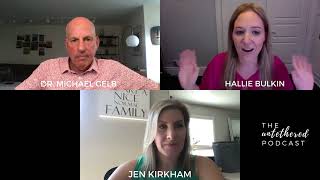
Episode 129 of the Untethered Podcast (host Hallie Bulkin) interviews Dr. Michael Gelb and Jen Kirkham about the TAO method (TMJ, Airway, Orthodontics) and airway-centric dentistry. They define TAO as a combined diagnostic-and-treatment pathway that emphasizes early airway assessment, freeing tethered oral tissues, myofunctional therapy, and orthodontic techniques (MSE, VIVOS, expanders, aligners) to grow the airway rather than relying only on night devices. The conversation stresses multidisciplinary collaboration (SLPs, OTs, hygienists/upskilled 'oral PAs', pediatric ENTs, orthodontists), early screening/intervention in infancy and preschool (faces can change by age 2–3; intervene well before age 12), and practice-level implementation (hygiene screening, FAST MYO screener). They discuss training courses (Hallie: MYO course for SLP/OT/RDH/DDS; Feed the PEDs course for SLPs/OTs) and an upcoming TAO conference (October 15–16 in Miami, Florida). Practical parent-facing recommendations include using video of sleep/breathing, advocating for airway-centric providers, and asking for cone-beam imaging and pediatric ENT evaluation when indicated.
Questions this video answers
TMJ, Airway, Orthodontics
October 15–16 in Miami, Florida
Feed the PEDs course: for SLPs and OTs; MYO course (coming soon): for SLPs, OTs, RDHs, DDS
Chapters
Hi and welcome to episode 129 of the Untethered podcast. Today we have Dr. Michael Gelb and Jen Kirkham joining us. Dr. Michael Gelb is a dentist in New York City with a practice devoted to airway, TMJ and headache disorders and how they affect performance, fatigue, memory and pain. Dr. Gelb is a clinical professor at NYU College of Dentistry and a diplomat of the American Board of Orofacial Pain. He has pioneered the concept of airway centric dentistry and is the co author.
Of the book gasp.
He is also the co founder of the APMD and the foundation for Airway Health. Jen Kirkham has been a keystone member of the dental community in business development, education, digital resources and programs to elevate careers while enhancing wellness for over 20 years. As CEO of Gel Practice Solutions, she helps dental teams weave a simple airway program into practice, as well as helping dental hygienists achieve upward movement from a tooth scraper to an oral pa. She has the perfect blend of business, clinical and technology skills to lead dentistry into the new era of health care, not sick care, where practices now get to profitably care for their patients while transforming lives, including their own. Quick Disclaimer all information, content and material of this podcast are the opinions of the speakers and is for the informational.
Purpose only and not intended to serve.
As a substitute for the consultation, diagnosis and or medical treatment of a qualified healthcare provider. Welcome to the Untethered Podcast. I am your host, Hallie Balkan. I'm a certified orofacial myologist, feeding specialist and mentor. This podcast is all about getting your.
Questions answered and collaborating with colleagues to.
Bring you the most up to date information in the orofacial myofunctional therapy, tethered oral tissue and airway space.
I challenge you to keep an open mind and join my mission to get.
This information out to the masses.
Let's get started. Well, Michael and Jen, I want to welcome you to the podcast. Thanks for joining me today.
Allie, Great to be here.
Thank you for having us. Appreciate it.
So before we jump in, or I guess while we jump in, let's just go right into what you all do because you've created this TAO method and I would love for our listeners to understand a bit more about what the TAO method is.
The TAU method, which stands for tmj Airway and Orthodontics, is kind of like my legacy. What I got from my dad was really the TMJ component and that would start sometimes in kids, but it would really start after puberty in girls and then Peak again around perimenopause. And a lot of patients still come in with TMJ complaints. That's mostly my high school and college and then adult population. Airway is something that Howie Hinden and I started talking about maybe 12 years ago when we founded the APMD. So airway is something that's really best managed by the dental team. Speech, language pathology. We talk about tots, we talk about myo, we talk about airway because we can really manage the airway, whether it's what you're doing, Hallie, where you're giving more tone to the tissues, dealing with neuroplasticity. Airway, I always believe, is the dental really best managed by us multidisciplinary. When you speak about sleep medicine, it's always been the purview of medicine and sleep. So airways become this big thing, the endeavor project. And there's a lot of people now focusing on kids and airway. And then ortho would be a way to solve the problem, to grow the airway to make the mouth big enough and really to grow the airway, make the mouth big enough to accommodate the tongue, first by freeing up the tots, doing myofunctional, freeing up the tethered oral tissues, and then having ortho come in and really give it some good scaffolding and something where the child can breathe through their nose. We can talk about that. Orthodontics in adults now is about growing the airway for. For 30 years, I would put it in a device at night. I would keep the airway open. They would feel great. I thought I was doing great. I thought I was transforming lives. But what I've realized in the last two years or so is that we really should be, especially for anyone under 50, they're not going to wear my device for 40, 50, 60 years. We now are doing a variety of techniques to grow the airway, whether it's mse, vivos, facial beauty expanders, clear aligners, lots of alf. You know, there's tons of techniques we're doing. So we really love the concept of Tao Tao dentistry, which is the journey that we're taking the dentist on that wants to be more than really a restorative dentist, drill and fill, and really wants to talk about health and wellness in their patient population.
I love that, and I feel like I am lucky to be surrounded by so many dentists in this space. But I know that that's not the reality yet in the dental industry. You know, it really. You almost forget that that's not the reality. Because when you are surrounded by so many people in, in this space, it. You just. Just status quo. But, you know, it's. I love that you mentioned the collaboration between the team, so I'd love to talk a bit more about that because from everything from infant feeding up through myofunctional therapy, in my world, there's this concept that everything is treated in silos. And I know we've talked about that outside of this podcast, where that's typically how people try to approach these therapies, and it just doesn't work. It can't be done that way. We really need this collaborative airway centric team approach, which, again, I've been very fortunate to have an amazing team surrounding our patients where my practice is located. But I know that's not the reality for so many providers out there who are interested in getting into this space or who may be starting to do this therapy and realizing I don't have providers to support. Okay, well, I'm doing myo or I'm doing infant feeding with a twist of MYO and tots, and I get what I should be looking at. I know airway is so important, but I can't find a provider around here who gets that, who can support the work that I'm doing. Because we know it's present at birth. We know once that baby, you know, 12 weeks in utero, they're swallowing. That's. That's a swallow they're going to have for life unless we intervene and change it. So.
Right. So, yeah, if I could just say a few words on that. So one of, one of the things that gimino really makes us aware, and I got this through Patty Otter, but when I combined Patty Otter's work and I learned about Patty Otter through Lois Lane, kids are born without the suck, swallowing, breathe reflex. They can't suck, swallow, and breathe at the same time. Most preemies that are born are mouth breathers. So now you get all this OTs that are getting trained in feeding, but they're really not aware that the kid is mouth breathing. They don't know there's an airway there necessarily. And so they're working on feeding. But for zero to three, no one else comes in to treat the airway. No one's coming in to get them to be nasal breathers. So we're kind of suck, swallow. Great. So the SLP needs to get in there. The OT and the SLP need to get more integrated. Yeah, we can't say we're going to ignore your swallow. We're going to ignore your breathe part for three years and then at age three. No. Karen Bonick told us that these problems may be irreversible and start in the first year of life. You and I both know that these problems start at birth. So we really have to work on breathing as early in life as we can to enable that infant to be able to breathe through their nose while they're breastfeeding. And that goes along with feeding. So do you agree with me that we have to get in a lot earlier with the SLPs or then retrain the OTs?
Yeah, absolutely. And that's why in my programs, both my MYO course is coming out and my feed the peds course in. It's both for SLPs, OTs. The MYO will incorporate RDH and DDS as well. Because we need to be working together and we need to be looking at, you know, we understand that the oral motor and the sensory system cannot be separated apart, even though that's how everybody teaches it. Well, the same goes for the airway. We can't have successful feeding without a successful airway. And this is what everyone's trying to accomplish, but nobody's considering the fact that maybe the suck is weak or the swallow is off because the airway is the problem. And, you know, I can't tell you how many of these babies have been also turned away, unfortunately, by ent saying, everything's fine, everything's fine, this baby's fine. No, the baby is not fine. There is a disconnect here. And so, you know, my role is teaching these professionals that one, we need to work together, two, we need to be looking at the airway so that when there is a an issue with a suck swallow breed, whether it's on breast, bottle or both, sometimes we have these babies who do really great because mom has a great letdown or because they've got that suck, they've got the what am I trying to think of reflex go in effect until maybe around three months of age. And all of a sudden now they have to voluntarily start swallowing and they don't. And so we see all these different patterns happen, but we should be looking at it at birth, not waiting until it's a pretty problem, you know, three, four, five months into life. And then we also see an issue with transition to solids with these kiddos around six months of age. These same babies who have been struggling, a lot of them have a hard time transitioning to swap to solid. So it's a much larger issue than just feeding and Feeding is unfortunately a big symptom of that larger issue. But in, you know, most people look at it as the root cause versus looking at the airways, potentially the root cause of these feeding issues. So, yeah, I absolutely agree with that.
Yeah. So I think, yeah, that's why I look to you, Hallie. You're, you're one that really is in both fields and if you can continue to do what you do and I, you're going to be talking in our conference also. I know down at the Diplomat and I'm really excited and I'm excited to have everyone take your, your 40 hour course also, which integrates all this. So I want to get as many OTs SLPs. Now, are hygienists allowed to take your courses or.
So the Feed the PETES course is specifically for SLPs and OTs. However, the MYO course that I have coming out in a couple weeks, that one will be for slp, ot, rdh, dds. Anybody who traditionally can take a myofunctional therapy course, who has it within scope, will be invited to take this course coming out.
Fantastic. Yeah, very exciting.
Yes. So, talent, let's talk about this upcoming dental conference. What will the team be presenting on? I know what I'm presenting on. But what will you all be focused on for anybody who might be interested in that upcoming conference?
So Jen, I can do. I'll do. Day two. We're going to start talking about for the restorative dentists. Lane Martin and I, co founders of this with Jen, will start talking about what a regular restorative dentist is seeing every day in their practice. Worn dentition. Because you know what, when you don't address these problems in kids, this is what we see when they start to be 16, 20, 25, 30, 35. Now they're clenching, they're wearing down their teeth and we think it's a compensation. And so we're trying to look at all the signs and symptoms that you might see in restorative practice where the patient really has an airway issue. Then I'll be talking with Kathleen Carson too. Then we'll get into some of the TMJ complaints. If they're not clenching and grinding, they're coming in with jaw pain, they have headaches, they have neck pain, they've got clicking, popping and locking, they've got fullness of the ears. This occurs later, generally ringing of the ears. But we'll go age by age. Kathleen Carson will also talk about the use of cbd. She's from California, so she gives A great lecture on integrating CBD into the restorative practice. And then of course, you're going to be speaking about the kiddos and then you'll talk with Jeremy. And Jeremy talks a little bit about the myofunctional tethered oral tissues and also about how do you grow the airway? We'll talk about airway. We'll talk about how to make a device, how to diagnose someone, how to stent the airway. Because there's some people in their 50s, 60s and 70s, they may not be ready for ortho for a year, for two years, or they may be just thrilled that they're sleeping better. We'll cover airway and then we'll end with how do you grow the airway? What are some of the techniques that you can use? How can you start doing some of this, you know, when you get back to your office? Jen, what did I leave out?
Well, you actually picked up right where I going to pick up right where you left off is how. How do you start this in your practice, when you get back to the practice? And so, I mean, we agree on a lot of things. We align with a lot of content that's out there, universal principles. But what really sets us apart in the TAO method is it's not just a diagnostic journey, but it's also a treatment journey. We set up the practice with a support system of the existing restorative team, specifically the hygienist and their screening. We transform the hygiene department and up level them into what we call an oral pa. So thinking of a physician mindset. So they're going from a tooth scraper into a really investigation process. And it's not hard, it's actually very simple and you don't have to change everything in your practice. And so we're going to be talking about how it's actually easier than you think. And so that's what the TAO method is all about that we're going to be talking about in October in Miami, Florida.
Awesome. And we can definitely link that so that everybody can get the registration links. Y' all can come join us. I know that while this, I think, was generally marketed to dentists and hygienists, I think this would be very beneficial for SLPs, OTs, really anybody working in the myo space. So I'm definitely going to make sure to share it and that will link it in the show notes and on social. But, you know, I'm excited to talk. I know that my talk personally goes hand in hand with what we've been discussing. I created a fast MYO screener. And the goal of that screener was so that we could truly do fast MYO screenings. And fast actually stands for, you know, facial, and that includes dentition, airway, speech, swallowing and tots. Because we need to be looking at all of these things. And if, you know, I know in many dentist offices, RDHs are busy and we don't have time to stop and do a five minute screening, even though that might be fast for an SLP or OT to do during one of our longer sessions. So my goal was, can we create something that can even be laminated and stuck on the wall so it's just visually in our face? And we have this constant reminder of what to be looking for when that patient's right there in front of us that we can maybe just note on their chart, you know, before the dentist walks into the room, if they're, you know, really truly trying to enter in or existing in this airway centric space. So I'll be sharing that. And I'll also be talking about Lily's case. My, my now 6 year old who started early expansion at 4 in an ALF. She's been in myo. She was my tots baby who we had a horrendous breastfeeding experience. I'll talk all about that. And, you know, everything from when, you know, in utero through where she is today. And then I was that case that you, you spoke about, Michael, where I had orthodontic relapse. I had braces and a rapid palatal expander when I was maybe 12. 11, 12. I remember it came off for my bat mitzvah. So it was definitely off by the time I was 13. And I then had permanent lingual bars put in. And then I asked for them to be taken out when I turned 30 because they were quote, unquote, supposed to fall out by the time I turned 20. So then my teeth started to shift. Then I fell into this space and realized what was going on with my own tongue tie. And I've now been through two years of a DNA appliance and one year of Invisalign, which just I just finished up a couple months ago. So, you know, I have both been the patient, the mother of the patient, now the wife of the patient. You know, I am the provider who provides these services to the patients. And it really gives you perspective when you've been through this in every which way, from infancy of your own child through early ele elementary, and now with my second daughter. We released her at birth and she has not had the same issues that my other daughter had. She may still go into early expansion. We're figuring that out. We just moved and have to kind of figure out who that would be with. But it really starts to open up your eyes. And that that concept of early intervention is so critical because we can't undo the damage that's done early on if we don't intervene.
You said two things that really sparked my. My thoughts to my imagination. The first thing you said was faces. I think the point I want to make is that faces are starting to change as early as the first or second year of life. If we continue that mouth breathing, if there's that nasal resistance, this is starting early in life and you're starting to get these facial changes. And what Kevin Boyd taught me and, you know, he really drove home. It's not necessarily even less than five now. You know, we sometimes want to get in there two and a half, three myo trainers. Two and a half, three and a half. You know, whether you're using myo research, healthy start vivos, you know, whatever technique you want to use. But for a lot of kids, we've got to get something in that mouth to start training that tongue to go up and to train those lips to get together and to really convert them into a nasal breather at an early, early, early age. You look at your history and that's the thing that the orthodontic industry we're really trying to revamp. That's why we've really looked to general dentists as being the hope, pediatric dentist and general dentist. Anyone that's seeing that kid or that has a mother, and you can talk to the mother of the child, like you, Hallie, and you know, to intervene at birth with tethered oral tissues. And sometimes that's enough to set the course straight. But most people we know are going to need some ortho, and you don't want to wait to age 12. So what's been taught in the orthodontic programs is slowly but not quickly enough. It has to be changed that we're going to get in there not just at seven or eight, but sometimes at two and a half, three. And now Bill Hang is teaching a course on early intervention. Kevin Boyd talks a lot about early intervention. And so I'd like to see the orthodontic community be open to change. And Adam Grant wrote a book called Think Again. And I really wish the orthodontic industry will, you know, not hold on so tightly to what they've been espousing and try to protect themselves potentially. I don't know if it's from lawsuits, but they just don't really want to change. But I think everyone in this field knows that we really need to intervene as early in life as possible for those at risk. And there's a lot of those at risk.
Yeah. And, you know, I think the other interesting discussion here too is when we talk about these younger kids, I'm seeing faces that are significantly changed by three, three years of age. And they have. We've had some kids with long face syndrome already who, you know, that is, that's scaring me because that means their airway is really significantly impact. And that may not be the norm to see that, that young and that, you know, we know epigenetics, we know, you know, Kevin Boyd talks about that a lot. It is really interesting. The other thing that we really highlight is ADHD in the classrooms and these kids who have attention issues. And I, you know, my team goes into a lot of preschools and we sometimes we will, we will go in and screen or monitor during nap time. We'll just pop into different classrooms during nap time and we ask the teachers, hey, does that kiddo always have their mouth open? Do they always sound like that or are they sick this week? You know, what's going on? And it's really started to open up the teachers to now coming to us and saying, you know, we've concerns this kiddo has been breathing with their mouth open. They come in with a pacifier and the parent takes it out, and then their mouth is just hanging open all day and then they're snoring during nap time. And it's a really incredible way to start intervening early because we have, we very, we're very lucky to go into some, you know, private school preschools in the D.C. metro Maryland area. But I know it's not happening enough. I know this is something that really needs to be a. It needs to be a screening that happens regardless of where you're located or where you go to school, what daycare you're in. You know, parents need to be listening to their kids at home. We tell all families who call us to, you know, go take a peek at your child about an hour after they've, they've fallen asleep. Go and take a look. What is our mouth doing? Is our mouth open? Can you hear them breathing? If you ask them if they snore, you get a yes or no. But we started to say we're not Just worried about snoring. We want to know if you can audibly hear them breathing. What does it sound like? Take a video, send us a video so that we can start to screen these kids at a younger age. Because it's an epidemic. I mean it is really a problem and if we can intervene earlier we can make huge changes in these kiddos lives. Especially with ADH conversation.
Yeah, well listen, the ADHD conversation, you know, there are a couple things again, you know, universal pre K so Biden has we want to have universal pre K but even better in the preschools and a lot of these kids are in schools at age 3. Not only would I like a mandatory and people don't like that word mandatory but I would like a generalized screening in the pre Ks in the 4 year olds but I would love it even better like you said in three year olds and what you said about seeing faces changing already at age three is totally true. That brings me back to the work of Weston Price and that brings me back to the work of Liberman and Corochini and anyone who's ever looked at this is that we're five, six, seven generations into this now of soft diets, not such good foods, pollution. And so right when those. And you could tell at birth that's the thing with Guimannant study about facial dysmorphism. It's apparent like you said at age one or even before the teeth are in, you know that that's going to. And certainly when the teeth come in and there's not enough room, there's a narrow palate, there's a high palate, tethered oral tissues where we really have the signs and symptoms by age 2 and a half to sometimes as you said earlier so brilliant idea. And then my whole thing and Steve Sheldon, this is going back years. Let's try to get these kids mainstreamed. I'd like to get them mainstream by age four. I'd like to get rid of any of the ADHD if we can. If it's airway related, let's get rid of that. Let's not for God forbid not put them on medication but let's get them give kids every advantage they have from a learning standpoint as early in life as possible. We just need to find someone and I got some pretty good contacts in New York but someone that's part of that universal pre K who's designing that. We've got to have that component and we've been trying to get it into all the schools but I think the more of us that keep talking about will filter into younger and younger populations.
Yeah, absolutely. I know they already do all kinds of testing and kindergarten readiness and all these assessments that happen during the pre K year. So it's not unreasonable to add another section to what they're already doing. That will take them two minutes. And whether they're napping or not, you can look and see if this kid has an open mouth while they're sitting in front of you. You can listen and hear how they're breathing. You can determine if they're sitting backwards at circle and don't appear to be able to sit still or attend to the teacher. They need movement or they, you know, they look at, they're starting to look more at children who need accommodations and who can't sit still and who can't participate. One other issue on that is that we're also pushing things down a little bit early on these kiddos and expecting them to sit for a 20min circle when they're four years old. That's unreasonable. They should sit for a five minute circle at four years of age. But that's all another conversation for another day. But if they can't sit for five minutes and they're not attending to their name and they don't have any hearing issues and you know that starts to beg the question what does their sleep look like at night and why aren't we asking that first and foremost before we run them through all these other assessments and questions? We should be looking at their sleep as the number one thing because that's going to tell us whether or not there's potentially an airway issue. Presentation.
Yeah. Hallie, do you have a program or like a very good thing for social media for parents? Like I know we're educating SLPs, I know you're educating OTs. I know you're gonna have a course that's gonna involve hygienists. Do you've got something, some good stuff for parent education that we could start to get out there where like go directly to the parent.
We do have a lot of parents who listen to this podcast. There's a lot of parents who follow me on Instagram as well. I'd have to go on Instagram and look honestly. But Jen and I have actually talked about behind the scenes maybe creating a very low cost course for parents where they can just access this information very easily. Because if you know what to look for then you know how to advocate and you know who to seek in your community, who to seek out, what credentials maybe you're looking for as well. Parents just don't know that. But I have had a lot of really amazing parents piece together what to ask just by listening to my podcast episodes. And they reach out to me and say, hey, who can you connect me to in such and such area? And we really try to connect them with a provider that is in this space. So maybe something is coming in the works later this year.
I think one thing to mention for everyone who's listening is to hear the other side. If you're a parent and you have a child and you're suspecting some of things or you see it in the general public, it's really important to be an advocate for your own health as well as your child's health, because you're the most in tune with what's really happening. And if you're aware of what dentists are being educated on, what your hygiene visit is going to be like, what your hygienist knows, are they trained in myofunctional therapy knowing that the hygienist and the doctor and the SLP and the OT are all speaking the same language, that means the world to a mother. And I just have to share. A text I actually got last night is that once you see this, you can't unsee this. You know, we've said that multiple times, but it becomes something, a way of life. And I was on a family vacation this summer. I ran into a gal and just, she just. We became instant friends. Jen, what do you do? Right? And then it becomes the conversation. She texted me tonight, says, my daughter's first orthodontist appointment is today and I'm scared to death they're not going to do the right thing. And I just said, here's the criteria. Expansion. Look at the myofunctional tissues. She was able to help talk to the orthodontist. And Wolf, I said, here's some resources. And so when you have an educated parent going into the visit, it becomes a more powerful conversation.
Absolutely. Yeah. We actually had this come up in my, my membership group today where a myo provider said, this parent's been to two dentists. They've both said, not time for expansion yet. Why are we even talking about this? And the child's 6. And I said, well, do you have an airway centric provider in your area that maybe you can send the parents to and send them with a list of questions that they should be asking so that we can arm our parents with the knowledge because we can't expect them to know how to advocate or what to ask. But if you arm them with that knowledge, these parents will go to bat for their kids. So that is definitely a major area of need. And we do a lot of this behind the scenes. But we have been talking about bringing this more to the forefront to help with this, I think.
Right. And I think the term airway centric, you know, Howie and I came up with that term and I think it's a great term. And the parents should know that if the orthodontist. First of all, I think cone beam, CT Imaging, State of the art. Your kid should have for me a cone beam so I can image the airway. I get to look at the tonsils, I get to look at the adenoids. There should be a pediatric ENT that's also airway centric, that gets it. I have the 80, 20 rule. Most pediatric ENTs, if they haven't been double boarded, some will get it, some won't. Some will just say, I'll just leave the tonsils there. But you want to work only with a pediatric ENT that really understands airway, gets the airway. And if there's an inkling of addiction, they will take out the tonsils and adenoids not for infection, but because of obstruction. And so with the orthodontist, the same thing. If the orthodontist is not focused on airway, if they're not airway first or airway centric, find a different orthodontist. Don't fight an uphill battle. You're not going to convince them. We've been trying for about 40, 45 years, my father before me, maybe I'll say 50 years, to be kind. And unfortunately, they're just some of them are not going to listen. So if you're listening to the podcast, find someone who's airway centric, who's looking at the airway, who's measuring your child's airway. And if they don't know how to measure it, then just contact Hallie, contact Jen. That's what our training program is about, to train these people. That's what your training program's about as well. And that's what we're doing together to try to train more people to recognize airway issues in kids at a very, very young age.
Absolutely. Well, this is fantastic. Is there anything else that we want to discuss or add that we haven't covered already?
I think it's been fabulous. It's a great discussion. I love Hallie, the work that you're doing. I think it's so important and you're one of the few people in the country that's first of all, so well spoken, so educated, but you're one of the only people in the country that's reaching out to SLPs, OTs, hygienists and dentists, trying to pull us all together. And you have the knowledge and expertise of what it takes. And you're a young mother, too, which gives you a lot of credibility because you're going through it and you're seeing some of the hurdles that all of our parents are going through to try to find the providers that are going to be best for their kids.
Well, thank you. Thank you for that. Yeah. I truly do believe that we all have a seat at the table and that we need to all be sitting together at the table to truly treat these patients and give them the best opportunity. So I really get excited when we have individual providers who understand this, but that who want to come together and collaborate. And I invite everybody listening to join us October 15th and 16 16th in Florida at the dental conference because it's going to be fabulous. So you need to be there.
It will, absolutely.
Yeah. Hallie, Tethered the name of your podcast, Tethered Untethered Podcast.
It's the Untethered Podcast.
And my daughter, my daughter Marissa is studying to be an slp, is the one who turned me on to you and your podcast. So we, I thank Marissa for introducing us.
Yes, thank you.
Thank you, Marissa. Awesome. Well, fantastic. I look forward to seeing you all and everybody who's listening in October at the conference.
All right, thanks, Hallie. Thanks, Jen.
Thank you.
Thanks for listening to this podcast. If you want to hear more of.
These Myo Tots, Airway and Feeding related.
Episodes, be sure to leave a review.
On Apple Podcasts or pledge a small amount on paper patreon.com the Untethered podcast.
If you found value, others you know in this space will too.
So be sure to share this episode.
On your social media platforms and join.
Us over on Facebook on my Facebook page @HALLIEBLCAN BIZ on Instagram at Alibulcan.
And you can head over to theuntetheredpodcast.com to grab a copy of the show.
Notes where you can also subscribe to be kept up to date on the latest podcast episodes.
More from Hallie



What I Was Missing in Feeding Therapy: ARFID, Airway, and Myo with Samy Hernandez





