Episode 138: The Marriage Between Sleep & Dentistry with Kalli Hale, DDS, MPH, AFAAID
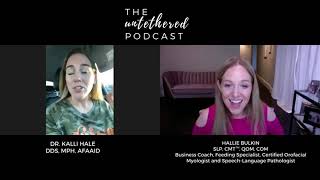
A YouTube interview (Episode 138, hosted by Hallie Bulkin) with Dr. Kalli Hale about the intersection of sleep medicine and dentistry. Topics include airway‑centric dentistry, pediatric and adult sleep‑disordered breathing, screening cues (mouth breathing, snoring, bruxism, behavioral issues), use of home sleep tests (FDA‑cleared for ages 2+), Vivos appliance protocols (Vivos guide series), myofunctional therapy integration, and interdisciplinary screening/education in schools and dental practices. The episode is educational and aimed at clinicians and parents interested in airway, feeding, and orofacial myofunctional topics.
Chapters
Hi and welcome to episode 138 of the Untethered podcast. Today we have Dr. Kali Elliott Hale joining us. Dr. Hale is known since she was a young child that she wanted to follow in her parents footsteps and become a dentist. She received her Bachelor's degree in Biology and her Master of Public Health from Texas A and M University. She earned her Doctor of Dental Surgery degree from the University of Texas School of Dentistry at Houston. She's passionate about how our teeth affect our systemic health, the long term consequences of dental treatment, the the link between dental infection, periodontal disease and heart attacks, and the relationship between chronic airway problems and tooth grinding. She is a clinical advocate for Vivos Therapeutics and an accomplished airway dentist. She lectures across the country and loves helping dentists with the secret to implementing airway center dentistry in their practice. She's an Affiliate Fellow of the American Academy of Implant Dentistry and a certified Invisalign provider. Quick Disclaimer all information, content and material of this podcast are the opinions of of the speakers and is for the informational purpose only and not intended to serve as a substitute for the consultation, diagnosis and or medical treatment of a qualified healthcare provider. Welcome to the Untethered Podcast. I am your host, Hallie Balkan. I'm a certified orofacial myologist, feeding specialist and mentor. This podcast is all about getting your questions answered and collaborating with colleagues to bring you the most up to date information in the orofacial myofunctional therapy, tethered oral tissue and airway space. I challenge you to keep an open mind and join my mission to get this information out to the masses. Let's get started. Well Callie, thank you so much for joining me on the podcast. I really enjoy you being here today.
Thank you so much. I'm looking forward to our chat for sure.
So tell me how you got into the airway centric dentistry space. I know you became interested in systemic health and what was that journey like for you?
Yeah, it's been a wild ride, I'll tell you. I come from a family of dentists. I'm actually one of five in my immediate family and we each have our own niche in the practice. And when I first got out of dental school I was very focused on implant dentistry. My dad is one of the top implant dentists in Texas, so that was just a big part of our practice and I would just start noticing some failures here and there with people cracking their teeth, breaking their teeth, loosening a screw on an implant. There was all sorts of things that were sort of becoming, you know, more. More known for me as a very new dentist. And I just fell in love with it. I fell in love with. With trying to figure out what our body's trying to tell us from a very basic level. And sleep is vital. Sleep is absolutely vital for our. For our bodies in every aspect of healing and organ involvement and everything. And so the more I looked at it, the more I could not. Not see it anymore. And I just started school. I just started. You know, I watched. Listened to some podcasts, and I watched some videos on sleep apnea and how that can sort of manifest in our mouth. And I wasn't even treating it at that point. Not at all. I just wanted to help these patients figure out if they had a sleep disorder or not. And so we started doing sleep tests, and I was referring patients out for that. And then you started catching it. It was crazy. All of a sudden that a dentist was catching somebody's sleep apnea, and it was. It was just really cool. So that sort of started it for me, and then it's just been a really crazy journey ever since.
We all fall down the rabbit hole, and it's hard to come back.
Yes, a very big rabbit hole. Yes.
So that's amazing. I love that you had the background of the whole family involved in dentistry. Now, are they open to what you're doing specifically within the practice, or do you get some pushback?
Oh, my gosh. They absolutely love it. No, no pushback whatsoever. My parents are the smartest people I know, and I'm pretty feisty myself, so I'm like, guys, we have to do this. We have to catch this. And they're like, okay, tell me more. And when I went through my training, it was like. It was the most incredible turn of events for me because we started immediately thinking about patients in our current family that needed help. And, well, no wonder that's happening to this patient. They must. If they're bruxing, they must be not breathing all night. Then we would test them, and then we would find that. So there was absolutely no pushback. Our practices, we have five practices in the greater Houston area with some of the top dentists that there are. And we are so focused on not just taking your money for another crown or a root canal or a filling that you break or. It's not about that. It's about treating the whole body like it's supposed to be.
I love that. I love that so much. So when you get pediatric cases, you get these kids there. What do you do with kids specifically? To identify that there may be a sleep issue at play.
Yeah, so that's probably the most passionate aspect of all of the. All the sleep I do is. Is catching it in these little kids to help them get off of their ADHD meds, to help them stop bedwetting, just to get them rested at night. I do a monthly seminar for my own current patient family. And now it's turned into people that are not even patients. I have teachers come ivnt, come where? They just want to hear, what is this Callie Hale person talking about? What is she doing in her office? And with the little ones, there are some very basic signs that a dentist and a RDH can be looking for. Grinding is the most obvious. And then we all have the quintessential mouth breather in the chair that has to hold their breath while you're cleaning their teeth. And they just can't even. They're fidgety and there's just a lot. So with us, we have some very specific forms that the parents fill out when they come in. A sleep questionnaire, something very basic that will just alert me to if I don't see an obvious sign in the mouth, maybe there is still something going on. We need to be looking a little further. So we start as young. I mean, the youngest I put into a sleep appliance or a removable guide is two and a half. That's a very hard age to do it that little though, because you just have to tell the parents, have a lot of patience with them. But they were so desperate. There was such a sleep and breathing problem going on that we needed to try something. And something was better than the pacifier for sure. So we just do a lot of educating in the practice and you can't hurt these little kids with these nighttime appliances at all. So if there's even an inkling that maybe they need it, we absolutely put them in it.
What kind of appliances are you using with these little ones?
So I'm a Vivos integrated provider. I'm a clinical advocate for Vivos Therapeutics, so I just adore their appliances. I use the Vivos guide series.
Oh, cool. Okay, I'll have to look into that. I'm trying to find something actually for my three and a half year old right now. And, you know, I put my 4 year old in an ALS appliance. She's now sick. So she was in that for just. It was. She only needed nine months. We were in it for a year because of the pandemic, but it was. It worked wonders. And I'M telling you, this picky kid who had all kinds of sensory, you know, like fight or flight digest, she is a different kid. And now she, at 6 is trying foods without being asked and adding new foods to her diet, not complaining about seams in her socks. And you know, it's like, obviously I care as a mom about how wide her palate grew and how her airway, you know, she's a closed mouth breather, she breathes through her nose. She's not getting as much, you know, it's, there's so much just systemically that is improved for her. So I'm looking at my three and a half year old and she's got, she's got decent spacing between her teeth, but she's my kid who has allergy or viral induced asthma. They can't seem to make up their mind. And her palate's a little high vaulted. And so we're trying to figure out. We just moved to South Florida. Florida. And so I had my, I had my provider up north in, in Maryland.
Oh, I've definitely got connections in Florida for you. I can hook you up with a, with a dentist that I mentor down there very, very quickly. So I'll email you some information on that. Yeah. The neurological consequences of these little brief periods of hypoxia, and sometimes they're not brief, but even, even the briefest moment where your child is struggling to breathe affects everything sensory big time. I mean, big time. These kiddos just have to rest, they have to get adequate REM sleep. And we're just not finding that in the ones that have sleep disordered breathing. So everything that you're saying are little ones that I treat every single day. So I will be happy to connect you with somebody over there so you can try to get some help.
Amazing. Thank you. I've been, I've been rolling around and most people are like, I'm like, maybe they might have some type of growth appliance. And you know, it's, it's just tricky when you're working three and a half. It's not, she's not even six yet. And I know, I know we like early intervention, but that's early intervention to most people is six, not three.
I know, I know.
Yeah.
But you definitely can. So.
Yeah. And she also is my baby who was released at day five. Tongue and lip. The child suctions better than most adults. Like she, you know, I'm like, we can do this. Like, we are totally doing this.
Yes, you absolutely can. You absolutely can.
So I know you Mentioned some of the signs that you have your hygienist look for in the chair that you look for as a dentist. And some of these kids, and I think, you know, that might be really eye opening to some parents, especially these kids who have a hard time if they're mouth breathers and you're cleaning their teeth and they feel like they're, you know, swallowing back saliva or they're wiggling around in the chair because they can't breathe well, because they're not nasal breathers.
Right.
What are other signs that you tell parents to look for in their child that might indicate that they need to be evaluated further by an airway centric dentist?
Yeah, the hyperactivity ADD ADHD discussion is probably the most prominent because by the time the kids get to me and maybe they're already on the medications, that's an immediate discussion for us. The other is bedwetting, anger issues, oppositional defiant disorder. I've had a couple of kids come in with that sort of odd diagnosis where they're just unhappy and I am too when I'm tired. So I have just a very eye opening discussion with them that let's do a sleep test. I use a home sleep test machine that's FDA cleared for ages 2 and above. So sometimes I'll just send them home with that so that we get a better reading because they're in their own bed and it's not like this. You know, the in test polysomnograms are really important when you need them, but they can be booked months out, six, eight months in Texas. And I'm like, what am I supposed to do for that long? Just let them suffer? No. And then the whole medical insurance and all that, it's so broke in the United States right now. So I just charge a really nominal fee to have the test done for them so that they can take it home and get some, get some answers right away. So I think those are the easiest for the parents to be paying attention to. But the most obvious is just that their teeth, kids teeth are crowded. I mean, if you look at their teeth, your kids teeth, and you're like, oh, you need braces. Like, no, actually you need early intervention orthodontics.
I was just saying this last night as I was recording my course. I'm like, pretty much anybody going into orthodontia has a myofunctional disorder. So we should be looking at why we need braces, why we need a rapid palate expander. And hey, if your kid is younger, we should be catching this and doing some early intervention asap as soon as I identify.
Yes. We need so many more myofunctional therapists and they need to be the hygienist. They need to be these people that are in our kids mouth every six months. And I tell all of mine, I'm like, I wish I have, I have a hygienist and myofunctional therapist in my office. And I just wish every dental office had that. It would be so much easier on these dentists to even get started in treating this if they had a clue where to start. And that's sort of the hardest thing is getting, getting them to realize what a need this is. I, I do zero general dentistry anymore. I hung up my drill in April. I have no time for it. I got to the point where I couldn't make you wait three and a half, four months for your crown or your, your filling. And the airway practice is, is driven just hugely for me by my current patient base. You know, you treat one sibling and then all of a sudden the parents doing the next sibling and then they've got their cousin coming in or their mom or their dad to the point where it changed everything for us in the practice big time. So I think that's hopefully very eye opening to your listeners that this is something that is so desperately needed and is so massively missed in the medical community right now.
Absolutely. And it's interesting because that happened too. When I started to implement orofacial myology and my, with my caseload, I basically looked at these kids and I went, hey, you know what? I came back from this course, I want to do an eval on your child in their next session. I'm not even going to charge you anything extra, extra, just the normal session rate. Let me get my hands on their faces, in their mouths. I want to see holistically, you know, from an oral motor or sensory oral motor standpoint what's going on. And every paid, every parent was like, oh yeah, okay, find a free eval, go for it. Like, let me know what you find. So it was so eye opening because I think you make a really good point that every RDH needs to be trained in this so that they know what to look for when the patients are in the dental chair. And I think that every SLP OTT need to be trained in this because so many of our sensory oral motor issues are directly tied to an orofacial myofunctional disorder. Now obviously there's children with syndromes and genetic disorders and you Know things where that's going to impact. Feeding, swallowing, sensory system. I'm not downplaying that, but I think that we owe it to ourselves and to these kids to be training ourselves. Because nobody trained me to go in the mouth in grad school from a MYO standpoint and look at the way things are all interconnected and consider the.
Fact that they don't. Absolutely.
It's also full reaching throughout the body. I mean, we learned about anatomy and physiology of the speech and swallowing system, but speech was not connected to anything motor related. That's the silliest thing you could ever say.
What? Absolutely. Yeah. I'm really optimistic that in the next 10 or 15 years it will be a curriculum in dental school and hygiene school. It needs to be the sleep aspect. I went to the University of Texas Dental School in Houston and I just hired a brand new graduate. She graduated this year in May, and she'd actually had some sleep courses and she had done some, I think two or three mandibular advancement devices in dental school, which is why I hired her. I snatched her up as quick as I could because the ability to get some of that stuff done in your GP program is very, very rare. And she's a total go getter. And all the doctors that I have are doing great, but it needs to be part of their screening. It needs to be as important as your decay diagnosis. These kids and their tongue ties and their tonsils and their swallows and all of that needs to be part of your periodic exam when you go in and check.
Yeah, I mean, you may not be surprised to hear. I mean, there's. I think I can count on two hands how many total programs in the United States have pediatric feeding as part of their program for speech pathologists. And for me, that's the entry point into MYO for an slp. You know, if we. I think for me, I was already a feeding specialist. So to enter into the world of Mayo, it just kind of all clicked and made sense. And I was like, oh, okay, now I see it all just through a different lens. And this just makes so much sense now. I had to teach myself peat feeding. They didn't teach me that in grad school. I only learned about adult dysphagia. And when Mayo. I know they're starting to integrate more MYO into it, but that's where I was like, there's a. This big missing, like gaping hole in our industry. And so that's why I created the pediatric. The Feed the peds Pediatric feeding screening tool. So at least we could start identifying these kids and then figure out who we can refer them to. If that's not you, who screened, you know? And then I created the FAST MYO screening tool because I was like, we need to have another lens so that we're looking at my skills, even though they overlap with feeding. Really, you know, four plus traditional MYO is a very different program than with our sensory.
Absolutely.
Sensory motor under four. And it's like, like, why isn't anybody teaching this? And so that's where Feed the Peds was born. Because I felt like I've got to fill this void because for me, I can only reach so many children. Like, how do we get to these other kids? I feel like we're living parallel lives here, right? And now everyone's like, where's your mayo course? When are you coming out with the mayo course? I was like, I'll create it. I've been saying this since fall of 2019. And it's like just this week rolling out finally. And I'm like, oh, my gosh.
But, well, it's going to be great, Hallie. It's going to be great. It is so, so, so needed. And I think the biggest disconnect is the corroboration between the different medical specialties. So SLPs aren't working with cardio and they're not working with sleep physicians. The link between the two are. That's what, like you're saying, that's the gap that's missing. And when they're not associating speech issues with sleep disorder, breathing and obstructive sleep apnea, that's where the core, the corroboration fails. And it's been really crazy to me how seamless. And not always, but how really seamless it's been for an ENT to be leaning on a dentist to help with a sleep apnea patient, Especially when they're CPAP intolerant, when they aren't wearing their cpap, they are right back where they were day one. And the ents are pulling tonsils and adenoids all the time. And then that's kind of where it stops for them. But now that they realize that there's more that can be done to support that. It's been. It's been really. It's been really eye opening for me. Of course, you have the ones that want nothing to do with what you're talking about. And they, you know, they are the higher heart. Right. But in a general sense, the more we can lean on the other providers and utilize, we are all so Smart in utilizing the best parts of what we understand. The better it's going to be for the patient.
Yeah, absolutely. I mean, I think that whole team approach is something that we all preach so much and that we do so because it's. It's critical. It is critical to the success of a patient's case to have all the important players on the team so we can have those discussions and figure out the best, like, individualized treatment plan for this patient. And, you know, one of those. One of those members, especially for our little ones, are their teachers or their daycare providers.
I know. Absolutely.
Reaching that, like, because I. So I used to go into preschools at Once Upon a time to treat these kids, and my team still does. They still go into homes and daycares and preschools. And I would go and pick up a kid and take him back, you know, after his session. And I would walk in during nap time and you hear this kid just, like, snoring, like, oh, my God. Like, is that kid sick? And the teachers are like, no, he always sounds like that. And I'm like, nobody thinks to say anything. Like, what is going on inside my heart?
That was a big.
That was like maybe six years ago or so five years ago. That was a big wake up call for me. And I went, huh? We need to educate these teachers on what to look for and when to refer. Because it's not just speech, language, or messy eating. It's kids who have open mouths during nap time every single day. Kids who are every day snoring. Or maybe they're not snoring, but you can hear them breathing.
You know, audible breathing, any sort of turbulent airflow. That's what I say. I'm like, you shouldn't be hearing anything. If you're hearing any little. Any noise like that purring or whatever they like to call it, because some of them think it's cute. And I'm like, it's not cute. We need to fix it.
Yes. Yes. And so I become, like, my. My new passion that I, like, want to work on in 2022 is figuring out how we can get these airway screenings as part of a national, you know, approach to checking children, whether it be. I mean, I know they do the Apgar scale, but I feel like that could even go a little bit further at first.
Yeah, but that's not even. Yeah, but Apgar. I mean, I'm your girl. We are soul sisters. I have told my husband I want to be in the Texas Senate. Telling them, why are we screening for scoliosis and hearing.
Yeah.
And eyes. Like, we need to do that. I'm not saying we shouldn't be screening their eyes and they're in their signs. That's the whole thing to do that at kindergarten. Like, hopefully by then we sort of have an idea on how that's developing, but we absolutely need to be checking their mouth and their sleep and they're swallowing and that could, I mean, I would, I would go to schools every day and just fill out the forms for these kids if I was given the opportunity. So absolutely, it needs to be done at the, at the state level, even the county level at first, just, just to get people aware of it. Amen.
Yeah. I mean, and so we, I was just joking that we might get fired by the last private school that we did school screenings for because like 50% of the kids came back with a tongue thrust or open mouth breathing or. I mean, and it's no wonder these kids have been in masks. But it's also pre mask, pre pandemic. We have like 33 to 50% of kids who present with a tongue thrust or mouth breathing or some form of orofacial myofunction disorder. And so, you know, in the young pediatrics and was like, oh, gosh, they're going to think that we think something's wrong with every kid, but really, I can't not report it. So, you know, we do go in and we do this with schools that welcome us in. But like you said, my, my mission is like starting at birth and then in the daycare programs and in the pre K, kindergarten and even middle elementary when they, I think around third grade, they do, at least down here where we are in Florida, they do the vision and hearing screenings. Again, I want vision, hearing, airway. I want that to all be happening at the same time. So, like we are again, speaking the same language.
I know, it's so important. It is so important.
Honestly, if you're having vision issues, you're having your hearing issues. What's the etiology of that? It's likely related to your mouth or your airway. So why are we not looking at the actual cause? Why are we looking at the symptoms? Right, like that. I'm not saying do away with it because it's widely accepted and it'll give us hopefully some information that takes us back to the mouth. But let's add in the other piece. Right? Like that's.
Yes, yes. And ear infections, and especially with kids that have ear tubes. I'm like, okay, well then your swallow is definitely not proper because you're not draining Eustachian tube. You probably need a chiropractic adjustment. And it just keeps going. Oh, my goodness. Yeah, absolutely, girlfriend. Yeah, I love it.
I love it. So is there anything else that you would tell teachers to pay attention to if they have these kiddos in their classroom?
Yes, the kids that cannot focus. And if, and if you suspect that your student may have a sleep disordered breathing issue. You see that they're always stuffy, their nose is always running, their mouth breathing while they're working in quiet. They cry a lot. Maybe they just can't handle the day. Any little tasks just sends them over the edge. Please find somebody trained in myofunctional therapy in airway center dentistry to get a consultation with. It's not just who does that kid's dental insurance cover, Go get your free cleaning and has nothing to do with that. They need to be properly evaluated by somebody that is highly trained in this.
Yeah, I love that. I love that. And I know we all hope insurance will at some point catch up, but that's, that's wishful thinking.
Yeah. We can't let our kids suffer until they do. So I could care less about it.
Exactly, exactly. I mean, for me, health first. So if I. It's like if you've got a little extra money sitting on the side, that should go towards your child's health because ultimately you're going to prevent an entire snowball of more health issues that you'll spend a heck of a lot more money on down the road if we address it now. So that's, that's always my little on that one. Now what about sleep apnea in an adult? Like, how can an adult maybe identify it on themselves? I get adults who are like, well, I live alone. I mean, I can record myself or I can use a sleep app. Do you have other recommendations?
Yeah. So most of the time the patients that have it really don't know that they do. I mean, they've been used to sleeping and breathing a certain way their entire life. So a lot of the times I tell them, you don't really know what it's like to sleep well because you never have. So this is your normal. It's not that it's normal, but maybe it's really common for you. So I think a really good home sleep apnea test machine is the best thing for them to do. There are free apps out there. Snore Lab is one that I recommend where it'll record you so you can see if you're snoring. I get told every day, oh, I don't snore, I don't snore, I don't snore. Then we do a sleep test, we find another way. So, so you don't know. You're not a good witness for yourself. Sometimes they'll tell me like, well, my husband doesn't say I do. And then I go, well, there's your husband's story. And they're like, oh my gosh, like a freight chain. I'm like, okay, well you can't hear you then. So there's no, there's not, there's no, you know, you don't have anybody else listening to you. So the sleep test is the best way to go about it because you really need to understand in an adult the severity. If they're severe, they've got to get on a CPAP machine until an airway center dentist can help them to maybe get off of it, depending on the severity. So I think that's the best. We don't want to guess. I have people tell me, Well, I lost £60 and it went away. Not true. You may snore less, but that does not mean that your sleep apnea is gone. So there's just a lot of assumptions that are made because again, getting in for a full on sleep test at one of these big sleep centers is very difficult, very costly. So if they can find an airway center dentist to do one for them at home, they can get their answers right away and make sure that they're not in a really bad heart attack risk. I catch people every single week who truly have cardiovascular issues happening because of how bad their sleep is. So.
Wow, that's, I mean, I was going to say and give us, tell us some consequences of not addressing this or having the undiagnosed and untreated osna. So cardiac is obviously a big one.
Yeah, I mean death, honestly, like I, and I don't ever treatment plan these cases out of fear. So I try never ever to bring up, you're going to die with this. That's not what it's about. But my, we have lost people before. So it's, it's, you know, by the time they've come to you and they've already had a couple of stent places, they've had a bypass surgery, they've had a heart attack, they've had just the gamut, stroke, whatever. Then we finally do a sleep test that should have been done on them 30 years ago and then you sort of have answers for why they're Dealing with what they're dealing with. So the obvious, really unintended consequences is some sort of cardiovascular event.
Yeah, that's tricky. But I know it's. And it's interesting, too, because in my own family, there's sleep issues and, you know, and people sometimes just don't want to hear it or they don't want to deal with it.
I know, exactly.
Or they deal with it the way they want. That's why.
I know. Yeah, I know. I think that's why I depend so much on these home sleep tests in my practice. Because after that, once we've done our due diligence and informing, it's really on them. It's totally fine. They can choose whatever they want to choose at that point, but not even the most serious consequences, I think. But the stuff that they start dealing with in their late 30s, early 40s, blood pressure medication, the diabetes diagnosis, the fatigue. So the three coffees in the morning and then, you know, chasing it with something else later in the afternoon, those are the kind of things that I think really affect their quality of life that they don't really realize are because of their sleep apnea, because none of us want to think something's wrong with us. We don't. So that conversation is really. I take. I spend a lot of time with the patients that are struggling with the fact that I'm telling them something's wrong and trying to help them come up with a really good solution, even if that does not include me. Right. So that. It's just hard. It's really hard. And I think they've got to talk to somebody, have a sleep test done, and talk to somebody that will really explain what the data means. Because every single patient I have that's on a CPAP has told me nobody ever went over their sleep test with them. They got a phone call from somebody at a front desk that said, you need a cpap. And they're like, I don't want that. And then they get it and they try it. And they hate it, of course, because they're cumbersome. And then it's under their bed. So I pride myself in going over their home sleep test with them line by line, chicken scratch notes all over it. Send it home with them so they can Google it, go over whatever it's their data, and after that decision's on them to what they want to do.
I love that. I think that educational piece is so important. And it was really eye opening. We had Ken Hook. I don't know if you're familiar with Him. He came in and talked to us in our, in the MYO membership and he went through and basically taught us how to. Not that we're reading sleep studies, but basically wanted us as a myofunctional therapist to look at these sleep studies, understand what measures should be addressed, what most centers are not even looking at, and how so many patients are getting written off if they have maybe like upper airway resistance syndrome, but not, you know, and, you know, all these different things. And so when he started to go over that and you could kind of see everybody's like, light bulbs go off in the, on the zoom room, it was like, whoa. Okay, I think I need to go back and look at my own sleep study because. Yeah, I know, you know, but also I think sitting there with a patient and explaining, because even as a therapist, me looking at that and I look at all kinds of things all the time, I was completely overwhelmed. And I was like, what am I looking at? Like, this doesn't make any sense. Oh, totally.
And it's all, it's all the numbers. Yeah. And it's like, like ahi rdi Odi Flow limited without. I mean, it's like you're like, what, what is any of this?
What is arera.
Yes. So when I, when I lecture, I, I go into detail on it for the dentist center in there, because I know I. Nobody had ever taught me that. And so when I get up and talk about it, I try to just give them the absolute bread and butter basics that they need to be able to have a conversation with the patient about it. And I do the same with my hygienist and my assistant, my lead. Airway RDAs are the best in the planet. They run the airway practice for me to the fullest extent. I would not be able to do the amount of cases I do per month without them, but it's because they know their stuff, you know, and we all need to understand it at least a basic level so that we can help talk to the parents too.
Yeah, no, that's incredible. I love that you do that. So are there certain take home points that you would give to other RDHs or dentists that are listening that want to implement airway centric dentistry into their already practice? What would you tell them?
Definitely. Definitely. Well, so I would say do some CE on this. And I am obviously not to plug vivos therapeutics, but that is where I got educated. And I think it's twice a month they actually have free CE for RDH and dentists. Vivos therapeutics they have an airway summit so they will run. One of my lectures is on there actually. So if you guys are listening to this, you'll listen to me again. But that's a way to literally get incredible knowledge from some airway center dentists and speakers. And their MYO girl is great. Hallie, you should definitely be teaching for them too. Like I need to get you guys in touch. But anyway, I would look into that. That way you're not having to spend any money to learn more about it. And you can see what it is that we're doing. It needs to be cookie cutter for these practices that have never done it. And that's exactly how the training was for me. Here's the forms you need. This is what you need to do next. This is how you screen. They hand it to you on a silver platter. And it was absolutely seamless. I do. My goal for myself is 200 cases a year. I think we're going to beat that this year in my practice. So if I can do that, you guys can do that for sure.
That's awesome. I love that. And I actually used an Avivos DNA myself for two years, so I'm a big.
You did.
Oh my goodness.
Oh, yay.
Yeah, I'm a big lover of that appliance. I always tell people it was bulky but it was worth it. And I think I'm at the point where I still have nasal congestion, I have a deviated septum, but I have, I think I need to have my turbinates reduced. So that's where I'm headed next. So that I can hopefully your palate.
Where it needs to be. That is great.
Yeah. I mean, and you're sitting here going, you know the people who need like coffee a couple times in the morning and they need to like boost themselves in the afternoon. I'm like, that's still me. I still have sleep disorder, breathing, because even though I've grown my palate and I don't have, you know, oral MYO issues messing it all up for me right now. So that's, that's my journey. But I love this. I. I actually just met one of the representatives from Vivos at the Dental Festival. I was presenting there and so I saw.
Oh yeah, I was there the year before last speaking. Yeah, yeah.
And so it was. That was a fun. That was a fun little festival. But yeah, so we were talking about maybe some collaboration or something. So I need to reach out to them for that reminder. It's really great. I was actually on their website this learning because I was just looking for more, you know, sleep based research and different things to kind of plug into the MYO course. And I was like, I know they've got a good, a good amount that you can access through them. So thank you for that. That reminder, we will definitely link your Instagram for everybody. Is there anything else that you want to share with our listeners that we haven't covered today?
I don't know. I think we pretty much got it. I just hope that they go get trained in this because you and I can't save the world all by ourselves. We need a lot more people doing it.
So that's right. Absolutely. Well, thank you so much. This has been amazing.
Thank you Hallie. I really keep my email. Please reach out anytime.
Thanks for listening to this podcast. If you want to hear more of these Myotots, Airway and Feeding related episodes, be sure to leave a review on Apple Podcasts or pledge a small amount on patreon.com forward/the untethered podcast. If you found value, others you know in this space will too. So be sure to share this episode on your social media platforms and join us over on Facebook on my Facebook page at halliebulcan biz on Instagram @alliebulcan and you can head over to theuntetheredpodcast.com to grab a copy of the Show Notes where you can also subscribe to be kept up to date on the latest podcast episodes.
More from Hallie



What I Was Missing in Feeding Therapy: ARFID, Airway, and Myo with Samy Hernandez





