Episode 152: A Holistic Approach To Physical Therapy with Scott Kaylor, PT
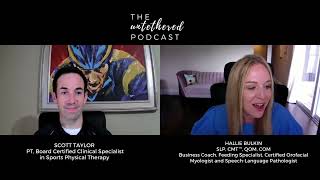
This is a recorded interview (Untethered Podcast, Episode 152) with Scott Kaylor, DPT, about holistic, airway-centered physical therapy. Kaylor describes his path from traditional sports-oriented PT into Postural Restoration Institute (PRI) concepts and a whole-person practice model (Zone Physical Therapy) that prioritizes hour-long evaluations, pattern recognition across systems, and team-based referrals. He uses a minimalist, exercise-first approach but integrates manual techniques (joint mobilization, instrument-assisted soft-tissue work), dry needling, and dental/orthodontic collaboration when needed. Concrete examples include using a tongue depressor/popsicle stick to alter jaw position and immediately change shoulder/neck range-of-motion and symptom reports; patient-centered goals emphasize sleep, performance, and reduced fight-or-flight nervous-system tone.
Questions this video answers
Exercise Science at the University of Tennessee.
Duke University (Doctor of Physical Therapy).
A sports residency through Proaxis Therapy and an upper-extremity fellowship through Proaxis Therapy with the Kansas City Royals.
About two and a half years prior to the interview.
Approximately a 13-year journey.
Chapters
Hi and welcome to episode 152 of the Untethered Podcast. Today we have Scott Koehler joining us. Scott is a doctor of physical therapy and a board certified clinical specialist in sports physical therapy. He got his undergrad in exercise science from the University of Tennessee and he went to physical therapy school at Duke University. He did a sports residency through Proaxis Therapy and his upper extremity fellowship through Proaxis Therapy in the Kansas City Royals. And he founded Zone Physical Therapy about two and a half years ago and has been married to his wife Julie for 15 years. Together they have four children, an eight year old, two six year olds, twins and a three year old, two boys and two girls. Quick disclaimer all information, content and material of this podcast are the opinions of the speakers and is for the informational purpose only and not intended to serve as a substitute for the consultation, diagnosis and or medical treatment of a qualified health care provider. Welcome to the Untethered Podcast. I am your host, Hallie Balkan. I'm a certified orofacial myologist, feeding specialist and mentor. This podcast is all about getting your questions answered and collaborating with colleagues to bring you the most up to date information in the orofacial myofunctional therapy, tethered oral tissue and airway space. I challenge you to keep an open mind and join my mission to get this information out to the masses. Let's get started. Scott, thank you so much for joining me on the podcast.
Yeah, it's exciting to be here and honored to be able to be a part of it and have a conversation with you today.
Absolutely. So before we jump into chatting about a whole bunch of different fun topics, will you tell us, you know, as a physical therapist, will you tell us how you got into this space or what even interested you in becoming a pt and then what got you into that holistic, you know, space as well?
Yeah, So I think for me, you know, a lot of my colleagues got into PT because they had a tragic injury or something that was big and profound and fortunately I didn't have that. I've just always been an athlete and being around sports medicine, I wanted to figure out how I could continue to do that because I wasn't blessed with a body to be able to compete at a professional level, but I wanted to work with those folks. And so early on in college I worked in the athletic department and had an opportunity to work with some Division 1 level athletes who went on to become professionals. And I just wanted to figure out what's my route to be able to work with those kind of individuals. And so I meant, or I sidled up to my mentor who was the director of rehab at my school and just followed his path and going to physical therapy school and that's kind of how I started. And then I took a very traditional route of doing the sports residency, which maybe isn't the best way to stay traditional, but traditional orthopedics of let's check range of motion and strength and if something doesn't move well, let's stretch it and if something's not strong, let's strengthen it. And certainly most people get better with that. But I just started to recognize that there was a certain percentage of my patients that weren't responding well to a traditional orthopedic process. And so I was, I was fortunate in my third year PT school to get introduced to Postural Restoration Institute through my clinical instructor, which I jokingly say is a blessing and a curse at the same time. Because once you learn a different way of thinking, you can never unsee it. Right. I think that's probably been your, your experience in treating patients. And so I just wasn't able to have a traditional look at how somebody moved. And so just able to see patterns of things and recognizing that it was beyond just bone and muscle and ligaments and that there is other systems that are involved in how we move. And so ever since then, I've been on this 13 year journey now of trying to figure out how can I best treat patients. And so that's how I got into doing this Priya stuff. I am by no means an expert, but I'm the more I learn, the more I realize I have to learn. Probably much like you feel on a daily basis.
Absolutely.
And so it's just been this fun journey. And then three years ago I had the opportunity to launch my own clinic with some friends. And our goal from the very beginning was we want to create this environment where people can come in, share their story and we can hear what's important to them. And so I came from a big traditional box shop kind of PT background. Once I realized that from a family standpoint, professional and college sports wasn't for me, I was able to check those boxes on my career goals. I left that out a minute ago. I had the chance to work in professional baseball work at the college level. And for my wife and I, that wasn't for us. So I came back to Greenville, South Carolina where we love being worked in a big box shop. And you know, you're just having patients roll in the door. And I'm trying to give them this one on one attention that they deserve and they need, but there's just a lot of distractions and people around. And so for me, I said, this is going to burn me out if I have to do this for the next 20 or 30 years. And so I wanted to create this space where people could come in and feel like their story is heard. And so I joke now, like with my students that come in, they just feel like they have to rush and get stuff done. And when my patient's telling me their story, they feel like they have to get it out real quick. And then I just sit there and stare at them and go, okay, what else?
Well, we're also that right. We're also used to like going into either a doctor's office or, you know, a specialist office and being like, I just got to tell you all my things because I know we only have like three minutes. And like you just, you feel so rushed. So it's not common to sit there and have someone spend time with you.
And so we're very blessed that we spend an hour at least with each of our patients. We have it blocked off. And so we just get to ask them questions and hear their story. And you know, in addition to learning like this multi system approach to treating patients, it's multifactorial in that I use this cheesy analogy with all my patients. I can't take credit for it. I took it from one of my colleagues who's one of the smartest people I've ever met. And she always says people are like a three legged stool. So we have our physical self, our emotional self and our spiritual self. And if one of those legs is off, it can exacerbate things in those other two legs of the stool. And so we have to treat it from this whole person approach. And so I don't want to bore you and your listeners with just all these stories about when we start diving into some of this emotional and spiritual side, how much it can improve the physical ailments that someone's having. But it's my job as the pt. I always tell them I'm a physical therapist. And so that's my wheelhouse. But it's my job to recognize that you're a person. And so if I need to refer you to somebody else or we just take the session and let you cry for a little bit, I'm a crier. And we can do that together. We can do that and make some pretty big gains towards our end. Goal. So that's a little bit of a nutshell on how I got here and just recognizing that this is something that I do believe I'm called to do and, and God has gifted me with this ability to connect with people, which has been really fun. It's kind of a big part of my story because prior to becoming a Christian, I did not enjoy speaking with people. I was shy and it was a great day if nobody would talk to me. And I'm being a little facetious, but not truly, not exactly. So I was just very shy. And now to be in this space where I have to connect with people on a day to day basis, it's just fun to see this growth and challenging me in some ways that is uncomfortable for me, but I really love doing it.
That's amazing. And that's, that's how we all grow. And I joke with people that, you know, sometimes I go a little too woo. On the podcast when we start talking about like the spiritual stuff or you know, vibration frequency and I, you know, and I talk about things from like when we are working from our highest vibration. Right. Like it's a frequency, it's our well being. It's all highly interconnected and I've had a lot of different advisors, if you will, outside of, you know, my religion. I've worked with shamans and so I don't even know how many people know that about me. But I will tell you that in the past couple of years like doing, you know, working with these, these individuals and working with people in the business space who are a bit more woo, if you will and some of them are more religious, some of them are more spiritual. You know, they all have different terms for what they call it. It is, it's, it's mind blowing to see the changes and you know, on your, in regards to your well being, like you were saying, like you really, you know, we, I talk a lot on the podcast about we can't treat the body in silos because we're such like an interconnected being like internally, physically within our body. But then you know, outside of that too, like I fully, I'm on board with you. I, I fully believe and identify with, you know, what, what you're saying. And I think that it's really amazing to offer that to patients because it is more than just our physical health and well being. It goes far beyond what we see and what's happening inside our body. And so that's a really amazing service and I can appreciate the hour long appointments that you get to spend with the patient and actually hear their story and learn from them. Because I always say the patient is one of the greatest assets on the medical team. They're the ones who can tell us what they're feeling. And they may not know the right terminology. They may not. But a lot of them have been to a lot of specialists, and a lot of them had been turned away or told them, oh, you're fine. And then they start to question themselves and think it's like, in their head or they're making this up, until they get angry enough and frustrated enough to realize, no, I'm not making this up. It's not in my head. Like, why can't I find someone who will listen to me? And so that's a very big part of my practice as well. As, you know, I've had a lot of moms with babies, especially, who have trouble feeding, who will finally say, you're the first person who you know, or, wow. I've been to three other specialists, and everybody has told me my baby is fine, or they don't have this, or, you know, I've told them these are our symptoms. And they've told me that basically I'm. I'm crazy. Right. And that I'm just over exaggerating. I'm a tired mom. Like, it's just, you know, and I know, you know, Autumn Henning, you're both in Greenville, and that's how I came to know about you. And she and I, we talk about this all the time because it's just. It frustrates us as providers and as parents, you know, who watch others struggle when they don't need to. So I love the work that you're doing and the space you're creating.
Yeah. Thank you. It's been fun and just excited to see where we go.
Yeah, that's awesome. So, you know, we talked about a little bit about, you know, how everything is interconnected throughout the body. So let's go there a little bit, because I know one of the things that. That you want to talk about is recognizing certain patterns that exist in individuals. Right. And how it then impacts their movement and ultimately their function. So can we talk a little bit about that?
For sure, yeah. So I'll take one step back and say, I told you a little bit. I went to PT school. I was introduced to Priya. I went to a school that was very much like, that's not exactly what we would teach. And so then I spent my first year in residency almost trying to disprove PRI stuff. So I would just evaluate everybody, regardless of what they came in for. And I would just, and I would just start looking at patterns and go, I know you're here because you have shoulder pain, but I knew enough for this regional interdependence, so I would just say, hey, we're going to do this head to toe screen. I'm going to look at some hip motions. I know you're here for your, your shoulder, but just indulge me for a minute. So I just started looking at people's range of motion. And I spent, you know, a year, now, 13 years, just looking at how people move and just recognizing that there's a lot of similarities in how we move as humans and how God created us to be. Now, certainly activity and injury and repetitive things can change how our body looks, but there's always this underlying similarity in how we move. And so that's kind of how I started recognizing these patterns, is just taking what Ron and his teaching team at the PRI are teaching and just trying to implement those with patients. And for, especially for the patients like you were talking about that have seen lots of specialists and they've seen their massage therapist, chiropractor for physical therapists, their surgeon, like, you name it. They have this whole laundry list of people they've seen want to get the benefit of like first or second or third opinion. So I can say, hey, what's all the stuff that you've already done? And then I can just do something different. But then it's just being able to see those, those patterns that people have and just recognize they've got the stress level and just being able to help them breathe and move and just show them in a session like, hey, I can just take, take you out of this fight or flight pattern that you're in and help you get towards this rest and relaxation and show you some pretty profound movements, hopefully in your symptoms, but definitely in these orthopedic objective tests that we're doing. So I work with a lot of baseball players and my clinic is located inside of a sports performance complex that's geared toward the baseball athlete. And I work with a lot of endurance athletes as well. And so a lot of times they talk about feeling tight and hamstrings or shoulder or whatever it may be. And I will affect their range of motion by having them do some kind of a breath technique or a positional technique. And over the last year or so, I've been getting more into this dental integration piece that is way above my pay grade, but I'm learning A whole lot from Autumn and colleagues like you. They're teaching me about how the tone tongue and the fascial connections. And I've got a couple of dental colleagues in town that are fascinated by this world as well. And so we're sending patients back and forth, we're having lunches together just to learn from one another. And so now basically for our patients, I'm just kind of screening them to go, do we need some dental work or some myo work with what we're doing from a physical therapy standpoint. So it's been fun to see how we can use different systems to pull somebody out of their pattern and be able to affect how they move. And then so it's my job as their PT to figure out what exercises do I need to give you to keep you moving well so that you can alternate from side to side and move through a full range of motion without having to compensate and put your joints at risk for, for injuries. You can continue to perform at a high level. And so I kind of take a minimalist approach first and go, if we can do that just with exercise, that is awesome. Let's do that. If after a couple of visits it's not sticking from time to time. So I know you've mentioned you've worked with your physical therapist and they're probably assessing stuff every time you walk in the door. And you know, if we go, hey, Holly, last time we left, you had this motion, you came back in, you don't have it today. Have your exercise has been going, and sometimes it's as simple as life was crazy. I have two kids and it was. I went to Disney for the week and my stress level is like way up here. Okay, well, that might explain it. Hey, let's get back on the exercise track. But if after a few visits you're doing everything I've asked you to do and life is pretty calm, then I have to go, okay, well, do we need to do we need some work from a dentist to help keep you out of these patterns? So changing your reference point at a jaw or putting something in a shoe so that your reference on how you feel your body against gravity is changed. And so it's, I'm still learning a whole lot and it's very humbling a lot of days, but it's also very rewarding. So I know that was a little bit rambly, so feel free to ask follow up questions on that pattern recognition, that was great.
No, and I, I think that you spoke to some really great things. So obviously that Team approach and then learning from colleagues. And that's something that we also preach a lot. And everyone says, well, how do we find these people? And how do we, you know, how do I find someone like Scott? Or how do I find someone like, you know, I know Ann Bynum is in your area and autumn training. Like, how do we create what they've created there? And I love that you pointed out, you know, one, you found colleagues who are interested in learning more and kind of going, huh, okay, you know, we do all have patients that hit a wall at a certain point and who may not make progress beyond a certain point. And I think that as clinicians, who knows what else is going to evolve over the course of our careers and what other methodologies may come our way or new research or whatever. Right. And so when we start to look at the body holistically and we start to open our minds to different options, treatment options, and collaborations with other medical providers and in our space, I think that it just, that makes us the best clinicians because we're open. It doesn't mean everything that we hear is going to be something that we feel like is best for our patients or that or necessarily works. But. But I think that we're really onto something in this, this airway centric space, as I like to call it, where we really look at the whole person. We listen to their symptoms, we listen to how it's impacting their function. And I also love how you said, you know, that minimalist approach, because we're very similar. You know, I, I train others in my space in the Maya world and in the feeding world, and everybody from day one wants to do an eval and then refer people out to, like, five specialists. And I'm like, pump the brakes, first of all. Yeah. I'm like, they might need that. They might need that. And I know parents are anxious or patients are anxious. We work with some adults, too, in my practice. They're anxious to get. Get the fix right, to solve the problem. But if we do too much at once, one, we don't know what's working, and two, they might not need all that. And it's very overwhelming. It costs time, it costs money. You know, it's. It's great. It's a lot. So I love that. It's like, let's try the behavioral, like the physical exercise intervention first for us. We always call it, like, behavioral therapy. And when I say behavioral, I don't mean like behavior, like, you know, following directions and sitting down and listening and all that. I mean, like from a standpoint of let's try those exercises, let's do the myotherapy or let's do feeding therapy. And let's see, like you said, if we get like three to four sessions in and we're like, okay, we're really not making any progress, that's when we typically go, who do we think the next best referral source is that may help us move the needle here. And that's typically when we'll say, is it like, for us it's like, is, is the nose blocked? Do we think there's a nasal obstruction that needs to be addressed and is that an ent or do we feel like there's more of a dental issue going on and maybe we need to refer to the airway centric dentist first. Right. So it's not always clear cut like, or do we think an allergist in this case may be needed first? Like it's very individualized and you know, there, I have colleagues out there who say we'll always go to the allergist first, then we go to the ent, then we go to the dentist. And I'm like, that's not true for all of our patients. You know, it's sometimes we say let's go to the PT first. Or like we say let's go. You know, we, we really need to look at that patient and what their current needs are and what is their goal, what is their goal for themselves? Because that's also going to drive the next referral source at times. So I really loved how you, you shared the whole, you know, team aspect and as I mentioned, the whole, the lunch and learn, getting together, sitting down pre pandemic and I've now moved since so I don't get to do this in person with my local team in Maryland anymore. My practice is still like in the D.C. maryland, Virginia area. But we used to sit down like 10 of us around my kitchen table and have some wine at 7 o' clock at night and we would look at cases together and to see all the different professionals and different eyes and their interpretation of the same patient is just mind blowing. And it's really educational and really awesome. And we totally would geek out over like, you know, the PT and the osteopath would see these certain aspects and the myotherapist SLP would see something else and the RDH would see something else. And you know, the vision therapist and the, we just, we had a whole bunch of different professionals sitting around that table. The oral surgeon, dentist, you know, we Had a really incredible opportunity at that point. And that really opened my eyes to the fact that, okay, we all need each other because we all see this patient in such a different light.
Yeah, we did that the other day and it was fantastic. It was just already planned. But it was a total coincidence on how this patient came in. But I had known this kid. I had done some kind of pre injury work within this athletic performance stuff. And then unfortunately, an old injury flared up. And so he ended up in my office and he has braces. And his orthodontist is one of my friends whose wife is a physical therapist and is very fascially centric and she's great. And so he understands this PT world, but not completely. And he's getting introduced to this airway component. And we have this friend, a mutual friend, dentist, who he and I are for a lot of patients together. And so my dentist friend coordinates this lunch. And we've got three orthodontists sitting there, myself and him. And the night before, this kid comes in with his braces on and I'm checking stuff and he's a baseball player. So shoulder motion matters a whole lot. So I'm taking. I'm having my colleague take pictures. I'm like, hey, just take a picture of me assessing his range of motion. I was like, all we're gonna do is I'm gonna put this little popsicle stick between his teeth to bring his jaw down and forward a little bit. So just decompress his TMJ and I'm going to recheck his motion. I want to see if anything changes. So I have these before and after pictures. I'm able to throw in a slideshow real quick because I'm going to meet with his orthodontist tomorrow, which is just perfect. Right. I'm having lunch with this kid's orthodontist, and his range of motion for his shoulder and his neck changes significantly. We didn't stretch anything. All I did was change the orientation of his bite. That's crazy, right? And I'm still learning what all of that means, but it was just fun. So we get to have this conversation with Picture Visual Aid to say, you know, just some considerations while you're adjusting braces and doing all the stuff that I don't understand and moving teeth. Let's just check a neck and see, is it neutral? Can it rotate left the same that it rotates right? Can it side bend right like it can side bend left? And if it seems off or they're describing any kind of Headaches or neck pain or back pain things, then that's where a great referral to me happens. So that as you're adjusting them orthodontically, I can help keep them moving well and have this body that can move left and right. Well, and it was. And rotate left and right. And it was just this fun discussion. And you see these orthodontists going, oh, man. Like, what I do here has this effect down. And they know that. They're incredibly intelligent people and they're smarter than me by a long shot. But just to be able to see it visually, I think helped them to connect some dots. And so it's just fun to see how we all work together and bring a different skill set to the table so that ultimately the patient has this great outcome. And so it's fun. We're all growing and learning. And the dentist that I referred to, his name, Dr. Covington, he and I are actually going out to Lincoln, Nebraska in April for their interdisciplinary conference through pri. And so I'm just excited to see what new stuff we're going to learn and be able to bring back share and how it's going to change our practice. So it's been fun. And I just say that to Echo, what you're doing with your team is awesome. And it's just fun when we can have discussions with other individuals in different spaces to see how we can help one another out.
Yeah. And Kip Covington actually taught for us in my Mayo membership, my monthly membership. And he's. I mean, he was fascinating. And it was, you know, he's really. He spoke to us mainly about the temporomandibular joints and some of the different, you know, approaches he takes in his practice. And a brilliant, brilliant individual. So you are very lucky to have. I mean, you guys have, like, the dream team out there. You guys have got, like, every different specialist. I love it. It's amazing.
Oh, man, I am. I am blessed to be here, for sure. And we plan on staying for a long time.
I know, I know. Autumn will love that. So she's got. I always joke, I'm like, you've got the best providers out in Greenville, South Carolina. Like, who would have known in Greenville, South Carolina, you guys would have this phenomenal team. It's amazing. Amazing. So tell me about. Because I know you do, like, a combination. We've talked about the manual therapy and then also use exercises. And what else do you do in your practice, like at Zone pt, Do you have other methodologies you use or treatment options?
Yeah. So I Mean for us, it's ultimately just trying to figure out what pattern are they in? How is it affecting their movement? What impairments do they have? So we know that depending on what sport or work activity they do, there are some kind of minimal expectations that they have to do to perform that activity safely. And so my team and I try to decide, okay, can I attain whatever the goal is via exercise only? And so can I affect them through movement and breathing and help them kind of reorganize their movement around some new things that we can give them, or do they need a little help to get there? Are they so toned up or patterned that I'm going to have to use my hands in a technique? So I am by no means like a craniosacral therapist, but we are also fortunate to have those here in Greenville. But in our clinic I do some techniques that Ron has taught through some PRI courses. I do joint mobilizations and manipulations that learn through the PT world. Dry needling is a big part of our practice. It's a very powerful tool. It's not a panacea. It doesn't fix everybody. And I don't think it's always, and it's definitely not the cure. But I just say when we do hands on stuff, whether it's needling, manipulation, mobilization, whatever, that's just our window to open up the opportunity to move so your nervous system can perceive a new way to orient itself against gravity. I'll use a lot of needling because it's honestly a quick way to inhibit some stuff. Patients usually feel an immediate change in their system. I would say we use a lot of dry needling in our practice, especially for our patients who have some TMJ stuff and some neck pain. We'll do some instrument assisted techniques. So it's like a massage with a metal tool. Just again, to create this neurophysiological window where we can change how people move and hopefully we calm down their symptoms. We just put the fire out and then help them to be able to move in a fashion where they don't perceive pain. So they have this non threatening window now where they can move in a new sense of like, oh, okay, this is cool, like I am going to be okay kind of a thing. So those are a few of the different techniques that we use. From like a hands on standpoint. We're not real heavy in the modalities. I would love to get a Class 4 laser one day, but I can't afford one right now that does have a lot of good evidence behind it. But for us, it's this combination of manual therapy plus exercise for the most part, with a referral out when indicated.
Awesome. And then we've talked a lot about pri, and I have had Ron Ruska on the podcast in the past. But for individuals who are not as familiar with the difference between a PRI trained physical therapist and your maybe traditional non PRI trained physical therapist, can you explain just generally the difference or how it changes your approach?
Yeah, I'll tell you how it changes my approach. And I hope I don't offend Ron by speaking incorrectly. I was joking with you before we started recording that. It's very humbling to be invited on your podcast following Ron because he's like a hero in my world. Right. So for me, I alluded to in our first talking point is that in a traditional PT world, we're basically looking to say, does something have enough range of motion or not? And if it doesn't have enough range of motion, we're going to do something to give it motion. So it could be a manual technique, it could be stretching, and we just kind of joke, whatever, WD40, we need to get that thing moving. And then if something's not strong enough, we give it. What kind of duct tape do we need? What exercise do we need to straighten, strengthen things? Well, that and most people, that works, right? But in 15% of the population that comes to the door, that's not the most effective way because we know that there are some underlying patterns. So sometimes someone looks like they are missing some range of motion, but really it's just muscle tone taking them there. So with my PRI hat on, I go, if I stretch that and give them motion long term, I might be creating an instability. And so I want to make sure that they are neurologically and orthopedically centered and have a new reference point to move from. And then I might actually see a change in range of motion without ever stretching tissue, which becomes like a big deal if you're talking about a baseball player. Right. So I'm fortunate in my sense in my clinic to work with people who play at a really high level. So we have elite high school athletes in my center, all the way up to major league guys. And so before I just start blindly stretching something that appears tight, I want to make sure they're in a good position and not create problems for them down the road. So it might be a short term solution for them, but it might not actually be setting them up for a long term win. And then the same thing from a muscle Strength standpoint, if a muscle is not in a good length tension relationship to create torque either due to pain or position, I might have to do something to help them be in a better position and then recheck them. And now all of a sudden that thing that looked weak might actually be strong. And so that's as a pri pt, then I'm helping people hopefully to move a little more efficiently and to see that we have this whole body system that we have to. To manage and it's not just stretching or strengthening. And I really don't want to minimize what my orthopedically minded colleagues are doing. They're doing great work and I know they think beyond that. But at its simplest level, oftentimes that's unfortunately what happens. If we have someone with back pain. We just go, well, let's strengthen your transverse abdominis, let's strengthen your back muscles. And it's like, well, maybe we just need to calm down their nervous system first, get them into a less frightened state. And then we can teach them how to move more efficiently without this fear of pain and not move like robots. Like, I don't want someone to have to feel like they have to brace their stomach every time they're going to bend down to pick something up. It's like, I just want you to be like this free, moving person that is able to do the stuff you want to do without thinking about it. Like, it's this fearless, thoughtless movement that I want you to have. And so I hope that answers your question.
Yeah, yeah, no, I think that's actually very well said and great because I think we talk about PRI pts all the time on the podcast and I'm like, aside from, I think Ron's episode. And I did have, I don't know if you know Brian Tuckey, he's in Maryland, but he was on the podcast because he's one of the ones that we referred to in my Maryland practice. Him and Manny Kim and, and Louise Kelly is out there as well. And so we've got some really great PRI trained pts doing some really phenomenal work out in like the Maryland area. And yeah, so it's, you know, we've all, they've all explained it, but sometimes I've gone back and listened to these episodes and I'm like, sometimes they're also so brilliant that I'm like, I feel like I need to listen to this three times over before I fully grasp and understand, like, the whole concept of how this is different. But it's, you know, you talked about Getting people out of fight or flight. And really, like, we always say rest and digest because of the work that we do. And it's so important because if you're working with somebody who's just constantly in this state of fight or flight, they're not going to respond the same as if their body is truly relaxed and they're in this calm state where they can both receive what they're being educated on, because there's a lot of education that we do in our sessions. But then also, their body is just not ready to receive whatever manual therapy you might be doing. So as a patient who's gone through, who's worked with a pri pt, always say, like, I feel like I got this, like, full body massage. And, like, Manny, like, barely did anything. I felt like he. Not that he didn't do anything. Like, I feel like he barely touched me. And I leave just feeling, like, so, like, relaxed and in this very calm state, and everything feels balanced. And so then it just comes down to, like, making sure that everything else is there to support that. So it holds, because with me, my biggest issue was it would hold for a certain period of time, but not beyond that. And as an adult who went through expansion after having it as a child, you know, he worked actually in my dentist's office, so I would see him for adjustments every single time they adjusted my DNA vivo suppliance. And there was a certain point about 50% of the way through my treatment where it was critical that I saw Manny because it would not. I could no longer crank my appliance unless I saw him first. And I was like, this is incredible, because he's not even working in my mouth. He's working on, you know, on my head, on my body, on my lungs and my hips. And just to see, you know, you go down and do some, like, different things in different areas. And I was like, and now I can crank my appliance and put it in my mouth. Put it in my mouth. And so to experience that as a patient, I was like.
Yeah, yeah, that's great.
Do you see now, you mentioned earlier that you would see sometimes, like, a change with the jaw. Right. Like you said, you put a tongue depressor. Right. You had them on the tongue depressor to change the position of the jaw. And then you noticed how other areas were impacted positively. So do you see changes in terms of, like, jaw positioning frequently in your clinic? Is that. Or is that something with certain patients based on their dentition, their alignment that you're noticing?
Yeah, you know, it's almost like anytime you go to a continuing education course, you just. With every patient that comes in the door, you try a piece from that continuing education course to reinforce a principle, right? So, honestly, almost with every patient now, just because I'm trying to learn, like, who needs it and who doesn't, almost at every initial evaluation, if I feel like the patient is willing to go down this road with me, I'm putting the tongue depressor between their teeth just to, like, almost prove a point to me if I can make a change. And so, like, for instance, right now, I have the opportunity to work with this professional golfer. And she's had this history of some stuff. And I was playing around with this Popsicle stick, and we're looking at her hip mobility and her thoracic mobility. And she was like, oh, my goodness. This is the best I've ever felt. Can I hit balls today with this tongue depressor between my teeth? And I was like, you're gonna look ridiculous. You certainly can. I said, but I'd rather go get you to see Dr. Covington. And let's figure out if we can develop this mandibular appliance for you. And then we gotta figure out what the next steps are. Because, like Kip will say all the time, I don't think God designed us to have a piece of plastic on our teeth forever. But certainly from an athletic perspective, performance standpoint, it might be something, at least while you're hitting balls, that we do in the short run. So to answer your question, I am looking at it with almost everyone, especially our athletes right now. Just because it's fascinating to me. Like, we'll have someone come in, and the right shoulders dip, their heads cocked to the left. You know, their left hip is forward. And they just kind of talk about either some shoulder pain or back pain or whatever it may be. And I put this Popsicle stick or tongue depressor, whatever, between their teeth. And then they're like. And everything's level. They feel better. Their pain goes away. I'm like, I haven't even actually done anything yet. And then I have them walk up and down the hall. All their motions change. They feel great. And I'm like, well, I guess you're gonna go see KIP now or Dr. Covington, because it seems like this is the thing that you need. And then it's going to be. And it's going to be my job to give you some exercises so that you can feel what it's like to be in this leveled position. So I am probably over utilizing this TMJ stuff right now just because I'm trying to learn. And I don't send everyone to see Dr. Covington, but it just depends on their history. If I have people, like I said earlier, if somebody has seen multiple practitioners, they aren't. The stuff that I'm giving them is not sticking or they're not sleeping well at night. Then I'm like, hey, it's at least worth going and hanging out with Dr. Covington for a visit. He'll evaluate you and he'll tell you if you need something or not. He's not going to just try to sell you something for the sake of selling it. Like, he truly cares about his patients and the same way that you and I do. And so he's willing to at least have a conversation to see if I'm on track with what I'm doing or if he's like, hey, actually, this person doesn't need it, and here's why. So we're using. I'm utilizing that quite a bit and realizing that the tongue position and the jaw has a big impact on how people move, and it really will have a big impact on why they're coming to see me as well.
I love that. That's amazing. I always say we need more of you guys. We need more pri, trained pts who. Who understand how to utilize different methodologies and different, you know, trains of thought. Because just like me in the SLP world, right, I wasn't. I wasn't trained on any of this in grad school. And, you know, there's still a major divide in our industry of people who think we're just completely insane to even be doing myofunctional therapy. And, you know, they don't care where the tongue is in the mouth as long as the sound the child's making sounds right. They don't care how they chew and swallow the food. As long as they chew the food, they swallow it and they're not aspirating. You know, it's like, well, I mean, we can all live that way or we can truly function optimally. And I think what's really incredible is working in this space and working with enough adults or teenagers who can truly. Or children who are just, well, you know, well advanced in their critical thinking skills. They've been able to share with us the changes and give us the feedback and to hear from adults and even teenagers who say things like, I didn't know what I was missing out on until I knew what I was missing out on. It Just gives me chills because it's like, that's why we do the work that we do. People want to feel good, but they don't know how to vocalize that. And they don't know that they're actually missing out on a much higher level of being or functioning. And I think that kind of brings us full circle to what we were talking about at the beginning with the stool metaphor that you used, and how if we truly want to be working from a place of well being, we need to have everything in alignment. I don't just mean, like our body, but like our spirituality, our. You know, so it's. It's incredible to have this feedback from patients. And I think it both drives my interest in, you know, pushing the envelope and learning more and really wanting to do best by our patients and not really caring what anybody else thinks about me or about the way we. We practice. Because I'm like, my patients are healthy, happy, and functioning optimally. So, you know, at the end of the day, that's. I'm doing my job.
Yeah, well, like, one quick story on that is I have this girl who's an elite softball player, plays at the college level. And on all of our intake forms, we ask about sleep, and we ask about some of those probably non traditional PT things, but she didn't mark them as being affected. When I got the intake form, and I just, you know, you just get the routine and I didn't circle back and ask about it. And we're doing our stuff. I got her to see Kip. She had this mandibular appliance, and she goes off to school and she goes, hey, I'm hitting the ball further than I ever have. I'm throwing the ball further than I ever could. And we didn't change her training program. Like, well, that's cool. And then she goes, and. And this was the part I thought was the most cool. Like, I love, like, I love the performance side. But she was like, this is the best I've ever slept in my entire life. And I feel well rested. I can focus in class. And I was like, whoa, I didn't know sleeping was an issue. Like, you marked on this page that it wasn't. She's like, yeah, I'm just. And she has some anxiety stuff. And she's like, I just feel better. And like, I love that her pain was better. I love that her sports performance was better. But, like, taking care of this young woman, I was like, I am so much more excited from, like, your long term development as a Human that you're sleeping at night, you feel better, you're more relaxed, you're in that rest and digest space more often. I was like, so that is actually the biggest win. I know as an 18 year old, that's hard to see. So I hear you completely on that. So that's our goal, is we just want people to have a life where they're well. And so I would just say amen to what you said.
Well, I think that's a great place to start to wrap up. So, yeah, you know, again, at the end of the day, I think working together as a team, continuing to be open to learning and really just doing right by our patients. Right. It's what we do as practitioners. And so I always love these conversations because I'm like, oh, can we clone you and bring you. And I'm now in South Florida. I'm like, can we clone you and bring you to South Florida? Can we clone you and send you guys all over the place? Because everybody else needs, you know, these PRI trained pts. So thank you for the work that you do and for helping to explain it to us a little bit better today. Is there anything, any last thoughts you want to share before we wrap up?
No, I'm just, I'm appreciative of the stuff that you and Autumn and your colleagues do. I didn't mention earlier, but my youngest daughter went through myofunctional therapy for 6 months after tongue tie buckle tie, lip tie release. And so just to see the changes in her posture and breathing and ability to pronounce some letters differently. Huge kudos to what you guys do and I'm just very honored to have the opportunity to be invited to be on your podcast and now get to know you and have you as a colleague. So thank you so much for the invite.
Yeah, thank you, Scott. Appreciate it. And I don't know, I mean, I don't know how much you listen to the podcast or not, but Lily, my six year old, has also. She's in MYO right now. She had expansion. She was a tongue tied, you know, lip tied baby. And then my second one was also tied, but we had her released early on and then she actually went through more traditional PT to try to keep her on track with her milestones and it just wasn't really working. I mean, she was staying on track, but she was still scooting and dragging her right leg behind her as she, you know, moved from one, I won't even call it crawling, as she moved from one end of the room to the other. And so I finally took her to. Because the PTs in our area that are trained in PRI don't work with infants. So I was, like, struggling to figure out, where do I take her. Took her to a craniosacral therapist one week and then probably did this too close together because I'm really not sure which one really worked. But then took her to osteopath the next week, and this was closer to about a year, 13 months or so. She just stood right on up, like three days later, started walking, and we were like, okay. And then a week after that, crawled across the couch, which is not a stable, you know, and started just crawling normally. And so all of that work that we had done to try and really work against the muscle versus going with the muscle and going with the motion, that also really was one of those opportunities that opened my eye to what happens when we take a different approach. And, you know, it's so my kids have been like, one of my greatest learning opportunities because, you know, they've. They've really helped to throw me down this rabbit hole probably further than I would have ever gone myself.
So that's awesome. Yeah.
So it's our kids. I always say our kids are our greatest teachers. But anyways, thank you so much for joining me. This was a great chat and we'll chat soon.
All right, take care.
Thanks for listening to this podcast. If you want to hear more of these myo taught airway and feeding relations episodes, be sure to leave a review on Apple podcasts or pledge a small amount on patreon.com the Untethered podcast. If you found value, others you know in this space will too. So be sure to share this episode on your social media platforms and join us over on Facebook, on my Facebook page at Halibulcan Biz, on Instagram at Hallebulcan. And you can head over to theuntetheredpodcast.com to grab a copy of the show Notes, where you can also subscribe to be kept up to date on the latest podcast episodes.
More from Hallie



What I Was Missing in Feeding Therapy: ARFID, Airway, and Myo with Samy Hernandez





