Episode 156: CDC vs OT: Crawling & Other Milestones You Should Care About with Dr.Marielly Mitchell
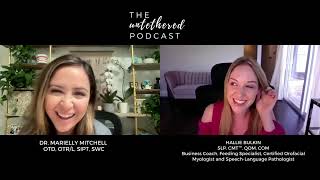
Untethered Podcast Episode 156 (host Hallie Bulkin; guest Dr. Marielly Mitchell) critiques recent CDC milestone changes—notably removal/downgrading of crawling—and argues this will harm early development and reduce timely identification for services. Speakers connect crawling and early motor milestones to laterality, handwriting, reading, ocular motor function, feeding/orofacial development (tongue tie, palate formation), musculoskeletal outcomes (flat feet, weak arches, hand function), and educational/insurance consequences (IEPs, reduced early intervention). They stress the critical early window (claim: ~80% brain development by age three), the lack of therapist representation on CDC advisory decisions, and urge clinicians to continue using previous milestone standards and advocate for policy revision.
Chapters
Hi and welcome to episode 156 of the Untethered podcast. Today we have Dr. Marielle Mitchell joining us. Upon discovering what orofacial myofunctional therapy had to offer, Dr. Marieli was blown away combining it with the framework she already.
Had learned as an ot.
With expertise in feeding, swallowing, cranial nerve integration and sensory processing, OMT opened new doors for treatment. As soon as she started implementing her combined framework, her outcomes improved and she became the go to expert on tongue tie release, long standing sensory issues, and ongoing swallowing and feeding difficulties. Her passion for OT and OMT comes from her experience as a child experiencing underlying issues that never got recognized or addressed until adulthood. She feels so fortunate to have had access to knowledge so few people know about. It's completely transformed her life and her treatment methods. She strives to find and connect the missing dots between oral rest, posture, sensory processing, the nervous system, sleep, cranial nerve dysfunction, swallowing and feeding. These various facets of the human experience impact daily function much more than people realize and Dr. Marieli is excited to be a pioneer in the field to bring these issues to light. Quick disclaimer all information, content and material of this podcast are the opinions of the speakers and is for the informational purpose only and not intended to serve as a substitute for the consultation, diagnosis and or medical treatment of a qualified healthcare provider. Welcome to the Untethered Podcast. I am your host, Hallie Balkan. I'm a certified orofacial myologist, feeding specialist and mentor. This podcast is all about getting your questions answered and collaborating with colleagues to bring you the most upcoming up to date information in the orofacial myofunctional therapy, tethered oral tissue and airway space.
I challenge you to keep an open mind and join my mission to get.
This information out to the masses.
Let's get started. Mary Ellie, welcome back to the podcast. I'm excited to chat today.
Me too. Thank you for having me. It's so nice talking to you always.
Of course. So we're going to talk a little bit about the change in the CDC guidelines. I know I've already spent a good chunk of time discussing, you know, the speech pathology side of things from, you know, both a language, pragmatic social skill and also semi feeding oral motor background. But we're going to definitely dive into your side of the motor conversation today. So I'm going to turn it over to you and let you. I want to know like what was your knee jerk reaction when you first saw these changes? Like what stood out to you the most?
Yeah, so for me, as an occupational therapist, right, I just really was shocked to see that crawling was completely, like, removed from the CDC guidelines and from the milestones. Like, it was just really shocking because I feel like that's a milestone that's so critical. It's not really optional. And I feel like it's really dismissing the importance of that. There are so many benefits to crawling that we really don't get as another opportunity to, like, do these types of neural connections later in life. This is the one time that we're actually on all fours. The. This is when the hands are on the ground. This is the only time that you're really doing that, unless you're as you should be crawling and climbing up trees as a kid and all that kind of stuff. But we all know that our kids don't really have those opportunities as much now because of, you know, not living in green spaces, et cetera. But the fact that crawling was removed, I feel, is this huge disservice because that is one of the main precursors for me, at least as an occupational therapist. And obviously the kids who come into my office are already coming in because there's some type of issue going on. It's such a foundational piece for laterality, which means knowing your left from right and knowing the center of your body. And that is a foundational skill for handwriting and also for reading. And as much as people are saying, like, oh, kids don't need to be able to, like, write anymore, it's not a thing. And I'm like, okay, well, typing is still a bilateral activity. Zipping your pants is still a bilateral activity. Like opening your water bottle, still a bilateral activity. And it's just so. It's disheartening to see that because I feel like the quality of children's development is going to plummet pretty rapid as it already is kind of doing that. And I don't think we just de evolutionize as a species overnight. And I think with the wording being as well intended to be like, oh, we're going to screen people better this way. I actually don't think that's really the case. I think more kids are going to fall through the cracks. I think it's going to give a lot of parents this lackadaisical approach and pediatricians who are going to be like, oh, yeah, it's fine. It's actually not important anymore. Don't worry about it. But medically, it makes absolutely no sense to me. And the benefits of crawling are so vast from a neurological perspective. Just how you just. Even the other one that they, you know, delayed sitting up right then now they keep, now they're able to prop themselves and they should have been seen independently at six months. Now how is that going to affect feeding? A whole nother thing to talk about, right? But when a child is sitting up right then they're going to cross midline, they're going to like rotate their trunk, they're going to fire their obliques when they cross their midline, that's where they start to go crawling. The kids who aren't going to do that are going to only move in one plane of movement and then they're going to just start pulling up to stand. When they don't cross midline, that like lack of integration for their midline is really going to affect, like I was talking about laterality from before and that's going to impact so much of their coordination. Their eyes are going to have trouble going left to right. Not only their eyes, but also from a feeding perspective just to like. So we can bring it back to like myo tube. Like the tongue is going to have a hard time lateralizing, right? Because like we've talked about before, like what you wanted, the lips you get in the hips. And if the mouth is the one body part that the kid can't see. And when they have to rely solely on sensory perception for this single muscle in their mouth, but their body's never really done that left to right movement, that's really going to be tricky when you throw a piece of food in there. And I think that they're not really looking at the ripple effect that this can do. So crawling was the major like, why? Why? Like how? Like, no, please. Like this is like our last saving grace. Like primitive reflex integration is a whole nother component of it. And just musculoskeletal wise to like, you know, when kids are delayed or they have specific diagnosis like downs and things like that, when they obviously have delayed milestones, their hands are typically flatter, right? And if you look at our hands, we have this like palm, this like curvature in our palms. That's from crawling, that's from weight bearing. The same with our feet. When you have flat feet, you are or your feet are pronated on a physical therapist. But I can observe this. Like you're going to have your lack of an arch. That lack of arch is going to mess up with the alignment, that the joints are going to be as stable and you're not going to be able to really like balance on these things. Things. And for Your hands, you're not gonna be able to grip things as easily. Imagine, like a board trying to wrap around, like, a cup. And I just feel like there's huge, huge, huge ripple effects that people are kind of dismissing with this and kind of almost like excusing, you know, a delay. That's something that would be common to make it normal. And I just think that that's not. I really am against the. Yeah, just because it's common doesn't mean it's normal. I don't think that's right. The standard of a human is a standard of a human for not just like, revolutionizing, like revolutionizing like human anatomy either. I mean, it's kind of crazy because people are like, being born with less wisdom teeth, which is. I don't know about that. That means our mandibles are just going to recede some more. Our skulls are going to shrink and our brains are going to shrink. And I'm like, what is happening?
So, yeah, no, that's a conversation that we've been having recently about how, like, we are evolving into having more narrower skulls. You know, our. Our jaws are smaller or. Yeah, that's. And it's interesting. It's an interesting conversation, especially as we focus on airway, because you and I know that you want these beautifully wide palates, and we want aligned palates. We want the tongue up in the palate. We want the body to really form itself right. In utero. And that dates. That goes back to in utero because we want to even tie that into swallowing. We know that by 12 and a half weeks in utero, we're swallowing the baby, that fetus is swallowing. And so at the end of that first trimester, you basically have that swallow that you're going to have going forward unless somebody intervenes and changes that, whether that's therapeutically or something else happens. But a lot of these. And that's why, you know, I think it's such a fascinating topic too, because parents will say, well, what did I do wrong? Or did something happen? Or. No, nothing happened. This is how things evolved in utero. And if the tongue wasn't up in the palate while a palate was being formed, and, you know, that's. That's going to impact what the palate looks like at birth. It's not like this happens overnight. And then, you know, can we change it during the first year? Sure. We have seen instances where we absolutely can change the shape of the palate. We can get that tongue up there. We can help it shape around the Tongue because those, you know, suture lines are still so open. But there is a point where it becomes really hard to do it. And then, you know, and I, for me, and at least in my practice, I've seen that usually before 6 months of age we might be able to do that. But after six months of, six months of age it becomes a lot more challenging. And then we're usually looking at earlier, you know, orthodontics, if we can, around two years of age when the two year molars come in and so on and so forth. So I know I went on a whole different tangent, but I think it's such a interesting conversation because people just see something like crawling removed from a milestone guide and then, you know, we're all over here up in arms. Because as an slp, I saw that and I was like, you have got to be kidding me. And I know from Nia, from my now 4 year old and I've shared this on the podcast before and I was telling you before we recorded, you know, she, she's now 4, but she was born with a tongue and liptide. We had them addressed when she was five days old. The feeding immediately improved. But you know, I was also working with her. I was in her mouth, you know, doing exercises to make sure, doing active wound care, but then also doing some oral motor exercises with her to make sure that everything healed properly and she did have proper function. And you know, I was very grateful that I had that skill and that ability to do that with her. But then I noticed that just like my first daughter, she was tight, right? She had tight muscles. And I was monitoring this because, you know, she was on track with her milestones and everything. But then she was also the baby who flipped over early and who wanted to sleep on her belly. Both of my kids were belly sleepers and she didn't have her butt up in the air like Lily did. So it wasn't as much of an airway concern as Lily was, which I now, now know years later. But, you know, I took her to PT because I was like, I'm concerned, like if she's this tight. The interesting thing was Lily was super tight. And I think it, I joke it benefited her because she was an early crawler. She was an early. That kid at 6 months of age was quite crawling up the stairs and at 7, 7 months of age she was crawling down the stairs and I was. And yeah, because I showed her once how to get down. Not on the stairs. I showed her on our deck on a low piece of like furniture. I showed her how to crawl up. I just taught her the motor pattern by, like, helping her move. As she was moving, she got up, she got down, and, like, we were like, oh, my gosh, put up the gates. What just happened? And then I was like. I was like, I'm kind of sorry that I told her that so early, but she, like, in little gym, even, like, people were like, how. How old is she? And I was like nine months. I mean, she was like, crawling up independently up the rock wall, flipping herself around, sitting on her bottom and going down the slide on the other side of the rock wall and then hanging. She would, like, she was so tight that she would just hang from the parallel bars for like a minute and a half. And people were like, I've never seen this. And I'm like, my child is a freak of nature. I don't know what's going on. Stupid fire. As a mom, I was like, I didn't know. I'm like, I don't think this is normal, but we're just gonna. We're just gonna run with it. Meanwhile, Mia was the complete opposite. Like, we released her. And Lily still had a tongue tie. She was still very tight, you know, all like, feeding stuff at that point. But Mia, she seemed to be, like, always on the cusp of just hitting her milestones. And she seemed tight. So I took her to a pt and who, like, early intervention pt, private pay and everything. Like, really good reputation. And it seemed like we were just kind of constantly keeping her just at the cusp of not missing a milestone. That's kind of what it felt like. And what I also learned was we were constantly forcing her. Her knee down. We were trying. We were basically trying to force against. We were going against the grain, right? Instead of going with it, we were going against it. And I later learned from working with some of my PRI trained PTs that, no, no, if you want to release something, you know, you might want to go outward to release it and then bring it back versus pushing against it to want it to be, you know, at the end, like, what the end goal is. And anyways, in the. When all was said and done, I probably did like eight months of private PT on, and we took a break in the middle and then restarted. And she never took to it. Never took to it. We did all kinds of, like, crawling and wall and all kinds of full body exercises, right? And. And we were really diligent about doing, like, the exercises with her. She didn't like it. You could tell it was uncomfortable. And So I eventually, like, stopped, but it then took her to a cranial sacral therapist. And then, like, 10 days after that took her to. Was like seven to 10 days after took her to osteopath. Because that's just when I could get an appointment with them. And I'm not joking you when I say within it must have been 24 hours, she got up. She, like, she already was pulling herself to stand, but she wasn't walking independently. Just got up and started walking. And I was, like, wild. And then, like, a couple days after that, I see her crawling across the couch on all fours with the knee finally down, no longer dragging the knee all the way across the room or anything. And I was like. And the couch is a hard surface to crawl across. I mean, it's soft, but it's also not stable. And I was, like, telling my husband.
I was like, she's crawling. She's crawling on all fours.
And he's like, what does it matter? She already can walk. Like, she just started walking. What do we care? And I was like, no, dude, nobody cares. You have to understand the importance of crawling. Like, this is why we have invested so much money and time into these services, because there's so much like. And I knew. I was like, I can't explain it, but I know from my colleagues and. Right. I know there's so much, like, integration that happens and crossing a midline and just all these different skills that are so highly dependent on crawling. So as an slp, I was beside myself when they saw they pulled it out, but I was like, I will never do it justice if I try to explain why I'm beside myself. So that's why you're here.
No, absolutely. And, like, to really, though, I can't emphasize, like, like, how important it is and the symmetry that it creates in the body. And when the symmetry isn't there, how body compensates. And the kid gets into these motor patterns that are, like, you see, like, a result of also their anatomy. And if they're not moving in these different planes of direction. And they're not. We don't walk like robots, right? We're not stiff. Like, there's always minimal rotation with whatever we're doing that starts in our most proximal part of our body, which is in our hips and in our core. And when someone, like, when you don't develop your core, you're literally like. You're as if it's a tree. It's, like, hollow and, like, rotten inside. Like, how are the branches going to be supported And I'm super concerned about it, and I feel like people are going to dismiss it, and it's going to be a really huge thing that we're going to see for generations to come of, like, okay, now so many kids potentially could have, like, did, like, not dyslexia, but potentially, like, letter reversals for an extended period of time. Reading is going to be really hard. The speed of their reading crossing midline with their ocular motor skills. It's just so foundational for so many things. And like you were saying, like, the ballad of coordination and the integration of all of it. And like, even auditory processing, like, information going from one side of your ear to the other. And like, the corpus callosum is going to start to atrophy, which is the last thing you need, which is in the center of your brain, right? I call it like the 4. For anyone from LA or the West coast, like the 405. Right. It's this, like, major highway that is, like, everybody's on it. And if it's like, when that thing is. If the four or five goes to three lanes, all the cars slow down. All the messages in the brain are going to slow down. Like, from a speech perspective. Like, what if someone's talking in the right ear and it needs to go to the left side of the brain where all the language centers are? Like, I can't. I'm barely love it. And it's. It's going to bleed into so many facets of development. And I just feel like it's a huge, huge disservice to kids. And I don't. The intention of flagging kids earlier, I don't think is really the. I don't know if that's, like, valid. I just don't. I don't think.
I don't think so.
And I don't think that it makes any sense. And I mean, there's just so many, like, neurological ripple effects of this. And then the musculoskeletal too, as well. Like, kids are going to have upper extremities that are going to be so useless. Like, these kids who aren't going to crawl and everyone says it's fine, are not going to be able to pick up scissors. They're not going to be able to cut things. It's going to be really difficult. They're not going to know their tool hand from their stabilizer hand, and they're not going. Able to, like, rotate the piece of paper and snip at the same time, because they've never really had to Use the two hands together. The, the main thing a lot of kids are doing now is like holding an iPad and swiping and to say like, how are they going to like cut open packages when they're older? Like, how are they going to cut open their Amazon box? Like, it's so functionally going to have an, an impact on kids and on the school systems as well because it's gonna like really, a lot of kids are gonna need more services when we could have just been like intervening earlier. And I think that the government really needs to take a bigger picture on like that and take a step back because this is like essentially gonna cost a lot, a lot later down the line people are gonna, lots of kids are gonna have more IEPs, they're gonna need school based services. They're not gonna be able to pick up the pencil. And it's just, I think we're digging ourselves into a hole that's pretty deep and it's going to impact reading speed, writing, all that. And I just, I don't know, I'm kind of, I'm kind of scared. I don't know.
I feel like I wrote down notes while you were talking before and I was, I wrote down handwriting, eyes coordination and flat feet, slash joints. And because I was like, these are such interesting things that you point out. And we see this, right? So in like my, myo patients even these are children who are at least 4 or 5 years of age, sometimes a bit older, and also adults. Now we're going for vision therapy. And vision therapy is hard. I mean, I had a, one of the dentists that I work with, she took her son and then she, and she's talked about this publicly and she then also put herself through it and she was like, it's exhausting. It is physically taxing on the body. And to see all of these airway issues and MYO issues and vision issues, it's all interconnected and like, I'm getting chills right now because it's nobody, I mean not nobody, but like, we know people talk about it in our space, but nobody else is talking about this. And like, I'm sorry, you need your eyes. I don't care what you do, you know, sure, I knew there's people who are blind who obviously figure out ways to use their other senses and they can function very well in the world. But for those of us who are used to using our eyes, we don't realize how much we depend on them and how much we're impacting our vision and our energy. That it takes to, to use our eyes when, you know, these other areas are impacted and there's just these compensatory patterns. And I think that it all plays into everything that you're talking about. So when you mentioned that, I was like, yes, yes, these kids shouldn't need myotherapy and vision therapy. And you know, ot. I know OT is usually, I think the vision therapist. There's like a program back in the D.C. metro area where it's like an OT and A. There are a couple. Like, I think the wife is an OT and the husband is. I want to say, I don't know if he's an ophthalmologist or if he's.
An optometrist, but they have developmental optometrist, maybe.
Yeah, he might be. And they just have this really phenomenal program. And so we've referred a lot of kids to them who needed this. And it's, you know, to see a child need and require so many specialists is. It's heartbreaking. Like, we want kids to be kids. Like, if we can intervene earlier and we can prevent them from having to need all of these services, which are both. It's an investment in time and money. Like, it doesn't matter how much money you have, you're taking away from that child's, you know, livelihood and their childhood. Now, obviously, if they need the therapies, you do them right. But wouldn't it be so much easier to intervene when they're an infant, when they're a toddler, if we know that these issues are happening and we. You know what I think the CDC guidelines prevent us from doing? It takes away that opportunity for us to intervene when they're younger. It's like, let's just wait and see if they have a problem and then we can deal with it then. Like, no, because by that point you've created such a gap in their learning. Like you're talking about with, you know, we know that children who have delayed speech are more at risk for reading and, you know, writing issues later on, phonological issues, phonetic issues, phonemic awareness. You know, I'm saying all the wrong words I was looking for. Phonemic awareness is greatly impacted. This is based on research. This is evidence based research. You know, it's like, why do, why are we not referencing that in changing these guidelines? And so, you know, really was frustrating to me to see that not one specialist was included on the committee. No OTS, no SLPs, no PTs were included. Yet. These are the developmental milestones that we assess and treat On a daily basis, all the time. Yeah, yeah. But the other thing you said, too, with the flat feet, I'm sitting here going, yeah, yep, I've got flat feet. Yep. Okay. I have, like, you know, my knees turn in. My hips are always, like, misaligned. I had a tongue tie that was addressed as an adult. I had, you know, orthodontic relapse, but had ortho, you know, when I was younger. I've gone to different providers. I've had kairos tell me, oh, one leg is shorter than the other. And then I had the next Cairo be like, no, your legs aren't. One's not shorter. Your hips are misaligned. Like, look, when you align your hips, your legs are the same length. But I've had. You said it causes instability and it causes problems with the joints. Well, guess what? I have, like, a weaker side. My left side is always my side that's prone to injury. I have, like, sprained this wrist multiple times. And, like, if I'm putting. If I, like, weight, bear too much on it or just do it in the wrong way, it like, snaps it back into a sprain. Like, it just doesn't, you know, and I'll put a splint on for a couple days. And usually that can get me back on track. Now, if I catch it early, because I know about it, but that was not an issue when I was younger. It's become more of an adult issue. And then. And that's like, when I've been down on the floor playing with kids that I've, like, initially caused this issue. And it was all from, like, leaning on it the wrong way. I was that kid who my aunt described as, like, the lowest tone baby she'd ever seen. And, like, really low tone core, very floppy baby hit all of my milestones, but at, like, the very last second. And my mom was like, you know, I take you to the doctor because you weren't doing X, Y, or Z. And you would literally do it in the waiting room at that appointment. Like you said. You said your first word to a stranger, like, to a person. You in the pediatrician's office, you said hi to some woman and, like, you know, you rolled over, like, in the office while we were waiting to go see the pediatric specialist. You. You know, it's just like, literally everything happened at the last moment. And, like, look, am I a functioning adult? Sure. But I have weak core, and that causes other health issues for me. It definitely, you know, the tongue tie, the lower tone, you know, tonicity that it's an ongoing issue. So I'm not going to sit here in lie and say, like, oh, life is so easy and everything's great. No, like, I'm really prone to injury even when I exercise to the point where, like, now my. My pri trained PT was like, yeah, no, you shouldn't be doing yoga because you're, like, too hypermobile. Yeah, you need to be focusing on things like Pilates that really focuses on, like, slower focused exercises to strengthen the core. And, you know, and it's very fascinating to see this all play out as an adult. And all I want is for my kids to not have to go through all of this. Like, I want their life to be easy and I want them to have, like, optimal function. And so that's where my passion comes from. Because it's like, I was able to identify with my one daughter when she was like, you know, 24 months old, the issues, and start navigating it then. And I wish I could have done it even earlier. Right. With my second one, we started at day four. Like, day one. Right. But really day five with her release and everything. And so that's where I'm like, we are failing, failing our children if we are just going to pull out milestones and move them later. And you made a point about how they're saying, oh, you know, we're just trying to put it at 70, like, 75% of kids should have it now versus 50% of kids. So it can make identification easier. No, it's actually the opposite. Because when you look at these. When you look at these, if you require even. Okay, so if 75% of kids, let's say. Okay, let me back up. If 50% of kids should be, let's say, using two words together on average, right. By age two, that means. And you say now. Oh, no, 75% of kids should be doing that. It sounds good in theory, but that's not actually what they did. When you look at it, they changed. They pushed back the expectations. And the problem with it, even if that is their goal, it's not how it's going to end up. It's just not realistic. It's not what's actually going to happen. Because insurance companies don't look at 50%, 75%, they look at the milestones and they go, oh, okay, well, this child doesn't need to be doing that until later because they've now pushed it back to 24 months or 36 months or whatever the case may be. And so they're gonna say, yeah, no, we're not qualifying this kid because this is federally funded or this is insurance reimbursement. And so it's driven by the federal government who's going to say, nope, sorry, you don't qualify and that that's what's harmful. I'm, you know, yes, I'm very grateful that I can private pay for my children to have services and we work with a lot of families that do. In my practice personally, a lot of our families do submit to insurance and get reimbursement directly. But there's a lot of children who are out there who are already at risk of falling behind, who do not have the resources. And this is what angers me most. These are the children who are most at risk of, for struggling already in school. And we just made that. We just, we have. And I say we because I feel like like all of us together, like not that we made these changes, but it's like this is putting these children at such a high risk, exponential. What's the word I'm looking for?
High risk?
Yeah, like they're high risk but it puts them behind. Like it basically. Oh yeah, more behind than where they. Right. They're way more exponentially at risk. Right. A disadvantage. That's the word I was looking for. It's much more exponential. They're much more exponentially like disadvantaged compared to their same age peers, whether we're talking about a two month old or we're talking about a three year old. And so my passion comes from like, we need to make sure that these guidelines are accurate and that they're understood properly and that they're implemented properly. And if you truly are going to say, oh well, 75% of kids should be doing this by this age. You didn't, you didn't back up the guidelines. You pushed them forward and pushing them forward, like meaning like we expect them at a later age, you know, that's putting these kids behind. So anyways, I hope that makes sense. No, no, it makes total sense.
And the thing is what like I think one of the things that like the science behind it is that we know that 80% of the brain is developed by age three. Right. And then it's just like insane to keep pushing this back, these milestones because then it's, we're losing precious six month periods where they could be in therapy, that they could be getting skilled, is that they should be like entitled to funding from the government or from the school district or if the parents are lucky enough to have parents who can play pay privately where we could Be building these skills and these motor, these neurons, like, when these aren't developed at that point in time, just like after five, like, it's not that we can't make progress. The brain's a beautiful thing. Neuroplasticity is there. But the difference, the significant difference that you could do before age three until waiting till age three or three and a half or four is. Is so huge. That window is really critical. And for us to just kind of be. For them to be kind of like, oh, we're just going to push it back and wait and see. It doesn't do anyone any, like. And it doesn't do anyone any good. The kids losing out on services. The therapist now has way more work to do. And then this. They're the funding cert. The funding person or whoever it is is going to have to pay a lot more in the long run. I don't see how this is going to help any system or any society at all. And, you know, this is something I should have researched before. And I really would love to see kind of how, like, other countries are kind of like, talking about this, you.
Know what I mean?
Where, like, medicine is kind of a thing. Like, it's just incorporated. I just, like, I really. I just don't think that this is going to help anybody in the long run. And it's causing a lot more work and we're not even going to really see the effects of this until like, a few years from now. And I think the language is super misleading, and I think that it's going to confuse a lot of people. I don't think it's going to be implemented correctly. I think that it undermines, like, the importance of just overall, like, human nature. And I feel like nature doesn't make mistakes, you know, and for us to kind of just be like, oh, well, you know, it's not important anymore. Don't worry about it. Like, that's not. No crawling there for a reason. And if you don't have the acute eye to see the importance of that, that's. You shouldn't be making these shots, calling these shots. And that's a. I think that's the thing that's just in the whole system of itself. Like, it's really. As therapists, like, we don't diagnose, but we're the ones who, like, treat the things intimately. And it's just kind of like we should have. They should have been consulting with therapists, the people who really are treating these things. And I, Yeah, I'm just. I'm just nervous for everything. And I don't know, I feel like so many muscles are going to be underdeveloped, especially the eyes and the hands, which are the smallest muscles in the entire body. They're the fastest to fatigue. Kids are going to have to go, like, imagine the social repercussions of this. Like you were saying, like, kids don't need to be in mile and then vision therapy and then ot. Like, when is she going to be in Girl Scouts? Like, when is she going to have a fun time? Like, when are they going to play with their friends? And it's like, yeah, I'm. It's not a good thing. I don't think this is putting us in any, like, right direction. And I feel like a lot of the issues are gonna really come up in the school system a lot. That's where it's really gonna have to rethink this. And then how long is it gonna take from the change? 20 years this took. Right. This has been a last time this was touched. About 20 years.
Yeah, I think it's been 20 years.
Yeah. So, like, okay, like, what's that? 2042 if it's gonna change again. Like, unless we, like, there's a huge army of us doing something, which I would love to, like, do or like, you know, but all therapists are so busy. People are burnt out. Like, it's a population of clinicians who, like, not everyone has the bandwidth. A lot of now there's social media and people have platforms. Social, like, platforms to speak on. But it's also like a. A really small army of people that can't really, like, I mean, I don't know. Like, there's aota. Like, there's not huge involvement in it. Like Asha. There is, but, like, it's a hard group of people also to kind of like, they don't have a ton of funding and they also don't have the bandwidth. Like, they're in the trenches treating. And now we're going to be even more, like, treating. It's just not as an ot. Like, it's, yes, you want to be. You want to have a career and everything like that, but, like, I don't want to be busy with kids who shouldn't be in my office. This could have been prevented. That's what I'm trying to say. And it's just kind of like, now it's going to be. Every kid's going to eat ot. Yeah, that's the thing.
Yeah. No one's able to pick up a pencil.
It's like, okay, great. Okay, skip crawling. It's fine. No, it's not.
Yeah. I think that we're seeing such a drastic change towards delays and so many kids having just something they need to work on in at least one domain that it's almost like they tried to normalize it. Right. And here we are saying that common doesn't mean normal. There's so much that we can do that doesn't always mean that you need high levels of therapy. But if you address these things when these children are infants or toddlers and get them on track and close those gaps, like, it could be very minimal intervention. Right. It could even possibly be happening in the classroom if we're educating teachers properly on, like, hey, when to flag, if there's a really a bigger issue. And, hey, here are the skills that we should be working on. And, you know, I know, like, my daughter's preschool teachers do a phenomenal job of looking at milestones and knowing that at three years of age, like, these kiddos should be cutting. Right. But some of them aren't because they weren't in school the prior year or, you know, we were in a pandemic. And so they're working really hard to, like, close gaps for some of the kids. And it's something that I've made a point of, like, working on some of these skills at home just because I'm exposed to it. So I know the importance of holding, you know, a chunky pencil or a chunky crayon when they're younger and making. Moving that to, like, you know, the shorter ones and moving it to, you know, eventually over time, moving it to the thinner, like, you. You know, the normal crayons, if you will.
Yeah.
For lack of a better word. And then traditional crayons. I don't like the word normal, you know, and then just looking at, like, how they hold the pencil and how they cut and how they hold the paper when they cut and all these. And, like, how they turn the paper and hand. Eye coordination and just all these things that my ots in my practice have taught me over the years, where Lily also thankfully had, like, really advanced, like, fine motor skills. And so I watched what she did and remember, like, my OT looked at her at one point, and she was like, yeah, no, like, she's good. You don't have to worry about anything. She's got advanced, like, gross motor and bimotor skills. I was like, great. Can we. Can we, you know, can we. Can we have that, like, carry over to the oral motor skills? That would be Wonderful. But she was so tight through her body that it was preventing that. So, anyways. But yeah, with my second one, like, just, you know, knowing, like, what they should do based on the guidelines, based on the milestone charts. Like, I have a milestone chart that I talked about in the episode where I recorded from 2014. It is, you know, obviously not something I've done research on, but look, we. This is what we work with. We work with these kids, SLP and ot, you know, services these kids who need these between birth to five years of age. And we even have some kids, like, who are a little bit older as well for, like, the more traditional therapy. And then we have our feeding kids and our MYO kids. And so we're doing a whole gamut of these. The therapy that you would see on these milestone charts. Like, where is this kiddo now? And it's very interesting because a lot of them have splinter skills, right? A lot of them have, like, certain skills in certain areas. And you're like, why can they do that but they can't do this, right? And it's like, okay, well, we're going to try and just work on these things and close that gap for them. But the earlier you intervene, the less therapy they usually need and the more it sets them up so that they don't fall off the milestone chart going forward, right? And it's like, we really need that. That approach. Like, that's exactly what you're basically saying here. And so I referenced that chart, and that's the chart that I was using to speak on the podcast. I recorded about, like, the speech language milestones. And then I looked at one of my other things for the oral motor, and it's just. It was. It was like, I was so angry. I was so fired up. I was like, you've got to be kidding me. Like, it is well established that do X, Y and Z by certain ages in the speech language world. And to just randomly go and change this and then, like, cite Asha as the platform that you base this off of. Like, no, I'm sorry, my milestones match.
Which.
On which. What's on Ash's website. And I think that's actually why, like, Asha went. And they are. They did make a statement to the public, and they said that they are addressing this directly, which was wonderful because they don't always come forward that quickly. So I was like, oh, good, my dollars are finally getting spent well. So I'm patiently waiting to see, like, yeah, what comes of that. But, you know, I'm like, that's the only reason why I feel like a bunch of us have. We've talked about, like, maybe putting something together and creating this, you know, together, but I'm like, if we can get Asha to make some headway, like, and then we can support that mission so it's cohesive. I'm like, I would love to see where that goes, but, yeah, it's very frustrating. It's so. And it's just unfortunate at this point.
Yeah, totally. I totally agree. And I think. I think I'm really happy to hear that about Asha. I haven't heard. I Maybe I'm like, missed it, though. But for Aota, if they're doing anything like that. But it's. I feel like it needs. Yeah. People need to, like, really address this. It's. It's a. There's huge ramifications if we don't. Huge. And I just. Yeah. From sensory perspective. Motor perspective or a motor. All the things. And I feel like it's just going to cost us a lot of time and, like, money later, and it's not going to help with, like, human evolution at all. I really don't.
So now we're on the same page. Well, thank you for joining me today and chatting about these milestones and sharing the oats side of things, because it's. I think we need to have these conversations because we do have a lot of parents who listen to the podcast. We also have a lot of providers who are going to be like, oh, wow, like, I didn't realize how, you know, I know I heard the noise, but I didn't really get it. Well, here you go.
Yeah, totally. I mean, it affects everything. Yeah. I mean, yeah, that's just. Well, we'll get it sorted. I hope so. Yeah.
Yeah. The goal is to get this sorted out, get things back to where they should be, and in the meantime, we will keep working from the old milestones in my practice because I'm not on board with this new change and what they're trying to push through.
Totally agreed. So, yeah.
Well, thank you again for joining me. This was fun. Yeah.
Thank you for having me. Always a pleasure.
Thanks for listening to this podcast. If you want to hear more of these Myo Tots, Airway and Feeding related.
Episodes, be sure to leave a review.
On Apple podcasts or pledge a small amount on patreon.com forward/the untethered podcast.
If you found value, others, you know, in this space will too.
So be sure to share this episode on your social media platforms and join us over on Facebook. On my Facebook page at Hallie Balkan Biz on Instagram at Aliebulcan, and you can head over to theuntetheredpodcast.com to grab a copy of the Show Notes, where you can also subscribe to be kept up to date on the latest podcast episodes.
More from Hallie



What I Was Missing in Feeding Therapy: ARFID, Airway, and Myo with Samy Hernandez





