Episode 159: An SLP Mama’s Journey: From in the Dark to Specializing in Feeding and Myo
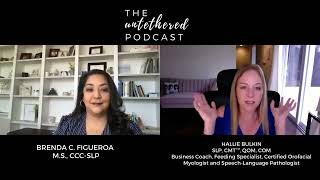
Transcript of Episode 159 of the Untethered Podcast (host Hallie Bulkin) featuring Brenda Figueroa, a bilingual speech-language pathologist and founder of Honey Bloom Speech Therapy. The conversation covers both hosts' personal family journeys with tongue-tie, breastfeeding struggles, and pediatric feeding, and expands to interdisciplinary care (ALF/VIVOS appliances, myofunctional therapy, ENT/allergy/dentist referrals), access/cost barriers, and clinician training/resources for feeding and orofacial myofunctional disorders.
Questions this video answers
Episode 159
State of Texas (Houston area)
Honey Bloom Speech Therapy
B.A. in Communication Disorders (University of Houston); M.S. in Speech-Language Pathology (Texas Woman's University)
He turned 5 in December (episode transcript states "He just turned 5 in December").
Chapters
Hi and welcome to episode 159 of the Untethered Podcast. Today we have Brenda Figueroa joining us. Brenda is a bilingual speech language pathologist in the state of Texas. She's the owner and founder of Honey Bloom Speech Therapy. Brenda has over 15 years experience as a speech language pathologist in a variety of settings. Originally from Mexico, she received her Bachelor of Arts degree in Communication Disorders with a minor in Spanish from the University of Houston. She received her Master of Science degree in Speech Language Pathology from Texas Women's University. Brenda has completed specialized training in orofacial myofunctional disorders through the International association of Orofacial Myology and Feeding courses including Feed the Peds, Ekman, Oral Motor Assessment and Intervention, TOTS Training, Plot the Tot and Tongue Tied Academy and various talk tools courses including Oral Placement Therapy. Brenda is passionate about working with culturally and linguistically diverse populations and supporting parents and families. Brenda enjoys collaborating with other providers in the area to provide comprehensive care to patients. She's a member of the American Speech Language Hearing association and is a licensed SLP in the state of Texas. Quick Disclaimer all information, content and material of this podcast are the opinions of the speakers and is for the informational purpose only and not intended to serve as a substitute for the consultation, diagnosis and or medical treatment of a qualified healthcare provider. Welcome to the Untethered Podcast. I am your host, Hallie Balkan. I'm a certified orofacial myologist, feeding specialist and mentor. This podcast is all about getting your questions answered and collaborating with colleagues to bring you the most up to date information information in the orofacial myofunctional therapy, tethered oral tissue and airway space. I challenge you to keep an open mind and join my mission to get this information out to the masses. Let's get started. Brenda, I am super excited to have you on the podcast today. I know I feel like we've been living a parallel experience in our lives. So welcome to the podcast. Thank you.
I'm so excited.
So let's jump right on in and talk about your why, you know, why you decided to specialize in feeding and myo like me.
Yeah, so what's crazy is you know, I was a speech path for what, eight, ten years or something like that. And I worked in the schools and you know there is that burnout experience and the huge caseloads and everything. But I was very lucky because I worked in the district that was actually very supportive and I had a really good nucleus. Like my campus was great. My the administrators the teachers, everything was great. And I had this like bilingual bubble, you know, all the patients that I served, you know, the families that were all Spanish speaking. So it was my wheelhouse and that was my specialty, you know, bilingual assessment and interventions. And so I was loving it. I thought I was going to retire there. But then everything kind of like became sidetracked when my son was born. And so I was a first time mom. And of course I did all the things, like I read the books, I took the classes, and, you know, I didn't know much about breastfeeding except I had heard women say, oh, I try to breastfeed and my milk never came in. Or, you know, I just never had a good supplier. I just didn't know enough. So I took a class at the hospital and I was like, okay, okay, you know, taking notes. But they never mentioned anything about oral assessment. They always talked about it in terms of supply and how to position and what to avoid, but never any kind of discussion about oral assessments. When my son was born, I felt like I wanted to do six weeks. Let's get to six weeks. Can we at least breastfeed for six weeks? And I was like, okay, so we could do it. But I felt like it was always a very difficult latch. And I was always like in this contortion, you know, trying to hold them into the latch. And I would see other women, like, eating and typing and, you know, brushing their teeth while they breastfed.
And I was like, I can't do that.
And so. I didn't know anything about tongue ties. And so one of my dearest friends, an SLP who moved to New Jersey, I'm in Houston, she. She kind of walked me through it and she was very gentle. And she's like, brenda, have you talked about or have you thought about tongue tie? And I was like, what? No, of course you're not tongue tied. We've had two lactation consultants in the hospital, two dictation consultants at the pediatrician's office. Of course he's not tongue tied. You know, she was like, well, I want you to do this. And so she walked me through some of the checklists, and then the next morning I checked them and I was like, you have a tongue. I think you have a tongue tie. And so all of that led me to. It was a very humbling experience because I didn't realize how much I didn't know. And I didn't know that so much of it was how, how much it was going to affect him. You know, it's not Just the speech. It's not just the breastfeeding. It was, like, the eating. I mean, the eating of solids and his posture and his sleep. And so with the pandemic, I was able to take a lot of courses online that I probably wouldn't have had time to take before. And so that led me to really, like, the rabbit hole, as everybody says, of feeding in myo. So, pretty much, he was the reason.
Yeah, that's. Like I said, we were living parallel lives. It's like, with Lily, you know, And I didn't know from day one with Lily. I knew only around 24 months that she was about 2 years old when I came back from my Mayo course, and I flipped her upside down, and I was like, this is the problem. This is what we've been dealing with. And, you know, she had also gone through that whole experience of, you know, we struggled to breastfeed. And I did Breastfeed her for 13 months, but it was painful, and it was. You know, I would have to turn my head because I didn't want her to see me, like, wincing at the. You know, trying to latch her. But I was just really stubborn. And I also went and, you know, the lactation consultants, I asked them for help in the hospital, and we had, like, two or three that came in and helped us and the positioning and everything, and not one looked. I later learned about gag orders in hospitals, you know, and then we went to also the lactation consultant at the pediatrician. Only one, not two. But she also never, never looked in her mouth. Never, like, said there was an issue, just told me I was holding her wrong, told me to strip her down naked, blow on her, spritz some water at her face. And I was like, all right, that's where I draw the line. I'm not throwing water at my baby to feed her, because she also once was latched. She was expending so much energy that she would fall asleep, and I couldn't keep her awake to feed. And so she wasn't getting enough during feeds, and then she was feeding more frequently. And I was like, I'm just a human milk bar and pacifier. Like, I just.
Like, this is.
And, you know, as a mom who was also recovering after giving birth, it was like, okay, whatever. Like, my baby needs to feed. Like, well, like, I have nothing. I'm not doing anything else. Right? Like, we can do this. But it was uncomfortable, and everybody tried to normalize that and say, well, you're a new mom. You just need to get used to it. And I'm over here thinking, like, this doesn't seem like a normal level of pain that anybody should have to go through. And. Okay. And so I just, just kept going. And I never really pushed further because I'd been to specialists and everybody kind of had said, you're just holding her wrong or she's, you know. So anyways, I mean, we were going for weight checks. They wanted me to put her on formula. There was like all those, all those fun issues. And yeah, 24 months, I flipped her upside down, looked in her mouth and was like, lip, tongue. Yep. Okay, well, here we are.
Check. Tick, tick. Yeah.
And I always said the jokes on me because I'm the pediatric feeding therapist mother, right. At that point, I was really working more with kids who were like, at least 12 months on up. I wasn't working with that, like birth to 12 months. I wasn't working with the infants. And so it was also very humbling to me because I feel like my world opened up in a very different way where I was going, hold up, I do pediatric feeding. Why is nobody talking about airway and tongue ties and myofunctional disorders? Like, these kids are mouth breathing, they're drooling for extended periods of time. Lily wasn't really doing. She had some like a. She was a mix. Like, she had closed mouth and open mouth posture, depending. And I can go back in pictures and videos and I see both now, but she wasn't chronically a mouth open child. She wasn't, you know, drooling. She actually was more advanced in her motor skills. But I think it's because she was so tight and tense. And so I think that actually for some kids, it hinders them. For her, it actually seemed to benefit her in hitting milestones. And so it's just, it's very interesting because I think even though kids may have similar diagnoses, they present differently. And so it's so important, right? Like, you know this, like, you specialize in this. Like, we have to look beyond just how the tissue looks to see, like, what is the functional impact. And so for her, it really. Feeding was the biggest issue. And then airway. And I'll skip ahead a little bit here. I was reviewing her CBCT last night, which I know I looked at, like, once upon a time in the dentist's office. We did the CBCT after she had her year of als, the appliance. And I was looking at it last night, and I was floored. Because when you look at her before and after her sinuses before, and this is a kid who had like three plus tonsils. And in the ALF appliance, the tonsils within three months shrunk down to like size two, almost down to like one. And I was like, whoa, what? Like, what's going on? And then of course, I was told in a Milo group that that's impossible. It couldn't happen. Except for research actually supports that this can happen. Here we are with that. But I was looking at the scan and I was like, oh, my gosh. Because my dentist is also very holistic and was like, are you sure you want to, like, do the scan? Like, I don't want exposure to, like, more radiation just to do a CBCT like, after. And I'm like, no, I want. I'm like, I want to do it because I want to prove to other people, since I'm in the educational space and I have a large platform, I want to show people what, why we do this and what it's doing for her. Her sinuses went from being almost completely blocked to completely open in before versus after having that appliance her. And we didn't change anything about her diet. We didn't change anything about, like, her myo at that point. She hadn't done more. She had done some mayo as well. But, you know, that's. In my opinion, she was already nasal breathing, but she congested. So if she wasn't a kid who always had her mouth open at night. But I know her tongue wasn't up. I know her tongue was down and coming forward even though her mouth was closed. Right. So there's those cases too that are kind of fascinating. So anyways, we'll get back to you and your kiddo. But I also saw that her adenoid shrunk. You can see it on the cbct, her nasal pathway. So when you look at it, the turbinates were so enlarged and you could barely see any of that black space that basically clear. It was like fully obstructed in the front and then towards the back. She had, like a little bit airway space. And after, completely open septum looks beautiful. Adenoids look within. Normal turbinates look normal. Sinuses are open. And I was just sitting here, like, oh. And her posture went from a head forward posture to a seat on her spine to a straight, like a straighter spine, like, better posture. And I was like. And we see this in the other pictures, like, of her standing up against, like the, you know, the chart in the dentist office and everything too. I was just like, holy moly. And mind you, I Admittedly, tell everybody this. We didn't really do body work with her during this time because it was Covid. So she got her appliance August 2019, and, you know, she was. We ended up, you know, and then March 2020, we know what happened, right? So that's where I was about to, like, start taking her for some more body work. Upper myo do you know, we hit pause and all of that, because it was just like, life got crazy. And I was launching the online business, admittedly, and I was like, well, let's just see what happens. And so we were also, you know, around nine months or so. She could have probably also been done with the ALF appliance. That's how quickly this worked for her. Nine months. But we ended up leaving it in for a year just because we were like, why not? Let's just. It's not going to hurt her. And so it came out around August of 2020. And then we did the scan in 2021. So we know that the results held because this was. This was a period of time after the appliance came out of her mouth. So anyways, I had. Because I was just reviewing that last night, and I was like, oh, my gosh, this is such a cool teachable moment.
But.
But anyway, so let's go back to your son and his journey, because again, I just. I feel like we live such parallel lives, and I know you have your own journey to share, too, so I'll turn it back over to you.
You know, actually, this podcast, you know, in conjunction with other, you know, awesome materials in the feed, was really a good guidance because, you know, I think before I even started this, I didn't know what a comm was. I didn't know what an ACE award was, and I didn't. I really didn't know what orofacial myology was. I had never really heard of it. And of course, I could kind of deduce what I thought it was, but I was never trained. I was never. It was never anything that I heard of or knew anybody that did it. And what's funny is I. That friend that helped me diagnose the tongue tie, she. Sarah, she's so cute. She tried to recruit me way before I was even pregnant. And she was just like, hey, Brenda, you should come do this feeding thing with me. And I would see how much she would study and how many courses she took, and I was like, no, I'm good. I have this bilingual bubble. We also have a wait list all the time. Like, I don't really want any more courses. And I was never really that person that, like, I was like, planning out my ceus around my life, you know, I was like, what do I need to take for my requirements? You know, and so she really helped me because when what happened to me was that. So she helped me find a provider. But, you know, even though I am in Houston, you know, a huge city, the person that I found, I won't even say what's part of town or anything, but it was a very humbling experience. And it's like, I've heard other people, including yourself, talk about it on the podcast, but that period of like, between me newborn and like, I would say, like six months. If you trigger a mom, you're like, ah, you know, you can start bawling because you feel it. It's so. It's like in your ingrained and your whole everything. And I remember going to this provider and I was like, yes, you know, he's a. Or, you know, this person's a leading expert in this field. And then, you know, of course it was confirmed, yes, tongue tie, lip tie. And do you want to do it today? And I was like, of course I want to do it yesterday. Like, why are we asking? And so they took him to the bag, he got it lasered, and it was basically a conversation of, oh, you're a speech path. You know what to do, and walks away. And I was like, wait, what? You know, I'm not here as a speech path, I'm here as a mom. Like, I'm not even thinking speech path.
And so our brains turn off and everything we know as a specialist goes completely out the window. Let's just put that out there.
Okay? Absolutely. And I was just like, okay, yeah, we fixed it. Yay, we're done. And then of course, the first course I took was Autumns. And I was like, what?
And of course, we can plug that a little bit. Fabulous, Fabulous course.
And I was just. It was more like, okay, I. I walked away. And I was like, okay, I have a list of other 25 courses I want to take. And so that helped me realize, like, yes, he had helped the problem, but it wasn't completely resolved. Then also, I became very upset because I was like, nobody told me about the importance of pre and post. Nobody explained the whole rationale between the release changing, only changing the anatomy, not changing the function. Nobody told me anything. I was. So I thought to myself, what if I was like a librarian or an accountant or like, you know, just a gardener? And I had no Speech pathology background. I would have never thought twice of questioning or following up or anything. And like, I have pictures of him having, like, postural issues, like when he was running, like, he always had a tight fist. And like, we have family pictures and he's like kind of doing this thing with this and then, you know, kind of like the curvature and the rotated pelvis and the extended pacifier use, which, which I, you know, I always tell parents, like, full disclosure, I will never shame somebody because we did it out of survival mode because it was. Now I know it was his airway cushion. And I was like, you know, working mom, I need my child to sleep. You're going to have a pacifier for a little bit longer than you should. And so, you know, his journey kind of taught me that, yes, even if you find a specialist, you still have to be fully informed and have a teen, because he had that release. And of course he ended up having to require another one because he healed very tightly. And I would say it was an incomplete, but, you know, I'm not an expert in that. And then it turns out he also had buckle ties that he didn't diagnose at the time. And so, you know, it was very disheartening because as a mom, you go and you're so emotional and you're like, please fix my child. Please fix him today. And, you know, not having that full disclosure, it was just kind of like, it made me mad. It made me. It fueled me. And then it made me very passionate about advocating for this because, you know, I thought to myself, I'm a professional in this field and how unprepared and, you know, how out of the loop I was at the time of anything related to this. And so I have to say, like, after he had his tongue tie revision and he had an alf, that's another thing that I couldn't find a provider that would do it under the age of seven. I have to drive all the way across town, which that provider is fabulous. I always recommend her because she's so compassionate and so thorough. But again, it's like time, money, effort spent. And luckily, I think that because of all the knowledge base, I am cognizant of the fact that some people are like, well, let me ask my husband. I need to see about the cost. And yes, it is very expensive. But, you know, when you look at the, the trade off and I think, doctor, I can't remember what the name of the doctor, the one that does the. The author of the Six Foot Tiger.
Dr. Liao.
Yes. He always talks about, yes, it's probably the same amount as a car or a whole new brand new car. But think of your health and the trajectory of your health. And, you know, I saw my son going from, you know, very compromised sleep. I mean, it was just painful to watch him not being able to sleep to, like, fully resting and that. To me, just knowing how much brain activity we were able to, you know, really prioritize and how much full rest he gets now. I mean, it was night and day. And I, you know, yes, it's been a sacrifice to drive and all the appointments and stuff, but I always tell parents, you know, if you do early intervention now, think of how much you would save. Like, I tell them about my journey, how I have a palate expander vivos, and that's not cheap either.
More comfortable, it's even longer, right? The older you get, the longer it takes to fix the issue. Basically. Yeah. No, I. And I'm in that same place now because we moved, right? So we moved from Bethesda, Maryland, down to Boca Raton, Florida. And, you know, my friend and colleague was 10 minutes away from me, and we did Lily's ALF. And so it was very easy. ALF popped out one time we could go and they would, you know, put it back in adjustments. Like, very easy to, you know, make appointments and go and handle it. And down here, the. There's only one ELF provider in all of, like, south Florida, and she's near North Miami, and she's. I hear she's wonderful. And I. It's taken me the full six months or eight months that we've lived here to wrap my head around the fact that, like, we need to do this because Mia is sick again. And, you know, and Lily. Lily was on the same path. And so I love how you brought up that doing this now helps later. Right. So we have to look at. Is it a big investment now? Yes. Can everybody make that investment now? Maybe not. There are different types of, like, care plans and things that doctors are often willing to work out with you. You know, they are. I do know a mom up in New Jersey who was able to. She has Medicaid, and she was able to get sleep study done and argue to get coverage for the alf, for the oral appliance. They're in for myotherapy and for body work. She got this all covered by Medicaid. And so I tell people, I'm like, if you're willing to put up a fight and finances are a problem, like, it will be a fight with insurance. But if, if you're willing to do it, it's worth it for your child because, you know, yes, some of us might be able to pay out of pocket, and we're very fortunate and grateful for that. But it is something that needs to be available to all children. And, you know, and I would argue that especially if they have obstructive sleep apnea on a sleep study, you know, these things work. And I'm hopeful that the type of data like I have from Lilly's CBCT to see the before and after, it's arguably cheaper to have an oral appliance than it is to have nasal surgery than it is to, you know, I mean, so when we start to look at it, right, like Lily's tonsils shrunk, her adenoids shrunk, I have physical evidence of it. You know, it's not just me just spouting off some, you know, theory. No, this actually happened for her. Did not use. We use, we use XLR or clear is the way properly to say, but a lot of people say xler. So I'll, you know, voice that. We did not use any steroid based sprays. We went to the ent, he turned us away. He basically said, her tonsils look unimpressive. They were almost touching and they were veiny and they looked unhealthy. And I was like, well, I don't want my child to have surgery. I don't want to use a steroid spray. But if that is what he recommends because he think thinks is necessary for her, then I'm on board. Like, I'm on board with what we think we need to do here. And it kind of left me. Like you said, like, sometimes we leave these doctors and who we trust and who we hope will look at our child with their best health, you know, optimal health goals in mind. And I'm not saying that that's not their goal, but maybe they're not trained in this or maybe they're not. They're not looking through the same lens that we are. And so I've come to the point where I tell parents, I give them a disclaimer, especially up in the D.C. metro area. And I say, look, you can go to the ent, but this is likely what they're going to say. Unless your child has very obvious obstructive sleep apnea, most children get turned away. Please go see an allergist and let's rule out any allergies. And then let's also do a consult with a pediatric airway centric dentist because they're going to look at your child's airway in a very different way. Where we're looking at, like you said, function. Right. Can the child breathe? Can the child sleep? Can they get restful, high quality sleep that allows their brain to function day in and day out? Because, you know, at the end of the day, I know we all want the best for our kids. We don't want them to struggle in school. If they're not sleeping well, their school performance will 100% be impacted. And I think that's a way that. That's a conversation I have with a lot of parents because I don't think people make that connection. They're like. Because they have, like a tongue tie. And I'm like, well, if that's how we want to, like, simplify it, yes. But there is much more going on here as a result of the restrict, as a result of the root cause of this issue that's kind of snowballing into a whole bunch of other signs and symptoms that we're seeing on your child. You know, and I wish somebody had that conversation with me. But you. Like, I had to kind of figure that all out for myself initially.
Yeah. And I mean, at the time, you know, we did have a lot of comms in the area that were. Well, none of them were close to me. You know, I think we have more providers now, but for my son, like the first two years, which is when this was happening, we were only doing Spanish with him and he didn't know English. And so I was like, by the time I drive over there, by the time I translate the session, and I was thinking, you know, I want to learn this from me too. So it was more like I was so driven to learn because I wanted him to benefit from it. And, you know, yes. Now we're at a point where he's like, mom, you're my mom. So I can't really do therapy with him. Like, I have to have somebody else do it. But at the time, like, we could do modifications with food and feeding. And so I did see a huge change in that. But, you know, I think back to your point about the cost. You know, sometimes we buy things and don't bat an eye. And this is kind of one of those things that we should really prioritize. And I remember really well, like, when I first told my husband, like, how much the alpha is going to cost. And he's like, what? And I was like, don't worry, I researched it. We're doing it. Yes. And he's like, but wait. And I was like, nope, sorry, we're going to do it. And then what's crazy is he has his own journey. And now he's a weirdo because he tells everybody about his vivos, but he had severe sleep apnea, too. And I tell him, think of how much he knows, how much his sleep has improved. And he was one of those people that was such a light, light sleeper. And think of the heart connection. And now that he knows how much sleep is correlated with, like, early onset, you know, heart attacks and cholesterol and high blood pressure and everything. Like, he prioritizes it now, but, boy, did we get into the beginning. And I was like, sorry, we're just going to do it. I'm sorry, I'm vetoing your opposition of this. Like, this is a mom saying yes. So we're proceeding.
This is a hill that I'm going to die on. And we are doing. I mean, I was kind of, you know, for my husband, too. It's like, you have to have the conversation where you, you figure out, like, what is going to trigger, like, the spouse to be like, oh, gosh, we have to do this, right? And, like, what is that? And what, what ticks? What makes you tick, right? So my husband, like, you know, he's very smart. He has a high iq. Like, education is really important to him. And not to say it's not for most parents, but I feel like he's like, highly, highly driven by, like, that educational component where I'm kind of like, education is important, but also there's people who didn't graduate high school or college that are multi millionaires and billionaires. So, like, really, at the end of the day, like, I feel like I could probably teach my child a lot of great skills in a business standpoint. They'll be fine.
It's good.
Like, whatever happens, happens. And he's like, they got to get into a good college and they got to do this. And I'm like, okay, well, okay, that's fine.
We'll see what you know.
I'm like, I mean, I'm not against education, clearly. Like, I have, you know, a master's degree and certifications and things, but at the same time, like, I could also go launch any business and, you know, we'll be fine. So anyways, yeah, we have, like, these conversations, but I told him I pulled up the research and I said, look, children who have, like, blocked, you know, airways that's impacting their sleep. And of course, like, he didn't really know the difference between Like Lily's like sleep and airway. And I don't think she had obstructive sleep apnea. I think she just probably had like more of a milder, although she was pretty blocked up, but it would come and go, right? So I basically said, These kids have IQs that are on average like 10 to 16 points lower than their same age peers, and these are typically developing children. And he was like, what? He's like, what do we have to do? I was like, she needs this appliance.
He's like, okay.
It was kind of like, all right, we're doing this. So. And at this point now, I actually showed him the CBCT from Lily last night. And I said, do you see her spine? Do you see how she's sitting much straighter? Do you see how blocked her sinuses and her, her nose was to begin with and how large her adenoids were? And I was like pointing to everything on the CBCT scan so he could see it. I said, and I read the thing and I read, you know, and I'm like, these are great results that we got just, you know, from elf. And I was like, so I think I'm gonna have to, you know, take Mia for it. And you know, of course, like, I, I'm gonna be paying full price down here. Like, I got a little bit of a discount up north because we referred a ton of patients to them. Like, this was a friend of mine and he was like, I'm like, I've just been a boy. He's like, well, why haven't you done it yet? She's like 45 minutes away without traffic. It's going to be an hour and a half. Like with south Florida traffic, no matter what time of day I go there and back. So we're going to spend three hours in the car with a four year old. And I was like, I'm honestly not too excited about that, but I think we're at the point where, like, we just need to do it. And I'm like, it took me a while to wrap my head around it, but, you know, even me, a specialist in the space, I, I was calling around, trying to see if I could find somebody closer who would be more willing to work with a four year old and just, I can't, I can't even get a traditional or ortho to do a lower lip bumper or some type of either fix removable appliance on Lily, who's six and a half. They want to wait. They agreed with everything I said, everything they saw the Exact same things. They're like, but she's a little young. Come back in a year. I was like, why? Like, what is the rationale for that? And I wasn't going to fight with this guy, but I was just like, huh? And so we actually have another appointment on Monday for Lily at another ortho, and I'll see what happens because they're connected to our new dentist. So, like, I'm hopeful, but no. And I respect the work that they do. I just wish they would start doing it earlier. Right. I wish they could work with these kids before they were seven, seven and a half, eight, nine. And then, you know, I said to my husband, I was like, nobody's going to do me as she just turned four. Like, I'm going to have to take her to this dentist in North Miami. And I was like, and she has a fabulous reputation, so I have, like, no reservations by doing that. Like, you know, paying her whatever she charges and doing this with her. I was like, it's really the freaking drive like, that's getting. And he's like, well, you know, just. Just, like, you leave if you make an appointment for, like, you know, 11:30 every time you go. I was like, I love how he's, like, now planning this in his head. I forgot what it's going to cost. He's like, we make this work. And he's like. He's like, how often do you have to go? I was like, it's usually every four to six weeks for adjustments, and if there's a problem, then we have to go in, like, so. So with Lily, sometimes we went in more frequently than that anyways, so. But I'm grounded, and he's on board, so full throttle. Here we go. Round two.
Yeah. Yeah.
I'm excited, but I really don't love long car drives, so it'll be fine for my child. I'm willing to do it.
Yeah. It's an investment.
Yeah.
For us, it's like, you know, Houston has horrible traffic, and so I always have to really map the visit. But, you know, it's really. We're just, like, used to it. It's like, let's just go. He already knows. And it's an exciting time, I think, because it takes a special kind of provider to work with that population, the really young ones. And my son was just about to turn four when the process started. And so I think, you know, if they're. They're trained or if their personality is good for that age group, then it helps the child be like, oh, we're gonna go see Dr. So and so today, you know, versus. Oh, we're gonna go see that doctor today.
Yeah, they actually, my kids like going to the dentist. It's kind of funny. Like, I know most kids don't love it. My kids are like all about it. They really did make it a very positive experience up north. So, you know, at Natural Dental. So it's like coming down here, you know. We also had a very good experience with our dentist down here. Everybody loves him and he does do tongue tie releases. And so we're very happy to be a part of like that practice too. It's been, it's been easier to find for them than for me as an adult. At least I haven't been to the dentist. Or I'm like, do I need to go fly back to Maryland?
Oh, my gosh.
But now it's, it is, it's, you know, it's one of those things where like, there are a lot of parents who are willing to travel and, you know, and I have always been like, all the power to you and I'm like, and now I'm in your boat. So I, hey, you know what you gotta do, right?
Yeah.
How old is your son now and how is he doing?
He just turned 5 and in December. And he's doing really great. I mean, he still has, you know, we're still working on remediating that crossbite and, you know, helping with his lisp. He has a frontal lisp, so it drives me crazy. But, you know. Yeah, so. But he's done much better. I feel like after he had his. The last revision, I mean, it was crazy how much he was able to really work on diversifying his swallow and get a better rotary, you know, chew and everything. And so it was just amazing to see. And it's really funny because he'll say, you know, like, I have a home office. And he'll be like, mom, did so and so come today? And I have to make up names. So I made this kid Mikey. He's like, mom, did Mikey come today for his exercises? And I'm like, yeah, he came today. And then he has his little bag. So he knows. And then what's really cool is these doctors that we've had a chance to meet the ALF provider and then his regular dentist and the dentist, the release. I will say, hey, doctor, so and so. They're going to be really sad if you don't do your exercises. So he's really like at that age where he's like, oh, I really want to do well, and he'll let me record, so I send them videos. So, I mean, it's really a great experience. But really, I always. You know, I get emotional because he. When I think of how he started back to that. That first day, and I was just like, how painful it was to breastfeed and how much he's totally. Like, he went from a munching kid who had all these OMDs, you know, so much oral motor dysfunction and, you know, mouth breathing, and he Extended pacifier use. And I'm like, wow, look how well you're doing now after all these interventions and such a team approach. And, I mean, he. He is invested, I think, because he knows, like, when his appointments are and because we also do a lot of Cairo. Like, I'll say, oh, you're gonna go see Dr. So and so today. And he's like, mom, tomorrow we have our appointment with so and so. So he really likes. And I think he's one of those kids. Like, he knows when his body needs it, because we go to chiropractor, like, every other week. And sometimes he'll say, mom, can I.
Go see Dr. Martin?
And I'll say, sure, because I think he feels it. And then I noticed the difference in his sleep. If he goes to get his alpha adjusted, sometimes he has some trouble with sleep. And then we go to the Cairo, and then it gets better, which I don't know how that works, but I know it works.
It's one of those things where now that I've had the opportunity to talk to so many different individuals who do this type of work on the body, be it pt, PRI amputees and osteopaths and chiropractors and craniosacral therapists, and, you know, I think we know, like, you and I know the whole connection between, like, we say, we're connected from the tip of our tongue down to the tip of our toes. And I think that sometimes it's just that it's our nervous system, too, right? Like, we have to, like, reset the nervous system and make sure everything's in alignment and everything's flowing well. And I feel like that also plays a major role in sleep. But I think as soon as, like, our orofacial myofunctional disorder takes back over, right? If it isn't completely resolved yet, or if there's a tongue tie at play or if there's some tension and that starts to set back in, it's sort of like it undoes the work that they had done, and our nervous system Kind of goes like, hold up. We can't go into rest or digest. We are now experiencing more fight or flight again. And so I think kids are so intuitive, and it's so cool to hear them when they're in this world and they have a glimpse. Obviously, they can't sit here and explain. I go to the chiropractor and here's the 75 things he does for my nervous system. No, but they can tell you, like you said, recognizes when his body needs that. And that's. I think it's so freaking cool. Like, it's just like you're giving him a skill that's going to follow him through life because even as a teenager and an adult, he's going to be able to go, okay, I'm listening to my body and my body's telling me X, Y and Z. And I think that's something that so much of society has fallen out of, like, place with, like, most of us don't know how to just pause, take a moment and be like, what is going on internally inside me? Like, what do I need to do for myself right now? Because we're also go, go, go social media. Like, we sit down and instead of resting our brain, we open our phones. And I'm guilty of this 100%, like, all the time we open our phones, right? We have, like, blue light. We're now stimulating ourselves instead of resting. And so it's like the brain's not getting rest and the body's not getting rest. And, you know, it's. It's kind of this, like, cycle. And so I'm like, on this path to try and break that cycle with my children, which I know obviously is more than me just telling them what to do. I have to model it too, right? I'm not. I'm like, definitely not here to shame anybody because I myself have to work on it. But it's, you know, the society that we live in. And I think the more that we can have these conversations about, like, what we can do for our children and what we're doing for ourselves and how we can trust our bodies to tell us what they need. Like, I think what you're doing for him is just really cool. So I just wanted to commend you for that because I think.
Thank you. It's been a journey. It's been a long journey, for sure.
So. And then I know you mentioned, you know, you have your own journey. So how are you doing? Like, where are you on your journey right now?
What's crazy is, like, I'VE never. I always thought I was a. I always thought I was a night owl. And I blamed my sleep issues on that because my mom is a night owl. And I just. I thought, you know, I'm not an early. I'm just not a morning person. And so I think obviously with. With being pregnant and then being a mom, I was just like, everything exacerbated, obviously, you know, and the quality of sleep was just horrible. And I remember feeling so, so tired. And then at the same time listening to all these trainings and podcasts and, you know, going to all these courses and sleep, sleep, sleep, and I'm like, wait a minute. I can't be learning about it and not doing it. So I asked my mom about feeding issues, and she did say, yeah, I had a hard time breastfeeding and all that stuff. And so I think for me, the biggest thing that was affected was posture because I always felt a really hard knot on my back, my upper back, and then also my oral rest posture. I was a product of the orthodontic wave of removing teeth before braces. So I did have four extractions. And so, of course, you know, my airway is reduced. And so I knew all of that going in. So when I had my tensile release, I didn't. One of the things I learned from my own experience is how much I was compensating with the floor of the mouth. I didn't know how much I was compensating. It was cool. As my dentist, Dr. Lukin, she was showing me, like, the measurement differences. And so when we took look at the pictures, it's crazy to see how much it was compensating. And so I feel like, you know, I had my tongue tie release with one of my other good SLP friends. She. I was kind of. We laugh at that experience because she felt something immediately after they were cutting. And I was like, man, I didn't feel anything. What happened to me? And she had, like a history of migraines and headaches and all this tension. And she's like, no, I feel like the meat on my head is melting. And I was like, what? I don't feel anything. But my chiropractic appointment was that evening after my release. And so I was like, yeah, I had my tongue tie release today. And then she did my cranial sacral. And then I got up and I felt this weird. I mean, it was just like, whoa. It felt like weird melting across, like, my shoulders. And she looked at me, she's like, are you okay? And I Was. It was weird, but it felt good. And so that night, when I fell asleep in the morning, I was concerned because I thought, what day is it? What time is it? Where am I supposed to be? Because I was in such deep, deep sleep and I thought, oh, my God, that was crazy. So sleep was one of the things that improved for me. And then, of course, I always thought I had correct oral rest, posture, but I. I obviously learned that it was just that tip. It wasn't the full contact. And so even now with the vivos, what I've noticed is my. The swallow, I'm able to really get that palatal seal before, I think it was just a contact. It wasn't really sealing. And so it's been an interesting thing being the patient. But I also think, you know, aside from it being a humbling experience, I think it makes me more relatable to my patients because I'm not just telling you about this great, awesome thing that I know nothing about. It's like, I've been there, I have a child, I have a husband. I'm the patient. And we're all kind of on the same path. And so I think people are like, okay, yeah, if you're willing to walk the walk and talk the talk, then I think we're a little more comfortable with that. So I think it's been, again, it's humbling because it helps guide me as a therapist. Like, how would I like to be presented with this information versus, you know, just bam, you know, And I always tell parents, like, you know, it's a lot of information, you know, just, I know it's going to be a lot, but I try to. To help my experience guide the way that I present it. Because I do know that, you know, a lot of times we get parents and it's like, oh, we just want speech for the sounds. And you're like, you know, and then you start asking questions like, how's the sleep and how's the eat? Oh, they eat great. They eat fine. And then you watch them eat and you're like, oh, okay. You know, we need to address other things too. So, you know, it helps. But it's also like, as a patient and as a mom of the patient, it's like, it feels exhausting at times, but then you see why it's important to keep going because it makes such a huge difference, you know, and it is totally worth it. It.
Yeah, absolutely. And I love that. I mean, we're living, like I said, we're living parallel lives, so it's Definitely one of those things where I also agree, like, being the therapist, right? And then I wasn't. I was actually the mom first, in a sense, because, yes, I was doing, like, pediatric feeding with, like, 12 months, you know, plus. But I took my course, came back first, started treating my child, started treating other people's kids around the same time. And it just was. I was going through it as a parent while I was going through it with other parents who were going through it with their children. And so it was very humbling. I mean, I remember my first evaluation, so I had a past client of mine, a little kiddo I worked with in preschool. The mom called me up and said, do you know this provider? We have been recommended for orofacial myofunctional evaluations. And I said, oh, I'm actually going to take my course in September. And so the mom was going to proceed with the other provider because this was like, like February or something. Then I got pregnant. Then I moved it up, and then she said, oh, well, we're going to come see you, because we already have a relationship with you. And I was like, okay. So then she calls back, and she's like, okay, apparently I need the eval, and so does my other son. And I was like, okay. So that went from, like, automatically had three patients on the schedule for evals. Two pediatric, one adult, you know, literally two days after I returned for my course. And I remember sitting there, like, with my notes, and she knew I was like, like, I had a relationship with this family. And I said to her, look, like, this is going to be the first time I'm doing the eval. She's like, that's fine. We know you. We trust you. Like, we're happy to, like, work with you on this. And I was like, okay, cool. And I also had decided I was going to go through certification and everything at that point. And so I was happy to have cases to start with, like, immediately. But I also came back and I offered to my other families. I was like, would you be okay if I did this evaluation on your child? It was like, I don't know, six other kids on my caseload, I think, or five or six that I immediately did an evaluation on within a week of returning. And I said, I'm not going to charge you extra. We're just. You'll just pay your normal session rate. Like, I just got new information. I think it would be really helpful. I would love to adjust our treatment plan if necessary. And it was very valuable. And I was really excited to be able to bring that back and do that immediately. And then of course, you sit there and you're like, oh, gosh, all these other kids that I've worked with that I wish and, like, do an email on and just take a different approach. Approach. And not to say that some of these children didn't improve, but you know, those kids who are, like, chronically congested and always getting sick and some of them drool, but they always have that open mouth posture and they're in speech forever. And, you know, I was like, there were just certain kids on my mind that I was like, oh. And sure enough, and several of them have called us back over the years because they weren't hitting their speech milestones as a child, got older and. And we were then able to take a different approach with some of them. Not, you know, they didn't all come back, but it was just one of those things where I was, like, so humbled but also so grateful that, like, I had the opportunity to experience this education and then go through it as the parent of the patient and then with, you know, all my little patients and then started treating adults, which I said I would never do, but in the Mayo world, for me, that's fun. So I'm like, let's do this. And then like, okay, I think I have all these issues and I need to now address it with myself. So, yeah, I'm like, I put my kids through it. So now. Now I guess it's my turn. But yeah, it's. It's definitely been a journey. And. And that was the whole reason why I started this podcast in 2019 too. I came, you know, now I'm. I was certified at the beginning of 2018. I was treating and I finally was like, you know, I really want to listen to something as I'm like driving around between patients. And I tried to find a podcast and nobody was talking about it. There was no Myotox Airway podcast. And I was like, wait, what? So here we are. Like, here we are almost two years. No, no, 2019, three years later. Right?
I told you this, but I found you through Melanie Potok because you were. She was doing some series. I think it was close to the pandemic or around the time, but she had guests and she had like a sleep training person. And then you were. I mean, I love Melanie and I, you know, I follow her too. But I was just like, when you were talking about it, I was like, oh, my gosh, this is it. This is. This is, you know, you're talking about. Tongue ties. And I was like, oh, no, I had never heard of this. And then of course, the guest that you've had is, as I said, with Ken being like one of the first one. I mean, not the first one, but he was the first six months, I think.
Yes.
Learning about sleep the way that I have now, it's just. It's just amazing. I just can't get over the fact that, you know, and the other humbling experience that I've had, I don't know if just probably happens to you too, but I will say that some of my SLP friends being the ones that reach out to me and they bring their kids and it's so crazy because they always say, you know, how come nobody like pediatrician or dentist told me this? And then I always remind them, like, I didn't know about this, nobody told me about this, you know, and. And I always joke with people. I'm like, I don't know what real feeding looks like because I always learned it. I feel like I learned the principles and the behind the scenes or the tots course, plus the myo. I learned that kind of almost at the same time as feeding. So I don't know what traditional feeding looks like because I always have it through, like you always say, with the twist of myo, because I never was trained in it before, so I don't know what other people's approaches are. So I do give that disclaimer that the feeding therapy may not be the same because I was not separately trained. I feel like it was more of a, you know, a synergy for me, so I can't look at it separately.
But I always, you know, and I. That's a really interesting point because I'm sure there's a lot more therapists who are having that experience too now. And I haven't really stopped to think about that. And I'm not going to lie, it makes me a little happy because, you know, you know, like you said, like, I call it feeding with a twist of tots and mayo. And nobody was teaching about tongue tie and myo in combination with feeding for like the birth. Like, yes, Autumn had workhorse was teaching about tongue ties, so I don't want to downplay that. And she also is a feeding therapist and myofunctional therapist now, ibclc. But when I took my course with her, it was really my goal there. I went to learn about tongue ties and of course we talked about there's feeding impact and speech impact and everything, but nobody was teaching a pediatrician Feeding course that kind of combined all of it. And that's why I was like, I was talking to my friend Teresa and she, you know, was like, somebody's got to do this. And I was like, well, I'm. I think I'm going to create this myo thing, so it's not going to be me. And then something just, like, went off and. And she has a child, and she talks about this publicly, who has. Who has special needs, and she's like, it's really hard to find a feeding therapist who understands how to work, work with my child. And as a speech pathologist, it's like, we should be able. We should have speech pathologists who, you know, can figure it out. Right. Even if you don't know, you can still learn. You can fit in. I think the problem is there just wasn't enough out there that really was addressing some of the issues that these kids are having. It goes beyond just, can we chew and swallow our food? Right. If we can't read through our nose, we can't expect them to chew and swallow properly. It's going to be dysfunctional. That's just a fact. Right. And so, you know, yes, I think airway is addressed to a certain extent, maybe when you take courses that are focused on NICU and that are focused on some of our littlest ones who have maybe certain diagnoses. But we have to look beyond even that population because we have a lot of kids who are typically developing or cognitively intact who have orofacial myofunctional disorders, tethered oral tissues, dysfunctional speech and feeding, and it's impacting them in other areas of life, too. And so I think that, you know, I. That same day, I don't even think it took me 24 hours. She was like, well, if you're not going to teach a course on feeding, I'm going, or I'll find somebody else to do it. I was like. I was like, you know how to get under my, like, skin? Because as soon as you said, I'll find someone else to do it, I was like, we need to do this. This is one of my passions. It's got to be me. Okay, fine. I was like, but I need.
Now it's accepted.
I can't do this alone. And really, I think it was an overwhelming thought at first for me because I haven't worked in a nicu. I haven't worked in a hospital setting. I've had. And my experience, really, my biggest experience, you know, was until I got into the tot space. It was with 12, 12 months on up. So I was also new. I would consider myself, yes, I could work with infants, and yes, I was working with infants and treating infants, but mostly infants who are struggling to feed because of oral restrictions. And it was a very specific population. And so I was like, I can teach on that. I can teach on the MYO stuff, but I need other people to come in and help me teach on the sensory side of things. And the, you know, I'm like, we can't pull sensory and motor apart, even though that's the way it's traditionally taught, you know, and I need somebody to come in and talk about NICU and talk about all these other areas that I don't have a ton of experience. And, like, yes, we get it in our practice. And yes, I work with some of these kids, but I wouldn't consider myself, myself the, like, go to area expert on those things. And so, you know, I think it was. It's just been an amazing journey. Now it's, what, March 25, 2021 today, as we're recording this, and we launched this March 16, 20. 2022. Did I say 2020? I'm like, I don't even know what year we're in anymore.
Okay.
It's been almost three years since we started the podcast now that I've realized it's 2022. And you see what sleep disorder breathing does to you people. You can't think straight. But now it's been two years since we had launched that, and it's just been so exciting because the more light bulbs we see going off and the more therapists start to put the pieces of the puzzle together and make these connections, it excites me because I know that means the more children that are going to have access to services that they need to, one, resolve their issues, but two, just put them back on track with optimal health. And like, that, at the end of the day, is I think, what we're all striving for. So. So, you know, I'll shut up because I know I could just go on for ages on this. But it's so exciting to see people become passionate about this because I'm so passionate about it. So, like, you know, I know we could just. Like I said, we could go on for hours.
Oh, yeah. You can't unsee it. And you can't, you know, you kind of have to keep your eyes kind of. You can't just go back to not knowing what you already know.
You know. Exactly. Exactly. It's like, you you can't go to the store or the airport or really anywhere anymore without seeing, like, you just see it on people's faces too. When they're walking around. You're like, if I could just have a conversation with that person. I'm not going to. That would be really inappropriate. But, oh, man. Yeah, it really helped them. Yeah, yeah. Can't unknow what you now know. You can't unsee what you now can see once you got those eyes on for sure.
So. Absolutely, yeah. You know, I don't know if it happens to you, but it drives me crazy. Like, if you ever watch TV and you see like celebrities and you're thinking you have all this money, like nobody's told you about this. And they talk about snoring and they talk about sleep deprivation and they talk about anxiety. And I'm thinking you need to find you a good team, a good person to lead you the right way, because that's just mind boggling to me. You have all the resources that people wish they had and you still don't have any clue that you have all these, you know, OMDs and airway issues. That's another fascinating thing to me.
It's very fascinating because we often will take images of celebrities and break down what we see on their face, you know, in groups and everything. We're like, okay, guys, let's practice. What do you see here? And I think so interesting too, because the more you get into this, like, the more you start to see also and the more quickly you recognize some of the things going on and, and you know, look, if a person is walking through life and they're functional and it doesn't bother them, like, good for them, right? But a lot of people who have dysfunction, who have mental health issues, who have anxiety, who have, you know, depression, who have all kinds of, they've got migraines and just all these symptoms that you start to see repeatedly in our adult MYO patients. I mean, I've had grown men cry in front of me because they have been to so many specialists and they have been turned. They've been told basically that they had. They're like mentally incapacitated to a certain extent. Like, people think they're literally crazy and they diagnose them as such and they're like, you have no idea how much this is impacting my life. Like, I can't function, I can barely work, my marriage is falling apart.
My.
I don't have the ability to interact with my children because I don't have the energy and I Just, you know, I feel a certain way all the time. And, you know, to be able to help somebody like that get their life back on track because you finally realize they have an airway issue. That's a big problem. Why has nobody identified that this person has an airway issue? Like, there are sleep centers all over America. What are we doing wrong? Why is this being missed? Right. You know, it's an interesting conversation, and it just really begs the question of, like, how long is it going to take for the United States medical system to turn around and finally start treating us holistically as like beings and entities of our own bodies that function together and that, you know, because we get into the whole conversation of pharmaceuticals and, oh, you got a symptom. Take this medication. You got that symptom. Take this medication. Well, as we take more and more medications and we're now starting to learn, and we won't go down this whole rabbit hole of, you know, I'll spend like 30 more seconds on this. But we're starting to learn it's upsetting the gut biome, and it's, you know, upsetting to just how we function as adults, and it's giving people foggy brains and it's causing more issues. And I think it's actually helping not for everybody, but sometimes. And again, nobody has ever asked about airway sleep, allergies, none of these things. And can we at least rule that out first before we start throwing people on lifelong medications that we're seeing also cause other issues? So I'm not a doctor, so I'll end my conversation there on that.
Just.
It drives me up a wall. But it's also really exciting to see. You know, I'm like, I know we're having a major breakthrough when an adult can put their full trust in a provider who they know cares and who they know is going to help them get to the bottom, like the root cause of the issue. And then it's really exciting, too, to see that patients go to their. Their GPS and their GPS be like, oh, well, you don't really need this medication anymore. Let's start weaning you off of it, right? And we're like, oh, gee, I wonder why that happened. Yeah, well, yeah, so it kind of comes full circle at the end of the day. And I think, you know, the work that we're all doing, it'll probably take a while, but I'm really hopeful that this work ends up being really life changing just in terms of what's going on out in the medical world. Right?
Now, absolutely, I 100% agree. And actually, I think you know exactly what you said. Like, hopefully, the trajectory changes.
And.
And I will say I know without a doubt that if it wasn't for my son and our journey, I would have never taken all these courses. I would have never even been passionate or driven. So it was extremely personal to me. But I would have never, ever, ever thought of opening a private practice. And I always joke that it happened to me because people were like, hey, you took that course. Can you help me with this? And I'd be like, yeah, let's just practice. And so I. If you would have asked me literally seven years ago or six years ago, will you ever open up a private practice, I would have laughed. Absolutely not. I'm not business oriented. I don't have a business brain. But it led me to this because at the time, working in the school, well, number one, the pandemic affected my husband's job, so that was one of the factors. Why. But second, doing this, I couldn't do feeding and myo in a school. And so that to me was. Is the. I think of how much, you know, they say children are in your life for a reason and all that, you know, spiritual thing, of how they. They change us for a reason and all the stuff that they teach us. And I feel like, yeah, I would have never specialized, I would have never gone down this path, and I would have never dreamed of being purposeful and driven to do a private practice because it was never. I feel like this is the most invigorated I've ever felt as a therapist, even. Even as a bilingual therapist, you know, because a lot of times, you know, when you work with culturally and linguistically diverse populations, that's very rewarding in itself because people are like, wow, you speak my language, you know my culture. Yes. You know, it's exciting, and so you feel valuable. But this is a totally different level to me. I feel like this is a gateway to let's learn together, let's. Let's improve together, let's thrive. As you guys always say, let's thrive together. And I think that's the invigorating part that I feel like, man, I wish I would have learned this earlier, but I know without a doubt that I would have never been this focused or driven if it wasn't such a personal, hungry journey. I was just like, teach me everything, show me everything.
But I think it's also really cool because you still have the opportunity to work with those populations, the culturally, culturally and linguistically diverse Populations just in terms of delivering this information to them that may not be as readily available otherwise, especially if they are primarily Spanish speaking or, you know. So I think that's really awesome that you have your practice and I know that we can find you@honeybloomslp.com so we'll put that in the show notes and everything. But people are always reaching out to me and saying, where can I find providers in X area that do what you do? And I have the website for that where people can look people up. But I always try to go back to who do I know in that area? And geography is not my thing. So I'll just kind of preface that right now. But I'm very thankful to have the directory so that we can go and look up the therapists all over the place in various areas who I know who've gone through like Feed the Peas or who have. We're creating one for the MYO course as well now. And, and it's just one of those things where it's a passion project, right? Like, I don't get paid to answer DMs on social media and then go Google therapists in other areas and then give that, you know, and I always, you know, I, I don't, I can't guarantee that a therapist is great, but I can tell you that they've at least had the education that you're looking for, right? So that's where, you know, if I can connect somebody and make that journey a little bit easier for a parent, like, for me, that, that's just such a big passion project, which is, you know, why I do that. And you know, I love it. I freaking love it. So, so anyways, I don't want to keep you all day. This has been amazing. Thank you so much me again. You guys can find brenda@honeybloomslp.com if you're in the. Was it Houston, right? Yeah, yeah, Houston. Houston, Texas area or surroundings. So much for all of your work that you're doing, Brenda. I love hearing all of the updates on your journeys and keep me posted on how everything's going.
I will. Thank you so much, Hallie.
Thanks for listening to this podcast. If you want to hear more of these myotots, Airway and Feeding related episodes, be sure to leave a review on Apple Podcasts or pledge a small amount on patreon.com forward/the untethered podcast. If you found value, others, you know, in this space will too. So be sure to share this episode on your social media platforms and join us over on Facebook, on my Facebook page @hallebulckenbiz, on Instagram @@hallebulcken. And you can head over to theuntetheredpodcast.com to grab a copy of the Show Notes, where you can also subscribe to be kept up to date on the latest podcast episode.
More from Hallie



What I Was Missing in Feeding Therapy: ARFID, Airway, and Myo with Samy Hernandez





