Episode 160: Hallie Shares Her Home Sleep Test Results
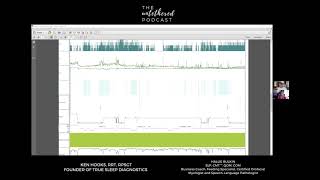
YouTube podcast episode (Untethered Podcast, Episode 160, 2022-05-09) in which host Hallie Bulkin and Ken Hooks (founder/operator of TruSleep Diagnostics; RRT/RPSGT) review Hallie’s home sleep test. Ken demonstrates Respironics CREST cardiorespiratory sleep‑staging, explains metrics (time in bed, total sleep time, REM latency, sleep efficiency, AHI, OAI/CAI, hypopneas, oximetry, pleth, snoring), and walks through raw channel data linking airflow/effort/pleth/pulse/SpO2 to flow limitation and REM‑predominant fragmentation. Impression emphasized REM‑predominant upper airway resistance with mild underestimation of disturbance on HST (AHI 0.7), recommendations include ENT follow‑up (Hallie plans septoplasty/turbinate/swelling surgery) and consideration of oral appliance or APAP if clinically indicated; plan for follow‑up testing after nasal surgery.
Questions this video answers
0.7 (AHI 0.7).
90.2% (sleep efficiency).
Average SpO2 95%; nadir (lowest) 91% (4% desaturation event).
Mean heart rate ~57 bpm; highest during sleep 84 bpm; lowest during sleep 46 bpm.
CREST (cardiorespiratory sleep staging) by Respironics.
Chapters
Quick disclaimer all information, content and material of this podcast are the opinions of the speakers and is for the informational purpose only and not intended to serve as a substitute for the consultation, diagnosis and or medical treatment of a qualified healthcare provider. Hi and welcome to episode 160 of the Untethered Podcast. Today we have Ken Hooks joining us. Ken is a founder and operator of TruSleep Diagnostics at treesloopdiagnostics.com Penn is a registered respiratory therapist with 10 years of experience and a registered polysomnographic technologist for adults and pediatrics with nine years of experience. Formerly the polysomnographic technician instructor at Greenville Technical College, he co authored the case report Rapid Maxillary Expansion and adenotonsillatectomy and 9 year old twins with Pediatric Obstructive Sleep Apnea Syndrome. An Interdisciplinary Effort. Well, good morning, Ken, and welcome to the podcast. I'm excited to have you return today.
Yes, thank you. I'm excited.
So before we get started, I wanted to let everybody know that you have this was actually my idea where I said, hey, you want to get on the podcast and share my sleep study results and all my medical information? And so I don't want anybody to think, you know, this is completely HIPAA compliant. You know, you're welcome to share my phi and everything. I'm giving full, full permission here. And everybody knows I'm an open book anyway, so I know we're going to review my home sleep test report and you've got some raw data to show to us too. So I'm excited because I actually haven't even gone over this with you yet. So I read through the report. This is my first discussion with you about the sleep study. I just got it from you like a couple days ago. So everybody, you guys are hearing it with me for the first time. So I'm going to turn it over to you and just have you kind of walk you, I guess, walk me through it like you would anybody and explain to me what's going on.
Sure. Yeah. So I'm really excited that I have new software called CREST by Respironics who does this Night one sleep test and it stands for cardiorespiratory sleep staging. And so they have a technology with cardiopulmonary variability. They're able to put sleep stages now on sleep studies. Why does that matter? Because it gives us even more information to put on here. So I'm excited that this is actually the one that we're going over so we can talk about that. So Time and durations. We'll start there. Lights off and lights on. And sleep is actually when we start reviewing the data. So before lights off, the test could be running and that would be the time in bed is the full time, or the total recording time is the full time. The time in bed is lights off to lights on. We've set those markers and then the total sleep time is actually the total amount of time that you were sleeping during that period. So if there's a whole bunch of movement and everything's looking kind of wonky, I will set lights off during that time. And that way we don't have to look at so much data. And then lights on will be usually at the very end of the study, right when you turn the device off. REM latency, this is the amount of time it takes you to go into REM sleep after you fall asleep. So sleep latency is how long it takes you to fall asleep. REM latency is how long it takes you to go into REM from that period. Now, in a perfect world, we roll on 90 minute cycles and in the first 90 minutes you're going to get a little bit of light sleep. You're going to get a whole bunch of stage three or four deep sleep and then you'll get some REM sleep right after that. As the night goes on, you get less deep sleep and more REM sleep until the end of the night. About an hour or two before you wake up, you get your most intense, longest REM sleep. And that's the one where if you do have dreams, you'll remember them that very last one. If you don't have that rim and you have a stage three, you remember the dreams from that, from that deep sleep sleep efficiency, Strangely enough, the average sleep efficiency is 80%. That's like the gold standard, which does not sound good to me. 90% is above average. We like to see around 95%. The only thing with the sleep efficiency on this study is it can be a little bit overestimated due to the fact that we don't have arousals. And it is an estimation on the cardiorespiratory as far as light sleep and being awake. It is highly accurate though for you though.
So like at 90.2%. Right? That's what I got. So that could that be misleading sometimes in the way that like sleep studies are interpreted.
So just for this home sleep test, yes, I do believe the sleep efficiency will be overestimated in a lab where I'm actually. And maybe one day we could do that. We can compare like an in lab with the home sleep test, but the sleep stage on the N lab is all done by hand. But the gold standard for sleep stages and scoring on the sleep test is 80%. So there's a 20% margin of error, which can also make a huge difference on an in lab study. So it almost evens out, so to speak. In a manner, wake after sleep onset is huge. This is the amount of time that you are awake after you've actually fallen asleep. So that goes along with sleep efficiency and sleep fragmentation. And we'll see, once we look at the hypnogram, that chart, we'll be able to see kind of what I'm talking about with the fragmentation.
So some of the numbers as you go through. So anybody who is able to, we'll put this on to be on YouTube as well, so you can see the report that we're going through. But in case anybody's just listening, will you share some of the numbers with them as well?
Yes, yes.
Awesome.
So the device sensor, this, this is just the details of how the study is run and what sensors we use. Because of Medicare, we have to do hypotenuse at 4%. And a lot of insurance companies, if you're trying to do therapy, will call the sleep test provider and ask, how do you score your hypotenuse? If you say 3%, then they won't reimburse. So but 3% is, in my opinion, the appropriate in the American Academy of Sleep Medicines, the appropriate desaturation for adults, kids is automatically 3%. So the next thing. Kylie. I'm sorry, the next thing down is the summary. This gives a rundown of the indexes and the oxygen desaturation the lowest of the night. So the AHI is the apnea hypno index. And before we talk about the crest portion, what this is is the average amount of times per hour of sleep that you had apneas, which in adults is at least 10 seconds of 90% or greater. Reduction of airflow has to be 10 seconds, which is almost flat. There's almost no airflow at all. So that's from the tongue closing off the airway or the tongue slapping on the epiglottis and the epiglottis closing the airway off. Hypotenuse are if there are at least, if there is at least a 30% reduction in the airflow and then we have a subsequent 4 or 3% oxygen desaturation. So 0.7 doesn't mean that, you know, every 25 minutes or so you had one of these. It could have been that you had a thousand while you were on your back and then you had none on your right side. So this is just the average over the whole night. The crest portion is this AHI was derived by crest. However, I don't allow the crest to do the scoring. I just. I delete everything. I go back and I score the respiratory events myself because it can be overscored in a situation on home sleep test for adults, the OAI is the obstructive apnea index. This is just how many times per hour where their apnea is. And then the cai, or central apnea index is how many times per hour they're central. The way that we get central apneas is we have one effort belt and there's three types of apneas. There's obstructive, which is the most common. There's mixed, and then there's central. The way that we figure out which type of apnea it is is with the effort belt. If we have a cessation of airflow and there's zero effort, the body's not trying to breathe at all. That's a central apnea. This typically occurs in patients with stroke. Some kind of head trauma, some sort of fluid overload in the heart, on the heart, so some kind of cardiac problem or even kidney failure. Usually. These are the type of patients that have a primary central apnea. It's not necessarily as common as you would believe it would be. The mixed apnea is where we start off central, so there's no effort and there's no airflow. But then in the middle of that event, in the middle of the 10 seconds, you start picking up breathing again. So your body is trying to facilitate a breath. That's the mixed apnea. And then obstructive is when we have a just about a full closure of the airway, but you still are trying to breathe. So central apnea is not so much common. I know that's becoming a more. A bigger and bigger thing is we kind of get more in asleep. The next thing down is the respiratory events. This is a breakdown of the type of events that were scored on the test and then also the events by position. So this is kind of a glance at. Let's say you had an even distribution of right and supine. Well, if you have more events than supine, we could say that you're worse on your back. But we would also still look at the chart, the hypnogram, to make sure that. So this is a breakdown There. This next page here is the oximetry summary and the pulse rate stats. And so oximetry really only comes into play for patients that you would really believe have sleep apnea. For the most part. We do have instances where if facial architecture is not the best, you will have desaturations, especially for a runner or a thin woman is very common. They can have severe hypotenuse, and in an instance like that, they may not have any apneas, but they would have all hypotenuse. In any other case, you may not necessarily see too much oxygen desaturation. It may occur here and there, maybe. So in this instance, your average or your average oximetry was 95%. There was a total of 40 saturations, and the max out of that four was 4%. So there was at least one time where your oxygen went down to 91%. The biggest thing everybody wants to know is, is this too low? It's only too low if it's out of your normal range. The normal range is 90 to 100 or 95 to 100. And people say, well, it's not 100. Do I have a problem? I don't know. What, what is your average baseline? So we really have to go on baseline, your own baseline, to understand whether this is significant for you or not. So if Your average is 95 and I see you at 93, and you say, Golly, 93 is kind of low, well, it's not. Not for you. It's not, because your body is used to 95. So in this instance, we did have a 4% desaturation at 91%. So that one instance would be significant and probably is synonymous with this hypotenia that we saw on here. The highest was 97%. What we tend to do when we have a side breath or gas after flow limitation is the gas, when you breathe in really big, you're going to pull in a lot of air, so there's going to be a lot more oxygen that's going to go through the lungs and the heart. So we will see a higher oxygen saturation during that gas, and then it'll taper back off to normal levels. On the heart rate side, this is the most important thing to me is the heart rate stats and how they go along with the breathing. And so while we see just numbers here, we'll be able to, especially when we look at the raw data, we'll be able to see how these numbers change when there is airflow limitation or flow limitation. The mean heart rate, the Average throughout the night is 57. On the previous sleep study, I would allow this to be what it is, but I would know that this would not be an appropriate estimation because we couldn't put sleep time on it. And so it would just be the whole study. And if you're awake half of the study and you're moving around and all that stuff, even though I know you're awake, the machine is going to take that into consideration of your average. Now it's a little bit more accurate. The highest heart rate during sleep, during your sleep time, 84 was the highest. I still do erase this, whatever was put there, and I go back through the study to see what is the highest pulse rate that is associated with some breathing disturbance, not a body movement or not transition in and out of sleep. Sometimes we have trouble transitioning into sleep when our breathing changes. We may have some. Some gas, but we may have some airflow limitation that will be normal as we transition. The highest heart rate during time in bed isn't necessarily significant because this is during the whole study. And so if you're moving around before you fall asleep, that's where that 99 is. There's nothing wrong with that. The lowest heart rate during sleep is 46, and then the lowest heart rate during time in bed is 46. So there's areas, especially when going to deep sleep, our blood pressure drops and our pulse rate changes when we go into deep sleep. And that's how we pick up deep sleep on these home sleep tests. Now, I can say that before I was people like, are you guessing? I'm like, I don't. Not really. But it's kind of hard to put to words. But we do have a blood pressure drop when we go to stage three. And because the blood pressure dropping, it does have an association with a pulse rate switch as well. Snoring. So the snoring. Sometimes I do have to, on a home sleep test, erase all the snoring and go back because it picks up turbulence through that nasal cannula. So any increased resistance, it may pick up as a tiny little blip. And so the algorithm will pick that up as a snore. It's not necessarily a snore. Sometimes we can see a lot stronger, bigger pulses in that channel. But in this instance, even if there's a tiny little blip, I go ahead and do it because that we can't associate it with increased airflow resistance. In this study here, there was 105 episodes of snoring, which may seem like a lot, but this was like 8 hours of sleep. The total duration with snoring was 120 minutes, which is a quarter of this time. So the whole time of this study was not spent snoring, quote, unquote. The mean duration of snoring. This is kind of misleading, at 68 seconds, because the snores are a rhythmic chain. And so it will pick up a chain as one snore. And then the percentage we said is a quarter. So 26%. This is new. The stage, the light sleep, deep sleep and REM. Light sleep, we're saying is 1 and 2. Deep sleep is 3 and 4 or 3 we normally use. And then REM sleep is. The REM is a light stage of sleep. And I know sometimes people think it's deep, but it is fast brain activity. And this is how we know if it's light or deep. Light sleep has faster brain activity. Deep sleep is more from the frontal lobe. And we have a very slow, wide, big EEG to notify deep sleep. So if you think about daydreams or if you ever. For me, I have to be careful when I'm thinking about stuff, driving, because I will start just daydreaming in the car. So you go from stage one to REM back to stage one, and you may wake up, which can typically be. If you're having some fragmentation during REM or you have some sleep disturbance during rem, you can wake up foggy. This is the area that your brain is. Cognition is actually being restored. Typical deep sleep, it changes as we get older. And I will talk about this for one second. As we're kids, you have a huge amount of deep sleep. This is when growth hormone is emitted. And so kids spend the most time in deep sleep. If you think about when kids are having what we would think are nightmares, actually night terrors, when you can't get them out, they're screaming and they're hysterical and you can't necessarily get them up. They feel like everything's still going on. That's a disturbance in deep sleep and will be a night terror. So they have a tremendous amount and sleep. As you get older, your deep sleep reduces. Well, the tongue never stops growing. And if you have improper tongue placement, the shape of your face will change as you get older. So your airflow resistance can become greater as you get older, causing you to have more sleep fragmentation and less deep sleep. So it isn't necessarily true that you will have less deep sleep as you get older. So, pardon me. So deep sleep ranges anywhere from 20, 25%, sometimes 15% REM sleep typically is around the same. Normally in adults we'll see 75% light sleep and then we'll have a breakdown of in between, between deep and REM sleep. The more the better though. You have a great amount of REM sleep. As far as if we were just to look at the number, the deep sleep is a little bit underserved. But we'll also, when we look at this hypnogram in the raw data, we can kind of see how this breakdown is. So we do have a graph right here. But I'm going to. I think I added another graph. So this one, even though we have this hypnogram here, I do put a bigger one here that kind of shows a little bit better. We can look at things a little bit better. So at the very top, this is the snoring from the machine itself. So this isn't auto tabulate or auto scored or scored by me. This is picked up by the machine. The height or amplitude of this snoring is the intensity of the snoring. It is a little bit misleading because this area here is the normal kind of low grade snoring. It all depends on how high yours is or the amplitude. This next one down is the heart rate. Very important and helps us determine whether we do have some significant areas of breathing as we look at this because we don't share the raw data with the patient when we talk about it. The SpO2 is oxygen saturation. Normally this is a pretty much straight line and we will see even if everything is normal, like this area right here, there is some movement here. So like this pulse rate will be false as far as it's not significant. You're moving right here. So I would believe that your pulse rate would be higher also. This pulse rate is. Or this oxygen saturation is kind of fluctuating. So there's a movement here. So I would expect that there as well, same thing right here. This pulse rate you moved right here, this is a break right in between this rim sleep you move right here. So I'd expect that pulse rate to be higher. And I wouldn't consider that in this determination areas that are like this right here, this rim right here and then maybe right before this, this area of wake right here I would consider as significant going down. We do have this snore is the one that is scored by the algorithm that I may erase in some areas. So on your study, for example, this was blued out all the way which gives false just like we have up here. So I Took out areas that were, I mean, just like a tiny little blip that could have been for movement and then areas that were connected to chains of snoring. So that takes out a lot of what would seem otherwise. Like you have a severe amount of upper air resistance. The next thing down is the respiratory events. This red is an apnea. This salmon or pink. Notice I said salmon or pink color. Here is a hypotenia. The longer the line, the longer the respiratory event. The next thing down we have is position. We have upright, right, supine, and then we also have left and P is prone here. Usually upright is when you're awake. Previously, everything would be stage two, and if you were upright, it was scored as wake. So that kind of would do a disservice to patients who sleep in a recliner or sleep inclined. So now we do have where even if you are upright, we could have some sleep in there. Pulse rate is high here. The oxygen is high here, all upright. So at this point, I'm believing that you would be awake. And as you fall asleep, you can see the pulse rate drops down and also your oxygen saturation drops down. Both are normal to have go on during sleep. The next thing we have is the sleep study. I mean, the sleep stage breakdown. So we have wake, which is this top line, and it goes from light to deep sleep. So the next thing we have this blue line here is light sleep, which would be stage one or two. This green or down here would be deep sleep. These ones with the red tops are REM sleep. You actually start off pretty good. There's some snoring in between this deep sleep and light sleep. Here you do have a break where you do go up from deep sleep to light sleep. Then you do go into REM sleep. You almost have perfect architecture on this first little section here. We do have some fragmentation in this rim. In your study, you do have more trouble during REM sleep, which is typical of patients who have upper airflow resistance or flow limitation, that you may have it on your right side. And it's like. It's kind of. And then you get on your back and go, okay, I can see that. But then you get in REM sleep and it's like, yep, here we go. So REM sleep will bring out the best or worst in a patient's breathing. Everything is paralyzed except for the diaphragm. And so we do have some soft tissue that may collapse. And if you have an architecture that is not fit for perfect breathing, which none of us do, then we will see Greater instances of flow limitation and sleep disturbance and REM sleep. Right after this REM sleep, we get some light sleep, deep sleep, and then there's a big breakage here. We will look at to show the time at the bottom. Yes. So this is 1am let's remember 1am where we do have this area that you toss and turn a little bit. Then we go back to sleep. We had another stage three or another deep sleep here. While you're in deep sleep, we do see some snoring here. Very light snoring. One thing that's funny about deep sleep, even though we're paralyzed only in REM sleep, when we're in deep sleep, we rarely ever move. Is strange that we're not paralyzed in deep sleep. But you are totally disengaged from your surroundings. So this is when somebody can say, I was talking to you, you didn't hear them, or you try to wake somebody up. And you can't, for the instance of children, that you can't wake up out of a dream is because they're in deep sleep at that moment. We have some rim here, but this rim is fragmented. This is the areas where I would say the sleep efficiency is kind of overstated because we do have fragmentation throughout, especially during this REM period here. Then we go into some good light sleep here. We're starting to normal off. We look at this pulse rate. We're starting to kind of normalize this pulse rate. We do have some spikes in here that are going along with these areas of fragmentation. So these two stalks here are when there was wake, potentially from breathing disturbance. We also do see a shift in the pulse or the oxygen saturation right here before this first one. We see a nice shift right here. So you do have a wake period because your oxygen saturation went up with that pulse rate. As we go on, you get another deep sleep here. The snoring is kind of fading out. So you probably are getting better sleep in this area. As the snoring is kind of fading out, you still do have fragmentation through this REM cycle. Here we have some light sleep. Then you have fragmentation. Remember, some fragmentation through this rim here. Fragmentation right after. Your body's probably sick of it. So you wake up and then you flip on your right side, trying to toss and turn to get comfortable. You get comfortable again. We go back into REM sleep and we have some fragmentation. So you do have a decent amount of REM sleep here in this last period, which is how it should be. However, it is fragmented. Your body is tired of that fragmentation. So you switch on your right side and this is typical supine sleep is the best sleep you'll get in your life, but it's the worst for our breathing. So typically what happens is we're comfortable on our back, we can't breathe, so we'll switch to our side. We're getting good sleep on our side. We go, man, this is good sleep. We're going to roll back on our back and then we get back up because we can't breathe. So this is the typical picture of a flow limitation or upper air resistance problem as we carry on throughout the study. This next bar down, the staging and arousal was this. I think it says confidence. So the confidence in the system of itself to stage, it's all green here. You did have a good study. In the instances that the study is not quite as good, where we may have some channels that are kind of in and out, I won't be able to use this software because I don't trust it enough to be able to discern the areas that are good or bad. So if it's all green like yours, I'm good to go with that. If we did have some signal dropout, there will be areas of red and as long as there's not a bunch of red, we're good to go. The flow quality, these I don't too much trust as much because my eyes are actually on the flow and on the effort to know if they're good or not. The thing about sleep is AI and automation is huge technology. And so where in the beginning of time these were really scrutinized and as time goes on, people want to get through a sleep study quick. So they have artificial intelligence tabulating score and they just kind of sign off on and say you do or you don't have. So that's why we have all these indicators of quality. The next thing down is the impression and the recommendation. So just because you don't have sleep apnea does not mean you do not have a breathing disturbance difficult. So sleep has become a lot more mainstream. And things that become mainstream become money makers, they're lucrative. And so there's a lot of things that come out that, you know, everybody says, well, I just want to know if I have sleep apnea. And it's a lot deeper than that. So just because you don't have sleep apnea does not mean that you do not have a sleep disturbance problem. The HI is at 0.7 and at this level I'm always like, we really have to be really tough on the data to say if there is something going on or there's nothing. The biggest thing is if a patient has signs and symptoms of sleep deprivation is number one, then sleep apnea is number two. Then we do need to seek options for therapy because the patient presents with a problem that can come from this. If a patient has undergone the most scrutiny, because we're very tight about our sleep, I say, well, how are you sleeping? I'll sleep fine. But you may have a partner or a child that says, yeah, but you toss and turn all night. Oh, well, you know, I had a long day. Yeah. So that has nothing to do with it. It's even longer day if you get no sleep. So these things have to be taken into consideration. You really have to lead your patient with questions so they don't kind of throw you off with, oh, you know, I'm fine, oh, I'm tired anyway. And then they have a high vaulted palate and you try to talk to them and they don't understand the connection. So you really have to lead a patient so they won't leave out or lie to you. For lack of a better phrase, the prevalence of upper air resistance was greater than apnea or hypopnea. So in the instance that you just do not have really significant sleep apnea, I will always put on the impression it works in supine. Or is the upper air resistance, Is it kind of the same as the apnea or is it more? What's going there? So G47.8 is the code for upper air resistance or snoring, which I put there on the recommendations. I will always say, follow up with your provider. The majority of my providers are my functional therapists and dentists. So they probably already have a plan in place. They just need this to say, I thought so, or for a patient to say, oh, okay, you're right. So when a patient says, can you talk to me about therapy? We can talk about things, but I will not talk about your therapy because your provider already has something in mind. And for 99.9% of the patients, I'm thinking, exactly whatever is already in place by that provider. So you got to go back to your provider. I will say, evaluate for architectural indicators of air resistance. 99% of my patients do not have clinical sleep apnea. I rarely have ever had someone with an HR over 10, even 5. The kids, however, all have sleep apnea. But the kids scale is different where five is mild for adults, one is mild for a child, and a home sleep test will underscore for A child what it would in a lab because we don't have arousals on the, on a home sleep test. And a hypotenuse for a child is an arousal that leads to. I mean a hypotenuse or airflow limitation that leads to an arousal. Can't do those here. However you can in the lab. So the HR would be higher in a lab. Theoretically in instances where I do see a little something, but I'm not the provider, so I don't necessarily know. I don't want you to provide therapy or treatment for this patient unless it is clinically indicated, unless the patient does suffer from sleep deprivation or signs of sleep apnea. And I do want to say upper air resistance and sleep apnea have the exact same signs and symptoms. If a patient's pulse rate spikes a thousand times a night and they don't have one apnea, hypopnea, what's the difference between that sympathetic nervous response and the sympathetic nerve response of having apnea all night? It's the same. Consider all appliance. If clinically indicated, always put this and consider APAP on there. Just because I don't know what the plan is. However, we do have to. It's like one of my physicians like, well, I got to put this on here because this is a therapy option. And you know, these are the two options that are the most mainstream. So let's put them on there just in case. Then we have it signed off by the board. Sleep doc. And then this technos is my full impression of the night. And so I will say if the AH is accurate or appropriately estimates, if it's slightly underestimates or if it truly, truly, truly does underestimate. So in this instance I did say it very slightly underestimates because your presentation of upper air resistance was so much greater during REM that it made everything else kind of look normalized. We didn't have too much going on outside of the areas of REM sleep. So we can't discount a full study because you only have these events in rem. REM is super important. So we do have to say that this is underestimation because if we took your REM sleep out, you wouldn't be able to be the top notch. You wouldn't be you, you would be a zombie. You couldn't even be in a social event, right, because you couldn't remember things. So there is an underestimation based upon that instance. In instances like these, it is really tough because I can see certain things here and there, however, this test is really out of the norm. And it would be, this test would be true for a lot of thinner women or very, very active runners, like cross country type of running. This is kind of typical of how they present. So this is difficult to kind of put to words when I can't or I don't show you the raw data if we don't like review the raw data together. So I say it slightly underestimates because we do have instances of mildly intense flow, limited breathing that is greater than the occurrence of apnea and hypotenia, occasional pulse rate spikes, mildly intense side breaths and mildly fluctuating SpO2 pleft. We'll look at that on the raw data. These all I take into consideration when I say a flow limitation is significant. If there's airflow limitation and there's no physiological marker of changes, that flow limitation is not significant. It's only significant if there's a physiological marker that changes. Breathing disturbances were greater and more intense during REM intervals before I would have to say I found this REM because of the way the breathing is. Breathing gets really funky and REM because everything just goes away. And so you're going to breathe faster to make up the minute ventilation. And then when you breathe too fast, your body goes, that's too much. Then you'll breathe slower but bigger. So it looks really funky. But now we do have the crest to show that the rim and this is actually accurate within about 2 minutes. So of all the studies I've done maybe 10 studies with the software in 2 minutes, each study may have been off between light sleep and rem, which is pretty significant because the average person that scores a sleep study will miss a lot of this. Airflow dynamics reveals slightly increased nasopharyngeal resistance while supine. And I say assess for open mouth breathing, nasal insufficiency, because if there's open mouth breathing, the tongue will fall on the palate, making it look like there's some sort of nasal insufficient efficiency. And we'll look at that too on the raw data. That dynamic increased oropharyngeal resistance during REM and then increased oropharyngeal resistance while on right side. I'll show you what that looks like. Sleep sleep efficiency was above average. However, we did have a reduction in deep sleep and that's because there is so much fragmentation. So in this instance the sleep efficiency is overestimated. And I believe it'll always be like that on this software because we don't have arousals and we don't necessarily have true sleep scoring is done by an algorithm. Baseline pulse rates. I'm kind of deciding whether or not to keep this on here or not because it is a lot more accurate now than it was before, but 53 to 56 beats per minute. And this is from me looking at the study and having to go to different areas where there's nothing going on. And then I can assess for three beat per minute change in the pulse rate. I use a three beat per minute spread because there was a case study done with I think cohort of 400 patients where they were tested with home sleep tests and tested in lab. And what they found was when an arousal was scored on an in lab sleep test, there was always greater than 3 beats per minute difference in the pulse rate. So 3 beats per minute and rising on a pulse rate is synonymous with an arousal. So I can't say you arouse that many times. However, I can say that there's a significant change. So that's where the three beat per minute spread comes from. The highest pulse rate observed is 84 beats per minute. I went through the data to find that. And the average calculated by the report is 57 beats per minute. The difference between the baseline and the calculated average, which is different now, but before you had to take into consideration everything body movement, times that you may be awake, if the finger probe may have fallen off for 10 minutes and your pulse rate says 255 or something like I have to take all that into consideration, but now it's not a thing. And then therapy or treatment is recommended if the patient presents with sign of symptoms of sleep apnea. Sleep deprivation. Sleep deprivation is huge because Even if your hi is 0, but you have a tremendous amount of fragmentation. You're only getting two hours of sleep versus six. So we always have to take sleep deprivation into account. Any questions on your report?
No. I think it's fascinating and I know that so many patients go missed with upper airway resistance syndrome uars. And so we've actually focused quite a bit on that just in some of my educational programs so that people can recognize, like you said, a lot of the signs and symptoms are the exact same thing as what you see with obstructive sleep apnea. And I'm sitting here wondering because I know I had a home sleep test done years ago. Like I want to go back to my GP from up north and be like, hey, do you by chance still have documentation? I haven't transferred files yet, even though I have a doctor down here see because they had a home sleep center in the pediatric or in the general practitioner's office. It was a huge practice, like a dozen doctors and one who specialized in sleep medicine. So I'm super curious to go back because that was. I want to say it was at least like 10 years ago that I did this home sleep study. So I don't know if they'll still have the data, but since then, I've done, you know, my vivos DNA for two years, followed by Invisalign. And now I'm at the point where I'm like, my tongue. And part of the reason why I wanted to do this is because I have an upcoming nasal surgery, which I'll mention in a second. But I noticed that, you know, in the past, like, six months or so, I'll wake up with, like, my tongue between my teeth, or I'll have scalloping on my tongue. And I'm like, why is my tongue like. I'm a myofunctional therapist. My tongue should be resting in my palate. I have enough space for my tongue up there now. So even though I might be a little narrow, I'm still considered to be more within normal for my maxilla. I know I still have a cross bite, so it could be partially that as well. Cross bite, because my maxilla is turned in on one side, on my upper left side. But I also know that my teeth tip inward lingually a little bit in the back, towards the back molars. I was telling. Had an orthodontic colleague on the. On the podcast last week who or we recorded last week, but it'll be several weeks apart from this episode where afterwards he was looking at my teeth and he's like, yeah, your teeth actually kind of like turn. They sit inward a little bit under, you know, the upper molars, the lower to the upper. So the relationship there, I think, still needs to be addressed. But what I did notice, too, was, you know, even though I have enough space for my tongue, I feel stuffy. And I was like, something's going on with my nose. I know I have a deviated septum. That's already been established on a past cbct. And I think I finally hit the point where I was like, okay, I'm tired of living like this. I need to have this procedure done. And I knew that my turbinates were enlarged. But when I went to the ENT down here, like a month or so ago, she had the scan done and everything in office. She immediately looked at it and said, yeah, you've got Your second septum is straight in the front portion, but then it deviates back towards the left and you really like, I really can't breathe out of the left side of my nose very well at all. And then I've got enlarged turbinates. Right. So we've got some obstruction coming from the outer wall of the nose inward. And then I also have, which I'd never heard of before, enlarged nasal swell bodies. And so I've got the obstruction coming off the septum outward as well. So like, oh great. So my nasal thing is it's extremely limited. So it would make sense as to why my mouth might pop open while I'm sleeping or why I'm biting my tongue or pushing my tongue, you know, against my teeth, whether I'm awake or asleep. So I'm noticing the scalloping while I'm awake too. So I was like, what is going on? So I will have that surgery the first week of April to address all of that. And you know, I think I might go into more orthodontia afterwards. But at this point I'm like, I want to see what happens with my nose and let that swelling calm down a bit and see how things feel. And I know that the swelling, they say, could take up to a year to fully go down. And I think part of that is like the tip of the nose takes the longest to decrease in swelling. But yeah, I'm curious to see, once they've given me some clearance, that a lot of the inflammation has decreased. I want to do a follow up study so we can see what improved. Did it improve? Does it still look the same? Because I'm so curious. I mean, for me, I feel like that's a major obstacle. Right. Like you can't breathe through your nose when you have all this inflammation. But I also have actual cartilage and bony structure that's impairing, you know, that's impairing my nasal breathing as well.
Yeah. So interestingly, I've been getting a lot of cbcts to review with patients and some providers. And to your point, the things that I see are even if you expand the maxilla, if there is some tipping, which some dentists will call it a tipping cross bite, the maxilla can trap the mandible in. And so you can be super wide here, but your maxilla won't grow to feel if it's still being locked in. So that's one thing. Anytime that you do have a vault in the maxilla, it is going to wreak havoc. And I know we talk about this all the time in the nose. So you will have what I call the ghost deviation, which is back here. So everything looks good up here, but back here you may have like a little kink and because of that, your turbinate space will decrease. So we do have instances where there's enlarged turbinates. But when we look at a cbct, if we see very, if we see some sort of misalignment or structural deficiency, potentially fixing, that will open up that space for the turbinates. So it is. And I'm super excited that you found somebody that actually was like, you do have a deviation back here versus saying everything is all good.
Yeah, I mean, it was really hard to find an ENT in the D.C. metro area. Like D.C. maryland, Virginia. You would be surprised. You think with all the doctors there we'd find somebody. And I just never really fully trusted the information that I received. And then I did a lot of research when I came down here and I actually found somebody right here in Boca. And she sat with me. So, I mean, I was at that office probably for an hour and a half because they started me with the PA who went over all my history, took all the notes and everything she sent me, had the doctor sent up on a script down the hallway to connected to their practice. But I went and had a CBCT done a CT stand immediately, which was sent back to. Then when walked back down the hall, they took me right away. The doctor came in, she reviewed everything with me. She was with me for at least 30 minutes. She drew pictures. She told me about open versus closed septoplasty. She told me, like, this is what people do. And here's what I, you know, but here's what I'm recommending, but you tell me what feels good to you. And like. And she's also someone that I've heard fixes what other people mess up. And those are the doctors I tend to seek out because I know that they're going to do what they think is best for the patient, not just like their technique. Right. So, yes, obviously doctors have their own techniques, but I really wanted someone who was going to look at me holistically and I didn't have to. I didn't get just sent out of the NT's office with, you know, oh, you're fine, try some allergy medicine. Downplaying, that's important too. But they did a CT scan and I didn't have to ask them for that. Right. They were like, hey, we need to do this before we can have a conversation and when she saw it and she told me, you know, you've got this. This and septa plot, you know, septum dev. Septum. Enlarged turbinates and enlarged nasal swell bodies. And then she pulls out this big chart and starts like, showing me things and drawing pictures. I was like, you are my people. Seriously, we're good. And so I took like the first available appointment for surgery. I just. I'm excited. I'm like, it's scary and exciting all at the same time. I want to breathe better, I want to sleep better. You know, it's one of those things where as women, we get told, oh, you're a busy mom. You run two businesses. Hallie, you got two kids, they're four and six. Like, you just run a busy life. Like, yeah, my life is busy. But I find that my body doesn't even want to put me to sleep. Like, I get back into those second winds. I become. I've always been a night owl because I feel like my body almost is like, well, you don't get great sleep anyways, so why sleep? Like, we'll just. We'll just go to sleep at 2 and wake up at 6:30 when you have to wake your kid up for school, you know, which is obviously detrimental to my health overall, regardless of the type of sleep I'm getting. But I feel like the quality has been impacted for so long that I'm just excited to feel what it feels like once the swelling goes down.
Yeah, yeah. No, that is exciting. And you bring up a really, really good point because we have patients that suffer from insomnia, and there's 11 types of insomnia. Only one is genetically driven. The other 10 are driven by lifestyle. And the biggest thing is if you have trouble when you fall asleep with breathing, your body's not going to want you to go to sleep. So you'll be sympathetically active through that point. So now, even though you are tired, your body won't allow you to go to sleep because it's afraid you're going to die. So you push yourself later and later and later into that I have to watch TV to go to sleep type of mentality. Um, so I won't. I won't do a lecture on sleep hygiene, but yeah, that's important. So we'll go to the raw data now. Everything good with the report?
Yes, thank you. This is amazing. I'm excited to see. When you were saying raw data, I thought you meant like the charts and everything you put in the report. And I was like, this is so cool. But then you were like, no, I've got raw data. I was like, oh.
Yes. Yeah. So I'm gonna make sure I do this right. Okay. So when I load your sleep study in here, this is the beginning. And people ask, well, the thing wasn't all the way in my nose. Is that okay? Yep. Because I can zoom in. So as long as it wasn't all the way out, I can zoom in to see. So I'll go over the channels briefly. The data markup is where we have the sleep stage. So we'll see wake, we'll see sleep, which will be light, we'll see DS is deep sleep. And then we'll see rem. This P flow stands for pressure flow. The nasal cannula is a pressure transducer. It picks up pressure, which is how we can see resistance and volumes. In a lab you would also have a thermistor which picks up airflow off a temperature change. We use that exclusively for apnea. If there's no temperature change, there's no airflow. So that would be an apnea. I prefer the P flow because I can see dynamics. Then we have the thoracic belt, which is the effort belt. There's a little bead that runs through the belt and it picks up expansion and contraction. It is by far the most difficult thing to do with the sleep test because it slides and. But we do have that. We only have that to determine what type of acne. That's the only reason that's there. In the lab we have two. Because we look at paradoxical breathing. If you have that right before an arousal, as you have a respiratory event, the pulse rate, the SpO2, which is oxygen saturation, and the pleth, they all come from the finger probe. The finger probe shoots a beam of light through the finger. It picks up blood flow. And all the super high technology shenanigans that spit this out. There's a three to four second delay of oxygen saturation from the finger to this report. So usually everything is subsequent to an airflow limitation, even this pleth. So what is the pleth? Plasmography means the difference between SpO2, the difference between blood volumes in between each heart rate. So each one of these waveforms in the pleth is actually a heartbeat. The amplitude is the volume of blood in that heartbeat. When we see airflow limitation or apnea, any kind of breathing disturbance, we will see a reduction in that blood flow volume. This is a sympathetic response. The body is shunting all the blood to the core and taking it away from the periphery. This is the cold hands, warm heart type of thing. So our body loves habit. If your body is used to having 93% oxygen saturation over a period of 10 years, that's going to be it, that's going to be your normal. Because your body is now performing optimally at that level, it has to make its own changes to supplant things that go on like that. So what we'll see is a reduction in blood flow volume in conjunction with a pulse rate spike subsequent to a flow limitation. That's what we look for for that. So body position is body position and then the snoring down here you'll see what I'm talking about with the kind of small blips, it doesn't necessarily have to be snoring when it's this small. It could be harsh breathing, being that it picks up turbulence in that cannula. So I'm going to zoom this in a little bit and we'll go through here. We got some wake here. Normally on a sleep study, this is areas where I would say would be sleep because it's quiet, nothing's really going on. We should be transitioning here soon. This is all body movement through here. Down here you can see went from up right to right, so probably getting ready to go to sleep. And now here we're in light sleep. So the plough should be pretty much even throughout the whole night. When we start having some airflow limitation, we'll start seeing this plough fluctuate. So through here we see some normal airflow limitation. As you transition into sleep, the amplitude or height of these waves is actually airflow volume. So when we inhale, this wave is going to go up. When we exhale, this wave is going to go down. So here we actually have some good airflow. There's no restriction here. This one right here, this little hump, this is nasopharyngeal. I say that because this is right at the beginning of inhalation, the cannula is in the nose. So at the beginning of inhalation, if we have any kind of plateau or prolongation of inhalation is from the nose. As we start to move up this inspiration. If we have a plateau or like here we have like a chop top, a plateau up here. This is tongue based. That's oropharyngeal resistance. These are really kind of minuscule as you fall asleep. But we'll see it as we go along the study. So we do have a few kind of airflow limitations. We can see volume Reduction pretty nicely right here. And your plethora is affected by that minimally. So I would say this is mild. If you went on through the whole study and you were like this, it'd be normal. As we go on, you can see the more the, the more limitation we have consistently, the more this pleth reduces this spike right here. One thing you can see in the pleth is if you have some sort of EKG abnormality. So spikes not like this, but kind of like this are synonymous with PVCs and PACs. The plethora is used in the hospital to see if there is some sort of heart rate abnormality. As the finger probe is on, the plethora is always up, but it's not at this level. We are at four minutes. We're looking at a four minute screen here. So this is each one of these blocks here. In between the line is 30 seconds if we zoom out. So I usually do this in four minutes to look at the airflow. If we zoom out, you can really see the limitations throughout here and you can see which one as we go through right here is synonymous with these pleth variabilities. So we'll keep going. I still would say when I was going through yours, I was like, oh boy, I'm gonna have one of these, one of these good folks. But we do, right here we have some very minuscule snoring. So resistance has started. As you can see, you're starting deep sleep. So you're getting deeper into sleep as you start snoring. So potentially this may be some open mouth posture through this area. We do see the airflow changing where we do have a lot more plateauing at the top. So the tongue or the soft palate is kind of starting to lean back on the airway. So we are starting to have some significant, I mean some airflow limitation. Not necessarily significant. It's not causing you to arouse or gasp, but it is there. So we keep going, keep going. As you can see, the plough and so this could be typical of the night. Just being that there's some very minuscule airflow limitations. We said with the plateauing still going, the pulse rate pretty much for the most part is even 57 to 60 throughout that whole period. Oxygen saturation is pretty much the same through the whole period. Okay, here now your body's sick of it. It's tired of all that limitation. So you're taking a big breath here. You see these bigger breaths. Typically when we take briggy breaths like this right after, we may have a central agony the way that we breathe is off of a carbon dioxide drive. Our primary respiratory response is carbon dioxide. We have a certain level that that carbon dioxide rises to in our body. When it hits that level, it triggers ventilation. If we exhale too much carbon dioxide, the brain will not tell the body to breathe so that everything can normalize again. That is a normal response to the body. The only time that we don't respond that way is during exercise, because our bodies are smart for some reason. So we do have just a little bit of limitation here. But you did have some recurring limitations. So your body's sick of it. It wants a big old breath here to try to normalize everything. Now, right after this breath, you can see how the volume is greater than what it was when you were sleeping, when you were going in deep sleep. So back to light sleep. This is a fragmentation here. This gasp, or the body trying to normalize your airflow has broken you out of your deep sleep. This is fragmentation. Even though you are still asleep, you were taken out of your deep sleep. So we go back now you're starting to kind of fall over again. We got some snoring here. And if you notice there's snoring here or increased airflow limitation, and then there's a little bit of gastrium right here, just a little bit, trying to normalize again. And then we fall back, we see again this oropharyngeal type of resistance. And then we do have the long chain of increased resistance or snoring again. Here we have just a little bit where the body is trying to normalize again. Now we see that the variability in the plethora is starting to become more significant because the body is more in tune with what's going on with your breathing. So at these points, you can have a little bit of flow limitation and a lot of variation in this plaque. And this is very typical with women who do present that are thinner, because over time, the body still is responding to what's going on. However, the breathing has become more normal for the patient. The physiological portion is still trying to adapt to what's going on. So we still will see physiological changes. And I didn't show this on the last one, but look at the pulse, 64. So we're at 59 now. We're at 64. Right when we have that spike. If we go back to here, we do the same thing. There's a lot of variability in here. This is right when you were falling back asleep again. Even right here, we're going from kind of upper to the lower 60. So we do have some fluctuation in that pulse right there. So we're going back through now. Everything's starting to normalize again. Getting right here, we have something, a bit of a spike that comes from just recurring flow limitation. And so you see how, like, it's almost minuscule. It's very. I don't know a word to say. I want to say tight. But the body wants perfection. It wants everything to work perfectly. And if it doesn't, it will do something to shock the body into being perfect. So even though if. If you had this sleep test anywhere else, it'd be like you don't have anything. And that's not to say that the significance in this lies in if you present with a problem, if you have signs and symptoms. Okay, so we keep going. We'll keep going. All right, so we're back to. After we have this shock right here, we're back to normalized breathing. You see, the airflow is looking good again. So we starting to have a lot of limitation through here. The plus is showing that right here we have another spike. This probably was the PVC right through here. As we have all this limitation coming through now we start to normalize again. And here. So right here, this says light sleep. This area right here is probably where I would start the REM sleep. We go into REM sleep now we have a lot of funky flow limitation. All of this is synonymous with rem. Right here we have our first apnea. There's a tiny little breath in here. 90% reduction of this flow right here says that this is an apnea. And it's 10 seconds right here. We start to see a lot of plateauing on this front end. Now this looks like nasopharyngeal resistance. However, I believe this is from the tongue. I believe this is oropharyngeal. I believe the tongue is falling back on the soft palate. One reason I believe that is because now we have an apnea where the tongue completely closes off the airway. If we didn't have an amiab. Be really hard to determine if this is from the nose or from the mouth. So as we keep going, breathing really fast here to make up for the lost minute ventilation. And then we're going to slow it down a little bit. We still have a little bit of resistance throughout here. It's nothing like when you were asleep before. You had. The only resistance you had was a little bit on the end of your inspiration, which is the tongue may be sliding back a little bit, but now, we do have a bunch of kind of tiny little resistances throughout here coming from the tongue. Boom, right here. Kicks you out of your rim. Your body's sick of it. You take a big old gasp, and you see there's some central apnea is right behind each of these big old gas. You blow off a bunch of carbon dioxide. Your body wants normality. So now we're kicked out of rem. We go back into light sleep. We're back in the rim and back into light sleep. This probably still is. Continue to be rimmed, probably until about right here. If we go back and look at the pulse through all this. Now, the whole time, you were trending in the 50s, right? Mid to high 50s. Well, in this room, sleep, we got 70s and 80s. Totally out of character for your pulse pattern. As we get back into light sleep, you're starting to go back down. But then we go back in the rim, and we start going back up 6971. We have this spike. We're at 70, and so we should start dropping back off. And we do. We're getting back down to the 50s. And down here is the area where there's some light resistance. Not necessarily a snore, but this definitely is increased nasal resistance down here. Still going through. And we're starting to get normal again. Just a little bit of oropharyngeal resistance. Got some spikes here. We see now at 79. And so this is backed out, potentially. There's more here. And so what I'll do, when I look at what the highest pulse rate is, I'll drop this down to 30 seconds, so 6. And so here, we'll look through here. And you did go to 79. But this breakdown gives me a broader view of what the pulse is throughout there. So it could have been where you went to 80 or 81, but I wouldn't know unless I took it down to that level. So going through again, everything's looking pretty normal. And this is you on your back. You need. Your back needs a gold star. Big old spike here as you go into deep sleep. So that breaks you out of that deep sleep. Now you got a whole bunch of wake through here, a bunch of body movement, probably trying to get comfortable again. We notice the volume on the breathing is bigger, so the slice of you may still be a little awake right here and kind of transitioning. No resistance back on your right side, we got another spike right here. Maybe a PVC fragmentation here. Right here. Even though you're kind of teetering in between wake and See, there is still some resistance. So your body signals a shock to try to get you normalized again. Now we have normal breathing, we have reduced volume. So I believe actually that you're asleep in this area. We have a spike here. There's probably some form of very low level or not inflammation, flow limitation. We do see some resistance starting to build here and the volume actually starting to reduce just a little bit. So there's a spike to normalize everything. Now this is at about one o' clock or so. This is where we wanted to see when we were looking at the hypnogram. And true enough, we did have some wake up. I slid all the way through and here's that area. So this is the area where we just came off of that kind of REM flow limitation. We're starting to get back into deep sleep and your body's like, you know what, we just need to start all over. We're going to switch positions. We're going to get off our back. So we're on right. This was that area. So we get back now to 130. So again, we have some good airflow here. There's some slight resistance, but not enough to affect anything. Notice how your plus is very even during this area. Very even pulse rate. Deep sleep in this area. There is something right here. I wouldn't be able to call this anything because I don't see anything before other than the slight resistance in the oropharynx. And right here there's some little dips. Nothing like it was before when you were having a lot more flow limitation earlier in the study. We do still have some. The body is becoming increasingly sensitive to the airflow limitations. Now we're not seeing volumes. We're seeing more of the oropharyngeal. So it could be that the tongue is playing a role in the arousal itself. And we wake again. And so now we're in a good bit of sleep where there's a good volume reduction, a little bit more oropharyngeal resistance. We go into rem and you can see as you go into rem, the body's already sick of it already. We have a big hypopnea here. I'm going to delete this. So we can actually see this airflow limitation that goes through here and subsequently it causes your oxygen saturation to drop. So these numbers that are on here, I never believe these because if we zoom in, we can see what's actually there. So this becomes a tough point for scoring hypotenuse where either I see it here or I say this gotta be hypotenuse. So I'll do this, I'll see what this says. That says 3%. Then I'll go to 30 seconds and I'll confirm that this is a 3 or 4% desaturation. So we see the first hypno here. This airflow limitation leading to a subsequent oxygen saturation desaturation. Now we do have a lot of tongue based resistance here. This volume is tremendously reduced. This goes on all throughout this room cycle. We see the plus starting to be even more minimized. And then we get kicked out, get a big gas fear. And now we're starting to normalize again. Go back through after that rim cycle. We're starting to have a lot more resistance like we were in the beginning of the study. Back into REM sleep. You're trying, you're trying your best. And then through here we can see some plethora based off of these very little areas of oropharyngeal restriction. We can't call these apneas because they're not 10 seconds. We can't call them hypotenuse because there's no significant desaturation. But we do have limitation in between each of these areas. In here we have a shock also when we do sleep staging in the 30 seconds the way that we do it is at least half cannot be awake for it to be score something else. So if half of it is wake, then we call it wake. So you probably actually sleep right here until this point. But we have to call the whole thing wake. So now we're back to normal again. Starting to get a little bit of resistance. This was just spontaneous going back through PLAAF is good again very, very minimal except for this point here. Very minimal fluctuations. It was good. Deep sleep. Had a little correction here. There's one here just from a little bit. Very minuscule flow limitation there caused a spike, big one right here back in the rim. And then you can see right here and here there's limitation. This is all oropharyngeal. We see the plus getting really, really tiny. And then right here is the shock back into rim. And I think we're almost done. There's a shock here after this rim period. Everything is not necessarily normal. Lots of oropharyngeal resistance through here. Shock to try to get everything normal. Lots of resistance here. We see a lot more variation in the pleth. Have another hypotenia through here. And this getting closer to the end of study where we have that very light state of sleep. That is rem. That would go from two to one to two hours before you wake up. Your body's trying to transition into it. But we see that these. These tiny little oropharyngeal resistances are starting to pile up and make your body want to arouse. So now we do have good flow again right here. This is a very long restriction. That's all oropharyngeal. So it's starting this pattern of where we have some slight oropharyngeal resistance through here. Nothing really significant as of yet. Now we're starting to have even more. And here's a little shock to get everything normal. Big shock, bigger breathing, more volume, and almost done. Big shock again from all this oropharyngeal resistance. Starting to have a little bit more snoring as we transition. Here's the last pair to rim, I believe. And this rim was broken up a lot. So this amount of fragmentation, the rim may make you wake up and go, I don't want to do it today. I can't. I can't do it today. Shock. Here's an amnion in the rim. And then. So I'll say this is all rim here. We see a lot of oropharyngeal resistance. All these through here, these plateaus, a lot bigger breathing, a lot better rim through this period because the volume is so much better. Spike there, and then you carry it out. There's a hypotenia here through this period right here. And then we end out on flow limitation. That was a lot. But you can see how it's interesting.
To see the patterns, though.
Yeah. So it's. It's not necessarily cut and dry. There are periods where you may have some resistance that really don't do anything. It's fine. But at a certain point, your body kind of gets tired of not having a full inspiration. So you can see how difficult this can be for me to say, man, is there really something going on? It really has to go back to the provider. And I can't say that there's not something going on, because there is. It just is not the typical picture of sleep apnea.
Yeah. Yeah. But you nailed it with. You know, it's like I get all this sleep. When I do sleep eight hours, and then I wake up, and I'm like, why am I not rested?
Why.
Why am I just as tired as when I get. You know, admittedly, when I only get four. Four hours of sleep, I am more tired than when I get eight hours of sleep. But when I still wake up after eight Hours of sleep and feel like I need caffeine or I need like something to kick start my day or I'm waking up tired, you know, that's where I'm going. Like, what the heck is going on?
Oh, no, I understand.
And it's so fascinating too, that that fourth, you know, because I know they say you're supposed to go through like REM four times in a night. Is that right? Or it happens every.
Yeah.
Okay. So, you know, it looks like I did, except for that especially that last period of REM was extremely interrupted.
Yes. Yep. And that usually is. That's what we used to call game time when we were in the sleep lab. And we're putting CPAP on somebody. You can fix somebody all night and at 3:30 to 5 in the morning, you better be ready because they're going to wreck every time. So you really have to be prepared. That last REM cycle usually is the most intense and the one with the most breathing disturbance.
Crazy, but amazing. Well, thank you. I mean, this has been so very helpful and it's really cool to go through it and see and understand and have a better understanding of everything because I can read a report. But I know when you taught this to us in the Myo membership, like, goodness, that was that like 2020 or early 2021. I don't even remember anymore, but it was a while ago. I just remember sitting there and being like, whoa. It's like really cool to have a deep dive into the raw data of a sleep study and to also just have the understanding that many labs don't look. They don't look for all the same markers that you're looking for. And that's why I tell everybody, I'm like, no, you gotta call, you gotta call Ken. Sleepdiagnosis.com. you got to get a sleep study with Ken because he's going to look beyond just some of that surface level stuff that a lot of sleep centers might be looking for to determine apnea or no apnea and determine if like there still is some sleep disorder breathing going on. Because there's other types of sleep disorder breathing that's not just obstructive or mild, moderate apnea. So I do remember when I had my first sleep study, home sleep study, and it was very similar to what you gave me. I remember having like wearing the nasal cannula and having, you know, the pulse ox and everything on my finger and wearing the belts and everything. You know, I feel like I remember I came back and they're like, nope, you're fine. And I feel like at that point I was actually in like a mild apnea. Like, I feel like that's what it said was I had mild sleep apnea, but mild and an adult, you know, still considered within normal at least, you know, a lot of sleep centers. And that was it. Nothing. Nothing came of that. That was like, we have nothing for you. You're fine. Continue on with life. And I was like, okay. Meanwhile, they, at 19, put me on, like, ADHD meds, which I had never been on in my entire life. My grades were suffering because my sleep was suffering and my attention in class was suffering as a result. And so when they put me on Ritalin, I noticed the difference between my notes. Like, I would take notes that were much more substantive than when I was not on the Ritalin. And I had friends who were using my notes and getting A's on tests and I was using my notes and getting some Cezanne test. And I was like, what the heck? Like, what is. When they put me on the medicine that did improve, but I hated it. I hated, like, being on the medication. I hate, like, I couldn't eat on it. I was irritable. Like, I couldn't be around anybody. The noise, like any like, pin drop, they're like, oh, it's so great. You don't even notice a pin drop. I'm like, no, no. I hear all the pin drops and. And then they're like, well, try putting headphones on. So I put headphones on there and I'm like, well, now I can hear my heart beating, so that's distracting.
Oh, wow.
Yeah, like, we don't get along very well. So I eventually, after grad school, I just stopped taking it. And I've just kind of figured it all out myself to this point. But I'm like, there's gotta be something greater like going on. I shouldn't have to need this. And I actually, a couple months ago, asked my doctor, I was like, hey, can we try Ritalin again? Because I just, I'm so tired. And yeah, I know I'm headed into fixing the underlying issue. But like, for a short term, like just to get some work done, I get up in the morning and it takes me hours to focus. Like, I get my kids, I'm on time, my kids go to school. You know, we hit all the deadlines and everything in terms of like, my kids life. And then I'm like, I don't have the energy to start on my work. And It'll be like 11am or noon and I'll start to get into it. And I'm like, ah, shoot, now I gotta go pick up my daughter from school. It's just. It's not good, right? So she would give me this. And it really helped. And I was like, if a medication can have that, that impact on me and really help, like, something else is going on, I shouldn't need that because it's not something I've needed my whole life. And I feel like if we can check my sleep and get that, you know, underway and my breathing, like, I'd be curious to see how that changes. Obviously, there'll have to be some habit correction there too. Um, but it's just the whole thing's very fascinating. I actually stopped taking it because it was creating a chronic, like, dry cough that was happening, like, every 30 seconds to a minute. And I'm like, I record stuff all day long.
I can't be like, oh, wow.
Hear me, like, having this, like, low level cough because I was trying to hide it, but I'm like, I can't keep clicking mute in the middle of talking, like, you know, breath. And I actually, I. So I totally stopped it. And then I trialed it again last week for one day because I was just so curious to see. And I'm like, sure enough, like, I was on, like, I was like, all right, we're getting stuff done today. But the cough came back immediately, and I could feel like it was almost like my airway just, like, tightened up and it felt very restrictive. So I don't know what it is that's triggering the cough. I'm sure somebody has some idea out there. But yeah, I'm like, everyone's like, you're excited for your surgery. And I'm like, yes, I am.
Yeah.
Deal with, like, all this stuff. And I want to know what it feels like to function as an adult who gets good sleep.
Yeah.
And I'm not. I'm not, you know, putting all my eggs one basket. I have this idea that I probably also need some further expansion too. Possibly, you know, stop once I've healed and everything. But I think it would be cool, like I said, to do the sleep study again and see, like, what improves once the swelling and everything goes down. Because I definitely. I can just breathe in and I'm like, I can go blow my nose. Nothing comes out. It's. It's obstruction from the anatomy. It's obstruction from the inflammation, you know, and so, yeah, so much fun when, you know, so much information. Right?
Yeah. Yeah. Yes. I will say, you know, for Medical diagnosis in terms of being having mild sleep apnea, we really have to think. We all hate insurance because they never pay for anything. But if you have mild sleep apnea, they'll pay for your therapy. So mild sleep apnea truly isn't mild. You will get a medical diagnosis. If you have a medical diagnosis, then you're worthy of therapy or treatment. And I think we don't. Sleep is one of those things where, you know, if somebody said, hey, you need to go get an mri, you go, I'll go get an mri. You don't say anything about it. But when people say you need a sleep study, it's like, you know, we just throw it all away. So there's that.
Yeah, we keep, I keep preaching. I'm like, sleep is everything. You can't function in life without your airway, without your sleep, without, you know. And that's one of the biggest conversations that I think I have with parents and patients is you may be, the child may be sleeping 12 hours, but if they're not getting restful sleep, like I try to keep it super simple. Like if they're not getting restful sleep, their brain is not repairing. They're not going to wake up ready to go. They're going to wake up as if they had very little sleep. And we know how we feel when we can't function. Now let's, you know, have our put our kids in our shoes and they're supposed to be running around and playing with their friends, but this kid is sitting backwards at circle time, not responding to their name because they're so fatigued and tired, they look spacey or out to lunch. That's not normal for a three year old. I mean, that's not normal for anybody. But you know, that's not, that's not okay to have a three year old, you know, in this position. And I've had this case where it's been either children with mild to moderate sleep apnea, but I've had kids with obstructive sleep apnea in preschool now. And it's scary. You know, this is. And nobody's picking up on it, but the child's snoring like a grown man during nap time. And everyone's like, oh, well that's, that's loud. And I'm like, that's loud. That's all you have to say? Like, we care.
Yeah, yeah.
Discussion. Yeah. So it's, this is one of those things where I'm like, we need to be screening these kids. Like we need, I mean, adults too, but Especially starting in kids. Because you had said something really early, earlier on in the episode about how children. I mean, I know that they need fewer instances to be diagnosed. Like, fewer apnea. Is that right? To be diagnosed with sleep apnea. And I know that you mentioned. Now I'm going to forget what it was. You also had mentioned that they have more deep sleep. Is that.
Yes. Yeah. A lot more. Yeah.
Yeah. So. Because our brains are growing, and that's. I guess that also comes back to where we say, like, the first seven years of life. I mean, really beyond that, too. But especially during the first seven years of life, there's so much growth happening. Those are, like, the critical years that, you know, that's. I look at my kids and I'm always like, is your mouth closed? Are you snoring? Can I hear you breathing? Is your tongue on your palate?
Yeah. I mean, it's. When you get into stuff, it's huge. But we do have kids that have growth delay and, you know, you wonder why. But they have an adenoid face or, you know, they have sunken orbits. And so it just is a. You know, if we see it, it's like universal signs. If we see it, it'd be good to address it. Yeah.
Yeah. Well, thank you, Ken. This has been amazing. As always, I appreciate you. Tell us where everyone can find you if they want to do a home sleep study with you.
So, trusleepdiagnostics.com, everything's on the homepage. Trusleepscmail.com is the email. If you have questions about anything, I'm always available. Even though I'm not available. If you have questions, just let me know.
Awesome. And I will say that it was super easy and straightforward. Like, you. You mailed me the kit. The instructions were really easy to follow. I'm kind of someone who, like, looks at instructions and, like, oh, man, I gotta read that. But no, it was, like, super straightforward. And there was. I like how you put, like, the link in so you could watch the video, too. That walked you through. Because I'm also very visual. So just so that I could get, like, the full experience. I, like, read the instructions. I went to the link and watched the video, and I was like, oh, anybody could do this. So you really make it very, like, approachable and easy to do. And it was, you know, very. It just. It was an easy process. So I feel like it's one of those things where people are like, oh, man, I got, like. They said, I got to do this. It was so easy. So, like, for anybody to not do this is silly because you're going to get so much good health information, you know, I believe so I'm just going to promote this. Anybody who's been sitting on it, who hasn't done it, someone told you you should or you think you should, should contact Ken.
Thank you, thank you, thank you. I appreciate it.
All right, Ken, well, this again has been amazing. As always. Thank you for joining me again on the podcast and reviewing my sleep test results with everybody.
Yes, you're welcome.
Thanks for listening to this podcast. If you want to hear more of these Myo Tots, Airway and Feeding related episodes, be sure to leave a review on Apple Podcasts or pledge a small amount on patreon.com the Untethered podcast. If you found value, others you know in this space will too. So be sure to share this episode on your social media platforms and join us over on Facebook on my Facebook page at Hallie Balkan Biz, on Instagram at Hallebulkin. And you can head over to theuntetheredpodcast.com to grab a copy of the show Notes where you can also subscribe can be kept up to date on the latest podcast episodes.
More from Hallie



What I Was Missing in Feeding Therapy: ARFID, Airway, and Myo with Samy Hernandez





