Episode 164: Lactation Consultants Journey Into Tethered Oral Tissues
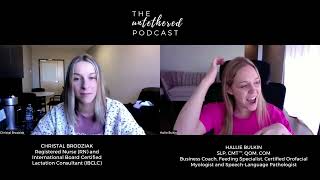
Episode 164 of The Untethered Podcast (host Hallie Bulkin) features Crystal Brodsiak (RN, IBCLC) describing her personal journey identifying tethered oral tissues across four children and how that transformed her practice. The conversation blends narrative (breastfeeding pain, reattachment, maternal guilt, rural access constraints) with clinical topics: functional vs anatomical assessment of tongue tie, when to consider release, the role of bodywork and myofunctional therapy, gaps in provider training, and the promise of telehealth for parent education and early evaluation. The interview emphasizes team-based care, prepartum provider relationships, and increased accessibility to training since COVID (e.g., TOTs/TOTS training). Contact and resource links (EmpoweredMamaLactation site and social handle) are given at the end.
Questions this video answers
Episode 164
Crystal Brodsia k — registered nurse and International Board Certified Lactation Consultant (IBCLC)
Hallie Bulkin — certified orofacial myologist, feeding specialist and mentor
empoweredmamalactation (website referenced as www.empoweredmamalactation)
Chapters
Hi and welcome to episode 164 of the Untethered Podcast. Today we have Crystal Brodsiak joining us. Crystal's a registered nurse and international board certified lactation consultant. She's a mom of four and it wasn't until her last baby who had a distinguishable heart shaped tongue that she would have ever considered her children to have tongue tie. She struggled to breastfeed every single one of them and no one ever looked in her baby's mouth. It was incredibly frustrating for her and also enlightening as a lactation consultant and she now has incorporated oral evals into every single one of her consults. She, she does a lot of education on this topic and has people reaching out to her because of the discussions that she holds. Quick disclaimer. All information, content and material of this podcast are the opinions of the speakers and is for the informational purpose only and not intended to serve as a substitute for the consultation, diagnosis and or medical treatment of a qualified healthcare provider. Welcome to the Untethered Podcast. I am your host, Hallie Balkan. I'm a certified orofacial myologist, feeding specialist and mentor. This podcast is all about getting your questions answered and collaborating with colleagues to bring you the most up to date information in the orofacial myofunctional therapy, tethered oral tissue and airway space. I challenge you to keep an open mind and join my mission to get this information out to the masses. Let's get started. Well, Crystal, thank you so much for joining me today. I'm so excited that we're finally hanging out and recording.
Yes, thank you for having me.
It is such a pleasure. Yeah, let's, let's jump right on in. And I always like to ask everybody, how did you come to find the tongue tie space? Or like, what's your story? How did you get into the tetheral tissue tongue tie world?
Yeah, so it's kind of funny. I actually have been a lactation consultant for about three years and I, before my fourth baby, I really didn't, I don't know that I didn't believe in tongue tie. I knew that it had some effects. I didn't really know what. I didn't really know how to assess it and I like knew they existed but didn't really believe in the whole like big picture. So it wasn't until my fourth son that I realized that all of the implications when he came out, he was like this perfect little dude. So we have three girls and he's our last and he's a boy he was a surprise Covid baby. So when he came out, like, you know, we were starstruck. It was amazing. My husband finally had his boy, which we didn't care that we only had three girls. But when he came out, I was, you know, so relieved. It was a rocky road of a journey for pregnancies. So when he came out, I was so super happy until he stuck out his little tongue and it was this perfect heart shape. And from there on was like a roller coaster after that. So like I said, I was a lactation consultant. After my first two babies, breastfeeding did not go well. The first baby at all. She was born early and she had a lot of issues with oral motor development. And only looking back do I know now who could have supported me in that journey. At that point I was scrambling. I had no idea who to reach out to. Everybody was just telling me it was normal. And it was super frustrating because when you're in that position and your mom's instinct is telling you that something's wrong and you're reaching out to people, scrambling, trying to find answers and knowing everybody's telling you everything's fine, it's frustrating. So our journey ended up very quickly with, with my first and then my second. I'm like, this is not going to happen like that. Like I was determined and I started actually training to be a lactation consultant. So if, you know, you need a thousand hours of contact with families. And I was a public health nurse at the time, so I was getting my education, my 90 hours of education in order to become a lactation consultant. Coming up to my second baby. So I was very determined and she was born and she like we had the worst latch. She, I had ulcers on my nipples up until like three months. And I was seen by a lactation consultant, a free lactation consultant in our area which was a two hour drive away and no one ever looked in her mouth. They basically told me you have inverted nipples and that is why you have problems. So you're always going to have problems with breastfeeding and it's because of your inverted nipples. So she was taking pictures and whatever and eventually my nipples healed and we continue to breastfeed for a long time. So I was super happy. I was like, okay, it's me, it's my problem. When I went into the third and fourth baby, it's like, it's my anatomy, it's my fault. So you know, I had all these nipple everters and all of these things to make sure that this wouldn't happen. The third baby. Well, the third baby we did have a little bit of a hiccup, but it went smoothly afterwards. And you know, it's funny looking back, I look at pictures and I'm like, oh, all these like little cute baby things that you see are actually not the cute baby things. They are actually warning signs to oral dysfunction. And like I said, it wasn't until my fourth baby that I was like, this is a true tongue tie. Like, there is no hiding this one. It is clear as day. I mentioned it to my midwife and she's like, oh, I didn't notice anything. And you know, it took till day two. My nipples were sore. I couldn't get a deep latch. My nipples were always lipstick shaped. So I started pumping right away. I'm like, I know what I need to do. I need to protect my supply. Something is up here. And then it kind of all trickled into, like reaching out for support from a lactation consultant and then, you know, getting his tongue revised at three weeks and all of the bodywork afterwards and then taking tons of education afterwards because I don't know, I didn't know anything prior to this. This guy. And now looking back, I can like identify out of all my children, you know, oral dysfunction. So it's. It was really frustrating to go through and not have knowledgeable support. And then I actually had a point where I couldn't actually get a hold of my lactation consultant for support. It was actually right after the revision and we were still struggling. And, you know, I just needed like reassurance and motivation and like, you know, someone to say everything's going to be okay. Like, no matter what's going on, everything's going to be okay. I was panicking. You know, I didn't have a lactation consultant as a backup. That was my only plan, was this one person. So it was really scary isolating. I had a lot of guilt over the whole thing because he never did functionally be able to remove milk at the breast. Like he would remove minimal amounts at the beginning of a feed where the milk is kind of free flowing into his mouth, but he was never able to functionally remove the milk. And he actually had a reattachment. So now we were dealing with all of those issues. And I didn't actually realize the reattachment occurred until I started solids. And again, his cute little baby behaviors. He was pocket gophering food and I'm like, oh my God, that is so cute. My dad does that. Like, that is the cutest thing. And then I realized as I did some research about it, I'm like, oh, dear, this is not good. This is actually a sign of dysfunction. When he would drink water out of a straw, sippy cup, it would just fly out of his mouth. So we ended up seeing a orofacial myologist and basically reassured me that, yes, what I see is, again, the effects of the tongue tie. He had been having bodywork, so chiropractor, cranial sacral therapy, and at the time, that's all the resources I had that I knew about. Now, fortunately, I know about so many more people in the umbrella of support, and I guess now we're just still dealing with. He's a thumb sucker. From the beginning, he needed to constantly suck. We're gonna have to deal with that one day. And so, yeah, this is. Welcome to the world of tongue tie thrown into fourth baby and then identifying it in all of my children. So now we're dealing with everybody one at a time. Because it is absolutely overwhelming.
It really is. It is. And it's amazing how many moms I talk to and providers I talk to that have changed how they go about practicing because of their own children, right? Like, our children are our best educators, really. And it's really amazing because, I mean, if you'd asked me about tongue ties seven years ago, I would have been like, what are you talking about? Right? And then I took my. I got into the world of myo, and here I am, like, I'm a pediatric feeding therapist, right? Like, I should know about this. I get into the world of myo, come home, flip Lily upside down, and I'm like, oh, you've got to be kidding me. Like, that's why we had 13 months of extremely painful breastfeeding. That's why she never got past the first percentile for weight. That's why. That's, you know, it's like the list of things goes on, and I was like, you know, you start to, like, question. Everything is. You're like, why did nobody tell me this? Why did nobody identify this? Why didn't anybody look in her mouth? Like, the same things that you were saying? Like, no one ever looked in the mouth. And I get it. You know, I know, like, IVCLCs traditionally, like, you're there for the mother baby dyad, and you're not necessarily there to work on oral dysfunction per se in the infant. So, like, I get why, you know, an IBCLC may not look in a baby's mouth, but then if we feel like, okay, breastfeeding is mom and baby are still struggling and I've done what I can do or what I've been trained to do. Why are we not pulling in another feeding therapist? Like you said, like, you didn't realize there were other resources. And that's where I've even realized, like SLPs and OTS who traditionally do feeding, right? Like beyond breastfeeding, if we're not trained in breastfeeding, we do bottle feeding, cup feeding, you know, transition to solids, so on and so forth. And there's even like so many subspecialties within, like, feeding and the ages you work with, whether it's peds or adults, and even within pediatrics, like, is it birth to three, Is it, you know, five plus and all that fun stuff? Do you work with kids with severe medical disabilities and, you know, or is it more the traditional picky feeding, problem feeder type of issue? You know, and it's just, it's, it's so. There's just so much depth to it. And the sad thing is that while there are so many great courses out there for SLPs and OTs, even like, I can't really speak to IACLC, so I haven't taken any of those courses. But I know in like the feeding, SLP OT world, like, I'm like, I've never taken a course that taught about tethered oral tissues. Why is this not in any. I've taken. I've spent thousands of dollars. I've taken. I don't know. I mean, at that point, like, I was doing, I was doing at least my minimum required continuing ed up until the point of having kids. After this became an issue, I was like, oh, we got 200 hours this year and another 200 hours that. I mean, that's like, obviously on top of working full time, right? So it's like on my own time here and my own time, I'm just out there taking all of these different courses. And it just, it's, it's still amazing to me that there are so many courses still don't have it. And that's where I remember talking to a good friend of mine who is a big name in the medical SLP world. And she was kind of like, I was like, yeah, I'm going to, I'm going to make this MYO course and like, my membership and everything. And she's like, I really think you should do a feeding course.
And I was like, that sounds like.
A lot more work. I don't think I'm up for that right now. Like, I don't know, I mean, I've had two kids. Like, I don't know, this is just a lot. And she was like, well, I guess I'll tell, like, someone else to do it if you're not going to do it. And I was like, dang it. Like, she know, like, I'm the kind of personality where you can't tell me what to do, but if you tell me, you're going to tell somebody else to do it instead of me. And I'm like, no, it's going to be me. And I mean, I thought about it for a couple hours and I was like, you know what? Like, how could I make this easier? I was like, well, part of it. What I think felt so hard for me was like, I've never worked in a nicu. I've never worked in certain settings, and I don't work with, like, really medically complex children. I work with children who have tongue ties. I work with children who are more picky. I work with, you know, autistic children. I work with children who had certain patterns where they're cutting out foods. And so I thought it was sensory and, you know, all of this other stuff that a lot of like the OT courses, you know, OT focused sensory courses would teach. And then I, when I just sat down and I was like, I just kind of took a good hard look at it. I was like, you know what? There is no course out there that exists that encompasses pediatric feeding, tethered oral tissues, and myo for like the birth to five crowd. Everyone's saying wait until they're cognitively at the age of a four year old. Which I get. Like, I'm a myotherapist. That's absolutely accurate. But why is nobody teaching anything prior to that age? We should not be waiting. And that's what just like drove me because I was like, we've got to have more, right?
So.
So, I mean, it's like, I get it, I get it. And it's like, all because of my own kids, obviously. I don't think I would ever be where I am today. But the same thing with the podcast, like, I went to find it for my own support purposes, it didn't exist. And I was like, oh man, now I gotta create it.
Here we are.
So, yeah, but I mean, I think it's so interesting and I love having not to say that I love that you struggle, but I love having, you know, moms and who are providers in this specialty come on here and share your story because it happens to all of Us. And I think that, you know, you brought up the mom guilt piece and the mom guilt runs deep, man. Like, oh, I thought, like, you know, I look back now and realize. And I was actually talking to Taylor Kulik. I don't know if you're familiar with her. She does, you know, the sleep. Yeah. So we were talking and I was like almost in tears on that episode because. And I don't remember if it was when she was on mine or when I was on hers, but either way, I was like, wow. Looking back, the bond with my first daughter is completely different than my second daughter, who was a good breastfeeder because we released her at day five and we did the exercises and I knew what to do with her and we got the body work, you know, and all, you know, we did PT and all this stuff, and she fed beautifully and we had no issues. Now she's still on her own airway journey, and that's a whole other story. But from a tongue tie feeding standpoint, like, it was glorious compared to the first time. And I never really took the time to stop and like, reflect. And I was like, wow. Like, I. There's probably a lot more going on from that first year with my first child than I ever realized. And I was just like in tearsome. Like, I feel like I was robbed of the ability to connect with my child on a certain level. And it made me angry that because I feel like I was not robbed by her anatomy. I was robbed by not having the right medical school support, despite having taken her to an ibclc, despite having talked to the doctor about it, you know? You know, so, yeah, I feel that completely.
And I actually have written posts about this, about how, how unfair it is that this happens. Like, I mean, there's obviously like bigger cards. Like, you know, I mean, relatively he's healthy, so I can't really complain in that sense, but it really does feel that way. And like you said, because my third child, we had a relatively good breastfeeding journey, you just assume that everything like you now you have it figured out. And it really did feel like between trying to get him to feed at the breast, trying to bottle feed, trying to breastfeed, because I was still trying to, you know, keep that, you know, relationship and bond and pump and all the things, like it was constantly. I was in a rush and then building that on all the appointments. So I live rurally, so I don't have access easily to all of these. You know, even in our bigger centers, we don't have access to the level of support that you're talking about. So it's really frustrating. Like, you know, looking back, I could have involved so many more people at the time. Obviously, I didn't have a clue. My support people didn't have a clue. Like I said, I was completely abandoned by my own lactation consultant. And so it's crazy. All the moms, now that I've talked to, I tell them, I'm like, you are going to feel guilty. You are going to have this phase after the revision that you feel that you did something wrong, you caused your child pain for no reason, and you're gonna feel that way. It is gonna go through your head and you're gonna be like, why did I do this? This was not a good idea. I don't see the immediate result because it's not a snip and everything is wonderful. I wish it was. I wish that there was, like, a magic potion that we can do and make it all easier. I have no idea what that day is going to look like one day when we get to that point. I hope we do, because this is so frustrating, like, even for me to go and help people, I'm like, this is not a quick fix. This is not going to solve your problems. This is not, you know, this is a journey. Unfortunately, it's not going to happen overnight. And, you know, I really feel for these people. And I have, like, the most deepest empathy because I've been there, too, struggling. And I think that, like, I was talking to someone or I saw a post shared the other day that only get breastfeeding advice from someone who has successfully breastfed their baby, and I'm like, wow, that was like, a stab in the heart. I like that guilt came right back because I almost felt like an imposter. I'm like, yeah, right.
Who am I? What about people who. Sorry to interrupt, but what about people who don't have kids yet? They can't. They can't be okay. That. Yeah, no, right.
And then I. Yeah, like, and then I thought, you know what? No, I am the provider I am because of the struggles I went through, and I wouldn't be the provider I am if I hadn't gone through those struggles. Like I said, I had no idea what a tongue tie was. I wasn't like, I did know what it was like, don't get me wrong. I did know what it was. I didn't know how to, like, do an oral evaluation. And now I've sharpened my skills so well that I can do it virtually through Parents. And then when I talk through them and I think. Which I think is so amazing, I don't know if that's part of your support too, like, virtual support, but when you do it and you are talking with a parent and they are doing the assessment on their child and they are like, oh, oh, you're like, right. Like, they are so empowered.
Yeah. Oh, yeah. No, that's. It's amazing. Like, we. Especially in the pandemic. So, like, before the pandemic, we were actually doing virtual mayo, but we had never done, like, we weren't really doing virtual, you know, feeding evals or tongue tie, you know, and tongue ties. Part of our feeding eval. But we weren't. We weren't doing that. And it forced us to. And it was amazing. Like, you're saying, you know, because even in person, I would have a parent get in the mouth and show them, and I take video so that they can see what we're seeing. We can pause and, like, we don't have baby's mouth open to, like, show them what we're seeing. And I think it's so helpful when they can visualize it, because then it's like, it's not just this theory in their mind that someone told them, now they've actually got their hands in there, they actually see it for themselves. And they're like, okay, yes. Like, I thought so, but now this confirms it. Like, we're not. We're not crazy. Like, yes, there really is restricted tissue there. And I think that's so powerful because, one, I think it gives the parent the power to advocate for themselves and the child. But I also think it just. It helps to quiet down some of all the questioning that we have as parents in our brain. Because even I, as a specialist, go, like, am I over pathologizing my child? Like, I don't. You know, I've done assessments on both my kids for myo. But, like, aside from that, like, I take them elsewhere for, like, assessments and treatment. And like, other people treat my kids. I don't treat my kids because, yes, I could. But. But one, there's also probably would be a power struggle between, you know, me and my children. But at the same time, I'm like, I just. I want someone else's eyes on them. Like, just, you know, I want someone else to have their expertise. And, like, we can chat, we can have discussions about what we're seeing, but I think it's really important that, you know, one, we trust that other person's eye, especially when they're the specialist, no matter how much we know or we think we know, but also knowing that the specialist you're taking them to or that's treating them has the proper training. And so that's where, like, when you said that, like, I was like, oh, man, that person in their massive ego trip, like, that's horrible. With the whole, like, you know, we should only have breastfeeding support from someone who successfully breastfed their own child. Like, that's, that's ego talking. And that is just. It's sad. It kills me to see stuff like this on social media because it's. There's so much information out there already that parents are struggling to like, source through. Like, let's just throw in like obnoxious posts like that. And someone doesn't have a child, but they have had, they've worked with a thousand babies and they've taken all of the courses and they've had mentorship and they're highly skilled. We shouldn't work with them. Like, what? I mean, it just doesn't make any sense, right? And then of course it's just nasty to like, parents who maybe doing this and helping lots of other kids, but like, you know, yourself and myself, we struggled. So what? We're not good enough to help somebody else's child because we struggled with our own, like, sorry, ego trip.
Ego trip conversation that needs to occur. Because that is. Yeah, that was my thoughts exactly. I was very like, yeah, triggered by it for sure.
Yeah. I'm like, how about we stop with these, like, posts where we attack each other online and we start supporting each other and hey, how can we all work together, right? Like, I know you've talked about the team aspect and I know for you especially it's challenging being rural and not, you know, having access or even knowing who you should have access to. You've mentioned a couple times, I think that that's so common even. Even in big cities where it seems like there would be so much support. It can be so hard to find that right person who gets it and who. I mean, we just moved last August from Maryland to south Florida and down here I can't find anybody to work on airway stuff. There's no holistic dentists anywhere near me. There's no airway centric dentist anywhere near me. There is one ortho who's airway centric, but still, like, my daughter is like going to be seven in August, and I took her in March, and basically the message was she has a beautiful face. Like, but let's not overdo it, like, let's wait six months. And I was like, what is waiting six months, like, do for her? Like, why don't we help her now when we know she needs. You've agreed. She needs upper and lower expansion still. Like, she's been in an appliance before. She's not new to the appliance world. It did wonders for her. We have the before and after cbcts to prove the changes in her adenoids, her sinuses, her nares, her. Her airway, just, like, the position of her jaw, her posture, like, so many improvements. But, you know, she needs. That was like, pre ortho, and this is now, like, the next orthodontic stage we're going into. And so, anyway, so I did find somebody who's in, like, North Miami, and it's an hour drive, but I'm like, it's. You know, it is what it is at this point because I just. I need to get the kids what they need, and I know what to look for. And so it just. It drives me so crazy that it's so hard to find these people.
I feel like they're almost hidden. Like, I never seen this before, and now I feel like. So someone told me, crystal, you're. You know that theory, like, when you are thinking about red cars and now. Now you see tons of red cars. They're like, Crystal, you see tongue ties, and you see a lot of tongue ties. Well, I don't believe that. I actually believe that a lot of our breastfeeding issues are tongue tie related. And that's people that I get to see because they are struggling, and it becomes complex. And, you know, they are here because they've exhausted all of their resources. So, yes, I am seeing a lot of tongue ties. And now I've become better educated on assessing and stuff like that. So it's not that there's more of them. I think that I'm just seeing more. I'm following a crowd of people that are more informed. And now I'm seeing more and more people say that they have extra training in this. And I'm like, where were you last year?
It's so true, though, because it is like, you know, there is that whole theory and everything. But I always say this to people. They're like this. I actually had a patient ask me one time, so. And this was like, I think the father. They were like, so does every child who comes into your office have a tongue tie? Like, as if, like, do you diagnose everyone with ties? And I looked at him and I said, look, that's a semi unfair question. I said, because most children who come into my office have already been to a dozen other providers. They are falling off the wait charts. Some of them are headed for feeding tubes. Sometimes it took a long time to get to me because people didn't realize that the baby should be seen by me. Some of them have been seen by other feeding therapists who weren't trained in tetheral tissues and myo. It just depends on what was your journey to get here. I said, you have to realize I'm the tongue tied person. People come to me to rule it in or rule it out, but that requires a full feeding evaluation. We have to look at function. It's not just about the presentation. You know, I go through the whole spiel, like to explain to the. To him, and. And he kind of just sat there, kind of like, almost like he got schooled. And I didn't really mean it to like come off that way, but I said, you know, a child who's struggling with feeding, who goes for their very first assessment, right? If that was truly my clinic and we were getting the baby, like right off the bat, my numbers would probably look very different. I said, and my goal is for that to be my practice, my practice to become. And we do have that now. This was like five years ago, you know, but so now we get a variety of babies who come in with feeding issues and we're kind of like, this is borderline, you know, like, let's see if we can gain function without having to have a procedure done. It doesn't mean that a tongue tie is not there. But does every tongue tie need to be released? Well, that's debatable. Depends on function and what we can gain. Because if a baby's feeding well, even if a tongue tie appears to be present, I don't want to rock the boat and just release it. Not that I get to make that decision. Ultimately, it's the family and the release provider, but I guide them. If you release it, you may be on a much more challenging journey. After that release, let's monitor, let's continue to watch the feeding pattern, make sure that it's going well, make sure that we're not building more and more compensations, because we know that when there's more and more compensations being built, there's a lot of tension, baby's uncomfortable. We have all these things, symptoms. We know that that often transitions into challenges with transitions to solids, and we don't want that for you, you know, and so that's where we start to have these, like, more informed, these more informed conversations. But I had a baby who once came to me, it was an OT mama. Baby's tongue was like heart shape. And the mom was like, I know she has a tongue tie, but she's feeding so well and she had transitioned to solids. Well, she's like, so I don't know what to do because everyone I work with is like, release her tongue, release her tongue. And I was like, look, I mean, I've never seen a tongue like this function so well. Doesn't mean that we're going to not hit a wall at a certain point, but like we're going to go based on function right now. So, you know, I say that because I think everyone thinks like, oh, Hallie sees a tongue tie, it's got to be released. And I'm like, no, we need to look at function. And we also need to consider the family unit. Like, what can they handle? Are they going to be good with follow through? Because if we're not good with follow through and that tongue reattaches, you've lived it, you know, like it causes other problems. The issue doesn't improve. Sometimes it can actually worsen and then you're going to have ongoing struggles with the transition in the solid. So it's like, well, are we having some issues right now, but some compensation? And you know, we think we can get by because this family is definitely going to struggle with follow up afterwards. Or is this family fully on board and like fully committed and we know that it's going to be successful. There's just, there's so many variables. And you know, it's just one of those things though that I'm like forgetting all the kiddos who have these concerns. And so it's, you know, that's who appears in our office. So it's not like we can throw out percentages. Like I can't say like, oh, 90% of kids have tongue ties. No, 90% of the kids who might end up in my office might have them, but they're coming to me because they need a feeding eval. As someone who's knowledgeable about ties and airway and you know, it's a whole different conversation.
Yeah. And I feel the exact same way, is that, you know, I don't get to assess all the babies right off the bat. And someone mentioned this to me too, is that even if we did in the hospital evaluate every baby off the bat, that's not a fair time to say that functionally that tie is going to affect that baby. So then I'm actually in a really opportune place to help support people because I do see them within that, usually within one week to up to three, four weeks, usually when they're already having issues with weight gain, or I'm seeing them further on at four months, six months, nine months, where now they're falling off the growth chart. So it's unfair to say that, like, you could do that, like, if there was everybody who was trained, you know, one way to assess an oral tie, and we could say that, like, 90% of people were born with tongue ties. It doesn't mean it would affect function, just like you said, right?
Yeah. I mean, like, anatomy is anatomy and look and to some degree also. And I talk with my friend Autumn Reed Henning about this a lot, who has a TOTs training course. She, you know, and I will discuss how, you know, and we also mentor inside of the my membership. We talk about how, you know, some people compensate really well, but they're still compensating. And so then, you know, an adult can decide, right, if they want to compensate well and continue to compensate or if they want to do something about it and change it, whereas a child, like, it's really challenging because we as adults have to make that choice for them. And, you know, and that's where I, like, look at the snowball effect, right? Like, like I said before, like, are they compensating well enough right now? And it's kind of like smooth sailing and everybody's happy. And, you know, because we also have to consider the mental state of mom, like, mom's mental health. It's. It's debilitating for some mothers. And, you know, here we have moms who have postpartum anxiety and postpartum depression, and a lot of that's going undiagnosed still. And so they're really struggling now. Let's throw a procedure in with a baby who's struggling to feed and this parent who's really, you know, it's not fair, and there's so much more support that's needed. And you were saying something earlier, and I was just sitting here thinking, like, I'm halfway through all of Call the Midwife seasons. Like, I don't know if you've ever watched that show, but I'm like, going over here, I'm like, man, what would life be like if, like, when we went into labor, somebody hopped on their bike and rode it to our house and just showed up? I mean, I know midwives, like, you know, driving Their cars and they do just show up. But you know, I'm like, and then anything you needed, like they were there for you, right? There was like, and I know it's not technically their job, but it's like there's some postpartum support. There is expectations of follow up, there's checking on mom and baby. And that's what we're missing in society these days. Like we don't have those, those, well, checks that should be in place for, you know, making sure mom is healthy, baby's healthy. Is there anything that either of them need? You know, we don't even go to the OB GYN until see 6 weeks post delivery. Like, no one is checking on mom. And I think, you know, the pediatrician that we went to when my kids were little up north, they did have questionnaires that you would fill out, right? And I'm like, here's another thing you have to do, right? So to fill out six questionnaires before taking my two week old to the, to the doctor, which I appreciated, but also was like, oh. But also, you know, the way you answer those questions on your own, on your phone, sitting at home by yourself is very different than if someone asks you those questions in person at the office or if, you know, if they're coming to visit you. It's a very different approach. And I think that, you know, maybe I had some postpartum anxiety, I don't know, overfeeding my child, but nobody would have picked up on it because I didn't think I had anything going on. And the questionnaires didn't trigger anything and you know, we seem to be fine. So I mean, minus all the feeding issues where I was literally feeding her around the clock and planning my daily outings around, you know, am I going to sit in my car outside a Target and feed her in the car for 45 minutes? Am I going to go to Nordstrom because they have a really nice feeding lounge. Am I going to go to. I mean, this is how I plan my days. And then finally 13 months, I was like, then we're done. Because this is painful. And we probably would have gone a lot longer had it not been painful. But I was very, very proud of myself that I suffered through 13 months of very painful breastfeeding. Now I just kind of look back and I'm like, that was entirely ridiculous and unnecessary. But, you know, here we are. So. Yeah, and I know I've been like all over the place with discussion, but it's just, you know, the support and the Team approach. And there's. Got it. Like, we need to do better.
Yeah. And you do you make a valid point about the midwife thing. And I keep saying this and people, I don't know if they're getting it quite yet, but so I offer like a coffee chat to meet and greet your IBCLC before you have baby, because nothing is worse, like for myself included, when you are in that moment of needing one and not knowing who to go to and who you'd have a connection with. And that's what I find. Midwives have an advantage because they are seeing moms the moment they are, you know, they're pregnant. So they find out they're pregnant, they get to develop this relationship with the midwife. They get to see her all the way through and afterwards. And I would love, like a goal of care would be to meet all of these professionals that could be involved in your care right off the bat when you're pregnant so that you have that relationship. Okay, so fine, Crystal. If Crystal's not for you, that's fine. Go find someone else that is and that you connect with. Because when you're in hot in that moment and you are struggling and you are depressed, because we know that hand in hand, if you are experiencing pain, you have an increased likeliness of depression. Hindsight, I'm sure, like every single one of my children, I had that as well. And no one identified it because, you know, I was fine. Like, I was managing. Everything was fine.
And we know that, right? Like, that's just basically what society tells us. Just keep trucking along, Mom. You're doing your best. This is what it's supposed to be like.
Exactly, exactly. So, yeah, I feel like we're really missing that progression of a relationship and that that to me is like the gold, like, if everything could change, I think having all of these resources and meeting these people before you actually come that time to meeting them. And who knows, like, maybe you won't even need them and that's fine. But at least in that moment, you're not scrambling and, you know, just pop a Google search and pick the first one off the top of the list, right? That you actually have that relationship. You can trust them. You feel like you can trust them and. And all of that sort. So that's kind of my motto is that, you know, that connection before. Before you need someone is. Is the ultimate goal.
So I have a question for you. Do you find that, like, providers in your area, whether it be pediatricians or ENTs, like, are they typically saying, like, Everything's fine. They can stick out their tongue. There's no tongue tie. Like, do you have that issue where you are too? Yeah.
And like, I have like a weird. I'm like in the middle of, like. So I'm in the middle of two towns, like a city and a town. And so in the city I find like, yeah, the pediatricians are more like, you know, yeah, your baby can stick out their tongue.
They're fine.
And on the other end, I see babies who. I'm like, okay, your baby has a tongue tie. They go for their one week check and they go snip. And I'm like, but no one evaluated if there is a posterior tongue tie. What did they do? And they're like, nothing. They just said, yes, they had restrictions, so they snipped it. I'm like, oh, my dear Lord, I don't know what to tell you right. So now I'm like, how do I now say, like? Okay, well, they address the anterior tie, but you still might experience issues because the posterior tie wasn't addressed and most definitely not the lip tie. So it's really frustrating to be in this position. And I'm sure, like, you guys feel the same way because I hear it all the time from other providers that we're hearing this, and I wish there was a day that we all would have some humility and be like, you know what? I don't know the answer to this, but I know someone who does.
Yeah, 100.
That would be huge. Like, I want that provider that does that. So my daughter's actually seeing an ENT next week. And this is my third daughter who had no problems breastfeeding. Like, I mean, minor hiccup, but I thought it was my oral anatomy anyway. But we had a great breastfeeding journey. But she breathes with her mouth open, she sleeps with her mouth open, and she's very like, chipmunk cheeked. And, you know, you probably have the better terms for what I'm kind of describing, but I do know that, like, she has issues with her sinuses and because she had that puffiness and swollen adenoids, like, without even seeing anybody. I know, I know that these are some issues, but if he says that, like, tongue tie is not a factor, I'll be just walking out the door. I'm like, you are not the provider for me.
I recently took me my, my 4 year old to the ante because she had been on like, multiple antibiotics over like a six week period. And I was like, I'm done. Like, we've been Doing this since infancy. Like, this was one of the worst bouts she's had. Everyone says she's pre asthmatic. Like, I'm just like, something else. Something's got to give. And I couldn't find a provider to do the expansion. But I knew. I learned about this. This dentist in North Miami. And I was like, it's time. It's just time to go. So we actually went to her, and then I took Mia to the ENT the week. Like, we had an ENT appointment the week after. And with the dentist, we had someone coming to the house with a CBCT truck, like, coming to, like, do her scan and everything. The ENT put her on a antibiotic and nasal spray and did not offer a scan, didn't do a scope. And the whole, like, reasoning was, well, you know, the little ones, we don't want to poke and prod and do all these things. Like, I want her. I want to be her friend. And I'm like, I don't want you to be her friend. I want you to be her doctor. Like, do what you need to do. Like, what, are we going to see you once every three months if needed? Like, come on. Like, it's just, you know, I get it to some degree, and I know some kids are not going to tolerate it like that. I understand. Like, never force it. If the child is not cooperative and they're just not having it, like, that's a different story. But, like, my child will sit still and do anything you like. She's really compliant. And anyways, so I was like, you know what? We're already having the CBCT done. I'm not going to force the matter. So I started her on the antibiotic we ordered, and we were waiting on the nasal spray to come in. And so she ended up having the antibiotic, I think, for five days before the cbct. And that was almost. Maybe it was actually seven to eight days before it was almost the full course of the antibiotic. And her adenoids were still, like, enlarged on the cbct, so they hadn't gone down fully. And maybe the antibiotic would have kept working. And, you know, but it's not the end all, be all. It's not. You know, maybe the nasal spray is what we really need to help reduce that inflammation. But I'm like, I feel like it's just going to come back because she's been on all kinds of antibiotics. We've been using XLR nasal spray for the past couple of years. Like, she's not new to nasal sprays. These are not coming down. Right. Like we need to do so at this point, I was like, whatever, I'm not going to fight him on it. We went back for the follow up. So I was just, I just wanted to have the experience. So I know, can I refer to this guy? And he was wonderful. He was great. But he was not airway centric. Right. And so I'm like, I did like that he wanted to at least try something. Because when I took Lily to another ENT up north and we lived in Maryland, she had almost kissing tonsils. They were like three plus, like very inflamed, veiny, not healthy looking, but she had a closed mouth posture at rest. And so because she wasn't sick at that point and her presentation, the ENT was like, well, I'm very unimpressed by those tonsils. I don't think we need to do anything. No medicine, not that I wanted medicine. No surgery, not that I wanted surgery. No come back in three months and let's monitor them. Nothing just sent me on my way and knowing what I do. And that was supposed to be the Airway Centric Ent in the D.C. metro area. I was so frustrated. I was like, you got to be freaking kidding me. And it's just, it was like that, that was our journey up north. And so down here I'm like, there's got to be somebody that can help us. And so I've heard about a few people like that are close to Miami, but we haven't been to them yet. At this point, I'm like, she's going, she's now into an appliance that we just picked up and she'll eventually go into like an expander in like nine months or something after the first appliance. So like, we're on our airway journey and I'm, I'm fully confident that's going to handle all the inflamed tissues and everything. But I'm like, man, I mean it's. Even with our level of knowledge, it's still so challenging. And I know you're rural, but you would think that me being like having access to these large hospital systems and cities that I would have options and it's like limited to none. So it's just, I think, a sad state of affairs right now, to be honest.
Yeah. And I guess the more. And I don't like, again, I don't know if I'm seeing red cars because I've been watching for red cars, but I feel like now the accessibility with like from COVID the accessibility of courses and training seems to have broadened because everybody seemed like they had in person courses and now you can take a lot of people's courses online, which is amazing and accessibility is huge. And so I hope that we learn something and more people become educated and, you know, because there are courses out there to train us. Even though, like I said, for a lactation consultant we talked about this, that we aren't trained to learn about tongue ties, like, that's not part of the exam. Like you, you know, it's not part of the education criteria, you know, but there are trainings for lactation consultants on tongue tie. And like you said, now I get like 200 hours a year. I remember struggling to get the 90 and now it's like 200 a year. No problems like it enough.
Yeah, well, and for anybody, for any lactation consultants who are interested in learning about tongue tie, the original, like tongue tied course was Tots training with Autumn Reed Henning. And she does offer both in person and online now. And so they are live. So you do have to like, you know, do it on the days offered. But it's so much more accessible and it's open to, you know, the medical community. And I just find like, she's actually who I originally learned about all of this from. And I just, you know, I'm so grateful for her because it was so nice. And she's, she's an slp. She's a myofunctional therapist. She's a comm. She's also an ibclc. So I call her like a unicorn. I'm like, you're the perfect, like, trifecta of like, all things. And I just think it's really great to have those different perspectives because I think it's becoming a little more common because a lot of people are now wanting to get different perspectives in their practice. But I think it's not so common in that you're not going to find somebody with that approach to tongue tie with those credentials typically. And so I tell everybody, I'm like, everybody, go take her course because it's phenomenal. And she, I know she updates it and I keep trying to get back to. Because I know she's updated it since I took it in like 2017, I think. But yeah, I mean, like you said, it's, it's. Things are so much more accessible. And I laugh because my whole model for my online business was to be virtual, to get, give more accessibility. And we launched the first. So I started this like fall 2019 is when we started building everything out with our launch date of March 16, 2020, literally as the world shut down, at least in where I was on the East Coast, I was like, okay, well, this is an online course, so we're just going to push forward. And it was amazing because I think people were also in this, like, state of, like, what do we do? And they're like, well, Holly has this course, so let's just take it, because I've got nothing else to do while I'm waiting to know if I get to go back in two weeks. And that didn't happen. But anyways, no, I think it was really, really cool to, you know, how it all just kind of fell into place, but I was like, yay for having an online course plan. So I feel you.
So I launched my business March, March of 2020. Like March 2020. I was full practice. My daughter was a year old, and that was my. So I was taking 18 months of maternity leave, like, for. In Canada, because that was an option. I was supplementing my income that I had from EI with for this last six months through working. And yeah, when they went virtual, I was like, okay, I'm kind of sad. But you know what? I had had training on virtual consults already because there had been lactation consultants already providing virtual consults. And I had, like I said, I've been taking tons of continuing education, so I had all those trainings, but now I just had to put them into practice.
And I think it really forces you to become a better provider because if you. It's. You have to teach the parents, like, on the spot, and then you have to problem solve if they're not getting it. And, like, it's very different than mentoring someone in your space who has, like, the medical background and knowledge of, like, at least what we're walking into, you know. So, you know, I think it really takes a very highly skilled, skilled therapist and, you know, clinician consultant to be able to walk a parent through that and get to them actually seeing and understanding and being able to have a conversation about, okay, we're on the same page now. What? Right? And so, you know, I commend you for that because that's not easy, you know, as a business owner and a private practice owner, like, how if I had started and had to, like, immediately flip, I think I would have had a mini, like, meltdown because I'm, you know, I try to be really flexible. Like, kids have definitely done that for me. I'm way more flexible than I used to be pre Children. But, yeah, no, that's. It's amazing to see how the world has changed in the past couple of years. And, you know, and I think in some ways it's. It's made some of these services more accessible for families, and I really just hope that that continues. It's like, hybrid of, like, in person and virtual being offered so that families can access, especially when they're more rural. Because, like you said, like, it's just. It's limited. And, yeah, we can help them. So, I mean, we can help them so much. And I don't think it's. I think some people say. I've heard people say, like, oh, well, you need to be able to get in the baby's mouth. You need to feel the baby's face, you need to feel the baby's body. We're not doing cranial sacral therapy. Okay.
Yes.
We're doing feeding, like, you know, as an SLP does feeding. Like, yes. But I can also guide a parent, because guess what? That parent should also be doing that between sessions every week. And if we're not already teaching that, even in person, like, what are you teaching? Like, what are you doing? Like, we need to have some parent education, even if it's five minutes at the end of each session in person. So it's one of those things where I'm like, I think it really put a lot more work on us, but at the end of the day, I think it makes us much more highly skilled clinicians. And I've seen it work beautifully, sometimes better than in person sessions because the parents have to take, like, responsibility on a whole different level. And it really involves them a lot more and makes. I think it empowers them, too. So, you know, I love it.
Yeah, I agree. Like, I've been doing. Because I work still with public health, and so I do in person home visits and stuff like that. And I definitely. People always look at me and are like, crystal, like, virtual. That's kind of like the less than. And I'm like, I beg to differ because the. I have to take more time, like, to be able to express what I want you to do, and then for you to be able to reciprocate it and tell me what you feel and what you see. And we talk about all those things. So it actually takes more time. But like you said, in the end, I always get, like, 100% reviews that people are like, I can't believe you were able to do that through a virtual consult. Like, everybody's shocked. And I'm like, I wouldn't offer this people if I didn't believe in it. Like, if I didn't think I could support you, I would not be on virtual.
Absolutely. I love it. Well, where can they find you?
Yeah, so I'm on social media, hystalbrodiac lc so you'll have to put my spelling of my name in the notes.
And get to it through your website. Would that be easier?
Most definitely. Yeah. You can connect through my website. So it's www.empoweredmamalactation. so Mama is M a M a love that.
I love that. Empowered Mama Lactation. Awesome. We'll make sure they have access to all of that in the show notes. And this has been fabulous. I love chatting with you. I always have, like, I'm like all of us moms who are like, in this space, I'm like, one of these days we just need to have like a conference of moms who have struggled to, like, you know, breastfeed and feed their children in general who are in the tongue tie. Myo taught feeding IBCLC all, you know, lactation world. We all just need to have, like a big conference together.
So it'll be a big conference. I think that, like, the motivation for a lot of people is the fact that they've been through it.
Yes, 100%. Well, this has been amazing. Thank you so much for joining me.
Thank you so much.
Thanks for listening to this podcast. If you want to hear more of these Myo Tots, Airway and Feeding related episodes, be sure to leave a review on Apple podcasts or pledge a small amount on patreon.com forward/the untethered podcast. If you found value, others you know in this space will too. So be sure to share this episode on your social media platforms and join us over on Facebook, on my Facebook page at Halle Balkan Biz, on Instagram @hallebulcken. And you can head over to theuntetheredpodcast.com to grab a copy of the show notes where you can also subscribe to be kept up to date on the latest podcast episodes.
More from Hallie



What I Was Missing in Feeding Therapy: ARFID, Airway, and Myo with Samy Hernandez





