Episode 167: The Power of A Growth Mindset with Rachael Garrett, DDS, MSD
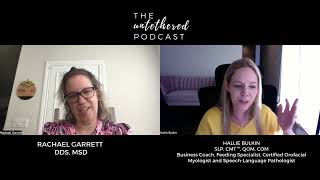
This content was created by Hallie Bulkin. This content was uploaded by Hallie Bulkin. This is a YouTube podcast episode titled "Episode 167: The Power of A Growth Mindset with Rachael Garrett, DDS, MSD" (published June 24, 2022). It’s an interview-style conversation hosted by Hallie Bulkin with guest Dr. Rachael Garrett, a board-certified pediatric dentist practicing in League City, Texas (Camerata Pediatric Dentistry Group). The discussion focuses on tethered oral tissues (tongue/lip ties), orofacial myofunctional therapy, airway-centered care, clinical experience with soft/hard tissue lasers and releases, interdisciplinary collaboration and mentorship, patient education and readiness for procedures, pre-/post-op care, and practitioner training and growth mindset, illustrated with clinical anecdotes.
Questions this video answers
League City, Texas at Camerata (Camarata) Pediatric Dentistry Group
www.kids-teeth.com
2010 and 2012
Since 2015
AAMS Congress (2015)
Chapters
Hi and welcome to episode 167 of the Untethered podcast. Today we have Dr. Rachel Garrett joining us. Rachel's a board certified pediatric dentist practicing in League City, Texas at Camarada Pediatric Dentistry Group. She's a dual graduate from the University of Texas School of Dentistry at Houston in 2010 and 2012. Currently she's in a multi practice group that specializes in pediatric dentistry with a focus on tethered oral tissues. She's used hard and soft tissue lasers since 2015. The primary focus on soft tissue procedures. She's trained in orofacial myology and believes in a collaborative care team approach to best help our patients. Quick Disclaimer all information, content and material of this podcast are the opinions of the speakers and is for the informational purpose only and not intended to serve as a substitute for the consultation, diagnosis and or medical treatment of a qualified health care provider. Welcome to the Untethered Podcast. I am your host, Hallie Balkan. I'm a certified orofacial myologist, feeding specialist and mentor. This podcast is all about getting your questions answered and collaborating with colleagues to bring you the most up to date information in the orofacial myofunctional therapy, tethered oral tissue and airway space. I challenge you to keep an open mind and join my mission to get this information out to the masses. Let's get started. Well Rachel, welcome to the podcast.
Thank you so much. It's an honor to be here and I'm really excited so I want to.
Jump right on in and talk. We're going to talk lots about tethered oral tissues and you know, your experience in that space. But what led to you being a provider, a release provider in the tethered oral tissue world? You know, what's your passion behind that?
Yeah, that's a very good question. So as a lot of my colleagues and professionals and therapists that I know that you have talked to and that, you know, in this world, when I first got out of dental school and even residency itself, I knew nothing about tethered oral tissues or even being a release provider. So my very first job was in the corporate world. So I worked at my kid's dentist and I was little baby pediatric dentist all by myself, had, you know, no idea of any of the new technologies that were out there. And I really was blessed to be able to have a good relationship with my office manager. At that time. She unfortunately had left the practice, but we still kept in touch. So about a year after she had contacted me and said, you know what? I work at this wonderful practice that is airway centered and really believes in tethered oral tissues and the impact that it has on the whole body. And so then I had met with the practice owner at that office at Kidstown Dental, Amy Ludeman. And she became my boss then for five, six years after that. And that really opened the doors for me into my passion of learning about tethered oral tissues, becoming a release provider, learning about orofacial myology, myofunctional therapy. And that really helped me to realize, wow, this is something that I'm really passionate about, really love and difference of pediatric dentistry that I just really find fascinating to be able to help and talk to parents and families about that really impacts their not only oral health, but systemic health as well.
Yeah, I love that that's so important. And something that you mentioned was that you. You basically were able to, like, enter into this amazing airway practice and you had a fabulous mentor. And I think that that's so hard to come by these days. I mean, I think people really want it, they strive for it, they seek it, but it's hard to find some. I mean, they're few and far between. I feel like it's a growing field, but, you know, I feel like it's growing and it's sizable because I feel like I'm immersed in it. But then I stand back and I look at it and I'm like, no, it's really still so tiny. And there's. It's so hard to find a mentor and to find, you know, even in my space with tethered oral tissues and feeding and myo, it's. It's hard for people to find mentors. And that's. That's been a big passion of mine, too, is to try and provide that for, like, speech pathologists and occupational therapists and even RDHs and dentists who want to learn more about the myo space because it's so critical. I mean, I really feel like so much of my success was due to having, you know, learned from certain individuals and then having that, you know, mentorship behind the scenes. So I love that you were able to, like, step into that space. And. And so where are you today? Where do you practice today?
Yeah, so currently I practice in a group practice. It's called Camerata Pediatric Dentistry Group. And I work. There's three locations, and I work at the location in Lake City, so I'm the primary doctor there. So I practice all things pediatric dentistry. But I have a big focus also in being a release provider So I will have patients that are from infants to. I've even seen some select adult cases where the myofunctional therapists that I see in the area, since I've known them eight plus years, they know my work, they know my philosophies. And so if they have some adult cases or if I've treated the kiddos, and, you know, this happens to you all the time, I'm sure, where you're treating the kids, and then the parents all of a sudden look at you and they say, hey, it's me. And so you end up taking on the parents all the time for me, with the releases. And the really interesting thing that I found, too, on some of those select adult cases that I've seen is that a lot of the feedback that I get from the adults is that, wow, I really like how you explain the procedures to me. Or a lot of adults are very anxious getting the procedures done. And so as pediatric dentists, I mean, we learn all different kinds of behavior modification and being able to just explain or help patients and parents feel comfortable. So when they're feeling comfortable for a scary and very emotional procedure for them, it actually takes a lot of that stress away and can help the procedure be even easier and more calming for them.
I love that. And yes, we totally see this all the time. And it's so, you know, it always starts with like, oh, my child's symptoms, like that, that's. That could be connected to that, and this person could help us achieve this. And okay, like, like overwhelmed, but also like, wow, had no idea that these things could all be so interconnected. And then it's like the light bulbs start to go off and they're like, wait a second, like, this was me when I was a child. Or, okay, as an adult, like, I. I feel like I have this too. And then you. I start to ask the questions and I'm like, do you get migraines? Like, how's your sleep? Do you wait? Do you wake up feeling rested?
Do you.
Do you know if you snore? Do you know if your mouth is open or closed when you're sleeping at night? How about when you're sitting at your desk and I just start to ask different questions about. Do you ever choke on water or feel like it's going down the wrong tube? Often? Do you feel like there are certain foods that you like and others that are more challenged? Maybe you just don't like them or you like them, but you just find yourself not eating them for some reason? You can't quite put your finger on it, I start to ask them just a variety of different questions, and they're like, yeah, how did you know? And I'm like, I'm a mind reader.
Are you in my brain, or did you already look in my mouth? Or how did you know? But a lot of people don't realize that we're picking up on a lot of cues, or just when you're in the field for a while, you notice postural things or how people are swallowing without even staring them down. And so exactly like you're saying, you can pick up and identify things, and as you explain it to them, then they're realizing, oh, wow, yes, I do a lot of the. Symptoms that really are affecting me and impacting me, and they didn't realize it until you explain it to them in a different way. Yeah.
Yeah, absolutely. Now, another thing that you brought up, too, is that you work with a lot of colleagues in the area. So let's talk about collaboration. Was that something that was, like, easy to come by in your area? Did it kind of happen naturally, or do you feel like either you or the others kind of had to work at it to come to the point where you had, like, a collaborative team of professionals to refer amongst?
Yeah, that's a very good question. So I would say it's been a little bit of both. So when I worked at Kidstown, I would say it was a lot easier for me to have that collaborative network. So. So I was in the north side. There are a lot of providers for chiropractic care, cranial sacral therapy, speech therapy, myofunctional therapy. So. And I'm really big on, you know, if I'm working on a case, I can shoot somebody a text or give somebody a call. And a lot of the collaborators that I work with, too, I would invite them, hey, if you've never seen a release before, come over, watch me do the procedure. And I'm also open to if. Early on, when I was starting, I was really blessed going back to the mentorship. Christy Gado works in my area. She worked in Katy, so she was also a really big mentorship for me because when I first started doing releases, just as all of us are, we're timid, we're shy, you know, we don't want to release too much. But as I found out first, starting also under releasing is just as detrimental as over releasing. And so I had to find that good medium of I released enough. But I also was very aware of all the critical tissues and spaces and so she really helped guide me by giving me feedback of all the patients I would see and tell me, hey, this is how this is looking in the healing stages, so maybe you need to do this or that. But going back also then to the collaboration. Yes. Talking with the different providers, asking for feedback on how my procedures were looking, talking to the different chiropractors or IPCLCs about the cases and are the patients ready or not. That really helps me as a provider to know that I'm doing right by my patients. But it also helps the patients to know that, oh, wow, I have a provider that is working for me and that is taking my care and my cases seriously and that they do want to help me, that it's not just about, you know, making the dollar that I do care about their health.
Yeah. And I love that. I mean, and you can see that in certain professionals when they really, truly are passionate about what they do. And, you know, that's how we operate with a lot of our doctors that we work with through my private practice. You know, we do email, quick text, you know, about the cases that we're collaborating on. And it's so nice when you have that provider because it's so hard to find in certain areas that also you mentioned something about, you know, they tell you when the case is ready for the release, you know, versus just kind of going in blindly. And I unfortunately see this so much where a lot of providers just take either not to say that a parent doesn't know, but sometimes parents will say, yeah, we're ready. And that's not the same as the provider who may be referring, you, you know, or whoever else might be on the team saying, yes, this patient is truly ready for release. We know what that means. But, you know, it's one of those things where I've tried to educate also so much on like, you know, pre op and post op and how we really have to prep not just the mouth, but we need the full body. A lot of these children, especially like their nervous systems need to be primed and they need to, you know, I focus a lot on the mouth, but we try to explain to a lot of families why we recommend whether it's Cairo, cst, Osteo, you know, whoever we might be referring out to. So I love that you also are. Sounds like you're big on that too, that they really need to be prepped for the procedure.
Exactly. And a lot of that, to be honest, didn't make sense to me at the very beginning, but then as I started taking more courses. So early on I was very thankful and blessed also to. So in 2015, I went to the AAMS Congress and that was one of the very big eye opening experiences for me where I was like, wow, this is so much information. Any collaborators? But then after that, every year I was able to go to different courses. So I've been to, like, Michelle Emanuel's cranial nerve dysfunction course. And so that brought in a different piece of the puzzle. And then just recently, I've been to a posture rest institute. I, Mike Cantrell came with Alice Lamb here in Houston, and she hosted the course. And I was able to learn more about posture and respiration and how that really affects the whole body. And again, as a pediatric dentist, that normally isn't something we're looking for, but becoming more aware of that, that really helps for me to be able to educate the patients and send patients where they need to go.
Yeah, I love that. I mean, you've fallen down the same rabbit hole that I have. It's like all of these great things. My first eye opening experience was my Intro to MYO course, and I took that with Sandra Holtzman. And at the time she was with the iaom and now she's in it with her, you know, her own company with Neo Health and. But I will tell you, I remember coming back from that course and flipping my daughter, who was 24 months old over at the time, looking in her, like under her lip and under her tongue. And I was like, that is why breastfeeding was so hard. Why did none of the providers we went to, like, nobody looked at her mouth. And then her journey started. And we're still on that journey at almost seven years of age. But it's just amazing to me, you know what I know now, right? And I was able to do some things differently for my second daughter, where she was released at five days old. And I was able to, you know, work with her a little before and after. But, you know, she fed completely differently. And, you know, I have that. I talk about that a lot on the podcast. But it's interesting because we're now at a point where my 4 year old's going into expansion, which is the same age that I ended up doing it with my first daughter. We started at age 4 and I was like, it's interesting. So I started the second one earlier with the whole, you know, release and everything. And she's definitely, she's been my airway kid. She's had a history of croup. She had RSV once, but croup she's probably had more than a dozen times in her first four years of life. If it could be more, I think I just stopped counting. She's had it twice. She was treated for it twice within a four week period back in February to March. And I was like, all right, enough. Like, this is enough. Like, we. So I'm now taking like a class in homeopathy because I'm like, I feel like I need alternative methods because the traditional medicines, they, you know, they nip it in the bud for like what, 10 days and then it returns. And this poor kid has been on so many antibiotics since birth that I'm like, okay, I know we're going into expansion and I know that will also help her airway. And I'm hoping that her pre asthmatic, you know, diagnosis, because she tends to become have viral induced or allergy induced. They can't decide. Asthma in the summers, although that was up in Maryland and now we're in Florida, so we'll see what happens down here in the summer. But I'm like, after having her on flow vent for two months, two summers in a row, and keeping a rescue inhaler on hand and dexamethasone on hand, and I'm just like, I'm done. Like, we've got to do better. And so it's really. I mean, even my first one with her expansion and everything and her enlarged tissues and nobody wanting to do anything about them, it's just they totally throw me down that rabbit hole. And I'm like, I'm very thankful for them though, because it's really opened up an entire new world for me to better help patients in my own practice that I remember coming back from the course and being like, hey, so these eight kids that are on my caseload, this. I mean, I had more than eight, but I'm like, there's eight kids on my caseload that I really want to do a myo eval on. And so I just offered it to the parents. I was like, can I do this for free in my next session with them? And just, you know, see, is there something we're missing or something else we can add into the treatment plan? And they were like, yeah, I'm going to say no to a free eval. So we did it and it just, it. It's all over. Like from there, like, everything just my entire world flipped upside down. And every child that presented and now we. My practice sees adults for mayo as well. It's like every patient that presents to you, we look at them through a totally different lens. And it's so interesting because I noticed that, you know, you mentioned something over here about having an open mind and like, growth mindset versus fixed mindset. And I find that so much of my profession has such a fixed mindset that they're not even open to learning about it. And I'm like, but you don't understand, like, all of our health starts in our mouth. And if our mouth is open and our tongue is down, that's a problem. Like, we need to address that. And it goes beyond, you know, a sound sounding correct. Is the tongue going to the right place for that sound? Because it's not going to the right place for that sound. They most likely are not swallowing correctly. And if they're not swallowing correctly, we know they're thrusting their tongue forward or, you know, we know that it's just at that point we're talking about a whole snowball effect.
You really hit some good points on that, too. So one I was going to say about your kiddos. So you have had the experience where, you know that it's not just a quick fix with doing things. It is a process and a journey. And so that is a lot of times what I tell parents too is we may identify some factors. So say, yes, your child needs expansion or your child needs to go to see the ENT and they need tonsils and adenoids, or yes, they are a candidate for having a release. But I always like to emphasize that it's multifactorial. I can't promise you, or I don't ever like to promise and say, oh, if we do this one thing, then all these things are going to be fixed. And I promise you, you're going to be a whole different person. But if we start identifying these different factors and we get you the help that you need, that you will start to have quality of life improvements and that we're looking and we're always calibrating and reassessing the signs and symptoms to seeing how is your child or your infant or your teen improving along the way. And then if we're noticing, okay, this isn't working well, then we can go and identify a different provider or practitioner that can help you to get help in that specific area. Then. Yeah, yeah.
No, I love that. And it's so important to educate parents, right? I mean, we have, I think, a lot of parents that walk in and it's a balance between like, educating and over educating. Because I know it's like, I just want to tell them, like, all these things But I know that if I tell them all these things, I'm going to lose them. If I tell them they need to go, these do these seven things today, they're going to be like, yeah, I'm going to go back to that other person who was not as crazy and over the top as, you know. No, but, you know, it's. It's a definite, definite balancing act. And, you know, the biggest thing I try to educate parents on, like, during evals is just simply like, okay, you came in for this problem. Like, this was your concern. And I try to tie it back into that because we have kids who come who are really picky eaters or who are drooling or, you know, they're, you know, there may be like a behavioral component. Although we always say let's, let's see what their sleep's like before we call them a behavior kid. Right? Like, let's be fair here, you know, or just there's all kinds of things going on, right? There's speech, you know, that's, that's usually some of our top ones. Speech drooling, you know, and picky eating are some of our top three concerns that parents come to us for. And, you know, before my, I took my MYO course, I would have looked at these kids, like I said, totally differently. And now I feel like I look at them very holistically and I'll start, like, on the face, and I'll start to explain to the parent, you know, well, look, the mouth is open, the tongue is down. We want that. Tongue up, lips closed, teeth apart, breathe through our nose. And so like, when I start telling them that, and it kind of this, like, little catchy phrase they can hold on to, they're like, oh, okay. They're like, well, how do we do that? And I'm like, because if we can accomplish that, we're going to also, in the process, work on the drooling. We're also going to give them the skills they need to be able to chew their food properly and move it around their mouth when doing so and then swallow that food properly. And when they do that, they feel safe. And if they feel safe, they're going to be more adventurous in trying new things. And if they are more adventurous in trying new things, we're going to expand their diet instead of sitting here and just, you know, and I'm not downplaying it because there's so many different feeding programs out there, but a lot of them are like, well, if you just put it in front of them repeatedly and then you have them touch it and then you have them touch it and then bring it to their nose. And you have them bring it to their nose and then bring it to their lips. And bring it to their lips and then bring it to their tongue. And I'm like, that's good and great if it works, but it can also take three years to get a kid to eat, like, five new foods. And for any parent, there's going to be a point of exhaustion. And we get a lot of these kids who've been in all these other programs. And I'm like, did anybody ever look in their mouth? And usually the answer is no. And I'm like, okay, well, we're going to do things a little differently here. We might not get in the mouth today. We're going to see. We're going to do whatever the child is allowing us to do. But that's the biggest thing I see is that nobody has ever looked in the mouth. And if they've looked in the mouth, it's like for two minutes and nobody ever looked. Yeah, it's like. And not really under the tongue. And they didn't really. Maybe they had them imitate one or two things, but they didn't really. I mean, our evals will take like 45 minutes to an hour just looking at the face and the mouth and the body posture alone. So I'm like, if they did a comprehensive eval and they looked at the mouth for two to three minutes or even 10 minutes, like, we're missing. We're missing the big picture here. So it's interesting. And I try to encourage other people just like going back to that open mindset. Like, I really try to encourage others. You know, even if you're hesitant, even if you're weary about this whole thing, just take a course or listen to a training or something where, you know, you open yourself to just hearing, hearing what others have to say. Because something might click in your brain. Because I know everybody who gets their foot in the door and actually listens to, like, what we are sharing in the airway centric space, they're like, oh, wow, this really makes so much sense. Like, I'm really totally overwhelmed, but this makes sense now. What?
And once you hear it and then you hear it again a different way or you hear it from a different perspective, you're just building on top of things. And that also really has helped me over the years to be able to expand my knowledge base. And like you were saying too, you do have to be able to read your Patients and your parents that you're explaining and educating, because. Exactly. I have some parents that come in and they're like, just give me the facts. Give me the information. I've already read up on. Read up on things, you know, so I'm like, okay, I'll explain things to you. But I have some that have notepads and are asking me, like, basically, you know, interviewing me, like, drilling me, asking me question after question. And so. But then I have others that I will explain everything to and still look at me with a blank stare. So then I have to explain it in an alternative or different way. So it really helps when you do take multiple or different courses because you pick up little tidbits or little facts or different ways or scenarios to be able to explain and teach things or educate people. And patients and parents really know too. Okay, my. The office that I'm going to or the practitioner that I'm seeing, they do understand or know what's going on because they are able to explain it in all these different ways on what I'm asking them. And that really helps too. And the other thing too, is one big thing that really changed for me was after I started taking the orofacial myology courses, I was able to explain things in a different way. That really helps my consultations for when people would come and say, oh, I have a tongue tie, lip tie. And before, I would just kind of say things on a basic subsurface level. But then once I was able to explain, you know, tongue positioning, swallow, oh, look at how this restriction is impacting this or that. And I would tell them why they were going even more to the myofunctional therapist. Then when they went to you guys, it made that job even easier for the myofunctional therapist to be able to explain. And it wasn't that you guys were having to then say, oh, this is why you need to see me. They would just say, okay, sign me up. I'm ready for these sessions because I know that I need to have it. And the parents and patients were saying, and this is why.
How do we clone you? I mean, how do we have more of you? That's amazing. I do have some providers who are so good at that, and they are really good at priming the pump for us. The patients just call us, and they're like, I know I need myo. So how do I get started? And I'm like, oh, this makes our life so much easier. But it is, It's. It's amazing to collaborate just with A variety of providers. And I love how you've taken so many different courses. We're very fortunate that in my practice up north, we have a couple PRI trained pts who are really highly skilled. And I felt I started to learn about the Postural Restoration Institute because of Manny, because of my PT who worked on me. And I remember, like, I always have ready, like, the first time I went to him and he. I went between pregnancies because I wanted to get my breathing on track because I knew that, like, I was, you know, not breathing functionally, like with my first pregnancy. And I knew I had a tongue tie, but I was waiting to address it until after the pregnancy. And so I went to him and he helped change how I breathe. I mean, he basically, you know, and he was also the first person who ever said to me, oh, you're. You don't have one leg that's shorter than the other. Your hips are just off. Like, we need to realign your hips and, like, figure out how to keep them aligned. You know that. And so that, for me, like, it was full body impact with that, that tethered oral tissue because, you know, my posture, head forward, shoulders forward, you know, one hip was sitting higher than the other. I even have, like, my maxils turned in on one side. I mean, it's wreaked havoc on my entire body. So it's, you know, it was very fascinating. And then I continued to go to him because then I got an appliance after I had my tongue tie release and did the DNA vivos appliance. It was interesting where he. He's actually in our dentist's office one day a week. And so he would adjust. Like, I would be able to get adjustments with him when I was in the office, and then I would see him in between, like, the adjustments in their office as well. And it was just. I was like, it was so such a cool experience. And I tell people, you know, going through this myself, right? And even as a, you know, even outside of my own case, just going through it as a provider, working with these other really knowledgeable people, we learn from our cases and we learn, like, you know, how to do better by our patients, but we have to be open to that. And I think we have to be constantly, like, looking for that. And the one thing that sticks in my brain so well is that, like, once I got 50% of the way through my expansion process, I could not, like, crank that DNA anymore. It was so tight. And I would see him and he would, like, realign everything and do his magical work, he calls it, he calls it manual counter strain. And he would do his manual counter strain. And he's like, it's not like the old counterstrain technique. This is very different. I'm like, I believe you. I don't know how to explain it, so I'm not going to try. But no, he was amazing. And as soon as I would see him, I could turn the appliance again. And it was like my body was ready to receive the next step. And so I always tell people, I'm like, I am not the person to explain how it works or why it works. I just know that it does work. And Manny will do a much better job of explaining that. Even after I've taken, I took the postural restoration, like respiration course that they recommend for a lot of SLPs who want to learn information. And I'm like, even after that I learned so much, but I'm like, I still am not the best person at explaining this, but it's fascinating and it's really. I know you had said learning from your hits and misses, right? We take images and we do follow up visits and we have to really, we have to drive the conversation so that we can understand like what our patients are going through. And so being able to do that and having those before, during and after photos and being able to show the patients like their progress, but then also being able to take those same photos back to the team and have conversations about like, what are you seeing, you know, sitting around a table. This was pre Covid, but we used to get together like once a month and bring cases together and just study club and kind of like talk about them. And hearing everybody's different opinion through their experience, their lens was so cool because I'm like, wow, like the PT osteopath over here versus this PT versus this osteo versus this myo and this oral surgeon and this airway dentist and rdh. And you know, it was like everybody just had like different backgrounds and different information. But we all contribute so much to that case and it always changed the trajectory of that case too when we were able to sit down and discuss it like that. And obviously now it's like, like you said you like to text or do a quick email and we've, we figured out much more efficient ways to do this. But, but it all kind of started there where we kind of all went like, yeah, like we all need to be talking, like we all need to be having this conversation for every single patient because it's so impactful. And it also, we learn from it.
So, yeah, we learned so much. And it's also eye opening, too, because the more that we're collaborating with each other, I realized, oh, wow, this person that I know knows so much in this field that I had no idea that they took all these courses. So then now I know that I can go to that person and ask all these questions. And, you know, years ago, I just threw out the door, like, okay, I'm not scared or embarrassed. If I don't know something, I just have to go and ask. Like, people are not going to judge me. It's so much easier to just ask for help because at the end of the day, it's going to help me become a better practitioner and a better collaborator, a better mentor and somebody that I can help to calibrate. Also with my fellow colleagues, the other pediatric dentists that are in the group practice, there's two others that are release providers, too. So you were going back to saying, taking photos. So we will also look at cases with each other that we've done in the offices and we'll say, okay, do you think that we should have done this or that or. Or if I'm at the other office with them and they're doing cases or vice versa, we'll sit in with each other and we'll, you know, if we need to help hold the infant and we can see what each other's doing, that really helps, too, to ensure that we're still providing and working the same techniques or same way, giving the same type of care to our patients.
I love that. I love that. And I love how you said, you know, like, we don't know everything. And I think we're at a. We never get to a point where we'll know everything. You know, I think we had a presenter last week presenting to us, and he's been in the field for, I don't know, 30, 40, however many years. I mean. And he said, I'm still learning. I still don't know everything. And I was like, it's so refreshing to hear that from somebody who's been doing this for so long, who teaches others, but also has had so much experience because we're lifelong learners. And to me, that's what makes the best practitioners or the people who can admit, you know what. I don't know. Let me talk to some colleagues and get back to you. Because it shows one, like, I'm okay getting vulnerable and admitting, I don't know. I kind of maybe have an idea, but, like, maybe I should Also consult with somebody else, and I want to do right by you. I love that. And I think that that's missing, and a lot of it's missing for a lot of people out there. And I encourage that in. When I teach, I encourage that of my students. I'm. Please, if you don't know something, tell a parent, like, it's okay to say, I don't know. Let me research this and talk to some colleagues, and I'll circle back with you. I say, because honestly, as a parent, I would appreciate that much more than somebody just kind of like, randomly spouting off just some random thing that's not helpful to me. And, you know, those are the appointments I walk out of. And I'm like, that was a waste of time.
Right. Right.
Where do we go next? Nobody knows where to go. So I really appreciate that. And I also love, you know, the vulnerability with, like, asking. You had mentioned you asked Amy or Amy Christie Gato, you know, for feedback on your releases. And I have a colleague and friend who also, when she, you know, when she was getting into the release space more, she said to me, please, like, tell me feedback. Like, tell me what these releases look like. And I was like, I'm not a release provider. I don't know. I mean, I can tell, you know, I can tell you what function looks like, and if I feel like it's functional enough, I know what healing should look like. But I can't tell you. Go deeper or go. You know, I'm like, that's. That's beyond me at this point. And that was several years back. But it was. It was also so refreshing for someone to have that open dialogue and for us to be able to say, okay, are we gaining the function that we desire? Because, again, like, that's the whole purpose. Like, how do we resolve the symptoms, get to the root of the problem, you know, and gain function? At the end of the day, that's ultimately, you know, the patients don't come in and say, hey, I want to gain some function. But, like, we know. We know that's the end goal is like, let's make them functional. And, you know, my. One of my colleagues, Autumn Reed Henning, who teaches the TOTS training course. Yes. Yeah. She's always like, you know, we talk a lot about how patients compensate, and some compensate really well. And it's, you know, we ask the question, are they functioning or are they functional? And at what point do we. They allow, you know, do we say, what's enough? Right. And really, I guess it comes up it comes down to the patient and what they desire. We know what we want for them, but at the end of the day, like, they are the ones who make that call. So it's, you know, one of those conversations where I think some people have a hard time wrapping their head around it because it's a little bit more of an ambiguous kind of like conversation, well, what's functional for this patient versus that patient? And I always go back to what's their goal? Why are they here? Right? Like, what do they want out of this? So I love that, you know, it sounds like you guys have such an awesome team. You have so many amazing providers surrounding you, you know, and it sounds like you guys really want to give your patients, like the best chance at functioning at the level that they desire. And so I love that.
Yes. Yeah. No, we're really blessed in Houston. We have so many opportunities, so many wonderful providers and care for that patients are able to access for care. And so it's just people that are looking for help and to have.
Quality.
Of care, improve quality of life improvements for their families and, you know, infants, children, teens, adults, they're able to find it. It's just, what do you want? What do you need? And the nice thing about it too is, you know, everybody is going to click or have different providers that they mesh differently with. And so that's what's also nice is sometimes if I can kind of read a patient that, okay, I think because of their personality type or questioning, they may be better suited for this person that I know that explains things this way or their personality is this, you know, different way that I think they're going to be better suited. Because I've also learned over the years, just like for me, I'm not the right fit for everybody. And I've accepted and I understand. And so you might be better suited seeing this release provider. So it's the same way that. Patient. I know, okay, I will view these different recommendations, but these couple ones might be better suited for you. Just because I know how you receive information or how you like to be educated or explain things.
Yeah, yeah, no, I'm. I am with you. Right? I'm right there with you. Yeah, we do, you know, we do get patients where sometimes we're like, this is not the best fit even, you know, even though I have a variety of therapists in my practice, so sometimes it's just a matter of switching therapists. Right. We have the ability to do that. And other times it's, you know what? I don't think that they're ready for this journey to the extent that we, you know, would walk them through it. Maybe somebody else would be a better fit, you know, maybe somebody else's methodology. I don't know. And, you know, it's always, always hard to have those conversations. But at the same time, like, our goal, again, is just to be the best practitioner we can be for our patients, and we can't do that if we're not all on the same page. So you mentioned one thing before, too, about how, you know, being judged. And that's another thing I always, like, preach on. I'm like, you know what? We're all going to be judged, good or bad. So, you know, I'm kind of like, I would rather be judged because I try to help you and because I did what I knew was best based on my level of training at this point, point in time, then be judged for the opposite from, like, not helping you or, you know, and so I'm like, that's, you know, I feel like to me, it's a. It's integrity. It's staying true to me, who I am as a practitioner, what I believe in, but also making sure that, you know, not pushing my beliefs on patients, but also knowing that, okay, in order for me to do right by this patient, like, I know this is typically our process, and we have, you know, certain things in place, and if that's so far left field for this patient that they're not never going to kind of come close to, like, what we're trying to do here, then it's also. It's out of integrity for us to treat those patients. And so, you know, we are also all about, like, making sure that you find the right fit for you. And I always tell everybody, don't take it personally because we're not the right person. We're not the right practice for everybody. And that's okay. I mean, that's so. It's just, again, it's so refreshing to have conversations like this and to hear, you know, I feel like we would die very well and practice together.
Right.
Yes.
Yes, I can sense that, too.
So is there anything that we haven't covered that we haven't discussed that you want to talk about or. We talked about a lot today?
I feel like it kind of. And it flowed naturally, so it was good.
Yeah. So. Well, thank you so much for joining me on the podcast today. This has been so much fun. If they want to find you, where could they go to find you and the practice that you're working at yes.
Our website is www.kids-teeth.com and again, I practice at the League City location. But on our website there's lots of good information and so if anybody wants to reach out, ask any questions, again, I'm here to help. I do like to collaborate, but having many mentors myself, I also like to mentor people or just help point them in the right direction. Again, if I don't know the answer what to do, I will help find you somebody and connect you and get you the information and resources that you need.
Perfect. Well, thank you so much Rachel. This has been so much fun.
Yes, thank you so much.
I appreciate it. Thanks for listening to this podcast. If you want to hear more of these Myo Tots, Airway and Feeding related episodes, be sure to leave a review review on Apple Podcasts or pledge a small amount on patreon.com the Untethered podcast. If you found value, others you know in this space will too. So be sure to share this episode on your social media platforms and join us over on Facebook on my Facebook page at Hallie Balkan Biz on Instagram at Hallebulcken. And you can head over to theuntetheredpodcast.com to grab a copy of the Show Notes where you can also subscribe be kept up to date on the latest podcast episodes.
More from Hallie



What I Was Missing in Feeding Therapy: ARFID, Airway, and Myo with Samy Hernandez





