Episode 169: Functional Dentistry and The Oral Microbiome with Dr. Staci Whitman
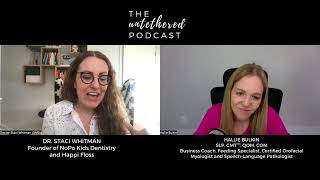
This content was created by Hallie Bulkin. This content was uploaded by Hallie Bulkin. This is a YouTube podcast episode titled "Episode 169: Functional Dentistry and The Oral Microbiome with Dr. Staci Whitman" (created 2022-06-28; last edited 2026-01-21). It’s an interview-style episode hosted by Hallie Bulkin with guest Dr. Staci (Stacy) Whitman, a holistic oral health educator and founder of No Po Kids Dentistry and Happy Floss. The conversation covers functional/biological dentistry and upstream root-cause care, the oral microbiome and its systemic links (gum disease connections to Alzheimer’s, pregnancy outcomes, cardiovascular and autoimmune issues), cavity prevention and remineralization (hydroxyapatite, ozone therapy, sealants, tailored protocols), the impact of mouth breathing and tethered oral tissues, diet and snacking strategies, intermittent fasting, regenerative farming/food sourcing, and practical patient/parent tips (water, sleep, flossing, collaborative referrals to myofunctional therapists and ENT/orthodontists). The episode is educational and aimed at clinicians and parents interested in holistic, preventative oral-health approaches.
Chapters
Hi and welcome to episode 169 of the Untethered podcast. Today we have Dr. Stacy Whitman joining us as a holistic oral health educator, the founder of no Po Kids Dentistry and the founder of Happy Floss, Dr. Stacey Whitman is on a mission to create a cavity free world with her extensive education in both conventional dentistry as well as functional health. Dr. Stacy is a trailblazer for holistic and preventative dentistry for both kids and adults. Quick disclaimer all information, content and material of this podcast are the opinions of the speakers and is for the informational purpose only and not intended to serve as a substitute for the consultation, diagnosis and or medical treatment of a qualified healthcare provider. Welcome to the Untethered Podcast. I am your host, Hallie Balkan. I'm a certified orofacial myologist, feeding specialist and mentor. This podcast is all about getting your questions answered and collaborating with colleagues to bring you the most up to date information in the orofacial myofunctional therapy, tethered oral tissue and airway space. I challenge you to keep an open mind and joint. My mission to get this information out to the masses. Let's get started. Stacy, thank you so much for joining me today on the podcast.
Thanks Hallie. It's a pleasure to be here.
I'm excited to talk about functional dentistry and all that. All things related, this is a topic that while not being a dentist and you know, I've become really passionate about because it's basically become my life mission to find functional dentists and functional practitioners in general to help a lot of the patients that we work with. So can we start there? Can you share with, you know, our listeners what you consider to be functional dentistry?
Yes, great question and a common question. And again, thank you so much for the opportunity to share this info with your listeners. Functional dentistry, essentially, like functional medicine, is an approach where you look at root causes or you try to get upstream as much as possible possible to disease or ailments. So instead of the traditional model where we are assessing end stage disease essentially in dentistry in particular, and let's say you go in and you're told you have a cavity and then you just schedule a filling appointment and you're out the door and there's really no conversation as to, well, wait a second, what went wrong here? And, and we've really normalized a lot of oral health issues, I think like bleeding gums and gum disease and cavities and bad breath and mouth breathing and all of these things are common, they're extremely common, but they aren't normal. And, you know, from an anthropological, evolutionary standpoint, our teeth aren't meant to break down and degrade and dissolve. You know, we are supposed to be nasal breathing. Our gums shouldn't be bleeding. And so functional dentistry is sitting with a patient, really taking the time to dig into their medical history, their lifestyle, their diet, their sleep, all of these things, the products that they use, and try to unpack what happened so that we can prevent it in the future. Because we know through prevention, that is how we achieve optimal health.
I love that you said that. Common, not normal. I say that all the time. I think I even have that, like, as the name of one of my modules in my Milo course, because that's such a big problem.
Right.
And I know for a lot of us who work towards getting down to the root cause of what's going on and kind of uprooting that so that hopefully other symptoms start to resolve. That whole common but not normal thing is something that I really hope kind of seeps into more conversations that people that parents have with practitioners and practitioners have with parents, because there's so many things that we've quote, unquote normalized that are abnormal that are truly impacting our health. So, yeah, I love that you that you highlighted that. And I think that comes down to what's going on in our mouth and how health starts in the mouth. And I know that you talk about the oral microbiome.
Yes.
Humbling over my own words today. Will you talk a little bit about that and how just every. I always joke, and I don't think it's such a joke, but I go, our pediatric dentists are like the pediatricians of the future because all our health starts in the mouth.
I love that you said that because I feel that way, but I have a strong bias. Of course, health does start in the mouth. It's the gateway into the body. I mean, we have so much immune function and benefit that starts in our mouth because this is a major access point to bacteria and viruses and molds and things to get into the body pathogens. And traditional dentistry is incredibly important. And I never mean to say that it isn't, but we are not taught a lot about assessing systemic health in the mouth. I mean, there's bits and pieces, but you can really dig deep and see nutritional deficiencies. You can see if a patient's dehydrated, you can assess their age airway. You can tell a lot about their stress level, you know, even, like, sleep. There's just so much their gut health and of course, you know, if we can have this snapshot into time and look inside the body from what's happening in the mouth, and we can help this patient achieve systemic health, too. So it is incredibly important, and the oral microbiome is a huge component of that. So many of us are familiar now with the gut microbiome and the importance of gut health. That has been front and center now for over a decade. And we've heard of leaky gut and gluten intolerance. It's on people's radar. But now I'm excited that the oral microbiome is kind of stepping up front and center, and we're realizing how impactful that is also on systemic health.
So.
So we do know, for example, gum disease and pathogens that are associated with gum disease and periodontal disease. They can get into our bodies through leaky gums. So if your gums bleed, that is now an access point for these pathogens to get into your bloodstream and lymphatic system. And from there, they hitch a free ride all throughout your body and end up in places they shouldn't be. And we used to think these pathogens couldn't cross the blood brain barrier. Well, guess what? They can. And so now they're being associated and tied to Alzheimer's and dementia. We used to think they couldn't affect our babies, our fetuses. Well, they can. They can get in and affect our pregnancies. They can lead to, like, preterm birth and, like, low birth weights. It can affect fertility. Cardiovascular disease can be tied to gum disease, diabetes, autoimmune diseases, joint issues, arthritis. I mean, the list is really going on and on. And our oral microbiome is impacting our gut microbiome. So if you are working with a naturopath or a functional medicine doctor, and you have a lot of gut issues, and you're doing all the protocols and things, but you're just not getting to the finish line. Many times I say, has anyone talked to you about your oral health? And even in the naturopathic and functional medicine world, it tends to get skimmed over, definitely. Much less so than traditional conventional Western medicine. But it is important to look in the mouth. Do you have gum disease? Periodontal disease? What is your microbiome doing? And now there are microbiome tests that are coming out on the market. They're usually spit tests. They're doing genomic sequencing. So we're really seeing in what balance do we have beneficial bacteria, which are very important for our health. But compared to Pathogenic bacteria, and it's when they're out of balance and we have dysbiosis that things can go sideways. And then we get gum disease and bad breath and cavities. And the big thing, I like to hit home with parents, too. You know, cavities aren't in your destiny. They're not in your child's destiny. So I do hear a lot, Dennis say, oh, you have soft teeth. It's genetic. But just like epigenetics, we have control over our health. Okay, so just because maybe you have a family history of cavities or maybe your teeth are undermineralized, it doesn't necessarily set you up for this future of chronic dental disease. And this is where functional dentistry comes in, is we need to help support the patient to stay ahead of it. So you might need to be more on top of things with your diet and hygiene, because maybe you are more susceptible, but it certainly doesn't mean that you can't control it. And so that's a really important point. And also that cavities, it's so antiquated to just say brush and floss more and avoid sugar. I mean, I feel so badly for all these families coming in. Everyone out there that's been told this, and then you are ripping your hair out saying, I don't give my kids a lot of sugar. We do have a decent hygiene routine. They still get cavities. And you feel, like, shamed or judged at your dental appointments, which sadly, I hear happens often. It is so much more than those things. It is nutritional deficiencies, fat soluble vitamins, trace minerals. How are you breathing? Mouth breathers are at a significantly higher cavity risk than nasal breathers. And also, what is your gut health like? That does impact oral health too. So do you have gluten intolerance or celiac? How is your salivary content? Do you have, like, Sjogren's disease? All of these things tie into oral health. So to just say brush, floss, and donate candy bars is really missing a majority of issues. And the real thing is if a patient is, let's say vitamin D deficient, or let's say they're trace mineral magnesium deficient, by helping a patient get to optimal levels to achieve better oral health, you are helping their systemic health too, tremendously. You're going to help their sleep and their mood and their immune health. So it is all connected. And unfortunately, dentistry went one way and medicine went the other way. And that's a whole other podcast why that happened. But we're trying to get the Mouth back into the body. And we're trying to educate patients that it is important to focus on oral health. And I agree with you. I think besides gut health, I really do think it is paramount it's the center of our health because it is the gateway into our body.
Yeah. And I mean, and I love. This is so informative. I'm sitting here, like, taking notes on things you're sharing too, in terms of like, remineralizing. Right. And or reversing cavities to a certain extent. Like, what can parents do beyond, you know, obviously going to a biological dentist and the, you know, the traditional advice they get. Are there certain other things? Like, for example, my family uses a certain toothpaste. It's supposed to help remineralize your teeth. And we'll like, leave it on our teeth instead of like rinsing it off at the end after we're done, like, we spit it out, but then we leave it on our teeth. We don't rinse. So do you have suggestions? Is that like one of them?
Yes. Great. You are onto something there. So I want to preface this as saying if you've been told cavities can't arrest, which means stop or reverse or remineralize, that is not true. So I see it every day in my practice. It's what I'm known for. People come and see me for this. However, you do need to catch the cavities very early. They really need to still be in the enamel or maybe just barely through the enamel. And a lot of times it'll be more successful in baby teeth in that situation. So my point is, you really do need to work with a dentist. I don't recommend just doing this on your own at home because your child may have a huge cavity that's approaching the nerve. And that is a situation where these protocols, they really won't work. I mean, I will be honest, there are some outliers where I've seen some arrest. You don't see, you won't ever regrow the tooth. But I have seen arrest in some extreme cases. But I don't suggest trying it without the supervision of a well trained functional or biological dentist. I have an entire protocol at my office that I implement and it is bio individual. So that is the thing. Just like everything in traditional medicine seems to be like one size fits all. Here's your diagnosis, here's your medical code, here's your prescription. Bye. I'll see you in a year. Well, that doesn't work for everyone. We're all different I mean, even within a family, we are different. And so when I create my remineralization or carries arrest protocols, it is tailored for the individual. But generally we need to understand what is the real root cause. Right? So very often it can be mineral or nutrient or vitamin deficiencies. So we want to be working with a naturopathic doctor, ideally getting tests done so we know where we're starting with and trying to get that child up to optimal levels. So that is a starting point. But also if they're mouth breathers, so we need to get that under control too. So we work with myofunctional therapists, we work with ents, we work with early functional orthodontists to try to see, like, why is this child mouth breathing? You know, I make the diagnosis and then we refer out and have a collaborative approach there. And that's a whole other tangent too, that we can talk about. But because you can do a lot of these protocols, but if your child is still mouth breathing every night while they're sleeping, it's not going to be successful. Mouth breathing changes the microbiome. It creates dysbiosis and it lowers the ph in our mouth, which means it's acidic. And we know acid equals disease. Okay. So we want neutral or alkaline pHs, ideally. So on top of that, we use a lot of ozone gas in my office. So ozone is a very potent antimicrobial, antibacterial antifungal, and it will essentially kill pathogenic bacteria in the mouth. So it just helps jumpstart this process of getting us from dysbiosis back into homeostasis. That you do need to be working with a dentist that offers that. I don't suggest use ozone gas in the mouth at home, but there are ozonated oils that you can purchase too, and you can apply those directly to the cavity. So that's part of our protocol. And so whether they're in between the teeth and we put the ozone oil on the floss, or we use like a little micro brush and scrub it into the tooth. And then hydroxyapatite is a really important component as well that is found in some toothpaste out there right now. Boca ryse well, wellness have some. We have to be a little careful to make sure they have a high enough concentration. But those are some that I do, I do like and I promote. But hydroxyaptate essentially is like a calcium and a phosphate, a phosphorus. And so it's, it's a mineral and it's what's in our enamel already. So hydroxyaptide comprises about 97% of our enamel, about 60% of our bone. And so now there's a lot of data and research to show it is a fluoride replacement. It's working as well as fluoride, if not better. It's non toxic. We're not worried about neurotoxicity, it's safe to swallow. And as you mentioned, and this is with all toothpaste, we don't need to rinse our toothpaste off. You should be brushing, spitting, and then leaving the toothpaste on your teeth. And so I do tell parents if there is a cavity, I like them to even put extra. So just kind of slather it on there or put it on your floss and get it up in there. And don't rinse with water, just have your child go to bed. So that's part of the protocol too. There is homeopathy that you can use like cell salts and things. I mean, there's really a lot, but again, I have to tailor that to the individual. And diet is a big component too. So how frequently is your child eating? Are they grazers? Do they snack all day? Do they sip on juice all day? Or even something you wouldn't think of like kombucha, which we think is healthy, or even carbonated waters. They're altering everything we put in our mouth. Changes the microbiome, except you could argue maybe just plain still water. But even that, I mean, structurally, it's really hard to find net neutral, not dead water or bottled water that has some sort of altered ph to it. So just think, everything you put in your mouth is changing your microbiome, it's changing your ph. And so we do want kids eating on a schedule. And all of these things apply to adults too, of course. But you want to be eating ideally every two hours. So it gives your mouth a chance to rest and it gives your saliva a chance to neutralize and to raise the ph. And so all those healthy enzymes and ions can work to naturally remineralize your teeth. But also we suggest being mindful of our snack choices. And so so many kids are eating fermentable carbohydrates and that those feed our pathogenic bacteria. And so what are fermentable carbohydrates? An easy way to think about it is crackers, pretzels, chips, granola bars, fruit snacks, fruit leathers, all of these things. And of course candy bars and soda and juice, sports drinks, all of these things that you know, especially Those initial snack foods like crackers and pretzels, we're kind of thinking as parents, like, those are kind of healthy snacks. They're on the go. I'm busy. But in reality, they do stick in your teeth. They feed pathogenic bacteria and they can lower pH and they act a lot like sugar in the mouth. So I'm not an all or none. We are in modern society and we are busy and we need real attainable tips and tricks. But I just like parents to be mindful that these things do cause cavities. So when you're giving them to your child, you're aware of it and knowing that that can impact them as well. And then I have a little parent hack. So if your child is eating crackers and pretzels and chips after, offer them some water or offer them a slice of apple or a carrot or a piece of cheese. Because those things, as you chew that crunchy carrot or that apple, it's going to help get the crackers off the teeth. It's going to help create salivary flow, help rinse the teeth and cleanse the teeth. Cheese is also very neutralizing. So those are just little tips. But parents always say, well, what snacks do I give my kids? That's all they'll eat. The first thing is try not to offer them a lot. Trying not to bring a lot of those things into the home. But if we do have them, try to make sure we have veggies and fruits and nuts and seeds. I say olives and pickles and meat, seaweed snacks are great. You know, those things that come from the earth and not from a factory, those things won't cause cavities. You know, if you eat too much fruit, I suppose it's an issue, but I like to focus, again, on realistic attainable things. So fruit is fine, but, you know, trying to incorporate in some of these whole foods into your child's diet and being more consistent with that and giving it time, it can take time if they're a big cracker kid, to get them to eat like veggies and hummus. But you just keep. You keep at it. You keep offering and chipping away at it, but just again, knowing that those foods can cause a lot of cavities. And so that's a big part of our protocol is assessing the diet, because diet really is so foundational for health.
Yeah. And I mean, this is speaking to my pediatric feeding specialist heart right now, because I really look at the MYO component, the tethered oral tissue comp component, and I'm actually in a homeopathy course right now as well. So I'm now coming at it from like different angles. So you brought that up and I.
Was like, yes, I love that you.
Use homeopathy for patients too.
Oh, and tongue tie. I mean, that's it. Sorry to interrupt, but like.
No, go ahead.
If your tongue is, if your child is tongue tied, they're at cavity risk too often. And some. And lip tie too. Your tongue does so much cleansing of your teeth for you. The next time you eat a bunch of crackers, I want you to really think about what your tongue is doing and I want you to really feel how those crackers stick in your teeth. I mean, it's pretty overwhelming. I don't eat crackers because it drives me bonkers because I hate having things in my teeth. But they're all in the crevices and grooves and they're in between your teeth. But then think about what your tongue does to clean it. And then imagine if your tongue can't move, it can't clean your teeth. So the crackers are just sitting there all day. And then especially maybe if we have an okay hygiene routine, like not the best. Because a lot of kids don't love brushing and flossing, you know, so looking at tethered oral tissues is really important. And then, you know, lip tie, it can keep the lip down and you know, liquids and things can build up. It's a cleansability issue sometimes on the upper of the upper teeth. So it's incredibly important. So myofunctional assessments are also part of my protocol. And again, trying to get to the root cause. So there's a lot that goes into it. And so our office, we book quite long appointments. It's not your traditional pediatric dental office where it's sort of like 30 minute appointments. Turn and burn, you're in and out. It's like a whirlwind. You barely speak to the doctor. Our patients are there for questions quite a long time and they get a lot of education. But because of that, we're seeing really incredible outcomes for these kids, which is very rewarding professionally. Yeah.
I have two different topics that came to mind because I was just at the dentist and they were checking my sealants and he did a whole 40 minute exam on me because it was a new dentist down here that we're going to. So sealants, because I know that I had sealants put on my molars when I was probably like 12. I don't know, whatever age I was. And I guess some of them are still in place. I think I've only ever had one true cavity that was filled and. Great. Do you have any thoughts on sealants? Like are they a yay or a.
Nay or a I'm a yay if they're done properly. So that's the caveat. The data is very solid that sealants do prevent decay in the chewing surfaces of our teeth. You can't deny the data. I'm concerned more about materials, especially as more is coming out about microplastics and BPA and phthalates and all of these things. So it's not to create like fear. But I do think we should be having the conversation about it and being mindful about it. And I'm a big advocate for just minimizing exposures. That being said, there are really clean materials out there right now. So the concern with sealants is, number one, you don't want to seal a cavity or bacteria underneath it and you don't. And you need to be mindful of the materials. So the way that we do them is we have a tool that assesses for cavities. It's like a little camera that we use. And if we do see the indication that there's bacterial activity, we'll use my laser and kind of clean it out. And then we use ozone gas so we're really disinfecting that surface. And then I use a ceramic based material. So that is a pretty atypical technique. I'm hoping more and more dentists will adopt this. To me, I think one of the most important procedures we do in a dental office day to day is a sealant. Unfortunately, sealants are often considered like a turn and burn procedure where the dentist isn't doing it and auxiliary team members doing it. They're kind of rushing through it just to slap them on there. It's a big money maker for dental practices. I don't mean every practice is this way, but it does happen. So just ask the right questions. I have an article actually that I wrote all about sealants. It's many, many pages long. If you want to deep dive on it, you can find it on Ask the Dentist. If you search Ask the Dentist sealants, that article that pops up is something I wrote. So that being said, I put sealants on my kids teeth because I believe in my technique. And also I'd like to point out right now I have a lot of control over my kids diet. They are six and eight. I will not always have control over them. They are going to hit middle school and they're going to hit high school, and I am sure they're going to be consuming things that if I knew about it, I would be very stressed out about. This is reality of life. Right. The hope is they go through that phase, they sow their oats, and then they come back to a healthier lifestyle into adulthood. Because I have set a solid foundation in their formative years. That being said, I want their teeth as protected as possible while they're potentially experiencing things that I wouldn't necessarily be feeding them right now. And then, of course, hygiene will change and things of that nature, too. So I'm pro sealant with some stipulations, I guess.
Yeah, I love that. And I love your use of ozone, because my biological dentist up north uses ozone. And it's just. I've learned so much about it, and it's. It's just a very cool thing. I know. You also have to be very careful. You really need to be trained in how to use it.
Yeah.
Something that they had a lot of training on and have very nicely integrated into their practice.
So I have added to my practice in 15 years. Ozone is the wave of the future. For any naysayers out there, they do not understand it. They have not even read about it. I guarantee you it is. There's so much research to support it. If you use it clinically for one day, you are going to see the benefit. And it is a very easy thing to add to a practice. To be honest with you. You do have to be careful. It's only because you don't want to directly inhale it. It's an irritant. You'll start coughing. We've never had that happen. I mean, it's. It's not a big deal. You know, it just takes a little mindfulness. There's a lot of things we do in dentistry that you have to be careful with. Right. So it's no different than placing a filling. You can't have a child breathe in or swallow or asphyxiate on filling material. I wish more dentists used it. So keep spreading the word about ozone. And if you are in an area and you have a dentist down the street who's using ozone, I would go see them. It can help so much with gum disease and periodontal disease and cavity prevention. It's really cool.
Yeah. I, like, went on this whole research, just reading everything I could get my hands on with it, and discovered that the company that I was buying the infrared sauna from had an ozone machine that people use. It's like a hundred bucks or something. But it has a tubing that's meant for cleaning vegetables. You can make your own distilled water for nasal rinses and whatever. And I was like, oh, my gosh, I've fully gone down the rabbit hole now. Now here we go.
Oh, I love it for sinus stuff because I'm. I'm a sinus impacted in person. Like, I have a lot of sinus issues, so I use it a lot, the ozonated water. Or I'll use, you know, you can use insufflation. You make you run it through olive oil and it creates an ozonine, so then it's safe to breathe in. Oh, it is. If you have sinus issues, find someone using ozone. Game changer. Promise you.
I love it. I love it. All right. And my other thing that I thought about, and I know this is more like adult directed than peds, but you had mentioned, you know, something actually we talk about a lot with, you know, is your child a grazer? How frequently do they eat? Are they eating meals or snacks? Like what? You know, so when it comes to frequency of eating, like, I've done intermittent fasting in the past and look, actually to get back into it because I kind of fell off the bandwagon with it, but I did it for like a couple of years and just never felt better. And also cut out gluten and that whole thing, which gluten I haven't had in like couple years, three years or so now, but at least not intentionally. What is your thought on like, intermittent fasting and, you know, benefit. Are there benefits to oral health? Does that harm oral health? Like, what is, what are your thoughts on that?
Yeah, I'm an intermittent faster, for sure. Here's the thing with intermittent fasting, again, it's bio individual. So when you go online in these blogs and it's like, you should do 16 hours a day, that's cool, but that's not for everyone. You need to listen to your body. And especially I think women. It's very different. We're hormonally different, we're biologically different. Especially when we have our cycle, everything's different. So don't just listen to bloggers. Listen to your body. But I'm a big proponent of intermittent fasting, and I do it and I've done it for years and years and years and years. I do think we just eat too much. And especially if you focus a lot on gut health, we need to let the gut rest. Also, I also really look at Ancestral our ancestors and evolution. And how frequently do we think we were eating then? I mean, we just didn't have access to endless amounts of food like we have now. So again, I suggest playing around with it. Listen to your body, see what resonates with you. But of course, just like resting your gut is important, resting your mouth is important too. We're not meant to have food or drinks in our mouth all day long every day. We're just not equipped for that. That is not how we evolved. So if you're doing that every time you put something into your mouth besides water, the ph drops. It is part of the digestive process. So you go from a neutral ph to an acidic ph. So if you are snacking, grazing, sipping, because that is a big issue is what you're drinking. People don't realize how much sugar and calories and just consumption is happening through liquids, especially with like some of these corporate coffee places, right, that are really affecting human health, in my opinion. But anyway, so every time you're drinking or eating, your. Your mouth is acidic. So if you're doing that all day, you're in a constant state of acidity. And so that your teeth can't keep up with that, no amount of hydroxyapatite, toothpaste, no amount of ozone is going to be able to combat that. So you have to make, if you want true optimal oral health and gut health because it's connected, you have to make some lifestyle changes, and that can be hard for people. And if you are really struggling, I suggest working with like a functional nutritionist or a health coach, because sometimes you just need a little accountability or some guidance or some motivation. But to answer your question, I'm very pro intermittent fasting, you know, whatever you want to call it, intuitive eating. I mean, whatever people call it. I know, it's so controversial. I wish that food just wasn't so controversial. I have strong opinions about some of these things too. But I am a big believer of listening to your body, but also using biology and biochemistry and science. It's part of that. And I don't think humans are meant to be eating all day long every day at will. You know, I think we need to have more structured eating. So.
Yeah, well. And I mean, you touched on one of my other favorite topics to talk about, which is basically how the United States treats food or fails to. Yeah, if you will. I mean, it's, you know, and the interesting thing too, which I don't like politics, but all of a sudden we have all these factories that are just catching Fire. Like one after another after another. It's just so amazing, like, why is this happening? But I think it really comes back to this whole non GMO organic. If we can get things straight from a farm versus factory, factory, farm, farm, raised fish. And I don't mean like far, you know, when I say from the farm, I mean like organic, actual farmers who are growing their own produce, raising their own cattle, you know, creating their own products to the extent that they can. Because they also understand that down the street you may have farms that are not doing all of this and who may have other, you know, things going into their soil that can affect adjacent farms.
But, oh man, you hit the nail on the head. So if you're familiar with Dr. Zach Bush, he speaks to this a lot. So he, he theorizes. I could not agree more. The true root of all of our chronic illnesses is from what we've done to our soil and the microbiome of our soil, because that's where we're getting our microbiome and our nutrition and our bioavailability and da, da, da, da, da from. We've trashed our soil through all these fertilizers and stripping and mono cropping and all of this stuff, right? So that's why I am a big advocate for regenerative farming. I am a big advocate to buying local, supporting your local farmer. Know where your food comes from. You can't do it all the time, but it's important. And again, I don't. I wish there was a way I could talk to every human on this planet and to sit with them and say, please stop having anxiety. This isn't about fear. You need to find balance. But it acknowledges power. Okay? And I will say I don't feel our government or the food industry has our back in this realm at all. It's, it's so complicated, so multilayered. There's lobbies, there's. It's very powerful. There's so much money and big food and essentially that ties into big pharma. And it's unfortunate topic when you start talking about these things. It's unfortunate because people are like, oh, you're a conspiracy theorist. It's not about that at all. And I think some of it's just business. It's just capitalism, right? But you need to be mindful of it. It doesn't mean you need to participate in that. And you do need to be aware of what's in your food. Start reading ingredients, you know, start asking these questions. For me, my health is everything. It's the most important thing in my life. I would give up everything else as long as I had my health. And that doesn't resonate with everyone. And so I think people in the health and wellness world, though, that is really paramount to them and foundational. But to me, I know everything I put into my body is leading me toward health or potentially disease. And so I'm very mindful about that. Now, does that mean I don't have a piece of chocolate cake? Of course I do, because that's also finding balance and enjoying life. But you'll find as you cut some of these foods out, if you reintroduce them, they don't taste the same. They kind of taste fake or plasticky or gross or chemically. And so, you know, it's just taking little baby steps to get back toward foundational eating habits, which I think is, is getting back to eating things that come from the earth. You know, that's what I try to teach the kids. Things that come from a farm and not a factory, essentially. Right? So I think it's never too early to start teaching your kids. I teach my girls to look at ingredient lists. We don't talk about calories ever. We don't talk about weight ever. We talk about ingredients. And just in a very casual way, like, oh, hey, look at this, look at these ingredients. I can't really even say these. Do you know what these are? Could we go to the store right now and buy these ingredients? You know, my girl's like, I don't even know what that is. I was like, I don't either. What aisle would that be in? I don't. What aisle would that be in? And you know, my almost nine year old's like, it's a chemical mom. Well, okay, so where would we get that? And she's like, I don't know. It just, you know, it's just teaching them and teaching them to listen to their bodies. I think we've forgotten to listen to our bodies. And some of us are so inflamed and so consumed with these sugars and these, you know, these seed oils and things. Like, we've, we've forgotten what it feels like to feel healthy. And so once you get there, like really just listen to your body. And so that's what I'm trying to teach my kids. Like if you eat something, something and now you have a stomach ache, I wonder why. Was it because of all the sugar? Was because of the blue food dye that was in there that I was like, like, oh my gosh, you're eating with some blue cupcake. I know, but. But I let. I let them do it at birthday parties and things because they have to have these experiences themselves. And then very often they will have a stomachache that night and we'll talk about it. And then I find the next time, they don't eat as much of the blue cupcake, and then the next time they actually pass on the blue cupcake. So, you know, you just. You're just a guide in your child's life, and you do have to sometimes be a silent observer and let them figure it out for themselves. But for you as an individual, your health is extremely important, too. And so really trying to listen to your body is so important.
I appreciate this. I love this conversation. I laughed one day because my daughter, who's in first grade and so everything was shut down with the pandemic up north.
She.
I homeschooled her for kindergarten. They actually, like, didn't even open up our schools until like, a month before the end of the school year. So she really, you know, she hadn't had all these different experiences. And she came home at the beginning of this school year down here in Florida, and she was like, mom, like, what's McDonald's? And I was like, this whole conversation. And she goes, yeah, you know, this child said in my. I don't want to say his name in my class. Said, it's not real food. And I. So we had a whole conversation about it. And she said, yeah, I'm pretty sure it's not real food either, because my mom only gives us real food or something. And I was just like, well, that made my heart happy to at least know that she could have, like, somewhat of a conversation understanding. Like, we eat fruits and vegetables, and of course, my kids do eat some sugar, and they. I let them eat things at birthday parties. And, you know, it's all a balance because I remember I started being really crazy with eating organic and non GMO and really watching what I was putting in my body before I got pregnant, through all my pregnancies and ever since. And I basically joked to my husband, who would complain about our grocery bills, shopping at Whole Foods, he would be like, this is skyrocketed. And I'm like, do you want our kids to be smart or not? And I say that as a joke, and I don't mean that to shame anybody or anything negative. I just use to kind of use it as a reason to, like, get him. Because for him, intelligence and doing well in school and, you know, that. That's what he identifies with. So I knew it would just get him to get off my back about the grocery bills. But I think it's become a bit easier to eat healthier, honestly, in some areas, especially straight to the farms and cheaper even when you go straight to that source as well. So there's money.
Yeah, you'll save money. And it's not attainable for everyone. I mean, it's, it. I hope there's a shift, like I hope that these foods can become more accessible for everyone. Right. But it, it's just little tweaks and changes that can have profound impact. Just a little more water every day, just, you know, going out for a walk, getting sunlight, prioritizing sleep affect, changing the way you're breathing, trying to eliminate stress, less screen time, less social media, less news. Like all of those things do impact our health too. But, you know, it's a personal decision. But to me, you know, and I think a lot of people in holistic health or functional health, they've. Almost everyone has a story, like an aha moment. For me, it was watching my mother pass from cancer and she was very young. She was 56 years old. And it was very impactful in my life. And a lot of it was environmental and her choices in life. And I don't believe we're meant to thrive. Humans are meant to thrive. And so to me, my health is absolutely the forefront of my wellness and my life desires. And so if it means spending a little bit more in food and I sacrifice a weekend trip or a new pair of shoes or a fancy purse or whatever it is, I will. Or getting my nails done or that coffee at the corporate American coffee place. I'll make my own coffee instead. I will do all those things. And sometimes it takes a while to get there and it's a slow movement.
But baby steps and choices.
Baby steps and choices. Choices. Yeah, yeah, yeah.
No, I completely resonate with that. And I've definitely over the years, like, slowly, like one step at a time, evolved into where we are now. And I still have more evolving to do so. I completely resonate with that. And I always say to people, if you're interested in that, just make one change. Figure out one change to make today, this week, and then from there you can start to. Because it can be so overwhelming and you know, we have enough on our.
Plates as ready as I will tell you, three of the easiest. I think some of the easiest things to do that will have the most profound benefit.
Yes.
Drink more water, prioritize sleep, get on A very solid sleep schedule. Really shoot for seven to eight hours a night. I mean, prioritize that. Get off your scrolling of social media because that's such a time suck. I'm guilty of it too. It's like nine o', clock. I go to bed early. It's nine o' clock and I'm like, I want to be in bed at 9:10. All of a sudden it's like 9:40. I'm like, what? What have I been doing? I mean, it's just such a waste. So get, get off that habit and then floss your teeth. I can't emphasize floss. I didn't mention this earlier. Floss. I would choose flossing over brushing any day of the week. Gum health is so important, as we spoke to earlier in our talk. You know, leaky gums, periodontal disease, and most cavities, we see they're between the molars. Like, get into a good flossing routine. Those three things, water, sleep, flossing, boom. You'll be healthier in no time.
I love it. Well, thank you so much for joining me today. This has been awesome. I know we could talk for days on these topics.
No, it's an honor. I really appreciate it.
All right, well, we'll chat soon.
Okay, sounds good. Thank you.
Thanks for listening to this podcast. If you want to hear more of these Myo Tots, Airway and Feeding related episodes, be sure to leave a review on Apple podcasts or pledge a small amount on patreon.com the Untethered podcast. If you found value, others you know in this space will too. So be sure to share this episode on your social media platforms and join us over on Facebook, on my Facebook page at Hallie Balkan Biz, on Instagram @hallebulcan. And you can head over to theuntetheredpodcast.com to grab a copy of the show Notes, where you can also subscribe to be kept up to date on the latest podcast episodes.
More from Hallie



What I Was Missing in Feeding Therapy: ARFID, Airway, and Myo with Samy Hernandez





