Episode 198: Dr. Steven Olmos, DDS: How Do You Sleep?
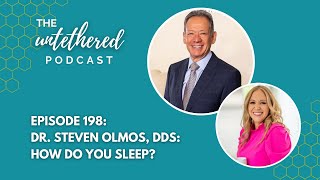
Interview-style podcast (YouTube) where Hallie Bulkin speaks with Dr. Steven Olmos about the links between respiration, sleep-related breathing disorders, craniofacial pain, and temporomandibular disorders. Dr. Olmos describes founding TMJ and Sleep Therapy Center International (multi-country network), his focus on root-cause care (nasal valve/nasal obstruction, airway-first approach), multi-center data collection and published research (including a large study linking nasal valve compromise to increased orofacial pain risk), pediatric screening efforts, and multidisciplinary education/mentorship for clinicians.
Chapters
Hi and welcome to episode 198 of the Untethered podcast. Today we have Dr. Steven Olmos joining us. Dr. Olmos was in private practice for more than 40 years, with the last 30 years devoted to research and treatment of craniofacial pain and sleep related breathing disorders. In 2023 he made the decision to retire from clinical practice to focus on advancing the fields of pain and sleep through research. He obtained his DDS from the University of Southern California School of Dentistry and is Board Certified in both chronic pain and sleep breathing Disorders by the American Board of Craniofacial Pain Medicine, American Board of Dental Sleep Medicine, and American Board of Craniofacial Pain and dental sleep medicine. Dr. Almas is the founder of TMJ and Sleep Therapy Centers international with over 65 licensed locations in seven countries dedicated exclusively to the diagnosis and treatment of craniofacial pain and sleep disorders. He continues to lead the field by continually publishing research papers on the connection between pain, airway and sleep disorders. Quick Disclaimer all information, content and material of this podcast are the opinions of the speakers and is for the informational purpose only and not intended to serve as a substitute for the consultation, diagnosis and or medical treatment of qualified healthcare provider. Welcome to the Untethered Podcast. I am your host Hallie Balkan. I'm a certified orofacial myologist, feeding specialist and mentor. This podcast is all about getting your questions answered and collaborating with colleagues to bring you the most up to date information in the orofacial myofunctional therapy, tethered oral tissue and airway space. I challenge you to keep an open mind and join my mission to get this information out to the masses. Let's get started. Dr. Almost, thank you so much for joining me on the podcast today. I'm excited to chat.
Well, it's my pleasure. Looking forward to it.
I would love to jump in and have you share a bit about your practice and the concept behind the TMJ and Sleep Therapy Center International because I understand you're not just US based and I think it would be really great for our listeners to understand more about the concept behind it, how you came to develop it and where you are today.
Well, it was based on need. So I did general Dentistry for a period of time now, 42 years since graduating dental school and after about 10 years I really was looking for a different challenge. I was looking for focus on these patients that nobody ever seems to be able to help, the ones who had chronic facial pain and issues. And I always assumed that the specialties knew how to do this because the general dentistry weren't taught these things. So I referred them to the orthodontist and the prosthodontists and the oral surgeons, all thinking that everyone knew how to take care of them, but come to find out nobody does and nobody's trained. And it was more about management. And so that was in the 80s and here we are now 2023 and it's still that way. I, I, I'm just amazed at how little thought has been given about how people got this way. We're still managing in the most part of the way things are taught, how to cover up symptoms. We have a little more sophisticated cover ups and band aids than we did before, but, but no one was really ever thinking about, well, why do these things happen and why do these people continue to suffer throughout their whole life? And so that was my emphasis. And so I decided I wanted to limit my practice to treating these patients. And I took, you know, courses after courses and I studied on my own and I took all the board exams for all the existing, you know, different groups that had board certification. I wanted to understand all the philosophies. And then in treating these patients I came to my own philosophy, a little bit of everything. And I always understood that for you to heal, you have to have good sleep. And so that was my focus. And then it turns out that a lot of these people, they weren't sleeping because they couldn't breathe. And so then I kind of directed my thought process into that about 30 years ago and now have a really good understanding of respiratory function, what it really means to not use your nose and to make sure your throat stays open all night and the consequences, the physical consequences. And so, you know, I've written a number of papers on the comorbidity between OSA and TMD and orofacial pain, grinding your teeth and primary headaches like migraine tension type cluster. For the pulmonary journals I've written papers about how, and just recently was published in December, the relationship between nasal destructions. In fact the nasal valve for first point of entry, if, if that is compromised on a patient, they're seven times more likely to have orofacial pain. This is the first paper that's ever directed and connected these things. And we had over a thousand patients taken from a number of our centers throughout the world. So this, this is one of the concepts and the things that I tried to do as I started to teach because as people ask me to give presentations and different places around the world I would give courses, I continue to do so. And I would meet other dentists that had similar thought process and they would want to know, well, how do I do what you do? You know, how do I limit my practice to these things? And so we created a standardized protocol to, to teach these people how to do that, where I also mentor them in addition to the courses and things that we do. And, and so basically wherever I've gone in the world and given lectures, that's where our centers have developed. And now we're almost 70. We're in seven countries throughout the world, we're throughout the US coast to coast, Canada, coast to coast. We're in Australia. We have four offices in Australia, one in New Zealand, we have one in Dubai, we have three in the UK and we have one in, in Dubai and also the Middle East. So we're, we're all over. This year we're planning to go to South Africa, Italy. So we're going to new places all the time and trying to spread the word about that it is possible to help these people and to do it consistently. I have a paper I'm writing right now on the comorbidity between these and also the efficacy of. So we publish, we're publishing a paper from. And that's one of the nice things about these centers is we collect data all the same. So we have multi center data collection. So when we publish our papers, it's quite impressive because it's not one facility, it's not one dental school. It's places all over the world that are seeing exactly the same things. And our techniques for treating these and our evaluation system which is really trying to understand why people have these problems and what's the basis for it. And so often they're related to respiratory problems and functional things that can be corrected. And so that's kind of been the mission. I published a paper on relapse. Why do we have to keep doing orthodontics over and over again? Why isn't it stable the first time you do it? In fact, why do we need to do it in the first place? And I published a paper on that in 2016 for the Journal of Orthodontic Practice, looking at CBCT Coneveam CT to evaluate obstructions that result in these relapses. And a lot of it has to do with the nasal component. And more people are starting to understand this now. But the paper we published about the comorbidity with oral facial pain, no one's ever published that before. And I think once we Understand a lot of the things we've been covering up that just keep getting worse until people have to have their joints removed and have titanium placed can be as simple as corrective nasal surgery. And so a lot of that is still missing from the ENT literature, certainly our dental literature. And so that's kind of been my mission, is to get that word out, to understand how respiration is so important to how we live in the quality of life.
I love that I, as an adult, as I was mentioning before we. We hit record, you know, came to realize that myself, with my own case and obviously through patients that, you know, I've co treated and my practice, it as much as I tried to go through some adult expansion and I had released my, you know, or I had my tongue tie release, and I did my own myo, and I was basically in myo every day treating patients. I noticed that my own maxilla was not shifting. It was kind of stuck and turned in on one side. And I, you know, finally had the nasal surgery earlier this year that I think was the catalyst to some of these other things. And I just gave a presentation in December on how, you know, what. Here was the order of treatment that I went through as a patient and a professional in this space. Here's the order of treatment that I wish I had gone through as a professional in this space, because I think it would have looked very different had I addressed the, you know, my nasal floor and my septum and, you know, all the surrounding tissues first. And it was really, truly amazing because, you know, going back to your point with, you said it so beautifully. And so, you know, simply in the beginning when we were talking that to heal, we need to sleep, but if we can't sleep right, well, that. That's the big problem I saw recently. Somebody said, you know, we should stop asking everybody how they are, and we should be asking, how are you sleeping? And when I realized that, you know, as a female who presents more with upper airway resistance syndrome than true osa, I was written off by a lot of different specialists that I had seen over the years. And after I finally could breathe through my nose and get quality sleep, the way that I woke up, the way I felt when I woke up, the energy that I had the ability to go through my day, I was like, I have no idea how I was walking around and living and being a mother and running several businesses. I have no idea how I did all these things before because my sleep quality was so awful. But I had no idea because that's all I ever knew to be true. And we see this so much with our patients, as I'm sure that you do as well. So I know you've also looked into respiration and facial pain. Does that go, is that orofacial pain? Does that go beyond just the temporomandibular joint dysfunction that people experience and radiating pain in other areas? What kind of pain, I'm just curious, what kind of pain do you typically see in your clinics and what kind of pain are you looking at in the research?
Well, it's chronic pain. If we look at what are some of the symptoms of respiratory problem, like sleep apnea, we see the forward head posture is a significant marker. Right now we're running a pediatric screening tool research study with Judy Owens, the head of Boston Children's Hospital, who also teaches at Harvard. This funded by the American Academy of Craniofacial Pain, one of the past presidents of that organization. We were able to collaborate and develop a visual screening tool for children that we're currently collecting data and hopefully later this year we'll be able to publish. Some of the early information we're seeing are the links between forward head posture, anterior open bites, narrow vaults, maxillary vaults and tongue ties, a heart shape and tethering. The things that we can identify early in life lead to people's chronic pain later in life. So we know that if you have forward head posture in a sleep related issue, you also develop inflammation of the jaw joint capsulitis. I published a paper back in 2005, I think, on how to upright the head when you have an inflammatory problem of the jaw. Using decompressive devices and things, we were able to get people's heads up about 4, 4.43 inches. And we had a population base of 13 to 74 year olds. So basically people of all ages are going to present in the same way. So what happens to you at night affects your day. The worse your apnea, the more the forward head posture, which means the more likelihood you're going to have cervical and lumbar pain. So these are the people who have the chronic low back issues who would think that the problem is on the other end and that it was your nose and your throat and your jaw that were producing those situations. And so getting people upright, you know, is really important in chronic pain because all the musculature that they have from, from the muscle, what we call extensor muscles, the back of the head that are trying to pull because the head's forward, they entrap nerves in the back of Your head that come from your spine. And so people get back of the head pain and pain above their eyes reflect birth from the SCMs as their day goes on. So these are the headaches that they deal with that are posteriorly related. But then you also have migraine, you also have tension type headache which is related to hypoxia during sleep, during REM related sleep apnea. So all these things that people have to deal with in their daytime. I try to explain to patients all the time that your problems were created when you were sleeping, but you wake up and have to deal with them throughout the day. And so then the first thing you have to deal with is the fatigue like you were talking about. And the questions I asked patients, so I don't miss the kinds of things you were saying is I asked them very simply, can you get to sleep? Can you stay asleep? Do you wake rested? You know, if you have primary insomnia, 50% of that is due to chronic pain. And then there's another component that if you have apnea that your brain's protecting you against going to sleep because it knows if you become unconscious, you're going to stop breathing. So there's a, you can be exhausted, but you can't go to sleep. Then there's the people who wake up during sleep because they have some kind of issue that could be pain related, that could be because they are struggling to breathe. And then, you know, because those are the people that say, well, I can get to sleep, but then I wake up every hour thereafter. And then there's the people that say I get to sleep and I stay asleep, but I wake up feeling like crud. And that's your fatigue issue and that's your immune system. That's what people don't understand is your nose is your immune system. So if it doesn't work, you, you're going to be tired, you're going to be more susceptible to problems. The nose is an organ to filter, moisten warm air, mix it with nitric oxide in your sinuses, that is antimicrobial, that prevents you from, you know, breathing in Covid and everything else. It's a peripheral vasodilator, so it lowers your blood pressure, it balances your CO2O2, so you maximize the amount of oxygen you can get from your blood. So extremely important that your nose works. And if it does, because I've seen lots of patients who have severe apnea, were able to treat them for their apnea, you'd expect them to be jumping up and down that they're feeling so good because you brought their age from 60 down to 5. But they say, doc, I really can't tell the difference, you know, until we. We work on their nose. And then, bingo, you know, you get that nasal surgery. Boom. Now the fatigue's gone. I've seen it over and over. And we understand that, of course, the more the nose is narrowed, the more the throat is narrowed. So something called peak, the critical pressure to close your throat is affected by opening the nose. It's called the Starling resistor model. So these are all important factors that we have to understand how they correlate. In fact, this morning I was working on a paper for the compendium on. They've asked me to write a paper on oral appliances for snoring and sleep apnea. But we need to. In any situation, whether it's snoring or upper air resistance or mild through severe apnea, you have four points of obstruction that all must be patent. Okay. To address any of those things. So that's nasal valve, nasopharyngeal velopharynx, soft palate, oropharyngeal, base of tongue. All of those have to be patent, regardless of what you're treating, in order to have successful quality sleep. That then is restful, you know, so you get the delta wave growth hormones, everything you need to be your best, you know?
Yeah, yeah. And I have to go back to, you know, pediatrics and what you were talking about with this. And you said a screener that you're. It's in development because we know that more and more children, especially being that my. My practice is primarily pediatric, we are seeing such an increase, and I think there's obviously a combination of awareness, but I think that it's also. We know our jaws are shrinking over time. We know that babies are born with this mouth open posture. We were seeing more infants who are presenting as mouth breathers at birth, whether that be because they have tethered oral tissue or there's just been some other type of orofacial changes in utero or during the birthing process. We're seeing these babies come out and need extra support with positioning because of tight muscles or, you know, the inability to latch. And it's. It's incredible to see also the amount of work we can do that young, early on to start working with them and trying to teach that nasal breathing, obviously guiding the tongue up, guiding the lips closed. After we confirm that, the baby truly can, you know, the nasal cavity is patent. But how young will your. Your screener Go. Are we looking at infants here? Are we looking at toddlers? Like where does it start?
We're targeting the 5 to 12 year old group in the mixed dentition. Right now we've got about 200 children in that study currently. But we're working more so that we'll have good statistical references for publication and that'll be published through Harvard. So we hope that that will have a great presence in the community. And but in terms of treatment, you know, as early as we can identify an issue, you know, the actual treatment can begin from birth, you know, identifying tethering so that babies can latch and they can be fed properly. And then of course active treatment anywhere from two years old and up, malfunctional therapies and this sort of thing until around five when you can start doing developmental guided development. Yeah, I think we've, our craniums have been shrinking for quite some time and I certainly think the reason why we're seeing so much is because our eyes are open to was always there. Just think about all the people who have, have had orthodontics. So every person with crooked teeth has a breathing problem and that's why orthodontic stability lasts eight years and then it relapses on average. So there's many patients that have gone through orthodontics four or five times because no one's ever getting to the root cause. And that's why I wrote that article about how to prevent relapse and understanding those concepts because why keep doing the same thing over and over again and expect a different result? Know that's lunacy and understanding what we're treating. You know, the seminal figure, Christian Guillemino, pediatric sleep physician, you know, developed the, he's a neurologist at Stanford that came up with the whole concept of ahi, which he says was a big mistake because of the overemphasis of it. But he says, you know, what we're treating to is nasal breathing during day and night. That is the ultimate goal of treating pediatric OSA and Merckx. Makes perfect sense to me. The more I understand, the more we can appreciate. I think the nose has just been something that's, you know, is thought of a vestigial organ. I mean, I just don't think most people give it much thought and even ents in my understanding. I'm really surprised at the lack of understanding about how a nose works and the way they go about treatment. For instance, the greatest flow rates are in the middle turbinate area, not the inferior turbinate. But 90% of the surgeries people get are in the inferior turbinate, which is crazy to me. So a concha bullosa will make more of an impact than soft tissue hypertrophy in the inferior compartment. So, again, that doesn't make sense. And 99% of people that get nasal surgery have some kind of skeletal component, but the valve is left untouched. The first point of entry is blocking whatever improvements. That's why so many patients report, I don't know, I can't really tell the difference from my nasal surgery. Well, it makes sense. I think our paper talking about the first point of entry being blocked, because we looked at every nasal obstruction, we looked at concubinosa, deviated septums, and in our screening, and the only one that had the greatest of, the one that had the greatest pathology relationship, orofacial pain, was the first point of entry, the one everybody forgets about. And so here you can address that with a breathroid strip or nasal dilator. But the surgeons aren't understanding, and that's what I think is an important part of this recent paper, is to get the ents to understand about that value. And then you'll have consistent. The ear, nose and throat doctors that I work with, they have this understanding, and we've been working together for many years, so I never have to worry that that portion of the nose isn't going to get addressed. But I don't think that's. I know that that is not common practice, even in my community here in San Diego, and I'm certain, you know, throughout the world it is not. And, and so that's where the awareness comes in. So people like you, you know, spreading the word, getting out here and letting other people know, I think is really important. So I thank you for this opportunity to, to share these thoughts, because that's always been my issue. And that's really why I, you know, wanted to train other offices and go out and teach. I learned a long time ago I could just sit in San Diego and work, you know, 24 hours a day, seven days a week, but I'd only be able to treat X number of patients. But if I teach other docs to help other people, I think, you know, I would have the, the greater influence and, and impact on the average person's life. And, and that's really been my mission and continues to be. And, and I can see you're, you're doing exactly the same thing and in the way that you're, you know, dispersing this information. So I thank you for that.
Yeah.
We need more people like you.
Thank you. And yourself. You know, it's. It is incredible, I think, when we can treat the patients. But I also. When I started to realize this, because I was that patient who was seeking the. The ent, I was looking and, you know, we got lots of great entities in the D.C. metro area, but I could not find one that I felt like, understood why I was sitting in that chair, other than maybe having a deviated septum. It was, you know, it was structural, but the physiological side of why I was sitting there was not. We weren't having the same conversation. And I do think that's probably why my friend who actually went into airway dentistry, I ended up seeing her first, and I had other. You know, I did some adult expansion. And then when I moved down to Florida and I found this amazing ENT who, you know, I heard the office was great. I went and I had a consult. And the way she was talking to me, you know, before I even saw her in that same appointment, they sent me down the hall, they did a cbct. I come back, she. She immediately pulls it up on the screen, and they just start going over, here's what we're seeing. This is how, you know, is asking me the questions. We. They had done an intake and everything. And I said, you know, this is the first time I've had a consult like this, where somebody is actually asking about the impact on me. We're talking about my whole system here. We're not just talking about my nose. And I left there feeling like, okay, this. This woman, you know, aside from the fact she's an ENT and a facial plastic surgeon, so I don't think she'll mess up my face. You know, she gets it. She gets airway in a different way than most ents I've spok into for me personally. And so that's. That was why in. In April. It's been nine months now. In April, I had the procedure, and I had done a sleep study, a home sleep test on my own just prior to the surgery, just because I want to compare the before and after for my own fun. And that's where we saw, you know, upper airway resistance syndrome. I basically go as. As soon as I hit REM sleep, my body wakes up. I never truly go into that REM sleep, but I'm not really presenting with true apnea either.
So.
Very interesting, I think, profile and it'll be. I want to redo the sleep study at that one year mark, once I've completely healed, because I Also had a rhinoplasty at the same time. But, you know, it's. It's been an interesting teaching opportunity and journey for me and one that I've shared very openly. But like yourself, I realized a long time ago, aside from struggling to find some of these individuals to collaborate with and to truly treat patients from this, this airway perspective, you. They're not teaching these things in our grad school programs. They're not. Most people are not teaching them after grad school either. And I finally went, okay, I can just, I can keep treating through my practice or I can have my team do that. And, you know, if I can combine, if I can create a course and start talking about airway and talking about these tethered tissues in combination with pediatric feeding so that we know what happens in utero. We know what's being, you know, the child swallowing at 12 and a half weeks in utero, that swallow they have then is what they're born with. Right. If I can start imparting some of this knowledge, teaching people what to look for, I can impact thousands and thousands of patients. So I had that, that same. You know, it was funny because my initial goal was I'm going to. I'm going to create a MYO course. And a colleague came to me and she said, holly, like, we need more pediatric feeding. And I was like, oh, man, that. That seems really heavy. I don't know if that's where I want to go first. And when I realized the opportunity to infuse airway into, you know, pediatric feeding, I was like, no one else is talking about this in this way. All right, game on. Let's go. And that was back in 2019. And so now we've had, I don't know, over 1500 SLPs and OTs go through the course. We've taught it nine times. We're about to launch our 10th course. And it's incredible to see how many eyes are open now that they've had the opportunity to learn in a safe space. They've, you know, receive mentorship, like you said, you give. These things are not readily available courses like these and mentorship and, you know, looking at cases. So every time I speak with somebody who gets it, who is on that same wavelength from an educational standpoint, it's incredible because we really do need, I think, to be imparting this information not just on the general public, but really on ears that are willing to listen in our own professions and then coming together, you know, multidisciplinary amongst all the different Professions has also been really incredible, but I know we still have such a ways to go, so.
Yep, that's true. Yeah, it's been. Yeah, it's been a struggle trying to get these things into, you know, our education. And I had a clinic for a few years at the University of Tennessee, where I was treating children with, you know, sleep breathing disorders and the pediatric hospital down the road. Labonor would refer the patients over. I'd fly in with my team, and we would treat these kids. And, you know, it was really kind of sad because by the time we saw them about age 10, they'd already been on CPAP for five years, and their condition had worsened from maybe mild to moderate to severe by the time we saw them because of the headgear effect from using CPAP on a kid, which actually aggravates the problem and makes them dependent on it. So we were reversing those processes, and we were able to show we had a child that stopped breathing 118 times an hour. And we were able to get that child down to three in. Hi. In eight weeks. So we were, you know, we really impressed these sleep physicians and how we were able to get the kids off of cpap. So it is possible, but you have to do the opposite. You know, you have to do dynamic things. You can't do static things. The things we do on adults, we can't do on kids. And, you know, you can't use the positive pressure in the same way you can't use oral appliances that are static. You know, everything has to be dynamic because they're growing and you have to. You know, I really related to what you said about how you had these issues and you have awareness. Well, it's so funny that you said that, because, you know, that's me, too. I empathize with my patients because I've had pretty much everything I treat them for. You know, I have, you know, jaw problem. I broke my jaw. I had to have my mouth wired shut. I had, you know, 20 years of migraines till I figured out how to resolve those issues. I had the crooked teeth and the narrow, you know, arches and all this sort of thing. Nasal obstruction. I had two nasal surgeries to correct those issues. So. So in making every. Making myself better was. Was not why I went into it, but I found I was one of those sick people. And. And that I was able to be free of all these things. And it's amazing to me now, at being almost 70, I'm better health than I was in my 30s. You know, but that is possible, and it's amazing how you can feel better, but you have to address these things, like you were saying, that are affecting you every single night. And that adds up. It certainly does.
Yeah. Yeah. No, and then becoming a mother, I mean, my. My own child, I was always in the pediatric feeding arena. I was, you know, kind of thrown into it right out of grad school, and I. I loved it. But I was also looking at children who were on the spectrum and patterns of foods they ate and what they felt safe about, you know, and all of that interesting, you know, stuff. And then I had my own child, and breastfeeding was very painful, very challenging. We made it 13 months, but basically that's what we did around the clock because that, you know, I didn't know about her orofacial disorder or her tongue tie and the pine narrow palate and all of these things seven years ago. And. And so she was my. My first educator in really, the airway health space. And so I kind of. I vowed once I learned that, and I figured it out for myself, and I knew what to do with my second child when she came along. I vowed. I was like, I don't think any other mother needs to go through this. If there are things that we can educate on, questions, we can give them to ask providers, we can encourage them to seek additional opinions. If we can empower parents, you know, to go out there and start early and young, then this can change. We can. This. This will look very different. It's always interesting when our. Our patients, you know, or the parents or patients say, you know, I think I have the same issue. Can you look in my mouth real quick? And, you know, we're referring them onward and, you know, doing evaluations with them, and it's. It's both empowering and incredible to have been a patient going through that. But like you said, you really do have the ability then to connect, I think, on the different level with your patients because it resonates with them. And I, you know, I tell them, I've been the mom, I've been the patient. You know, I. I understand where you are, and I understand the journey ahead. And I think, you know, helps for them to know that someone else has been through it. And I always say, look, you know, my own children were my own. My first child was really the guinea pig of our family with trying different things to help her. I said, and. And then I guess I was just the second guinea pig as the adult trying to do things to improve my own airway. But, yeah, it's taught me a lot. And you had said something earlier about the connection throughout the body and before I really truly understood this space. I always used to say, you know, we are connected from the tip of our tongue to the tip of our toes, just by nature of our fascia and how everything is connected and working together. And being that we work with soft tissue as, you know, speech pathologists and myofunctional therapists and feeding therapists, you know, we're not, I always tell everybody we're not in the business of moving bone. We don't work with hard tissue, we work with soft tissue and, and that can have a lot of influence on hard tissue. But you'll never hear me claiming to, you know, move bone or shift teeth or change bites or anything, but it is quite, you know, you talked about that, that head, neck forward posture. And one of the things we see, I had mentioned a little bit pre, you know, prior in this episode with these infants is torticollis. They have a side preference. They may be better on a mother's breast on one side than on the other side. We were seeing this at birth and we're seeing it then turn into larger snowballed issues with even 3 year olds who have these head forward neck postures or they're kind of tilted to one side and the symmetry or lack thereof, asymmetry is becoming very present with longer faces and narrower jaws. And it's, it's both incredibly interesting to be able to work with these patients, but also, you know, it's a little frightening to be seeing this so young. So, you know, I'm very, a very big advocate for that early intervention. And I love that you have that screener that you mentioned that you said you're looking at ages 5 to 12 because that's our, that's our typical myo age. We see a lot of kiddos come in for articulation concerns actually, or picky eating in my practice. And we always look at airway and, or you know, we look at the whole orofacial complex, complex. And how are they breathing, how are they sleeping? It goes much further than that initial complaint they came in for. But we're finding that every single one of these kids has got something greater going on much, much further beyond the initial complaint that the parent came in with.
Right. And the respiratory restrictions manifest in skeletal changes. And so the dolichocephalic faces from the nasal obstruction, mouth breathing can be reversed. I show dentists how to change. Take a dolichocephalic face and make it mesiofacial, you've got to do. When you have asymmetry, you've got to do asymmetric therapy in order to make it symmetric. That's what I published articles and things on how to do that, a number of them in the Journal of Orthodontic Practice, so that we can understand that these things can be undone. Certainly the earlier we get into that, that the better. And in fact, you know, you had your story about your children. Well, that was mine too. Of course. This was, you know, many years ago, but I had been treating children for these kinds of issues, and turns out my kids. So my daughter had terrible allergies, C section, so it didn't go through the birthing canal. So we had lots and lots of sensitivities and, you know, lots of ear canal issues that they wanted to put grommets in her ears and. And it got to that point where I was like, nah. So I. I did developmental stuff with her at age 4 and, you know, resolved a lot of those things and, you know, you know, doing quite well now at 26, coming on 27 now. And my son, who had sleep terrors, that's the most horrible experience for. For, you know, a family. You know, he'd be screaming in the middle of night. You go running in there, and he's sitting on top of the bed with his eyes open. He's asleep, but he's screaming as if somebody's stabbing him or something. And it was horrible. And so I treated that, and within weeks, I was able to resolve that. But I know if I. I had taken him to a sleep physician or, you know, I'm sure he would have been medicated for a good part of his. Part of his life. And I just corrected the respiratory issues that were causing those and not resolved. But for the time period, that was pretty, pretty awful. So now I show people, you know, how to address these things, how to address the, you know, craniofacial dysfunction as well as the respiratory. And that's the thing. You really shouldn't be doing orthodontics. I always tell people teeth are last in the equation. If you have a chronic pain situation, that means they have a breathing problem. So you've got to address the pain situation, then address the breathing. And when everything is stable and you have orthopedic stability, then lastly you go about making the skeletal corrections because then it will truly hold. And the orthodontic treatments and the orthopedic things I've done, I don't hold with retention I don't put wires on things to artificially hold relationships because we know that doesn't last either. And orthodontic agodo study a couple years ago showed that orthodontics will relapse within eight years regardless of whether teeth are tethered with a lingual fixed lingual retainer upper and lower. So doesn't matter. That's all just, you know, a myth. And, but the real culprit is the respiratory problems. And so that's how you get a lasting correction. And I look at things in the long term. I want my treatment to last for the life of the person. I don't want to cover up their aches and pains or their problems with sleep, with medications or Botox or whatever. That's the easy, that's the less thinking way to go about it, is cover it up. But there's a consequence because the disease process is worsening every day. So there's a price to be paid. And so I think the real benefit is getting to the root cause of all these issues.
Yeah, 100%. I'm all about root cause and not treating the symptoms, not throwing band aids on the symptoms, but truly figuring out what, what, you know, what is that root cause? What is underlying everything that's presenting to us, which I think is very different than how typical medicine works these days. But, you know, here we are. So it's, it's always so nice to have conversations with other providers who, who understand it. And it's exciting to know, you know, how widespread you are internationally and how you're educating other providers on this. Because we, whenever I meet somebody, I go, hey, so you know, are you, are you teaching others how to do this? Because this is my goal. Like this is one of our goals. Ten years from now. We would love to see this be the norm. We'd love to see, you know, the traditional medicine following this root cause approach versus this, you know, band aid and snowball approach. So it's nice to have these conversations. And you know, the other thing you mentioned too is these kids who are on medications. You know, we had a kid age 5, present with, he had sleep, just hit up OSA, never had a sleep study and was on three medications, stimulants and antidepressants at age 5 for ADHD like behaviors and, you know, things that it just, it really gave me pause because why are we putting 5 year olds on ADHD meds and then antidepressants? Why are we upping them and downing them when we've never even asked about Their sleep. We've never had a sleep study done.
Yeah, that only happens in the US because in Europe they, they don't. They don't do that sort of thing. Yeah, and it's really. It's really quite sad because, you know, but. And that's why I've been teaching these things for. I've had courses we call mini residency. I've been doing this for 20 years here in the States and throughout the world. So we produce manuals on how to go through this. So, you know, we've been doing this for a long time. But it's really sad because the kids are just exhausted, they're tired. That's why they wet the bed, they have deeper sleep. Adults wake up to go to use the restroom, but it's the same mechanism. Very often the problems are that when you have obstruction, the diaphragm is trying to draw in air, but then you have all this increased negative pressure in the chest that causes the right atrium to distend and fill with blood. That kind of tricks your body into thinking you have too much fluid. So you produce a diuretic that produces the urine that either you wet the bed if you're a little kid because you have deep delta wave sleep, or you get up and go to the restroom as an adult because you have lighter sleep. But the mechanisms are the same and the fatigue is the same, and we treat it the same. If you're an adult and you're really tired, you drink a lot of coffee in the morning, you know, to get going, and then you drink coffee throughout the day. I've never understood that. For me, you know, I can't drink coffee because it, you know, it gets me crazy. But I wake up, I'm ready to go, I don't need a stimulant, you know, I just, it's just. But that's why you have to have quality sleep. The children are the same way. So we give them stimulants. You know, if, if, if an adult at the coffee and the Red Bulls aren't working anymore, then we give them monofenol or some other kind of stimulant with children, we give them Ritalin, you know, we say, oh, kids, you know, just say no to drugs. You know, don't go to the corner and get your meth because here's a prescription for it right here. So you don't save you the trouble. And then you see these kids, I call them kids, you know, 30 years old that are still on Redland, you know, because they've been like that since they were children. And that's just all wrong. And. But. But it's that thought process. And you're right. You know, we don't really have a whole thought process. It's a symptom management process that we have, and how do we manage the symptoms. But they continue to progress, and these people have more and more which end up being, you know, psychosocial issues. And also now neurotransmitter problems that are handled with antidepressants. And so we're seeing a big component in there that's one of the factors in our recent study that we're doing now on the efficacy of our treatment is not just pain reduction, but also how do we affect the depression, anxiety, because we give a GAD7 and a PHQ9 for every patient before we start and at the end of treatment. And that's going to be part of our study, is how are we affecting the psychosocial components? Everybody, well, was taught that the emphasis is really that there's these people that are just crazy. That's why they have job problems for the longest time. They have a bad gene, which is the most moronic thought process I've ever heard. But, you know, people still believe these things instead of thinking that there are actually physical things that are wrong, you know, and that the result of them being wrong results in fatigue. And so that's diagnosed as clinical depression, when really it's just super tiredness, you know, and. And the anxiety component. Well, a lot of that I ask people, well, how do you wake up? Do you wake up anxious? Well, it could be you were suffocating last night, and that's why you're, you know, anxious this morning. So we really have to understand how much that these are the consequences of having dysfunction and ill health, as opposed to that being the origin of the problem. And that's what we're trying to disprove. And we'll have our paper out later this year. And so I'm looking forward to that.
Yeah, no, me, I. I cannot wait for that paper because. And I would love to, and I hope that it shows and that, you know, we see the improvements on the psychosocial side of things. Because I can't tell you how many grown men I've had, you know, that we've evaluated who are in tears because no one's ever taken them seriously. They've been to 12 different specialists, and they're constantly sent in circles. And, you know, we sit down and we start asking them all these questions, and they're like, so you, you don't think I have ptsd? And I'm like, well, I can't either take away or give that diagnosis. I didn't say that. But I think that a lot of them are coming with this whole onslaught of diet of psychological based diagnoses that they may or may not have. But for to hear them say, no one's ever listened to me like this, or no one's ever believed me, or no one's ever connected the dots like this, or no one has ever pointed to the fact that this could be related to how I'm breathing, how I'm sleeping, and told me there actually is something that we can do about this. Like, you're the first person in so many years and so many professionals. And it absolutely is heartbreaking to know that they've been through so many professionals and it took that long to get to my team. But then it's also on the same, you know, on the same token, it's rewarding to be able to do this work and to help them put the picture together and help them realize there is hope. Because like you said, they're happily medicated in their 30s and their 40s. You know, we, we treat older, you know, 50s, 60s, and it happens with females as well. I've had several females come to me and tell me, you know, I've been diagnosed as like, everyone thinks I'm absolutely insane. Like on paper, here's the diagnosis. And we sit there, we look and go, no one's ever looked at your airway, no one's ever really looked at your sleep. Nobody's looking at how you're chewing. You know, has anyone looked in your mouth? Like, what, what's going on? And so I think that the point being we see a lot of this. What you're saying is we're seeing it in kids, but we're also seeing it in adults who have lived this way their whole life. And it's almost like they've just finally gotten tired of being told they're crazy and decided to just try one more route to see, you know, like, hey, let's see what happens if we go talk to these people who see, you know, seem to think there may be something they can do to help. And it's like I said, it's sad that that's ultimately where it's at at the moment, but it's also, I think, wonderful that we have these options to offer and that people are starting to find us more and more.
Well, it's in the literature. I mean, The Agodo published a paper on patients with psychosocial diagnosis, on medications, antidepressants and antianxiety meds, and who had osa and when they successfully treated the osa, one paper in particular, with oral appliances, they were able to significantly reduce the psychosocial component and also, you know, the cardiovascular markers like hypertension, all that kind of stuff. So that's already been published and that validates what we see in clinical practice. And yes, you know, absolutely, that's what we see as well. And that's why. But you have to understand, most sleep physicians, sleep specialists, they don't know anything about chronic pain and they don't treat it. And they, we understand there's a bi directional relationship between pain and sleep. They take perfectly healthy kids, college kids, and deprive them of sleep to increase, to increase their pain levels in the daytime. So they're developing pain just by keeping them from sleeping. So we know that sleep disturb, pain disturbs sleep, but also the lack of sleep increases your pain level. So therefore it's bidirectional. And most sleep physicians, they understand that, but they don't really do anything about it. And I was really surprised. I was at a sleep conference in London and I was invited as one or two dentists, they're all physicians. And the first lecture was about insomnia, which is the greatest sleep disorder there is, greatest quantity of people having this issue. So you just can't get to sleep. Interesting first slide was all these different markers that are psychosocially related to insomnia. And then one little thing off to the side on that slide said 50% related to pain. And the person goes on to give the whole lecture, never mentions pain again. I said, excuse me. At the end of it, I said, you know, your first slide, you know, you had all these things, you, you know, for an hour you discussed all these psychosocial components. But 50%, half of all the reasons why a person can't get to sleep is pain. And you don't mention that says, oh, we don't treat pain, we don't give pain to those. You know, I didn't say you needed to. I'm just saying to address the fact that it's, it's I a major factor in the equation. And so we have to prepare people for sleep. In my business, pain and sleep are especially osa and breathing disorders are highly comorbid. And so I mentioned this and then, you know, there were mostly, you know, pulmonologists in the group and I said, you know, that needs to really be, you know, reflected nice. And they said, well, why don't you do that? And so they asked me to write the paper and I did. And that's one of the ones that I sent you about the comorbid relationship between jaw problems, primary headaches, like migraine, tension type, cluster headaches, posture, and all these things are all in that paper that correlate the fact that we've got to prepare people for sleep, make sure they're comfortable, make sure they're not hurting, make sure they can breathe at night so that we can address their pain problems in the daytime, and they have the energy and strength to get through the day because, you know, if you're already tired and now you've got a whole day in front of you, that's depressing after a while, especially if you have no hope of improvement. So I can certainly relate to that.
Yeah, no, and thank you. And we will, we'll definitely link to the articles that you shared in the show notes. And I mean, this is. You're an incredible wealth of information. So thank you for sharing all of this. Is there anything we haven't touched on that you want to share?
Oh, tons. But there's only so much time. But I think we've hit some good markers. I think we have addressed the fact that, you know, the earlier we identify these problems, a better quality of life for that person. And, you know, I think that's the emphasis for today is like, let's get out there, let's screen, let's find out who they are and then get to appropriate education training so that we can be able to handle these things. That's what we want to do.
Absolutely. Well, thank you so much, Dr. Olmos. I appreciate your time and your brilliant mind. This has been really fun for me to speak with you and we will be sure to link your website. So anybody who's looking to find your mini residency or any other important information that you provide, do you have a quick website link to share with us in case they're listening and they want to just go check it out right now?
Sure. TMJ Therapy Center C-N-T R E.com is our website and that hosts all the courses that we teach. Also a network of all the offices that we have around the world world and links. We have one in Royal Palm Beach, Florida. As a matter of fact, Dr. Sergulu, we have a center there. So likely there's somewhere fairly close and that's where the level of care that we're talking about and the understanding of all these things are taken into account, exactly the same in any of these places around the world. So it's really comforting to know that I can refer a patient or they can refer a patient. You don't have exactly the same quality of care. I think you, you know, probably struggle a bit in that you have a knowledge base and then you try to share with someone else. But maybe their knowledge base isn't quite what yours is. Or they have a different philosophy, they do things different. And certainly you're working with lots of dentists and other providers and they all do different things. So it does make it a bit difficult if you've started something and you'd like it to progress. But then, and that was always my frustration is, you know, so you go to an organization, but just because you're a member of an organization doesn't mean you do things all in the same way. So that's where, that's where the standardization in my mind is really important.
Yeah. Well, that's, that is fantastic. And I am going to go check, I'm going to go look up that office because I get asked all the time. People forget that I've only been down here in Florida for a little while and I have no idea who's really down here yet. My practice still exists up in the DMV for the most part in D.C. maryland, Virginia. So anyway, thank you so, so much again. We will, like I said, link the tmjtherapycenter.com and the link to your mini residency and everything on the show notes. I appreciate you joining me today. Thank you again, Dr. Olmos and thank.
You for the opportunity. Really, really had a good time. Thank you.
Thanks for listening to this podcast. If you want to hear more of these Myo Tots, Airway and Feeding reviews related episodes, be sure to leave a review on Apple Podcasts or pledge a small amount on patreon.com the Untethered podcast. If you found value, others you know in this space will too. So be sure to share this episode on your social media platforms and join us over on Facebook on my Facebook page at Halibulcan Biz, on Instagram at Alibulcan and you can head over to theuntetheredpodcast.com to grab a copy of the the Show Notes where you can also subscribe to be kept up to date on the latest podcast episodes.
More from Hallie



What I Was Missing in Feeding Therapy: ARFID, Airway, and Myo with Samy Hernandez





