Episode 250: Community Matters with Marie Cannon, MA, CCC-SLP, CMT®
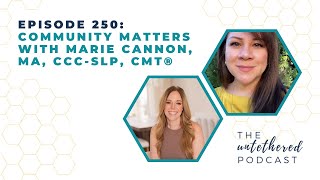
A podcast interview (Untethered Podcast, Episode 250) hosted by Hallie Bulkin featuring Marie Cannon, a North Carolina–licensed Speech‑Language Pathologist and Certified Myofunctional Therapist. They discuss Marie’s clinical training (Feed the Peds, Beckman Oral Motor, TOTS, MYO Method, CMT), her transition into private practice Stages Therapies (opened Oct 2021; office July 2022), her work across the lifespan (infants to adults), culturally responsive care and multicultural background, clinical mentoring/continuing education experiences, and practical business/clinic topics (insurance, scheduling, referrals). The episode is aimed at clinicians and trainees in orofacial myofunctional therapy, airway, tethered oral tissues, and pediatric feeding therapy.
Chapters
Hi and welcome to episode 250 of the Untethered Podcast. Today we have Marie Cannon joining us. Marie is a North Carolina licensed Speech Language Pathologist with a graduate degree in Speech Language Pathology from the University of North Carolina, Greensboro. She also possesses the National Accreditation Certificate of Clinical Competency from the American Speech and Hearing Association. She has completed Feed the peds, a 12 week pediatric feeding course Beckman Oral Motor Training to address function and sensory integration issues TOTS training for assessing and identifying tethered oral tissues, tongue, lip and cheek ties and the Myometh and Oral Myofunctional Therapy course that focuses on airway health, correct oral posture, tether, oral tissues and chewing skills. After completing the coursework, Marie then pursued certification as a Certified Myofunctional Therapist. This training and certification enables her to work with clients from 4 to 104 years old. She's treated clients across the lifespan from infants with feeding issues, early intervention, school age and adults, and short term rehab. Additionally, Marie's clinical interests also include multicultural populations and its influence on communication. She grew up in a bilingual home with an American father and a Filipino mother. Throughout her life, she's visited many different countries and enjoys immersing herself in their language, food and culture. In late 2021, Marie opened her private practice Stages Therapies. This is a practice that Marie has always dreamed of, a place where clients are treated in a holistic nature instead of silos. Quick Disclaimer all information, content and material of this podcast are the opinions of the speakers and is for the informational purpose only and not intended to serve as a substitute for the consultation, diagnosis and or medical treatment of a qualified healthcare provider. Welcome to the Untethered podc. I am your host, Holly Balkan. I'm a certified myofunctional therapist, feeding specialist, podcaster, business owner and mentor. This podcast is all about getting your questions answered and collaborating with colleagues to bring you the most up to date information in the orofacial Myofunctional Therapy, airway, Tetradural tissue and pediatric Feeding Therapy space. If you're new here, I challenge you to keep an open mind and join my mission to spread this message far and wide. If you've been around since June 2019, thanks for being a loyal listener as we jump into today's episode. Remember to listen with correct oral rest posture, tongue up, lips closed, teeth apart, breathe through your nose. Let's get started. Hi Marie and welcome to the podcast.
Hi Hallie, thank you so much for having me.
I feel like we've been like longtime Friends ever since, you know, you joined the Mayo membership in fall of 2021. And I know you've. You've taken Feed the Peas and, you know, MYO method and, like, all the things. So I love that, and I would love for you just to, like, share with us your journey. I know that started with the MYO membership, but were you, like, in the MYO space before that or.
Yeah, absolutely. I wasn't in the MYO space before that. I'd actually heard about it through one of. Through one of my friends. Going to give a little shout out to Danny Augustine. So, yeah, she's fantastic. We went to graduate school together. She's amazing. And so I was just like, what? What is this MYOF functional? And why didn't I hear about this in graduate school kind of thing? And then, you know, you start doing a little bit of research, and it was just like, this is how I should have been practicing, like, all my life. Like, why have I just been doing, like, imitation type of therapy? Like, do it like this.
Copy me.
Why didn't you teach me muscle assessment in graduate school while you were torturing me? I don't understand. So. So, yeah, so I found the Maya membership, and it was just such a great, supportive place. I love the Facebook membership piece of it because it's like, everybody's on there asking questions. Everybody's so welcoming. It's such a safe space. Like, everybody's really respectful. And like, the ones that are the seasoned clinicians, they're always so kind to the newer ones. And it's so welcoming because, you know, in some of the other therapist spaces where it's just like, hey, you can join this Facebook group for, you know, this is the kind of therapy that you like to do. Sometimes people are snippy about it or tell you what you're doing wrong. Yeah. And so that's. It was just a beautiful part of that. And, you know, you start going through, like, there's business plans and everything else. And I had already started thinking about opening my own practice, and just a lot of things were culminating in the fall while we were still all kind of cooped up with the pandemic. And. And then the MYO method came out, and I was like, ah, you mean I don't have to, like, go out and do a Qom. Com? Hallelujah. Om. Like, there's another option. What? So I was so excited when that option came out, and the information is just laid out so beautifully. It was just so easy to follow. And when I tell you you were My best friend. You were my best friend. All right. You know, I had. How old, how old was my daughter then? She was like 13 months maybe at the time. Maybe she was 11. 11, 12. It was in that range. And so, like, I watched those videos while I was folding laundry. When I washed this, like, all the tasks I don't want to do because, like, I'm not doing. I'm not enriching myself as I'm doing these tasks motivated me to wash dishes. So thank you for motivating me to wash dishes and fold laundry.
Only I can motivate myself to do the same thing.
I wouldn't feel pumped up because plus, you get to see your progress. Right? So you're like, oh, yeah, you know, let me do this. And, and, you know, hold on. I was a. I was a little too interested in folding these corner sheets on this. So let me, let me rewind it, you know, and in between naps, I mean all those different things. So it was just so fantastic. And I just felt really empowered. Even more so to be like, I really do want to open up my own practice and kind of. Yeah. And just kind of do things the way that I want to do it, like, have my own patience and, and. And do billing the way that I want to do it. And like, not, I don't know, not, not be tethered with the stress of, you know, you have to work this schedule and you have to be here then because these are the needs that we have. And because I do have a small boutique practice, I would say that my patients are definitely more like good friends. And I definitely attract a lot of a similar holistic mindset, which is leading me to something that I need to do as a thank you, like for my fa. For my, for my patients. I come from a business background, so I want to say clients, I want to say thank you for my clients. So I want to do like a thank you, like a picnic, get together type thing. Unfortunately, it's getting cold right now, but it is what it is. But just so that I can get all of these moms and dads together that all have this similar mindset and they've all been through traumatic things with other doctors, offices, with doctor's offices. I'm not a doctor with, with doc. With their doctors, with other health care providers, you know, where they weren't really, really listening to them or they were kind of like poo, pooing what they were saying. Like, they don't need that. Why would you want to put your child through that? You know, so thank you for that. I consider myself a follower of Halle. I'm a hallower. Follow all things Hallie.
Oh, my gosh, you are too much.
But I'm serious, because I am. Because I have had other careers. I am extremely grateful for the opportunities that this career field has given me. And I'm trying not to get emotional, but just. I'm one of those sappy people. And it has given me the ability to. To connect with my patients, which is something I've always liked. I've always enjoyed connecting with people. I've always enjoyed helping people. And the beauty of watching their progress is. I mean, it's. I'm. I'm a junkie for that type of stuff. Like when my family send me videos from Thanksgiving, they were stressed out about Thanksgiving. What is my kid gonna eat on Thanksgiving? You know, and they send me videos, they're like, look, we ate cheesecake. We put salsa on our steak. You know, they wouldn't even eat spaghetti sauce. Now they eat spaghetti. I mean, just. They're drinking, holy cow. We. We don't need a G tube anymore. Oh, my gosh. And they're talking. I mean, it's just. It's incredible, y'. All. It's the best. It's the best thing ever.
I've always said there's like two sides to it, right? It's like I was. One side is a little self serving and that it's feeding, but there has to be that energetic exchange, right? There has to be like, you gotta.
Love what you do.
You gotta be passionate about it. And it's gotta fill your cup just as much as you're filling the cup of your patients and their families and caregivers. Because that's when you have the most success in therapy. That's when all these beautiful things start to happen. And I think that's also being super keyed in to who your patients and their families are. You know, if you're not, then what are you even doing in this field?
I have no idea. Because I tell my families all the time, I'm like, look, I see you for a small sliver in time. I get a tiny snippet. You are their therapist. You know your child the best. You're with them all the time. I want you to feel empowered and have the tools that you need to feel confident and. And I do something that I know maybe a lot of people, probably a lot of people don't do. But I text with my families, like, all the time, especially because, like, I treat babies and everything. Like, that. Dude, those moms are stressed out. You know, who are they going to turn to? And it's not like I'm going to have them forever. I'm not going to lie. Some. I probably. I'm going to have forever because we wind up being friends and. And everything. And what a beautiful thing that is, too. Like, what a blessing that is. But to be able to help somebody in their time of need is just a really, really beautiful gift. So. Yeah.
Well, I love that for you, and I love that, you know, how long were you in this field before you even started Mayo? And you said you were like, you changed careers, got the business.
Yeah. Of that, yeah. Yeah, absolutely. Yeah, I guess I was. I guess I'd been. Been a speech therapist for about five years. Okay. At that point. Yeah, maybe about five years. And I had done. When I got out of graduate school, I did private practice. I went straight into a position where they did feeding, and they did the feeding training on site and all that kind of stuff. And I was so gung ho for it, and I was driving around a lot and. Which was good in a way, because we moved to a. A different part of our state that I didn't grow up in, so I got to know all the back roads. I feel like a local. Even though their barbecue is different in this part of the state, that's okay. We won't hold it against y'. All. But so. So I got to learn a lot of, you know, a lot of the nuances and dig down in the cultures, because I'm also a culture junkie. Like, I'm big on meeting people where they are, and the more information and knowledge that I have about their culture, the better they're going to make. They're going to feel. Being with me, they're going to feel safe because it's like, oh, you know, something about this, you know, that's going to, you know, so you seem familiar.
Right, Right. They'll trust you, and they'll also know that you're not just trying to push your agenda, that you understand, like, why they're there and that you're. Even if it's something that maybe you don't fully understand, you've some research or some due diligence, in a sense, and in the sense that, hey, you know, here's what I do know, but I would love to hear from you, like, how does this look in your family? How does this work with your, you know, and your. Because that's gonna. That's gonna look different from one family to the next, which I'm sure you know and appreciate. So that's. I feel like there's such big conversations around being like, a culturally responsive clinician right now, and I don't think that any of us can truly be, you know, educated on every single culture out there. That's. That's never going to happen. Because what culture means one family is going to be different the next, even when they come from the quote, unquote, same cultural background. Right?
Yeah.
And you're not. I'm not an expert in this space. I've just been create. I've basically been, you know, diving further in with. Putting up some DEI courses and things in our field and the various avenues of various speakers and everything, which are.
Very fantastic DEI courses, by the way. Thank you very much for that. Really, really appreciate that.
Yeah, absolutely. And. But I think that's. It just goes to show that, like, we have a responsibility as healthcare professionals to dive into this and really just understand, like, not just because this has become like, the in thing right now. I've always asked families, what foods do you want your child to eat? Are there certain things that you prefer I not to discuss or talk about? Like, you know, if I'm talking to a family who keeps kosher, I'm not going to talk about pig, bacon and ham and stuff like that. But if I'm talking to a family who that's all they eat, like, I need to know these things, right? And so it's, you know, being. I just bring up, you know, kosher. Being a Jew, I don't. I grew up in a kosher household. I don't keep kosher now. But even that, right. All the differences in what that means from one family to another is very different sometimes.
Absolutely. I have some great Jewish friends because the area that I grew up in, we have a huge Jewish community and Jewish schools and everything. And I forget. I forget. And I'm going to tell you why I forget. Because, number one, I'm Southern and we eat a lot of pork. All right? Number one. Number two, I'm half Filipino. Guess what? They eat a lot of pork. So I forget. And so we would go to lunch or dinner with. With some of our Jewish friends, and I would order something, like some. Some kind of boudine sausage or something. It'd be a pork product. I'd be like, y', all, this is so good. You want to try it? They'd always look at me like, no, thanks. I was like, I am so sorry. I'm so sorry, y'. All. So like my feeding clients, I put notes on their files as my reminder. Like, gluten free, you know, does not eat.
It's like, I mean, so. Yeah, yeah. No, and I feel like, try really.
Hard not to offend anybody.
You know, at the end of the day, I think when the intention to not offend is there and the intent to do your best is there, like your thing, families will know. And if they know that, like most of the time you're really kind of keyed in. If you like say something, no one's going to be mad at you. You know what I mean? It's kind of to be like, no. Like I. And you're like, it's really good. I don't eat that. Oh, right, right. I mean, I will tell you, like, I even being Jewish myself, like, I would go out and eat like with a friend who keeps kosher and I was no longer keeping kosher and I would be like, do I order? Is it okay for me to even order like a product? Or like, do I not eat a lot of pork? But I'm like, I might have bacon. So I'll be like, sure. Because I don't want to be like, you know, you don't.
Smell of it, right?
Exactly. Like, I'm like, is that offensive? Like, I mean, like my, you know, with my dad around who doesn't eat that stuff, like, I will intentionally not have it present in my, like in a meal. But like when he's not around, then we have it. And I'll just say, well, we don't have it when Z is here. And that's just a decision I made. Like, he didn't ask me for that. Right. And so that's where I really like to say, like what? Like when you start to talk to your families. Right. It's just so important to understand culturally, like what are their family traditions, their cultural beliefs, like what do they do on a day to day basis. And once you start to dive into that, that is your, I mean, you will gain their trust very quickly if they see that you actually care and that you're making an effort. So I love that you've got your notes all over with like, you know, all the little dietary needs and restrictions, but it's, you know, the other. The flip side of it too. Yeah, and the flip side of it too. Just with so many dietary restrictions just from allergies and things these days too, and intolerances. Like I'm always like, I tell families, I'm like, you provide the food, please. Because I, you know, Liability, you know, and if nothing else, like, let's just smart.
Yes, absolutely. So true. Yeah. Yeah. We don't want to give anybody anything accidentally. For sure. Yeah. So.
Okay, so. So you. Were you already doing feeding then when you got into the mild world?
Yeah, so I had done some feeding. And actually, whenever I got into the. My world, I actually had left private practice and I went into the school system because I needed community. I was really tired of being by myself. I'm not gonna lie. I was really tired of driving around driven, driven, driven, driven, driven. And I was just like, coming. Coming from a different career where I had my own office in a, like, big glass tower in a downtown area. I was just like, oh, I could have an. I know that. I've always heard that, like, they're broom closets and stuff like that. I had that. I had that. I remember we had to take.
Wait, we had to. Sorry to interrupt, but we had to take the. The shelves off the wall. Like, I was standing there. Wall maintenance came and drilled the shelves off the wall, and then we pushed a file. A file folder, you know, a file tower thingy into my. Into that closet. And I. I kid you not, my desk sat against the door. Like, you couldn't open and close the door. There was no opening and closing. Not that you'd want to, because it barely fit all of this, plus all of my junk like that I then was bringing in. And wait. The better part was I was in a preschool teacher's classroom. So try actually working at your desk when you can't close the door. You can't see kids one on one in your own office. And yeah, two years of that. Two years of that.
Bless you.
I was like, I'm done.
But that. That is the story. Like so many people, you can't get anything in a preschool classroom. Are you kidding me? They all knew you too. So, you know, they were like, hey, Ms. Hallie. Oh, yeah, yeah.
Oh, yeah. Or. Or like, a kid throws up his lunch because he doesn't want to eat it, not because he's sick. And all of a sudden it's like, we need another adult in the room. And I get pulled from my desk. Like, Like. Or yeah, There was always something, and I. I don't know how I got anything done, because also, I'm like, adhd, so there's that. But anyways, I'd much rather be in the classroom with the kids. Like, that's more fun than, like, sitting at my desk, too. So that.
Yeah, yeah. Therapy's never been an issue. But that paperwork.
For real? For real, for real. Okay. So you were doing, you were doing feeding and everything. And so do you. I just curious. So. Because I feel like having that feeding background made it a little bit easier for me when I got into the MYO space. Do you have any thoughts around that?
Yeah, it definitely made it a lot easier. And because I had been in the school system and hadn't been doing much feeding, I mean, you know, you get rusty. You know, we have language attrition, we have information attrition. And so I've been. I'd been, you know, gotten a little rusty. And then I was just like, you know, it's all coming back, like, my brain is going down to the basement. And I was just like, yeah, I feel really good about treating adults like, which is something I've always kind of been shied away from. It's still, I do treat adults. It's still not as fun for me as it is for children, like, because I guess for kids, it's okay for you to be funny and then you can play around and stuff. With adults, it's kind of like I can't have my funny face for you. I'm gonna go in here and do a little cheek massage and, you know, that kind of thing. But, yeah, it definitely helped me get more comfortable with that, helped the information integrate a lot faster. But after I was done with it, I mean, it just, it just, it just shoots you down like this big rabbit hole. I was just like, okay, I need to do feed the beads now. I see all these holes that I have.
And so you jumped right on in, right?
Yeah, exactly. So I was just like, okay, can you sign me up for that one, too? Check the box.
Check the box.
Am I missing anything? Is there anything I haven't taken yet?
I love it all.
And of course, you know, everything at this point, I, I, I have. Well, and then, you know, with the mayo, it sends you into the, you know, tethered oral tissues. Rabbit hole. So, you know, I had to go see your sister Autumn over there and go do her class.
I love Autumn.
I love Autumn. She's fantastic.
She's amazing.
Yeah.
And, you know, I think it's like, you go down this rabbit hole, right? And you're like, oh, well, this is a rabbit hole that is never gonna end. Because really, it's your lifelong learning at this point. Point, Right. It's just gonna. There's more information evolving. You know, I always say, I'm like, it's great to learn what we know, but obviously we continue to evolve as clinicians, and so does the research, and so does. Yeah and all the things. But. But yeah, then you even took it one step further in beyond the MYO method into cmt, right?
Yeah, absolutely. And I was so excited to go through that process and everything. You know, it's a little, you know, like, gives you grad, grad school nerves. You gotta, you know, present and you gotta take a test and all that kind of stuff, and when you haven't done that in a while, it's a little. But yeah, and I just. I'm so excited that I did that, and I'm so thankful. I have actually had clients seek me out because I am a cmt. Literally. I have had patients who have told their friends that are speech therapists. Why don't you get your cmt? You should get certified in that. You. You need to take. You need to take my functional courses. Because our speech therapist is so good. And I'm just like, oh, you guys are so kind. Thank you so much. Like, I just, I've, you know, I've just gleaned a lot of information, but it definitely does help. And, you know, you. You feel a lot more confident in treating those. Those types of disorders that you see that are typically only see a little bit of progress, like lateral lisps. I had a lateral. I had a lateral lisp, kiddo. That poor girl, she'd been in therapy a long time in the school system. I was doing my traditionals, and it just wasn't moving very far. Now I. They come to see me and we see progress and I know which muscles we need to tighten up, and I know why the. I know where the air is escaping and where. How the tongue shape needs to be, where the placement is, all the stretches that we need to do, you know, to. To activate to we. Where we can get symmetry in the face. And they start with you and they're very asymmetrical. They're not activating one side of their face. And then it's just like, oh, baseline, you know, symmetry on both sides of the face. Like, it's. Yeah, it's. It's just fantastic. It's so.
It's.
It's had so many benefits that have come along with it, you know, because it's one thing to be like, yes, I've taken my functional courses, but like, you know, when you have your accreditation there, it's just like, yes, I've taken it and here's my certification. Somebody has tested me to make sure that I am competent exactly I know.
What I am doing. I'm still, you know. Yeah, I love that. And it's so funny, too, because I always tell everyone. I'm like, I always wanted to create the MYO course, right? I ended up creating Feed the Pete's First. Then I created the membership because everyone was like, hey, we want to learn more about, like, the TOTS and MYO modules that you taught and Feed the peds. And that was really geared towards, like, how you adapt it to the little ones. So, like, how do we do it for, like, traditional MYO age through adults? And I was like, well, this seems really backwards, but okay, let's just start the membership. So then I write it. So I launched a membership summer of 2020, because I don't follow rules. I just kind of. My gut is just like, do this first. Okay, now let's do that. And I'm like, I'm just gonna trust. I'm gonna trust my intuition and run with it. And so, you know, out in the online business world, they're like, create your. Your course and from that course and go into a, you know, a membership, and from a membership, go into a mastermind or some kind of a thing. And, you know, so that would have been like. What would have made sense in that realm is a feeding membership, which I don't have and I've never created. And. But here we are, right? So I'm like, everything backwards. No feeding course into my membership, into a MYO course. Everyone's like, please create the course. I'm like, okay, okay, okay. It took me forever, but I got it done. Followed like, What? Fall of 2021, I think it was when I finally released that course. And then I think it was like, right after you joined. I think the membership actually is when I released the course.
You're like, wait a second.
But that's okay because we gave you all a deal, right? And then everyone's like, wait, we need a certification? And I was like, do we? Do we really?
That means I have to do more work? No. So. But it's so helpful.
It is, it is.
And. And we.
Honestly, it's so funny to me because the certification's only really been out maybe two years now, if that. Yeah, two years that we technically have it. And I feel like we have revamped it like, two or three times for people who have gone on in the back end a bit just because. Just for really not. Not because it didn't work or because anybody told us we had to. It's because we were so critical of our own, like, processes and wanting it just to be, you know, continually functional and making sure that it is something that you can take back. And really, like, the model is still the same as the beginning. It's like we've just maybe changed the case for the pediatric one or change the case for the adult one, which makes sense over time, too, because, you know, we don't want the same cases forever. But it's also really stretched us, I think, as therapists and especially, like, the board who, like, grades things blind, you know, and who. Then you've got the mentor team and all that. It really kind of has even stretched us because we're like, well, how do we continue to evolve this so that we continue to develop critical thinkers and people who are not going to just, like, go, oh, check the box. Got my cmt, did the course, got my certification. Like, no, no. Not that we want to make it difficult, but like, you said, like, there was a challenging component to it and that you had to present a case live. And, you know, and we're like, we want it to be functional. We want it to be something that makes you kind of stop and go, okay, this is my patient case, and I have to actually talk about them, and I kind of have to pull the pieces together and present it right. And so it really kind of just brings it holistically, like, brings everything together. And so I love that because I've always said I'm like, for any certification or anything, I create, like, no fluff. No fluff stuff. We're just gonna put the stuff that we need in there. And even in, like, the cute. The multiple choice, like, questions that we have and that we've updated, it was more so, like, what are the things that I want everyone to walk away from this with, like, very intentionally asking, like, certain things that I was like. I feel like if they remember nothing else from this course, like, not that you're not going to, but.
Right.
Wanted to really highlight things that I think were questions that came up frequently or topics that I feel like may even deserve, like, further attention, like, as you continue to go through the certification process. Because just so much intent behind, like, how things were done. And so I just. I love to hear, like, you know, when things are helpful, even if they feel a little hard. Because it's like I always say, everything is done for a reason in my business. It's never just do it. It's if there's. If we're just doing it to do it. I'm like, throw it out. We don't need that. That's fluffy. Nobody needs that.
No, well, and the information is really well laid out. And here's the thing too, is that you get that information forever whenever you sign up. And you go to those live and in person ones. And I'm not saying it's not bad, it's great, but you don't remember everything. You don't glean all of it. You don't glean all of it. But when you can go back and re watch videos, you can go back and listen to books and you still pick up things. You didn't, you didn't pick up the first two or three times. It's just like, oh, that information was there. I didn't even realize it. How did I miss this? So you can go back and be like, you know, I need to review this. I haven't seen this type of patient in a while. I feel like I'm lacking a little bit in this area. Let me go back and review this. And it's just been immensely helpful for me because I am one of those people that feel like I need to like, be enriched all the time. Like when I'm putting on my makeup in the morning watching Hallie's videos, you know, I'm with you all day. Apparently you are. You're not sick of me? No, I'm mad we don't live closer together. Well, come on, come visit.
Come on over. I love that. I love it. I love all of it. So, okay, so I'm just like. Because you've literally done everything. Like you've done Feed the P, the MYO method, cmt, the MILE membership, you've done it all. But I really love what you share too, because when I. With my courses, not the membership, but with the courses, you do get that ongoing access. When you invest in one of my courses and I've had other people tell me the same thing that you said. I have gone back and watched this section of the course because I got a patient that maybe, maybe it wasn't relevant before or maybe I just needed to brush up on something. And like, from my clinical skill standpoint, I just felt like I needed to watch something again. And I was like, I, I was like, that's why I gave it in my, in my brain. Being a person, you know, being a neurodivergent person, I share the same sentiments. Like I would go to a course and be like, wow, that was a really great course. And in person and I'm. And I try to take all my notes and I will, I Don't know what this is. This pattern is with me, but I would flip over to the back of either the folder or the notes every single time. And like, as you know, the speaker speaking, the teacher's teaching, I'm writing down ideas for some patients. Usually it's about three. I usually get ideas for about three patients. I don't know why that magic number is always the number. Then I go and do it and I'm like, okay, now what? And I feel like it kind of pigeonholes me. Like, it just through how I learn. I was like, I felt very pigeonholed. And I was like, I've got some great ideas and maybe I kind of know where to go next with these three. But, like, what about my other patients? And right now I've hit a wall, and who do I talk to about, like, where do I go next? And so trying to find the mentors and trying. That's where I was like, this is the bane of my existence. And so in doing all of this, I was like, all right, if I'm going to put a course out like this, especially because there's a lot of content and it's. It's a lot. I was like, you gotta have ongoing access. And I think there's, you know, there are certain psychological principles and everything. And I forget what it's all called. But, you know, behind, like, we only hear and absorb what we're ready to. And so we only take that in. And that's why, like, when we do go back, like a month later, a year later, some people are, like, two years later, they're going back and re watching some. Some different, you know, modules or parts of modules. They're like, I don't remember ever hearing that the first time, but it's here, so obviously it was there. Well, because you can only absorb so much information. And as you advance through, like, you then have, like, things become second nature. Now you have space to absorb new information even though it's not really new. Right. And so it just made it safer. I mean, when I started to hear this from other people who said the exact same thing as you, I was like, wow. I was like, I mean, I always wanted that to kind of be the case, but to hear it actually, like, come to fruition and actually be something that people are telling me is actually happening for them, and they're able to go back and, you know, pull this info out and they're like, I don't remember hearing this first time. I'm like, well, it's kind of like.
A new course then.
So I guess you're getting your money's worth.
I absolutely love that.
All right. Okay.
So what else, like, I know that you were talking about, like, you weren't sure that why you did, like, feed the peeds first and everything, but if you really, like, zoom out and think about it, you met the population where they were. You really did.
Yeah.
So as a field of pediatric speech pathologists, like, the greatest need was in pediatric feeding. So what you were able to do is you put that course together and you gave us all these tools, all of us that were floating around out there that are like, oh, I. I need to do this right. It's all in one place. It's a comprehensive course. We get mentoring. We, you know, we have our. Our safe space where we can bounce stuff off of each other and all those. Great. And then what you did was, hey, look how amazing this is. Feels good, right? Look at this over here. I made the Mayo membership. Look, you just need. You want to dip your toe in it a little bit, get some information, come on in, like, be surrounded by other, like, minded therapists, and then you get all warm and fuzzy, you know, and then, then you just dive on in and do the MYO method, Right.
Apparently it was everyone's like, gateway in, right?
Absolutely.
But I remember, you know, so one of the reasons why I ended up doing Feed the Peas first was because, you know, my good friend Teresa Richard was like, hey, we really need a comprehensive pediatric feeding course. And I was like, hey, that seems really heavy.
And.
And I always joke, and I probably. I feel like I've said this a lot, especially recently, recently on the podcast for, like, she kind of was like, the memo was like, hey, if, you know, if you're not going to do it, then I'll. I'll go tell someone else to do it. And I was like, ah, let me sleep on it. And the next day I was like, I was like, I feel like I'm being pulled to do this. And, like, my gut is saying, go, but at the same time, I'm going, like, this is bigger than me because I haven't worked in every single one of these, you know, therapy settings, and I haven't worked with all the populations that we need to cover. I'm very, like, niche. And so, like, I can create a niche course, but, like, something is telling me, like, that's not what's. I feel like we need to go, like, whole picture, because in order to even work with that niche, I feel like we need to understand all These other things, too, first. And so, yeah, it.
It all ties in together. All of the sensory, all of the muscle function, feeding your speech sounds, all of it. It's all so interconnected. And why we treat in silos is beyond me, but it is what it is.
Us healthcare system is basically, I feel like, forced that, you know, to happen, in a sense, with the treating in silos. But, yeah. And then, you know, I even kind of took a few steps back, and I was like, at one point, as a feeding therapist, I was like, I.
Don'T even know what normal is.
How am I treating these patients, like, early on. And that really forced me to go read some books and kind of figure out, like, what. Like, what are the normal ranges? Like, what's the order in which things happen and develop? Because if I don't understand that, how do I treat this? And so I was like, we need to know what typical development looks like and what, you know, what happens when we're not following that typical trajectory. Well, maybe there's some splinter skills and we have some later skills, but we haven't fully, you know, mastered or don't even really have present some of these other skills. We got to go back like that.
Absolutely.
We can't just skip certain things, you know, even if we're supposedly performing a later skill, you know, they don't build on each other, but then some of them also don't always require the full gamut of, you know, the foundational skills. So it was kind of this very interesting, like, aha moment for me where I was like, huh? I feel like I need to create the course that I wish I had, that I never had. And this is gonna. Okay, let's go.
I thank you. I thank you for all of your courses because it has been immensely impactful, not just to me personally, but to me professionally and to all of the families that I have been so blessed to come in contact with and to be able to help them through their hurdles. That's. I mean, so it's. You've created a ripple effect throughout. Throughout the SLP universe. So, like I said, I'm. I know I always tell you, thank you, but I'm really, really thankful for. For all of the information and just, you know, that it was given in a way that was digestible that you did include business aspect into it. What I'm like, y', all, the bio membership, y', all, they give you business tips on how to go into doctor's offices. If you want to solicit them, go in. And I mean, they give it to you here. It's on a platter. Put your name on it. Right, Right.
I know. I'm like, here is your. Done for you. You know, PowerPoint. Just put your name on it and go use it.
Right? I'm like, here's your brochures.
Download them, add your name to it, print them. Like, here's your trifolds. Like, here's, you know, all the things here.
Yep, yep. Absolutely. So. And they've been so helpful to me. I've had so many of them printed. It's been really good.
That's awesome. That's amazing. Well. And so. Okay, so you open. Tell me again, when did you open your practice?
I technically opened my practice. October of 21 is technically when I did it. But I am one of those people that have bought into health insurance. I have health insurance and all of that fun stuff. So. So I started my process of getting approved with, like, Medicaid and all that kind of stuff. So In July of 2022, I got my office that I'm in now. I'm in. I'm in a. Oh, co. Working space is where my office is. So we've got a lot of different businesses. I'm the only therapist here. I'm also the only one that brings small children in the building, Makes lots of noise. Baby's crying. It's coming from my office. My husband literally had a meeting downstairs one day with the building owner, and when I saw him that evening at home, he said, was there a baby crying in your office? And I was like, he was mad, didn't want to eat. Like, he was like, yeah, we had a meeting with a developer in the conference room underneath your office. I was like, oh, yeah, Oops, sorry. That's exactly it. So. So, yeah, so. So it's really. It's really good that it's a space that I can handle. And I went through the process of, like, getting a network with insurance, all that kind of fun stuff. So, yeah, so I moved into this space in July and really started, like, getting a lot of clients and stuff about, like, October and then. Do y' all know that we have that end of the year rush, right, where everybody's like, I've maxed out my insurance. They're gonna pay for everything. I met my deductible. Can I get it? Whatever. Whatever. Feel like I need this for my kids. So then everybody who's coming into your office at the end of the year when I'm like, aren't. Shouldn't y' all be Christmas Shopping or holiday shop or something. Aren't you going on vacation? What do you do here? Yeah, why are y' all over here? Don't y' all know I gotta do stuff at home too? I gotta decorate, so. Yeah. So ever since then, it's just been. And honestly, I haven't even advertised because I'm scared.
No.
I'm scared. I get referrals from doctor's offices just because they see my evaluation come through.
There you go. Well, you know, and that's the thing. I never. I have never done any paid advertising for my private practice. It's all been, like, word of mouth and, you know, sharing with other families and doctors seeing our reports or understanding how collaborative we are. Families even, you know, telling doctors, oh, hey, this is who, you know, we go to. This is who you should refer to. We never really had to do that up front. We started to do it more like, as we evolved as a. Like a myo and feeding practice, just to educate on. Hey, this is like what we're really specialized in. But other than. It wasn't even necessarily to get patients. It was more just to make sure they were sending the right ones and not the ones that we can't help.
Right. Exactly.
Yeah.
I love it.
I love it. Well, that's amazing. So everything's going well as your. So your schedule is full, especially right now at the end of the year?
Yeah, yeah, my schedule is as full as I want it to be, as full as I can. I can handle it. And it's. And because I. I guess because I. I am able to keep such a tight rein on things, you know, like I said, like, everybody, we're almost like a family here. We're like really good friends or cousins. Like, like I said, we all are all bouncing information and stuff off each other. And, you know, and I have patients who are like, hey, I'm having, like, this issue, so I'll go to somebody else. I'll be like, who did you see for. Were you guys having issues with that? And. And so it's just even within, like, everybody is so collaborative and, like, you know, sharing information and everything. But, yeah, it's just. It's just been really easy, too, for, like, whenever my daughter has a field trip, you know, I'll be like, hey, got a field trip? I need to cancel or we can reschedule for this. Everybody's very understanding. They know that I'm a mom, and then I have a toddler. And, you know, so it's just been. It's. It's been Perfect. But I will tell you what the difficult part is. Here's the hard part. I don't know which way I want to grow my practice yet. I don't know. I have so many directions I feel like I could go in that I don't know which way. And it's been a little paralyzing.
So overwhelmed. The overall kind of freezes you in your boot, you know?
It's like, oh, yes, yes. Then I turn into the ostrich, and I'm like, oh, I'm gonna go do this over here. Because this looks good and satisfying, and I can see results quickly from it. It's good.
I say the overwhelm is my kryptonite. Overwhelm is my kryptonite. Anytime I start to feel overwhelmed, I will get out a piece of paper and pen. I just write down everything that's on my brain. And honestly, like, sometimes I just put it in the drawer, and I'm like, whatever is meant to be will be. And I try to just pick one thing that I feel like would be the best thing to do right now from, like, everything I wrote down and focus on that. And it's so funny because sometimes I come back and I'm like, like. I'm like, oh, wow. I did, like, three of the five things I wrote down. And then the other two, I'm like, why did I ever think that would be a good idea? You know, just as you go through, like, different phases in your life. Right. Like, things change, and so it feels like a really good idea right now. It might not feel like a good idea and two weeks, but. But, yeah, I just feel like I have to brain dump everything in one place to kind of get. Become, like, at peace with, like, whatever this massive brain download is I'm having. And then I just look at it. I'm like, that one feels good right now. Let's go with that.
Absolutely. I will tell you that I have found. I'm going to see how it works, but I have found it's an online planner, and I'm very much a pen and paper person. And you can print it, But I was like, oh, the. The thought of printing out, sending this somewhere to be printed, it was just. That was overwhelming. Too much. So I'm gonna try. I'm gonna try and do it, but it's an ADHD planner. So even whenever you feel like, you know, because we, like divergent tasks. Yeah. And that has convergent activities that you can do, like, even litter. It's like coloring. But you can only Color with one color, but in different shades to, like, help your brain reset. Oh, I'm so helpful. I'm so hopeful it's going to help. It's going to help me.
You know, I think it's one of those things that you do what you got. You do. You try it, right? And you see how it works. And if you could see my Google Calendar, it is just. It is a. I won't show it because there's probably things on there that I can't share. But, you know, it is literally, like, right now, I have four different colors on my calendar for today. And one is for one business, one is for the podcasting, another one is just for reminders to myself, and then another one is like a shared family calendar if they need to know, like, certain things about, like, where I'm at or what my schedule is or who's picking up a kid or whatever. So I have found that, that, like, color blocking can, like, really help because everything used to be in one color. And when I did that, I was like, okay. Like, it was just like. I'm like, do I have any meetings I need to be on right now?
No.
Okay, put the phone down. And then by the end of the week, I'd be like, well, there's 20 things I didn't do this week because I was just overwhelmed looking at it. Now I'm like, I can go in and see the color very quickly. And it's like, oh, snapshot. See the whole thing. Okay, great. I know everything on my calendar today like that. And so there is something to that for sure. So this might be really cool. You'll have to keep me posted.
Yes, absolutely. I. I surely will, because I was so excited to even find it. I was just like, this exists. Yeah, I love it.
So good.
So good.
All right, well, tell us where they can find you if they want to work with you and where you're.
Oh, yeah, yeah. Okay. So you can find me on my website, stagestherapies.com and it's just like it sounds S, T A G E S. And part of that, you know, why I named my practice Stages, was because I felt like I was going to be working with patients at different stages in their life. They're at this stage where they need to get over this hump, whatever it is, whether it's their feeding, whether it's their speech, whether it's their. Do I have tethered oral tissues and do I need my own? All that kind of fun stuff. So you can find me there. My practice is also on Instagram and it's also stages therapies. Got so lucky. All my stuff was available.
I'm surprised that, like, you know, it's so interesting. Like, someone else. I won't say it, but it was like a very, like, whoa. That URL was available. I think it was like, maybe the last. The last episode that's airing. But I was like, I'm surprised somebody didn't have that URL yet. And there's. I'm like, what other URL should we go buy up to people? Right?
Yeah, absolutely. And I will tell you, I really hate getting those emails where somebody's trying to sell you a URL and I'm just like, look away. I know. No, I'm. I'm not interested. That's not helpful at all. And if I wanted it, I would have already applied for it. Like, exactly.
You never, you know, there was one. There was one URL that I did want, and I did pay, like, one of the platforms, I don't know, 75 for them to try and get it for me because it was hosted by them too. And it's like the platform where I get all my URLs through. And. Yeah, no, not only were they. Did they fail 100 at getting it, Like, I never. I barely even heard back from them. And I was like, this is like a. What a scam. Like, just what a scam.
Yeah, yeah. And I was like, for 75 bucks, that was good.
Well, no, that's just a service to try and get them, to communicate with them to then buy it for, like another fee. And. Yeah, anyways, I was like, all right, well, that was a one and done wasted experience.
Yeah, well, it's going to be wasted for them too, because nobody's gonna pay for it. So, you know, it'll eventually expire and come up.
Yeah, yeah. I was like, oh, my God, I don't even. And you look at it, right? And these are. They're not in use. It's not like somebody's using them. So. Anywho. All right, well, this has been amazing. I know we covered so much, but we'll connect again later. Thank you so much for joining me today, Marie. This has been an absolute pleasure having you here.
Thank you. Thank you for having me. Thank you for all that you've done for our space. Oh, look at that. That's one of those new things. They integrated the systems, right. You do hand motions and it's. Things pop up. It's always a pleasant surprise when that happens. But just thank you so much just for all that you've done, all the impact, because you just really, really have impact. Just the greater good. And I'm just, I'm just, I'm so grateful. I really, really am. So thank you for all of your hard work.
Thank you. And thank you for being a part of the community. I mean, it's like, I can put all this out there, but if we don't have the community to be, you know, to join, join the forces, if you will, what, what good is it for? So thank you for being a, you know, for trusting me and everybody that's part of the programs and the team and everything on this end. Because we appreciate you.
So good. Thank you. Thank you.
Thanks for listening to this podcast. If you found value in this episode and want to hear more of these Myotots Air weight and feeding related episodes, be sure to leave a review on Apple Podcasts and share this episode with on your social media platforms. You can access free resources and all I offer@halliebalkin.com or pop over to hollybulcin on Instagram to get all the latest updates.
More from Hallie



What I Was Missing in Feeding Therapy: ARFID, Airway, and Myo with Samy Hernandez





