Episode 253: Changing the Future of Picky Eaters with Cindy Napoli and Daniele McLean
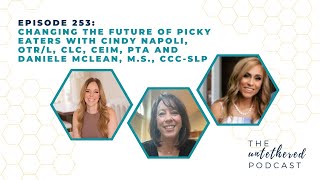
Untethered Podcast episode 253 (Feb 5, 2024) — host Hallie Bulkin interviews Feed the Peds graduates Danielle McLean (SLP, co-owner of Title Therapy Solutions, mother of a preterm son with multiple tethered oral tissues and underlying Ehlers‑Danlos/connective tissue concerns) and Cindy Napoli (PTA→OT, decades in pediatrics, torticollis specialist, CHDI program supervisor). They discuss how the Feed the Peds training changed their practice, clinical experiences in the NICU, management of tethered oral tissues (tongue/lip/cheek ties), healing and revision challenges especially with connective tissue disorders, the relationship between torticollis/positional asymmetry and oral function, the need for interdisciplinary collaboration (SLP/OT/PT/IBCLC/dentists/ENT), airway/snoring screening, culturally sensitive approaches to feeding, and local service details for referrals and hiring.
Chapters
Hi and welcome to episode 253 of the Untethered podcast. Today we have Danielle McLean and Cindy Napoleon joining us. They are both Feed the Pete's graduates.
And I'm going to tell you about.
Each of them separately. Danielle has been a speech language pathologist for 10 years. She's from New Jersey but resides in North Carolina where she co owns a private practice Title Therapy Solutions, providing speech therapy and occupational therapy services focused on sensory and reflux integration, feeding, airway and orofacial myofunctional therapy and Tender Hanover in Onslow County, North Carolina. Danielle started out with a passion for working with adults with feeding tubes, motor.
Speech diagnoses and aphasia.
She had a placement in EI and a NICU PICU in graduate school which sparked her love for working with pediatric feeding. Unable to find a pediatric feeding job as a cf, Danielle returned to treating adults until her move to North Carolina where she jumped back into the pediatric feeding world. Danielle was part of one of the first feed the Pete's cohorts back in 2020 and this taken other coursework to expand her skillset following a high risk pregnancy of her own and delivering her first child at 33 weeks. She knew what to do and how to advocate for her son in the nicu. He presented with tether, oral tissues and feeding challenges and Danielle really educated the NICU staff on how his feeding challenges were not just a result of being a preemie. He also did not have a speech therapist or PT in the NICU assessing him. She was the only SLP and mom.
That really came to his bedside.
Her graduate rotation and training and Feed the P served her and her son well. Danielle shares her journey with her son on this episode along with her friendship and professional collaboration with Cindy Napoli who joins us on this episode as well. Cindy has worked in pediatrics for over 38 years. Her journey began as a physical therapy assistant working in a variety of settings that formed her love for a multidisciplinary treatment approach and during this time she volunteered and worked on feeding programs making that pediatric patients were positioned well and seated properly to engage with activity demands. Cindy also worked with an integrated preschool followed by 17 years in a level four trauma center in the PICU NICU inpatient and outpatient settings with infants and their families. Treating babies with torticollis really became a passion when Cindy's own daughter displayed torticolla signs and symptoms that were missed and undiagnosed by her own pediatrician. In 2018, Cindy returned to school for her graduate degree in Occupational Therapy while working in EI. She graduated in 2010, continuing to work in EI, mostly school based, for five years while also teaching pediatrics at the local university for two years. She then left to follow her passion working with babies and families full time. In 2016, Cindy became program supervisor of CHDI in Springfield, Massachusetts. She's also an educator of infant massage and a CLC. Her her specialties include horticollis, plagiocephaly, body tension, functional evaluations with a focus on self training and jaw tongue strengthening program as taught in feed the PEDs, along with integrating the use of teaching parents infant massage, positioning at the breast and bottle feeding and coaching parents on developmental milestones and everyday play activities.
Quick Disclaimer all information, content and material of this podcast are the opinions of the speakers and is for the informational purpose only and not intended to serve as a substitute for the consultation, diagnosis and and or medical treatment of a qualified healthcare provider. Welcome to the Untethered Podcast. I am your host, Holly Balkan. I'm a certified myofunctional therapist, feeding specialist, podcaster, business owner and mentor. This podcast is all about getting your questions answered and collaborating with colleagues to bring you the most up to date information in the orofacial myofunctional therapy, airway tether, Dural tissue and pediatric Feeding therapy space. If you're new here, I challenge you to keep an open mind and join my mission to spread this message far and wide. If you've been around since June 2019, thanks for being a loyal listener as we jump into today's episode. Remember to listen with correct oral rest.
Posture, tongue up, lips closed, teeth apart.
Breathe through your nose. Let's get started. Danielle and Cindy, welcome to the podcast.
Thank you for having us.
Good to see you.
Good to see you too. You know, it's fun because there are some people who have obviously taken Feed the peds that I then get to talk to on social media quite frequently. And so to actually be like face to face with both of you at this point is exciting for me. So I yeah, I'm glad that I get to see your beautiful faces.
Same. I'm excited. This is great. Thank you.
I know I feel like we're constantly texting or keeping in touch, but to actually see you in real time and talk, it's exciting.
We're real people.
Yay.
So I want everyone to understand, you know, a bit about who each of you are, understand your backgrounds and you know, like I said, you took Feed the Pete's, but you know, Danielle if you want to go first and share with us a bit about, you know, your background and your journey into feeding, I would love for you to start there.
Yeah, so actually, when I first became a speech language pathologist, I wanted adults. That's it. No children. I wanted all feeding, all adults, all strokes, dysphagia, everything. And when I was in graduate school, they basically told me, you can't have your mind decided already. We need to switch this up on you. So when I was in graduate school, they put me through an early intervention rotation, and they put me through a NICU and pick you rotation and changed my life. But of course, you know, as you graduate and you get a clinical fellowship, that's not always the easiest to get into. So I was in the adult side for quite a bit. And then when I moved down to North Carolina in 2019, I had the opportunity to start a pediatric department in a clinic. And that's when Feed the Peas popped up. And I. I mean, it just, you know, it opened up my world to pediatric feeding and everything that I do now. And it just has been a game changer, especially in the area that I live in, because there's not many providers who do it. So now every speech therapist I meet, if they ever say they're interested in the tiniest bit about feeding, I'm like, haley Balkan, feed the Peas. MYO membership. All of them, like, you need to do it. It'll change your world. And it really has. It just kind of. It gave me so much more information than I ever received in graduate school, because you don't learn certain things at the graduate level, you know, so they give you the basics. So this was really just so knowledgeable and detailed, and it changed my life for me, professionally and personally.
Well, thank you for. For that share and for, you know, giving us your background and everything. And, you know, thank you for promoting me and all the. All that we do over here. And so, Cindy, before we dive in any further, will you go ahead as well and share a bit about you and your background in the feeding world and, you know, anything else you want to. You want to share with us?
Yeah, so my background started really different. I actually am. I still am a PT assistant, and I graduated way back in the dinosaur ages of 1985, and I worked in an institution at the time, working with the pediatric patients that were 18 years old, and I used to help out in the feeding programs. And, you know, back then, it was looking at their posture and looking at how they were sitting, but I would help them with Their feeding. And I really enjoyed it. And when I used to then work in the preschool and, you know, the hospital again, I would always volunteer like my extra time at lunchtime and just be part of baby's feeding. Like I, if you needed an extra hand, I would help feed so that I just really, really enjoyed. And then about 2028 PT assistants were allowed in Massachusetts to become part of early intervention. And I decided to go back to grad school for OT because I just wanted to do more with my life. I wanted to do more in the feeding world and I felt I really could do it. And I just fell in love with early intervention. And so working in early intervention on the weekends helped me to go on and further my education and. But there's just, there's just so many opportunities, so many different things. When I went to grad school, I didn't get the chance to do any feeding. So I worked in a school system, but in the school systems in our area, they don't work on feeding. And then I worked in with geriatrics and at that time I was in the stroke unit and cardiac and they didn't do any feeding. So I was like, so disappointed. So when I came back to do early intervention, we still didn't have a lot of kids on our caseload with feedback feeding. Fast forward after taking your course. That's all I do is feeding. Like, there was a time in my life where it's like I wanted more. I just wanted more feeding. I took five different feeding courses and I just still didn't feel like I had enough feeding courses. And I just wanted more. Covid happened. But I signed up for Feed the Peas before COVID happened. And so trying to take your course and trying to manage everything in life, it didn't matter because I was so, like, in tune to the course. Like, the course was like the, I don't know, cherry on the cupcake. You know, it's like you looked forward to it every Tuesday and Thursday, like it didn't matter, that life was chaotic and crazy and you had to figure out your patience. It's like you wanted to go to that course. You wanted to see what was going to happen. You wanted to see how those babies were going to progress from week to week and, and learn and ask the questions in the live group when you could ask the questions. And I tell everyone, it changed my approach to feeding. It totally changed everything I do in feeding.
Well, thank you. Thank you for sharing that. I mean, it's one of those things where when this big Vision came to, and I actually decided to put like my MYO course on the back burner for a while and create the peed in course first. I was overwhelmed because, you know, I was like, this is so much bigger than the knowledge base that I have. And, you know, yes, maybe I've taken a gamut of courses, but the actual kids that I'm working with at a certain point were primarily toddlers. And then I got into infant feeding, but it was more so those cases that were tethered oral tissue. You know, they had tethered tissues and they mouth breathing and they were struggling to feed. And very rarely did I get like a medically complex case. Like, I had some very medically complex cases cases, but they were few and far between. And I also. And so I just was like, I'm not qualified to teach all of this. Like, I, I, if I'm going to do this, like, I need other people who do this on the, on a regular basis. And that's where we pulled together a team which shape shifted between, like, the first days of talking about the course creation and actually getting the first course out just because of a pandemic and people being like, I can't participate in this right now. And I was like, you know, but it was really critical to me that we pulled together, like, this comprehensive course that I felt like I never had, that I always, like, wish that I had. And so to be able to actually pull that off and then to meet therapists like yourselves and then to watch everybody evolve. Like, even for therapists who were, you know, our goal was initially like, newer therapists, people who are newer to feeding. And then we started to hear that other therapists who have been in, have been doing feeding for a while were like, well, hey, like, we're taking the course too. And we're like, that's so cool. And to hear that it actually was, like, helpful in teaching some new, you know, some of it was a review, but other stuff was new or you were seeing things through a new lens. I was like, this is really, really cool for us. And we also saw like a whole change over time. Just critical thinking, right? How everybody was thinking and putting information together and the evolution of it to the point where, like, now in future cohorts, people will say, well, hey, I have questions about X, Y and Z. And we feel like we're often saying, like, we promise it's coming, just wait like that converse. The information is strategically happening in a certain order. And we know it feels like a long time to wait, but like, this is going to be completely different conversation in two weeks after you've watched like module five or module seven or.
Right.
And so it's Roe's like, we promise we're not pushing you off. We just. This is where we can't have the conversation we want to have right now. Give it a few weeks. So, yeah, so it's been very, very cool to be on this side of things and, you know, be able to watch therapists evolve and watch therapists really step into a lot of them sometimes have the competency already, but really step into being more confident and really going, oh, yeah, okay, I knew some of this and I knew a lot of it actually. Now I've got some new stuff too. And, like, I really feel like I can go out there and do it. So that, to me is like, very rewarding to see.
Well, I also think that your course teaches some of the top notch new wave thinking, even though you've been doing this since 2020. So it's going to be 2024, four years graduating, right?
Yeah.
And I'm still hitting roadblocks with so many pediatricians, so many ents. I feel like I'm a broken record. You know, I counted since we graduated at least 10 kids that I've referred and have gotten diagnosed with airway issues just from taking your course and knowing the signs and knowing, you know, what to look for. And that's so important. And it, I mean, I say it shouldn't come from me, but those are things that should be red flags for, you know, people right from the start. So I feel like we're educating, you know, pediatricians, they're listening. But it's frustrating at the same time that everybody's not at the same level. And this is, to me, it's old news. Right? But it's not, you know, so you elevated, and I love the change of your name, you elevated my awareness to want to know more. So now I have a lot of the, the baby sleep books or the baby airway books, you know, like all these different things that I never would have thought about before, you know, and we've changed the way we ask questions and intakes. Like our developmental specialists are asking questions about does your baby snore? Like, intake questions. We're going to that level of just. And it's not coming from me. They'll come back to me and say, hey, I think you need to come see this kid. He snores, he has open mouth posture. I noticed he's dribbling. Mom's not Concerned, but we're concerned. And I'm like, I just, I just went to heaven. You know, I'm like, I did something right. It's working.
I'm on the opposite end of things. I'm so badly trying to talk to providers in the area about snoring and airway and tonsils and everything. And that's been a big challenge for me down here. So my private practice now that's kind of been our goal is to have meetings with the providers in the area and teach them what I do and why I do it and red flags to look for and to the ones that we are actually meeting with. It's like all of a sudden the light bulb is going off. Well, how come we never thought about that? But for sure in this area we're still trying to very much educate on that because when we're talking about snoring or open mouth posture, a lot of people are like, well that's, that's no big deal. They've been doing that for how many years? And you know, you just like Cindy said, you brought this whole new way of thinking, this higher level that really can change so many people's lives. So yeah. Thank you.
Well, thank you, thank you, thank you both for, you know, trusting in a course that you really didn't have much to go off of because it was pretty brand new. I think when I, you know, when you both entered into this space, I remember like launching it like March 16, 2020. It like felt like as the world was like shutting down and nobody really knew what was happening. And I created it like with the intention of it being a course that could work with therapists who are working but that also helps spread the information out because it's a lot of information. And you know, I also just knowing myself and how I learned best, I was like, I like the audio, the visual. I like being able to go back and like rewatch things or re listen. I like, I was like, I literally created the course I wish that I had for my own brain.
And I rewatch it all the time. I really do. I'm constantly going back to it for the kiddos that I treat for my son, I'm constantly going back to it. And just being able to have that access is amazing.
Module 7 and 8, they play well at the gym. When you're on the treadmill.
I love that. That's so funny.
I mean, honestly, it's not, it's four years old, but it's four years new. I pick up something every time, every time. And you know, I, when I talk about it too, there's one early intervention in our area that I went to speak and I'm like, you know, I just, I love it so much, you guys. If you don't go to the course, listen to the podcast, you can pick things up on the podcast. You know, if you do the five day screening, you're going to learn more in the screening than you have ever learned at any college course. When I was asked to come back and teach last year for pediatrics, I said, no, I can't. Because knowing in my heart now how much there is to teach for infant feeding, there's no way I can teach it in three days. You know, there's just, there's, there's too much. I mean, this is. Every college should teach what you teach, this should be required. And there's just so much to know with infant feeding. And, um, you, you just have done such a great job with it. And I feel like I carry such a level of confidence when, when I go out, but I still refresh myself. I still, you know, elevate myself to take more courses because I want to know more. Yeah.
Lifelong learner.
Yeah. Oh, yeah, definitely.
But I think that's why a lot of people shy away from infant feeding and pediatric feeding in general. Just because before you, they're really much education, you know, and the graduate programs are trying to cram everything in that they can. And like, I went to a medical college, I went to New York Medical College, and it was based strictly off of medical. And I remember my year there, they did like a trial pediatric feeding course because so many people were starting to really get into it and interested in it, but they didn't follow up with it. And I know that's why a lot of us never felt so comfortable and we were always so scared. So just like Cindy said, I, you know, I think this needs to be at a college level for sure. Graduate college level. Absolutely.
Yeah. And I would agree with that fully. And Danielle, so you also had your own experience as a mom. Yeah. Would you be willing to share with us a bit about, you know, really whatever you want? Anything from the pregnancy to, you know, feeding journey and all that?
Yeah.
So I had a high risk pregnancy, and so I have underlying ehlers Danlos syndrome, which a lot of people still do not really understand what that is. But it's a connective tissue disorder. So I'm hypermobile, I have a heart condition. There's some other things that can go along with it. So my pregnancy was very high. Risk. I had intrauterine growth restriction. So my son was born. Born at 33 weeks because of all the complications. And when he was in the nicu, the first thing I noticed, the second I saw him cry, I was like, oh, no, he has ties. And he didn't just have a tongue tie, he had a tongue. He has a lip. He has a lower lip, and he has the upper and lower cheeks. So I'm like, oh, of course. It's like my worst nightmare. So while in the nicu, you know, it was really interesting to me that while we were there, you know, he was never looked at by speech, never looked at by pt, never looked at by ot, and it was just me. Now here I am as a new mom, you know, my anxiety, crazy high. I'm in the NICU because he was in the NICU for months. There's all this other stuff going on. And on top of it, I was the one training other nurses how to do four feeding. Or I was the one kind of, you know, hitting the doctors on, hey, I think my son has this going on. Hey, I think we need this type of bottle. They thought I was crazy. So I brought my own Dr. Brown creamy nipple bottles into the NICU. I showed the nurses how to do the pace feeding, all of that. Talked to them about ties to the point where other nurses were coming up to me asking me, you know, what happens if a kid's doing this? Um, so. And I wouldn't have known how to do all that unless it was for the Feed the Peas. And then so we got him home, and I found a provider in the area from the Feed the Peas alumni group, and she is two and a half hours away. Dr. Holman, great dentist. So when my son was 40 weeks and 10 days, we brought him a Dr. Holman for just an upper lip and the top, the tongue release. At that point, we didn't do the cheeks or anything because there wasn't much research out back then when we did it. And, you know, here I am, a new mom and also my son's feeding therapist, because there's not many people in the area that can do what we do. And that was really hard for me, and it still is really hard for me. My son's healing was not. Not great. He has reattached. He kind of now presents with a partial release. And I work on function with him all the time. And part of it, I think, is because he might have an underlying issue. But being a mom and then having to be a therapist, I can see my Kids that I treat and be, you know, just know exactly what. What to do and how to do it. But then when it comes to your own child, you really are just so blinded by what's the best thing to do. But, you know, he still is having some difficulties. I'm still working with him. He's very orally defensive right now because of everything I've always done. I. I think. And, you know, right now I'm just working with what we got. I've talked to Cindy a bunch of times, actually, about what to do. Do I get a revision? Do I not get a revision? I know right now is not the best time because he won't even let me look at his mouth. I still do some different things with him. But I think that, you know, I think there's one thing definitely missing in our area, in our specialty, is what do we do when a child might present with some type of underlying connective tissue disorder? When they're here, healing is just not ideal. Do we revise? Do we not revise? And then you really have to weigh out the pros and cons. And I think that's what brought Cindy and I together initially was me asking questions on the feed the peds group, and then we started texting. And that's been a big, you know, question mark for me. And, you know, is it worth it or is it not worth it? Because we're talking about scar tissue, we're talking about, you know, more reattachment, all these issues. And I definitely think there's something to say regarding healing and something I've never really thought about fully until my son's healing was just a mess. And here I am doing all the exercises exactly as prescribed, exactly as you taught us. And I'm like, well, it came. It came back, and it came back.
A little bit worse.
And then here I was as a clinician looking at these parents like, are you really, really doing the exercises? And now I know, you know, you know, at the end of the day, a lot of it has to do with the anatomy and physiological functioning of the patient, whether it be a child or an adult. And I just think that's something just so fascinating about our bodies and something I've been really looking into and, you know, reaching out to other professionals in our field about their experiences with that and if they're doing any research on that. But long story short, it's definitely, definitely been challenging being a mom and a speech therapist. And my son has gross motor issues and low tone and torticollis and all these other things combined that it's been really hard to kind of separate the two. And that's why I think Cindy and I really hit it off because we can just talk about this kind of stuff all day long and give each other insight, whether it be for my son or her patient or a patient of mine. And yeah, that's my experience with it though.
Well, thank you for, for sharing that. I mean, I know from one mom to another who has had, you know, feeding challenges and tethered all tissue cases, it's, it's not easy. And it's especially hard when you have to be your own, you know, you have to be the mom and the feeding therapist simply because there maybe is not somebody nearby, even if you want it to be somebody else. I also have low tone connective tissue issue. Like we think that. I also have eds. And I, when I healed from my own tongue tie release, admittedly I did not do all the over the head lifts from somebody else doing it that should have. I didn't realize at the time that that would actually be a big deal for me, but especially given like my own connective tissue and lower tone, you know, presentation, that was probably extremely important for my healing process and, or I probably should have asked for some sutures, but I didn't. And so I, you know, when my tongue healed, I do have what feels like enough range of motion from a functional standpoint. I do sleep with my tongue up in the top of my mouth. If I'm not congested, my mouth is closed. And so from a functional standpoint, I've been able to work through, and I did do some adult expansion too, but I've been able to work through a lot of it to the point where I'm functional. But when I look at it, it doesn't look the way I want it to heal. So instead of healing in like a diamond, it healed in a triangle. And so it wasn't necessarily, for me, it wasn't necessarily worse off, but it was like, huh. To put somebody through this and maybe not understand that healing may be very different from one person. And next, it was also a very big eye opening, you know, experience for me. And I completely agree with you. This is not something that one that I really think I understand well enough myself. But that two is very well documented, discussed, you know, it's definitely missing. And I don't know. Cindy, I know you're, you've talked to Danielle about this. Is there anything from an ot? And I know you also have like your PTA background Is there something you can share or any insights you have on this topic?
So Danielle and I talk a lot. It all started. It all started way back when with that straw question. She asked a straw question on Feed the Feeds Wall, and nobody was answering it. And so I gave her the protocol. And then I just decided, heck, I'm going to text her on the side. And then we've been texting ever since, and. And she's like, can you give me some ideas? My son has tortoise. And I'm like, I can't give you any ideas for him. I don't have a license in North Carolina, so. But I can coach you on what you can do. Like, I'm so ethically bound to everything my license say, you know, so I'm like, I'll tell you ideas and what you can do. But, yeah, as far as the release goes, because I went to a study group with Michelle Emanuel, too, and, you know, she was saying the same thing, like, you can release these kids as much as you want, but you know you're going to get the same response if they're not actively participating in the stretches. You may not get that. That lengthening. Right. And. And then I was talking to one of my providers because I went out to dinner with her and. And she was saying, even if you got stitches, you still have to do the stretch. So from an oral aversion standpoint of view, and as being an ot, I would say stay out of his mouth. Like, let's use food as a way to reinforce the strengthening. Let's use food to get his tongue to come over. He likes vibration, so let's think of techniques that we can use to get better elongation, weight shifting in the mouth. So I'll use all my therapy terms of what I would do on the floor, but really it's about safety in the mouth.
Right?
What do we want his mouth to do as far as the speech stuff? You know, go back to some of the talk to the courses that you went to with, you know, doing the tongue exercises. I think we both took the same course this summer. We seem to take the same courses, you know, where you're doing, like, the tongue hugs and you want the tongue tip lateralization. So you're promoting the range of motion he has. He might have a partial release, but he also might have a little bit of weight shift and weakness that you see throughout his whole body that we typically see with kids with torticollis. So torticollis is a passion of mine. I absolutely love it. And it's because me as a mom, I was asked by my PT, my long standing PT that I've been working with for 35 years, who now works with me at CHD in early intervention. She asked me if my youngest daughter had torticollis. And I. Because she had a picture, I have a picture of her on my wall at work. And I'm like, no, there's just nothing wrong with her. And she's like, well, she always has her head bent. And I'm like, that's her cute baby smile. You have to remember, 25 years ago, torticollis was a diagnosis. Like, usually had hip dysplasia. You had, you know, a bunch of other things going on besides just a crick in your neck, right? So I went home and I looked at her. And now looking back and everything, you know, you read now, she had a traumatic birth. She was a C section. She almost died. She had the cord wrapped around her neck three times. I had a very bad birthing process with her. She was a container baby because she's the first generation of kids that were containers, were strollers, were car seats, but I couldn't lift anything because I also had a gallbladder surgery five weeks later. So, like that car seat, stroller, backpack, whatever, saved my life, saved my lifting. So literally, she truly had a positional torticollis. Right? Nobody calls it that anymore. Pediatricians aren't taking the time to say and to refer. So we got these babies with all this body tension. What I've learned from going to feed the peds course is the connection between torticollis and tongue tie. And that's the other thing that you drove me to, Hallie, is I needed to know more what that connection was. I needed to read more. And the more I read, the more I researched. I wrote up my first evaluation. I was so proud of it. And one of our area providers said, I can't accept this from you. You're not a clc. I'm like, I'm a feeding therapist, and I'm an ot and I took a course. I know what I'm looking for. I did a functional evaluation. I'm asking you to tell me whether these are oral restrictions and or tongue tie. I said, I know they're restrictions, but are they tongue ties? Wouldn't accept the evaluation. And I'm like, you know what? I'm going to go back and I'm going to better myself. So that's what drove me to become a clc. And, you know, I'm So thankful for that remark. I finally got to meet him in person a couple of weeks ago, and. And I thanked him. I said, thank you very much. Now he wants his referrals to come from IBCLCs. And I'm like, I'm too old.
Oh, my gosh.
You know, like, look, I do the bodywork on them. I am a PT assistant. I'm an ot. I work with the pt. I teach the parents in massage. I'm like, I do my best that I can. I said, I'm very confident on what I'm doing. I said, I'm sure that you can take these. This evaluation and gather that I've done a good job because I actually won't refer a child on the first time that I see them. It takes me three times to do the evaluation. I want to make sure that I'm accurate, concise. I also want to see if the baby responds to therapy, because a lot of times you actually will see a difference. If we can get their tone down and their tension released, I can really see what the floor of the mouth is doing. And that's changed over time. That's taken me a little bit of time. And. And I have to thank, like, Dr. Andrea Fallon. She's one of the preferred providers I've been working with who let me come and see a release. And, you know, she'll say, cindy, I love your paperwork. I know when you refer your clients that these clients are ready for a release. They get a much better release. The muscles you can just see. And I'm not caught up in the fascia because they're getting what they need. So, you know, I would love to educate more on we need to be in their mouths before and after. You know, that that would be, like my ultimate. I could. If everybody knew that, I would be happy.
It was interesting, too, Holly, because you and I were texting about my son way back when about what. What to do and how to help him, because he also has all these allergies. And you were trying to help me try to calm everything down for the healing. And what's funny enough is, you know, where. Where I live, just, you know, trying to get PT involved for torticollis or infant massage or cranial sacral therapy. It is so difficult in this area. And, you know, as we all know, they all go hand in hand with feeding issues and tethered oral tissues. And I just think it's so interesting how we have all this knowledge, but it's not spread everywhere. And it really makes such a difference for Everybody. And I have a tongue tied myself, and I'm looking to get mine released by the same provider. But how to do my son first? And I think of everything that you were just saying to Halle, like, how is my healing gonna go? Because my son, he's pretty functional, but his tongue doesn't look the greatest. And it's just so interesting when you think about everything together from everything you taught us, so just really fascinating.
Yeah. And I think, like, one of my. My biggest messages and things that I realized going through this as a mom, as a parent, you know, as a provider, was how interconnected everything is. And that conversation that you've both highlighted is just. It's lacking in, you know, and look, there's Eastern medicine. There's Western medicine. There's people who live in between boats. There's people who use both. There's some people who are more one direction than the other. At the end of the day, we're all dealing with the human body. Right. And we all, I think, need to come to the realization that, like, we've been talking about it's so interconnected, and it almost. Before I even had conversations with other providers who actually validated this for me, before I realized there was, like, a book called Anatomy Trains, and before I realized that, like, this is a, like, real thing. And I. It just was like, my intuition, like, I kind of was like, well, if our tongue is connected to our hyoid and our highway just kind of was like, you know, it's like, this bone's connected to that bone kind of thing. A little song that plays in your head. I, like, had a new song in my head, and I was like, this is influencing that. And that's influencing that. And I'm like, this is connected down. I'm like, well, the kids are not chewing their food well, and they're swallowing these whole pieces of food. Like, a lot of these kids are on the spectrum that I was working with in my earlier days as a therapist, and I was like, and they're always constipated. Well, maybe they can't chew their food well enough. And if they're swallowing whole pieces of food and it's making it down to their belly, and the belly can't process it, I'm like, well, that. That's connected. Okay, now what about the. I just. I had all these conversations, like, happening in my head. Like, what about the kids who are chewing well enough and they're still having constipation issues? I'm like, but again, it's all interconnected. Like, why are they not having regular bowel movements? Is it the type of foods they're eating? Well, yes, we know for some kids, they have very limited repertoire. And so it is the type of food. And is it that the foods are too soft? Is it that the foods are one single color and we're not getting a good diversity of foods here? It just really made my brain start moving. And then when you enter into that whole sensory, oral, motor conversation beyond just the type of foods, but how easy it is to break a food down, how much are we chewing? How much energy. Energy does that take? I'm like. Then I started looking at these kids, and I'm like, the kids who are falling apart by snack time at 10am Are the kids who have used up, like, nine of their buckets of energy, and we've got one left, and they cannot possibly sit here and chew another snack. So they see this snack and they are like, in fight or flight, because maybe they need the energy, but they don't even have the energy to consume. Consume it to gain additional energy. And it was like I just had all these, like, conversations in my little adhd, you know, ADHD brain. Like webs of conversations going in five different directions, going like something is going on and nobody's talking about it. Why?
Yeah, but.
And then add.
Add the vagus nerve on it, right? You just said flight or flight in body tension. The vagus nerve. Torticollis. So it's like, it just like, all goes together, right? So it's like you need to soothe it.
And my son's been in PT since January. Right. And we're still having issues with weight shifting and that left side and his cheek tie and everything is much tighter on that left. And I always kind of describe it as a pulley, too, with just the tethering and how the body's trying to fight it. And, you know, it's just crazy how all this stuff makes so much sense. But it took a while for us as a profession to get here. Here and understand it and talk about it and. Yeah, and that's why I think it's just so important to educate and enlighten everybody on it and how. What can we do to help provide therapy for these people?
Yeah, yeah.
And something that. One of our sucking skills, right? The. The infant training skills that we do, you know, after we do our vows and everything. I bought the book for Christmas last year by Catherine. Jenna Watson or Catherine Watson Jenna. I always get the two names mixed up. But, you know, she pointed me in the direction. And I took a couple of her courses too. And it's like looking at the tongue and looking at the tongue lift. And she does a lot on torticollis and breastfeeding and how you don't fight that baby to have to feet in midline. Like, you really do the comfort of that baby's neck position, and you just slide them over to the other side. You don't try to get that perfect head position, which kind of like blew my head away. But it's like, when you do that, it's like, just so much more comfortable for the mother and the baby. But taking pictures has been, like, so complimentary to all of my evals and actually attaching them to the evaluations. I'm actually seeing, like, we'll just take pictures randomly when the baby's crying. And you can literally see the tension and the lift in the tongue and how asymmetrical not just our jaws are, but the tongues are. So you can tell the jaw tension by. By the. The tightness, right? How. How long does it go in? Where. Where is it going in the fingers? How tight is it with the phasic bite? But the. The tongue lift is so telltale on. It can't lift this high on this side. It's lifting over on this side. It's like, there's so much work to be done. So much work to be done inside the mouth.
Yeah, well, on those. On those babies, right, I always say when they're crying, I always say it sounds so cruel. But just get a video, Get a video. Because like you said, you get so much information from that and what the tongue is doing. And more times than not, just by seeing what they do when they're crying, right? You kind of go like, okay, I have an idea of what's going on or not going on in the mouth when they're feeding and when they're at rest and when they're, you know, when they're needing to function, there's dysfunction present because of what we're seeing right here. And it even carries over in older kids, not necessarily older kids, like preschoolers even, where by the time they start chewing, right, we can see on their face that a masseter muscle is more developed on one side sometimes than the other. And we go, I know what side they chew on. And I can tell you the tongue is probably not lateralizing. They're probably putting the food in on that. Those molars, they're chomp, chomp, chomping, munch, munch, munching. And maybe there's some overspill onto the tongue or into the cheeks, but they're probably not getting a whole lot of food on the other side, unless you're placing it directly on those molars on the other side and then swallowing it back from the molars. And so it's so fascinating to me, like, when we start to just look at, like, tons of faces. And that's why I've always said, and I know during the pandemic this was challenging, but it's like, get your hands on as many pediatric faces, you know, whether you're working with infants or toddlers or older kids as you can, because as you start to see these things, and then you can actually, like, palpate, you know, and kind of feel the muscles. And what happens when they punch down? What happens when they open their jaw? What happens when they're feeding or they're, you know, whether they're breastfeeding, bottle feeding, cup drinking, chewing, whatever, you know, swallowing. What. What does it feel like? Because it's so fascinating, like, to just feel like you're like, oh, yep. That's a pattern that now I've seen in a number of these kiddos. A lot of them have very similar dysfunctional patterns that, you know, to your point, Cindy, like, there's a lot of things that we can do to help them. Obviously, we need to know where the dysfunction lies. But, yeah, like, how, you know, we don't diagnose on the visual, but that visual is so critical. And it's always been, like, one of my best teaching tools, because we can't see it all. Like, I can't see it all when working with a child. I will record and go back after and be like, whoa, totally missed that. When they were sitting right in front of me and I was looking right at their face like, yeah.
Yeah.
So, okay, so now you two connected in the group as you shared, and you guys have a lot of commonalities and topics that you are very passionate about, you know, feeding awareness, especially, like, in your own communities. I know, Danielle, that you shared a bit about, like, your community. Now, Cindy, like, in your community, do you find that, like, are there a number of feeding therapists? Is it lacking? Like, what is it, like, where you are?
Yeah, it. I feel like it's lacking. We have a great group up in Northampton that we'll see some outpatients. But where I work right now, it's. It's an inner city. So a lot of our families don't necessarily have transportation to go up to the Northampton area. So I think That's a little bit hard. But, you know, there are several early interventions in the area, but anybody age 5 and over, so for the older population, it can get difficult. It can get really difficult. For these kids, I only treat zero to three, so, you know, it's hard. A couple of the hospitals will treat, but it's very short term, you know, so there's. There's not a lot of variability in feeding therapists. There's not a lot out there. We're starting to make some headway with like a couple of places, have some sensory gyms and some sensory spot areas that will offer open place play and open access and do sensory evaluations for kids and things like that, which is really nice for the area. But there's not a lot of private, you know, feeding therapy and things like that, so.
And I also think it gets kind of touchy too. Just kind of expanding on that. Right? Because food is comfort, food is love, and that food when you're. I mean, I come from a big Italian family, so when you're sick, you eat. When you're happy, you eat. Everything you do revolves around food. And not only do I think there's a lack of it in the area as far as feeding therapist goes, but I think there's. It's a little touchy of a subject when you talk to a parent that, oh, your child is having a feeding issue or, you know, your tongue can't. Your child can't move their tongue the way they should.
And.
And I think it's a little touchy of a subject too. So I think that's why. So kind of not so. No, not only just because of the lack of providers, but I just think the touchiness that comes to it. And if your child eats everything, a lot of times people think, oh, they're fine, there's nothing wrong, but we look at it differently. Right. Or a lot of times regarding the airway, I see older kids too, and a lot of them have attention deficit issues. And a lot of it's coming from that airway and trying to, you know, explain that to a parent or a physician, it can get a little touchy, you know, So I think that's also kind of the reasoning for it being not so big as we want it to just yet.
Yeah, I mean, I think there's that. That dance between like the art and the science, right. Of like delivering information, especially when someone's not asking for it, but like you are working with the child. And it's like, I feel like I have an ethical obligation to discuss this with the family. And I think part of it, you know, surrounding food especially, begs the question of, like, where's the education for us about being culturally sensitive and being culturally competent clinicians? Like, how do we even ask the right questions to not offend this person? How do I deliver this information? And, you know, and look, at the.
End of the day, if they're not.
Interested in addressing it after I brought it up to them, like, that's their prerogative, right? But it's. Yeah, it's such a fine, like, dance between that. Because I, you know, I'm Jewish, and we have a motto in my family. Till we eat again. Like, every time I see my family, it's like, till we eat again. Because everything centers around food. Whether it's birth, a holiday, a holiday where we're fasting, and then we break with a fast at the end of the day. Death. Like, everything. Celebrations of all kinds. Like, everything is. Somebody had surgery, somebody's husband got diagnosed with something. Something happened to the child. Where can I send a meal? Is there a meal train? Like, how do I. Like, nobody wants you to have to worry about feeding yourself or your family. There should never be anything but enough food. Right? And so I totally, totally get, like, where you're coming from, too. And. And it's, you know, as, like, a mom also for, like, someone to say something to me, I think, you know, as a feeding therapist, like, okay, I get it. But I always try to put myself in their shoes to be like, whoa, like, this. This is something we don't touch. Like, we don't mess with this and that. This is. Same time, we're like, but I also want my child to thrive. So, like, what's that marriage between, you know, being very sensitive to and also being an ethically, you know, appropriate clinician?
It's a.
It's an interesting conversation.
Yeah, it's definitely a dance. We definitely teach that. When we talk about responsive feeding, one of the topic areas that I bring up is, you know, how do you feel about feeding? How do you, as a human feel about feeding? Did you have trauma in the past? You know, because many of us did. You know, being Italian, who. You finished your food and. And it was a. We always had a happy time eating, but, you know, we also came from different paths. It's like, you finished your plate club, and if you didn't, you went to bed early, and, you know, food mattered and. And, you know, when I was brought up in college, it was like, you know, desserts were rated the same as your meal time, which I do agree with, you know, it's not finish your play club anymore. So trying to pass that along to new parents and new therapists, it's like you gotta kind of understand where parents are coming from, kind of read the room and also like if we're talking about baby led weaning or even having that conversation with how are you going to feed your baby? You know, what's the next steps of transitioning your baby from the breast or bottle into solids? You know, one, are they going to believe you? Are they going to believe the pediatrician? Like I just come out straight and say this is what the American Academy of Pediatrics says, this is what the who says, you know, six months is when we start feeding and introducing solids. And this is how I feel. I'll give you the data on it and this is the reasons why. But then when we start talking about, you know, the baby lead weaning or adaptive baby lead weaning and you're talking about a lot of food waste, right? Some of our parents can't afford the food waste. So how do you have that conversation that we're going to value this, right? We're going to value the baby bringing food to their mouth, but at the same time, how do we do it so that they don't break the bank, but they can still manage it and do it lovingly, right? And then if they don't want to do that, how do we not judge them for not carrying out what, what we say? So it's, it's a lot of checking in with yourself as a therapist and not using implicit bias and, or using noticing your own implicit bias, right? And going from there and saying, okay, what's best for the child? What are the parents goals and how do we meet that together? Because sometimes we might have these great grandiose goals, but the parent just wants to do what they want to do. But let's get safe for the baby.
Yeah, well, and I think that's a beautiful point because it's one of those things where you really have to check yourself. Like you said, and it was before I even had children, I oftentimes would like try to take a step back and go like, okay, I have don't have their lived experience. What, you know, when a family says to me like I respect what you're saying, but we don't want to do that. Like that can hit your ego a bit, right? And you kind of go like, oh, I mean, but do you actually respect me? Do you actually trust me? I mean, you start to have these conversations in your head. And I think a long time ago, I really, I just. Based on some of the populations I worked with, I very early realized that not all families, like you said, can afford food waste. And, and even sometimes those who can maybe are not okay with it, or maybe they have their own ways of dealing with it. And so I really think, like you mentioned, Cindy, it's our responsibility to put our egos aside, check our implicit biases, our biases, to make sure that we are being sensitive to who we're working with. Because at the end of the day, you're not helping anybody if we're. If I'm pushing my agenda on a family, I'm not there to help them. I'm there to push my agenda and make myself feel good. Right? And so that's why I say it's like such a dance between art and science because we have to put on our creative hats and go, okay, what I normally recommend is not going to work for this family because it just, you know, they have certain cultural beliefs or they have certain, you monetary or dietary guidelines or restrictions or whatever the case may be. What can we do to help this child? Like you said, be successful, meet the parents, go goals, and do it in a safe way. So I love how you framed that because it's, it's in real. It's really important. If it's not more important than everything else that we do, you know, families are not going to step forward and trust you or want to work with you if they're not being heard. And so, especially in this day and age, we have a big responsibility to lead that conversation. And, and I think, you know, my eyes were very open to marrying my husband who was born in Belarus and communism and who, you know, food waste is like, not a thing here. Like, we don't throw food out. But I also have this, I always have this thought in the back of my mind of, like, I'm not in the clean the plate club, you know, committee. Like, that's not where I live. But I will take food from our table and I will put it in a glass, you know, container, and I will put it back in the fridge and we will eat it tomorrow. And you know, where one of my parents grew up, grew, you know, grew up in the either clean the plate club. You have seven minutes to eat. The plate gets picked up, you know, seven minutes after I put it down on the table. And if it's not done, like, like you said, you go to bed early or you don't get anything else the next morning. You don't eat too bad, go to bed, you know, so it's like there's so many, like, whether that's trauma that's been embedded into, like, our experiences or, like, when I was growing up, I felt like there was always enough food. I. There was no limitations on how much time we had to eat. My brother was usually the last one at the table. He was a kid who liked to carry two cookies around, one in each hand. He didn't always eat them. Maybe he'd ate one, but he didn't eat both. It was like, you know, whatever that was.
Right.
Everybody has these experiences that they come with, and they may not want to talk about it, but I think giving the space to open conversation around, like, what's. Like you said, what. What are your experiences? What are your beliefs? What is important to you? Here is something that we definitely need to discuss more and elevate more. And I actually had a phone call with the CEO of ASHA yesterday, and we were talking about just things happening and some change that we want to see internally and some things that we're doing, you know, externally as members. And we brought up the conversation around feeding, drinking, swallowing, and these different cultural, religious conversations and just understanding how to even approach that conversation. And she did share one resource, but it's become very apparent in the past couple months we need a lot more. And I think that it then falls also on us as therapists to support our colleagues in approaching these topics and these conversations.
Yeah.
So now after that heavy topic, it's a good one.
Let's move forward.
And Cindy, I know you also, you give talks, you teach on some level, Right. At the local university. So talk to me about, I think, Danielle, did you attend some of Cindy's talks that she gave? Like, talk to me about that.
Yeah. So Danielle came as a mom and as a slp. I think you came to the first one, Right. Because the second one, you ended up having to work because your employees were sick. But so I gave a talk on torticollis and the connection between torticollis and tongue tie, and then an intro to. What was the other one? We did intro to baby lead weaning and adaptive baby led weaning, which is the one you weren't at. Right.
I was not at that one.
What was the other one?
Like, tongue tie release and torticollis feeding issues.
What to expect or what. What do you see?
Yeah.
And how to, like, recognize all of that and what. What role it plays in with feeding and just overall development.
Yep. So, yeah, so we talked about that and, and really gave them, what does it look like to breastfeed? What does latch look like? What does, you know, a good breastfeeding session look like? What does a shallow breast latch look like? And, you know, I think some of them, like, had no clue, like, what the tongue was supposed to do. I mean, I know and I use the, the Farquhar Dr. Park Bar, the ENT videos that you had on, and I even found the toddler videos. I love his site because he has multiple tongue tie videos. And I used those videos and I don't think people realize, like, what the tongue function is really supposed to do. So even when I was taking classes as a clc, like, people will ask me, you know, like, how did becoming a CLC influence your. Your job as a feeding therapist? I said, becoming a CLC has helped me learn about breastfeeding and supporting the mom and knowing what a good latch looks like and knowing how a baby should come on the breast and off the breast and everything I should know about a mother and the signs and symptoms. So I think that has helped me greatly. And I talk a lot about that. Like, you need to know, like, as an ot, you can take classes, you can go to different courses that, that offer lactation and ot, but being a CLC really tunes you into the science of what might be happening inside that breast, what might be happening with the mother's emotions. And. And again, being an ot, you can do all that counseling. So it really goes hand in hand.
And.
But as far as the video goes and the tongue, and the tongue mechanics of the breast and where the nipple is supposed to be on the palate, that I can't even tell you how valuable that is. And then showing the students that and making them feel where their tongue was on their palate, and they were just amazed as to where it was supposed to rest. And then seeing the toddler video and seeing what a normal bolus goes, and then if the tongue, if the tongue doesn't rest on the palate, what happens to a typical high palate? And it's like, you know, I always tell parents that it's their choice to go to the ENT or to the dentist to see if their child needs a release, I don't diagnose. I will state what restrictions I see. I state how it interacts with their function. And if you choose not to have the release, we need to compensate somehow. So we need to make the feeding safe, whether it's A bottle. Whether it's the breast, we just need to make sure the baby is safe. We're going to find out, like, between six and eight months when that baby can't eat mashed potatoes because it's not going to be able to form the bolus and make the little dump truck tongue go back and, you know, push it back into the throat. And they're all amazed. You know, they all come back to us at eight months going, something's wrong with my baby. It's not eating. And it's like just, little birdie told me. Little birdie, yeah. So, you know, it's just. It was really amazing. But what I liked in the second presentation was that it actually shows, you know, why with that high palate up there. And if the tongue can't move, they panic, they get stuck. There's nothing you can do. And that video is, like, priceless. It's like, you guys may not go into any infant feeding, but if you go into adult feeding, pediatric feeding, if your tongue is stuck to the base of your throat or the base of your mouth, this is what happens. And this is why you get kids that panic and that become picky eaters. And every kid that you see that comes to your clinic, please check for their tongues, please check for restrictions. Because I can't tell you which I like more. Seeing the babies get done that take about a month. I never tell patients that it's going to go away right away because it still takes about a good month for a good suc training to complete. But let me tell you, some of my older toddlers that get done, it's almost incredible how quickly they begin chewing and having a diagonal and rotary chew, like, within a week, it's night and day. And I don't know which I enjoy more. It's absolutely incredible.
All the progress. All the progress. Yeah, it is. It's absolutely incredible to see it happen. And, like. And we see the patterns, right? Working with these little ones, like, we see the patterns. We know, like, okay, they're compensating. Well now, like, when is this gonna change? We know it's maybe around four months, five months, six months, seven. I mean, at some point a lot of them will come back and I'll tell parents, like, what to look forward to. It sounds like you're kind of telling them very similarly. And they'll come back and they'll be like, how did you. How did you know? Like, how did you know that? Like, this would have been one of the things. And I'm like, you Know, I kind of do this, like, this is kind of what I do. So, you know, see these patterns and see these things happens. Things happen regularly, and I wish it for nobody. I'm like, at the end of the day, I hope that you don't have to come back. I hope that everything, you know, works out well. But anatomy and physiology are kind of one of those silly things that we just might have to work on.
Yeah.
So, Danielle, you had mentioned that with your little one where he is now, you mentioned you're still working on something. So what are you guys currently addressing, if you're okay to share?
Yeah, so I'm still addressing his facial tension because of the upper and lower cheek ties. He definitely has a lot of facial tension. So I do a lot of massage. I try to do the cheek sweeps and all the pulls. And like I said, he's really not letting me just recently not go in there. I do a lot with the vibration tools to help with all of that. I'm working on his biting, his lateral biting.
He.
Everything he prefers is on the right, so I'm trying to get him to prefer and bite on the left. But he tends to go with his head versus just biting. So we're working on that. And I'm still trying to teach him how to slow down. He likes to over stuff because of the low tone and because of the difficulties that he's having. So we're getting lots of speech and language work in with making him weight and having to request more. But a lot of it is coming from just, you know, working on the tone, working on the strength and the function, the range of motion, and then also as well. This is another thing, too. I know, too, as his core gets better, his hips get stronger. That's also going to play a part in his jaw strength and function. So it really just goes hand in hand. So as we're working on that, I know they will kind of correlate and work together, but it's a lot of really working on that oral defensiveness too, and making it a lot more fun and play. So eventually maybe in the future we can get assessed and see if something needs to be done. But just so that I can work on his function a lot too, with my finger, with the vibrating tool, I'm trying to get his tongue to do certain movements. Lateralizing, elevating. The one thing I was just talking to Cindy about was I had cookie day on Sunday and we made peanut butter balls and I gave him some to try, and that actually got him to work on Suctioning. So I was like, all right, if this works, we're gonna do clicking and we're gonna do elevation and suctioning. And that worked. And I was able to see the frenulum and. And it's there. It's pretty thick, but he's able to do that and hold it for a couple of seconds while doing the peanut butter ball trial. So that made me ecstatic. But I think it's just getting creative and trying different things to work on oral motor skills. Like, I'll give him corn on the cob. I'll give him ribs. I'll do different things that really require biting and opening up your lips more and rounding and stripping. So it really is getting creative with the food that you. You give to your child to make it fun. And you're not really just in there with tools, too. So I do a lot of different food items that require a lot of biting and pulling and opening his mouth more, which helps in general. So I. I did a lot of that, too. With our baby lead weaning, when we. Instead of giving him things to, like, chew on, I did a lot of, like, I would take a corn on the cob and take the corn off so he can practice. So there's just. And that's what I teach my parents too. You know, I just think it's more functional that way. So that's what I do, and that's what I've been doing.
Love that. I love that. Are. So you obviously have a. Not obviously, but you have a private practice, so tell everybody where they can find you. So if they're looking for someone in your area.
Yeah, so we're definitely hiring. Actually, we're looking for an OT or a CODA or SOP or SOP Assistant. So we're a mobile therapy company. We are located in Holly Ridge, North Carolina, and we treat all the way from Wilmington, North Carolina to Jacksonville, North Carolina. We provide treatment in the homes, the daycares. We're partnered with the Early Intervention program of North Carolina. So we see a lot and we do a lot. You can find us on Instagram. You can find us on social media. Social media. And we have a website. It's Title Therapy NC as in North Carolina dot Com. And we also have some posts on Indeed. But, you know, I have a. I have a couple of speech therapists underneath me that they're going to hopefully be taking the next Feed the Peace course that comes out. So, yeah, trying to train everyone on how to do some feeding stuff too, which is great.
I Love that.
Yay.
And we'll make sure that that's linked in the notes so that everybody can link directly to you if they're anywhere near you or want to work with you. That's a fun opportunity.
I actually did find one person through the Feed the Peds alumni group.
I love that. I've actually found team members through there as well, so yay for that. Cindy, how about you? If someone wanted to find you, where do they find you?
So basically, if they need an early intervention referral, we work in the Springfield area, so we have five catchments. They can call CHD and look up chd.org Our number is 739-3954. And then I am opening a small private practice for people that are not in my catchment area, which would be Agawam, Southwick, West Springfield and Westfield. And they can find me or email me@cindyodlachot.com awesome.
Well, thank you both so much. I know we could stay here and talk all day, but I don't want to take all your time. I know that. You know, Cindy, it looks like you're in the office, so I am. I am behind you up there.
I know. And we're. We're so excited to be sending one of our new employees to you too, so. So she knows she's going to be the mini me, which I'm happy for because I can't keep up. We're getting so many referrals, which is awesome. Yeah.
I mean, there's such a need. There's such a need. And so anybody who is interested in, obviously, Feed the Peas, you can reach out to us at supportfeedthepedes.com, we're happy to help reach out to Danielle or Cindy, ask them all about it. But, yeah, if they're in your area and you know, somebody wants to either work with one of you or just a parent that wants to connect with you, I really encourage you all to do so because Danielle and Cindy are both amazing resources in their areas. And at this point, like, I would just love to clone all of us, like, 100 times over so that all the babies and all the families, you know, that all the caregivers can access the care they need as soon as they need it and speed up that process too. You know, like, really get those little ones in there as soon as we know there's something going on and, yeah, increase awareness.
I truly feel like we're changing the future of picky eaters. Yeah. I really do.
Yeah.
Yeah.
I always say it's not picky eating if it's been going on for more than a couple months, at that point, there's something greater that we should be kind of going, like, why? Why is this happening? Because I always say, like, kids want to be successful at what they do, and they're. They're little people pleasers. They want to make us happy. They want us to be proud of them. They want us to clap for them.
And be like, yay, great job.
Right?
And so no child is, you know, and I say this, too, as we're wrapping up and I'm going into a new conversation. I say this because we get a lot of families that call, and I'm sure you hear it too, where they go, oh, my child's just a lazy eater. Oh, my child is stubborn. Oh, my child is, you know, this, that. Just a lot of descriptors that we go, please, please stop using those. Because I can promise you that your child. This may feel very challenging for you. And I'm not in any way, shape, or form trying to, you know, tell you how to feel about the situation. However, children inherently want to be good. They want to please. And they have two basic functions in life. They need to be able to breathe and they need to be able to eat. And if they can't do those things, they're not doing it. They're not struggling on purpose to piss you off. So if we can all take a deep breath and realize that, like, you know, children really want to eat and breathe, maybe we can all kind of come to the table and have a different conversation. But, yeah, we get those phone calls all the time that they're lazy, they're stubborn, they're this, they're that. I'm like, can we just stop that dialogue and move it to a different conversation?
So.
So, yeah. Anyways, any last thoughts before we wrap up, ladies?
No, sorry. You're gonna hit my son.
Thank you guys both so much for joining me.
Yeah, it was great seeing you again.
So great talking to you guys.
Thanks for listening to this podcast. If you found value in this episode and want to hear more of these Myotots, Airway and feeding related episodes, be sure to leave a review on Apple Podcasts and share this episode on your social media platforms. You can access free resources and all I offer@halibalkin.com or pop over to Hollybulcken on Instagram to get all the latest updates.
More from Hallie



What I Was Missing in Feeding Therapy: ARFID, Airway, and Myo with Samy Hernandez





