Episode 280: Beyond the Smile:Whole-istic Pediatric Dental Care with Drs. Lynda & Krystle Dean-Duru
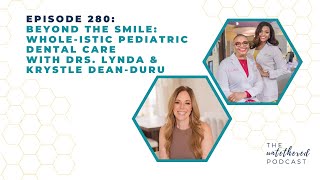
Podcast interview (Untethered, Episode 280) with Drs. Lynda and Krystle Dean‑Duru about integrative, functional, and holistic pediatric dentistry. The conversation covers their mother–daughter practice model, early intervention for breastfeeding and orofacial function, airway- and sleep-focused care, laser and appliance therapies (e.g., ALF), interdisciplinary collaboration (lactation consultants, osteopaths, myofunctional therapists), continuing education, and the future direction of pediatric dental care emphasizing prevention and growth-focused approaches.
Chapters
Hi and welcome to episode 280 of the Untethered podcast. Today we have doctors Linda and Crystal Dean Duru joining us. Nestled in the heart of Ashburn, Virginia, Ashburn Children's Dentistry and its sister entity Womb to Grow Wellness is more than just a dental practice. It's a sanctuary where children's oral health is intricately connected to their overall well being, embodying a philosophy of integrative, functional and holistic pediatric dentistry. At the helm of these remarkable institutions are Dr. Linda Dean Derou and her doctor and her daughter, Dr. Crystal Dean Deroux, who together have revolutionized pediatric dental care with their unique blend of compassion, expertise and innovative treatments. Graduating first in her class at the University of Benin Dental School in her native country, Nigeria, Dr. Linda's dedication to holistic health is reflected in her extensive continuing education in orthodontics, dental sleep Medicine, Dental Cranial Osteopathy and Orofacial Myology. She is certified amongst others in Advanced Light Functionals ALF Therapy, a treatment philosophy that uses brain friendly custom made appliances to promote proper neurology, craniofacial development and optimal airway function, and is a member of the prestigious Nathan Orthodontic Education Group, Masters at the World Clinical Laser Institute Fellowship at the Academy of Laser Dentistry and a Fellow at the United States Dental Institute. Following her own sleep apnea journey, her approach to pediatric dentistry integrates these advanced techniques to prevent sleep apnea and breastfeeding difficulties in infants. Dr. Crystal Dean Duru, inspired by her mother's passion, followed in her footsteps with a Bachelor's Degree in Psychology from Columbia University and a Doctorate of Dental Surgery from Virginia Commonwealth University.
Dr.
Crystal further honed her skills during her specialty pediatric residency at the Interfaith Department of Dental Medicine in Brooklyn, New York where she served as Chief Resident. Her specialized continuing education training includes pediatric dental sleep medicine, airway orthodontics and functional frenuloplasty, positioning her as a leading expert in addressing pediatric airway sleep and growth issues. Quick Disclaimer all information, content and material of this podcast are the opinions of the speakers and is for the informational purpose only and not intended to serve as a substitute for the consultation, diagnosis and or medical treatment of a qualified health care provider. Welcome to the Untethered Podcast. I am your host Holly Balkan. I'm a certified myofunctional therapist, feeding specialist, podcaster, business owner and mentor. This podcast is all about getting your questions answered and collaborating with colleagues to bring you the most up to date information in the orofacial myofunctional therapy, airway tether, dural tissue, and pediatric feeding therapy space. If you're new here, I challenge you to keep an open mind and join my mission to spread this message far and wide. If you've been around since June 2019, thanks for being a loyal listener. As we jump into today's episode, remember to listen with correct oral rest. Posture. Tongue up, up. Lips closed, teeth apart. Breathe through your nose. Let's get started. Doctor Crystal and Dr. Linda, welcome to the podcast.
Hello. Thank you for having us.
Thank you for having us.
Yes.
Well, I'm excited to have you on. I know that we chatted recently on your channel on Instagram, and thank you so much for that. It was honored to be a guest and I'm excited for you to share your wisdom with our listeners.
We're excited. We love hanging out.
Yeah, yeah. And I love so much that you are a mother daughter team and I would love for you to just, you know, before we get into the nitty gritty today, share with us. Like, how did that come to be?
Well, we never really planned it. As a matter of fact, I thought her brother was going to be the one joining me because she always had her heart set on being a pediatric surgeon. Cardiac. Cardiac. Not just pediatric surgeon. Pediatric surgeon. And I was like, okay, well, however, when they were growing up, I always took them to work with me, even when I was an associate at a different office. And so I go, okay, you're working with me. And I either work with me or you work at the library. There's no working at Gap or the mall or anything like that. And then suddenly, one of the summers, she was already in college at Columbia. She was on summer break and she was working in the office, and she had a really challenging kid. Really challenging kid. And I thought, oh, my God, we're going to have the conversation. She's not coming back tomorrow. And so we got home, there was a conversation, but not how I expected it to be. And she was so excited because that kid who was a special healthcare needs patient, told her that she wanted her mom to bring her back the next day so she could clean her teeth.
Aw.
I said, oh, she did. And then she said, yeah, mom, she did. I said, so how did that make you feel? Oh, mom, you have so much fun doing this. I think I'm gonna do it. I said, no, no, no, no, you're not doing this. You're not doing it. She said, yeah, yeah, yeah. For real. Anyway, fast forward, she finishes school and she said, so I want to be a year off so I can take time and stay with you, make sure that's what I want to do. And even at that point, I was still like, man, just do your pediatric surgery. Let me be alone, leave me alone. However, it did pick her interest. And yeah, she went through dental school, went to the residency, and as she was finishing her residency, I really needed to have her back here. However, in my mind, I thought, you know, it's best for her to go spread my wings somewhere else. And as a matter of fact, the way I describe it to the patients, I said, go make your mistake somewhere else, then we'll come back to our practice.
Yeah, I knew, I knew I'd always wanted to come back. I'd seen how the practice was and what kind of. It was really innovative because I'd gone through dental school and I talked about lasers and my, my instructors were like, yeah, right, laser. Like, nobody uses lasers to fix teeth, like, as I'd like.
But I see it, I worked it.
I've assisted, I've been there. So. So I already knew. I said, okay, I'm going to have to, I'm going to. This is where I want to work. This is the kind of place. But I also wanted, like, the freedom to work other places and see how things are done elsewhere. You know, I knew dentistry was my passion. I knew working with kids was my passion for sure. And so it just, it just worked out that I took a little break and took a little three year break after, after residency just to kind of like get my feet wet, work with other providers. I learn and like you said, make my mistakes elsewhere. I guess I think I picked up new skills and.
Yeah, I know.
And so, and then we came back. So I always knew that this is where I was going to be, but I definitely needed some time to solidify that decision for sure.
I love that. I love that. It gives me some memories back to when I signed a contract in grad school to go work in the schools. And I never wanted to work in the schools, but it gave me a lot of really good insight and information to then leave three years later when my contract ended and go into private practice, you know, and help patients in a very different way. So, you know, I think there's, it's all part of the journey. Right. And I love that you were able to kind of circle back and now you guys work together.
Oh, my goodness.
Yeah.
You never know how, how your path and what, how it takes you. You just never, you never know. And then all of a sudden I always like to Say is she used Jedi mind trick, because she definitely wasn't like, you need to come work for me. She is just like, please go.
Yeah, it was that takeaway. You know, I think in sales they call that, like, the takeaway. It's like you take away and then they want in.
Robert Cialdini kind of, you know.
Yeah, yeah, I think he did.
He did a good job, Aldini.
I love that. But I think you also pointed out that you really noticed that there was a difference in, you know, the office and how your mom practiced and, you know, it sounds like very innovative, maybe ahead of your time. And so I would love to know from you all, just, you know, in what ways do you feel like even having that experience and, and now working together? And what ways do you feel like you may be connecting some dots that are maybe missing in other pediatric offices?
I mean, I think that's. That's a really good. Because that's really what makes this fun. Challenging, but fun at the same time. You know, I think, you know, we've. We're seeing kids starting from days old, and they're also wanting to stay, even in their young adulthood.
Right.
Some of them have kids, some of them have homes. You know, they have businesses, and they're wanting to stay. So it that, as a scientist, gives you an opportunity to just see your treatments or, not that you've done anything wrong, but just see what you've been learning and how that's been, you know, utilized and how you're treating your patients, how they've grown, who they've become, things like that, and. And what changes you need to make or what changes you don't have to make and, you know, things like that. So that's already a start of connecting the dots. But I don't know how you consider now.
And it's important, yes, because then I get to see what we did well, what we could do differently. And it was a lot more stark for me. I'm a recovering sleep apnea patient, and when I saw pictures of me at nine months of age, all the signs of sleep disorder, breathing with it, I had that open mouth, the tubercollis, the tight fist, all that tension in the bodies. And so knowing that we're seeing kids as early as two days old, the mindset became different. It became even more important to learn how do we get it so that these patients do not become the me of the future, you know, so it's like you're catching it when it's at stage one before it becomes sleep apnea or before they get diagnosed with add and that you're improving their growth and understanding, too. A lot of it has to do with how their faces grew and what the neurology is as early as possible. And so getting to put those things together, I think that's what makes us a lot different from general pediatric practices. Because most times when the parents come here, they've already been to several other places. And then we connect the dots for them and go, hey, what was the bird story like? What was this infant like when they were growing up? You know, so those things that were missed when they were younger, we could put together for them and help get them back on track. So it's fun.
And I love that too. You already started breastfeeding support. So even the knowledge that in 2006, like, we're hearing about this now, tongue tie, lip tie. But 2006, you already knew that in order to have a mom and a baby, have a really good experience with just initial feeding, something that should be natural, you had to be able to release the tongue in some way, shape or form. This is before we had all the knowledge on how to do it so completely comprehensively. But in 2006, using a laser, not the scalpel, not a diode, but using a very well, you know, using a laser to help a child and help moms, you already did that and started mentoring other providers. And then on top of that, early intervention with. With orthodontics, you've started doing that too, without understanding the physiologic effects. Yeah, that's what we kind of mean by. When they get older, you're seeing like, yeah, you made the beautiful smiles. They don't have cavities because we're proactively preventative. Like, we're not, you know, sealants, things like that. Things that we learn and we're supposed to do, but we took it seriously because we knew exactly that it's important. Right. But now, as we even learn more from seeing the patients and then on seeing our procedures that we'd already were like, okay, I know this is because you started orthotine.
Yeah, way, way before.
Right. So you knew there was something. You correct the habit, you'll get a better outcome. But it was hard to put all those pieces together because the knowledge base wasn't there outside.
Right.
Not a lot of people had their knowledge together. And then. So you're just kind of like anecdotally just helping children. You know, parents are like, what is this crazy thing we're doing? But they're doing it you know, and they know something's up. So it was. That was the nascency of how we started to connect the dots. But then as we. We saw more patients and then we. The knowledge base became even better with some. Some of these. These giants that we stand on their shoulder.
Right.
Like, you know, Dr. Nordstrom, all those kinds of people starting to really look into why we're doing the things that we're doing. Doing instead of us kind of barbaric. Not barbarically, had just kind of like, use this to try this and let's release the tongue.
Well, I know something's going to do something for you.
Now the pieces are being put together, so I think that that's been really helpful as far. That's the fun part about connecting the dots as well. Yeah. So from time, from lost time to long time.
No, I love that. I mean, you definitely have. It sounds very innovative and it sounds like you were ahead of your time and you kind of, you knew, like, how we need to grow a healthy face. It's not just about moving some teeth and making smiles look pretty. How do we functionally get this, you know, orofacial complex, serving the child? Like, how do we get it so that they can breathe well, they can sleep well, they can, you know, everything else chew and swallow and speak and everything, you know, everything that we need to do. And so I love that. I mean, it sounds like you were connecting the dots long before the literature supported what you were doing, which I know can be really challenging.
Right?
Yeah, yeah. Me from her even.
I was like, mom, what are we doing? I'm here. Like, that's not what I learned. And then she's just like, no, no. How it doesn't make sense the other way.
I remember precisely when she first joined us. And she'll come to, you know, we'll finish the day. She'll say, mom, you talk too much. And like, patience or the patience. Yeah, Because I'm trying to explain this, explain that, get it this way. Because I always felt like I was feeling them if they're not doing what they need to do for their children. Because I thought, I'm feeling this child. I'm not communicating to this mom. Because I'm feeling. If they understood what I'm trying to tell them about their kid, they'll run and do it for them. And she'll say, mom, you talk too much.
Let's go.
We have other cases.
That's what I was used to. And now, now I'm giving lecture. This is the lecture series where patients.
Need to talk too much now the tables have turned. But you know what I always say that makes the best, you know, practitioner or doctor or, you know, provider. You have to be able to explain what you're doing and why you're doing it. And if you can't, you shouldn't be doing it. If you don't know why you're doing it, it can't just be, oh, I learned this in school. No, right, yeah, precisely, yeah. So you, you've spoken to the importance of early intervention in pediatric dentistry. Is there anything else from like an early intervention standpoint that we didn't touch on that you think would be important for our listeners to consider or know about?
You know, the part that I don't think was stressed enough is that, okay, why does a child come to us at two days, two days old? And so if they're having breastfeeding issues is the conventional thought is wait till they're one age, one to tend to the dentist or six months after their first youth come in. However, if a child is having trouble nursing or trouble breastfeeding, which is something that should come easily for a child, come naturally, then one has to consider seeing a knowledgeable pediatric dentists during that early times because one, they can work collaboratively with other providers to help the child get back on the breast. Because not everything is a tongue tie that needs to be cut. And so it becomes important for parents and moms to understand that. And sometimes the pediatrician will say, oh, go to the ent, or go to, or don't go to the pediatric dentist. However, if the mom thinks about it, if something that is wrong is within the mouth, who best has more knowledge about that than a pediatric dentist? Not saying that everybody knows, but at least keep asking questions until you find somebody who at least has more knowledge about it. So it's very important because then once that happens, to get back on the breast, working collaboratively, like we said, there's also that guidance. So like, if the tongue function was in care for whatever reason, that you want to make sure that the building blocks of the growth of the face is there, which is getting good tongue motion and also making sure that they can breathe through their nose because you don't want them breathing through their mouth, really. And most of those kids will have breastfeeding issues come with open mouth posture. And that's your foundation for not good breathing. So you want to change that and retrain for that and also continue to follow that child to help to guide them once they get to start chewing because that helps the jaw to come forward. If the jaw comes forward, then you have more space to breathe. And so all of those are very important early intervention things that generally, of course, you don't learn that in pediatric dental training, you get to be interested and get a zillion hours of continuing education. I'd say continuous education, much like paying school fees all over again, to be able to have that knowledge. So, yes, that's the part that we think is critical, obviously. Yes. Getting the teeth and making sure that keeping the teeth early enough, knowing the things to do, like not sharing spoons and utensils if the mom has, you know, the care deliver has a lot of cavities because then you can reintroduce the cavity bacteria into the baby's mouth anyway. So so many things that they can get, so many tips that they can get that has to do with growth and also preparing the jaws for the teeth and the rest of the way. Yeah.
And just to add on that early intervention, the knowledge. Right. I think we, we talked about the being collaborative and the knowledge that the parent receives on just how the setup is supposed to be for going forward. Right. That's what. For some of them. I didn't know. I didn't know. I should have known. That's the part that kills me. It hurts my heart.
Right.
And to talk about our education in pediatric dentistry, we do the reason why we say pediatric dentist is important, because we learn growth and development. That's literally what we learn. We just don't learn how to apply it and how to connect the dots. That's the problem. Right. That's with a zillion hours of continuous education and extra. I feel like I'm in a residency, six year residency. Right. I've been doing 2018 and I'm like still in a residency in that sense. So that continuous education is the understanding on how to connect these dots. Because we did learn this. Every time I sit, I'm like, this was embryology, this was epidemiology. I know this stuff.
Right.
And being able to put it together and put it together in a way that you help your patient, that's the part that wasn't taught to us. So it is. That's for us, that stressing of that beginning portion of life where. And if, if a parent had, or if a baby had a rough journey coming into this world. I mean, there's so many interventions that are used now. It's like not to say any of that is bad. We want the baby alive, want the baby healthy. Right. But we want to be able to give the knowledge that this baby can thrive because you have this knowledge and we've intervened in this way that's more gentle and then it's guiding. So then when we're talking about braces, we're not talking about multiple rounds. We're not even talking about or taking teeth out right now. And yeah, so that's that. It's the start. That's why we talk about, that's why we said that foundation, that the nervous system too, people don't, you know, not understanding how that relates to your, your entire body, your physiology. And just essentially, like in this new age, this AI system. This AI system starts early. Yes, yes, moving. Right. So, so that, that's our big thing about why we were so proactively early intervention. Intervention and proactively preventative and talking about.
It and talking about we have not seen and we've got so many errors on our back on that. But we're not backing down because we see the kids who, when we're helping them, they're getting better, they're becoming more of who they were meant to be. So why would we stop?
Yeah, yeah, well. And you said thriving, right? And I always. One of our mottos in my private practice is taking them from surviving to thriving. And it's, you know, we're the feeding therapists. We're the ones who are supposed to help help these kids, but we're not taught this in grad school. And so for us, it's also, I think, I think that our national organization and state licensure requires maybe somewhere between like 15ish hours on average of continuing ED per year. And everybody I know does it at minimum, probably 75 to 100 hours per year of continuing ed because we're just constantly taking more coursework that we feel is necessary to specialize in this, this arena and work with providers like yourself, where, you know, it's just, it's just the whole thing is mind blowing. Somebody messaged me earlier today and they said, so I heard you say you do, you know, you and your practice do consults with patients. How do you do that when you're not licensed in every state? And we said, well, it's a consult. I said, so many parents go to so many providers and they just want somebody else's eyes on the case. They want somebody to case manage their child's case for them and help them kind of sift through information and figure out, like, where who should I go to? Not, we're not assessing, we're not Treating those out of state patients. Sometimes we're just looking at the case and going, hey, you know what? Trust your gut. Like, this is the next best place. And this provider you went to has the right approach and this is the team, you know, that you should be working with or, hey, reach out to this professional in your area. And it's, it's a lot more of connecting people with the right providers who are growing faces forward and opening those airways. Right. And working collaboratively than anything else. And so I love to hear, you know, I love to hear when others are as obsessed with continuing education as we are, because we just feel like we didn't get this in grad school, but we have no choice.
There probably isn't there. You learn something, you realize, I don't know enough about it. I got to learn more. I got to keep, got to keep putting. I have to put connected dots for myself. Yeah, yeah.
And then I started as a feeding therapist, right. And I was not working with infants at the time. It was more toddler on up. And then I fell into the tethered oral tissue space and really dove more into, like, infants and at the same time fell into the myo space and was like, oh, like, oh, everything just makes sense now. Like, why? I'm like, why are we not talking about this? Like, yes, we don't do mayo with, like, babies and toddlers, but we can apply those concepts and adapt it so that these children never need mayo when they turn 4 or 5. Like, let's make sure they don't have to have it. Like, okay, if your child is at that age, that's okay. There's nothing wrong with that. But if we can get in there like you're talking about early on, and that early intervention component, it's just so critical. And I tell parents all the time, too. I'm like, going to the providers that you need to go to from the get go at the beginning before you ever do a procedure especially, is so critical because we need a baseline. We need to know what everything looks like. Because to your point, not every tie or a tie appearing to be a tie is a true tie. We might have symptoms or tension that may mimic a tie. Right. And we don't know that until we take the right approach. And that all starts with going to the right providers from the beginning. So I do, I love your, your early intervention approach. Because it's critical.
No, we, we, we consider it very important. Men especially, because when I first started doing this, yeah. I was the first person in our area to Bring doing palm ties and lip ties for babies in office with lasers. And at that time the mom they came all we knew. They have trouble acting. Okay.
Yeah.
We cut it. You know, we used a laser and cut it and, you know, things got better immediately. Six months later come in. They're not eating still. It started to get solid foods. And then I get breastband.
Right. The surgery looked great. They were out of bed.
Footstep was good.
Stuff was good. But.
Exactly. And you know, and as time's gone on, we've learned a lot more of how the connection is. How when they're coming through the canal, how they can get stuck around here, how the nerves can get stuck. Then the occipital area, which the vagus nerve and the hypoglossal nerve, which connects to the tongue. If they're not moving, then you can cut all your wand. The tongue still doesn't know what to do.
Yes.
So that led to a whole different concept in the practice. So that they come. You expect them to get cut when you come to the fragment. I'm sorry, you're in the wrong place. I usually say, look, I have the cutting laser right here in the next room is set up. But that's not what your child needs. That's not what we're going to do. And some moms were upset about that. But that's okay. Not everyone is for us. Do know that the kids that we've seen and treated differently, like getting their bodies ready. Collaborating with the osteopathic physician, the neuro. The neurology, conscious chiropractor, lactation people. Those kids are better. I don't get to hear from. I don't. They come in, you know, because we're continuing to follow them. They're coming. I'm watching from afar. Lifts are closed. They just come forward. I'm just like, yes.
But yeah.
The idea is to get nature to take over because the child already has the blueprint. You just need to remove the obstacles and allow nature to do its job. Which means a lot less intervention as they grow older.
Yeah, absolutely. I love that. I love that. So what do you see the future of pediatric dentistry. Dentistry being. Because, I mean, I. I feel like we will you. I feel like we might agree on this. I feel like this needs to be the future. But I feel like there are so many pediatric dental offices that are just not quite there and they don't really even know anything about growing faces Forward.
Right. So what do we see the future of pediatric dentistry to be?
Yeah. You know, our hope is that more people will embrace this and understand that they already have a foundation and they just need to see how the apply it to the child in front of them. And so maybe while adding more to the curriculum so that there's more practical uses and practical approaches to early intervention and hopefully they'll get to see like, people like you, us and other ones who are doing things early and we can follow those children to see what their outcomes have been.
So, yeah, I agree with that. Starting off with the education of the providers themselves, that should be already the start. Because I know for me, a lot of my friends are like, I'm trying to get into this now, and I don't even know where to help them start. Right. Because I took all, like so many. I don't know where to start to help them. So, like having a nice, A good curriculum, which is obviously agreed upon, and learning how to interact with other providers. All of our allied health providers that we always were afraid. No, no. What's going on? You know, who are these people?
You know, like. Right. The booty.
When they just touch, they just look. They're not doing the things. No, we. Being able to interact in that way is important. But also not everybody has to do this. Right. Knowing to send to somebody. Right. And if you want to be more of the like, say, I'll call it like urgent care dentistry.
That's not.
It's still needed. Right? That's still very, very much needed. But also knowing how to recognize that should be the.
The minimum. The minimum.
So that should be the soonest future that should happen. Knowing how to know when something's wrong and say something's wrong. Mom, we need to have you see.
Right.
But I think obviously access is difficult. So being able to educate those kinds of providers to start looking at the face, looking at the function, looking at the child that's sitting in your chair. It's important. They're not, they're literally not just coming in for this. They're coming in, their eyes are drooping, their mouth open, they learn they're miserable or they're very anxious. Not everybody is really that afraid of the dentist like that. It's not. They're not afraid of the dentist because they're afraid of the dentist. They're afraid of their, their bodies in the dental chair. Right. They don't have as much resource for themselves, let, let alone somebody else in their airway space. So that in and of itself is the hint. That's. It's not a. You know. Oh, they're just afraid. I Was afraid.
No.
Why were you afraid?
What was the problem?
You know, like asking more questions. We need more time. We can't. Can't shuttle in, shuttle out kids in the dental office either. So that's that the future of dental care is a little bit more boutique. It's a little bit more like. Because we see them so much more often, you know, we're seeing them more often. We have to be able to spend more time. And they start to know you, you start to know them. There's certain things you can't deny, at least. Even if they don't follow through, they know. First of all, we have it all the time. Oh, yeah, yeah, yeah. Then a couple years later, it's like almost the thing you were discussing. And that's just meeting them where they are, to be honest. They need to have a baseline. They need to know that my doctor is knowledgeable. They know this stuff. I'm not ready now for myself, but they know this stuff. And I'm going to, you know, I'm going to go where when I can. Right. And we. Our motto is like, the earlier the better, but it's never too late. Right. So I think that's what the future is. The future is more better education for our providers. Learning how to collaborate and then just being able to really know the signs, see the signs and identify and take more time with.
And refer.
Just refer. It's okay. You don't have to be. It would be nice to even learn some habit appliances and things like that. But just know how to refer. Don't say it doesn't exist. Don't say it's too much or it's a fad or they'll grow out of it, you know?
Yes.
Yeah. I learned that in dental school. When they said lasers or fad, I knew from then on. I can't hear. I can't listen to this.
Like, I've turned you off this. We're done here.
I love my dental school. I watched bc. I love it. I was trained very well. I love my residency. But at the same time there was limit. There are limitations, you know.
Yeah, yeah, yeah. No. And you highlighted several times like it sounds like there's a need for more. Maybe a screening or some sort that is more standardized that all dentists may. Dentists. I can't talk. All dentists could adopt making up words now to use when they're working. You know, while the teeth are being cleaned by the dental hygienist, they can be looking in the mouth and checking up some boxes in their Mind. And we created like a fast MYO screening tool for. It's more geared towards, like, older kids and adults. It's not really, you know, so it is airway focused and all of that. But at the same time, I feel like even a simpler version for dentists that could be used across pediatric offices, where you're just kind of like every single time you see that child, whether it's every six months or however frequently you see them, you know, it just kind of tips you off to know, do I need to refer? And then I love how you also spoke about the referral process and kind of collaborating and who should we be collaborating with? Because even, like, within one of my. In one of my membership. My membership, we get this all the time. Like, well, what do these people do? And we recently created some resources to see spell out for, like, myofunctional therapists, mostly like slp, ot, rdh. You know, some dentists were like, hey, these are the collaborative providers you typically are looking to work with. Here's what their roles typically are. You know, even in our space, at least those who are specialized in the myo airway, you know, forward growth, you know, facial growth arena.
Exactly.
And. And then we are creating one just for, like, body work now so that we can list out the different types of providers. Because that's like you were saying, it's like, it's not just voodoo. Like, I can't tell you how it all work. Some of them have been on the podcast. They can tell you much better than I.
Exactly.
Right.
But it works. Right. And so it's like when we all come together with our respective specialties and we're collaborating and figuring out what each patient needs individually. Like, we see. We see. Like you were talking about before, you know, you were saying, we see the differences. It makes. Like, I don't need a research paper that's going to come out 17 years from now to prove that what we're doing is working because we see it before our eyes.
You mentioned something, too, that I. That's on my mind. It's that I was one of those, like, I need the science. I need to see that this and that. The random. And when you realize what health care is, is. It's not the science. I mean, it's science, but it's. It's life science. Right. So you just said that the research just come out years later. That's number one. Number two, there are certain sciences you cannot do experiments on.
Right.
Human. Right. And so there has to be a feeling or a Vocation. When a, when a, when a doctor goes in to be the doctor.
Yeah.
There has to be some kind of vocation in trying to heal, not just following certain recipes.
Because you're a healer. You're a healer, and that means that you've got certain gifts within you to be able to put things together, to see critical. Yeah, yeah. Some critical thinking thoughts. You know, it's just like when people say, oh, we use a non surgical laser, the baby lace therapy. And then they say, I need. I've looked everywhere. I don't see anything published on baby laser or oral laser except for the people who are doing it. And I go, okay, if you understand laser physics and if you understand the literature that's already in on photobiomodulation, then you can see how that's an extension of that. Some very smart guy in the name, Dr. Nordstrom, Derek Nordstrom, has figured out that if you use the intensity of the 1064 nanometer weight web laser that is already available, that does penetrate deeper into the skin layer where the nerves are, the mitochondria, all of that. The fascia is. And you know that fascia can get frozen. The hyaluronic acid can get frozen. And when you apply lasers to it, it can decrease and allow the flow. You just applied it in a certain manner now. Now you're able to decrease the fascia flow or increase fascial flow in the head and neck area. And you see it all the time. After you, you know, some of the parents, they come, they have this much discomfort and the sublingual fashion, they go, oh, my God. And you put the light on and come like, can you try it again? They said, what did you just do? Magic? It is not magic. It's just that we allowed flow, we allowed motion, and life is motion. So. So it's being able to put together the science that is already there, the technology that's already there, and then figuring out how can I better use it to help patients more and if that helps reduce the amount of ties that people get cut.
Yeah, well, less invasive. Amazing.
Yeah, exactly. Work with a cranial osteopathy. And then she says, oh, my goodness. You know, we could be working together. And I just start the light. Yeah. She's at the feet. She goes, oh, my feet. Just felt like mushy for me when I first heard it. I was like, oh, my God. Okay.
What?
And you clean that. You land at once on your skin and then you're putting the light there. Then I have to remind myself all the laser Education I've got. Okay, I understand that the photons are now acting on the cells. The light energy is getting, penetrating deep. That makes sense, right? So being able to utilize the skills you have and put knowledge together, I'm sure within the next five, 10 years, that's going to be. What if you're not using it? It's like, what kind of provider are you?
Right.
Because even now they're using it in transcranial therapy for mouthwash, a tbi, traumatic brain injury and for Parkinson's. Well, same technology.
Yeah.
So why are we so resistant in being able to use it in the head and neck region, which most important area? So we're dealing with a craniofacial respiratory complex, aka Dr. Voice.
Yeah, yeah. I have so many thoughts on this one. They've just popped in my brain. I was having this conversation with somebody last week and I said, well, you know, it's actually, I've heard it's pretty common that, you know, more elder patients who need not dental implants, but who need dentures. Thank you. Will get cheek ties and lip ties sometimes released because it impacts their ability to wear dentures. And someone said to me, what? And I said, yeah, so, you know, if these children are struggling with, with feeding and with breathing, with sleeping, but it's okay to remove them for a denture, like, why, why? What's the disconnect here? And someone was like, you make a valid point. And I'm like, see, these are the things that people aren't talking about. The other thing too, as you mentioned, like, it, you know, as we kind of talked about a few times now, is it takes about 17 years for the research to catch up. And one of the things that I don't, I don't love our national organization, Asha, but one of the things I do appreciate about them is that, you know, they do highlight the evidence based practice triangle. And in that triangle, they focus on client perspective, clinical experiments, expertise equally with the external scientific evidence. And I think that, you know, one of the biggest issues, especially in my space too, is a lot of the evidence that supports the work that we're doing. It. It exists, but you have to know where to source it from where you have to know you'd be smart enough to pull it together from different sources to make sense of what we're doing, which is what you beautifully explained with, you know, Dr. Nordstrom's approach and using the laser. And there is a lot of, a lot more evidence than I think that we give credit for. But at the same time, Even if there wasn't, we still have the clinical expertise and the patient perspective, experiences that are very real. And that's two thirds of that triangle. So why are we dismissing that so frequently?
Yeah, yeah, okay. Yeah, yeah.
And this.
That's.
That's the future of dentistry and I think. Or in medicine. Right. I think that's what Covid did for a lot of people. They started to. They stopped because they couldn't go out. They were like, well, let me research what actually is happening. They did their own research. I'm not saying that they knew how to synthesize this information, you know, the common person. Because it does take some schooling to understand even how to know what you're looking at. Yeah. But it piqued their interest to say, I need to figure out my body. I need to. I need to understand.
That's the.
To me, that's the least that a patient should be able to do.
They.
They can't just blindly. They shouldn't blindly just go to a provider. They should have an idea of what they're looking for, why they're looking for, what's ailing them, when it started, you know, things like that, to help us co. Collaborate in their healing. So that's. To me, that's where the future of dentistry is, or just health care in general. Yeah.
And then 3.0.
Yeah, yeah, 3.0. Yes. Yes. It needs it. A complete overhaul.
So.
Yes, absolutely. So, okay, so if you were a mom out there who's kind of like, okay, what do I do next? And maybe, you know, we can even talk about this differently. A mom who is pregnant or who is looking to get pregnant versus, like a mom who's already got a baby in her lap. Do you have different tips or suggestions for what they should look for, where they should go?
Well, let's start with the one who's wanting to be pregnant. And I'm so happy for you because you have the opportunity to create the healthiest baby you can. And so you start with finding out for yourself, what's your sleep like, how are you breathing, are you grinding, are you snoring? And those sort of things. And if you are, look for help for that. And so the best time to feed a baby is usually two years before you actually plan on having them or before you get pregnant with them. So you have the opportunity to at least change some of your nutrition, change your breathing and sleeping patterns, and get more whole foods as well to prepare for that baby. Now that you're now pregnant with the baby. Then you also have to check you're breathing. Are you snoring? Yes. There's going to be some impact because now you're carrying another human being. However, it shouldn't be to the fact that where you're openly, you're snoring, you wake up, you're tired, you're tossing and turning because that usually meant that there was something in there before the baby starts coming. So you can still get help. As a matter of fact, I think there's a counter someplace in the west coast that intentionally put women on the third trimester on a CPAP to help them with their oxygenation. Because that the way the womb is or the condition in the womb determines how well that baby is going to be. Because mind you that practicing all the things that they're swallowing as they are inside preparing themselves for the outside world. So if they're not getting good oxygenation, then the neurology, the electricity is not going to be there enough for them to do all the things they need to do. So they already start compensating while they're in the belly. And then compensation is not life. That's just surviving. You want your baby to thrive, so do your best. Keep your nutrition, you know, get whole foods as much as possible, get good breathing techniques. If it's yoga, Pilates, wherever it is that you can. Wherever it is that you can. Oh, look, jail people, whatever it is that you can do to get your mind and soul and body ready, that will be helpful for the child. Now when the baby comes and obviously that's a joyful moment, everybody's happy now that baby should intuitively come and crawl up and find the boob and latch on easily. And it should be a very beautiful experience for both of you. There should not be pain with it. Okay, there's some discomfort, maybe you're both trying to figure it out. But it should not be painful. Such that when my sister in law was in the hospital, she said when it's time to feed the baby, she didn't want to. She wanted the hospital to take the baby. It should not be that kind of discomfort. For whatever reasons. If it is, keep asking questions, keep looking for the answers for until someone helps you figure it out. So I don't know, I'm talking.
No, no, this is, I mean I was this mom. So I'm sitting here going, yes, yes, continue. This is so helpful.
Yeah, they'll keep asking and they tell you, oh, they're going to grow out of it or just get to a bottle. That's the, that's the most unkind thing for any provider to tell them, oh, just get to the bottle. Anyway, so they want to breastfeed. That's then, you know, you messing with their mind. This is something that should be easy for them to do naturally if they're not able to, if it's not happening, help them find answers. Don't just throw the bottle at them. It's not the same. But sometimes when you can or have to use the bottle, that's okay. We welcome that. But then let's figure out what kind of bottle should we use that will best mimic how nature meant for this tongue to function and help to develop the face and the jaws. So I think what I'm getting to is don't stop looking for answers. Oh, you know, keep asking because you want to find someone who's going to help you figure out how to get your baby thriving.
And also if the, if the baby came into the world a little bit, you know. Yeah. If it was C section, if it was baby was in the, in the, in the canal for too long. So the journey was a little bit rough, a little bit difficult. Take that into effect too. Always keep that in mind. Some parents, like, well, they came out. I'm so glad they're surviving. They came out right. But the way that they came out is going to affect how the nervous system develops, how their body and how their jaws develop too. So, yeah, eating and how they came out.
So that's very important.
Yeah, so that's the first thing. And then as they continue to grow and definitely you, you want to start. You want to find a knowledgeable provider. A knowledgeable provider to be able to help you start guiding. Because by the first thousand days is probably the most important part and most critical part of a child's development. So that's up until about three years old. And you would think they've lived a whole. They're intelligent, they've lived a whole life.
Oh, yes, we are.
You know, so it's so important that we nurture that. And yeah, so that's, that's a big. That's a big thing.
Very important. I'm glad that you brought that up because the brain's growing the most between wind up 1 and 90 days of age. And so you want the most.
You.
I didn't know some of these things when I was, when they were growing up. I'm feeling like I need to let these moms know. Help your child. Your child.
Yeah, that we turned out badly.
How would.
When you think about it, it's what Energy, what are you having to use? What is. What is being you know, take. It's like Rahm and Peter to pay Paul, you know, like, would I still. Would I have anxiety, you know, like those kinds of things or would I be able to, you know, be as resilient? Right. So am I having to take up my resiliency like bank to be. Well, you know, be who I am because I grew up and I had all that I sucked my son. I had, you know, had tongue tied lips.
I'm.
I'm in treatment now and I can already see a difference because I did get bracelets. I had straight teeth. You know, things were wrong. I had TMD issues. So you know, getting on analysis and that results. Being able to have. Do a lot of myofunctional therapy. Like I can see my face being relaxed. You know, so there, there's so many things that you're wor. You know, you're. You're pinpointing when you're doing symptom management as an adult. Meanwhile, when you were younger, it. We could have been guided. You wouldn't even. That's probably the hard part because some parents, like, I don't see any problem. But you have to look at you, look at you grandma, you okay?
You know.
You know, like that you almost have to. And then they start remembering like, oh.
Yeah, I did have to do that.
They remember Todd. Not toddlerhood, but like when they were in school. Yeah, I did have that. I was embraced this for like 10 years.
Or you start telling them now like all these different myo symptoms and they're like, what? That's related. We're like, that's absolutely related. You've got a whole myofunctional disorder going on and this could have been prevented. Do you want this for your kid? Like, I mean, you know. Yeah.
Every parent knows what they themselves on their own is dealing with. And that's robbing away just joy, you know, and it's robbing. And you're just chronically ill. You don't know why it's robbing joy and all kinds of things you have. I'm not saying it's all dental related, but this is a very important.
I mean the window to health is your mouth.
So. Yep.
The more I hear it, the, you.
Know, some of my.
My doctor friends like everything is airway you always talking about. It's like I can't help but. Right like you eat everything deals with like your entire system and how you breathe, you know.
Yeah.
So I can't help but tell. But, you know, I'm looking. You look at your friends, and you're just like.
I was having this conversation on a Saturday. I was visiting with some friends up in, like, close to, like, Maryland, Delaware area. And I looked at one of the kids, and I was like, she has got the most beautiful smile. She's got little spacing between all her teeth. It fills her mouth. I was like, this is so uncommon. This is just. And every time I look at her, I'm, like, so captivating because it's just not what you typically see. And I was telling my friend, who's actually a nurse practitioner, and I was just like. I was like, her mouth is just phenomenal. Like, I just. I want you to recognize, like, how good and how rare this is. And, you know, my other friend was like, well, what is it supposed to be like, looking at her kids? I was like, oh, boy, here we go, right? I was like, well, have spaces in.
Between their baby teeth.
Yes.
Fit a nickel between each one of them.
Yes.
And you should be able to see, like, almost all of the top and almost all at the bottom. And they hunting like that.
They have.
My second one had such a deep bite. You know, it was interesting because I was that mom who had obstructive sleep apnea in pregnancy, but, like, maybe some more mild sleep disorder breathing beforehand. And I didn't put on a ton of weight or anything, but my nose, I developed, like, a bump in my nose. I already had a deviated septum, and so that did not help. And then Lily, my oldest, now she got to turn nine. She was the one with the tongue and lip tie that I didn't know about until she was 24 months old that I discovered when I was taking my MYO course. And she was hard to feed. And I went to lactation and, you know, ibclc. Supposed to be taught savvy and all the things. And I was told, you know, look, she's feeding beautifully. And then it's like, you take your car to the shop and, you know, it doesn't make the noise. You go home, and all of a sudden it starts, like, sputtering again. I'm like, that was my child. And anyways, we breastfed. She rested 13 months, and it was painful. Like, there were times where I could not look her in the face because I was turning my head so she wouldn't see me grimace, which I'm going, you know, which is a whole catch 22 for me. Because as a feeding therapist, I'm like, you're supposed to make eye contact with your child. This is supposed to be enjoyable. And here I am, like looking awake, so I don't want her to see this, like, you know, awful expression on my face because this hurts. And I was also told in the hospital, you know, oh, it's going to hurt for a few weeks because you're a new breastfeeding mom. And then I had my second child who was released at five days of life.
Her.
Her lip and upper. Her upper lip and her tongue. And with all the appropriate interventions surrounding it. It was pretty early. And, you know, I think in some cases I would have waited a little bit longer, but night and day difference fed so differently. And then we did a lot of bodywork throughout the first year of life because she also dragged one of her legs behind her when she started moving around. But, you know, these, both these kids were in early expansion. They've now both had two rounds of expansion. One is six and one is turning nine. And they're going to go into maybe a third round. And we've had various providers because we moved. Right. But I've been of the, you know, I trust my airway providers and I'm like, whatever you think they need, let's do it. I'm like, I know their teeth will be straight if we have the space for it. So I'm less concerned about the straightness of their teeth. I want to make sure that their teeth will fall out. I want to make sure that. Because they were delayed and they started losing teeth as soon as they had the space to lose the teeth.
Yeah.
And I was, I was talking to one of my friends about that too, this weekend where she was like, oh, well, I think her six year old or seven year old has only lost like one or two teeth. And I said, well, you know, my girls were delayed until their expansion started to kick in. And then like teeth just started falling out of their mouth. Like things could grow in. It had space to happen. Yeah, yeah.
Don't understand too.
Yeah.
First foundation for if there's no real estate and you've got big honking. We saw some of that yesterday.
Huge tape coming in.
Baby teeth are going to be like.
I don't want to go anywhere.
I mean, it was amazing. Like, Lily had a row of shark teeth. Yeah, Shark teeth are her lower central incisors just grew in right behind the teeth. And we went to one ortho who was supposed to be airway centric here in Boca, and he did a beautiful examination at the end was like, well, she's already Been in some expansion. I don't want to tire her out. And I was like, she's turning six. Like, this is a normal, like a typical age for ortho. Why are we talking about tiring her out? She's a fantastic patient. And he said, well, you know, let's wait like six months. I was like, what is six months going to do? Like, we're ready now. And he goes, well, why don't we pull out those lower two teeth? I was like, well, your dentist friend across the hall just told us not to do that and to give it six months to see if they come out on their own. Because, you know, we do have some teeth there. They're not fully grown in, but maybe it will resorb the root. Maybe we'll naturally lose those front two teeth. So I don't want to pull those teeth out. That just seems like unnecessary trauma right now. But expansion probably could help speed that up, too. Yeah, no, I don't know. I mean, I'm with the worthy or the dentist here, but I'm just. Just feeling. Based on working with patients and collaborating with colleagues and, you know, the research. There is research to support this now. Like, so now we drive an hour south to go to somebody else.
It's hard, like the. Like I'll say for my provider friends, because it may not. The ones that don't believe, they may not. For us again, hours in the back, which we're okay with because we know what it is. But I think part of it, too, is like when he said stuff about tiring the patient out. We heard that as well. You know, like, patients don't want to wear the appliant. Compliance.
That is.
That is something you take into effect. But you. You.
It's.
It's like it's a choice. Right. You have to. That we're running against time.
Yes.
So that, you know, maybe we take a break before invisalign, you know, when it's time to do the alignment. Right. This part, the foundational building. There really is no option.
Yeah.
I feel, you know, this is what was learned in school and some of my provider friends, they probably experienced it in their clinic. But not knowing maybe the foundation and the principle of why it needs to be done, to be able to reorient their. Their mindsets about, you know, the treatment happens and choices. Because you. There's really no time.
Yeah.
Well. And I have the most incredible before and after CBCT images of Lily from having her ALF appliance when we were still in Maryland. She had an Al she had an ALF and it was during COVID so it got put in and then Covid happened. And so we really didn't do a lot any body work because everything was shut down. And so but she, I think she got it put in around August. So like right after she turned four and she had like kissing tonsils. And within three months she was still in school at that point, right? Pre Covid, fall 2019, she had beautifully sized tonsils. She was not getting her tonsils shrunk down to like one. She was no longer getting sick in cold and flu season. This was like again, pre Covid. And then her, her sinus, her cavities, like they just opened up. And we have this like year apart CBCT scan that we did. And my friend is very cautious. She doesn't like to just do the cbct. She's like, you know what? It's like, we don't need to prove it to anybody. I was like, no, no, I want this. I know it's for exposing her to a little bit more radiation. But like, I'm like, I think this is important, like information one for me to have it too. Like, we can educate people with this too. And like, Lily's the best patient. So, you know, we have this just beautiful. And I share it with people because I'm like, look what excited expansion done. And this was slow expansion, right? And then my older one, who had group nine times in one year as a three year old, we put her into a rapid paddle expander with a forward growth component because she was like in an airway crisis. And we didn't have that time for the slow maxillary expansion to kind of occur. We kind of needed a little bit more faster paced expansion for her. So the dentist here suggested like going into that versus the ALF as step one. And I was like, listen, like, you're the expert, you, you tell me. And since then I've seen like more research come out on all these, you know, approaches. And I'm just like, I'm so grateful because it's made them healthier. Their jaws have grown. They're not done growing yet. And I'm like, I will do whatever we need to do to make sure they have healthy airways.
And in your, you, you, you make a really good point. I love that. I love that that's happened for your girls. Because the success and the way we measure success is no longer like, how many millimeters or, you know, where the teeth are sitting. No, it's actually, are they healthy? Are they having these health, you know, Growth and is there development going in the way that it's supposed to go?
That those are, those are the measurements.
Of success that we have to, as providers, dental providers, kind of reorient our mindsets. We really do have to, because that's really what matters at this time. That's why early intervention matters, because that foundation and the building blocks that you were doing right now, that it's going to show itself in those teenage years when they're not. It's not just hormones where they're having this anxiety or they're being, you know, honorary and, you know, really just annoying, you know, that is they, they still will be, but not to the point where they can express themselves to you. Right. Yeah, they'll be, they'll.
They'll have more buckets of energy and, you know, to manage all of that that comes with those changes. Right. It's. I think it's. I talk to parents sometimes about like, buckets of energy. Like Your child has 10 buckets of energy when they wake up in the morning, and if they have an airway crisis going on, they're down to three. How are we going to divide up those three buckets over the course of the entire day? They're probably gone by breakfast. And now you're sending them to school versus a child who has an open airway uses one bucket by breakfast, they use another bucket middle of the morning, they use another bucket by lunch, and we've only use three. Halfway through their day, they've got lots of energy left. And so just using like examples like that with parents, parents kind of go, oh, that makes a lot of sense.
That's. That again, that's part of what, how to learn. Learn, like collaborating with other providers. Because you guys know how to kind of break it down in a, in a, in a way that is doable even for me as a person.
Yeah, yeah.
It just makes more sense, you know, and that's what's helpful in educating the parent. Yeah. They have the choices. They can make the choices on that.
Yeah, absolutely. Well, this has been amazing. Are there any last thoughts, comments that you want to add before we start to wrap?
Yeah. Any last comment?
Oh, well, I think I just, I wanted to go back to the comment when you talked about the ALF appliance, the Alpha appliance, and some patterns. Some people, especially some providers, have thought of it as an extent. And I just, I want to clarify that it is not an extent. It is like biomimetic, meaning the way that it was developed. It's helped with the cranium to support it and have the tongue be able to do the job that it actually needs to do. So it does take time, depending on the child, depending on what their body's ability is, how much electricity, meaning how well their cranial nerves and their neurology has connected to help them be their best selves. So when they say, oh, it pushed the teeth here, push the teeth back, that's because the people, if you're using it as an expander, yeah, it will push the teeth. That's not what it's supposed to do, but you will get the room, you will make a good foundation and the teeth will come in close to where they're supposed to be. And that's really is important because many people have talked about it in that manner. And so provide a dog. You cannot take one class and think like, know about how to use the appliance. It's multitude of steps, multitude of classes, multitude of understanding and also mindset change. Because as dentists, we want to see something change right away and we want to do something with our hands. You almost literally have to sit there and watch nature do its magic. Of course, with the intervention, the body and all of that, for us, we always incorporate the non surgical base, like in the fascia moving. We have an osteopath, we work with some chiropractors, and we work with a team that helps the whole body to integrate so that your body can help you be its best self. Because nature has already got you covered. You just need to remove the inner fan.
Well, I think that was a great last step.
Yeah, yeah, yeah, I love that.
Okay, future is back to nature.
And I love that.
I love that. Well, thank you Both so much, Dr. Crystal and Dr. Linda, for joining me today. This has been amazing and I know our listeners are really going to love this entire, this entire chat.
Thank you so much.
It's so good to see you again.
The weather turns out a bit.
Thank you, thank you.
Thank you so much.
Awesome.
Again, thanks for listening to this podcast. If you found value in this episode and want to hear more of these myotots, Airway and feeding related episodes, be sure to leave a review on Apple Podcasts and share this episode on your social media platforms. You can access free resources and all I offer@halibalkin.com or pop over to Hollybulcan on Instagram to get all the latest updates.
More from Hallie



What I Was Missing in Feeding Therapy: ARFID, Airway, and Myo with Samy Hernandez





